


Every great outdoor space begins not with a shovel, but with a vision. Before you can create a truly functional and beautiful environment, you need a clear idea of how you want to live in it. This means looking inward at your own lifestyle and outward at your property’s unique character. This crucial first step ensures the final design is more than just beautiful—it’s a perfect extension of your home and your life.
Defining Your Vision for Outdoor Living
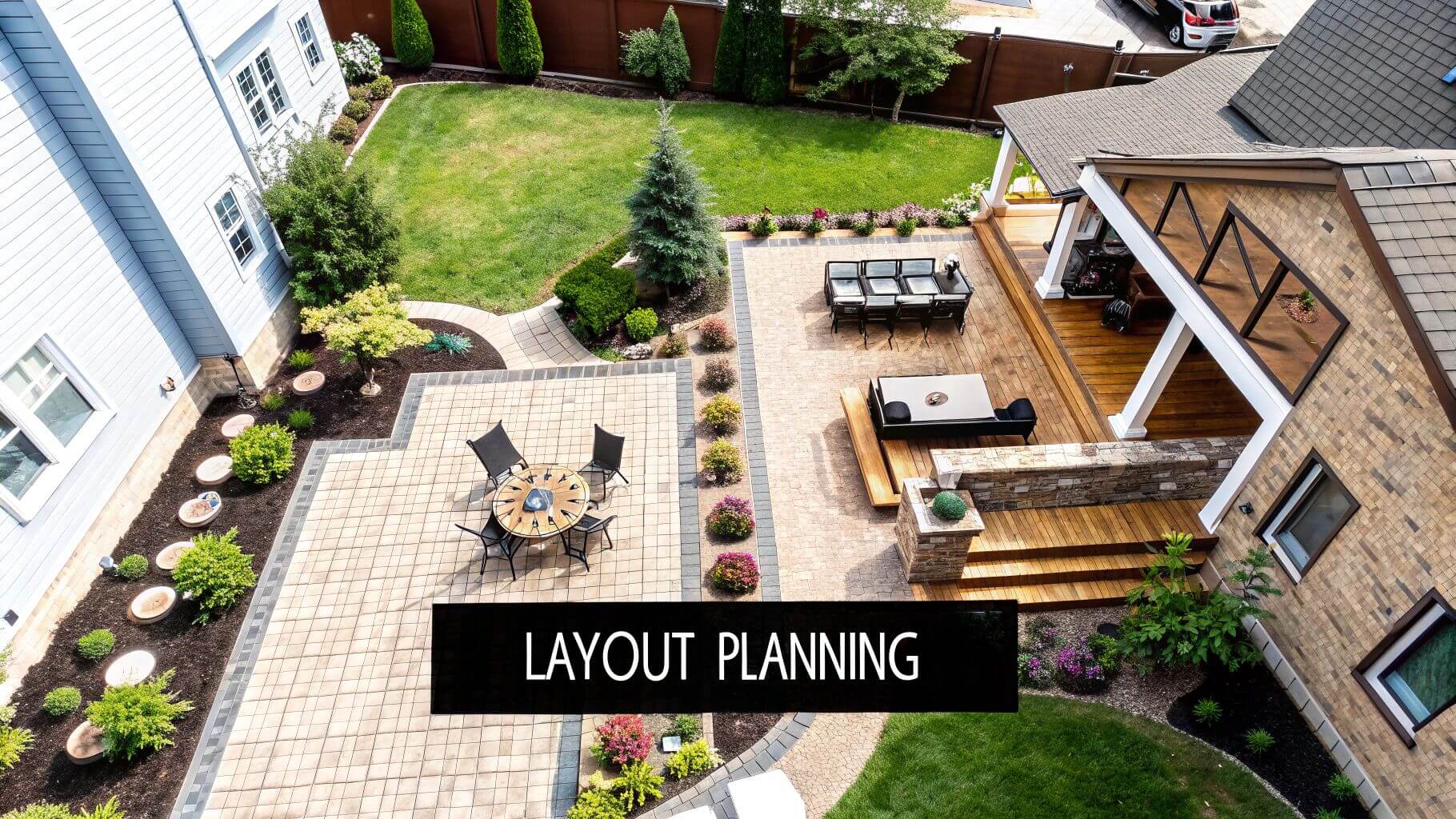
Before a single paver is laid, the most important work happens on paper and in your mind. It’s about creating a blueprint for your lifestyle, not just copying a look from a magazine. Think of this vision as your North Star; it will guide every decision you make, ensuring each element has a distinct purpose.
This thoughtful approach is precisely why homeowners are investing so heavily in their outdoor spaces. The U.S. landscaping market is on track to become a $184.1 billion industry by 2025. That’s a powerful reflection of a growing desire for personalized outdoor environments, driven by a 6.0% compound annual growth rate from 2020 to 2025.
Assess Your Lifestyle and Priorities
Let’s get practical. The best designs are born from honest answers to straightforward questions about how you’ll actually use the space.
- Who is this space for? Is it a quiet retreat for you and your partner? A bustling hub for large family gatherings? Or maybe a safe, durable play zone for kids and pets? The answer dramatically changes the layout.
- What will you do out there? Make a list of everything you envision. Think about grilling and dining, swimming, tending a garden, or just lounging with a good book on a Sunday afternoon.
- When will you use it most? Are you picturing bright weekend get-togethers or cozy evenings by a fire pit? This will inform your needs for shade structures, ambient lighting, and even outdoor heating.
A common mistake I see is people designing for a fantasy lifestyle instead of their real one. If you rarely host huge parties, that massive outdoor dining set might go unused. An intimate, comfortable lounge area could be a much better fit for your day-to-day life.
Analyze Your Property’s Characteristics
Every property has its own personality, shaped by sunlight, wind, and terrain. The secret to a truly great design is working with these natural elements, not fighting them.
Spend a few days observing your yard. Where does the sun fall in the morning, and where is it in the late afternoon? This simple observation tells you the perfect spot for a dining patio versus a sunbathing lounge. Notice the prevailing winds, too. This might show you exactly where to plant a screen of trees or install a structure for protection and comfort. Understanding these patterns is fundamental to crafting what many now consider a new era in outdoor luxury.
Finally, start thinking in zones. Just like an open-concept home has distinct areas for cooking, dining, and relaxing, your outdoor space should too. You might map out a quiet corner for a reading nook under a pergola, a central social hub around a fire feature, and a separate, active area for a grill station. This zoning strategy brings a sense of order and purpose, making the entire space feel intuitive and expansive.
Choosing Your Hardscaping Materials
The bones of your outdoor space—the patios, walkways, and decks—are what give it structure and life. This hardscaping is far more than just a surface to walk on; it defines the flow of your yard, directs foot traffic, and sets the entire mood. Getting these material choices right from the start is an investment in both the beauty and the staying power of your environment.
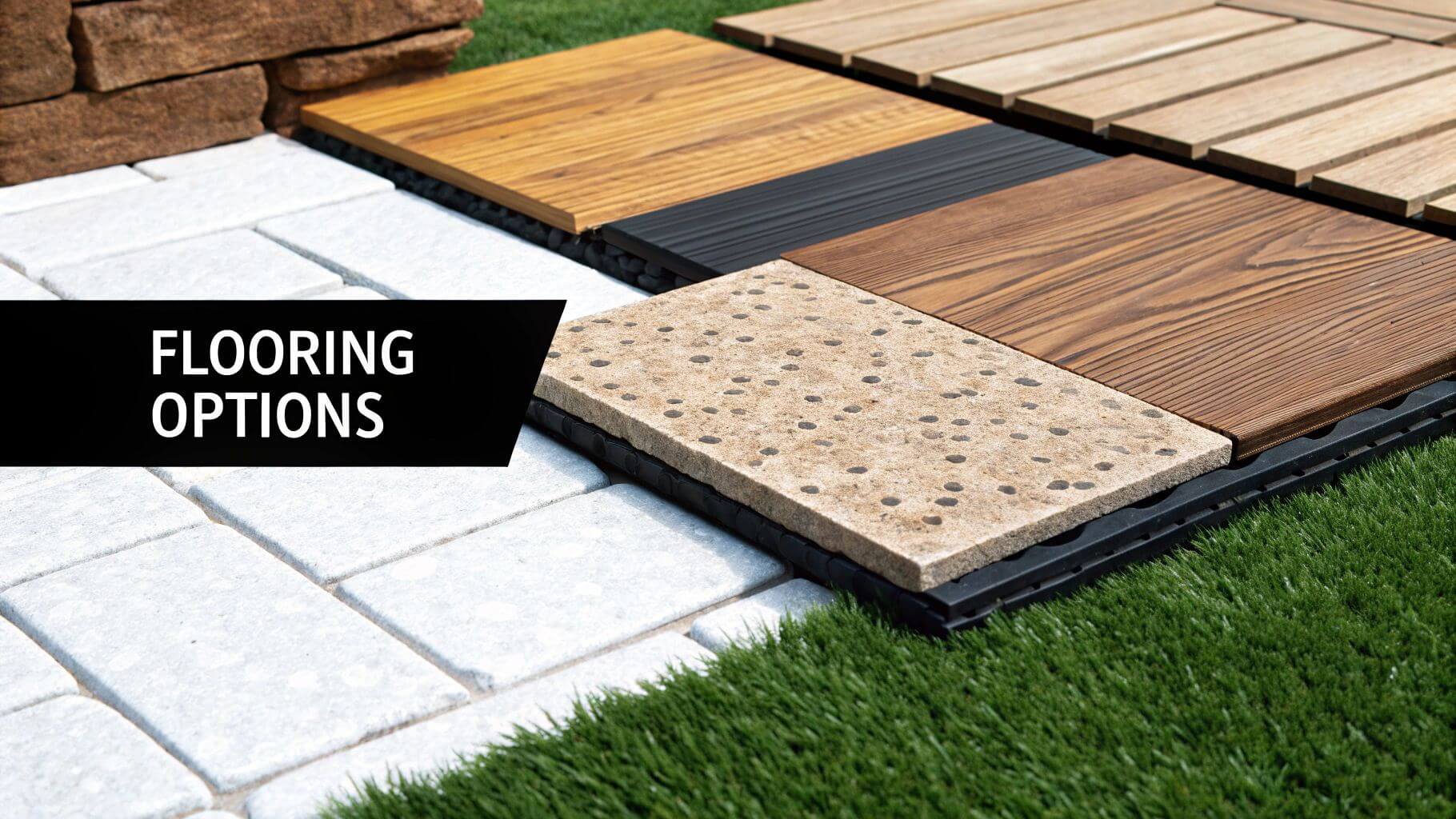
When I work with clients, we look far beyond just what looks good on day one. You have to consider your local climate. For example, if you live in a rainy part of the country, non-slip surfaces like textured concrete pavers are a must. In a place with brutal freeze-thaw cycles, you’ll need materials that won’t crack under pressure, like a high-quality composite deck.
Thinking this way from the beginning saves you from expensive repairs down the road and makes the space genuinely usable year-round.
Natural Stone for a Touch of Timeless Elegance
There’s something about natural stone—flagstone, slate, travertine—that brings an organic, luxurious feel you just can’t replicate. Every single piece is unique, with its own variations in color and texture that create an incredibly rich, sophisticated surface. Flagstone is a personal favorite for creating rustic, cottage-style patios, while the clean, sharp lines of cut travertine are perfect for a sleek, modern poolside retreat.
Of course, that kind of beauty comes with a few trade-offs. Natural stone is typically the most expensive option, not just for the material itself but also for the skilled labor required to install it correctly. Some porous stones, like limestone, will also need to be sealed regularly to keep them from staining, especially around a grill or in areas with heavy rainfall.
The real secret is matching the stone’s natural properties to its intended job. For a high-traffic outdoor kitchen area, a dense, non-porous granite is a much smarter choice than a softer, more absorbent sandstone.
Concrete Pavers: The Versatile and Durable Workhorse
Concrete pavers are a fantastic option that delivers on durability, versatility, and value. Thanks to huge advances in manufacturing, they now come in a massive range of shapes, sizes, colors, and textures that can convincingly mimic everything from natural stone to classic brick. This allows you to get a truly high-end look without the premium price tag.
One of their biggest practical advantages is how easy they are to repair. If a single paver gets cracked or badly stained, you can just pop it out and replace it without tearing up the whole patio. Their interlocking design also creates a strong yet flexible surface that can handle minor ground shifts, which drastically reduces the risk of cracking.
This blend of beauty and practicality has fueled a major trend. In fact, by 2023, a whopping 63.7% of new single-family homes were built with patios, marking eight straight years of growth. It’s a clear signal that patios have become the go-to foundation for modern outdoor living. You can dig deeper into these patio design statistics to see how preferences vary by region.
Composite Decking for Low-Maintenance Living
If you love the classic warmth of a wood deck but can’t stand the thought of all the upkeep, composite decking is your answer. It’s an engineered product, typically made from a mix of wood fibers and recycled plastics, designed to fight back against fading, staining, scratching, and mold. It won’t rot, warp, or give you splinters, and you’ll never have to spend a weekend sanding, staining, or sealing it.
Yes, the upfront cost for composite decking is higher than for standard pressure-treated wood. However, the long-term savings on maintenance are significant. In most cases, a simple cleaning with soap and water is all it ever needs. This makes it the perfect choice for anyone who wants to spend their free time enjoying their deck, not maintaining it.
Material Comparison for Patios and Decks
Choosing the right surface is a balancing act between budget, aesthetics, and the amount of maintenance you’re willing to take on. The table below breaks down some of the most common options to help you see how they stack up against each other.
| Material | Average Cost (per sq ft) | Typical Lifespan | Maintenance Level | Best For |
|---|---|---|---|---|
| Natural Stone | $25 – $50+ | 100+ years | Low to Medium | Creating a timeless, high-end look with unparalleled natural beauty. |
| Concrete Pavers | $15 – $30 | 50+ years | Low | Versatile designs and high-traffic areas where easy repairs are a plus. |
| Pressure-Treated Wood | $15 – $25 | 10-15 years | High | A classic, natural deck aesthetic on a tighter initial budget. |
| Composite Decking | $30 – $45 | 25-50 years | Very Low | Busy homeowners who want the look of wood without the constant upkeep. |
Ultimately, whether you choose the timeless appeal of natural stone or the modern convenience of composite decking, the right material will not only enhance your home’s value but also enrich your lifestyle for years to come.
Creating a Seamless Indoor-Outdoor Transition
The most breathtaking outdoor spaces I’ve worked on don’t feel like a separate yard at all. Instead, they feel like a natural extension of the home. When you get that transition right, you’re not just adding a patio—you’re fundamentally expanding your living space, making the entire home feel bigger, brighter, and more connected to the world outside.
Achieving this kind of effortless flow is an art. It goes far beyond simply installing a nice door. It’s a deliberate fusion of architecture, materials, and decor that invites you to move between the two realms without a second thought.
Dissolving the Physical Barriers
The most dramatic way to connect the indoors with the outdoors is to literally remove the wall between them. Large-format glass doors are the go-to solution here, turning a solid boundary into something transparent and movable.
- Bi-fold Doors: These are a fantastic choice for entertainers. They concertina back on themselves, opening up an entire wall to create a massive, unobstructed pass-through between a great room and a deck.
- Pocket Sliding Doors: For a truly disappearing act, nothing beats pocket doors. They slide completely into the wall, leaving an opening with no visible frame. It’s the purest, most high-end way to achieve that seamless connection and maximize your views.
This isn’t just a niche idea; it’s where high-end design is heading. In recent industry surveys, 46% of design professionals pointed to pocket sliding doors as a top emerging trend. That’s a significant number, showing a clear demand for these kinds of fluid, inviting outdoor features. As you can see from how professionals are merging indoor and outdoor living on NAHB.org, the focus is on creating cohesive experiences.
Maintaining Visual and Material Continuity
Once you’ve addressed the physical barrier, the next move is to build a visual bridge. You do this by carrying key design elements from inside your home directly into the outdoor space. Consistency is everything; you want the two areas to feel like a single, thoughtfully designed environment.
Start with the floor—it’s one of the most effective tools for this. Using the same material, or at least materials with a very similar color and texture, both inside and out can trick the eye into seeing one continuous surface. Imagine a beautiful slate tile in your kitchen that flows right out onto the adjoining patio. The effect is stunning.
Here’s a pro tip from years of experience: Always look for an outdoor-rated version of your interior flooring. Many porcelain tile manufacturers now offer coordinated indoor and outdoor lines. The outdoor tiles have a slightly rougher, non-slip finish for safety, but they maintain a perfect visual match.
The same idea applies to your color palette. Pull an accent color from a piece of art or a throw pillow in your living room and repeat it in your outdoor cushions, planters, or an area rug. These subtle repetitions create a visual story that ties the entire space together, echoing the same principles found in well-executed luxury open-floor plan designs.
Furnishing the Transitional Space
Your furniture choices are what truly make an outdoor area feel as livable and comfortable as the room it connects to. The goal is to select pieces that mirror the style, scale, and comfort of your indoor furniture.
If your interior is all clean lines and modern design, don’t suddenly switch to rustic teak outside. Look for outdoor sofas with deep, plush cushions and high-performance fabrics that are just as inviting as your indoor couch. Arranging the furniture into a cozy conversational group, maybe anchored by a stylish outdoor rug, reinforces that “outdoor room” concept.
When you treat your patio with the same design respect as your living room, you complete the transition and create a space you’ll instinctively be drawn to, day after day.
Layering Light and Ambiance After Dark
When you invest in a beautiful outdoor living area, you shouldn’t have to head inside just because the sun goes down. The real magic often begins at dusk, and strategic lighting is what makes it all happen.
It’s about more than just flipping on a floodlight. A truly exceptional lighting plan paints with light, creating mood, highlighting your landscape’s best features, and ensuring every corner is safe and inviting. Think of it like designing an indoor room—you wouldn’t light your living room with a single, harsh overhead bulb, and the same principle applies outdoors.
The Three Layers of Outdoor Lighting
From my experience, the most captivating outdoor spaces use a layered approach. It’s a tried-and-true method that combines three distinct types of lighting, each with a specific job. When they work together, the result is a cohesive, warm, and wonderfully functional environment.
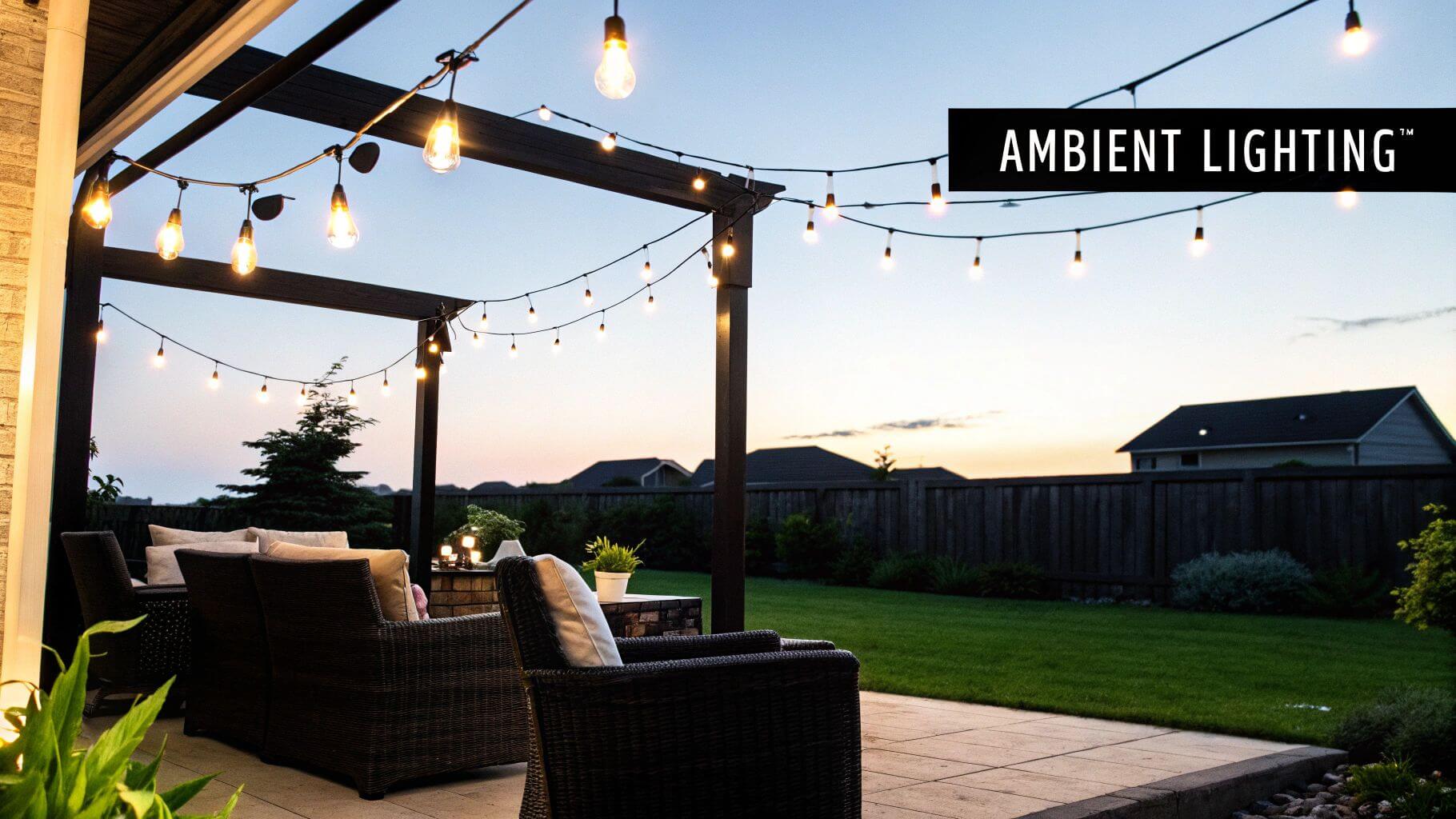
- Ambient Lighting: This is your base layer of light. It’s the soft, general glow that makes the entire space feel welcoming. Picture delicate string lights draped over a dining area or the gentle radiance from post-cap lights along a deck railing. The goal here isn’t brightness; it’s about creating a present and gentle foundation.
- Task Lighting: This is your workhorse. Task lighting is focused, practical, and aimed precisely where you need it for specific activities. It’s the clear, bright light over your grill station so you can see what you’re cooking, the subtle lights built into stair risers for safety, or a directional lamp next to an outdoor armchair for late-night reading.
- Accent Lighting: This is where you get to be an artist. Accent lights are all about creating drama and drawing the eye to the most beautiful parts of your property. A well-placed uplight can turn a mature tree into a living sculpture against the night sky. Spotlights can graze a stone wall, showcasing its rich texture in a way you’d never notice in the daylight.
A pro tip I always share with clients: start with your “wow” features. Before you do anything else, identify the one or two things you want to be the stars of the show at night—a magnificent tree, a water feature, or a striking architectural detail. Build your accent lighting around them first, and the rest of the plan will fall into place much more naturally.
Beyond Lighting: Creating True Ambiance
While a layered lighting scheme sets the stage, other elements can become powerful focal points that truly bring your evenings to life. Features that provide light, warmth, and sound create natural gathering spots that draw people in.
A fire pit is the perfect example. Yes, it provides ambient light, but its real power is in the heat it gives off and the social gravity it creates. There’s something primal and comforting about sitting around a fire that sparks conversation and connection. Whether it’s a rustic wood-burning pit or a sleek gas fire table, this single element can define an entire social zone.
Water features offer a completely different, yet equally powerful, sensory experience. The gentle sound of a small waterfall or bubbling fountain is incredibly soothing and can help mask unwanted background noise. When you light it from within or below, the moving water catches and reflects the light, creating a mesmerizing centerpiece that feels like a true escape.
Choosing Plants and Furniture for Comfort and Style
Now that the bones of your outdoor space—the hardscaping and lighting—are set, we can get to the part that truly brings it to life. Choosing the right plants and furniture is where your personality shines through. This is how a well-designed patio becomes a personal oasis, every bit as inviting as your living room.
This step is about more than just picking a nice sofa or some pretty flowers. It’s about creating an experience. Plants can become living walls that offer privacy or define different “rooms,” while the right furniture layout can completely shape the social dynamic of the space.
Crafting a Living Landscape with Plants
Plants are the essential softscape that balances all the stone and structure. They introduce color, texture, and a sense of vitality. A great planting strategy is about more than just looks; it’s about function and creating a garden that gets better with time.
I always encourage clients to think in layers. You can create incredible depth by placing taller, wispy grasses behind low, mounding perennials. Picture the soft, feathery texture of a fountain grass contrasted with the bold, waxy leaves of a hosta tucked into a shady spot. It’s these thoughtful pairings that make a garden feel professionally designed.
For a landscape that thrives without constant attention, stick to native species. Plants that are naturally suited to your climate need less water, less fuss, and ultimately, less work from you. This isn’t just a sustainable choice—it helps your garden feel like a natural extension of its surroundings.
I often tell clients to treat their plants like architectural elements. A clean line of Italian Cypress can create a formal, elegant screen for a dining area, while a climbing wisteria can transform a plain brick wall into a breathtaking feature.
Selecting Durable and Stylish Outdoor Furnishings
Your furniture is what turns the space from a patio into a true outdoor room. Thankfully, today’s market is filled with incredible options that blend high-end style with rugged durability. When you’re shopping, zero in on three things: the material, the comfort, and the overall aesthetic.
High-performance materials are non-negotiable. Look for pieces made from powder-coated aluminum (it’s lightweight and won’t rust) or sustainably-harvested teak, which has natural oils that make it resistant to rot and pests. For cushions and fabrics, solution-dyed acrylics are the industry benchmark for resisting fade, moisture, and mildew.
Your outdoor furniture should feel like a natural extension of your home’s interior. If you have a modern, minimalist vibe inside, look for outdoor pieces with clean lines and a sophisticated, neutral palette. If you need some help defining that style, this essential interior design style guide is a fantastic resource for creating a seamless indoor-outdoor connection.
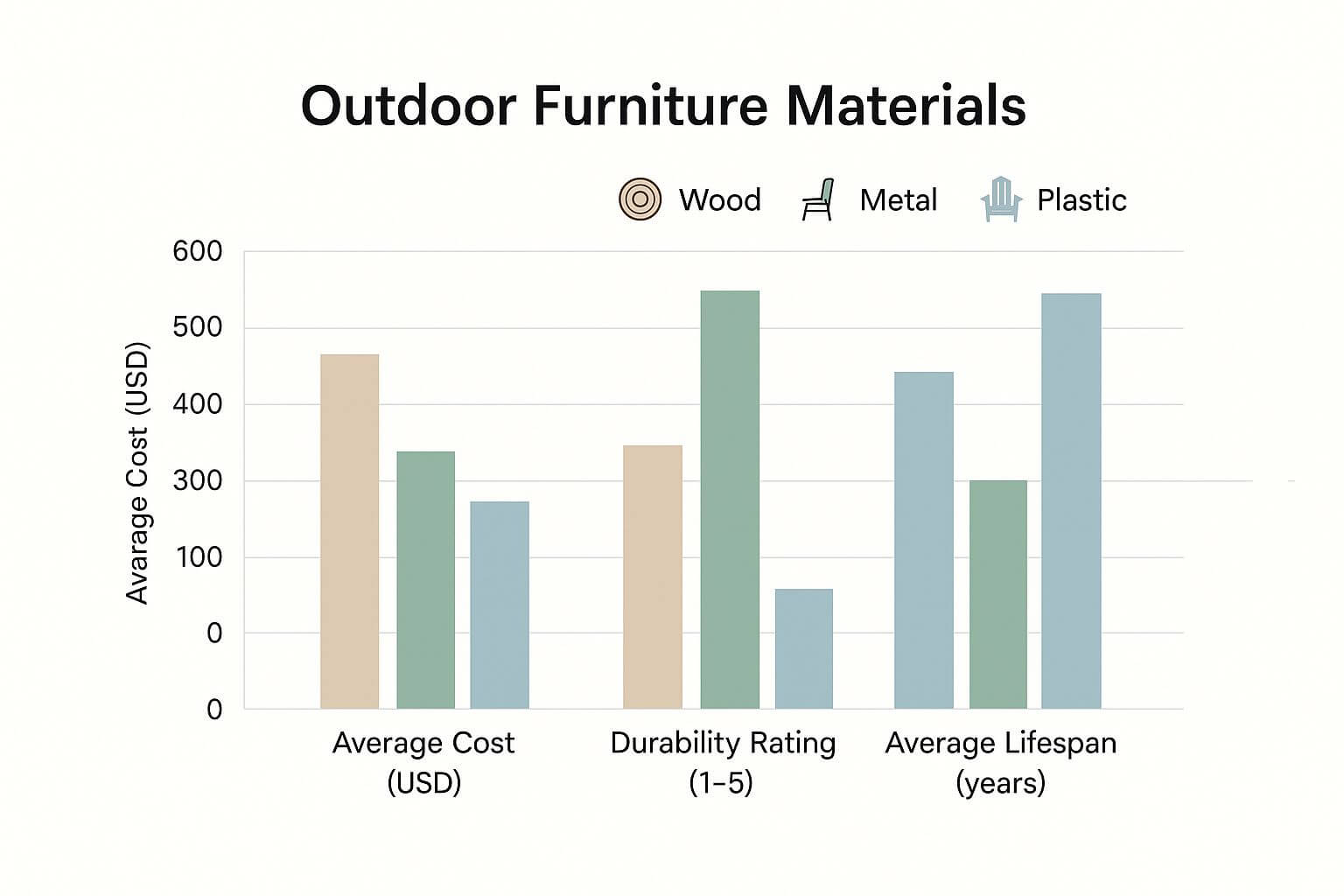
Outdoor Furniture Material Guide
Choosing the right material for your outdoor furniture is a critical decision that impacts its longevity, look, and the amount of upkeep required. Here’s a quick breakdown to help you compare some of the most popular options on the market.
| Material | Weather Resistance | Maintenance | Price Point | Aesthetic |
|---|---|---|---|---|
| Teak | Excellent (naturally oil-rich) | Low (can be left to weather to silver-gray) | High | Classic, warm, natural |
| Aluminum | Excellent (rust-proof) | Low (cleans with soap and water) | Mid to High | Modern, sleek, lightweight |
| Wrought Iron | Good (can rust if not maintained) | High (requires sealing/painting) | Mid to High | Traditional, ornate, heavy |
| All-Weather Wicker | Very Good (synthetic resin) | Low (easy to clean) | Mid-Range | Versatile, coastal, comfortable |
| Recycled Plastic | Excellent (resists moisture, fading) | Very Low (cleans with soap and water) | Low to Mid | Casual, colorful, sustainable |
This table serves as a starting point. Your final choice will depend on balancing your budget, your local climate, and the amount of time you’re willing to spend on maintenance to keep your investment looking its best.
Arranging Furniture for Function and Flow
The layout of your furniture is just as crucial as the pieces themselves. A thoughtful arrangement will support how you want to use each zone, whether it’s for lively dinners, quiet morning coffees, or relaxing with a book. The goal is to make the space feel intuitive and effortless.
For conversational areas, always arrange seating to face inward. This simple move encourages people to connect. Anchor the grouping with a central element like a fire pit or an outdoor rug to define the space and make it feel intentional, just as you would inside.
Don’t forget to leave clear pathways. A good rule of thumb is to allow at least 30-36 inches for main walkways so people can move around freely without squeezing past furniture. This small detail is what transforms a collection of chairs into a functional, welcoming outdoor living room that everyone will be drawn to.
Common Questions About Outdoor Design
Designing a luxury outdoor space is an exciting journey, but it’s one that often comes with a lot of questions. Moving from a dreamy vision to a functional, beautiful reality involves countless decisions, and it’s completely normal to feel a bit overwhelmed.
Think of this as a conversation with an expert. We’ll walk through the most common hurdles homeowners face, giving you the practical clarity you need to move forward with confidence and avoid those all-too-common (and expensive) mistakes.
How Do I Create a Realistic Budget?
Let’s be clear: a budget isn’t just a number you pick out of thin air. It’s a strategic financial plan for your entire project. The first thing I tell my clients is to make a “dream list”—write down every single thing you want, from the patio itself to the specific lighting fixtures, plants, and furniture.
Once you have your list, you can start putting real numbers to it. Research the local costs for materials and professional labor, as prices can swing wildly from one region to another.
As a starting point, many in the industry suggest earmarking 10-15% of your home’s value for a comprehensive outdoor overhaul. To make that number less intimidating, let’s break down where the money typically goes:
- Hardscaping (40-50%): This is almost always your biggest line item. It covers the foundational elements like patios, decks, walkways, and any necessary retaining walls.
- Plants & Landscaping (20-30%): This bucket includes everything from topsoil and trees to shrubs, flowers, and good-quality mulch.
- Key Features (15-20%): Here’s where you budget for the “wow” factors—a custom fire pit, a sleek water feature, or a sophisticated outdoor lighting scheme.
- Furniture & Decor (10-15%): Finally, you have the finishing touches that make the space truly livable, like seating, tables, and planters.
Here’s the most important piece of advice I can give you: build a 10-15% contingency fund directly into your budget from day one. You never know what you’ll find once you start digging—poor drainage is a classic example. That buffer ensures a small surprise doesn’t completely derail your project.
What Is the Best Way to Design a Small Outdoor Space?
When you’re working with limited square footage, the game changes. Your entire strategy needs to revolve around maximizing every single inch. My mantra for small spaces is: think vertically and demand multi-functionality.
Instead of spreading out, go up. Vertical gardens, trellises overflowing with climbing vines, or a few tall, slender trees like Italian Cypress will draw the eye upward, creating a powerful illusion of spaciousness.
Every piece of furniture needs to earn its keep. Look for benches with hidden storage, or find a fire pit that can double as a coffee table with a custom cover.
A simple but incredibly effective trick I’ve used in tight urban gardens is to mount a large, weatherproof mirror on a boundary wall. It instantly creates an illusion of depth and reflects light, making the entire area feel bigger and brighter.
Stick to a lighter color palette for pavers and walls to make the space feel more open and airy. And don’t be afraid to create zones. Even in a tiny footprint, you can use an outdoor rug or a strategic grouping of planters to define a “dining room” with a small bistro set.
Should I Hire a Landscape Designer or Architect?
This is a critical fork in the road. While a DIY approach might work for a simple refresh, a complex, high-end project almost always demands a professional. Bringing in an expert isn’t an expense; it’s an investment that saves you from costly errors and gives you access to trade-only resources and top-tier contractors.
So, who do you call?
- A Landscape Architect is your go-to for projects involving significant structural work, permits, or complex engineering. Think large retaining walls, major drainage and grading solutions, or the intricate design of swimming pools and outdoor structures. They have the technical and engineering background to make it happen safely and legally.
- A Landscape Designer is the master of aesthetics and function. They are the experts in crafting a cohesive vision—developing stunning planting plans, selecting the perfect materials, arranging a functional layout, and making sure every element works together in perfect harmony.
For the kind of seamless, integrated environment that defines a luxury project, a professional is non-negotiable. They are what elevates a simple patio into a truly transformative outdoor living space.
How Can I Make My Outdoor Space Low Maintenance?
What good is a beautiful yard if you spend all your time working in it instead of enjoying it? Building in low-maintenance solutions from the very beginning is absolutely essential for modern life.
Start with the bones of the space—the hardscaping. Choosing high-quality, durable materials like composite decking or porcelain pavers will save you countless hours of upkeep. They stand up to stains and weather far better than traditional wood.
When it comes to plants, think smarter, not harder. Fill your garden beds with native and drought-tolerant plants that are already suited to your local climate. They’ll thrive with minimal fuss.
A thick layer of mulch is a simple secret weapon for suppressing weeds and retaining soil moisture. But to truly set it and forget it, install an automated drip irrigation system on a timer. It delivers water directly to the roots where it’s needed most, saving you time and cutting down on water waste.
Ready to connect with a top-tier professional who can bring your vision to life? At Haute Design, we curate a network of the nation’s most distinguished interior designers, architects, and builders, ensuring your project is in expert hands from concept to completion. Discover the perfect partner for your luxury outdoor space by exploring our network today.