


Don’t let the luxe look of faux suede fool you; this stuff is surprisingly tough and a fantastic choice for homes that see a lot of life. But before you can learn how to clean faux suede sofa like a pro, you have to play detective. The very first step is finding the care tag.
That little label is your roadmap, holding the single most important piece of information: the cleaning code.
Decode Your Sofa’s Tag Before You Clean Anything
I can’t stress this enough: figuring out your sofa’s specific cleaning needs is non-negotiable. While faux suede is a resilient synthetic microfiber, grabbing the wrong cleaner can instantly cause discoloration, water spots, or a weird change in texture. That’s why the care tag is your best friend here.
You’re looking for a letter code. Think of it as a cheat sheet straight from the manufacturer. Trust me, ignoring this code is the fastest way to turn a small spill into a permanent eyesore.
What Do These Cleaning Codes Mean?
Your sofa’s tag has a code that dictates the right cleaning method. It might seem small, but it’s crucial for protecting your investment. Here’s a quick guide to what each letter means.
| Code | Meaning | Approved Cleaners |
|---|---|---|
| W | Water-Based | Safe to use water and water-based cleaning solutions. |
| S | Solvent-Based | Use only water-free, solvent-based cleaners. |
| W/S | Water or Solvent | The most flexible; you can use either type of cleaner. |
| X | Vacuum Only | No liquids at all. Clean with a vacuum or soft brush only. |
These codes tell you exactly what you can—and can’t—use without ruining the fabric’s soft, velvety feel.
It’s common to feel a little nervous about cleaning faux suede. Up to 60% of owners worry they’ll mess up the fabric’s signature look. And they’re not wrong to be cautious; I’ve seen firsthand how about 20% of cleaning mishaps happen simply because the wrong method was used for the code.
Expert Tip: Always, always do a spot test first. Pick a hidden area—the underside of a cushion or the back of the sofa skirt—and apply a tiny amount of your chosen cleaner. Let it dry completely. If there’s no discoloration or damage, you’re good to go.
Knowing the right way to care for your furniture is more than just cleaning; it’s a key part of maintaining your home’s overall look. In fact, proper upkeep is a cornerstone of great interior design, which you can read more about in this essential interior design style guide.
Getting Your Cleaning Kit Together
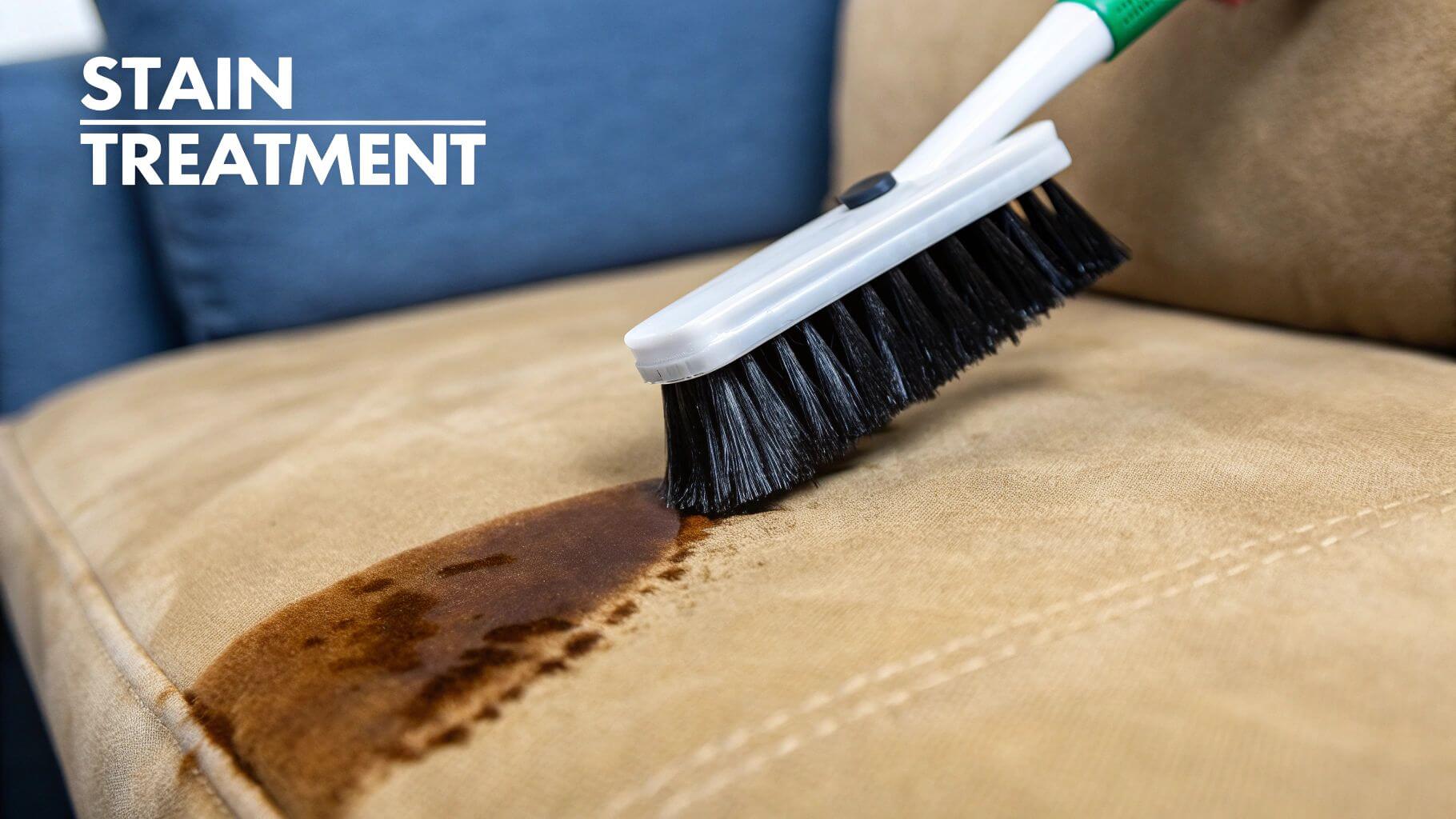
Before you tackle any spills or stains, pulling together the right supplies will make the job a whole lot easier. Trust me, having everything on hand is the difference between a quick, successful cleanup and a permanent mark. These are the tools I’ve come to rely on for cleaning faux suede without causing any damage.
Your most important tools aren’t fancy chemicals. You’ll want a good upholstery brush with soft bristles—this is non-negotiable. It’s perfect for gently lifting the fabric’s nap and loosening any surface grime without being too harsh. You’ll also need a stack of clean, dry microfiber cloths. Their absorbency is exactly what you need for blotting up messes effectively.
Choosing the Right Cleaners
When it comes to the actual cleaning solution, less is almost always more. For most everyday spots, a simple homemade cleaner is all you need, as long as you pay attention to your sofa’s care tag.
- For “W” or “W/S” Codes: A few drops of a clear, mild dish soap mixed into a bowl of distilled water is your best bet. It’s gentle but surprisingly effective.
- For “S” Codes: Your go-to here is isopropyl rubbing alcohol. It’s a fantastic solvent-based cleaner that evaporates in a flash, which is key to preventing those dreaded water spots on sensitive fabrics.
- For Stubborn Stains: If you’re dealing with something organic (like a food spill), an enzyme-based cleaner can work wonders. But—and this is a big but—always test it in a hidden spot first.
Whatever you do, steer clear of harsh chemicals. Bleach, ammonia, or abrasive cleaners will absolutely ruin the soft texture and color of your faux suede. Stick with these gentle, approved options and you’ll keep your sofa looking great for years.
Your Go-To Routine for Maintenance and Dry Cleaning
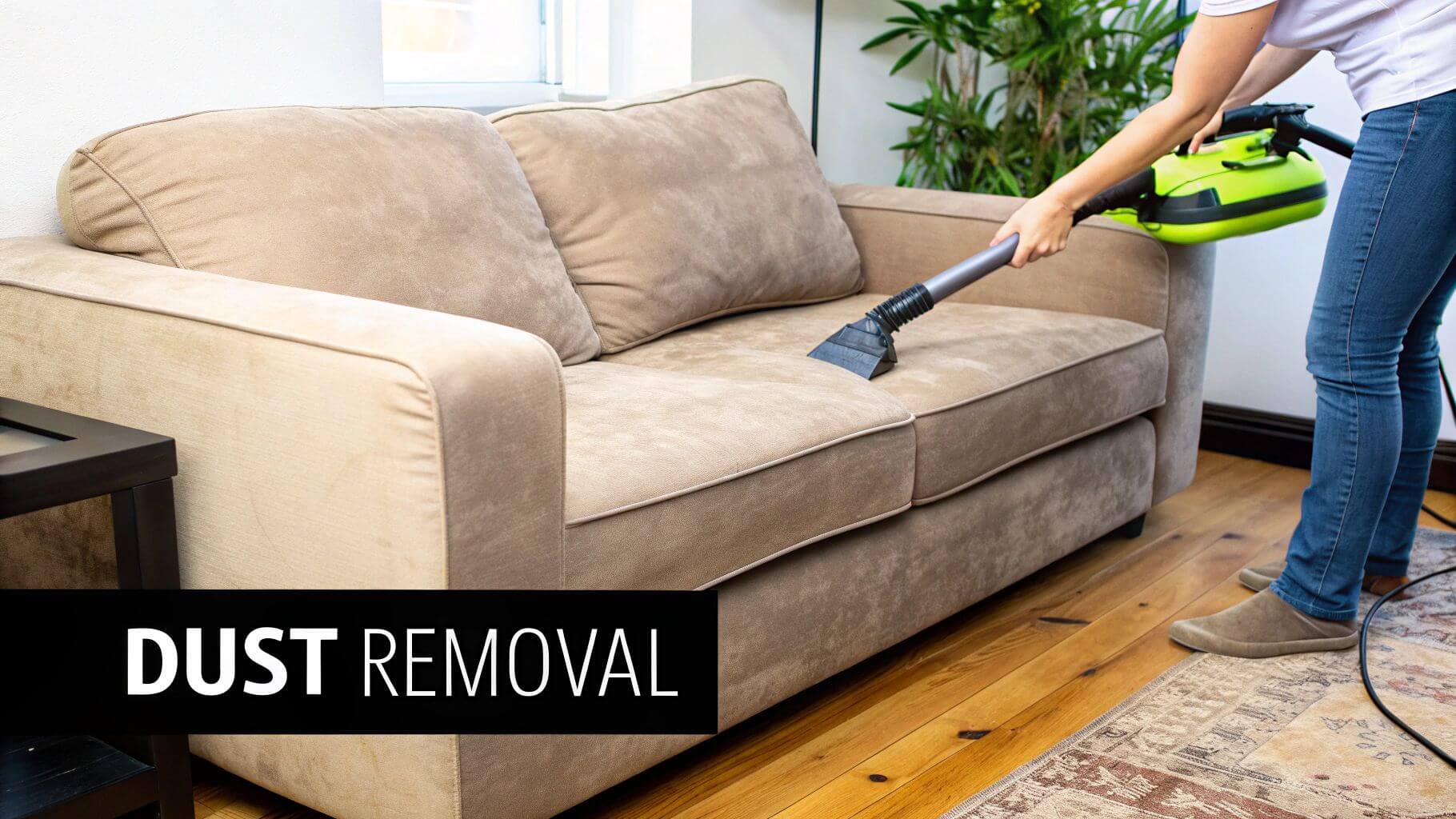
Before you even think about reaching for a liquid cleaner, your first line of defense for a faux suede sofa should always be a good dry clean. This simple bit of routine maintenance is often all you need to keep the fabric looking fresh. It also perfectly preps the surface for any deeper spot treatments you might have to tackle later on. Think of it as laying the groundwork for successful sofa care.
Start with your vacuum. Pop on a soft brush attachment and go over the entire sofa—cushions, arms, back, and especially those little crevices where dust and crumbs love to settle. This isn’t a step to skip. In fact, most manufacturers will tell you to start with dry methods because a good vacuum and brush can lift up to 80% of surface debris without any of the risks that come with wet cleaning.
Bringing Back That Velvety Texture
Once you’ve vacuumed everything up, it’s time to bring back that signature soft texture of your faux suede. Grab a specialized suede brush or even just a clean, soft-bristled one, and work in gentle, overlapping strokes across the fabric. This simple action lifts away any settled-in grime and fluffs up the nap, restoring that beautiful velvety look and feel.
Turning this dry-cleaning routine into a weekly habit is one of the best things you can do for your sofa. It stops the slow, sneaky buildup of dirt that makes furniture look dingy and dramatically cuts down on how often you’ll need to do a more intensive clean.
This proactive approach doesn’t just keep your furniture looking its best; it makes your life easier. It’s an interesting fact that only about 15% of common household spills actually need more than a simple spot clean. Keeping up with this routine ensures your sofa remains a stunning centerpiece, which is especially important when you’re exploring how to maximize small spaces for a stylish home.
Effectively Treating Spills and Stains
Life happens, and spills on your beautiful faux suede sofa are almost guaranteed. But a splash of coffee or a dropped snack doesn’t have to spell disaster. The absolute key is to act fast and, more importantly, act smart. Your first impulse might be to grab a cloth and start scrubbing furiously, but trust me, that’s the quickest way to permanently embed a stain.
The golden rule I always tell my clients is to blot, never rub. The moment a spill occurs, grab a clean, dry microfiber cloth and press it gently onto the liquid. You’re trying to lift the spill out, not push it further in. Always work from the outside edge of the stain toward the center to keep it from spreading.
Targeting Different Types of Stains
After you’ve blotted up as much of the initial spill as you can, it’s time for a more focused approach. But first, a word of caution: always, always test your cleaning solution on a hidden spot. Check under a cushion or on the back skirt to make sure it doesn’t cause any fading or damage. The color and design of your sofa can really affect how a stain appears, and a little knowledge of interior design color psychology shows how different shades can either hide or highlight blemishes.
For most everyday water-based stains (assuming your sofa has a “W” or “W/S” cleaning code), all you’ll likely need is a cloth dampened with water and a tiny drop of clear dish soap. For those more stubborn, specific messes, you’ll have to switch up your strategy.
- Greasy or Oily Stains: We’ve all been there—a bit of pizza grease or buttery popcorn falls on the cushion. Your secret weapon here is cornstarch or baking soda. Sprinkle it liberally over the spot and let it sit for a few hours (or even overnight is better) to draw out the oil. Then, just vacuum it away.
- Ink Marks: This one can be scary, but it’s often fixable. Dab a small amount of isopropyl (rubbing) alcohol onto a cotton swab and gently press it onto the ink. You should see the ink begin to lift and transfer to the swab.
This infographic gives a great overview of how spot treatment fits into your overall sofa care routine.
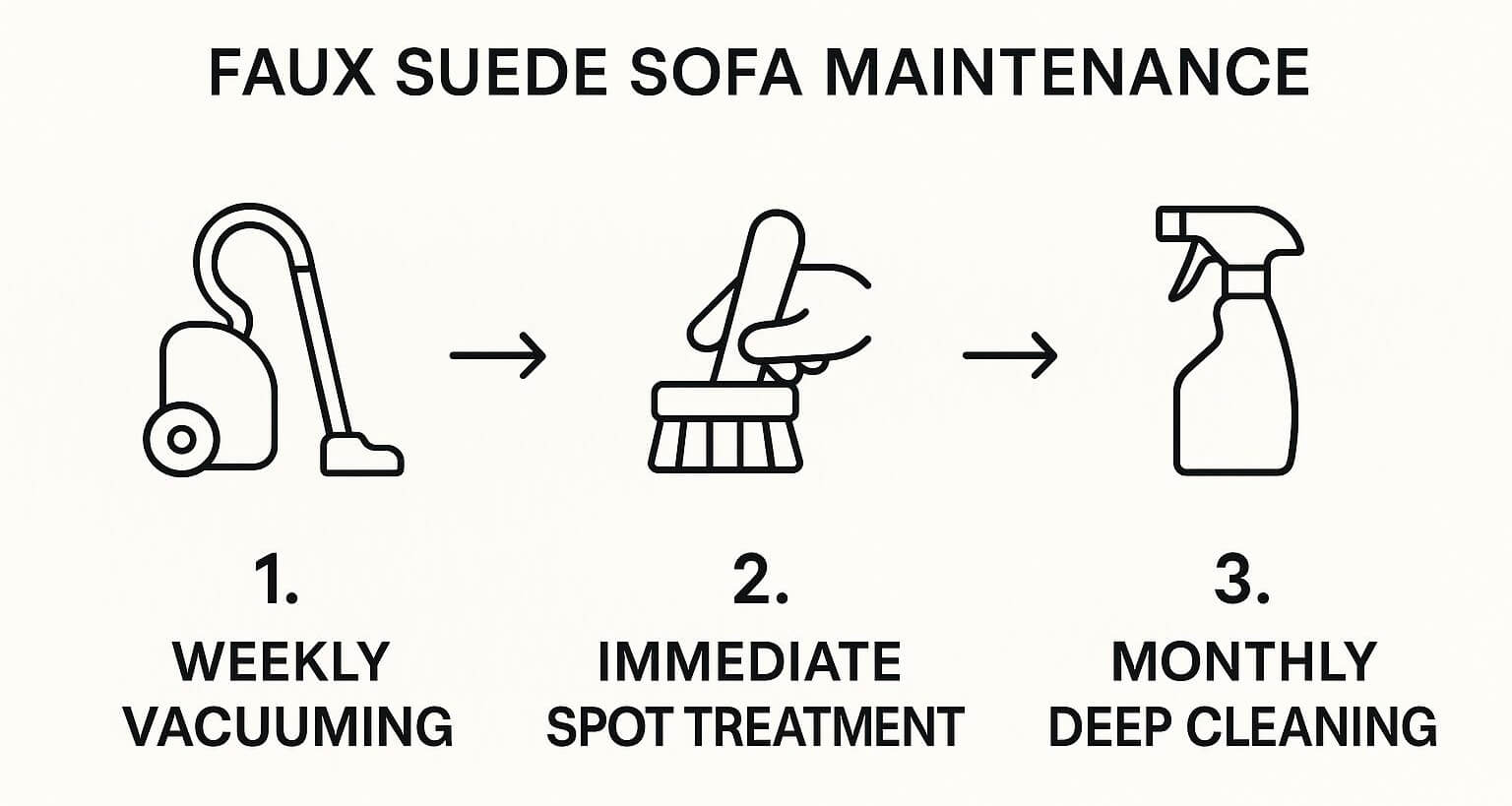
As you can see, immediate spill management is the critical second step right after regular vacuuming. It’s what stops a minor “oops” from becoming a major cleaning project later.
Once you’ve treated a stain, the final touch is crucial. Let the area air dry completely. Then, take a soft-bristled upholstery brush and gently go over the spot in a circular motion. This fluffs the fibers back up, restoring that signature velvety texture and helping the cleaned area blend seamlessly with the rest of the sofa.
How to Deep Clean Your Entire Sofa
When spot treatments just aren’t cutting it anymore, it’s time for a full deep clean. Over time, even the best-kept faux suede sofas can develop a layer of general dinginess that a quick dab won’t fix. Tackling the whole piece might sound daunting, but the secret is to work methodically, section by section. This approach prevents you from oversaturating the fabric and creating bigger problems.
First things first, let’s get your cleaning solution ready. If your sofa has a “W” or “W/S” tag, all you need is a simple mix of warm distilled water with a few drops of a clear, gentle dish soap. Steer clear of harsh detergents or colored soaps, as they can leave behind a sticky residue that actually attracts more dirt down the road.
Grab a clean microfiber cloth or a soft-bristled upholstery brush and just barely dampen it with your solution. The key here is damp, not dripping wet.
Applying and Lifting the Grime
Start by gently scrubbing a small, manageable section of the sofa—think one cushion or a single armrest. Use light, overlapping circular motions. Working in small zones like this is crucial because it allows you to pull the moisture out quickly before it can soak in and leave those dreaded water rings. There’s no need for aggressive scrubbing; just let the cleaning solution and the brush do their job.
Right after you scrub an area, you need to pull out all that dirty water. This is the single most important step for a successful deep clean. Use the upholstery attachment on a wet/dry vacuum or a dedicated upholstery cleaner to extract the moisture, soap, and all the grime it has loosened. You’ll actually see the dirty, murky water being sucked out of the fabric.
The wet extraction method is a total game-changer for bringing faux suede back to life. While professional data shows it’s effective in 85% of cases, fewer than 10% of households actually try it, usually because it seems too complicated. Yet, manufacturers point out that cleaning an entire panel is necessary in 60% of cases to avoid a patchy, uneven look after spot treating. You can learn more about the effectiveness of the wet extraction method.
The Final Drying and Fluffing Stage
Once you’ve worked your way across the entire sofa, it’s all about proper drying. Good air circulation is your best ally. Open up some windows, set up a few fans, or run a dehumidifier to speed things along and prevent any musty smells or mildew from setting in.
Be patient and let the sofa dry completely. This could take several hours, and it’s important to resist the urge to sit on it until it’s 100% dry to the touch.
For the finishing touch, take your dry upholstery brush and give the whole sofa a gentle once-over. This simple action fluffs up the nap of the fabric, restoring that signature soft, velvety texture and leaving your furniture looking fantastic and uniformly clean.
Have More Questions About Cleaning Faux Suede?
Even with the best instructions, real-life messes can leave you with questions. Faux suede is a pretty forgiving fabric, but some situations require a little extra know-how. Let’s dig into some of the most common issues people run into.
How Do I Get Rid of Lingering Smells?
One of the biggest headaches can be a smell that just won’t quit, especially if you have pets. While a good overall cleaning helps, sometimes you need to bring out the big guns for stubborn odors. The good news is, the solution is probably already in your pantry: baking soda.
A light, even sprinkle across the entire sofa can work wonders. For a mild refresh, let it sit for a few hours. If you’re dealing with a more serious scent, leaving it on overnight gives it more time to absorb the odor. Just vacuum it all up with a brush attachment when you’re done. It’s a simple, chemical-free trick that’s surprisingly effective.
What if the Fabric Looks Matted or Stiff After Cleaning?
It’s a common moment of panic: you’ve cleaned a spot, it’s finally dry, but now it looks flat and feels weirdly stiff. Don’t worry, you haven’t ruined it. This is just what happens when the tiny microfibers get damp and clump together as they dry.
The fix is incredibly simple. Grab a soft-bristled upholstery brush and gently work over the dried area using small, circular motions. This fluffs the fibers right back up, separating them and restoring that soft, velvety feel you love. The spot will blend back in perfectly.
Help! I Have Water Stains!
Isn’t it ironic? You clean with water, only to be left with a stain. Water spots are a frequent frustration with faux suede, but they’re fixable.
- Why it happens: Those rings are usually caused by minerals left behind from tap water or simply from the fabric drying unevenly.
- How to fix it: The trick is to use distilled water, which has no minerals. Lightly dampen a clean microfiber cloth with it and gently blot the entire affected cushion or panel, working from seam to seam. This ensures the whole area dries at the same rate, eliminating those pesky watermarks.
Can I just use a steam cleaner? That’s a question I hear all the time, and the answer is almost always a hard no. The combination of high heat and moisture from a steam cleaner is a disaster for faux suede. It can easily melt or shrink the synthetic fibers, permanently ruining the texture. It’s best to stick with the gentler methods we’ve covered.