


Before you even think about looking at portfolios, the most important work happens right at your own kitchen table. Nailing down your project’s scope, style, and budget from the get-go is the secret to finding a designer who clicks with your vision and respects your bottom line. It’s this upfront clarity that sets the stage for a smooth, successful partnership.
Define Your Project Vision and Budget
Jumping into a design project without a solid plan is a recipe for disappointment. It’s like heading out on a road trip with no map—you’ll get somewhere, but probably not where you intended. The real work of finding the right designer starts with you, long before the first meeting. This is your chance to turn those daydreams into a clear, actionable brief that will anchor every decision to come.
This initial homework is what separates a frustrating experience from a fantastic one. It’s how a vague wish like “I want a nicer living room” evolves into a concrete goal: “I need to reconfigure the living room to improve traffic flow, add smart storage for our electronics, and create a warm, inviting space for our family of four.”
When you can articulate your needs with that level of detail, you empower designers to give you their best work. The more specific you are, the more insightful their proposals and creative concepts will be.
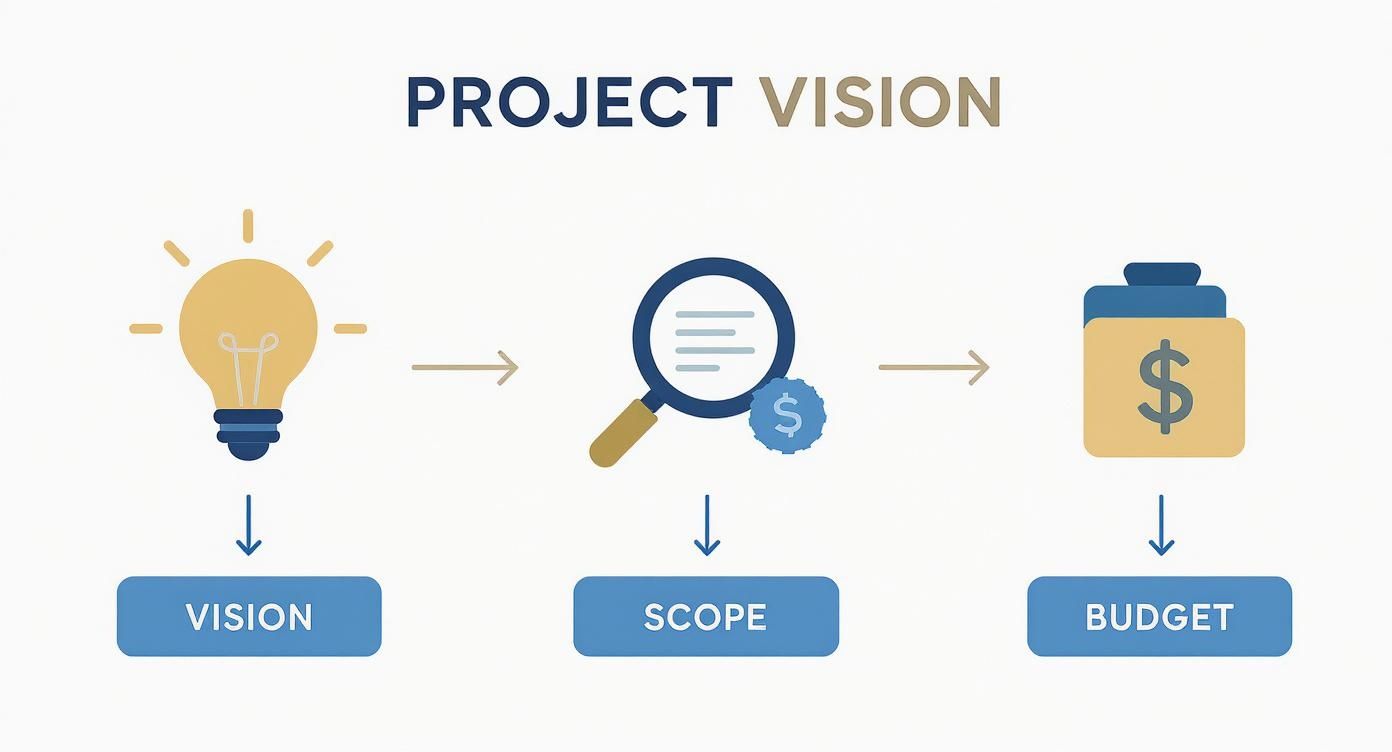
As you can see, a well-defined vision is the foundation. From there, you can build out a clear scope and a realistic financial plan.
Get Specific About Your Style and Scope
It’s time to move beyond generic labels. Instead of just saying you like “modern” design, think about the feeling you want the space to have. Do you want it to feel serene and minimalist, or vibrant and eclectic?
Start a vision board. Use Pinterest, tear pages from magazines, whatever works for you. This isn’t just about collecting pretty pictures; it’s about finding the patterns. As you gather images, look for the common threads:
- Color Palettes: Are you always pinning warm neutrals, moody jewel tones, or crisp monochromatic schemes?
- Textures and Materials: Do you see a lot of raw wood, polished marble, plush velvet, or sleek metal in your saved images?
- Furniture Silhouettes: Are the shapes you love clean and linear, or are they soft and curved?
This visual exercise communicates your taste far more effectively than words ever could. It gives a designer a direct window into your aesthetic.
A well-curated vision board is one of the most powerful communication tools you have. It bridges the gap between your ideas and a designer’s interpretation, heading off misunderstandings before they start.
At the same time, you need to define the actual scope of work. Are we talking about a simple cosmetic refresh with new paint and furniture for one room? Or is this a full-gut renovation that involves moving walls, custom cabinetry, and managing contractors? The distinction is critical, as a designer who excels at decorating might not be the right fit for a complex remodel. For a deeper dive into managing a larger project, our guide on how to plan a home renovation for success is a great resource.
Set a Realistic Budget and Timeline
Let’s talk money. This can be the toughest conversation, but it’s absolutely essential. A realistic budget is much more than just the cost of a new sofa. A truly comprehensive plan needs to account for everything.
To help organize your thoughts before you start reaching out to designers, use this simple checklist.
Initial Project Planning Checklist
| Planning Area | Key Questions to Ask Yourself | Example |
|---|---|---|
| Project Scope | What specific rooms are included? What is the primary goal (e.g., cosmetic update, full remodel)? | Living Room & Kitchen. Goal: Open up the layout, update all finishes and appliances, and furnish completely. |
| Design Style | What is the feeling or mood I want to create? What are 3-5 keywords that describe my aesthetic? | “Calm, airy, and sophisticated.” Keywords: Natural light, organic textures, minimalist, warm. |
| Timeline | What is my ideal completion date? Are there any hard deadlines (e.g., a holiday, a new baby)? | Ideal completion in 6 months. Hard deadline is Thanksgiving for hosting family. |
| Budget | What is my total, all-in number? Have I set aside a contingency fund? | Total budget of $150,000, which includes a 15% contingency of ~$22,500. |
This table should get you started, but remember to break that budget down even further. It should include line items for:
- Design Fees: These vary and can be a flat rate, hourly, or a percentage of the total project cost.
- Furniture & Finishes: This covers everything from sofas and lighting to flooring and tile.
- Contractor & Labor Costs: For any construction, electrical, or plumbing work required.
- Shipping & Installation: These costs can be significant, especially for custom or oversized items.
- Contingency Fund: This is non-negotiable. Always set aside 15-20% of your total budget for the unexpected.
Being upfront and honest about your budget from day one is a sign of a serious client and builds immediate trust. It allows a designer to bring you creative solutions that are both beautiful and financially feasible. This thoughtful approach is more important than ever. The global interior design market, valued at around USD 137.9 billion recently, is projected to grow to over USD 208 billion by 2033. This shows just how many homeowners see the value in investing in professionally designed spaces, making your careful budgeting a critical first step.
Finding and Researching Potential Designers
Once you have a clear vision for your project, it’s time to find the right creative partner to bring it to life. A quick Google search will give you thousands of names, but that’s often more overwhelming than helpful. The key is to start with curated sources where quality is already a given.
Platforms like Haute Design are a fantastic starting point. They connect you with a pre-vetted network of top-tier professionals, which saves you an incredible amount of time. Instead of sifting through endless websites to vet basic qualifications, you can focus purely on finding a stylistic match. High-end shelter magazines and design blogs are also excellent resources for discovering established talent in your area.
Analyzing a Designer’s Portfolio
A designer’s portfolio is their visual resume—and it’s the most critical tool you have for vetting. It’s easy to get swept away by beautiful photos, but you need to look deeper and analyze their work with a discerning eye.
First, look for consistency. Does the designer have a clear point of view that shines through, even across different project styles? This signals a strong creative vision. If a portfolio feels scattered or seems to be chasing every new trend, it might suggest a lack of a core aesthetic.
Then, zero in on the quality of execution. Get close to the details. Are the draperies tailored perfectly? Do the patterns on the wallpaper and upholstery align without a single flaw? These are the tell-tale signs of a meticulous professional who values true craftsmanship and won’t cut corners on your project. You can explore a variety of inspiring interior designer portfolio examples to see what this level of execution really looks like.
Finally, consider their stylistic range. A designer who can masterfully execute everything from stark minimalism to classic traditionalism demonstrates impressive versatility. This is a huge asset if your own style is eclectic or hard to pin down, as it shows they can adapt to your vision instead of just pushing their own.
Understanding Professional Credentials
While looking through websites, you’ll probably come across acronyms like ASID or NCIDQ after a designer’s name. These aren’t just alphabet soup; they represent a serious commitment to the profession and signal that the designer has met rigorous standards for education, experience, and examination.
- ASID (American Society of Interior Designers): This is the industry’s leading professional organization. Membership, particularly at the “Professional” level, shows a dedication to the craft and adherence to a strict code of ethics.
- NCIDQ (National Council for Interior Design Qualification): This is the gold standard. An NCIDQ certificate means a designer has passed a demanding exam covering health, safety, and welfare, proving their expertise goes far beyond just making things look pretty.
While plenty of talented decorators don’t have these credentials, their presence offers an invaluable layer of assurance. It confirms you’re hiring a qualified professional who truly understands the technical side of design, from building codes to complex project management.
Hiring a credentialed designer is an investment in peace of mind. It ensures the professional you’re entrusting with your home has a proven understanding of the technical complexities required to protect your safety and your project’s integrity.
The Importance of Checking References
A beautiful portfolio and impressive credentials are a great start, but references tell you what it’s really like to work with someone. This is a non-negotiable step. Plan to speak with at least two or three past clients, and come prepared with questions that dig deeper than, “Were you happy?”
You need to ask pointed questions that reveal their process:
- How did the designer handle unexpected challenges or budget adjustments?
- Was communication clear and timely throughout the project?
- Did the final costs line up with the initial proposal and any approved changes?
- Would you hire this designer again? Why or why not?
The answers to these questions will give you incredible insight into their problem-solving skills, communication style, and financial transparency. This diligence ensures the partnership is built on a foundation of trust and proven performance. In an industry projected to see a USD 31.77 billion growth between 2025 and 2029, standing out requires this level of reliability and expertise.
Conducting an Effective Designer Interview
The portfolio got them in the door. Now comes the real test: the interview. This conversation is your chance to decide if they’re the right creative partner to bring your vision to life. It’s far more than just a chat about past projects or a discussion about fees—think of it as an audition for a deeply involved partnership, both creatively and financially.
Your mission here is to get past the polished presentation and see how they really work. Is their communication style a good match for yours? How do they handle pressure? This is less about a formal Q&A and more about a structured conversation to see if you genuinely connect. A truly successful project depends on this personal and professional alignment.https://www.youtube.com/embed/AC0m9A3OuJ8
Going Beyond the Portfolio
You already know you like their aesthetic. The real discovery happens when you dig into their process, especially what happens when things don’t go perfectly to plan. Because, let’s be honest, they rarely do. Beautiful final photos are one thing, but a smooth, professional process is what will protect your sanity and your budget along the way.
You need to ask questions designed to uncover their real-world approach. Generic questions only get you generic, rehearsed answers. Instead, frame your questions around specific, plausible scenarios.
- On Problem-Solving: “Could you walk me through a time a custom sofa arrived with the wrong fabric? Tell me exactly how you handled it for the client.”
- On Budget Management: “Let’s say we’ve approved a design, but a key tile we chose is suddenly backordered for six months. What’s your process for finding alternatives and explaining the impact on the timeline and budget?”
- On Managing Trades: “How do you vet your network of contractors and artisans? What happens if there’s a disagreement on-site about the quality of their work?”
The answers to these questions are incredibly telling. You aren’t looking for someone who has never had a problem; you’re looking for someone with a professional, transparent, and structured system for solving the inevitable challenges that come up.
Assessing Creative and Personal Chemistry
Just as crucial is understanding how they collaborate. A designer might have a stunning portfolio, but if your personalities clash or their communication style gives you anxiety, the entire project will feel like an uphill battle.
This is where you need to listen not just to what they’re saying, but how they’re saying it. Do they seem genuinely curious about your vision board, asking thoughtful follow-up questions? Or do they seem to be nudging you toward a look they’ve already perfected for another client?
Pay close attention to whether the designer is truly listening or just waiting for their turn to talk. A great partner will build upon your ideas, offering suggestions that refine and elevate your vision, not replace it.
The design world is always changing, and today’s clients are increasingly focused on wellness and sustainability. This means a growing emphasis on biophilic elements, non-toxic materials, and smart home features that create a healthier living environment. It’s a great idea to ask a potential designer how they incorporate these modern principles into their work. Their answer will tell you a lot about how current and forward-thinking their practice really is. You can discover more insights about these market trends on intelmarketresearch.com.
Key Red Flags to Watch For
While you’re looking for all the right signs, it’s just as important to spot the warnings. Certain behaviors during an interview can signal major headaches down the road.
Be cautious if a designer:
- Is dismissive of your budget. A true professional respects financial boundaries. They should offer creative solutions within your budget, not make you feel like it’s inadequate.
- Lacks a clear process. If they can’t clearly explain their project stages, how they communicate updates, and when payments are due, it points to disorganization.
- Gives vague answers. Direct questions about challenges, fees, or markups deserve direct answers. If they start hedging, that’s a major warning sign.
- Pressures you for a quick decision. A confident, established professional will give you the time and space you need to make a thoughtful choice. High-pressure sales tactics are a bad look.
In the end, the best designer for you is someone who not only has the talent to create a beautiful space but also possesses the professionalism and temperament to make the journey a great one. Trust your gut—if the conversation feels right, it’s one of the strongest indicators of a successful partnership.
Decoding Proposals and Design Contracts
Once the interviews are done, the proposals start rolling in. This is where things get real, and where your careful attention to detail will pay off immensely. A design proposal is far more than a price tag; it’s the roadmap for your project and the foundation of your working relationship. The contract that follows is the legal framework that protects everyone involved, so getting comfortable with these documents is non-negotiable.
The first thing you’ll likely notice is how the designer structures their fees. There are a few common ways they do this, and no single method is “best.” The right one really just depends on the size of your project and what you’re most comfortable with.
Understanding Common Fee Structures
Designers generally use one of a handful of billing models. Each one has its pros and cons, and understanding them is the only way to compare different proposals fairly. It’s about making sure you’re comparing apples to apples.
Here are the most common approaches you’ll encounter:
- Hourly Rate: You pay for the actual time the designer and their team put into your project. This is a great fit for smaller jobs, consultations, or projects where the scope is a bit fluid at the start.
- Fixed or Flat Fee: A single, all-in price is quoted for the entire scope of work. This gives you budget certainty from day one, which is why it’s so popular for large-scale renovations or new builds with a well-defined plan.
- Cost-Plus Percentage: Here, the designer buys all the furniture and materials using their trade discounts, then adds a markup (usually 15-30%) to the net cost. This fee covers their procurement work, while the design time itself might be billed under a separate structure.
- Mixed Model: It’s also very common to see a hybrid. For instance, a designer might charge a flat fee for the upfront design work and then switch to an hourly rate for project management during construction and installation.
To make this clearer, let’s break down how these fee structures stack up in different scenarios.
Comparing Interior Designer Fee Structures
| Fee Structure | How It Works | Best Suited For | Potential Pitfall |
|---|---|---|---|
| Hourly Rate | You’re billed for actual hours worked at a set rate (e.g., $150-$500+/hr). | Smaller projects, design consultations, or when the scope is uncertain. | Costs can creep up if the project expands or decisions take longer than expected. |
| Fixed Fee | A single total fee for a clearly defined scope, usually paid in installments. | Large, well-defined projects like a full home renovation or new construction. | Requires a super-detailed scope upfront. Any changes will mean extra costs. |
| Cost-Plus | The designer buys items at a net price and adds a percentage markup. | Projects that are heavily focused on furnishings and decoration. | Can create the perception of an incentive to choose more expensive items. |
Scrutinizing the Scope of Work
Money aside, the most critical part of any proposal is the scope of work. This needs to be incredibly specific, outlining every single service the designer will provide from beginning to end. If this section feels vague, consider it a major red flag.
You want to see a clear, phased breakdown of the project. It should look something like this:
- Conceptual Design: Initial space planning, mood boards, and overall style direction.
- Design Development: This is where detailed drawings, 3D renderings, and initial material selections happen.
- Procurement: The process of sourcing, ordering, and managing all furniture, fixtures, and materials.
- Project Administration: Coordinating with contractors, architects, and various trades.
- Installation & Styling: Overseeing deliveries, placing every piece, and adding all the finishing touches.
Just as important is what isn’t included. Does the fee cover architectural drawings? Is the designer managing the general contractor, or just handling the decorative side? Getting this clarity now prevents very expensive misunderstandings later.
The contract you sign is your project’s single source of truth. It should eliminate ambiguity and clearly define responsibilities, deliverables, and financial obligations, setting a solid foundation for trust and a successful outcome.
Key Clauses in the Design Contract
Once you give a proposal the green light, it’s formalized into a legally binding contract. While having a lawyer review any major agreement is always a smart move, you need to understand the key clauses yourself. For a deep dive, our guide on professional interior design contracts is an excellent resource.
Make sure you pay close attention to the sections covering:
- Payment Schedule: This clearly defines when payments are due, which is usually tied to hitting specific project milestones.
- Purchasing and Procurement: It should spell out exactly how furniture and other items are ordered, billed, and handled.
- Change Orders: This lays out the formal process for what happens when you want to make a change to the approved design and how that impacts the cost and timeline.
- Termination Clause: This explains the specific conditions under which you or the designer can end the contract.
Taking the time to thoroughly review these documents is a crucial part of choosing the right interior designer. It’s your best insurance for a partnership that’s transparent, professional, and ultimately, a huge success.
Building a Great Client-Designer Partnership
Signing the contract isn’t the finish line; it’s the starting gun. This marks the beginning of a deeply collaborative journey where a successful outcome hinges entirely on a strong, communicative partnership. Those stunning portfolio images you admire? They’re the direct result of a client and designer working in sync, navigating decisions and challenges as a unified team.
Your role now shifts from interviewer to creative partner. The foundation you build here—based on clear communication, mutual respect, and a shared understanding of the process—is everything. Getting these dynamics right from day one will prevent misunderstandings, make decisions easier, and ultimately ensure the project ends in a space you absolutely love.

Setting the Stage for Clear Communication
Your first conversation as partners should be about setting the “rules of engagement.” This isn’t about being rigid; it’s about respecting each other’s time and workflow to keep frustration at bay.
Have an open chat about the best way to stay in touch. Does your designer prefer a scheduled weekly check-in call, or are they more comfortable with email updates as things progress? What are their business hours for non-urgent questions? Clarifying these small details at the outset creates a smooth, predictable rhythm for everyone.
For instance, a common point of friction is the late-night text with a “quick question.” While it might seem harmless, it can easily disrupt a designer’s personal time and break their creative focus. Agreeing on a primary channel, like a dedicated project management tool or a single email thread, keeps all communication, files, and key decisions organized and accessible.
The Art of Giving Constructive Feedback
At some point, your designer will present an idea—a fabric swatch, a floor plan, a color palette—that doesn’t quite click with you. This is a completely normal and necessary part of the creative process. The way you deliver that feedback, however, makes all the difference.
Giving good feedback is a skill. The goal is to be honest and specific without accidentally shutting down creativity. Instead of a vague, “I just don’t like it,” try to explain why it’s not hitting the mark for you.
- Focus on the feeling: “That wall color feels a bit heavy for this room. I was hoping for something that felt lighter and more open.”
- Tie it back to your vision: “I see how this sofa fits the modern aesthetic, but it doesn’t have the comfortable, sink-in feel we wanted for family movie nights.”
- Ask clarifying questions: “Can you walk me through the thinking on this layout? I’m having trouble picturing how we’d move from the kitchen to the dining area.”
This kind of specific, thoughtful input gives your designer actionable information they can use to refine the concept. It’s the perfect balance of respecting their expertise while keeping your personal needs at the heart of the design.
A great client-designer relationship is a dialogue. Honest, specific feedback is the most valuable tool you have to guide the project toward a result that truly reflects both your vision and the designer’s talent.
Trusting the Process and the Professional
Finally, remember why you hired this specific interior designer. You chose them for their expertise, their creative instincts, and their ability to manage a thousand moving parts. There will be moments when you need to lean on that trust, even if a choice seems unconventional at first.
This can be the hardest part for many clients, but it’s essential. Once you’ve clearly communicated your vision and provided feedback on the core concepts, give your designer the space to do their best work. Micromanaging every minor decision can stifle the creative flow and undermine the trust you’ve worked to build.
A great designer will guide you, present curated options that fit the brief, and handle the countless behind-the-scenes details you’ll never even see. Your job is to make the key decisions with their expert counsel, not to manage the project yourself. When you trust them to lead, they can deliver results that will truly exceed your expectations.
Common Questions We Hear From Clients
Even with the best planning, it’s completely normal to have some last-minute questions before you commit to a designer. This is a big investment, after all—not just financially, but of your time and trust. Getting these final uncertainties cleared up is what gives you the confidence to move forward.
Let’s walk through some of the most common questions that come up when clients are on the verge of hiring a design professional.
Designer vs. Decorator: What’s the Real Difference?
This is a big one, and the distinction is critical. Think of an interior designer as a licensed or certified professional who understands the art and the science of a space. They’ve often completed formal education and can manage everything from structural changes and spatial planning to ensuring the project meets building codes. They’re the ones you call when you’re moving walls or gut-renovating a kitchen.
An interior decorator, on the other hand, is all about aesthetics. Their expertise lies in choosing the perfect furniture, paint colors, fabrics, and accessories to bring a room to life. They work within the existing four walls, transforming a space without touching its structure.
- You need a designer if: Your project involves technical drawings, reconfiguring layouts, or managing contractors for construction.
- You need a decorator if: Your goal is to furnish and style a room beautifully, with no structural changes planned.
What Should I Expect to Pay for an Interior Designer?
There’s no single answer here, as costs can vary dramatically based on the designer’s reputation, your location, and how complex your project is. As a general rule of thumb, it’s smart to set aside 10-20% of your total project budget for design fees.
Designers have a few common ways of charging for their services, and a good one will make their structure crystal clear from the start:
- Hourly Rate: This can range from $150 to over $500 an hour, depending on the firm’s prestige.
- Flat Fee: A set price for the entire design scope, which gives you cost certainty.
- Cost-Plus: The designer purchases goods and services at a trade discount and adds a markup, typically 15-30%.
- A Mix of Methods: Some use a combination, like a flat fee for the core design work and an hourly rate for on-site project management.
Your proposal should break down every cost and explain exactly what’s included. Total transparency here is non-negotiable—it’s the foundation of a good client-designer relationship and prevents any awkward budget surprises down the line.
How Can I Prepare for Our First Meeting?
The more you bring to that first conversation, the more you’ll get out of it. When you arrive prepared, the designer can immediately start to understand your vision, your lifestyle, and whether you’re a good fit for each other. It’s about starting the relationship off on the right foot.
Try to have these things ready:
- A Clear Scope: What rooms are we talking about? What’s the goal for each space?
- A Realistic Budget: Be open about what you’re willing to invest, including a cushion for the unexpected.
- A General Timeline: Do you have a hard deadline, like a holiday or a big event?
- Inspiration: Bring your Pinterest boards, magazine clippings, or anything that shows what you love.
How Long is This Actually Going to Take?
This depends entirely on what you’re doing. A simple room refresh could be wrapped up in 4-8 weeks. But a full-gut renovation or a new build? That could easily take anywhere from 6 months to over two years. It’s a marathon, not a sprint.
Things like contractor schedules, lead times for custom furniture (which can easily be 16-24 weeks or more), and even how quickly you make decisions will all affect the timeline. Any seasoned designer will give you a detailed project schedule from the outset, but always be prepared for bumps in the road. Delays are just part of the process in any complex project.
Finding that perfect professional is the single most important decision you’ll make. With Haute Design, you can skip the guesswork and connect with a curated network of the nation’s most respected, pre-vetted interior designers. We make sure your vision is always in expert hands.
Explore our exclusive network at https://hauteliving.com/designnetwork.