



Knowing how to choose the right architect starts with a deceptively simple, yet powerful, first step: defining your vision with absolute clarity. This isn’t about scribbling a few ideas on a napkin; it’s about crafting a detailed project brief—a document that translates your dreams, needs, and budget into a clear roadmap. It’s the most critical move you’ll make before you even think about interviewing candidates.
Translating Your Vision into a Project Brief
Before you can find the right architect, you have to know exactly what you’re trying to build. A well-crafted project brief is your single most important tool for ensuring potential architects understand your goals from the very first conversation. It acts as a powerful filter, attracting professionals who are genuinely aligned with your vision and respectfully deterring those who aren’t a good fit.
Think of the brief as the constitution for your project. It’s the foundational document that lays out the rules, goals, and non-negotiables. Without it, you’re navigating an incredibly complex process based on feelings and assumptions, which almost always leads to miscommunication, budget overruns, and a final product that just misses the mark.
Distinguishing Must-Haves from Nice-to-Haves
Every project begins with a universe of ideas. The real work is organizing them into a clear hierarchy. This isn’t just about listing features; it’s about connecting those features directly to how you live your life. Start by drawing a hard line between your needs and your wants.
- Must-Haves: These are the absolute non-negotiables. For a growing family, this might be a minimum of four bedrooms or a dedicated mudroom to handle the chaos. For a professional working from home, a soundproofed office flooded with natural light isn’t a luxury; it’s essential. These are your deal-breakers.
- Nice-to-Haves: These are the features you’d love to have if the budget and design allow. Think of a temperature-controlled wine cellar, a rooftop terrace for entertaining, or a specific brand of high-end appliance. These elements are flexible and can be value-engineered if costs start to climb.
A simple, practical way to do this is to create two columns. On the left, list everything you need for the home to function for your family. On the right, list everything you want. This exercise forces you to prioritize and provides immediate clarity for any architect reviewing your project.
Gathering Cohesive Inspiration
Pinterest boards are a fantastic starting point, but they can quickly become a chaotic mess of disconnected images. An architect can’t design a cohesive home based on 50 different, competing styles. Your goal is to curate inspiration that tells a single, compelling story about your aesthetic.
Instead of just pinning images, add notes explaining why you’re drawn to each one. Is it the warm, minimalist color palette? The rich texture of the reclaimed wood? Or is it the way the afternoon light fills a particular space? This context is invaluable. A great project brief might include a small, tightly curated mood board with just 5-10 images that capture the overall feeling you want to achieve, supplemented with your personal notes.
A strong brief articulates not just what you want, but why you want it. It connects every design choice back to your lifestyle, values, and the functional needs of your family, giving an architect the deep insight required to create a truly personal space.
Defining Your Budget with Honesty
The budget conversation can feel awkward, but avoiding it is a recipe for disaster. A realistic budget has to account for much more than just the construction costs. To be truly effective, it needs to cover a whole range of expenses.
Your total project budget should always include:
- Construction Costs: The actual labor and materials for the build.
- Architectural & Engineering Fees: These are typically a percentage of the total construction cost.
- Permits & Inspection Fees: The necessary costs mandated by your local municipality.
- Fixtures, Finishes, & Appliances (FF&A): Everything from the faucets and flooring to the kitchen appliances.
- Contingency Fund: This is non-negotiable. Set aside a buffer of 10-20% of the construction cost for the inevitable surprises that pop up.
Being transparent about your all-in number from day one allows an architect to design within your financial reality. A good architect respects your budget and will bring creative solutions to the table to help you achieve your goals without overspending. For those new to the process, understanding the fundamentals of room layout and flow is also key. You can find excellent guidance in this detailed interior design space planning guide to help refine your ideas before you even meet with a professional.
Finding and Vetting Potential Architects
Now that your project brief is locked in, it’s time to find the right architect to bring it to life. This is more than a simple Google search; it’s a deliberate process of discovery and vetting. The goal here isn’t to find every architect out there, but to build a strong shortlist of the right ones.
I always advise clients to aim for a list of three to five firms. This gives you enough variety to compare but keeps the process focused. You’re looking for genuine partners who have the experience, design flair, and professional rigor your project demands.
Building Your Initial List of Candidates
Your search should begin with sources that have a built-in layer of credibility. Forget casting a wide, generic net. Instead, focus your energy on places where quality is already a given.
Here’s where I’ve seen clients have the most success:
- Professional Organizations: The American Institute of Architects (AIA) is the gold standard. Their member database is an excellent starting point because AIA membership signifies a commitment to high ethical standards and ongoing education.
- Trusted Referrals: Nothing beats a recommendation from someone you trust. Ask friends, family, or business colleagues who have completed projects you admire about their experience. Go beyond “we liked them” and ask about communication, how they handled budget discussions, and their problem-solving skills when things didn’t go to plan.
- Design Awards and Publications: Keep an eye on local and national design awards. These publications do the initial curation for you, showcasing firms doing exceptional, innovative work. This is a fantastic way to find talent that aligns with your specific aesthetic.
One often-overlooked source? Respected builders and contractors. These are the people on the ground who work with architects every day. They know who produces clear, buildable plans and who is a collaborative team player. Their perspective can be incredibly valuable.
This decision tree gives you a visual for how your project’s core elements—balancing needs vs. wants and working with a fixed vs. flexible budget—can really sharpen your search.
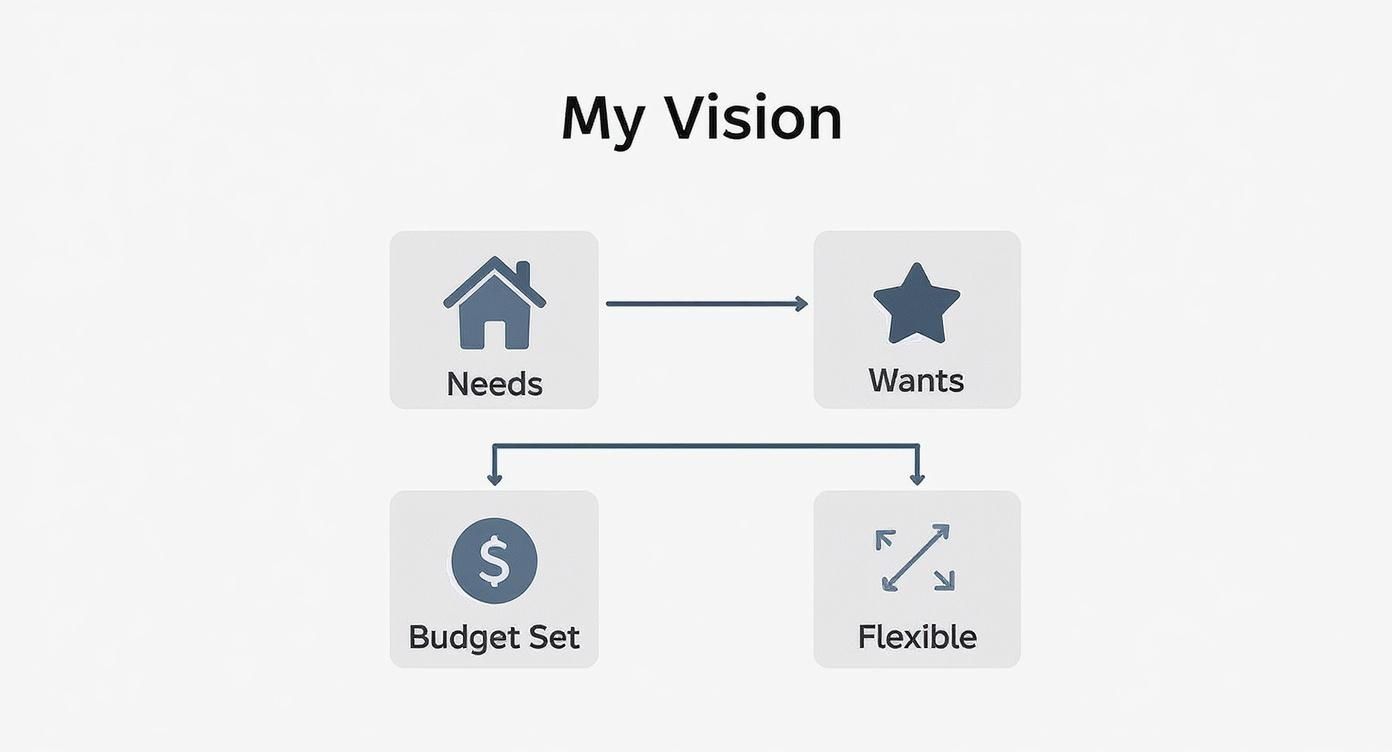
As the graphic shows, being crystal clear on your priorities is the foundation for finding a firm that’s truly the right fit.
To help you weigh your options, here’s a quick breakdown of the most common channels for finding an architect.
Architect Sourcing Channel Comparison
| Sourcing Method | Pros | Cons | Best For |
|---|---|---|---|
| AIA Database | Vetted professionals, high ethical standards, searchable by specialty. | Can be overwhelming; requires independent vetting of portfolios. | Clients who want a baseline of professional credibility and are willing to do the research. |
| Personal Referrals | First-hand accounts of the working relationship and process. | Limited to your network; a good fit for one person isn’t a guarantee for another. | Clients who value trust and want insight into an architect’s personality and process. |
| Design Publications | Curated list of top-tier talent, showcases high-quality work. | Often features high-end, award-winning firms that may have higher fees or less availability. | Clients with a strong aesthetic vision looking for a firm known for design excellence. |
| Builder Recommendations | Practical insight into who is easy to work with and produces quality plans. | Perspective is focused on buildability, which may not always align with your design goals. | Clients who prioritize a smooth construction process and a collaborative team dynamic. |
Each channel offers unique benefits, so using a combination of these methods will give you the most well-rounded list of candidates.
How to Critically Review an Architect’s Portfolio
An architect’s portfolio is so much more than a gallery of pretty pictures. It’s their resume in visual form—a testament to their problem-solving skills, design philosophy, and real-world experience. When you’re reviewing a portfolio, you need to look past the beautiful photography and analyze the substance.
First, look for relevance and consistency. If you’re planning a complex historic renovation, a firm that only showcases sleek, modern new builds probably isn’t the right fit, no matter how stunning their work is. You’re looking for direct experience with projects of a similar scale, budget, and complexity to your own. Have they dealt with the same zoning headaches or site constraints you’re anticipating?
Look for a consistent design language across a firm’s portfolio. While each project should be unique, a clear and recurring design philosophy indicates a mature, focused practice rather than one that simply follows trends.
Finally, ask yourself if their work resonates with you personally. Read their firm’s “About” page and project descriptions. Do they talk about light, materiality, and space in a way that gets you excited? The very best projects are born from a shared vision and a genuine connection between client and architect.
As you dive into your research, it helps to know where to look. For a curated list of directories and platforms, check out these best platforms to find architects. Taking the time for this focused research is what will help you narrow your list down to the final three to five firms you’ll invite for an interview.
Conducting Interviews That Reveal True Fit

A stunning portfolio gets an architect through the door, but genuine compatibility—the kind that survives the inevitable stresses of a complex project—is discovered in conversation. The interview is where the theoretical becomes real. This is your chance to understand their process, communication style, and whether they’re truly invested in bringing your vision to life.
Think of it less as a formal interview and more as a structured dialogue. You’re looking for a long-term partner, not just another vendor. The goal here is to move beyond the polished presentation and see how they think, listen, and solve problems on their feet.
Questions That Uncover Design Philosophy
Generic questions get you generic answers. To understand how an architect really works, you need to ask questions that force them to reveal their process and priorities. Forget “what is your style?” and start digging into the substance of their approach.
These questions are designed to get to the heart of their design philosophy:
- “Can you walk me through your design process, from the initial concept all the way to construction documents?” This simple question reveals how structured (or unstructured) they are and what you can expect at each phase.
- “How do you handle disagreements when your professional opinion differs from a client’s request?” This is a crucial test of their communication and negotiation skills. The answer tells you everything about their ego and collaborative spirit.
- “Describe a project that presented a major, unexpected challenge. How did you and your team solve it?” Their answer reveals their problem-solving capabilities under pressure, which is far more valuable than a perfect track record.
The answers you get will tell you if their approach is collaborative or dictatorial, flexible or rigid. You need a partner who can guide your vision with expertise, not one who imposes their own without regard for your input.
Assessing Team Dynamics and Project Management
For most projects, you aren’t just hiring an individual; you’re hiring an entire firm. It’s critical to understand who will be working on your project day-to-day and how that team is managed. A principal architect might be brilliant, but if your project gets handed off to a less experienced designer, the results could suffer.
Ask direct questions about the team and their workflow:
- Who will be my primary point of contact throughout the project?
- How often can I expect updates, and what format will they be in (e.g., weekly calls, email summaries)?
- How do you manage the project budget and timeline to prevent overruns?
A great architect is also a great project manager. They should have clear, established systems for communication, budget tracking, and decision-making that they can articulate with confidence. An inability to explain their process is a major red flag.
It’s also helpful to understand the talent pool you’re tapping into. There are around 116,000 practicing architects in the United States, and the industry is becoming more diverse. Women now make up 25% and people of color comprise 20% of architects. With nearly 40,000 candidates pursuing licensure, there’s a strong pipeline of talent, ensuring a wide range of perspectives. You can dig into the numbers in this report on the architectural profession.
The Art of Checking References
Checking references isn’t a formality; it’s one of the most powerful vetting tools you have. But simply asking “did you enjoy working with them?” is a waste of time. You need to ask specific, targeted questions to get honest, useful feedback.
When you speak with a reference, be respectful of their time and get straight to the point.
Here’s what you should be asking:
- Was the project completed on time and on budget? If not, what caused the issues, and how did the architect handle it?
- How would you describe the architect’s communication style? Were they responsive and clear, or did you have to chase them for answers?
- Did you feel like they truly listened to your needs and vision?
- Would you hire them again for another project without hesitation? The answer to this final question is often the most revealing.
This detailed feedback provides a real-world picture of what it’s actually like to work with the architect. It validates the promises made during the interview and gives you the confidence to make your final decision. By combining insightful questions with diligent reference checks, you can confidently choose an architect who is not just skilled on paper, but the right partner for your project.
Understanding Proposals and Contract Terms
Once the interviews are done, you’ll start seeing proposals from your top architects roll in. It’s easy to get fixated on the price tag, but these documents are so much more than that—they’re the legal and operational roadmap for your entire project. I’ve seen firsthand how a misinterpreted clause can lead to misunderstandings, scope creep, and painful, unexpected costs.
This is where you shift gears from judging design philosophies to scrutinizing business acumen. A well-organized firm almost always produces a clear, comprehensive proposal. If it’s vague, you can bet the process will be, too. It needs to spell out exactly what you’re getting… and just as importantly, what you’re not.
Decoding Common Fee Structures
You’ll quickly find that architect fees aren’t one-size-fits-all. The way a firm charges is tied to the project’s complexity, its scale, and their own business model. To really compare apples to apples, you have to understand the real-world implications of each approach.
You’ll almost certainly come across one of these three models:
- Percentage of Construction Cost: This is the old-school method. The architect’s fee is a set percentage—often 8-15% for a custom luxury home—of the final construction budget. The good? The fee scales with the project. The bad? You won’t know the final number until the builder bids are in, and it can create a subtle disincentive for the architect to design cost-saving solutions.
- Fixed Fee (Stipulated Sum): This is exactly what it sounds like: a single, fixed price for a clearly defined set of services. I personally like this for the budget predictability it gives my clients. The catch is that the scope of work has to be nailed down tight from the start. Any changes or additions will almost always come with extra charges.
- Hourly Rate (Time and Materials): Here, you’re paying for the actual hours clocked on your project, usually with a “not-to-exceed” cap to prevent things from getting out of hand. This is great for smaller projects or when the scope is still evolving. It offers flexibility but also carries the most risk of unpredictable costs if the project gets bogged down or grows more complex.
Each model has its place. The real question is which one aligns with your project’s nature and your own comfort level with financial risk.
Scrutinizing the Scope of Work
Pay the most attention to the “Scope of Work” section. This is where everything the architect will do for you should be spelled out in painstaking detail. Vague language here is a massive red flag.
A professional proposal will break the project down into clear phases, something like this:
- Schematic Design: The big-picture concept phase, with initial floor plans and basic exterior concepts.
- Design Development: This is where the design gets refined, materials get selected, and major systems (like HVAC) are defined.
- Construction Documents: Creating the highly detailed blueprints and specifications that builders will use to price and build your home.
- Bidding or Negotiation: Helping you find and select the right contractor.
- Construction Administration: The architect’s on-site presence during construction, acting as your advocate and making sure the build is sticking to the plan.
A contract that just says “architectural design services” is telling you nothing. You need a detailed breakdown of deliverables for every single phase. This isn’t just about being difficult; a clear scope protects both you and the architect by setting firm expectations and preventing “scope creep”—that slow, painful expansion of the project beyond its original goals and budget.
Identifying Critical Contract Clauses
Beyond the fees and scope, a few other clauses are non-negotiable for protecting your investment. You need to read the fine print, and honestly, having an attorney review the final contract is a small price to pay for peace of mind. It can save you from colossal headaches later.
Make sure you find specific language covering these points:
- Project Timeline and Deliverables: The contract should lay out an estimated timeline with key milestones for each design phase. Construction is unpredictable, but the design work shouldn’t be.
- Ownership of Documents: This is standard practice, but you should see it in writing. The architect typically retains the copyright to their drawings, but you are granted a license to use them for this one specific project.
- Change Orders: What happens when you want to move a wall after the plans are “final”? A good contract clearly defines the process for documenting changes and approving any costs that come with them.
- Termination Clause: This spells out how you or the architect can end the agreement if things go south. You need to understand your rights and what, if any, financial penalties are involved.
Choosing your architect is a decision that goes far beyond their portfolio. A clear, fair, and detailed contract is the true foundation of a successful partnership. It ensures everyone is on the same page, setting the stage for a transparent and collaborative process from the first sketch to the final walkthrough.
Making the Final Choice and Building a Strong Partnership

You’ve gone through the interviews, studied the proposals, and called the references. Now comes the moment of truth. It can be tempting to just look at the bottom line and pick the lowest bid, but that’s rarely the right move. Remember, you’re not just hiring a service; you’re choosing a partner for what will be a complex, personal, and financially significant journey.
The final decision should be a balanced view of everything you’ve learned. It’s a mix of their design vision, their technical chops, their communication style, and—just as important—your personal connection with them. The best projects I’ve seen are always built on a solid foundation of mutual trust and respect.
Weighing the Final Factors
To get beyond a simple gut feeling, try creating a simple scorecard to compare your top candidates. This helps you step back and look at the decision more objectively, weighing each firm against the same set of criteria.
Here’s what I’d put on that scorecard:
- Design Alignment: Do their past projects genuinely resonate with the aesthetic and level of quality you’re aiming for?
- Technical Experience: Have they proven they can handle a project of your scale, complexity, and specific location?
- Communication & Rapport: When you talk to them, do you feel heard? Is their communication clear, proactive, and respectful?
- Fee & Value: Look past the final number. Does their proposal offer real value? Is it comprehensive and completely transparent about what’s included?
Laying it out like this often makes the best choice obvious. A firm that costs a bit more but excels in communication and project management can end up saving you a fortune in stress and costly mistakes later on.
Kicking Off the Project on the Right Foot
Once you’ve made your selection and the ink is dry on the agreement, the real work begins. That first kickoff meeting is your chance to set the tone for the entire relationship. A strong start is everything.
Think of this meeting as less of a formality and more of a strategy session for your collaboration. The goal is to get on the same page about how you’ll work together, how decisions will be made, and how you’ll communicate. Effective project management for home renovation starts right here, with clear protocols from day one.
The most successful projects aren’t just the result of a great design, but of a great relationship. Establishing clear communication channels and mutual expectations from the outset is the single most important investment you can make in your project’s outcome.
It’s also worth remembering the bigger picture. The global architectural services market is valued at over USD 214 billion, but firms are feeling the squeeze from rising costs and trade tensions. These external pressures can impact their availability and pricing, making that solid, collaborative partnership even more crucial for navigating any bumps in the road.
Establishing Your Communication Rhythm
Nothing kills a project faster than ambiguity. You need to work with your architect to nail down a clear communication plan right away. This isn’t about micromanaging them; it’s about making sure everyone is on the same page and things run smoothly.
Get specific and agree on these points:
- Primary Contacts: Who is your go-to person at the firm? And who on your side should they reach out to?
- Meeting Schedule: Will you meet weekly or bi-weekly? Lock in a recurring day and time.
- Preferred Method: Is email best for keeping a paper trail, or do they use a specific project portal? When is a phone call the right move?
- Response Times: What’s a reasonable time to expect a reply for non-urgent questions? Agreeing on something like 24-48 business hours sets clear expectations.
Your role in this is just as important. You have to be ready to provide timely feedback and make decisions to keep the momentum going. By setting these ground rules early, you build a partnership based on clarity, which makes for a process that is as rewarding as the final home.
Answering Those Final Questions Before You Hire
Even after you’ve done your homework and narrowed down the list, a few key questions always seem to pop up right before you sign on the dotted line. That’s a good thing. Getting clear, confident answers to these final points is the last piece of the puzzle, ensuring you’ve truly found the right partner for your project.
Let’s walk through some of the most common questions I hear from clients at this critical stage.
What Should an Initial Consultation Actually Look Like?
Think of the first meeting as a mutual interview, and it should absolutely be complimentary. You’re there to see if the architect understands your vision, and they’re there to see if your project is a good fit for their firm. It’s not a free design session; it’s a discovery meeting.
I always tell clients to come prepared with their project brief and their top-priority questions. A good architect will spend most of the time listening, asking smart questions about your goals, lifestyle, and budget. They should be able to show you past projects that echo what you’re trying to achieve and clearly explain their design process, how they structure their fees, and what a typical timeline looks like. You should leave that meeting with a crystal-clear understanding of the next steps.
How Much Say Will I Really Have in the Design?
You should have a lot of input, especially in the beginning. The entire design process is—or at least, should be—a deep collaboration. Your job is to bring the vision and provide honest, timely feedback. The architect’s job is to take that vision and make it real, all while navigating the complexities of building codes, budget constraints, and the practicalities of construction.
That said, the dynamic can vary. Some architects thrive on having a very hands-on client, while others produce their best work when given more creative freedom. This is something you need to talk about frankly in your interviews.
The best client-architect relationships are true partnerships. The architect brings the professional expertise, and the client brings the personal vision. One simply can’t succeed without the other.
Make sure you understand exactly how and when your feedback will be gathered and folded into the design. A solid process for reviews and sign-offs is what prevents headaches down the road and guarantees your voice is heard at every key moment.
What Does the Architect Do Once Construction Starts?
When the hammers start swinging, the architect’s role pivots to what we call construction administration. This is an absolutely essential service where they become your eyes, ears, and advocate on the job site. They aren’t the builder, but they are your primary quality control.
Typically, this involves:
- Site Visits: Popping in regularly to check on progress and make sure what’s being built matches the plans exactly.
- Answering RFIs: Contractors always have questions. The architect is there to provide quick, clear answers (Requests for Information) to keep things moving.
- Reviewing Payments: They’ll review the contractor’s payment requests to confirm you’re only paying for work that’s been properly completed.
- Problem-Solving: Things always come up on a construction site. The architect is the lead problem-solver, working with the builder to find solutions without compromising the design.
The exact scope of these services needs to be spelled out clearly in your agreement.
It’s also smart to consider the current market. As shifting interest rates impact commercial development, many firms are now focusing on different sectors, like healthcare or education. It’s worth confirming that your architect’s recent portfolio is directly relevant to your project, whether it’s a private home or a commercial space. For a deeper dive, you can find more about these architectural market trends. This ensures their skills, and just as importantly, their network of contacts, are perfectly aligned with what you need.
Finding the perfect architect for your luxury project starts with the right connections. At Haute Design, we curate a network of the nation’s most distinguished architects, interior designers, and builders, connecting discerning clients with elite professionals. Elevate your vision by exploring our exclusive directory.