


Arranging your kitchen drawers is less about a quick tidy and more about building a functional, lasting system. The secret? A simple, four-part process: empty, clean, sort, and organize. This straightforward approach is the key to transforming a cluttered mess into a space where everything you need is exactly where you expect it to be.
Your Foundation for an Organized Kitchen
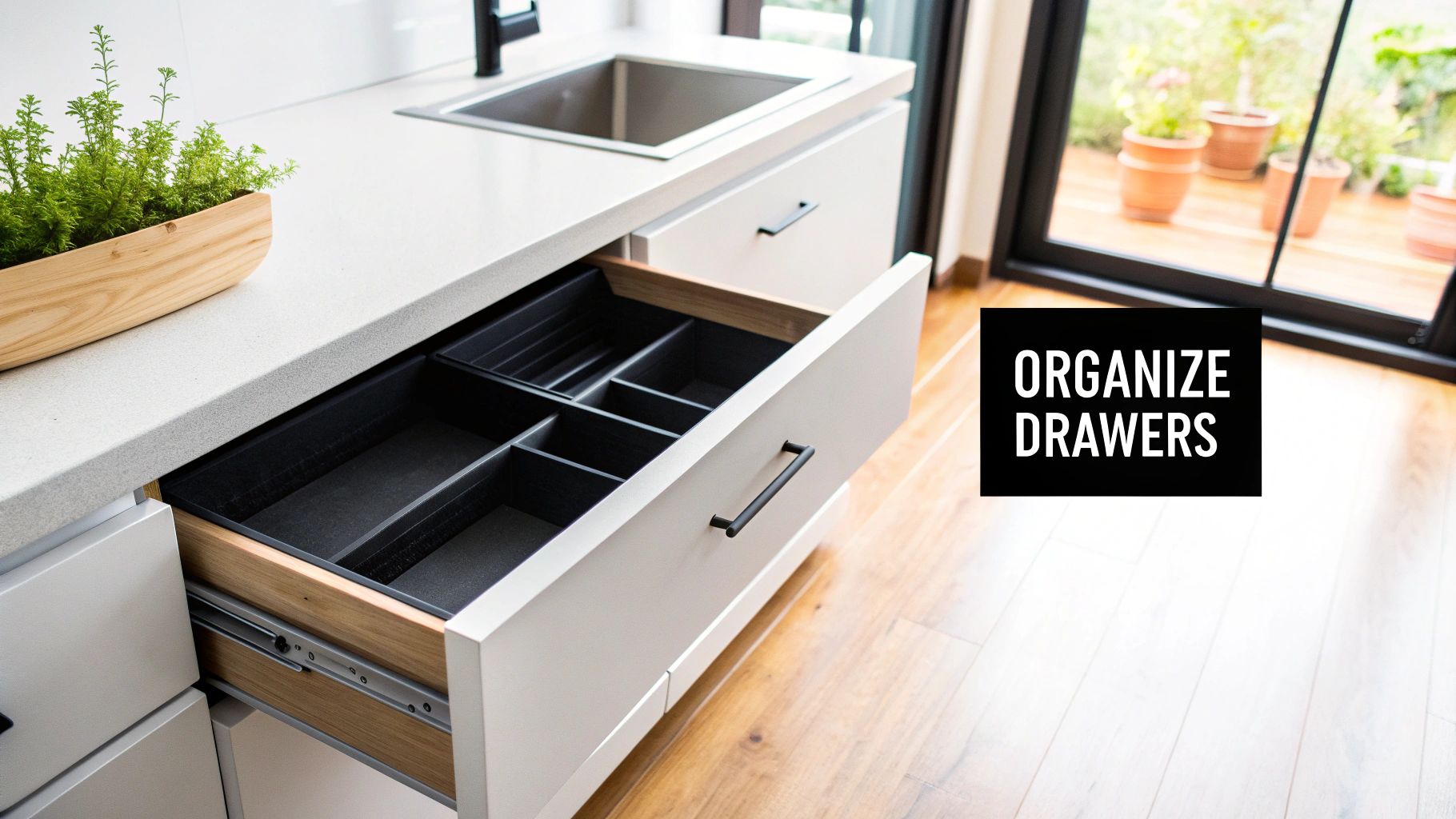
True kitchen organization starts the moment you decide to tackle your drawers head-on. By investing just a few hours now, you can create a setup that works for you, not against you. Think of it as the first real step toward a complete kitchen transformation, making every meal prep smoother and genuinely more enjoyable.
Why a System Matters
Without a clear plan, drawers inevitably slide back into a state of chaos. It’s just human nature. By approaching the task methodically, however, you create a logical home for every single item—from the forks you use every day to those holiday cookie cutters that only see the light of day once a year. This process is all about turning daily frustration into functional harmony.
This renewed focus on kitchen efficiency is part of a much larger trend. The kitchen drawers market, currently valued at USD 20 billion, is expected to skyrocket to USD 30 billion by 2033. This growth is all about homeowners wanting solutions that blend good looks with smart function. In fact, a recent survey found that 68% of homeowners who bought drawer organizers said they saw a noticeable improvement in their kitchen’s cleanliness.
A well-arranged drawer system is more than just a visual upgrade; it’s a practical investment in your daily workflow. It saves you time, reduces stress, and makes the entire cooking process more intuitive.
Ultimately, organizing your drawers is a core principle of effective kitchen design. A thoughtfully planned layout doesn’t just maximize storage—it dramatically improves the flow and usability of your entire space. For a deeper dive into creating functional layouts, this interior design space planning guide is an excellent resource.
Here’s a quick look at the core principles we’ll be putting into practice.
Kitchen Drawer Organization at a Glance
This table breaks down the fundamental concepts for creating a perfectly organized kitchen drawer system.
| Principle | Action | Primary Benefit |
|---|---|---|
| Zone Your Space | Group items by function and store them near where they are used. | Reduces time spent searching and improves cooking workflow. |
| Declutter Ruthlessly | Remove duplicates, broken items, and things you never use. | Frees up valuable space for what you actually need. |
| Divide and Conquer | Use dividers, trays, and inserts to create a specific spot for everything. | Prevents items from shifting and creating a jumbled mess. |
| Prioritize Access | Place frequently used items in the most accessible drawers. | Makes daily tasks quicker and more convenient. |
Following these simple rules will set you up for long-term success, ensuring your drawers stay just as organized as the day you first tackled them.
The Art of Decluttering and Categorizing
This is where the real work—and the real magic—happens. Before you can even think about organizing, you need a completely clean slate. The best way to get started is to pull everything out. I mean everything. Empty every last drawer onto your countertops or a big dining table.
It might look like a kitchen explosion, and that’s okay. Seeing it all laid out at once is the only way to get a true inventory of what you’re working with. It’s an eye-opening moment when you realize you own three identical whisks or a garlic press that’s been broken for a year.
The Four-Box Method
To keep the chaos manageable, I always use what I call the “four-box method.” Just grab four bins or simply designate four spots on your floor. Label them: Keep, Relocate, Donate, and Discard. This system takes the emotion and guesswork out of it, letting you sort with purpose.
- Keep: These are the items you use regularly and that actually belong in the kitchen. No exceptions.
- Relocate: This pile is for all the stuff that has mysteriously migrated into the kitchen—think stray pens, rubber bands, and kids’ art supplies. They have a home, and it isn’t here.
- Donate: For all those perfectly good items you just don’t use. That extra set of measuring cups or the apple corer you bought for one recipe? Someone else will love them.
- Discard: For anything that’s broken, expired, or just plain junk. Be ruthless.
An organized space is less about having more storage and more about having fewer, better-curated items. The goal is to ensure every object in your drawer earns its place.
Once you’re left with only your “keep” pile, it’s time to group things into logical categories. The trick here is to create categories that match how you actually cook, not some generic system you saw online. Forget the single, chaotic “utensil” drawer.
Instead, get specific. Your categories might look something like this:
- Daily Utensils: Forks, knives, and spoons for everyday meals. Simple.
- Cooking Tools: The spatulas, ladles, and tongs you grab when you’re standing at the stove.
- Baking Essentials: All your measuring cups, whisks, and cookie cutters for when you’re in a baking mood.
- Prep Tools: Think peelers, graters, and knives—everything you use for chopping and getting ingredients ready.
Thinking this way creates a natural map for your kitchen. You’re building an intuitive system so you can grab what you need without a second thought. This is the foundation that makes a kitchen feel effortlessly functional.
Mastering the Kitchen Zone Method
With your items sorted, it’s time to decide where everything should live. This is where professional organizers often turn to a game-changing strategy: the kitchen zone method. The whole idea is to create a more intuitive workflow by storing things right where you actually use them.
It sounds simple, but this approach can completely transform how you feel about your kitchen, cutting down on wasted steps and that frantic search for the right utensil. You’re not just filling drawers; you’re designing a space that works for you, not against you.
Defining Your Primary Zones
Most kitchens naturally break down into four main activity zones. Thinking about your space this way is the secret to figuring out the best arrangement for your drawers.
- The Prep Zone: This is your primary countertop workspace. The drawers and cabinets here should be dedicated to everything you need to get ingredients ready—think knives, cutting boards, mixing bowls, measuring cups, and graters.
- The Cooking Zone: Naturally, this area is right around your stove and oven. You’ll want spatulas, tongs, ladles, pots, pans, and oven mitts all within easy reach. No more walking across the kitchen to grab a whisk while something is sizzling on the stove.
- The Cleaning Zone: Centered around your sink and dishwasher. This is the spot for dish soap, sponges, scrub brushes, and dishwasher pods. Keeping these supplies close makes cleanup feel like less of a chore.
- The Consumables Zone: This includes your pantry and the surrounding cabinets or drawers. It’s home base for food storage—spices, oils, canned goods—but also for the items you use to eat, like everyday dishes and silverware.

This kind of strategic sorting is the bedrock of a truly organized kitchen. As the visual shows, every single item needs a clear destination—whether you keep it, move it to another room, donate it, or toss it. This creates the clutter-free foundation you need before you can really put the zone method to work.
The real goal of zoning is to make your kitchen feel like an extension of your own movements. When your tools are exactly where you expect them to be, the entire cooking process becomes smoother and so much more enjoyable.
Choosing the Right Drawer Organizers
Now that your drawers are empty and you’ve sorted everything into sensible groups, it’s time for my favorite part—finding the perfect organizers to keep it all that way. This is where the magic really happens. We’re moving beyond those old, flimsy plastic trays and into a world of smart solutions designed to fit your drawers and your life.
This isn’t just about making things look pretty; it’s about pure, unadulterated function. The right system turns a chaotic drawer into an efficient workspace. It’s no wonder the global kitchen storage market is projected to hit a staggering USD 183.03 billion. People are catching on. In fact, a recent survey found that 65% of homeowners saw a major improvement in their kitchen workflow after adding better organization.
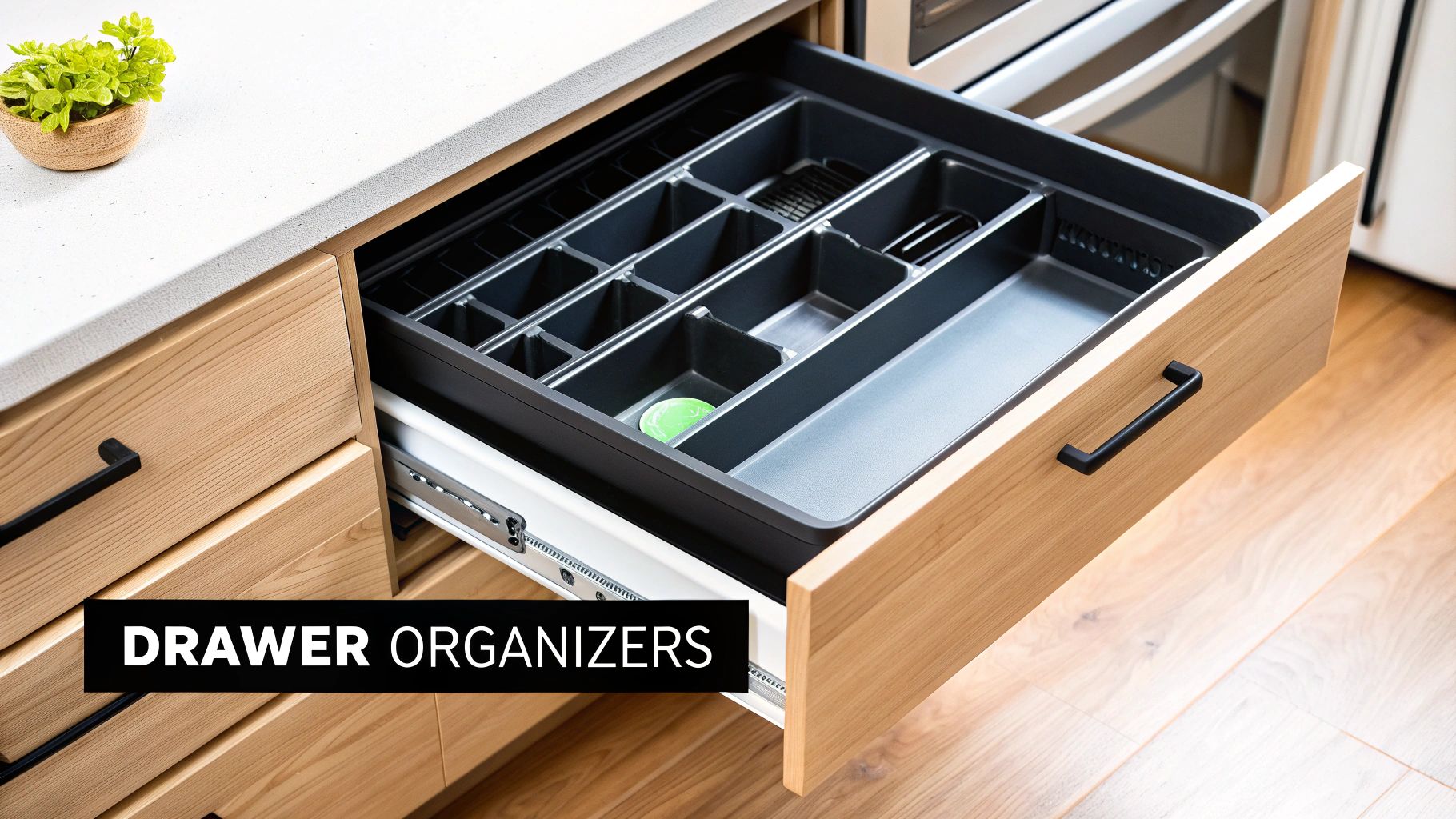
Materials and Fit Are Everything
The material you choose sets the tone for both the drawer’s look and its durability. There’s no single right answer here; it all comes down to what you’re storing and the aesthetic you’re after.
- Sustainable Bamboo: This is a classic for a reason. Bamboo offers a warm, custom-built feel and is incredibly sturdy, making it ideal for cutlery, utensils, and knife blocks. I often recommend adjustable bamboo dividers because they create a seamless, high-end look.
- Versatile Plastic: Don’t knock high-quality, clear plastic. It’s a workhorse—affordable, a breeze to clean, and perfect for containing potential spills from oils, spices, or leaky honey jars. The best ones are modular, letting you click together individual bins to create a custom layout.
- Sleek Metal: Usually found as wire mesh or solid inserts, metal organizers are built to last. They’re my go-to recommendation for deep drawers that need to handle the weight of heavy pots, pans, or small appliances without buckling.
To help you decide, here’s a quick rundown of the most common options and what they do best.
Comparing Drawer Organizer Solutions
This table gives a brief overview of different types of drawer organizers, helping you pinpoint the best fit for your kitchen’s unique needs.
| Organizer Type | Best For | Pros | Cons |
|---|---|---|---|
| Bamboo Dividers | Cutlery, utensils, “junk” drawers, creating custom sections. | Warm aesthetic, sturdy, often adjustable for a custom fit. | Can be bulky, not ideal for containing spills. |
| Plastic Trays | Silverware, spices, makeup, office supplies. | Affordable, easy to clean, many modular and interlocking options. | Cheaper versions can crack, can look less high-end. |
| Metal Bins | Heavy items like pots, pans, lids, or small appliances. | Extremely durable, modern look, good for deep drawers. | Can be more expensive, might scratch drawer interiors. |
| Custom Inserts | Knife blocks, spice racks, K-cup holders, specialized tools. | Perfectly tailored to specific items, maximizes efficiency. | Less versatile if your needs change, higher cost. |
Ultimately, the best solution is the one that fits your items and your drawer perfectly, preventing things from sliding around every time you open it.
The best organizer is one you don’t have to think about. It should make grabbing what you need an unconscious, effortless action, blending seamlessly into your daily routine.
Getting the Measurements Right
Here’s a rookie mistake I see all the time: buying organizers that are just a little too small. Those gaps around the edges become dead zones where clutter collects and small items get lost. Always, always measure your drawer’s interior dimensions—width, depth, and height—before you even start browsing.
This step is absolutely critical when you need to maximize small spaces for a stylish home, because in a tight kitchen, every single inch has a job to do.
Think beyond basic trays. A diagonal divider can be a game-changer for long utensils like rolling pins or whisks. A tiered spice rack insert lets you see every label at a glance. And for that infamous “junk drawer,” a tray with lots of small, varied compartments is the only way to tame the chaos of batteries, pens, and spare keys. A little planning here goes a long way.
Keeping Your Organized Drawers in Tiptop Shape
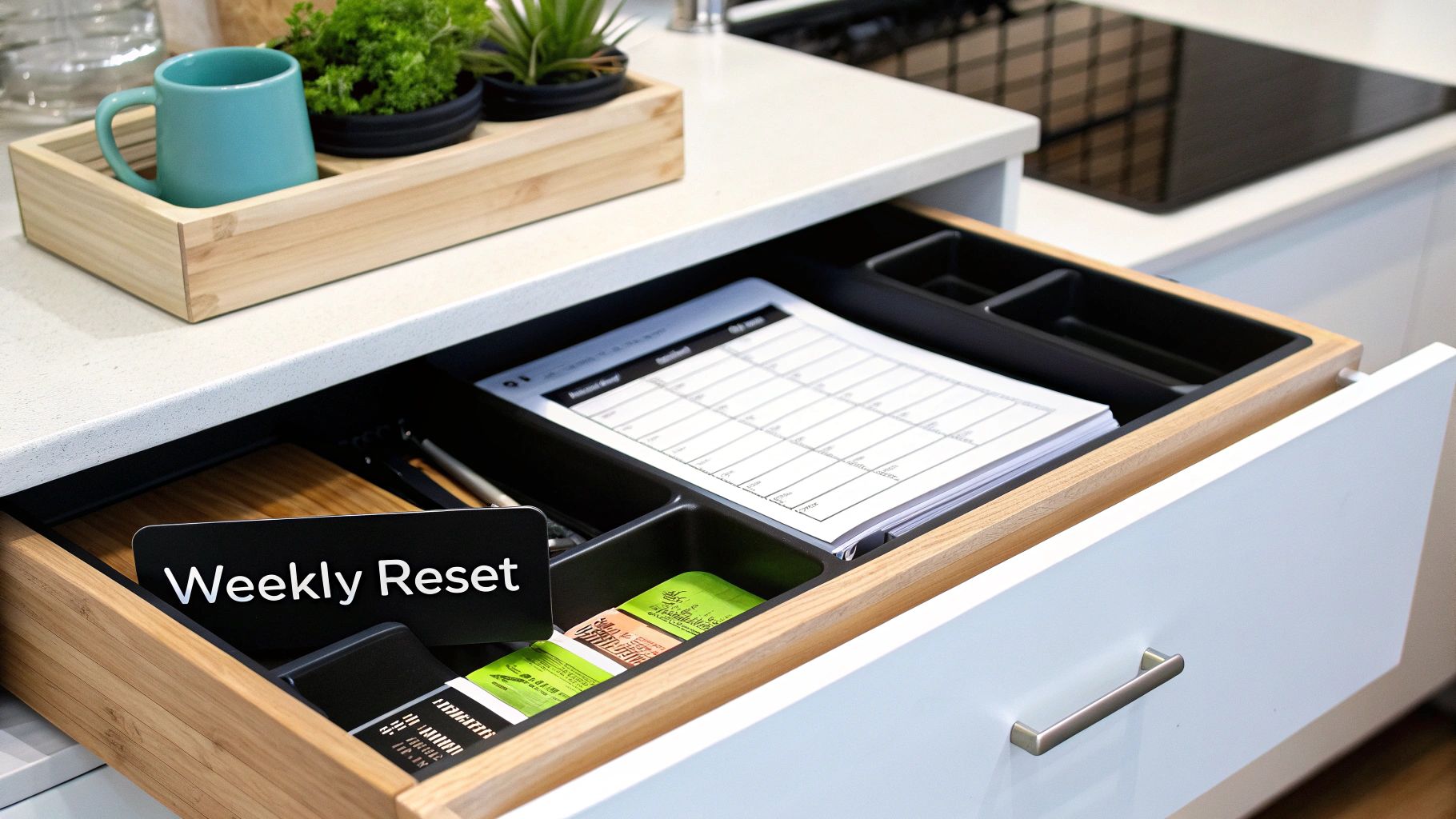
You’ve done the hard work, and your drawers look fantastic. But let’s be honest—keeping them that way is the real challenge. Great organization isn’t a one-and-done deal; it’s about building simple habits that stop the clutter from creeping back in.
The single most effective trick I’ve learned is the ‘one in, one out’ rule. When a new gadget comes into the kitchen, like a shiny new potato peeler, its predecessor has to go. This simple discipline is your best defense against the slow, steady accumulation that turns a perfect system into a jumbled mess.
And it’s worth the small effort. I’ve seen clients reclaim so much time—in fact, a well-organized kitchen can lead to a 30% reduction in time spent just looking for things. That’s a huge win for daily efficiency. If you’re interested in the broader trends, you can find more data on the kitchen storage organization market on coherentmarketinsights.com.
Making It a Lasting Habit
So, how do you make maintenance feel less like a chore? By integrating a couple of quick, painless routines into your week.
- The Five-Minute Tidy: Once a week—maybe while the coffee is brewing on Sunday morning—just do a quick scan. Put that stray measuring spoon back with the baking tools or return the scissors to their home. This little reset prevents minor disarray from snowballing.
- The Quarterly Check-In: Every few months, take a step back and ask yourself if the system is still working. Maybe you’ve gotten really into baking sourdough and need to rethink your prep drawer. A quick adjustment ensures your drawers continue to serve you, not the other way around.
The real goal here is to make tidiness a reflex, not a project. Just a few minutes of upkeep each week is all it takes to protect the calm and function you worked so hard to achieve.
Common Questions About Arranging Kitchen Drawers
Even with a solid plan, you’re bound to hit a few snags when organizing kitchen drawers. What do you do with that oddly shaped potato masher? How do you keep a deep drawer from turning into a black hole for pots and lids? Let’s walk through some of the most common challenges I see and how to solve them for good.
What About the Junk Drawer?
Ah, the infamous “junk drawer.” We all have one. Instead of letting it become a chaotic mess, I suggest rebranding it as the “utility drawer” or “home essentials drawer.” The key is to give everything a dedicated spot.
Small, adjustable dividers are your best friend here. Create tiny compartments for batteries, pens, rubber bands, spare keys, and scissors. Once every little thing has a home, it’s no longer junk—it’s just organized.
How Can I Make Deep Drawers More Functional?
Deep drawers feel like a great idea until they become a jumbled pit of chaos. The secret? Think vertically.
Instead of stacking, store items on their sides. You can use simple tension rods or even a sturdy file organizer to line up baking sheets, cutting boards, and pot lids. For bulky things like small appliances or nested food containers, use deep bins to keep them corralled. This makes everything visible and easy to grab.
How Do I Handle Unique or Bulky Utensils?
Let’s be honest, standard utensil trays just don’t work for everything. Whisks, rolling pins, and large ladles never seem to fit. The trick is to stop trying to force them into tiny slots and give them the right kind of space.
- Long Utensils: A diagonal divider is a brilliant solution for things like rolling pins or long barbecue tongs. It uses the full length of the drawer, a space that often goes to waste.
- Bulky Tools: I like to use a single, deep bin inside a larger drawer to group together mashers, ice cream scoops, and other awkwardly shaped tools.
- Knife Storage: Tossing sharp knives into a drawer is a recipe for disaster—both for your fingers and your blades. An in-drawer knife block is non-negotiable for safe, accessible storage.
The key is to stop fighting the shape of the item and instead find a storage solution that complements it. A little creativity can solve most organizational puzzles.
If you’ve tried everything and your drawers still feel wrong, the problem might be bigger than just organization. Sometimes, it’s the kitchen layout itself. For a more significant overhaul, getting advice from professional kitchen and bath designers can make a world of difference in how you use your space.
Ultimately, the best system is the one that feels intuitive to you. There’s no single right way to arrange kitchen drawers, so feel free to adapt these ideas to match your personal workflow and the tools you reach for every day.
At Haute Design, we connect you with premier designers who can transform your kitchen into a model of style and efficiency. Discover top-tier professionals who specialize in creating luxury spaces that are as functional as they are beautiful.