


Before you even think about searching for high-end residential architects, the first and most crucial step is to get crystal clear on what a luxury home actually means to you. This isn’t about blueprints or square footage just yet. It’s about articulating your lifestyle, your personal aesthetic, and the kind of atmosphere you want to live in every day. A sharp, well-defined vision is the bedrock of any successful architectural project.
Step 1: Crafting Your Vision for a Luxury Residence
Starting a custom home project is really an act of translation—it’s about turning your feelings, habits, and daily routines into a physical, livable structure. The best architect-client relationships don’t start at the first meeting. They begin when a client has already done the deep thinking needed to create a comprehensive project brief.
Think of this document as your project’s north star. It will guide every decision you make and ensure your conversations with potential architects are sharp, focused, and productive right from the get-go.
When you have this level of clarity, you sidestep common pitfalls like scope creep, you can set realistic budget expectations, and you naturally attract the kind of architectural firms that are a perfect fit for your goals.
It’s About Lifestyle, Not Just a Floor Plan
Your first move isn’t to start sketching rooms. It’s to analyze the way you actually live. A true luxury home is one that functions so seamlessly around your unique rhythm that you barely notice it. Instead of just thinking, “I want a big kitchen,” dig deeper into the actions that will happen there.
- Your Daily Routines: Are you the type who cherishes a quiet morning coffee while looking out at the garden? Or is your kitchen the chaotic, bustling hub of family breakfast every morning?
- How You Entertain: Do you host large, formal dinner parties, or are your get-togethers more about intimate, casual gatherings on a covered patio?
- Privacy vs. Connection: Do you need dedicated, separate zones for work, hobbies, and quiet relaxation? Or does an open-concept design that fosters family interaction feel more like you?
Answering these kinds of questions gives an architect a story to work with, not just a checklist of rooms. It’s what allows them to design spaces that genuinely enhance your life, not just contain it.
A home’s true luxury isn’t measured in square footage, but in how effortlessly it supports and elevates the owner’s way of life. It’s the difference between a house and a sanctuary.
Gathering Inspiration That Tells a Story
Once you have a solid handle on your lifestyle needs, it’s time to gather aesthetic inspiration. This is more than just pinning pretty pictures on Pinterest; it’s about pinpointing the specific elements that truly speak to you. Whether you create a digital mood board or a physical one, be disciplined about it.
For every single image you save, make a note about why you love it. Is it the quality of the natural light pouring into the room? The rich texture of the materials? The soaring sense of volume and space? Or maybe it’s the seamless flow between the indoors and the outdoors.
This simple practice helps you—and your future architect—get to the “why” behind your taste. To get even more specific, it can be incredibly helpful to explore an essential interior design style guide to learn the vocabulary of different aesthetics, from stark minimalism to ornate classicism.
This kind of critical self-reflection is what separates timeless design principles from fleeting trends. Timeless design is rooted in things like proportion, natural light, and authentic materials. Trends, on the other hand, might just be about a certain color or finish that will feel dated in five years. Any top-tier residential architect will be thrilled to work with a client who can articulate these deeper preferences. It’s the groundwork that ensures your home will be a source of joy for decades to come, reflecting a vision that is authentically and completely yours.
Finding and Vetting Elite Architectural Firms
Once you have a clear picture of what you want, it’s time to find the right architect to bring that vision to life. This isn’t about a quick Google search. The kind of talent you’re looking for—the true visionaries in high-end residential architecture—operates in a different sphere.
The goal here isn’t to drown in options. Instead, you’ll want to build a focused shortlist of just three to five firms. This means looking beyond the glossy photos and really digging into how they think, solve problems, and work with clients. You’re not just hiring someone to draw plans; you’re looking for a creative partner for a deeply personal journey.
Where to Discover Top Architectural Talent
The most celebrated architects rarely rely on traditional advertising. Their reputations are built within respected, peer-reviewed circles. If you know where to look, you can tap directly into this pre-vetted pool of exceptional talent.
Start with publications that are known for their architectural taste. Magazines like Architectural Digest, Dwell, and Luxe Interiors + Design are fantastic starting points. They do more than just show off beautiful homes; they often detail the collaboration between homeowner and architect, giving you a real feel for a firm’s process.
Beyond magazines, professional awards and organizations are a goldmine.
- The American Institute of Architects (AIA): Check out the design awards from both your local and the national AIA chapters. An architect who consistently wins these awards has earned the respect of their peers for delivering exceptional quality.
- Industry Accolades: Keep an eye out for firms recognized in publications like Forbes, which sometimes features architects whose work is a cut above. Being named among the nation’s top residential architects is a serious mark of distinction.
- High-End Builders and Developers: These are the people in the trenches. A respected luxury home builder in your area will have firsthand experience with the best architects and can give you recommendations based on both design skill and on-site execution.
Think of this research phase as gathering intelligence. You’re identifying firms whose work not only aligns with your aesthetic but also consistently meets a high standard of excellence.
This initial soul-searching—thinking through your lifestyle, style, and budget—is what sets the foundation for a successful search.
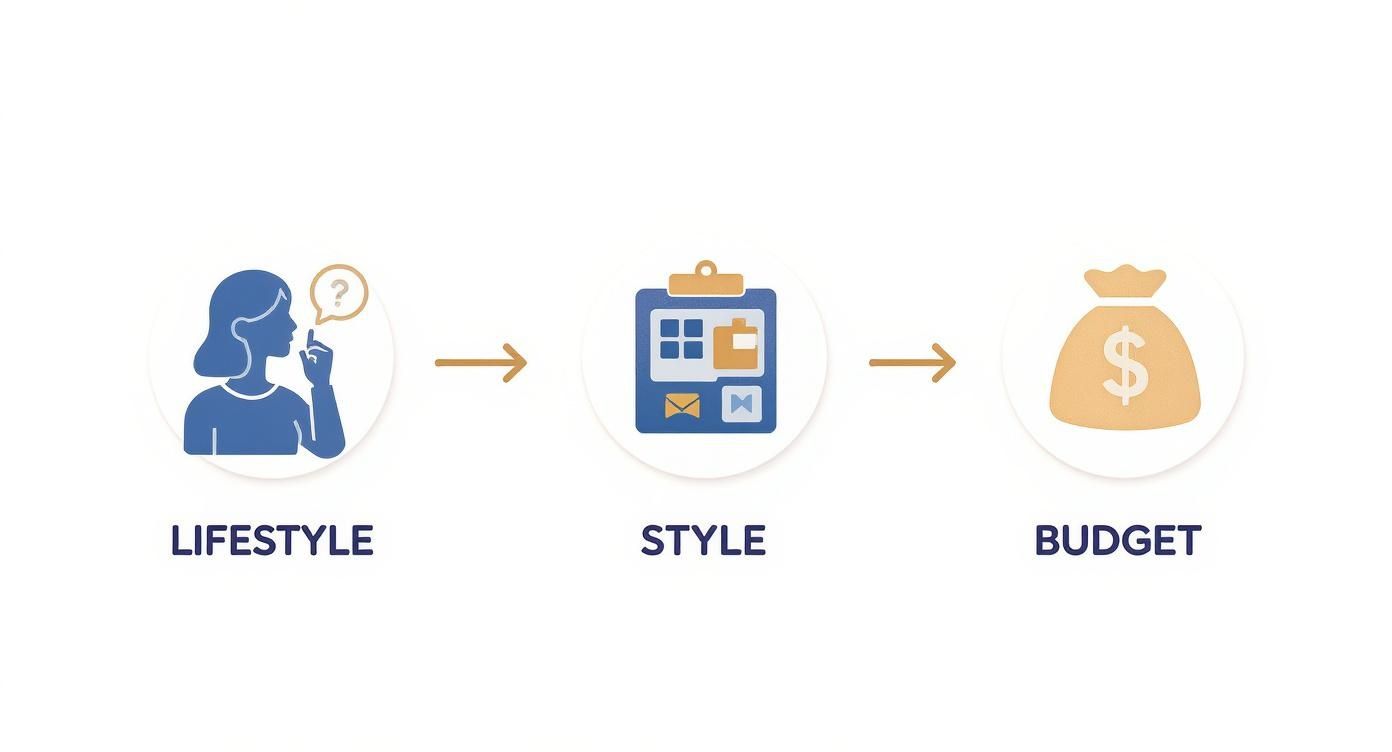
Coming to the table with this clarity ensures you’re ready to have meaningful conversations with potential architects.
Building Your Focused Shortlist
With a list of promising names in hand, the real vetting begins. This is where you shift from admiring their finished projects to critically assessing if they’re the right fit for your project.
First, take a deep dive into each firm’s online portfolio. Look for more than just pretty pictures; search for a consistent design language that speaks to you. Do they have a clear strength in the style you’re after, whether it’s crisp modernism, sensitive historic restoration, or that seamless California indoor-outdoor flow?
A great portfolio does more than display success; it reveals a consistent philosophy. Look for the thread that connects their projects—that’s where you’ll find the firm’s true design identity.
Next, pay close attention to the scale and complexity of their work. If you’re planning a sprawling estate on a tricky hillside lot, you need an architect who’s been there before. Their portfolio should prove they can handle not just the aesthetics but also the tough engineering, zoning, and site challenges that come with it.
Finally, consider the firm’s size and culture. A smaller, boutique firm might give you direct, daily access to the principal architect, which can be an incredibly personal experience. A larger firm, on the other hand, might offer a deep bench of specialists. Neither is better, but one will likely suit your working style and personality more.
As you narrow down your choices, exploring the best platforms to find architects can also provide curated lists of top-tier talent. By the time you’re done, you should have a tight list of firms that don’t just look good online but feel like a genuine match for your vision.
How To Read An Architect’s Portfolio Like A Pro
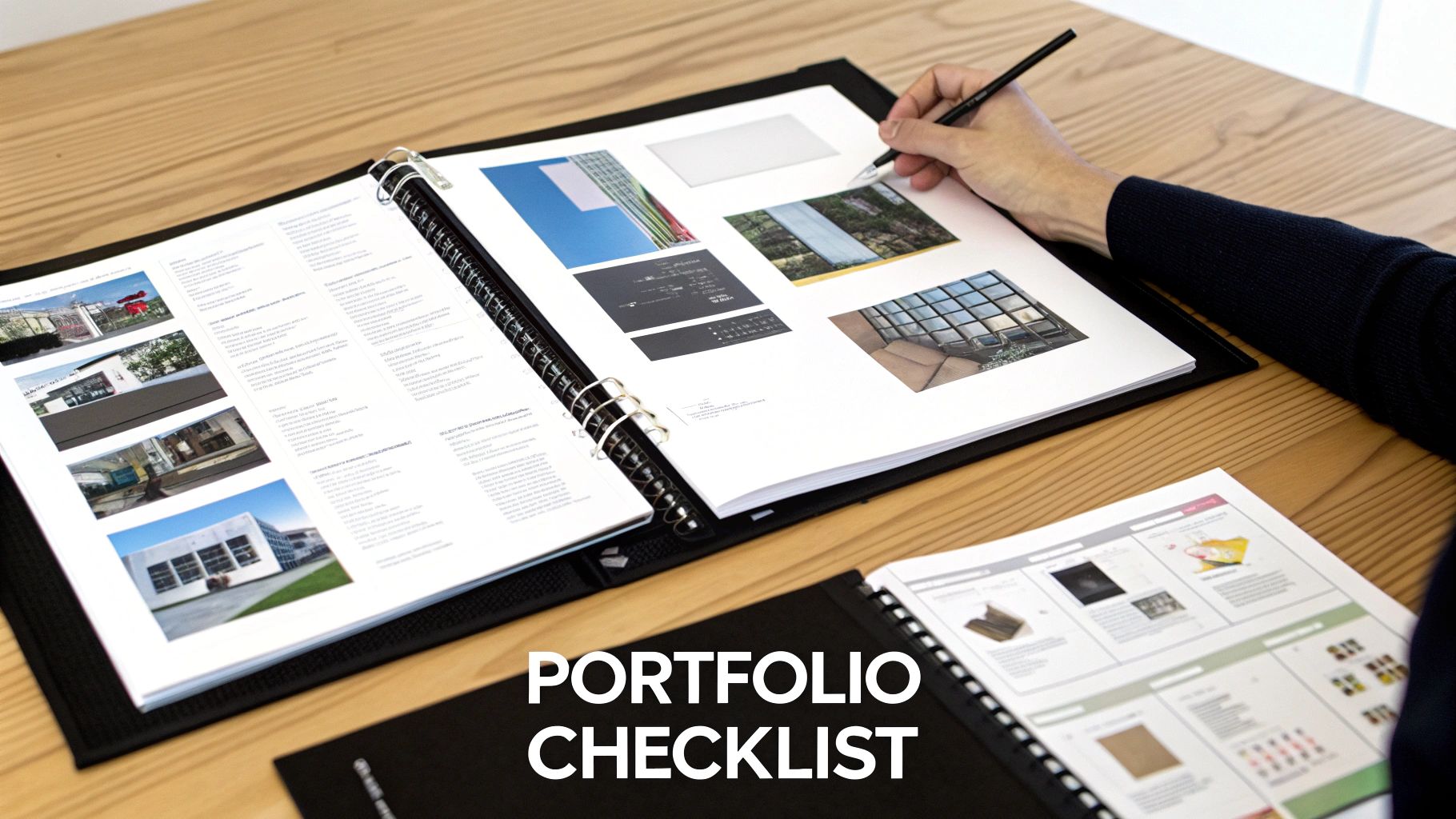
An architect’s portfolio is much more than a collection of pretty pictures. It’s their visual resume, telling you a story about their design philosophy, problem-solving prowess, and what they truly value in a project. To find the right partner, you have to learn to look past the surface-level beauty.
This is your chance to see what an expert sees—how a firm resolves complex site challenges, their command of materials, and their knack for crafting spaces that feel both impressive and deeply personal. A critical eye will help you tell the difference between a firm that produces stunning but impersonal houses and one that creates truly one-of-a-kind, site-specific homes.
Looking Beyond The Glossy Photos
Every project in a portfolio is designed to impress, so your job is to uncover the subtle evidence of true mastery. Instead of just admiring the finished shot, try to reverse-engineer the architect’s thinking.
Start with the site. A top-tier residential architect doesn’t just plop a building on a lot; they weave it into the landscape. How does the home respond to its surroundings? Look for clever solutions for managing a steep slope, framing a breathtaking view, or shielding interiors from a harsh afternoon sun.
Next, focus on their use of natural light, which is arguably an architect’s most powerful tool.
- Light as a Design Element: Do they use clerestory windows, light wells, or skylights to pull daylight deep into the home’s core?
- Controlling the Mood: Notice how they use overhangs or screens to create soft, diffused light versus direct, dramatic sunbeams that move through a space.
- Light Across the Day: The best portfolios often show a project at different times, demonstrating how light transforms a room from morning to evening.
This kind of analysis shows whether the architect is just designing rooms or truly sculpting experiences. A great portfolio should give you a gut feeling of what it’s like to live in their spaces.
Materiality and Meticulous Detail
The signature of an exceptional architect often lies in the details—specifically, the points where different materials meet. This is where you can spot true craftsmanship or, conversely, a lack of thoughtful execution. When you’re looking at project photos, zoom in.
How does a wood floor transition to a stone entryway? Is it a seamless, intentional detail, or does it feel like an afterthought? Scrutinize how window frames are set, how cabinetry integrates with the walls, and how exterior cladding materials join at the corners. These small moments create an overall feeling of cohesive, deliberate quality.
Great architecture is often found in the quiet moments of connection—the precise alignment of a tile line with a window mullion, or the way a handrail feels under your palm. A portfolio should hint at this tactile quality.
This level of detail signals a firm’s commitment to craft and their ability to communicate complex instructions to the builders. It’s a strong indicator that what you see in the drawings is what will actually be built. To see how leading firms present this, it’s worth exploring some exemplary architecture portfolio website examples for reference.
Talking To Past Clients
A portfolio shows you the final result, but references tell you about the journey to get there. Speaking with an architect’s former clients is an absolutely essential step. It gives you invaluable insight into their process, communication style, and professionalism when things get tough.
Don’t settle for a hand-picked list of two or three glowing recommendations. Ask for references from a recent project, one completed several years ago (to check on durability), and if you can, a project that faced significant hurdles. This will give you a much more rounded view.
When you connect with them, you need to dig deeper than “Were you happy?” You’re trying to understand the day-to-day working relationship.
To get the real story, you need to ask targeted questions that go beyond a simple thumbs-up or thumbs-down.
Key Questions for Architect References
Go beyond ‘Were you happy?’ with these targeted questions for an architect’s previous clients.
| Question Category | Specific Question to Ask |
|---|---|
| Budget & Financials | How accurate was the initial budget estimate compared to the final cost? How were change orders and unexpected expenses handled? |
| Communication | How responsive was the architect and their team? Did you feel your vision and feedback were genuinely heard and respected? |
| Problem-Solving | Can you share an example of an unexpected issue that came up and how the architect navigated it? Did they bring you solutions or just problems? |
| The Final Product | Has the home held up as you expected? Are there any design details that you particularly love or wish were different now that you’ve lived in the space? |
| Overall Experience | Knowing what you know now, would you hire them again for another project? What is the one piece of advice you would give someone about to work with this firm? |
Hearing directly from past clients provides the context that glossy photos simply can’t. Finding a firm with a proven record of both beautiful design and professional, transparent project management is what turns a potentially stressful process into a truly rewarding partnership.
The Architect Interview and What to Ask
You’ve studied the portfolios. You’ve spoken with past clients. Now comes the most critical part of your due diligence: the face-to-face interview. This isn’t a formal interrogation; think of it as a structured conversation to see if there’s genuine chemistry. You’re about to embark on a long-term, deeply personal journey, and finding the right personality and communication style is every bit as important as design talent.
This meeting is your chance to get inside the architect’s head. How do they solve problems? How do they navigate disagreements? Are they listening to you, or are they just waiting for their turn to talk? The answers will tell you if this is a partnership that can truly flourish over the months and years to come.https://www.youtube.com/embed/vSzB6sIS0EI
Setting the Stage for a Productive Conversation
Walk into this meeting prepared. You’ve already done your homework on their work, so don’t waste precious time on basic questions that a quick look at their website could answer.
Instead, zero in on specifics. Try something like, “In your Hillside Residence project, I was really struck by how you integrated the home into that steep grade. Could you walk me through the challenges you faced and how you solved them?”
This kind of informed question immediately shows respect for their time and signals that you’re a serious, engaged client. It elevates the discussion from a generic sales pitch to a real conversation about design, process, and creative problem-solving. A great interview should feel more like a collaborative brainstorming session than a one-sided presentation.
Questions About Design Philosophy and Process
Your goal here is to understand how they create, not just what they’ve created. Their answers will give you a window into their core design values and their approach to collaboration. A truly elite high end residential architect will have a clear, well-articulated philosophy that shapes every project they touch.
- “How would you describe your firm’s design philosophy?” Listen for more than just buzzwords like “modern” or “sustainable.” A thoughtful response might touch on a commitment to regional materials, a deep focus on the occupant’s sensory experience, or a passion for how natural light moves through a space.
- “Walk me through your typical design process, from the first sketch to final construction documents.” This question pulls back the curtain on their internal systems. Is there a clear, phased approach? How and when do they bring in key consultants like structural engineers or landscape architects?
- “How do you involve your clients in the creative process? At what key stages is our input most critical?” This is non-negotiable. You are looking for a partner, not a dictator. Their answer should demonstrate a genuine respect for your vision and a structured method for gathering and incorporating your feedback throughout the project.
A truly collaborative architect doesn’t just present finished ideas; they invite you into their thought process. They show you the ‘why’ behind their design decisions, making you a co-author of your home’s story.
Digging into Project Management and Logistics
Brilliant design is only half the battle. Flawless execution is the other half, and that hinges on disciplined project management. This is where you shift gears to assess their business acumen and their ability to be a responsible steward of your time and money.
Vague answers about logistics are a major red flag. An experienced firm will have established, battle-tested systems for managing the immense complexity of a high-end residential project. Don’t be afraid to ask direct, pointed questions about their operational competence.
Budgeting and Scheduling
How an architect talks about money is incredibly revealing. You’re looking for transparency, realism, and a clear methodology.
- “How do you establish a project budget, and what is your track record for sticking to it?” A professional will talk about detailed cost estimating at various design phases, the importance of a contingency fund, and having an open dialogue about financial trade-offs.
- “How do you manage the project schedule and keep clients in the loop?” Ask what software or tools they use. Do they provide regular written updates? How do they handle the inevitable unforeseen delays that pop up on any complex build?
- “What are your relationships like with the best local builders? How do you prefer to collaborate with them?” An architect with strong, respectful connections to top-tier contractors is an invaluable asset. This can lead to more accurate pricing, superior craftsmanship, and much smoother problem-solving on site.
It’s also smart to ask about their experience navigating local zoning boards and the permitting process. An architect who deeply understands the nuances of your specific municipality can save you months of headaches and delays. If they seem dismissive or overly casual about your concerns—whether about the budget, timeline, or your role in the process—consider it a serious warning sign. You aren’t just hiring a designer; you’re hiring a professional partner to guide one of the most significant investments of your life.
Navigating Architectural Fees and Contracts
This is where the dream meets the details. Moving past the exciting design conversations, it’s time to get into the nuts and bolts of the financial and legal side of your project. A well-crafted agreement is the bedrock of a successful partnership, protecting both you and your architect from future headaches and financial surprises.
Think of it less as a hurdle and more as a roadmap. Getting the numbers and responsibilities crystal clear from the outset is a non-negotiable step. It ensures the creative process can thrive on a foundation of trust and transparency, without being derailed by ambiguity later on.

Decoding Common Architectural Fee Structures
When you’re commissioning a custom home, you’ll quickly learn that architectural fees aren’t one-size-fits-all. The fee structure is almost always tailored to the project’s unique complexity and scope. Most high-end architects work with one of three primary models.
- Percentage of Construction Cost: This is the most common approach for luxury residential work. The architect’s fee is a set percentage of the final construction cost, typically falling between 8% and 15%. The great thing about this model is its flexibility—the fee naturally adjusts if you decide to add a guest house or scale back on interior finishes. The potential downside, however, is a perceived conflict of interest, since a more expensive project means a higher fee.
- Fixed Fee (Stipulated Sum): Just as it sounds, this is a single, agreed-upon price for all the architectural services laid out in the contract. Clients often love the budget predictability this offers. A fixed fee works best when the project is well-defined from the very beginning and isn’t likely to undergo major changes. If unforeseen complexities arise and significant redesign is needed, the architect will likely need to renegotiate the fee for that extra work.
- Hourly Rate (Time and Materials): You’ll most often see this model used for initial consultations, feasibility studies, or smaller, more contained projects. It’s also common for services where the scope is hard to predict. While it’s completely transparent, forecasting the final cost can be a real challenge, which is why it’s not the go-to for designing an entire custom home from scratch.
Understanding the Architect’s Contract
Don’t be intimidated by the paperwork. Most reputable firms use standard agreements, often based on documents from The American Institute of Architects (AIA). These contracts are the industry benchmark, having been refined over decades to be comprehensive and fair to all parties.
While you should always have your own attorney review any contract, it pays to understand a few of the most critical clauses yourself.
The contract isn’t just a legal formality; it’s a communication tool. It forces a detailed conversation about expectations upfront, preventing costly misunderstandings down the road.
Make sure you pay close attention to these key sections:
- Scope of Services: This is the heart of the agreement. It needs to spell out, in meticulous detail, exactly what the architect will deliver. Does it include just the initial designs, or does it cover construction documents, helping you select a builder, and overseeing the construction process? Vague language is a red flag. For instance, if it mentions “site visits,” clarify how many. Is it a weekly check-in or only at major construction milestones?
- Payment Schedule: The contract should clearly link payments to progress. A typical structure involves an initial retainer, with subsequent payments due upon the completion of key phases like schematic design, design development, and construction documents. This ensures you’re paying for work as it’s being completed.
- Ownership of Documents: This is a standard but important clause. The architect retains the copyright and ownership of their drawings and plans. As the client, you are granted a license to use those plans to build this one specific project on this one specific site. It’s what prevents your unique home design from being replicated elsewhere without the architect’s permission and compensation.
- Reimbursable Expenses: These are out-of-pocket costs that aren’t covered by the main fee. Think of things like printing large-format plans, paying for structural engineering consultants, or travel expenses. Make sure you understand what falls into this category so you aren’t caught off guard by extra charges on your invoices.
Taking the time to really digest these components transforms a dense legal document into a practical blueprint for a successful project. It ensures everyone is on the same page, with a shared understanding of every financial and operational detail.
Answering Your Key Questions About Working With a Luxury Architect
Embarking on a custom home journey naturally brings up a lot of questions. Getting clear on the timeline, who does what, and how you’ll be involved is crucial for a smooth and successful project. Let’s tackle some of the most common questions clients have when they decide to partner with a high-end residential architect.
Think of it this way: the more you understand upfront, the more confident you’ll be in your decisions down the road. Clarity at the start is the best way to prevent surprises and ensure the entire process, from first sketch to final walkthrough, is a positive one.
What’s a Realistic Timeline for a Custom Home?
This is almost always the first question, and the honest answer is: it’s a marathon, not a sprint. The timeline for a luxury custom home depends heavily on the project’s scale, design complexity, and local permitting—which can vary wildly from one town to the next.
We can generally break the journey into two distinct phases:
- The Design Phase: This is where the magic happens. From initial concepts and schematic designs to the highly detailed construction documents needed for permits, this stage alone often takes between 6 to 18 months.
- The Construction Phase: Once you break ground, the actual build can last anywhere from another 18 to 36 months. For very large estates or homes with complicated site work, this can easily stretch longer.
A seasoned architect will lay out a detailed project schedule for you early on, so you’ll know what to expect and when.
Architect vs. Designer vs. Design-Build: What’s the Difference?
You’ll hear these terms a lot, but they aren’t interchangeable. For a luxury home where artistry, engineering, and safety are paramount, knowing who does what is non-negotiable.
- A licensed architect has gone through years of formal education, a demanding internship, and a series of rigorous board exams. They are legally qualified to design every aspect of a building, from its structural integrity to its compliance with safety codes. Critically, they act as your primary, legally-bound advocate.
- A residential designer, while often talented in aesthetics and space planning, usually doesn’t have the same legal or educational credentials. They typically can’t stamp and approve structural plans, a vital function in custom construction.
- A design-build firm bundles the design and construction services into one contract. This can sometimes streamline communication, but it can also blur the lines of accountability. With this model, you may lose the independent oversight an architect provides, whose sole job is to represent your interests and ensure the builder executes the design flawlessly.
“A great architect serves as your independent advocate throughout the entire process. Their primary allegiance is to you and the integrity of the design, ensuring the final product matches the original vision without compromise.”
What Will My Role and Involvement Look Like?
How hands-on do you need to be? This is a great conversation to have with any architect you’re considering. For a home to be truly yours, your collaboration isn’t just helpful—it’s essential. You’re the expert on your life; the architect’s job is to translate that into a home that lives and breathes with you.
You can expect to be most involved at the very beginning, during the vision-setting and schematic design phase. This is when your input on lifestyle, flow, and personal taste is most critical.
As the project shifts into more technical stages like construction drawings, your involvement will become more focused. A good architect won’t overwhelm you. Instead, they’ll curate choices and present you with clear options at key decision points.
And what about during the build itself? Your architect doesn’t manage the day-to-day construction—that’s the general contractor’s job. Instead, your architect performs what’s known as “Construction Administration.” This means they make regular site visits to verify the work aligns with the plans, review payment requests from the contractor, and help troubleshoot any design issues that pop up, acting as your expert eyes and ears on the ground.
Finding an architect who not only understands your vision but can also answer your questions with transparency is the cornerstone of a successful project. At Haute Design, we connect discerning clients with the nation’s most distinguished and carefully vetted architectural professionals.
Explore our network to find the perfect partner to bring your vision to life at https://hauteliving.com/designnetwork.