


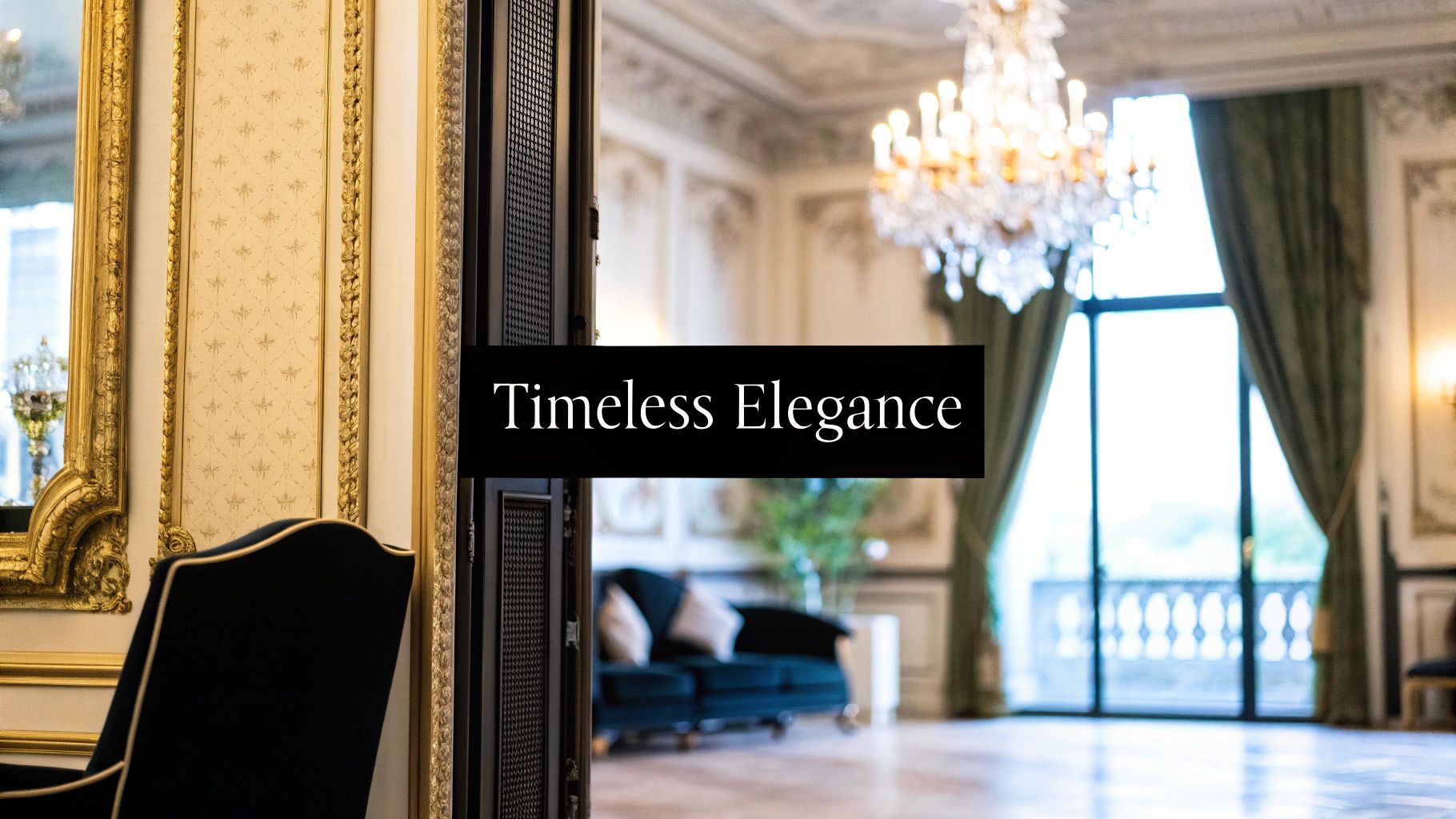
French style is more than just a look—it’s a philosophy. It’s about creating a home that feels both elegant and effortlessly lived-in, where historical weight and everyday comfort coexist beautifully. The goal isn’t just to decorate a space, but to curate a home with soul, where every object feels like it has a story.
The Enduring Allure Of French Design
There’s a certain magic to French interiors, a world where elegance feels second nature and history is woven into the very fabric of a room. This guide is your key to unlocking that essence. We’ll move past the fleeting trends to explore a truly timeless aesthetic, showing you just how this style masterfully blends opulence with genuine, approachable comfort.
What’s so captivating about French design is its incredible range. It isn’t one single, rigid style; it’s a family of aesthetics, each with a unique personality. Forget the idea of strict rules. This is about discovering the particular expression of French living that truly speaks to you.
This very versatility is why it holds such a powerful and lasting appeal. The French interior design market—which covers everything from the gilded grandeur of a Louis XV salon to the understated cool of a modern Parisian flat—hit an impressive USD 8,817.4 million in revenue. Experts project it will expand to USD 10,719.5 million by 2030, a clear sign of the world’s deep and ongoing appreciation for these design principles. For a closer look, you can explore more data on the French interior design market’s growth and trends.
Your Roadmap To French Elegance
To really get this right, you first need to understand the core variations. Think of this guide as your roadmap, helping you pinpoint the specific elements that will bring that coveted French look into your own projects. We’ll dive into:
- Parisian Chic: This is the city-dweller’s version of French style. It’s structured and refined, but with an effortlessly cool edge, instantly recognizable by its classic herringbone floors and intricate moldings.
- French Country: Imagine a well-loved linen shirt. This style is natural, warm, and deeply connected to the pastoral landscape, defined by rustic wood beams and the earthy tones of terracotta.
- French Provincial: Here, we see a bridge between the city and the countryside. It’s a more polished take on country living, balancing rustic charm with the graceful, sophisticated lines of its furniture.
Once you grasp these nuances, you can start building a space that feels authentically French yet completely, uniquely your own.
Exploring The Spectrum Of French Interior Styles
When we talk about “French style” in home decor, it’s a mistake to think of it as a single, uniform look. That’s like saying all music is the same. The reality is far more interesting—it’s a rich spectrum of distinct design languages, each with its own history, personality, and soul.
From the effortless cool of a Parisian apartment to the sun-drenched warmth of a Provençal farmhouse, each substyle tells a completely different story. Getting to know these nuances is the key to creating a space that feels truly authentic, not just like a copy. It’s what separates imitation from intentional, masterful design.
This concept map helps visualize the core pillars that hold up the entire French aesthetic: a constant, delicate balance of elegance, history, and comfort.
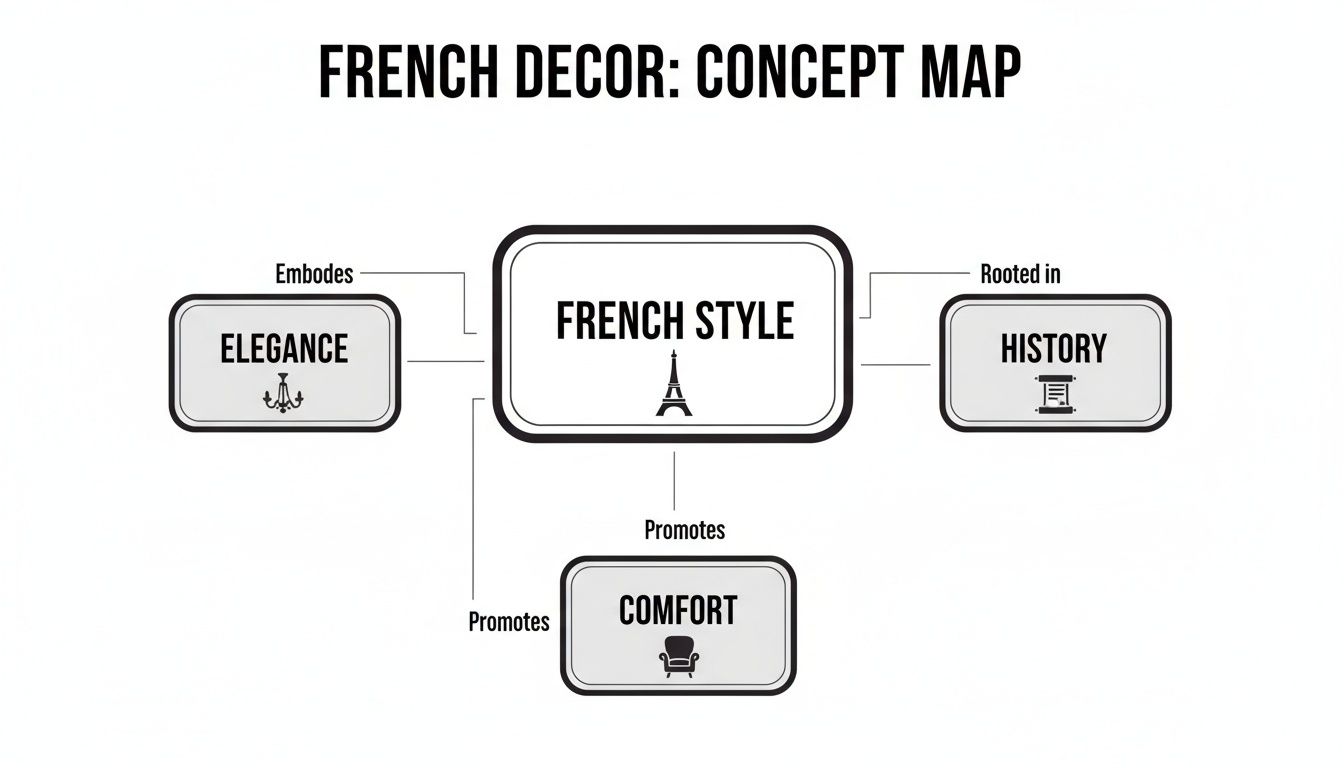
No matter which specific style you lean into, these three elements are always in conversation, working together to create that timeless, lived-in appeal the French are so famous for.
H3: Parisian Chic: An Urban Elegy
Think of a perfectly tailored suit—structured and impossibly refined, yet worn with an air of complete nonchalance. That’s Parisian Chic in a nutshell. It’s an urban style, born from the grand Haussmannian apartments that line the boulevards of Paris, and it all starts with strong architectural bones.
You’ll immediately recognize it by the high ceilings, intricate crown moldings, and classic herringbone parquet floors. These features create a magnificent historical canvas. Against this grand backdrop, the decor itself is a masterclass in curated restraint.
The Parisian apartment aesthetic is not about filling a space; it’s about celebrating it. It champions the idea of ‘negative space,’ allowing each carefully chosen piece of furniture, art, and lighting to breathe and make its own statement.
Furniture is often a dynamic mix of iconic mid-century modern pieces sitting alongside treasured antiques, creating a conversation between past and present. The color palette is almost always neutral and sophisticated—think layered shades of white, cream, soft grey, and black. This allows the architecture and the art to really sing. And of course, the quintessential touch: a massive, ornate gilt mirror, casually leaning against a wall to amplify light and add a dose of effortless glamour.
H3: French Country: Rustic And Soulful
If Parisian style is the tailored suit, French Country is a comfortable, well-worn linen shirt—natural, breezy, and deeply connected to the earth. This aesthetic takes all its cues from the idyllic farmhouses of Provence and the wider French countryside. It’s warm, welcoming, and beautifully unpretentious.
At its heart, this style is a celebration of natural materials and the charm of imperfection. You’ll see it in the details:
- Exposed wooden beams that add rustic character and a sense of history.
- Rough plaster walls, often finished with a soft, warm wash of color.
- Terracotta or stone floors that provide an earthy, durable foundation that only gets better with age.
The French Country color palette is pulled directly from the surrounding landscape: sunny yellows, soft lavenders, earthy reds, and gentle sky blues. Furniture is sturdy and functional, often showing its age with distressed paint finishes and honest, simple craftsmanship. Patterns like the classic Toile de Jouy, with its charming pastoral scenes, are used generously in textiles to add a touch of storytelling.
H3: French Provincial: Refined Rural Elegance
French Provincial is the beautiful middle ground, occupying the space where the city’s polish meets the country’s soul. You can think of it as the more refined cousin of French Country. It originated in the wealthy estates of the provinces just outside Paris, capturing the relaxed spirit of rural life but elevating it with more graceful forms and sophisticated details.
This style is best known for its distinctive furniture. It beautifully mimics the ornate, cabriole legs and curved silhouettes of Louis XV pieces, but renders them in simpler, more rustic materials like oak or walnut. The result is furniture that feels elegant but never ostentatious.
The color palette stays soft and muted, often built around creamy whites, pale blues, and soft greens. Fabrics might include humble linens and cottons, but they’re often paired with more luxurious textures. It’s a wonderfully balanced aesthetic that feels both sophisticated and utterly comfortable—perfect for a family home that values beauty and practicality in equal measure.
H3: Neoclassical: Timeless And Architectural
Finally, we arrive at the most formal and historically rooted of the French substyles: Neoclassical. Drawing its direct inspiration from the classical art and architecture of Ancient Greece and Rome, this style is defined by order, symmetry, and grandeur. This is the aesthetic of grand chateaus and formal salons, a direct reflection of the opulence of the Louis XVI period.
Straight lines, geometric precision, and classical motifs—think columns, laurel wreaths, and medallions—are the hallmarks here. Furniture is elegant and upright, often featuring fluted legs and intricate carvings. It’s crafted from fine woods like mahogany and often finished with subtle gilded accents.
The color palette is typically light and airy, featuring pale blues, greys, soft greens, and yellows, almost always accented with gold. Neoclassical design is less about rustic comfort and all about creating a sense of timeless, architectural elegance and refined luxury.
To help clarify the differences at a glance, this table breaks down the core elements of each major French interior substyle.
Key Characteristics Of French Decor Substyles
| Style | Core Philosophy | Typical Materials | Color Palette |
|---|---|---|---|
| Parisian Chic | Urban, curated, effortless elegance | Marble, parquet, brass, velvet, glass | Neutral (white, grey, black), metallics |
| French Country | Rustic, warm, celebrating imperfection | Rough wood, stone, terracotta, linen | Warm (yellow, red, lavender), earthy tones |
| French Provincial | Refined rural, gracefully informal | Natural woods (oak, walnut), cotton, iron | Soft (creamy white, pale blue, soft green) |
| Neoclassical | Formal, symmetrical, grandly historic | Mahogany, gilding, silk, bronze | Light (pale blue, grey, yellow), gold accents |
Understanding these distinctions allows you to blend elements with intention or commit fully to a single vision, ensuring the final design feels authentic and deeply resonant.
The Foundational Elements Of French Design
To truly understand French style, we have to start with its bones. It’s not about the sofa you pick or the art you hang—at least not at first. The real soul of a French interior is built on a foundation of authentic materials and a deep, intuitive understanding of color. This is where the magic begins.
At the heart of French design, you’ll always find a trio of noble materials: wood, stone, and metal. These aren’t just building blocks; they’re storytellers. Picture the intricate parquet de Versailles floors that lend a sense of history and movement to grand Parisian apartments, or the massive, hand-hewn oak beams that define a rustic Provençal farmhouse.
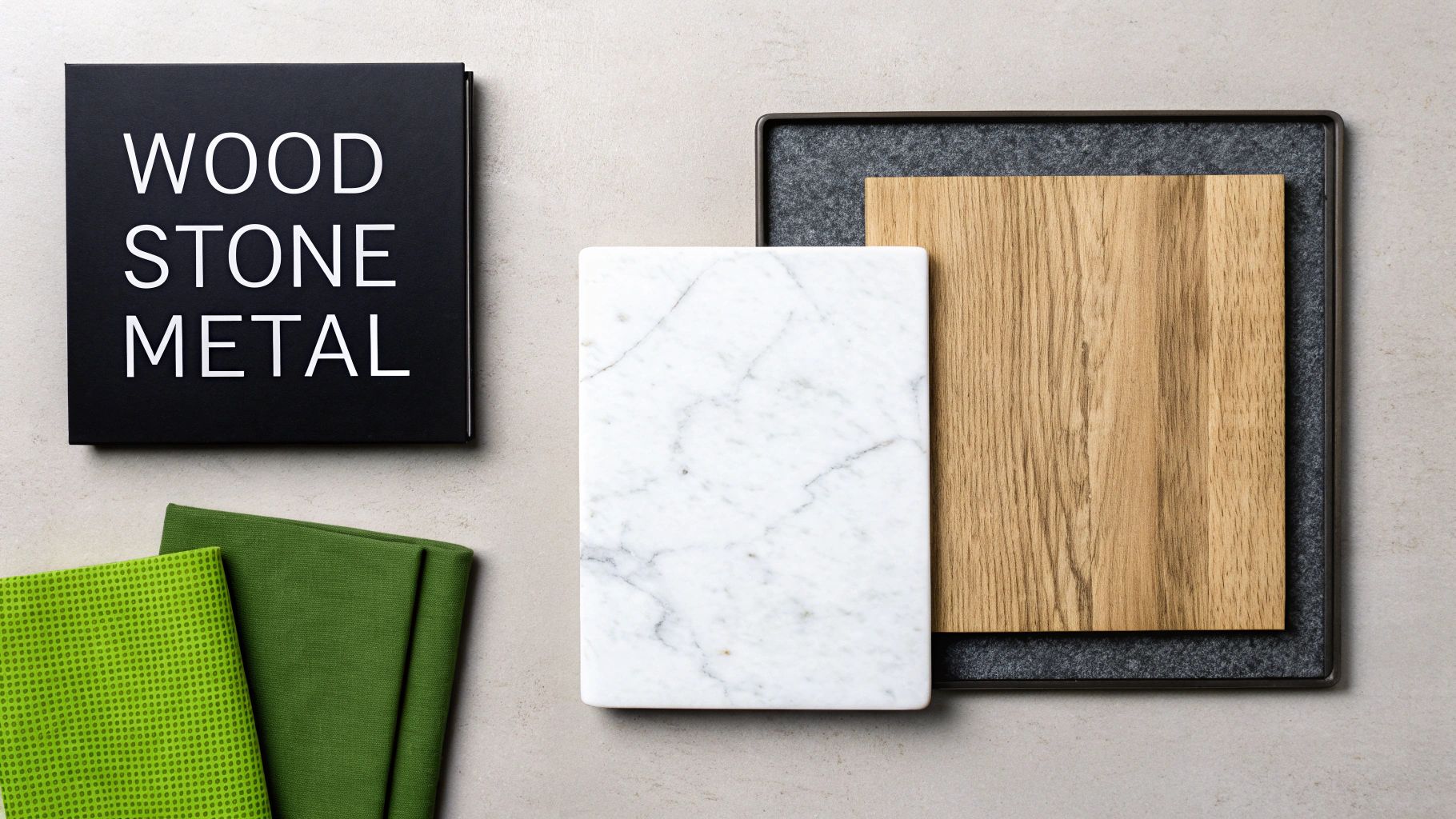
This reverence for quality is non-negotiable. An authentic marble mantelpiece, cool and solid to the touch, gives a room a sense of permanence that a replica just can’t fake. In the same way, the delicate strength of wrought iron in a staircase railing or a window grille adds a beautiful layer of artisanal craftsmanship.
The Essential Material Trio
The real artistry lies in the interplay between these three elements. Each one brings a distinct energy to a space, and striking the right balance is what makes a room feel authentically French.
- Wood: It provides warmth and life. From the polished elegance of a Louis XV commode to the rugged simplicity of a farmhouse table, wood grounds the entire design. We always look for pieces with a visible grain and a rich patina that speaks to their history.
- Stone: This brings a sense of permanence and coolness. Marble, limestone, and slate are staples for flooring, countertops, and architectural features like fireplace surrounds. Their natural variations in color and veining add an organic, irreplaceable texture.
- Metal: Metal adds a touch of refined glamour or rustic strength, depending on how you use it. Think gilt bronze (ormolu) mounts on furniture, warm brass hardware, and strong wrought iron fixtures that introduce light-reflecting surfaces or bold, graphic lines.
French design is an exercise in restraint and authenticity. The goal is to select materials that will age gracefully, gaining character over time rather than being replaced. It’s an investment in a home’s enduring story.
This focus on heritage-infused pieces is a major reason France’s home decor market hit USD 24,565.38 million and continues to grow. We’re seeing affluent homeowners allocate 15-20% of their renovation budgets just to source authentic, quality materials that honor the spirit of classic French design.
Crafting The Perfect Color Palette
Just as critical as the materials is the color palette that weaves them all together. It’s easy to think French decor is just shades of beige, but that’s a common misconception. The approach is far more nuanced, designed to play with light and create a very specific mood.
The foundation is almost always a neutral, but it’s a complex one. Think soft, chalky whites, creamy ivories, and a whole spectrum of elegant grays, from a soft dove to a deep charcoal. These shades create a serene, expansive backdrop that lets the architectural details and curated furnishings really shine.
From that neutral base, color is introduced with incredible intention. You’ll often see palettes built around:
- Dusty Blues and Greens: Soft, muted shades like celadon, duck egg blue, and pale sage bring a sense of tranquility and a connection to the outdoors.
- Warm, Earthy Tones: In more rustic styles, colors like terracotta, ochre, and warm blush add a sun-kissed glow that feels like it was pulled right from the French countryside.
- Strategic Accents: A single pop of a rich jewel tone—like a deep burgundy velvet chair or an ornate gilded mirror—is used sparingly to add a touch of drama without ever overwhelming the room.
The goal is to create an atmosphere that feels both luminous and intimate. When you master the psychology of these color combinations, you can craft spaces that aren’t just beautiful, but deeply resonant. For a deeper dive into this, you can explore our guide on mastering interior design color psychology. This approach ensures every element works in concert, forming a solid and elegant foundation for your design.
Curating Furniture: The Soul of a French Home
Furnishing a French home is less an act of decoration and more a process of storytelling. It’s a deliberate curation, a slow gathering of pieces that resonate with meaning, history, and character. The core philosophy is beautifully simple: mix, don’t match. We’re not aiming for the sterile perfection of a showroom catalog. The goal is to create a living space with a soul—one that feels like it has been collected over a lifetime, not just assembled over a weekend.
This approach thrives on the tension between old and new, ornate and simple. Imagine a sleek, contemporary sofa sitting across from a pair of weathered antique chairs. It’s a conversation between centuries. This curated blend is precisely what gives French style its signature depth and personality, making a room feel both impossibly chic and deeply personal.
Iconic Pieces That Define French Style
Certain pieces of furniture are so deeply woven into the fabric of French design that they act as instant anchors for the entire look. Just one or two of these icons can ground your space in that authentic Gallic charm. They’re celebrated not just for their beauty, but for their history and how they’ve gracefully served homes for generations.
A few key players to look for:
- The Bergère Chair: This is perhaps the most quintessential French armchair. Defined by its upholstered back, arms, and a deep seat cushion all nestled within an exposed wood frame, the bergère is the absolute epitome of relaxed elegance. It’s a wonderfully versatile piece, looking just as right in a formal living room as it does tucked into a cozy bedroom corner.
- The Armoire: Before built-in closets were a thing, the armoire was an absolute necessity. Today, this stately wardrobe is a stunning statement piece. You can still use it for clothing, of course, but it can also be creatively repurposed as a linen press, a hidden media cabinet, or even a surprisingly sophisticated bar.
- The Commode: More than just a chest of drawers, the commode is its far more elegant cousin, often featuring a marble top and the graceful, curved lines signature to the Louis XV style. It adds a touch of rococo glamour to an entryway, dining room, or bedroom, elevating the space instantly.
The Art of the Mix: Antiques and Modern Design
The real magic happens when you masterfully blend cherished antiques with clean, modern forms. An antique brings history and patina into the room; it carries the marks of time and craftsmanship, adding an irreplaceable layer of soul that you simply can’t get from mass-produced items.
On the other hand, a modern piece—a minimalist coffee table, a streamlined lamp—keeps the space from feeling like a museum. It brings a freshness that feels relevant and uncluttered. This juxtaposition is a partnership where each piece makes the other look better. The clean lines of a contemporary sofa, for instance, make the ornate details of an antique commode pop even more.
The French interior design philosophy is not about perfection. It’s about life. A small chip on a marble tabletop or the gentle wear on a velvet chair is not a flaw—it is evidence of a life well-lived, a story to be told.
When you’re out sourcing antiques, focus on three things: craftsmanship, patina, and story. Look for the tell-tale signs of quality like solid wood construction and dovetail joints. Learn to appreciate the patina—that soft sheen a surface gets from age and use—as a badge of honor. And if you can, find out the story behind the piece. Knowing its history makes it more than just furniture; it becomes a part of your own home’s narrative. For more inspiration on creating an inviting seating area, you can explore some brilliant luxury living room seating ideas that complement this curated approach.
Mirrors and Art: A Layer of Personal Expression
In a French home, mirrors and art are never afterthoughts. They are integral architectural elements. There’s a reason an oversized, ornate gilt mirror is such a classic French staple. It does more than just reflect an image; it bounces light around the room, creates the illusion of more space, and acts as a powerful piece of art in its own right. Casually leaning a massive mirror against a wall is a signature move that adds a touch of effortless, undone glamour.
Art is the final, and most personal, layer. The French approach is to choose what you truly love, regardless of trends. This might mean a bold, abstract painting hanging over a traditional mantelpiece or a tight grouping of small, antique sketches on a hallway wall. Art is the ultimate expression of who lives in the home, adding that final, intimate touch that makes the space uniquely and completely yours.
Mastering The Finishing Touches And Details
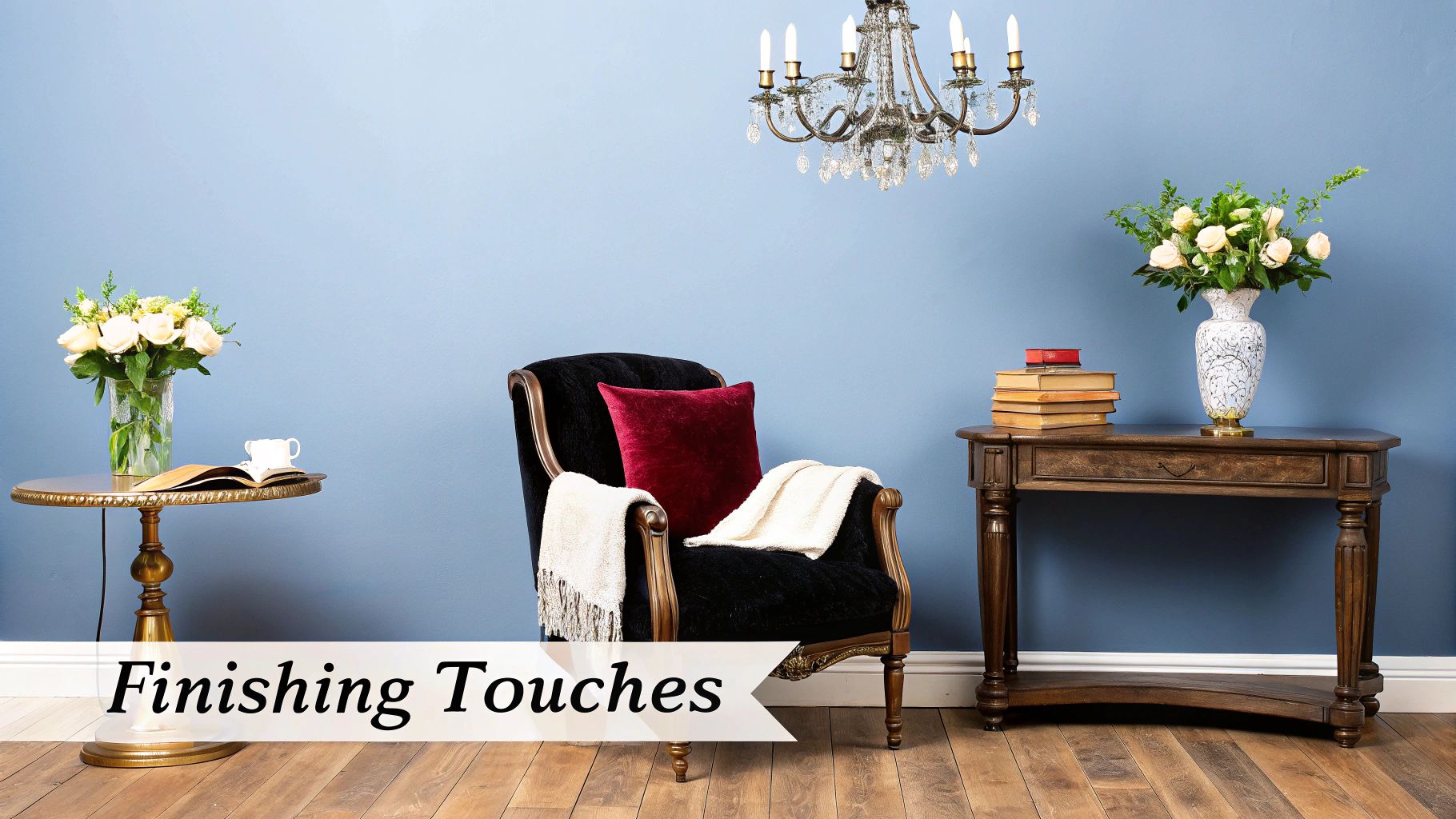
This is where the soul of French style truly emerges—in the final layers. These are the thoughtful, intentional details that elevate a well-designed room into something authentically French. It’s all about the delicate dance between lighting, textiles, and accessories, where every single element contributes to a cohesive, lived-in atmosphere. This is what makes a house a home with a story.
Think of lighting less as a utility and more as the room’s jewelry. A statement chandelier is often the centerpiece, an anchor of elegance that immediately draws the eye upward. Whether you opt for a crystal-laden antique or a modern fixture with classic lines, its job is to create a sense of grandeur and occasion.
But a chandelier is just the beginning. The real magic happens when you layer your lighting to cultivate a warm, inviting glow. This is where wall sconces and table lamps become so important, creating intimate pools of light perfect for cozying up with a book or sparking conversation.
The Power of Textiles and Textures
Textiles are what give French interiors their rich texture and narrative depth. Your choice of fabric can completely shift the mood of a room, adding layers of comfort and sophistication. It’s about choosing materials that feel as good as they look, creating a sensory experience that is both luxurious and deeply comforting.
A few essential fabrics really set the tone:
- Velvet: Brings a touch of opulence and depth, perfect for a statement sofa or accent chairs.
- Silk: Offers that refined sheen, often used for elegant drapery that pools gracefully on the floor.
- Linen: Lends a relaxed, natural texture that embodies rustic charm—ideal for bedding, slipcovers, and casual curtains.
Iconic patterns also play a starring role. Toile de Jouy, with its intricate pastoral scenes, adds a sense of historical storytelling, whether on wallpaper or upholstery. Even a subtle damask or a classic stripe can introduce a pattern without overwhelming the space, adding character and visual interest. It’s through these carefully chosen textiles that a room starts to feel truly curated.
Accessorizing with Elegant Restraint
The final step is the art of accessorizing, which the French approach with masterful restraint. The absolute goal is to avoid clutter. Instead of filling every surface, the focus is on a few meaningful, high-impact objects that add personality and a sense of history. This philosophy is all about quality over quantity.
In French decor, empty space is a luxury. It allows each object to breathe and be appreciated for its individual beauty, preventing the room from feeling overwrought or staged.
This curated approach might include just a few well-placed items:
- A stack of antique, leather-bound books on a side table.
- A simple vase filled with fresh, seasonal flowers.
- A personal heirloom displayed with pride on the mantelpiece.
- An ornate, gilded clock that adds a touch of romanticism.
When you combine these details with strong architectural features, you create a layered and authentic interior. Even something like elaborate trim can elevate a space, and understanding a guide to crown molding design can help you integrate this classic detail flawlessly. By mastering these finishing touches, you achieve that signature effortless charm that defines timeless French style.
Adapting French Elegance for a Modern Lifestyle
The real magic of French interior design isn’t that it’s a perfectly preserved historical artifact. It’s that it breathes, changes, and somehow feels just as right in a modern high-rise as it does in a centuries-old château. So, how do we make that happen? The secret is in translating the core principles, not just copying the old forms.
This isn’t about creating a museum. It’s about crafting a sophisticated, livable version of French elegance that serves the way we actually live today. Think of it as a conversation between the past and the present, where classic character meets contemporary comfort.https://www.youtube.com/embed/9V3Ckz4XiJQ
Blending Timeless Forms With Modern Function
One of the first hurdles designers face is making modern technology and open-concept layouts play nicely with the historical soul of the design. The trick is to cleverly disguise modern necessities within traditional forms. For example, a smart home control panel can be discreetly tucked away inside a vintage-style armoire, keeping the room’s classic atmosphere intact.
Open-plan spaces can often feel a bit cold or undefined, but French design offers a brilliant solution. You can use a single, powerful classic element—like an ornate gilt mirror or a beautifully carved console table—to anchor a specific zone. This adds a touch of warmth and history that instantly grounds a minimalist backdrop.
The goal is not to create a period room. It’s to borrow the best of French design—its emphasis on quality, patina, and elegant lines—and use it to imbue a modern space with soul and personality.
This thoughtful integration is more than just a trend; it’s a significant market driver. France’s interior design market, the global benchmark for this aesthetic, was valued at USD 4,994.56 million and is projected to hit USD 7,198.64 million by 2032. This growth is largely fueled by new real estate investments and a rising demand for smart home features that can blend seamlessly with classic decor. You can explore more detailed French interior design market trends on Credence Research.
Creating a Dialogue Between Art and Architecture
Another fantastic way to modernize the look is through art. Imagine hanging a bold, contemporary painting right above a traditional marble mantelpiece. That single move creates an electric focal point. The juxtaposition makes you appreciate the beauty of both the historic architecture and the modern artwork, proving they don’t just coexist—they make each other better.
Here are a few practical strategies to guide this blend:
- Focus on Silhouette: Look for modern furniture with clean lines that subtly echo the graceful curves of classic French pieces. A streamlined sofa, for instance, can look absolutely stunning sitting across from a pair of antique bergère chairs.
- Invest in Quality, Not Trends: French style has always been about enduring quality. Advise clients to invest in a few high-quality, timeless pieces—a solid wood table, a perfectly crafted armchair—instead of filling a room with things that will feel dated in a year. These become the soul of the room.
- Embrace Patina: Don’t be afraid of a little wear and tear. A touch of age on an antique mirror or a vintage chest adds a layer of authenticity and warmth that keeps a modern space from feeling cold or sterile.
By sticking to these principles, you can create a version of French style that feels both deeply rooted in history and perfectly in sync with a modern way of life. It’s this beautiful balance that gives it such lasting appeal.
Your Questions About French Style, Answered
As you start to explore the world of French design, a few practical questions almost always come up. Let’s tackle some of the most common ones so you can move forward with clarity and avoid some typical pitfalls.
How Can I Make French Style Work In A Small Apartment?
This is where the Parisian approach truly shines. Think of it as a masterclass in making the most of limited square footage. Start with a light, airy color palette—creams, soft whites, and the palest of grays will make your space feel more expansive and open.
Instead of filling the room with lots of small items, invest in one or two statement pieces that really command attention. A beautiful, oversized gilt mirror casually leaned against a wall, for instance, not only adds a touch of glamour but also reflects light, making the room feel bigger. The goal is to avoid clutter at all costs and select elegant, multi-functional furniture.
Isn’t French Decor Too Formal For A Family Home?
That’s a very common misconception, but the answer is a definite no! While you might picture a formal Louis XV salon, styles like French Country and Provincial are the complete opposite. They were born from real, hardworking country life and are inherently relaxed, durable, and incredibly welcoming.
These styles embrace sturdy, well-worn wood furniture and comfortable, natural fabrics like linen that only get better with age. It’s all about striking that perfect balance between elegance and everyday life. Think of performance fabrics on a classic settee or a beautiful farmhouse table that isn’t afraid of a few scratches from homework and family dinners.
The real beauty of family-friendly French decor is its love for patina and imperfection. Those little scuffs on a table or the wrinkles in a linen slipcover aren’t flaws—they’re evidence of a home that’s truly loved and lived in.
What Are The Biggest Mistakes People Make With This Style?
The number one mistake is turning it into a theme-park version of France. This usually happens when someone buys a matching furniture set or overloads a room with every French cliché they can find. Authentic French style is the opposite; it’s about curating a personal collection of pieces over time.
Another major pitfall is an obsession with the brand-new. A room filled with nothing but shiny, perfect objects will feel sterile and lack soul. You need that sense of history, that patina. Finally, remember to give your pieces room to breathe. French interiors celebrate negative space, allowing each beautiful object to stand on its own and be appreciated.
Ready to translate your vision into a masterpiece of French-inspired design? The experts at Haute Design specialize in connecting discerning clients with the nation’s top interior designers and architects. Find your perfect design professional on Haute Design and start the journey to your own beautifully curated home.