


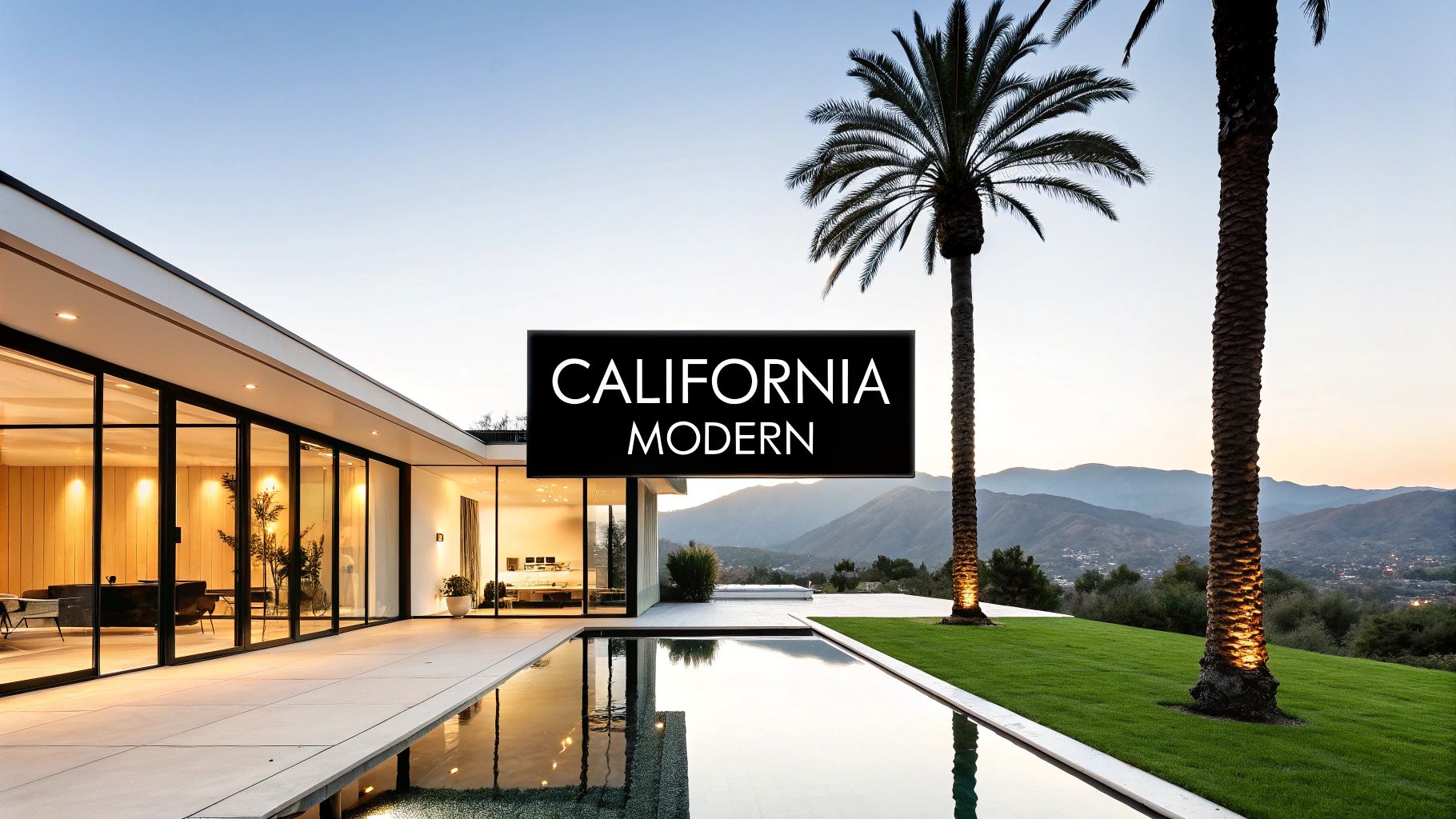
California modernism isn’t just an architectural style; it’s a lifestyle philosophy rooted in clean lines, indoor-outdoor harmony, and a deep respect for the landscape. From the sun-drenched deserts of Palm Springs to the dramatic cliffs of Malibu, California modern homes have consistently set global trends, blending innovative engineering with a distinct sense of place. This architectural language, characterized by open floor plans, expansive glass walls, and honest materials, continues to evolve, defining what it means to live luxuriously today.
In this comprehensive guide, we dissect 10 seminal examples of California modern homes, from historical icons to contemporary masterpieces, uncovering the strategic design principles that make them timeless. For homeowners, architects, and developers, these case studies offer a masterclass in creating spaces that are not only visually stunning but also deeply connected to their environment.
We will move beyond simple descriptions to provide a tactical breakdown of each project. You will gain a clear understanding of the architectural strategies, material selections, and site-specific solutions employed by the world’s leading designers. This curated gallery is designed to be a practical blueprint, offering replicable strategies and actionable insights you can apply to your own high-end new build or renovation. By analyzing these exceptional projects, you will learn how to commission and execute a design that embodies the sophisticated, effortless spirit of California modern living. We explore the specific techniques that make these homes successful, providing a roadmap for achieving similar results.
1. The Eames House (Case Study House #8)
The Eames House, also known as Case Study House #8, is a landmark of mid-century modern architecture and a cornerstone of California modern homes. Designed by the legendary Charles and Ray Eames in 1949 as their own residence, it was part of the Case Study House Program sponsored by Arts & Architecture magazine. The project’s goal was to create affordable, replicable home models for post-war living, utilizing industrial materials and modern construction techniques.
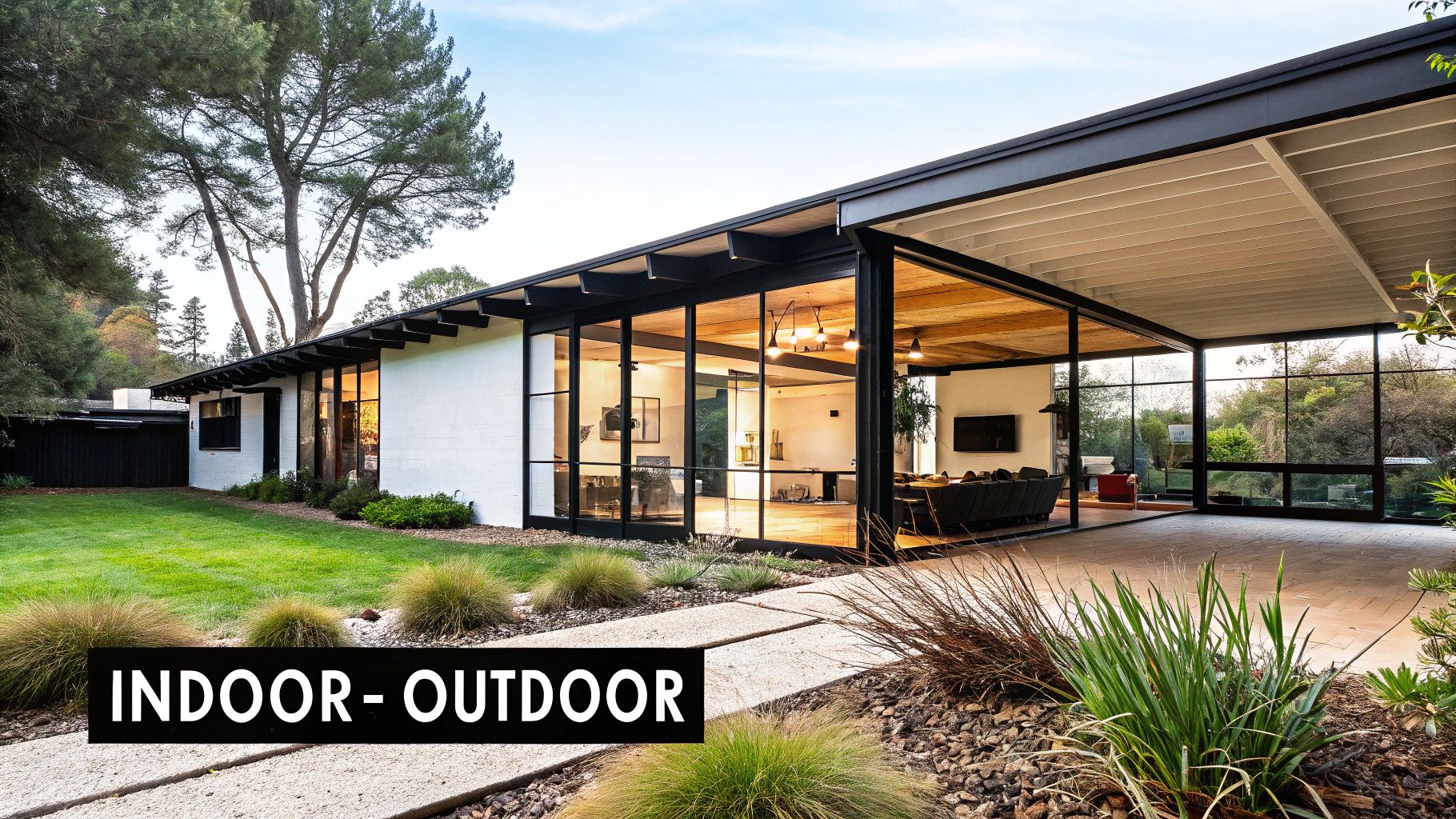
The house demonstrates a revolutionary approach, combining an industrial steel frame with vast glass walls and prefabricated panels. This modular system allowed for an open, flexible floor plan that masterfully blurs the lines between the interior and the surrounding eucalyptus grove in the Pacific Palisades. Its design prioritized livability, functionality, and a deep connection with nature, proving that modernism could be warm and personal, not just stark and cold.
Strategic Analysis & Key Elements
The genius of the Eames House lies in its elegant simplicity and material honesty. The exposed steel structure isn’t just for support; it becomes a primary aesthetic element, creating a clean, geometric grid that defines the space.
- Prefabricated Components: The use of off-the-shelf, industrial materials made construction efficient and cost-effective, a core principle of the Case Study program.
- Indoor-Outdoor Integration: Floor-to-ceiling glass walls dissolve the boundary between the living space and the landscape, a signature feature of California modernism.
- Flexible Living Space: The open-plan interior and double-height living room create a sense of volume and adaptability, allowing the home to function as both a living area and a creative studio.
Actionable Takeaways & Renovation Tips
For those looking to infuse their projects with the spirit of the Eames House, focus on material honesty and spatial flow.
Key Insight: The Eames House proves that industrial materials like steel and glass can create an inviting and warm home when balanced with nature, color, and thoughtfully curated interiors.
- Embrace Structural Honesty: Consider exposing structural elements like steel beams or posts to create clean lines and an industrial-chic aesthetic.
- Maximize Natural Light: Use large windows or sliding glass doors strategically to connect interiors with outdoor patios or gardens.
- Design for Functionality: Incorporate built-in furniture and modular storage solutions to maintain an uncluttered, open feel, just as the Eameses did.
The principles pioneered by this iconic residence continue to influence architects and designers globally. For more information, visit the Eames Foundation.
2. The Glass House Residences – Palm Springs
Palm Springs became a living laboratory for “Desert Modernism,” a branch of California modern homes defined by its sleek, minimalist aesthetic designed to embrace the harsh desert environment. Architects like Richard Neutra, Albert Frey, and William F. Cody pioneered a typology of glass-walled pavilions that celebrate radical transparency, geometric precision, and an uninterrupted connection to the dramatic landscape of the Coachella Valley.
Iconic examples such as Neutra’s Kaufmann Desert House and Frey’s Frey House II masterfully integrate structure with nature. These residences use expansive glazing not just for views, but to dissolve the very concept of walls. The designs feature clean horizontal lines, deep roof overhangs for sun protection, and outdoor spaces that function as seamless extensions of the interior living areas, creating luxurious retreats perfectly attuned to their surroundings.
Strategic Analysis & Key Elements
The brilliance of Palm Springs modernism lies in its strategic response to the desert climate. It proves that a glass house can be both elegant and functional, even in an extreme environment, by carefully manipulating light, shadow, and airflow.
- Environmental Integration: These homes are meticulously sited to capture mountain views while using deep overhangs and brise-soleils to mitigate intense solar gain.
- Material Honesty: A simple palette of glass, steel, and stone grounds the structures in their environment, creating a sophisticated and timeless look.
- Seamless Indoor-Outdoor Flow: Sliding glass walls and continuous flooring materials erase the threshold between living rooms and outdoor patios, effectively doubling the living space.
Actionable Takeaways & Renovation Tips
To channel the essence of Palm Springs desert modernism, focus on creating a powerful connection between your architecture and its specific site, using glass as a tool for integration rather than just an opening.
Key Insight: Desert modernism is not just about using glass; it’s about a holistic design approach where the building’s form, orientation, and materials work together to create a comfortable and elegant dialogue with the surrounding landscape.
- Design for the Climate: Use deep overhangs or pergolas to create shaded outdoor areas and protect interiors from direct sun, preserving views without overheating the space.
- Extend Interior Finishes: Carry flooring materials like polished concrete or large-format tiles from the inside to an outdoor patio to create a unified, expansive feel.
- Incorporate High-Performance Glazing: Use modern, energy-efficient glass with coatings that reduce UV and heat transmission to make a glass-heavy design practical and sustainable.
These principles remain highly influential in contemporary design. For more on the preservation of these architectural treasures, explore the work of the Palm Springs Modern Committee.
3. The Case Study House #22 – Stahl House (Buck House)
The Stahl House, or Case Study House #22, is arguably the most famous of all California modern homes, representing the pinnacle of modernist ideals. Designed by architect Pierre Koenig in 1960 for the Stahl family, this Hollywood Hills residence appears to float weightlessly above Los Angeles. It was the program’s most ambitious project, seeking to solve the puzzle of building an affordable and elegant home on a seemingly impossible hillside lot.
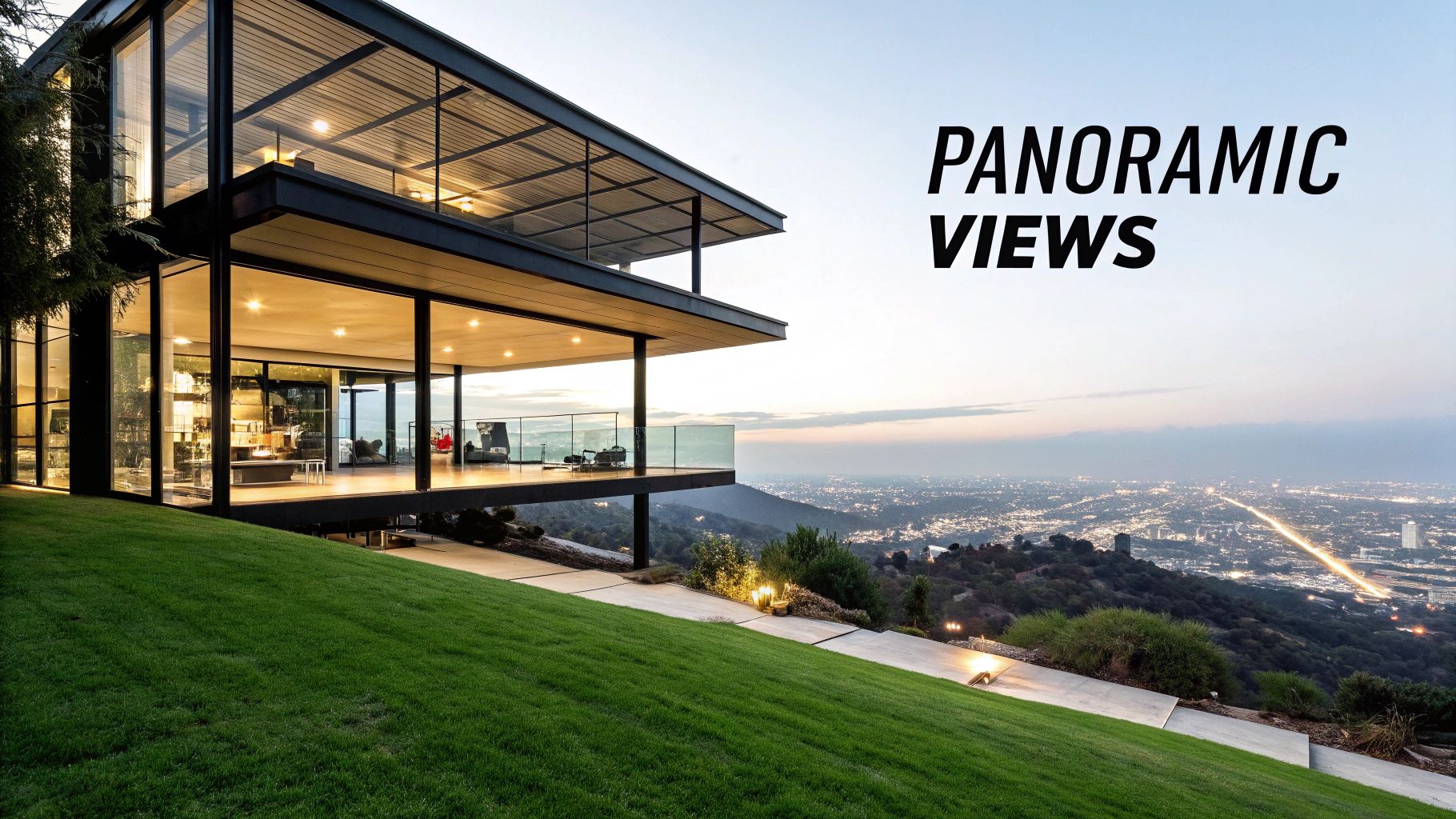
The home’s dramatic cantilevered design, supported by a minimalist steel frame, is a feat of engineering that allows for uninterrupted, 270-degree panoramic views. Its L-shaped plan wraps around a swimming pool, further blurring the line between interior and exterior. The house became an international icon largely due to Julius Shulman’s legendary photographs, which captured a vision of glamorous, effortless California living that continues to define the style.
Strategic Analysis & Key Elements
The Stahl House’s brilliance is its masterful synthesis of structure, site, and spectacle. Koenig used industrial materials not just for economy but to achieve a visual lightness that defied the home’s challenging location. The structure itself becomes the primary architectural expression.
- Structural Expressionism: The exposed steel frame is not hidden but celebrated, forming the home’s aesthetic and functional backbone. The dramatic cantilever is a bold statement of engineering prowess.
- Total Glass Enclosure: Massive floor-to-ceiling glass walls on three sides dissolve the building’s envelope, making the panoramic view the true “wallpaper” of the home.
- Simplified Material Palette: The disciplined use of steel, glass, and concrete creates a clean, uncluttered look that directs all attention outward to the city below.
Actionable Takeaways & Renovation Tips
To channel the dramatic spirit of the Stahl House, focus on using bold structural moves to create architectural statements and maximize views.
Key Insight: The Stahl House demonstrates that the most challenging sites can yield the most spectacular results when architectural vision is paired with innovative structural engineering.
- Make Structure the Star: Use bold structural elements like cantilevers or exposed steel beams as the main design feature, rather than just a support system.
- Prioritize the View: Design the floor plan and window systems to frame and enhance key views, making the landscape an integral part of the interior experience.
- Engage Engineers Early: For ambitious designs, involve a structural engineer from the very beginning to ensure the architectural vision is both safe and achievable without compromising the aesthetic.
The legacy of this home continues to inspire architects building on difficult hillsides. You can explore more about the impact of Mid-Century Modern Architecture here.
4. Richard Neutra’s Residential Portfolio – Orange County & Beyond
Richard Neutra, an Austrian-American architect, was a pivotal figure in shaping the identity of California modern homes. His extensive portfolio, spanning from the 1920s to the 1970s, introduced a unique form of modernism rooted in “biorealism,” a philosophy that aimed to connect architecture with human biology and psychology. His homes, such as the iconic Kaufmann Desert House in Palm Springs and the Moore House in Ojai, are celebrated for their site-responsive designs and seamless integration of human needs with the natural environment.
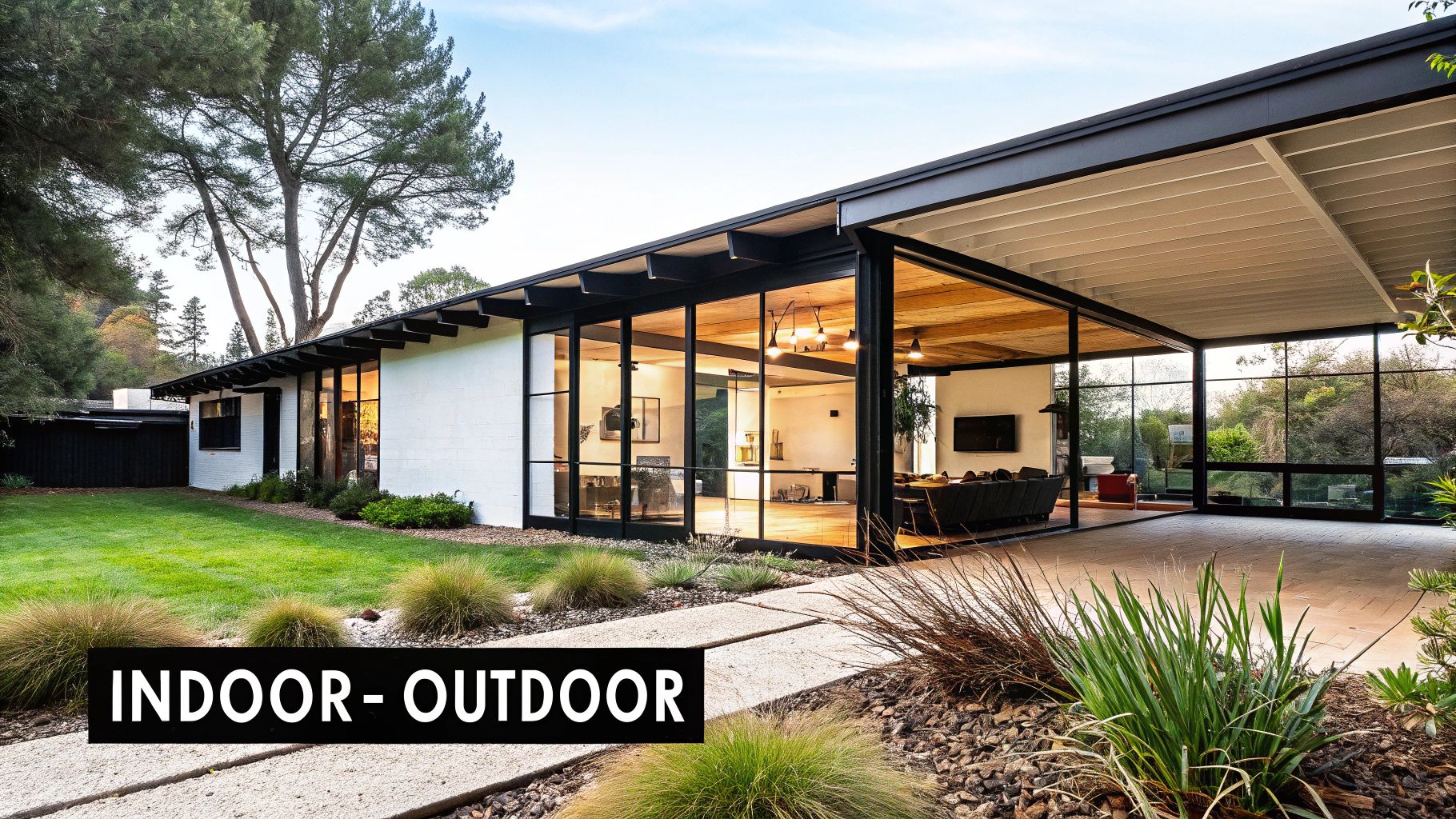
Neutra’s approach was deeply analytical, often involving detailed questionnaires for his clients to understand their lifestyles and psychological needs. This human-centered methodology resulted in homes that were not just aesthetically clean but also deeply comfortable and functional. His designs are characterized by their “spider leg” plans that extend rooms into the landscape, using large glass panes and reflecting pools to blur the boundaries between inside and out, making the home a tranquil sanctuary.
Strategic Analysis & Key Elements
The enduring legacy of Neutra’s work lies in his masterful balance of modernist principles with a profound sensitivity to site and occupant. His designs feel both rigorously geometric and organically connected to their surroundings.
- Human-Centered Design: Neutra prioritized the psychological well-being of inhabitants, using architecture to frame views, manage light, and create a sense of calm and order.
- Site Integration: He meticulously studied each site’s topography, climate, and views, orienting his homes to maximize natural light and blur the line between building and landscape.
- Material Honesty: Neutra employed industrial materials like steel, glass, and stucco with authenticity, allowing the structure and materials to become part of the home’s aesthetic expression.
Actionable Takeaways & Renovation Tips
To channel Neutra’s design philosophy, focus on creating spaces that are both visually striking and psychologically restorative, with an unbreakable link to the outdoors.
Key Insight: Neutra’s work demonstrates that modernism’s clean lines and open spaces can be profoundly human when designed in harmony with the natural environment and the specific needs of the occupants.
- Design from the Inside Out: Before focusing on aesthetics, analyze how the space will be used and how it can best support the well-being of its inhabitants.
- Treat the Landscape as a Room: Design patios, decks, and gardens with the same level of care as interior spaces, using sliding glass walls to create a fluid connection.
- Frame Nature: Use windows and structural elements strategically to frame specific views of the landscape, turning the natural world into living art.
Explore more about his philosophy and projects at Neutra Institute for Survival Through Design.
5. Luxury Modern Hillside Estates – Los Angeles & San Francisco
California’s dramatic topography has given rise to a unique typology of modern homes: the luxury hillside estate. These residences, often found perched in areas like Bel Air, the Hollywood Hills, and San Francisco’s affluent neighborhoods, represent a masterful blend of architectural ambition and engineering precision. Firms like Marmol Radziner and SPF:architects are renowned for designing structures that follow the natural contours of the land, minimizing environmental impact while maximizing panoramic city and ocean views.
These homes are characterized by their strong, clean lines, extensive use of glass, and deep integration of smart-home technology and sustainable features. The design challenge of a steep grade is transformed into an opportunity for creating dynamic, multi-level living spaces with private terraces, infinity-edge pools, and seamless indoor-outdoor transitions. This approach to building is a hallmark of contemporary California modern homes, where luxury is defined by the experience of the space as much as its amenities.
Strategic Analysis & Key Elements
The genius of modern hillside design is its ability to make a challenging site feel both secure and expansive. The architecture engages directly with the landscape, using retaining walls and cantilevers not just for structural support, but as powerful design statements that create drama and frame breathtaking vistas.
- Topographical Integration: Instead of fighting the hill, these homes are terraced into it. This creates distinct zones for living, entertaining, and private retreat, all connected by thoughtfully designed stairways and elevators.
- Engineered for Views: Structural engineering allows for vast expanses of uninterrupted glass and cantilevered decks that project out into the view, dissolving the barrier between the home and its stunning surroundings.
- Smart and Sustainable: Advanced home automation is often integrated into the architectural fabric, controlling lighting, climate, and security. Sustainable elements like solar panels, green roofs, and passive cooling are core features, not afterthoughts.
Actionable Takeaways & Renovation Tips
For projects on sloped sites, the key is to view the topography as a defining feature rather than an obstacle. Thoughtful planning is essential to balance aesthetics, functionality, and structural integrity.
Key Insight: Successful hillside estates treat the landscape as the primary client. The architecture should serve to enhance the site’s natural beauty and capitalize on its unique vantage points.
- Hire Hillside Specialists: Engage an architect and structural engineer with proven experience in hillside construction, as these projects involve complex foundation and drainage considerations.
- Zone Your Outdoor Living: Create multiple, distinct outdoor areas on different levels, such as a main entertaining terrace, a private balcony off a bedroom, and a secluded garden patio.
- Integrate Technology Early: Plan for smart-home systems and sustainable infrastructure from the initial design phase to ensure they are seamlessly incorporated into the home’s structure and flow.
For more inspiration on this architectural style, explore the portfolios of firms like Marmol Radziner.
6. Modernist Desert Compounds – Rancho Mirage & Greater Desert Communities
The modernist desert compound represents a unique evolution of California modern homes, adapted for the extreme climate of arid regions like Rancho Mirage and the greater Coachella Valley. These properties are not just houses but expansive, private retreats that blend minimalist modernism with resort-style luxury. Architects and luxury developers in areas like Indian Wells and Palm Springs have perfected a style that emphasizes seamless indoor-outdoor living while addressing the harsh desert environment.
These compounds often feature a main residence accompanied by separate guest casitas, sprawling patios, and infinity pools, all organized to maximize privacy and frame stunning desert vistas. The design prioritizes sustainability through native, drought-tolerant landscaping, advanced water conservation systems, and high-performance climate control. The architecture itself uses deep overhangs, strategic orientation, and materials like stone and stucco to create a cool sanctuary that remains connected to its dramatic landscape.
Strategic Analysis & Key Elements
The brilliance of the desert compound lies in its ability to create an oasis of comfort and luxury without fighting its environment. It embraces the desert’s stark beauty, using architectural forms to enhance the experience of the landscape while providing shelter from its extremes.
- Climate-Responsive Design: Deep roof overhangs, brise-soleils (sun-baffles), and carefully placed glazing are used to control solar heat gain, a critical consideration for desert living.
- Integrated Amenities: These homes are designed as self-contained resorts, often incorporating outdoor kitchens, fire pits, private guest accommodations, and pools that act as a central social hub.
- Xeriscaping and Native Plants: Landscaping is a key element, utilizing native plants, decomposed granite, and sculptural boulders to create a low-maintenance, water-wise environment that complements the modern architecture.
Actionable Takeaways & Renovation Tips
To channel the essence of a modernist desert compound, focus on creating a harmonious balance between luxurious comfort and environmental responsibility. This approach is ideal for anyone designing a retreat meant for relaxation and entertainment.
Key Insight: Successful desert modernism doesn’t just tolerate the environment; it leverages it. Strategic design can turn the challenges of sun and heat into opportunities for creating dramatic, comfortable living spaces.
- Create Outdoor “Rooms”: Use covered patios, pergolas, and strategically placed walls to define outdoor living areas for dining, lounging, and entertaining.
- Invest in Performance: Prioritize high-performance windows, advanced insulation, and energy-efficient HVAC systems. Consider incorporating renewable energy sources like solar panels.
- Unify with Materials: Use a consistent palette of natural materials like stone, wood, and concrete to connect the main house, guest structures, and landscape features into a cohesive whole.
7. Modern Coastal Compounds – Malibu, Carmel & Big Sur
The dramatic coastline of California provides the ultimate canvas for modern architecture, giving rise to stunning coastal compounds in areas like Malibu, Carmel, and Big Sur. These residences are designed to exploit breathtaking oceanfront sites through daring engineering, like cantilevers that jut out over cliffs, and the extensive use of glazing. More than just homes, they are resilient structures built to withstand the harsh marine environment while navigating complex environmental regulations and coastal engineering challenges.
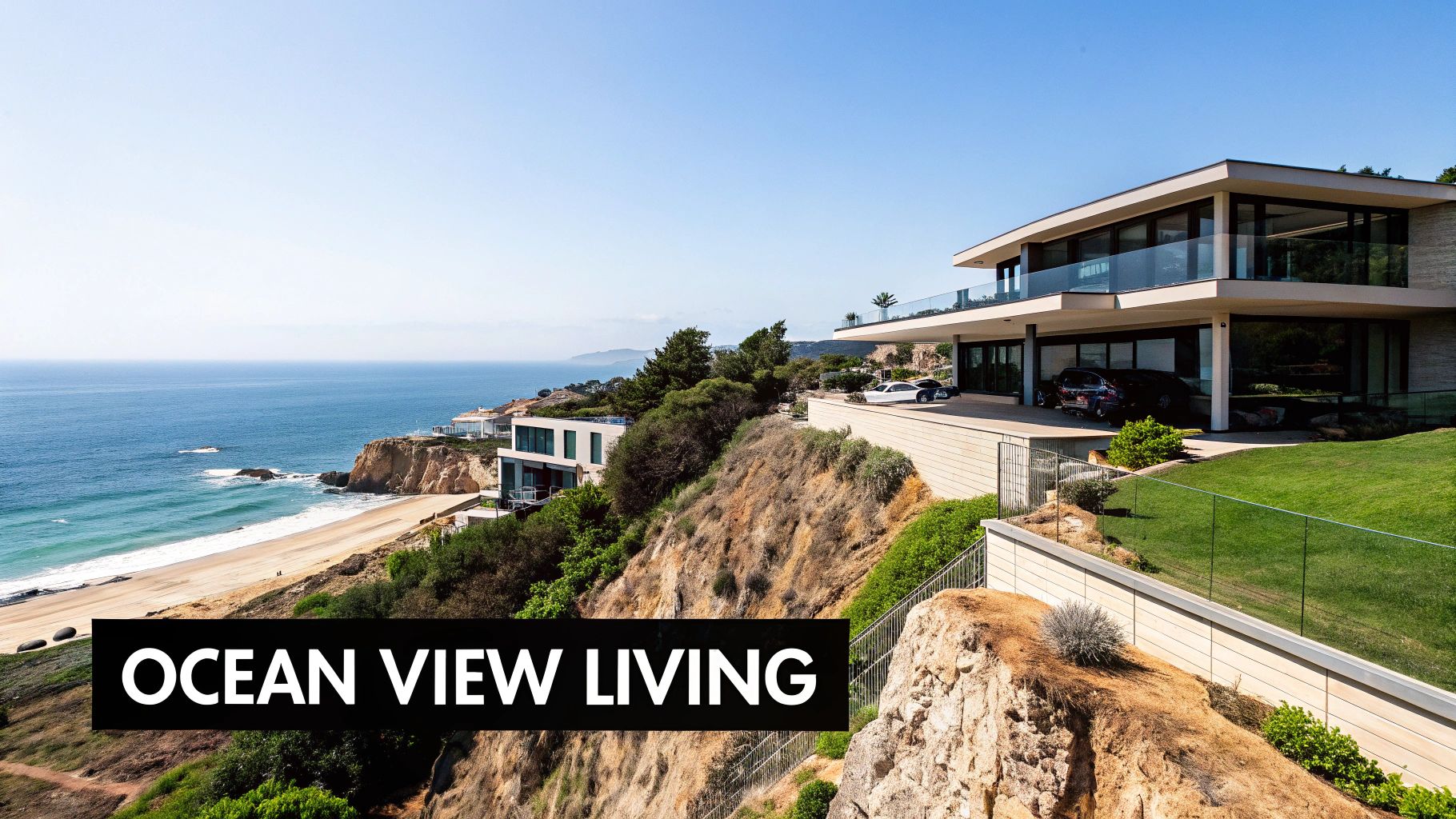
The design philosophy behind these California modern homes is a marriage of luxury aesthetics and robust, site-specific engineering. Architects work to dissolve the barrier between the indoors and the immense Pacific landscape, making outdoor terraces and patios primary living areas. This approach requires a deep understanding of erosion, weather patterns, and material science to create a home that is both a serene retreat and a durable fortress against the elements.
Strategic Analysis & Key Elements
The brilliance of modern coastal compounds lies in their ability to balance architectural ambition with environmental responsibility. The design process is dictated as much by regulatory constraints and natural forces as it is by the desire for panoramic views, leading to innovative and highly contextual solutions.
- Site-Specific Engineering: Structures often feature deep foundations, retaining walls, and advanced drainage systems to manage coastal erosion and seismic activity, making the seemingly impossible possible.
- Corrosion-Resistant Materials: Materials like architectural concrete, marine-grade stainless steel, titanium, and specially treated woods are specified to resist the corrosive effects of salt spray and moisture.
- Maximal Glazing: Expansive, high-performance glass walls and sliding door systems are engineered to withstand high winds and harsh sun while maximizing ocean views and natural light.
Actionable Takeaways & Renovation Tips
To create a successful coastal home, one must design with nature as a primary partner and potential adversary. Early and expert-level planning is non-negotiable.
Key Insight: The most successful coastal modern homes treat the environment not as a backdrop, but as a core design constraint. Success depends on proactive engineering and material choices that embrace, rather than fight, the coastal conditions.
- Engage Experts Early: Involve coastal engineers and environmental consultants from the very beginning to navigate regulations and design for site-specific challenges like erosion and weather.
- Prioritize Durable Materials: Specify materials known for their longevity in marine environments. This includes everything from structural components and window frames to exterior cladding and fasteners.
- Design for Outdoor Living: Plan for outdoor spaces to be true extensions of the interior, with durable furniture, windbreaks, and integrated heating to make them usable year-round.
8. Sustainable & Smart Modern Residences – LEED, Net-Zero & Integrated Tech
The pinnacle of contemporary California modern homes marries cutting-edge sustainable design with sophisticated smart-home technology. This new wave of residences pursues ambitious performance goals like LEED Platinum or net-zero energy while seamlessly embedding automation, wellness systems, and advanced monitoring directly into the architectural fabric. This approach moves beyond simple green features, treating sustainability and technology as integrated, core components of luxury living.https://www.youtube.com/embed/yTW_7vIOlLw
These homes, often found in Silicon Valley and Beverly Hills, utilize passive design strategies like optimal orientation and high-performance insulation before adding active systems like solar panels and geothermal heating. The result is a structure that is not only environmentally responsible but also resilient, comfortable, and intuitive to its occupants’ needs. This forward-thinking design philosophy represents the next evolution of California modernism.
Strategic Analysis & Key Elements
The genius of this approach lies in its holistic integration. Instead of adding technology or sustainable features as an afterthought, the architecture itself is designed around performance and connectivity. The home operates as a cohesive, intelligent system rather than a collection of separate parts.
- Performance-Driven Design: The building envelope, material selection, and site placement are all optimized to minimize energy consumption, following principles from standards like LEED and Passive House.
- Integrated Technology: Smart systems for lighting, climate control, security, and entertainment are planned from the initial design phase, ensuring wiring and hardware are concealed for a clean, modern aesthetic.
- Wellness and Resilience: Features like advanced air and water filtration, circadian rhythm lighting, and backup power solutions (e.g., Tesla Powerwalls) enhance occupant well-being and provide self-sufficiency.
Actionable Takeaways & Renovation Tips
To create a truly sustainable and smart home, prioritize early planning and integration. For a deeper dive into this topic, you can learn more about the principles of sustainable architecture.
Key Insight: The most successful smart and sustainable homes treat technology and green building not as amenities, but as foundational elements that inform every architectural decision, from the floor plan to the facade.
- Start with Passive Strategies: Before specifying expensive mechanical systems, maximize passive heating, cooling, and lighting through smart design of windows, overhangs, and insulation.
- Build a Collaborative Team: Engage LEED-accredited architects, energy consultants, and smart-home integrators at the project’s outset to ensure all systems work in harmony.
- Plan for the Future: Select interoperable smart systems that can be updated over time and design with adaptability in mind, allowing for future technological advancements.
9. Adaptive Reuse Modern Conversions – Warehouses to Luxury Lofts
Adaptive reuse represents a dynamic and sustainable approach within California modern homes, transforming historic industrial buildings into stunning residential lofts. This practice, prevalent in areas like Downtown LA’s Arts District and San Francisco’s SOMA, preserves the architectural soul of warehouses and factories while infusing them with contemporary luxury. By honoring the original structure, these conversions create unique, high-ceilinged, open-plan spaces that blend vintage character with modern functionality.
The appeal of these conversions lies in their voluminous interiors and material authenticity. Original elements like exposed brick walls, concrete floors, and massive timber or steel beams are celebrated, not concealed. This structural honesty is then complemented by high-end kitchens, minimalist bathrooms, and smart home technology, creating a compelling dialogue between past and present. The result is a home that offers an expansive, flexible living environment rich with history and urban sophistication.
Strategic Analysis & Key Elements
The success of a warehouse conversion hinges on a delicate balance between preservation and modernization. The strategy is to leverage the building’s “good bones” as the primary design feature, allowing the raw industrial shell to define the home’s aesthetic.
- Structural Preservation: Retaining original features like exposed brick, ductwork, and large factory windows is crucial. These elements provide irreplaceable character and a sense of history.
- Open-Concept Layouts: The vast, column-free spaces inherent in warehouses are ideal for creating expansive, light-filled open-plan living areas that are a hallmark of modern design.
- Material Juxtaposition: The design intentionally contrasts rough, historic materials (brick, concrete) with sleek, modern finishes (stainless steel, polished stone, glass) to create a rich textural and visual experience.
Actionable Takeaways & Renovation Tips
For developers or homeowners embarking on an adaptive reuse project, the focus should be on celebrating the building’s industrial heritage while ensuring modern comfort and livability.
Key Insight: Adaptive reuse creates one-of-a-kind modern homes by treating the original industrial structure not as a limitation, but as the main design asset, offering a unique narrative and aesthetic that cannot be replicated in new construction.
- Consult Specialists: Work with architects and engineers experienced in adaptive reuse. They can navigate historic building codes and creatively integrate modern systems like HVAC and plumbing.
- Highlight Original Character: Instead of hiding structural imperfections, showcase them. A weathered beam or a patched brick wall tells a story and adds authentic charm.
- Zone with Furnishings: Use area rugs, large furniture pieces, and strategic lighting to define different “rooms” within the open-plan layout, maintaining a sense of scale and intimacy.
10. The Modern Garden Room & Indoor-Outdoor Integration – Contemporary Approach
The modern interpretation of California living elevates the landscape from a backdrop to a primary architectural element. This contemporary approach treats outdoor areas as integral “garden rooms,” seamlessly expanding the home’s usable square footage. Driven by a desire for wellness and connection to nature, these spaces are meticulously designed with features like outdoor kitchens, resort-style lounges, and sculptural water elements, blurring the distinction between inside and out.
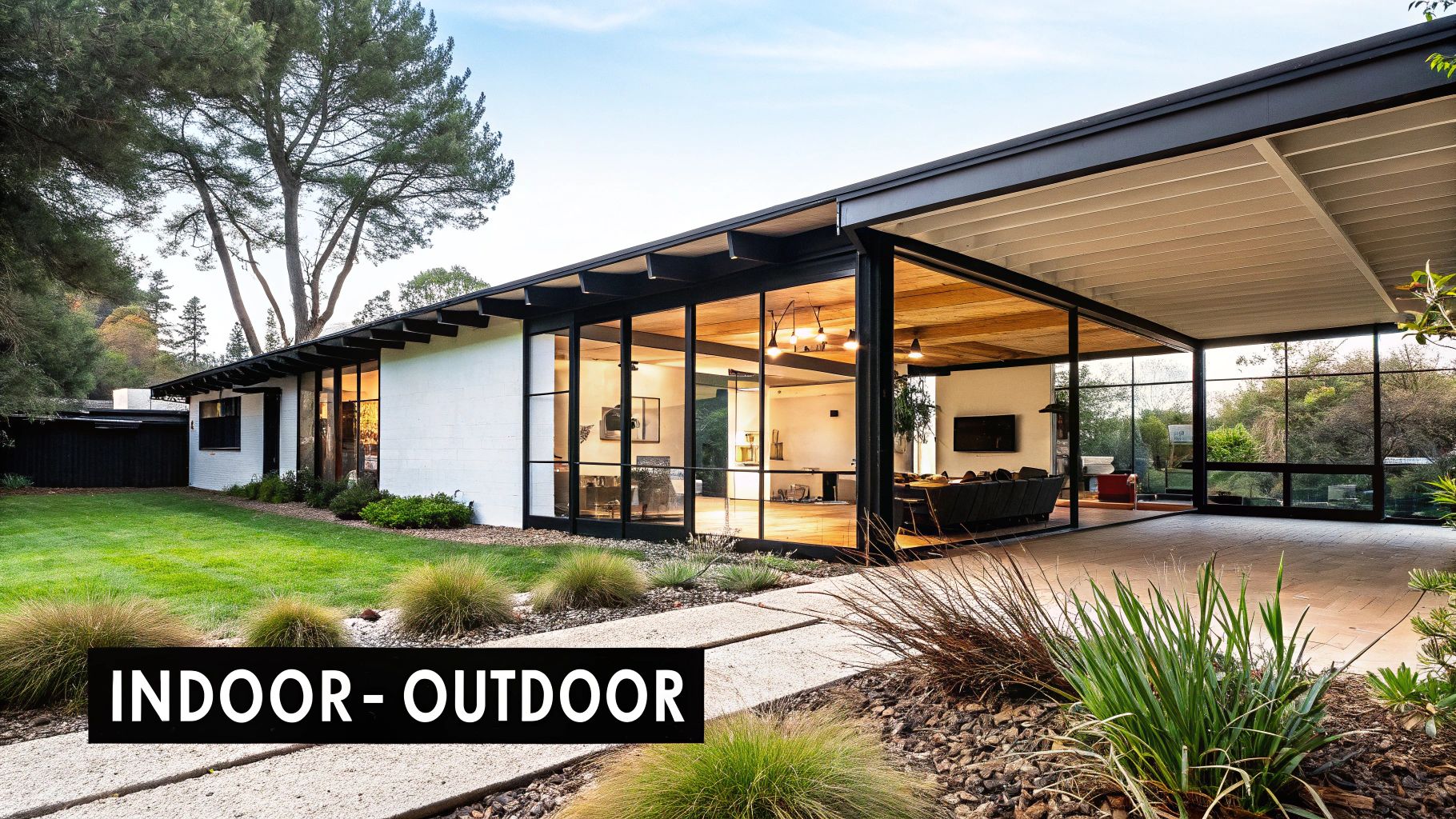
This philosophy is central to many luxury California modern homes, where landscape architects like PWP Landscape Architecture work in tandem with building designers from day one. The result is a holistic environment where material palettes flow uninterrupted from the living room to the patio, and every window frames a deliberate, picturesque view. These outdoor spaces are not afterthoughts; they are essential components of the home’s core design and daily function.
Strategic Analysis & Key Elements
The success of the modern garden room hinges on treating outdoor spaces with the same rigor as interior architecture. It’s a strategic move to maximize a property’s potential by creating distinct, functional zones that enhance the living experience.
- Holistic Design Integration: Landscape and architectural plans are developed concurrently, ensuring sight lines, material continuity, and functional flow are optimized from the project’s inception.
- Zoned Outdoor Functions: Outdoor spaces are programmed with specific uses, such as a dining area with a full kitchen, a quiet meditative garden, or a poolside entertainment lounge.
- Material and Aesthetic Continuity: Using the same flooring, color palettes, and design language for both interior and adjacent exterior spaces creates a powerful sense of unity and expansiveness.
Actionable Takeaways & Renovation Tips
To successfully execute this integrated approach, homeowners and designers must plan the landscape as a fundamental part of the architectural vision, not as a final decorative layer.
Key Insight: True indoor-outdoor living is achieved when the landscape is designed as a series of functional, architectural extensions of the home, rather than just a garden to be viewed from inside.
- Design Sight Lines First: From inside, identify key views you want to highlight and design outdoor “rooms” around those vistas.
- Invest in Permanent Elements: Treat outdoor furnishings, high-performance appliances, and custom-built features as permanent architectural installations to ensure longevity and a cohesive look.
- Prioritize Seamless Transitions: Use pocketing or bi-fold glass door systems and level flooring thresholds to completely erase the barrier between indoors and outdoors.
This sophisticated integration is a hallmark of high-end design. For a deeper look into this trend, explore more examples of luxurious indoor-outdoor living.
10-Point Comparison: California Modern Homes
| Title | Implementation Complexity (🔄) | Resource Requirements (⚡) | Expected Outcomes (📊⭐) | Ideal Use Cases (💡) | Key Advantages (⭐) |
|---|---|---|---|---|---|
| The Eames House (Case Study House #8) | Medium 🔄 — steel/glass detailing, climate planning | Medium ⚡ — steel, glazing, maintenance | High 📊⭐ — enduring influence, livability improvements | Inspiration for luxury modern homes; educational case study 💡 | Timeless modern principles; seamless indoor‑outdoor flow ⭐ |
| The Glass House Residences – Palm Springs | High 🔄 — solar control and desert detailing | High ⚡ — high‑performance glazing, cooling | High 📊⭐ — maximal light/views; resort ambiance | Desert retreats and high‑end vacation properties 💡 | Maximizes views and light; strong aesthetic appeal ⭐ |
| Case Study House #22 – Stahl House (Buck House) | Very High 🔄 — cantilevered engineering and hillside complexity | Very High ⚡ — specialized structural contractors, seismic work | Exceptional 📊⭐ — iconic imagery; marketing asset | Iconic hillside showpieces and dramatic luxury homes 💡 | Dramatic panoramic views; engineering as design driver ⭐ |
| Richard Neutra’s Residential Portfolio | Medium 🔄 — site‑responsive, human‑scale detailing | Medium ⚡ — quality materials and careful siting | High 📊⭐ — occupant well‑being; market longevity | Human‑centered luxury homes emphasizing wellness 💡 | Balanced modernism with warmth; enduring market relevance ⭐ |
| Luxury Modern Hillside Estates – LA & SF | Very High 🔄 — multi‑level site coordination, systems integration | Very High ⚡ — smart tech, sustainability, luxury fit‑out | High 📊⭐ — premium pricing; strong buyer demand | Ultra‑luxury hillside estates for affluent/international buyers 💡 | Integrates latest tech & sustainability; high ROI potential ⭐ |
| Modernist Desert Compounds | High 🔄 — climate‑responsive design and water systems | High ⚡ — HVAC, water conservation, specialized landscaping | High 📊⭐ — private resort‑style retreats, wellness appeal | Second homes and wellness compounds in arid regions 💡 | Privacy, resort amenities, desert‑tuned aesthetics ⭐ |
| Modern Coastal Compounds – Malibu, Carmel & Big Sur | Very High 🔄 — coastal engineering and regulatory constraints | Very High ⚡ — corrosion‑resistant materials, extensive permitting | Very High 📊⭐ — top market value and appreciation | Coastal luxury holdings for ultra‑wealthy, international buyers 💡 | Unobstructed ocean views; exceptional market premium ⭐ |
| Sustainable & Smart Modern Residences | High 🔄 — integrated systems and certification complexity | High ⚡ — LEED/passive tech, smart‑home integrators | High 📊⭐ — lower ops cost, market premium, health benefits | Eco‑conscious luxury buyers; tech‑forward residences 💡 | Energy independence, incentives, enhanced wellness ⭐ |
| Adaptive Reuse Modern Conversions | High 🔄 — code compliance, structural adaptation | Medium‑High ⚡ — renovation specialists, potential hidden costs | High 📊⭐ — unique character; urban demand and appreciation | Urban lofts, revitalization projects, creative‑sector buyers 💡 | Character‑rich spaces; sustainability through reuse ⭐ |
| Modern Garden Room & Indoor‑Outdoor Integration | Medium 🔄 — landscape/architecture coordination | Medium ⚡ — professional landscape, outdoor systems | High 📊⭐ — expanded usable living area; enhanced wellness | Entertaining estates and wellness‑focused properties 💡 | Significantly increases functional space and lifestyle value ⭐ |
From Inspiration to Realization: Building Your Modern California Legacy
The journey through the landscape of California modern homes reveals a powerful, enduring narrative. From the pioneering spirit of the Eames House to the breathtaking audacity of the Stahl House and the serene integration of Richard Neutra’s designs, a clear set of principles emerges. These are not merely architectural styles; they are philosophies for living, deeply rooted in the state’s unique geography and optimistic culture.
The examples we’ve explored, whether perched on dramatic hillsides, nestled in desert oases, or embracing the coastal fog, all share a common DNA. They prioritize a seamless connection with nature, celebrate material honesty, and leverage structural innovation to create spaces that are both functional and profoundly beautiful. The quintessential California modern home is a dialogue between the built environment and the natural world, a sanctuary designed for light, air, and life.
Synthesizing the Core Strategies
As we distill the lessons from these iconic projects, several key strategic takeaways become clear. Mastering these concepts is the bridge between admiring a photograph and commissioning a legacy project.
- Site-Specific Mastery: The most successful California modern homes do not impose themselves on the land; they collaborate with it. This involves more than just orienting for views. It means understanding solar paths, prevailing winds, and topography to inform the home’s massing, fenestration, and material selection, as seen in the masterful hillside engineering of Los Angeles estates.
- The Indoor-Outdoor Continuum: The blurring of lines between interior and exterior is non-negotiable. This is achieved through tactical elements like floor-to-ceiling glass walls, pocketing door systems, and the continuation of materials like stone or concrete from inside to out. The modern “garden room” concept exemplifies this, treating outdoor patios and courtyards as integral living spaces.
- Material Authenticity and Innovation: A hallmark of this style is letting materials speak for themselves. The warmth of wood, the solidity of concrete, the sleekness of steel, and the transparency of glass are used honestly. Simultaneously, modern projects embrace innovation, integrating sustainable technologies like those found in LEED-certified residences and the smart systems that define contemporary luxury.
Actionable Pathways to Your Modern Vision
Translating inspiration into a tangible asset requires a deliberate and strategic approach. The gap between a concept and a completed home is filled with critical decisions and expert collaboration. This is where the true work begins.
First, define your vision with precision. Go beyond generalities. Are you drawn to the rigorous geometry of mid-century modernism or the organic, sustainable approach of contemporary designs? Do you prioritize technological integration for a smart home, or is your focus on creating a net-zero, off-grid compound? Clarity at this stage is paramount.
Second, prioritize professional partnership. The complexity of executing high-level modern design, from navigating coastal building codes to engineering a cantilevered structure, demands specialized expertise. The success of every project detailed in this article was contingent upon a visionary collaboration between client, architect, and builder.
This leads to the most crucial step: assembling the right team. Your project’s potential is directly tied to the talent you engage. You need professionals who not only understand the aesthetic of California modern homes but who also possess the technical acumen and local experience to execute flawlessly. This is not the place for compromise. The investment in a top-tier design and build team is the single most important factor in achieving a result that is both architecturally significant and deeply personal. The principles of California modernism offer a timeless blueprint for living well, and with the right guidance, you can build your own chapter in this remarkable architectural story.
Ready to connect with the visionaries who can bring your modern California dream to life? Haute Design offers an exclusive, curated network of the nation’s leading architects, interior designers, and builders who specialize in luxury residential projects. Find the vetted, top-tier talent perfectly suited for your project by exploring the network at Haute Design.