


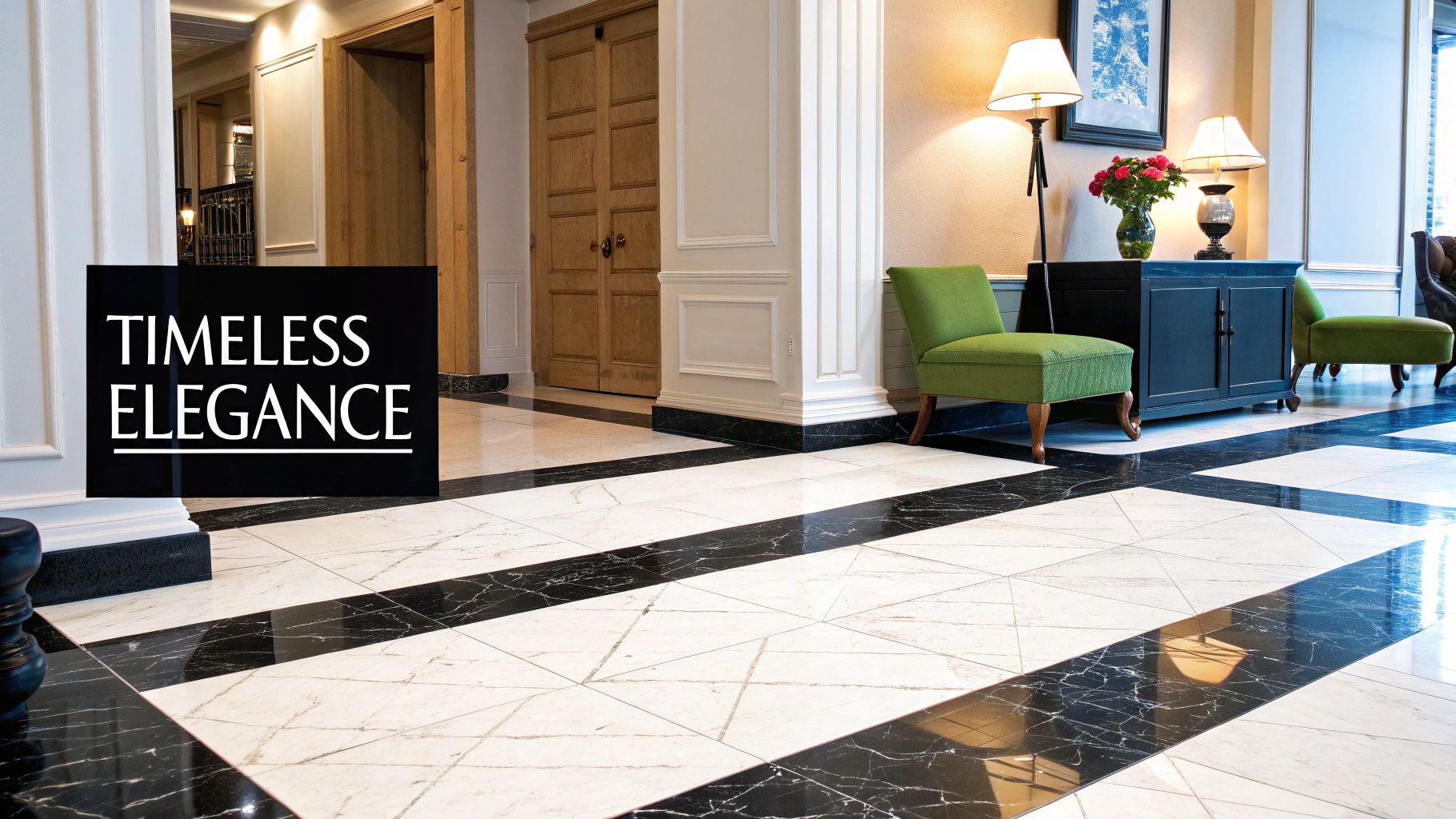
A black and white marble tile floor is more than just a surface; it’s a statement of timeless sophistication. For centuries, this classic combination has been a cornerstone of high-end interior design, using the stark contrast between dark and light stone to create a sense of drama and luxury. It’s a look that feels both historic and strikingly modern, capable of elevating any room it graces.
The Enduring Elegance of Black and White Marble Floors
Walk into a room with a black and white marble floor, and you immediately feel its impact. This isn’t just flooring; it’s a design declaration that has anchored spaces from grand Venetian palaces to sleek contemporary penthouses. The secret to its lasting appeal lies in a simple but powerful design principle: high contrast. The dynamic play between deep, inky blacks and luminous whites creates a visual energy that is at once bold and perfectly balanced.
This type of flooring plays a unique dual role. It can easily be the star of the show, drawing the eye with a classic checkerboard or an intricate mosaic. Yet, its monochrome palette also functions as a surprisingly versatile neutral, providing a sophisticated canvas that complements a huge range of colors and decor styles.
Why This Combination Transcends Trends
Unlike design fads that come and go, the black and white pairing is rooted in deep historical and artistic tradition. It evokes a sense of order, rhythm, and formality that feels both grand and grounded. This timeless quality is a smart investment, ensuring your space won’t look dated in a few years. Instead, it becomes a permanent architectural feature that adds lasting value and appeal.
Few materials can claim this level of adaptability. A black and white marble floor can feel regal and traditional in a historic home or sharp and minimalist in an industrial loft. If you’re looking for more inspiration on how to harness its versatility, you can explore fresh ideas in our essential interior design style guide.
The magic of a black and white marble floor is its ability to be simultaneously simple and complex. It’s a canvas that allows other design elements to shine while still commanding attention with its inherent graphic beauty.
At its core, this combination delivers:
- Visual Drama: The high contrast makes an immediate and memorable impact.
- Timeless Appeal: It has remained in style through countless design movements and will continue to do so.
- Design Versatility: It provides the perfect backdrop for everything from opulent Art Deco to stark minimalism.
Ultimately, choosing this flooring is about crafting a space with confidence, character, and an unwavering sense of style.
Choosing the Right Marble and Finish for Your Space
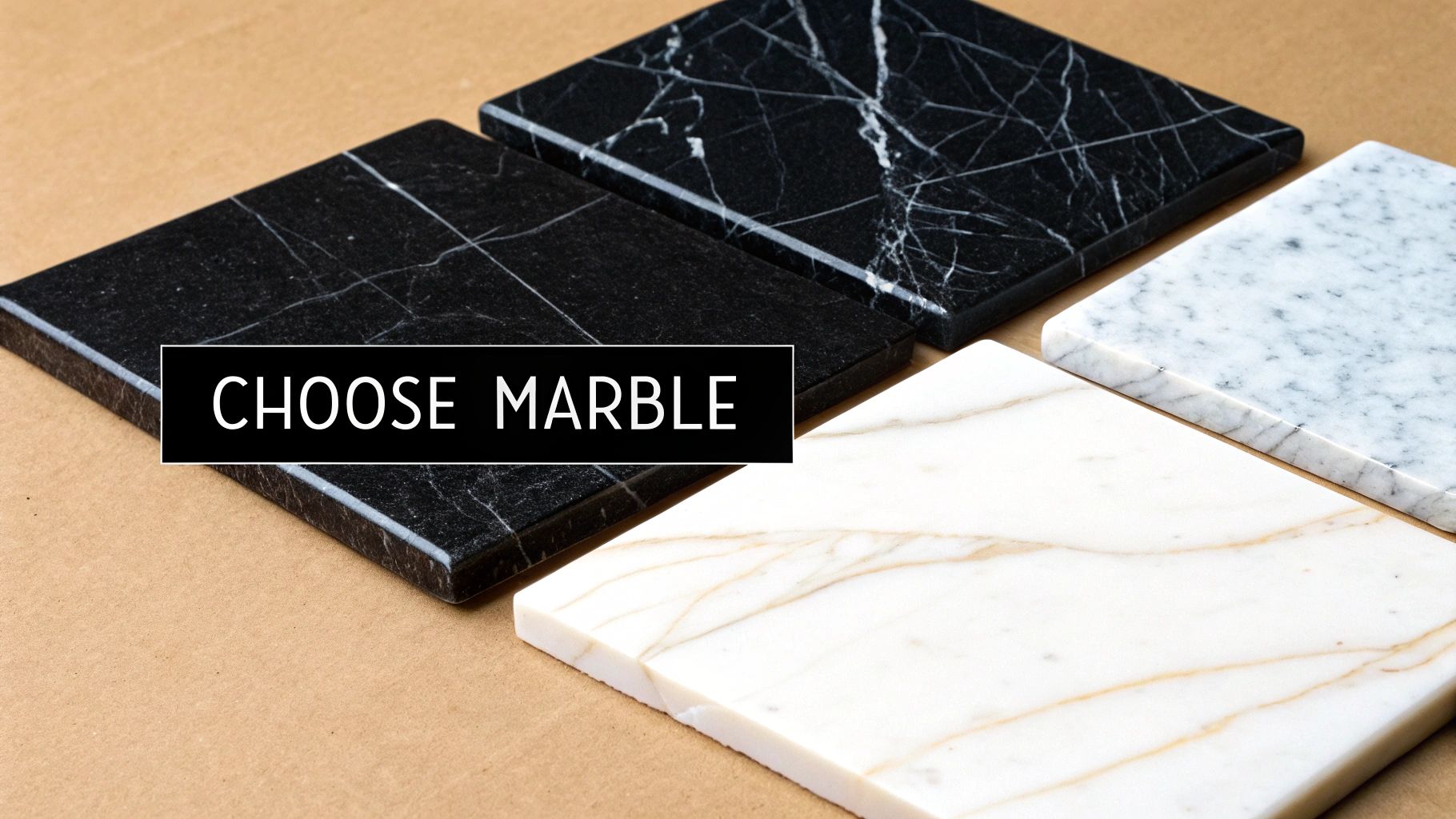
Selecting the perfect stone for a black and white marble floor is a bit like a tailor choosing fabric for a custom suit. The raw material and its texture are everything; they define the final look and feel of the space. Not all marbles are the same, and the subtle differences—from the depth of the black to the character of the white—can completely change a room’s atmosphere.
There’s no denying the timeless appeal of this pairing. In fact, white and black marble together make up nearly half of the world’s marble demand, accounting for a combined 47% of the market share. White marble is a perennial favorite for its luminous quality in luxury homes, while black marble is often specified to create a bold statement in commercial projects. You can dig into more of the numbers on global marble market trends on Market Growth Reports.
Iconic Marble Varieties to Consider
When it’s time to choose your stone, a few classic varieties stand out.
For the black component, Nero Marquina from Spain is an absolute showstopper. It has a deep, jet-black background slashed with crisp, irregular white veining that delivers instant drama and sophistication.
For the white tiles, you have a few incredible options, each with its own personality:
- Carrara: The quintessential Italian marble. It’s known for its soft, feathery grey veining on a more subtle, greyish-white field. It’s a classic for a reason, offering a gentle and refined contrast.
- Calacatta: A much rarer and more luxurious Italian stone. Calacatta boasts a brighter, purer white background that serves as a canvas for bold, dramatic veins in shades of grey and sometimes even gold.
- Thassos: Sourced from Greece, Thassos marble is prized for its pristine, almost crystalline white appearance. With minimal to no veining, it provides a clean, bright, and thoroughly modern look.
The Critical Choice Polished vs Honed Finish
Once you’ve picked the stone, the next major decision is the finish. This choice impacts not just the look but also the day-to-day livability of your black and white marble floor. Think of it as the difference between patent leather and suede—one is slick and shiny, the other is soft and velvety.
A polished finish gives you that high-gloss, mirror-like surface that reflects light beautifully. It makes the stone’s color and veining pop, creating a formal, opulent feel that’s perfect for a grand entryway or a formal dining room. The trade-off? Its slick surface can be slippery when wet and tends to show scratches more readily.
On the other hand, a honed finish is created by sanding the surface to a smooth, matte, or satin-like texture. It’s far less reflective and offers a softer, more contemporary appeal.
A honed finish is my go-to recommendation for high-traffic or wet areas like kitchens and bathrooms. Its slightly textured surface provides much better slip resistance and is incredibly forgiving when it comes to hiding the minor etches and scratches that are a part of daily life.
To help you decide, here’s a quick breakdown of how these two finishes stack up against each other.
Marble Finish Comparison: Polished vs. Honed
| Attribute | Polished Finish | Honed Finish |
|---|---|---|
| Appearance | High-gloss, reflective, vibrant | Matte or satin, low-sheen |
| Feel | Formal, luxurious, glamorous | Understated, contemporary, soft |
| Slip Resistance | Lower (can be very slippery) | Higher (much safer for wet areas) |
| Durability | More susceptible to showing scratches | Better at hiding scratches/etches |
| Maintenance | Shows fingerprints and smudges easily | More forgiving of daily wear |
| Stain Resistance | Slightly less porous due to polishing | Slightly more porous; needs diligent sealing |
| Best For | Grand foyers, formal living/dining rooms | Kitchens, bathrooms, high-traffic areas |
Ultimately, choosing between polished and honed comes down to balancing your aesthetic vision with the practical demands of the room. A polished finish delivers that unmatched glamour, while a honed finish offers a quiet elegance and superior everyday performance.
Mastering Classic Patterns and Layouts
The real magic of a black and white marble tile floor isn’t just in the stone itself—it’s in the pattern. The layout is what tells the story, setting the rhythm, scale, and personality of a room. It’s the subtle difference between a quiet statement and a grand gesture, all crafted from just two timeless colors.
Of course, the most iconic layout is the classic checkerboard. It’s simple, yes, but incredibly powerful. The key to getting it right lies in the scale of the tiles. If you’re working with a large, open space, big tiles—think 18×18 inches or even larger—will create a bold, graphic look that feels impossibly grand. In a smaller space like a powder room or breakfast nook, smaller tiles, maybe 6×6 inches, give off a charming, almost vintage vibe.
The Power of Orientation
Beyond just the size of the tiles, how you orient them can completely trick the eye and change the feel of a room.
A traditional straight-laid pattern, where the tiles line up perfectly with the walls, feels very stable and orderly. It respects the room’s architecture and gives off a formal, grounded energy. It’s a choice that feels deliberate and classic.
But if you want to inject a bit more energy, try laying the tiles on a diagonal. This simple twist has a huge visual payoff. The diagonal lines pull your gaze across the floor, making a narrow hallway feel wider or a small room feel more expansive. It turns the floor from a passive surface into an active part of the design.
Beyond the Classic Checkerboard
While everyone loves a good checkerboard, the design possibilities are so much richer. If you’re after a more intricate or luxurious feel, a few other patterns can deliver incredible visual texture.
- Diamond with Cabochon Insets: This is such an elegant look. You lay larger white tiles on a diagonal and place a small, contrasting square (the cabochon, usually black) at each corner. The effect is sophisticated and jewel-like, adding a beautiful layer of detail.
- Stately Borders: Think of a border as a picture frame for your floor. Framing a room or a central pattern with a solid black or even a patterned marble border adds definition and a sense of formality. It really grounds the space and gives it architectural weight.
- Custom Waterjet Mosaics: For a true showstopper, nothing beats a custom waterjet mosaic. These are intricate designs—from swirling floral motifs to crisp geometric patterns—that turn your floor into a bespoke piece of art. They’re perfect for making a statement in a grand foyer or a formal dining room.
Each pattern tells a different story. A diagonal checkerboard might feel playful and expansive in a kitchen, while a mosaic medallion communicates pure, unadulterated luxury in an entryway. The choice of layout is your opportunity to define the room’s character from the ground up.
You can see these patterns play out beautifully in spaces where the floor is the star, like in many of these stunning white kitchens with marble, where the flooring adds contrast and an unforgettable personality. At the end of the day, the pattern you choose will shape the entire experience of the room, turning a simple surface into a deliberate and captivating design feature.
Ensuring a Flawless and Lasting Installation
A stunning black and white marble tile floor is only as good as the foundation it’s built on. While picking the perfect stone and pattern gets all the attention, it’s the behind-the-scenes work that truly guarantees a lifetime of beauty and prevents costly failures down the road. It all starts with the subfloor.
Think about trying to build a house on soft ground—it’s bound to shift and crack. The same logic applies here. Your subfloor must be perfectly level, completely rigid, and free of any movement. Any bounce or flex, no matter how minor, will eventually transfer up through the tile, leading to cracked marble and crumbling grout. Professionals often have to reinforce wooden subfloors or pour a self-leveling compound over concrete to create that perfect, unyielding base.
The Unsung Heroes: Mortar and Grout
Once the foundation is solid, the focus shifts to what holds everything together. The right thin-set mortar is non-negotiable for a natural stone like marble. You’ll need a high-quality, polymer-modified thin-set that offers both the powerful bond and the slight flexibility needed to handle subtle movements. This is what keeps tiles from popping loose over the years.
Grout selection is also much more than just a color choice. A premium, stain-resistant grout is your first line of defense, especially for keeping that white marble and its grout lines looking crisp and clean. A flexible, sanded grout is usually the way to go, as it’s built to withstand foot traffic and minor shifts without cracking.
The installation process is a craft where precision is everything. Meticulous preparation isn’t just a preliminary step; it is the most important part of the entire project. It’s what ensures your investment becomes a permanent, breathtaking feature of your home.
This visual guide shows the evolution from a simple grid to more intricate layouts, highlighting how different patterns achieve unique design goals.

From the classic checkerboard to an elaborate border, each layout demands absolute precision from the installer to bring the vision to life.
Knowing these technical details helps you have more productive conversations with your installation team. After all, great oversight is a huge part of a successful renovation. Learning about project management for home renovation is a real guide to making sure every detail is handled correctly. By understanding the meticulous work involved, you can ensure your classic black and white marble floor remains a flawless centerpiece for generations.
Protecting Your Investment with Proper Maintenance
A black and white marble floor isn’t just a design choice; it’s a long-term investment in the character and value of your home. With the right care, its classic beauty will last for generations, becoming a true heirloom feature. The good news is, protecting it doesn’t require a complicated regimen—just consistency and a gentle touch.
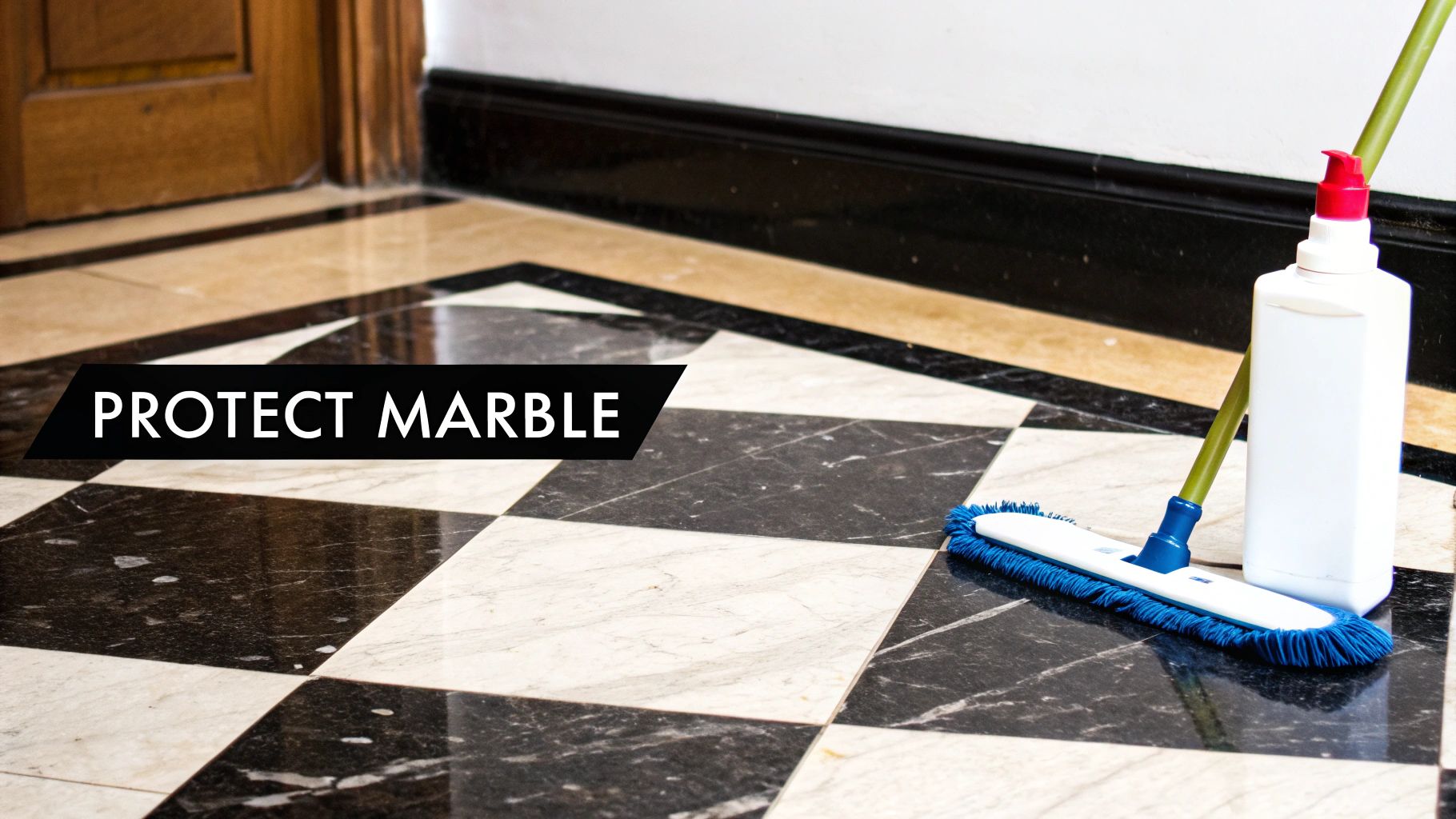
The first and most crucial step is applying a high-quality impregnating stone sealer. Think of it as an invisible shield for your floor. Marble is naturally porous, meaning it acts a bit like a sponge, absorbing liquids that can lead to stubborn stains. A good sealer penetrates deep into the stone, filling those microscopic pores to block spills from ever soaking in.
This isn’t a one-and-done task, though. Over time, foot traffic and cleaning gradually wear down this protective layer. Plan on reapplying your sealer every 1-2 years in high-traffic zones like hallways and kitchens, and every 3-5 years in quieter spaces.
Creating a Simple Cleaning Routine
Keeping your marble floor looking pristine really comes down to daily maintenance. The main goal is simple: remove the fine dust and grit that can act like sandpaper underfoot, scratching the surface. A soft microfiber dust mop is perfect for this daily sweep.
When it’s time for a more thorough clean, the most important rule is to use only pH-neutral cleaners formulated specifically for natural stone. This is where many people go wrong, as common household cleaners are often marble’s worst enemy.
Warning: Avoid acidic substances at all costs. Cleaners containing vinegar, lemon juice, or ammonia will chemically react with the marble, a process called “etching.” This dulls the finish and causes permanent damage that only a professional can fix.
Even something as innocent as a spilled glass of orange juice can leave a lasting mark if you don’t act fast.
First Response for Spills and Scratches
Life happens, but on a marble floor, your reaction time is everything. When a spill occurs, resist the urge to wipe it. Instead, blot it immediately with a soft, absorbent cloth. Wiping just spreads the liquid around, giving it more opportunity to seep into the stone.
For light scuffs or superficial scratches, you might have some luck with a specialized marble polishing powder designed for spot treatments. For anything more serious, like deep scratches or widespread etching, it’s time to call in a professional stone restoration expert. By following these simple guidelines, you can relax and enjoy the daily luxury of your floor, confident that its timeless beauty is well-protected.
When you start thinking about a black and white marble floor, the first number that comes to mind is usually the price per square foot. But that’s just the opening chapter of the story. The true cost of a beautiful, lasting marble installation is a blend of several crucial elements, from the stone’s origin to the skill of the person laying the tile.
The marble itself is, without a doubt, the biggest line item. Not all marble is created equal. A premium stone like Calacatta, coveted for its brilliant white background and bold, dramatic veining, will carry a significantly higher price tag than the more accessible and softer-veined Carrara. That choice alone can swing your material budget by 50% or more.
Peeling Back the Layers of Your Budget
Once you’ve chosen your stone, a handful of other costs come into play. These are the details that separate an amateur job from a professional, heirloom-quality floor. Overlooking them is a recipe for a budget blowout down the road.
Here’s where your money really goes:
- Design Complexity: A classic checkerboard is the most straightforward and budget-friendly pattern. The moment you step into more intricate designs—think herringbone, custom mosaics, or complex borders—you’re adding significant labor costs due to the precision and time required.
- The Installer’s Fee: This is one area you absolutely don’t want to skimp on. Labor rates vary by location, but finding a true stone specialist is paramount. An experienced installer knows how to handle marble’s quirks, preventing costly cracks and mistakes that a general tiler might make.
- Subfloor Prep: Marble is beautiful, but it’s unforgiving. Your subfloor needs to be flawlessly level and rock-solid to prevent tiles from cracking under pressure. You may need to budget for reinforcing the joists or applying a self-leveling compound to get it just right.
- The Unseen Essentials: Don’t forget the supporting cast. High-quality thin-set mortar, waterproofing membranes for bathrooms or entryways, premium grout, and a top-tier stone sealer are all non-negotiable for a floor that’s built to last.
Think of it like buying a fine watch. The movement inside (the marble) is the main event, but the craftsmanship of the case (installation) and the quality of the crystal (sealer and grout) are what protect your investment and make it truly shine.
By seeing the full picture from the start, you can build a realistic budget that accounts for every detail. This foresight is what ensures your stunning new black and white marble floor is a source of joy, not financial stress.
Of course. Here is the rewritten section, crafted to sound like it was written by an experienced interior design professional.
Your Black and White Marble Floor Questions, Answered
You’ve explored the styles and picked the perfect marble, but a few practical questions are probably still floating around. That’s completely normal. In fact, working through these common concerns is the last step before you can move forward with total confidence.
Let’s walk through the questions I hear most often from clients. Getting these details right is what ensures you’ll love your new floor for how it lives, not just how it looks.
Will This Kind of Floor Overwhelm a Small Room?
It’s a fair question. A bold, graphic floor in a compact space sounds like it might be too much, but it’s actually a classic designer move to make a small room feel grand and purposeful. The secret is all in the execution.
By using larger format tiles—think 12×12 inches or even bigger—you’ll have fewer grout lines breaking up the pattern. This immediately creates a cleaner, more expansive feel. Another pro tip is to lay the tiles on a diagonal. This simple trick fools the eye, drawing it along the longest line of the room and making the space feel wider and deeper than it really is.
A black and white marble floor doesn’t shrink a small room; it gives it a powerful personality. When handled correctly, the high contrast adds depth and character, not clutter.
Can I Install Radiant In-Floor Heating?
Absolutely, and you’ll be glad you did. Marble is a fantastic conductor of heat, which makes it a perfect match for radiant heating systems. The stone soaks up the warmth and then radiates it slowly and evenly into the room. There’s nothing quite like that gentle, luxurious warmth underfoot.
It’s an especially popular upgrade in bathrooms and primary suites, completely changing the feel of the space on a cold morning. Just be sure to bring in a professional for the installation; they’ll know exactly how to embed the system correctly to account for the stone’s natural expansion and contraction.
What’s the Best Finish for High-Traffic Areas?
For any part of the house that sees a lot of action—entryways, hallways, kitchens—my recommendation is almost always a honed finish. Its soft, matte surface is incredibly forgiving. It does a much better job of hiding the minor scratches and etch marks that are just a part of everyday life in a busy home.
But it’s not just about looks. A honed finish offers far better slip resistance than polished marble, which can get notoriously slick, especially when wet. For the most lived-in spaces in your home, honed marble gives you that perfect blend of beauty, durability, and peace of mind.