


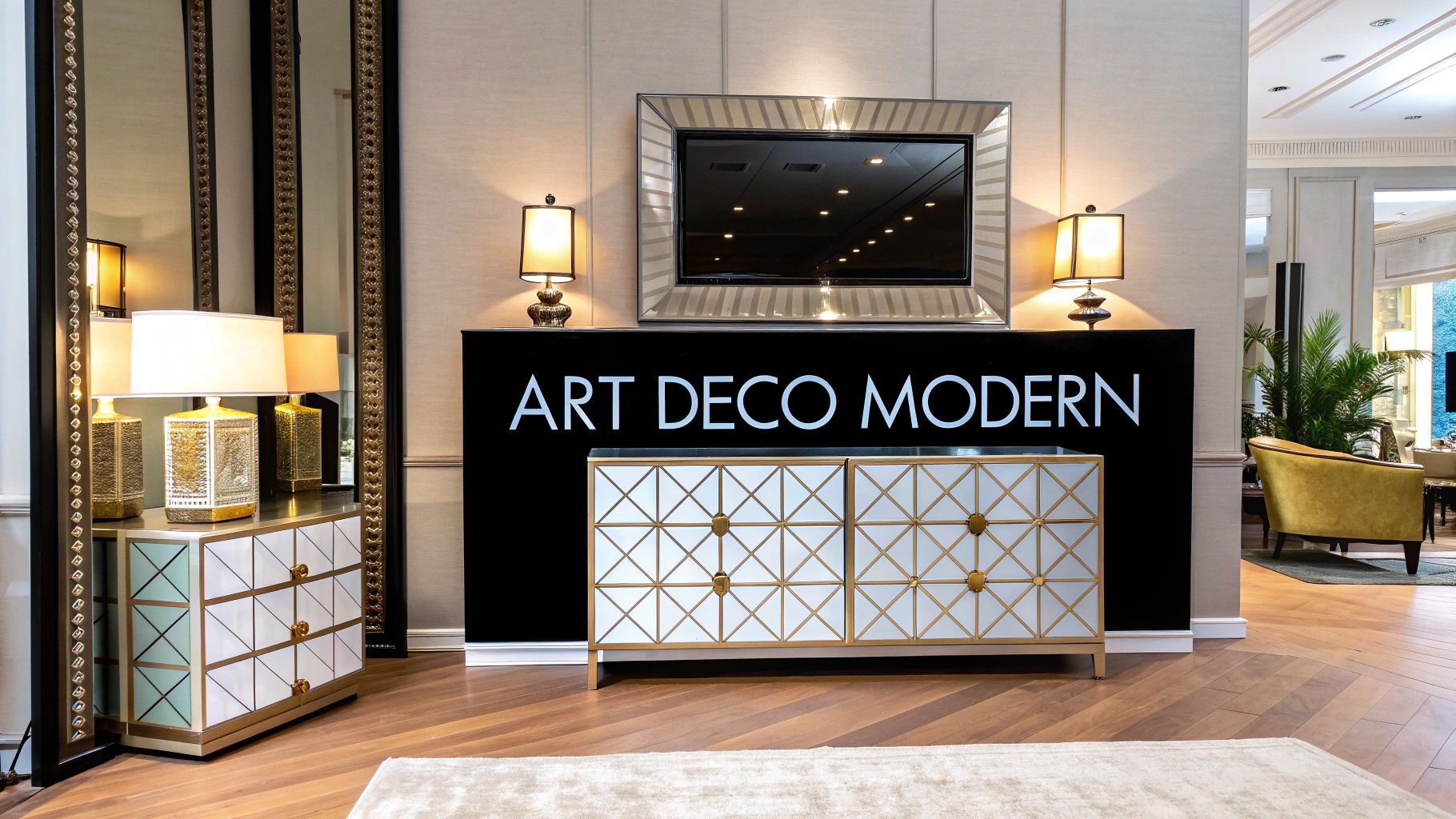
Step into a world where the unbridled optimism of the Jazz Age meets the clean, considered lines of modern life. This is the very soul of Art Deco modern interior design—a confident, artistic, and luxurious style that feels both deeply rooted in history and perfectly in sync with today.
The Art of Art Deco Modern Interior Design
At its heart, Art Deco modern is a brilliant fusion, blending the theatrical glamour of the 1920s and 30s with the restraint of contemporary minimalism. It’s less of a rigid style and more of a conversation between two distinct eras. One whispers of opulence and ornamentation, while the other speaks to simplicity and function.
The magic happens when these two voices harmonize. The goal isn’t to create a museum-like replica of a historic room. Instead, we selectively borrow the most compelling Art Deco motifs—its bold geometric patterns, lavish materials, and sculptural silhouettes—and thoughtfully place them within a clean, modern context. The result is an environment that feels curated yet comfortable, a perfect equilibrium of past and present.
A Story of Glamour and Progress
The original Art Deco movement was a direct reflection of its time, born from the energy of the industrial boom and a worldwide fascination with technology and global cultures. It made its grand debut at the 1925 Exposition Internationale des Arts Décoratifs et Industriels Modernes in Paris, an event so influential it drew over 16 million visitors in just six months and gave the style its name. If you’re interested in diving deeper, you can explore more historical design trends and their lasting impact.
At its core, Art Deco modern interior design is about selective drama. It’s the art of choosing a few iconic, high-impact elements—like a sunburst mirror or a velvet channel-tufted sofa—and allowing them to command attention in an otherwise streamlined, contemporary space.
This curated approach is what keeps the style from feeling costumey or dated. The modern elements act as a clean canvas, allowing the Art Deco accents to inject personality, history, and a dose of glamour. It’s this very balance that makes the style so appealing to discerning clients and designers who are after a look that’s both sophisticated and timeless.
A few key principles guide this aesthetic:
- Strategic Opulence: Luxurious materials like marble, brass, and velvet are used with intention, not excess. They appear as impactful statements rather than overwhelming decoration.
- Geometric Harmony: Strong, iconic patterns—think chevrons, zig-zags, and sunbursts—are integrated in a way that energizes the space without dominating it.
- Streamlined Forms: The ornate, decorative details of Art Deco are beautifully juxtaposed with the clean, simple lines of modern furniture and architecture.
Understanding the Signature Elements of Art Deco
To truly master the Art Deco modern style, you have to get fluent in its visual language. This isn’t just about surface-level glamour; it’s a deliberate, almost theatrical, assembly of powerful symbols that tell a story of progress, luxury, and unshakeable confidence. Grasping the “why” behind each characteristic is what separates a novice attempt from a truly sophisticated application.
At its heart, Art Deco is a full-throated celebration of geometry. You can think of it as controlled energy, captured and solidified in physical form. The style is defined by its bold, clean lines and strict symmetry—a radical break from the soft, flowing organic shapes that defined the Art Nouveau movement just before it. This intense focus on structure was a direct reflection of the era’s obsession with machinery, speed, and the raw power of the industrial age.
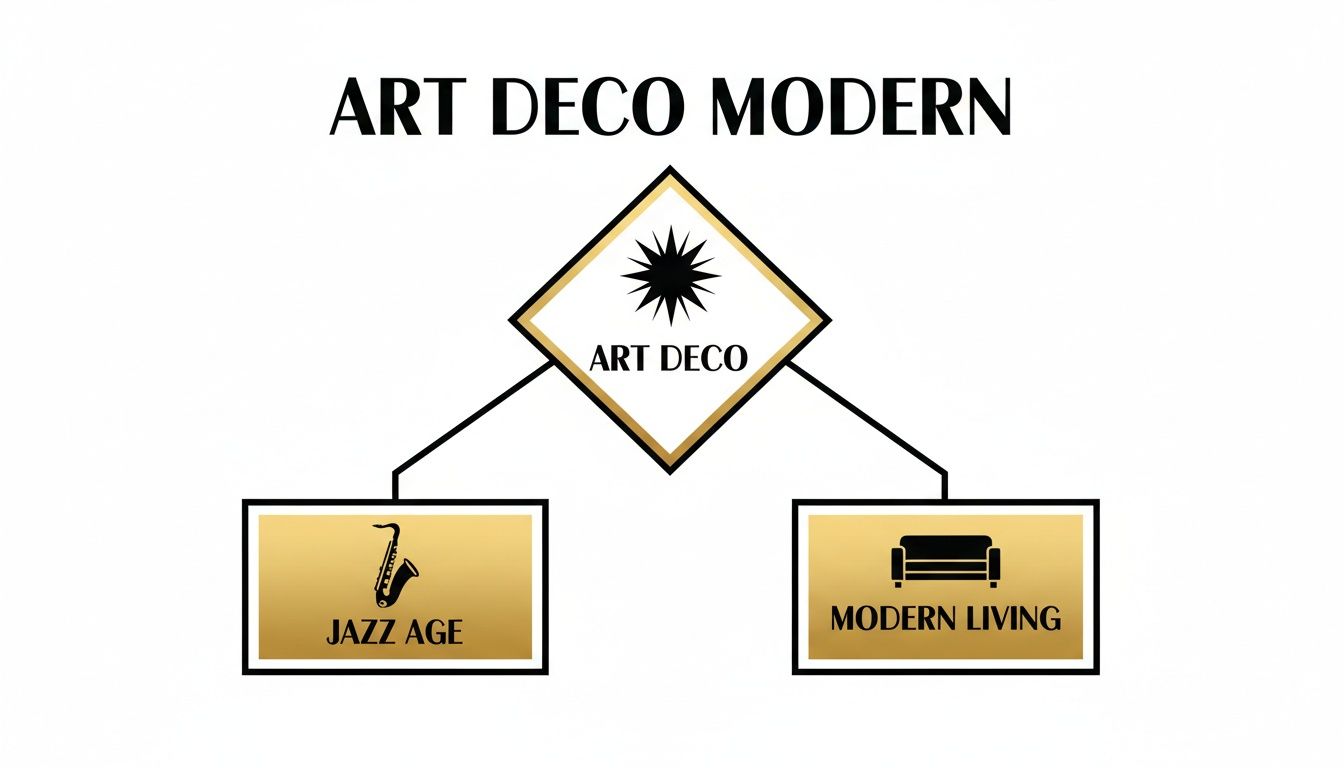
This diagram neatly illustrates how the style’s foundational principles branch out, capturing the vibrant energy of the Jazz Age while laying the groundwork for the sleek functionality of modern living. It’s this unique blend that gives Art Deco its enduring power.
The Power of Pattern and Motif
Art Deco patterns are instantly recognizable, and for good reason—they carry a ton of symbolic weight. These motifs aren’t just pretty decorations; they are engineered to create a sense of soaring upward movement, unapologetic opulence, and pure dynamism. The inspiration was pulled from everywhere, from ancient Egyptian tombs to the gleaming pistons of a brand-new engine.
Here are the geometric motifs that form the style’s DNA:
- Sunbursts: You’ll see this everywhere—on mirrors, lighting, and intricate marquetry. The sunburst, or sun-ray, motif is all about optimism and the dawn of a new era. It radiates energy from a central point, immediately drawing the eye and creating a powerful focal point.
- Chevrons and Ziggurats: These sharp, stepped, angular patterns are pure architectural bravado, echoing the iconic silhouettes of new skyscrapers and ancient pyramids. The ziggurat, a terraced pyramid shape, builds a sense of grandeur and verticality, symbolizing ambition and human achievement.
- Stylized Florals and Fauna: Forget the realistic botanicals of other styles. Art Deco abstracts nature, reducing flowers, gazelles, and fountains down to their essential geometric forms. The result is a sleek, sophisticated interpretation that feels both impossibly elegant and undeniably strong.
This strategic use of motifs is absolutely central to the style’s identity. In a modern Art Deco space, a single, perfectly placed sunburst mirror or a rug with a bold chevron pattern can anchor the entire room. It injects that historical character without ever feeling like a museum piece.
Materiality and Luxurious Finishes
The materials chosen for Art Deco interiors were every bit as important as the shapes themselves. The style makes no apologies for its love of opulence, using finishes that catch the light and create an immediate sense of grandeur. This was a direct celebration of the new materials and technologies made possible by industrial innovation.
Highly polished and reflective surfaces were everything. Think of glossy lacquered wood, a finish that takes incredible craftsmanship to achieve but results in a deep, liquid, mirror-like sheen. This was often set against metals like polished chrome, brass, and stainless steel, which brought in a cool, sleek contrast. These materials weren’t just for show; they captured the streamlined aesthetic of modern machinery, ocean liners, and automobiles.
To add warmth and complexity, exotic woods like Macassar ebony and rich walnut burl provided stunning organic patterns that played beautifully against the man-made metals. Intricate inlaid designs, often using luxurious materials like mother-of-pearl or ivory, showcased an incredible level of detail and artistry.
By truly understanding these core elements, you can start to select pieces that don’t just look the part but also tell the authentic, compelling story of art deco modern interior design.
To crystallize these concepts, the table below breaks down the key historical elements of Art Deco and shows how they are intelligently reinterpreted in today’s high-end interiors.
Key Art Deco Elements and Their Modern Application
| Art Deco Element | Historical Significance | Modern Interior Application |
|---|---|---|
| Symmetry & Geometry | Reflected the order and power of the machine age; a departure from nature-inspired Art Nouveau. | Creates balanced, uncluttered layouts. Used in furniture silhouettes, custom millwork, and tile patterns for a strong foundation. |
| Sunburst & Fan Motifs | Symbolized optimism, dawning eras, and energy. Often used as a central, radiating focal point. | Appears in statement mirrors, lighting fixtures (sconces, chandeliers), and inlaid details on console tables or headboards. |
| Ziggurats & Chevrons | Evoked skyscrapers and ancient pyramids, representing ambition, height, and modernity. | Integrated into rug patterns, fireplace surrounds, and decorative screen designs to add vertical interest and dynamic energy. |
| Lacquered Surfaces | A luxury finish demonstrating craftsmanship and a love for high-gloss, reflective materials. | High-gloss cabinetry, sideboards, or coffee tables in deep jewel tones or classic black provide a polished, sophisticated anchor. |
| Polished Metals | Chrome, brass, and steel were celebrated for their sleek, industrial, and modern feel. | Used for furniture legs, lighting hardware, faucet fixtures, and decorative trim to add a layer of polished, reflective glamour. |
| Exotic Woods & Inlay | Showcased global reach and a taste for rare, beautiful materials like Macassar ebony and burl wood. | High-end casegoods, wall paneling, or custom flooring featuring exotic veneers provide rich texture and visual depth. |
This translation is key: it’s not about replicating a 1920s room but about infusing a contemporary space with the soul, confidence, and curated luxury that define Art Deco.
Crafting the Perfect Art Deco Color and Material Palette
Art Deco modern design is a full sensory experience, a sophisticated conversation between color and texture. Getting this interplay right is what creates a space that feels both authentic to the era and emotionally resonant for today. The style really offers two distinct color stories, each capable of setting a completely different mood—from theatrical grandeur to a much softer, serene elegance.
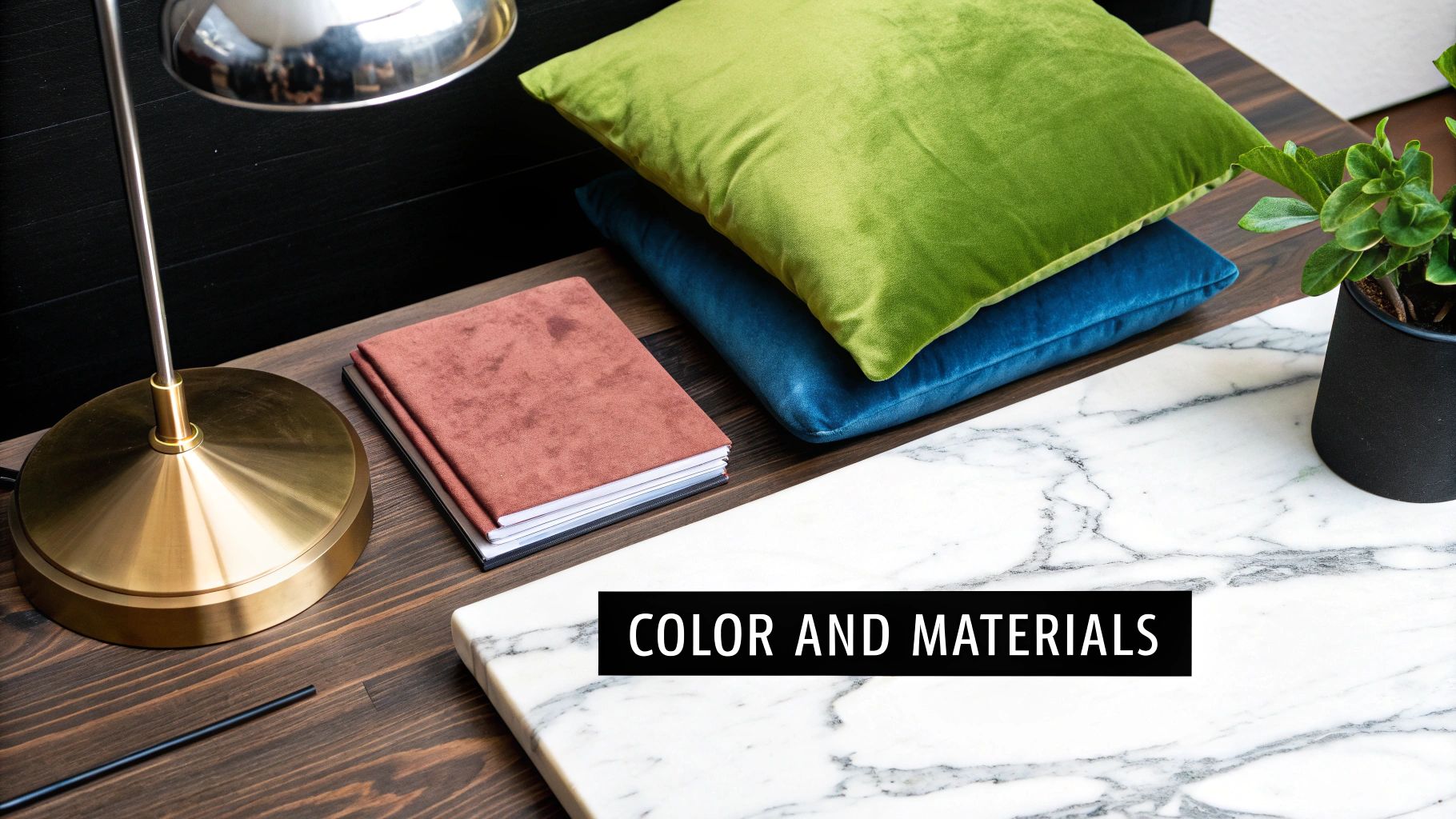
The first, and arguably most iconic, palette is all about high drama and contrast. It’s built on a foundation of deep black and crisp white, often punctuated by the brilliant flash of polished gold or brass. This classic trio immediately creates a powerful, graphic statement that is unmistakably Art Deco.
Layered on top of this base are rich, saturated jewel tones. We’re talking emerald green, sapphire blue, deep burgundy, and vibrant amethyst. These colors are never used timidly; they command attention on statement upholstery, lacquered accent furniture, or luxurious drapery, adding a real sense of cultivated opulence. Understanding how these bold hues affect a room’s feel is crucial, and you can delve deeper into this by mastering interior design color psychology to truly refine your selections.
The Softer Side of Glamour
But there’s another side to Art Deco, one expressed through a more subdued and calming palette. This approach leans into creams, beiges, and soft dove grays for a neutral foundation, which immediately creates a lighter, airier atmosphere. This softer scheme is often paired with cool, sleek metals like chrome and silver to provide a modern, understated shimmer.
To keep this palette from feeling flat, soft pastels are brought in as accents—think dusty rose, pale mint green, or a muted sky blue. This colorway was especially popular in the coastal expressions of Art Deco, like in Miami’s historic district, and it translates beautifully into contemporary interiors that aim for a gentler kind of glamour.
The key to a successful Art Deco palette isn’t just the colors themselves, but the confident and intentional way they are combined. Whether bold and dramatic or soft and ethereal, the palette should feel deliberate and curated, with each hue playing a specific role in the overall composition.
A Symphony of Tactile Materials
Beyond color, the very soul of Art Deco is found in its rich and varied materials. The style is a masterclass in contrasting textures, creating spaces that aren’t just visually stunning but also irresistibly tactile. This deliberate layering of materials is what gives Art Deco modern design its profound sense of luxury and depth.
The core principle is simple: balance hard, sleek surfaces with soft, plush textures. This creates a dynamic tension that is both exciting and harmonious.
- Lustrous Metals: Polished chrome, stainless steel, and gleaming brass are non-negotiable. You’ll find them in furniture legs, striking light fixtures, mirror frames, and decorative inlays, bringing a touch of industrial precision and reflective light into the room.
- Exotic and Lacquered Woods: Highly polished, dark woods like Macassar ebony, rich walnut, and rosewood add organic warmth and visual weight. High-gloss lacquer finishes—especially in black or a deep jewel tone—provide a sleek, almost liquid-like surface that feels incredibly decadent.
- Sumptuous Textiles: Velvet is the quintessential Art Deco fabric, loved for its deep pile and ability to hold rich, saturated color. It’s the go-to for sofas and armchairs. Other luxurious options include silk, satin, and mohair, often used for cushions, throws, and drapery to add layers of softness.
- Elegant Stone and Glass: Marble, with its dramatic veining, is a favored material for flooring, tabletops, and fireplace surrounds. It’s often paired with mirrored surfaces or frosted and etched glass, which play with light and reflection to enhance the sense of glamour and space.
Choosing Iconic Art Deco Furniture and Lighting
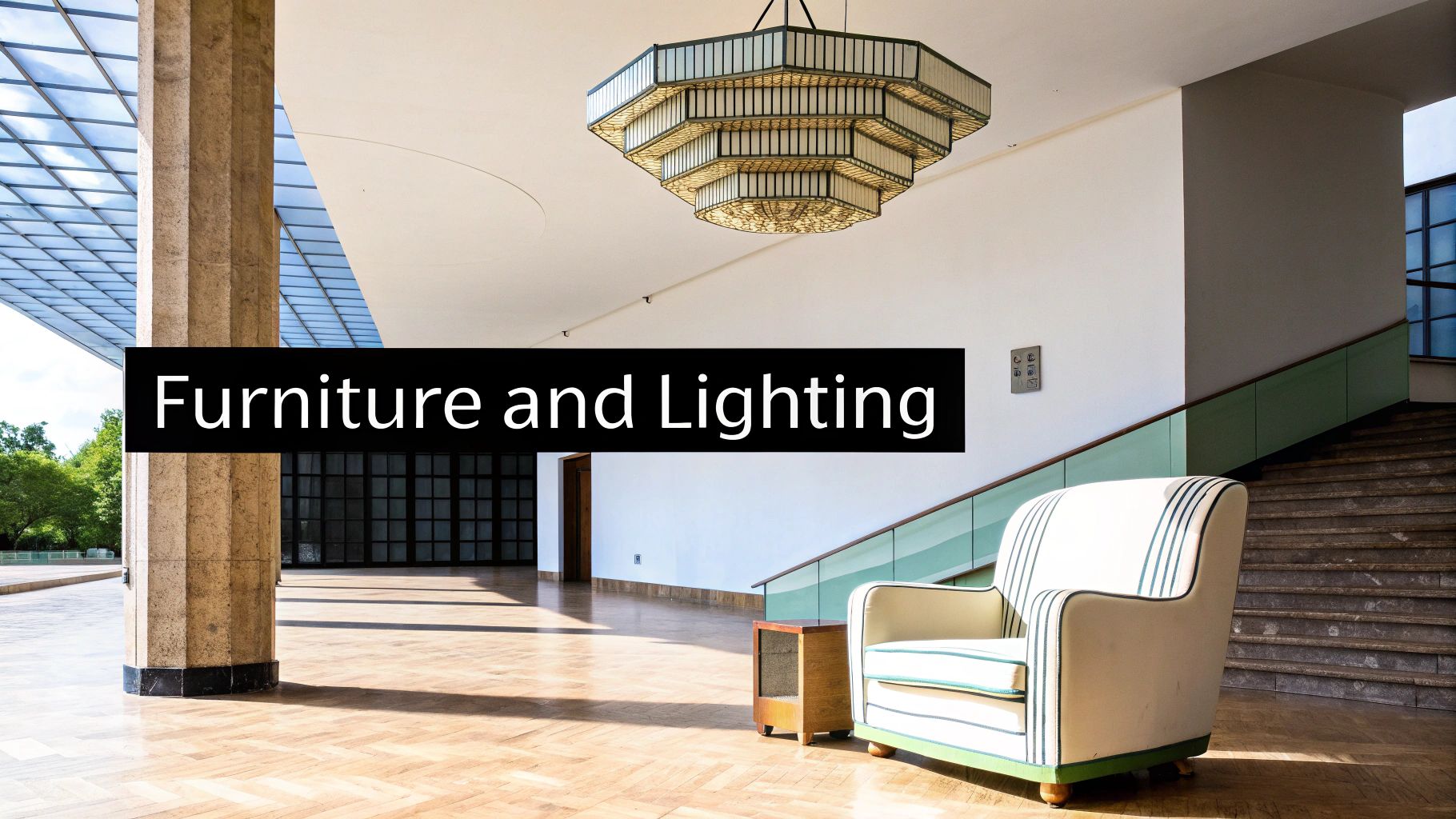
In any Art Deco interior, the furniture and lighting are the showstoppers. Think of them less as functional necessities and more as sculptural art pieces that capture the entire spirit of the room. These aren’t just background elements; they are bold, dramatic statements defined by powerful forms and unapologetically luxurious finishes. The real skill lies in striking that perfect balance between period authenticity and modern comfort.
Art Deco furniture has a certain confidence. It’s defined by its streamlined silhouettes, strong geometric shapes, and sweeping, elegant curves. Picture a low-slung club chair with a rounded barrel back, wrapped in a rich, touchable velvet. Or maybe a console table with a stepped, ziggurat profile, finished in a mirror-like black lacquer or exotic Macassar ebony. These pieces are meant to be seen and admired.
Selecting Statement Furniture Pieces
When you’re curating furniture, the two things to obsess over are form and materiality. The designs are often impeccably symmetrical, built from materials that simply demand attention. The trick is to create a dynamic conversation between the different textures and shapes in the space. For example, the cool, hard gleam of a chrome-and-glass coffee table provides a stunning contrast to the softness of a plush, channel-tufted sofa.
Key archetypes to look for when sourcing furniture include:
- Curved Sofas and Armchairs: Seek out those beautiful shell-back or channel-tufted silhouettes. Upholstery in jewel-toned velvets or smooth, supple leather adds that essential touch of opulence and comfort.
- Lacquered Cabinets and Sideboards: A high-gloss finish—whether in classic black, a deep moody blue, or a soft cream—lends a sleek, reflective quality to the room. Look for exquisite details like inlaid sunburst motifs or heavy, polished brass hardware.
- Geometric Console Tables: With their stepped forms or clean, bold lines, these pieces are ideal for making an entrance feel grand or for anchoring the space behind a sofa. Finishes in exotic wood veneers or mirrored surfaces are hallmarks of the style.
Art Deco furniture was designed to impress. Each piece has such a strong presence that it’s crucial to give them room to breathe. The key is to avoid overcrowding. Instead, let one or two iconic selections command the space, especially in a living room.
Of course, knowing how to arrange these powerful pieces is just as important as choosing them. For a deeper dive into creating a space that feels both grand and intimate, you can explore our guide on how to design a living room.
Illuminating with Dramatic Lighting
Lighting in an Art Deco scheme is never an afterthought—it’s a central, starring element. The fixtures are often the most theatrical objects in the entire room, sculpting the space with both light and intricate shadow play. They are almost always crafted from materials like polished brass, chrome, and frosted or etched glass to produce a truly dazzling effect.
Look for fixtures that celebrate geometric forms and an aspirational sense of height. Tiered chandeliers that look like frozen waterfalls of light make an unforgettable statement in a dining room or a grand entryway. Wall sconces, often shaped like stylized fans, shells, or torches, provide beautiful layers of ambient light while acting as pieces of art in their own right. For a softer, more atmospheric glow, globe or drum pendants in opal glass diffuse the light beautifully, creating an instant sense of intimacy. The right lighting does more than just brighten a room; it makes the metallic finishes sparkle and brings out the deep luster of lacquered surfaces, truly making the entire design sing.
Bringing History Home: A Miami Beach Case Study
To see how these historical ideas come to life in contemporary luxury, you only need to look at the living portfolio of American Art Deco: Miami’s South Beach. It’s far more than a vacation spot. For designers, it’s a hands-on lesson in adapting a bold, glamorous aesthetic to a sun-drenched, modern way of life. The pastel-hued buildings along Ocean Drive aren’t just artifacts; they are active muses for today’s most innovative interiors.
Miami Beach is home to the world’s largest collection of Art Deco architecture, with over 800 preserved structures packed into its historic district. This incredible ensemble was famously rescued from the wrecking ball in the 1970s, saving a unique design language that continues to shape art deco modern interior design. For those interested, you can discover the full story of the Art Deco revival.
Translating Architecture to Interiors
Designers steeped in the Miami scene often pull cues directly from the neighborhood’s architectural DNA. The famous pastel color palettes—those soft pinks, mint greens, and powder blues that paint the city’s skyline—are thoughtfully brought inside luxury coastal homes. The result is a serene, airy interior that feels glamorous yet deeply connected to its stunning surroundings.
The same translation happens with materials and forms. Classic terrazzo flooring, once the standard for grand hotel lobbies, is now being reimagined for modern mansions as a durable and decorative foundation. The iconic “eyebrow” window shades, sweeping curved corners, and porthole windows seen on the exteriors now inspire interior features, from gracefully arched doorways to custom, rounded cabinetry.
The genius of modern Miami design lies in its ability to distill the optimism and glamour of the original Art Deco movement into a language that speaks to contemporary coastal living. It’s never about replication, but reinterpretation.
A Modern Narrative with Historic Roots
This approach gives us a powerful visual blueprint for blending past and present. It’s a perfect example of how to borrow from a rich history without creating a space that feels like a time capsule. Instead, the final interior feels layered, meaningful, and completely of the moment.
The goal is to capture the feeling of Miami Art Deco—its vibrant energy, its bond with the tropical landscape, and its built-in sense of occasion. A few key strategies make this possible:
- Light and Reflection: Using oversized mirrors and high-gloss surfaces to bounce light around a room, echoing the way sunlight glints off the ocean and the city’s bright facades.
- Stylized Tropical Motifs: Weaving in abstract palm fronds, wave patterns, or even subtle flamingo-inspired shapes into textiles, wallpapers, and custom metalwork.
- Seamless Indoor-Outdoor Flow: Creating an effortless transition between interior spaces and exterior lanais or pools with large glass doors and continuous flooring—a modern spin on the original style’s celebration of leisure.
By studying these real-world applications, designers can craft spaces that honor a classic era while perfectly serving a modern client’s lifestyle. This sophisticated approach is beautifully demonstrated by top firms in South Florida, as seen in the distinguished work of designers in the Coral Gables area who master this very type of historical fusion.
Your Guide to Making Art Deco Work Today
Bringing the glamour of Art Deco into a modern home is where the real magic happens. It’s one thing to admire the theory, but quite another to make it work with your floor plan and lifestyle. Let’s tackle the common questions that pop up when it’s time to translate that grand vision into a livable, breathable space.
Think of this as the final, practical step—the conversation that empowers you to start your project with clarity and confidence. We’ll move past the concepts and into the real-world strategies for creating a home that feels both historically rich and perfectly of the moment.
How Do I Use Art Deco Without My Home Feeling Like a Museum?
This is the number one concern I hear from clients: creating a home that feels like a film set instead of a genuine, modern residence. The secret isn’t historical recreation; it’s strategic integration. You’re not aiming for a full period room. Instead, you’re curating a few high-impact elements that tell a story.
It’s all about creating a dialogue between the past and present. Start with one spectacular statement piece—maybe a magnificent sunburst mirror above a clean-lined, contemporary console table. Or perhaps a bold, geometric rug that anchors an otherwise minimalist seating arrangement. This selective, curated approach ensures the style feels intentional, not like a costume.
Another fantastic technique is to borrow the Art Deco color palette—those deep jewel tones and shimmering metallics—and apply it to modern forms. Think rich emerald velvet on a sofa with simple, clean lines, or brass inlays on a minimalist cabinet. You get all the glamour, but built on a contemporary foundation that keeps the space from feeling stuck in time.
What Are the Best Rooms for an Art Deco Modern Look?
Art Deco was born to be seen, so its inherent glamour is a perfect match for social spaces designed to impress. Its dramatic flair absolutely sings in areas where you entertain guests.
- Living Rooms: The ideal stage for a luxurious curved sofa, a dramatic tiered chandelier, or a pair of sculptural club chairs.
- Dining Rooms: A beautiful setting to show off a sleek, lacquered sideboard and a major statement light fixture that sets a sophisticated mood.
- Home Bars: Even a compact home bar or a chic bar cart becomes a perfect canvas for high-gloss finishes, metallic accents, and mirrored details.
That said, its elegance translates beautifully into private spaces, too. A primary bedroom can become a truly opulent retreat with a tall, channel-tufted headboard, mirrored nightstands, and soft, layered lighting. Don’t overlook smaller opportunities like a powder room or home office, either. These confined spaces are a fantastic place for a concentrated dose of the style—you can go bolder with a geometric wallpaper or a striking marble vanity without overwhelming the home’s overall design.
What Common Mistakes Should I Avoid?
Even with the best intentions, a few common pitfalls can quickly derail the elegance of an Art Deco modern interior. The most frequent mistake, by far, is overdoing it. By its very nature, Art Deco is a bold style. When you layer too many competing patterns, textures, and objects, the look can slide from chic to chaotic in a heartbeat.
The key is to choose your heroes—your focal points—and give them space to breathe. A single, powerful statement piece loses all its impact when it has to shout over everything else in the room. Less is almost always more with such a strong aesthetic.
Ignoring scale is another classic misstep. Art Deco furniture often has a substantial, sculptural quality. It’s critical to make sure the pieces you choose are proportional to the room itself. The goal is to feel grand, not cramped.
Finally, don’t compromise on the quality of materials. This style is defined by luxury and fine craftsmanship. Using cheap imitations or low-grade materials will instantly deflate the entire aesthetic. To get that authentic, elegant result, you must invest in real materials: solid wood, genuine metal, rich velvets, and polished stone. It’s the only way to achieve a look that lasts.
Ready to bring your vision of timeless glamour to life? The most distinguished professionals in luxury design are waiting to collaborate with you. At Haute Design, we connect discerning clients with the industry’s top interior designers and architects who specialize in creating extraordinary environments. Find your perfect design partner on our exclusive network and begin your journey toward a truly exceptional home.