


Your digital portfolio is more than a gallery; it’s the first handshake with a potential high-net-worth client. In the world of luxury architecture, your website must communicate sophistication, unparalleled expertise, and a deep understanding of your client’s aspirations before a single word is spoken. It needs to be a meticulously designed space that tells a story, your story, and showcases the caliber of your work through an immersive digital experience.
This curated guide moves beyond simple aesthetics to dissect the very best architecture portfolio website examples. We will analyze the strategic elements that make them effective tools for client acquisition. Our focus is on the specific design choices, user experience (UX) decisions, and narrative techniques that attract and convert affluent clientele.
Inside this comprehensive breakdown, you will find:
- In-depth analysis of portfolio websites built on powerful platforms like Webflow, Squarespace, and Wix.
- Actionable takeaways you can immediately apply to refine your own digital blueprint.
- Direct links and screenshots for a clear, visual understanding of each example’s strengths.
Discover how to transform your online presence from a static gallery into a powerful engine for business development. Learn the strategies used by elite firms, including the distinguished members of Haute Design, to articulate value and secure high-caliber projects. Let’s explore the digital blueprints that build legacies.
1. Webflow Templates Marketplace
For architectural firms seeking a high-end digital presence without the timeline or budget of a fully custom build, the Webflow Templates Marketplace offers an exceptional starting point. This platform provides a curated library of premium, ready-made website templates designed specifically for visual portfolios. Architects can purchase a template, visually customize it within Webflow’s powerful no-code editor, and launch a sophisticated site in a fraction of the usual time. It stands as a premier example of how to achieve a bespoke look with the efficiency of a pre-built foundation.
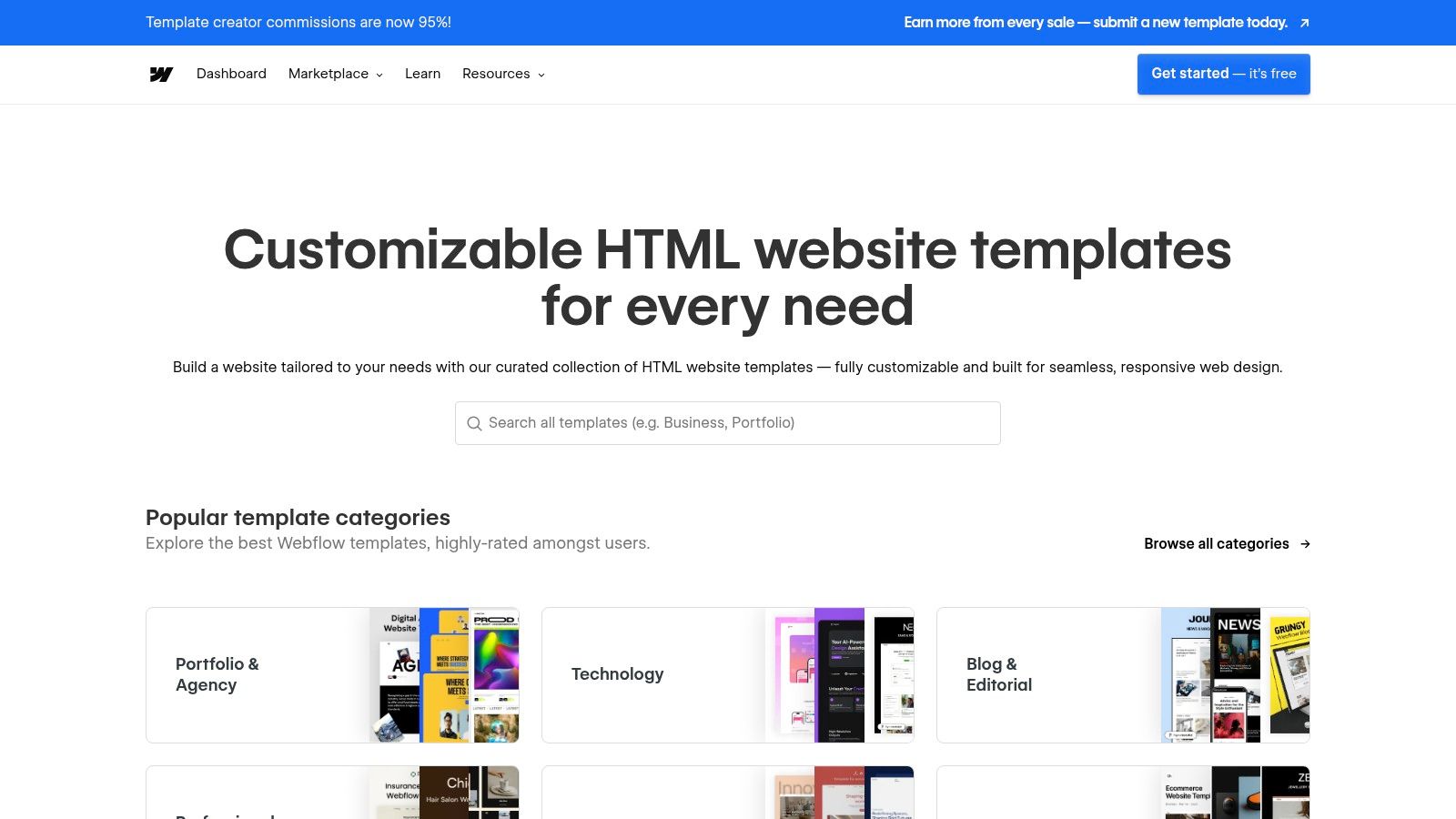
The platform excels by offering templates that already incorporate the structural and aesthetic elements essential for a luxury architecture portfolio. These aren’t generic business themes; they are purpose-built with features like dynamic CMS-driven project galleries, elegant page transition animations, and layouts optimized for high-resolution imagery. This focus on sophisticated motion design and visual storytelling makes it a powerful tool for firms aiming to impress discerning, affluent clients.
Strategic Breakdown: How to Leverage Webflow Templates
Webflow’s marketplace provides a direct path to a polished digital portfolio, but its true power lies in strategic selection and customization.
- Project-Centric Structure: Most architecture templates come with pre-built Content Management System (CMS) collections for projects, team members, and services. This allows firms to easily add, update, and manage their portfolio content without needing a developer.
- High-Fidelity Animations: The templates often feature smooth, subtle animations and interactions that elevate the user experience. These details, like parallax scrolling and gentle fade-in effects, convey a sense of modern precision and quality that resonates with luxury clientele.
- Responsive by Design: Templates are built to be fully responsive, ensuring your portfolio looks impeccable across desktops, tablets, and mobile devices, which is critical for clients viewing your work on the go.
Key Insight for Luxury Firms: A template is not the end product; it is the starting framework. Affluent clients value uniqueness. Use a Webflow template as a high-quality base, then customize typography, color palettes, and imagery to align perfectly with your firm’s brand identity. The goal is to make the template unrecognizable as a template.
Actionable Takeaways for Your Firm
- Prioritize the “Live Preview”: Before purchasing, thoroughly explore the live preview of any template. Navigate every page, test it on different devices, and ensure its core structure and user flow align with how you want to present your projects.
- Verify CMS Structure: Check that the template’s CMS is robust enough for your needs. Does it have fields for project location, year, lead architect, and a rich text editor for detailed case studies? This foresight saves significant time later.
- Invest in Professional Assets: A premium template demands premium content. Your investment in a Webflow template will only pay off if you populate it with professional photography, videography, and well-written project descriptions. High-quality visuals are non-negotiable for an effective architecture portfolio website example.
Learn more at: Webflow Templates Marketplace
2. Squarespace
For architects and boutique firms that prioritize speed, ease of use, and a clean, modern aesthetic, Squarespace is an industry-standard all-in-one platform. It bundles hosting, domain management, and a powerful website builder into a single subscription, making it an incredibly efficient way to launch a professional online portfolio. With its curated selection of portfolio-centric templates and intuitive drag-and-drop editor, Squarespace allows designers to create visually compelling sites without writing a single line of code.
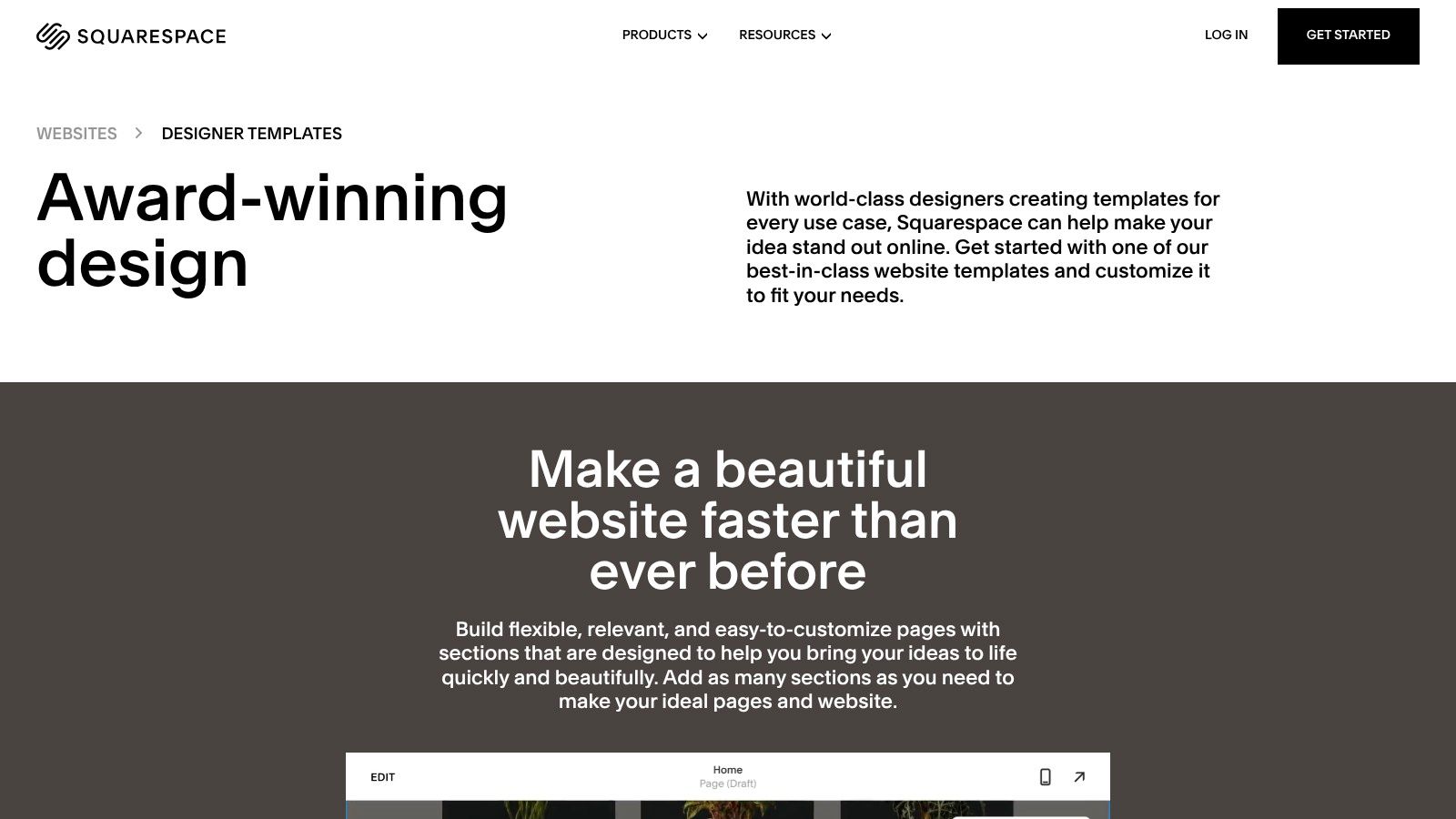
Squarespace excels in its streamlined approach to portfolio creation. The platform’s templates are designed with a minimalist, image-forward philosophy, allowing high-resolution project photography to take center stage. While it may offer less granular control than a platform like Webflow, its strength lies in its simplicity and reliability. This makes it a fantastic choice for firms that need a polished, low-maintenance digital presence that just works, enabling them to focus on their architectural practice rather than complex web development.
Strategic Breakdown: How to Leverage Squarespace
Squarespace provides a direct and accessible route to a professional portfolio. Success on the platform comes from choosing the right template and using its built-in tools to create a seamless brand experience.
- Template as a Foundation: Squarespace templates are professionally designed to be mobile-optimized and visually balanced out of the box. Select a template that most closely matches your firm’s aesthetic to minimize customization and get your site live faster.
- Fluid Engine for Layouts: The platform’s Fluid Engine editor gives users a grid-based system for more precise drag-and-drop control over text, images, and other elements. This allows for the creation of unique, asymmetrical layouts that can make a template-based site feel more custom.
- Integrated SEO and Analytics: Squarespace includes built-in tools for search engine optimization and website analytics. This integrated functionality helps firms track visitor engagement and improve their visibility on search engines without needing third-party plugins.
Key Insight for Luxury Firms: While Squarespace is user-friendly, a high-end portfolio requires more than default settings. Invest time in customizing typography, spacing, and color palettes to match your brand guide perfectly. Use high-quality, professionally shot images and videos to ensure your projects are presented with the polish they deserve.
Actionable Takeaways for Your Firm
- Select a Portfolio-First Template: Browse the template library specifically for designs geared toward portfolios or photography. These often include pre-built gallery pages and project layouts that are ideal for showcasing architectural work.
- Master the Image Block: The core of any architecture portfolio website example is its imagery. Learn the different presentation options within Squarespace’s Image Block, such as inline, poster, card, and collage, to create dynamic and engaging project pages.
- Use Summary Blocks to Curate Content: Use Summary Blocks to create curated grids of your projects on the homepage or a main portfolio page. This feature allows you to pull content from other parts of your site and display it in a visually appealing, organized manner.
Learn more at: Squarespace Designer Templates
3. Wix
Wix is a versatile and user-friendly website builder that provides an accessible entry point for architects and firms needing to establish a digital presence quickly. It distinguishes itself with a dedicated portal for architecture portfolios, offering curated templates, step-by-step guidance, and even an AI site generator. This combination of tools allows for rapid deployment of a professional-looking site, making it ideal for emerging practices or those needing a high-quality online portfolio without a steep learning curve or significant initial investment.
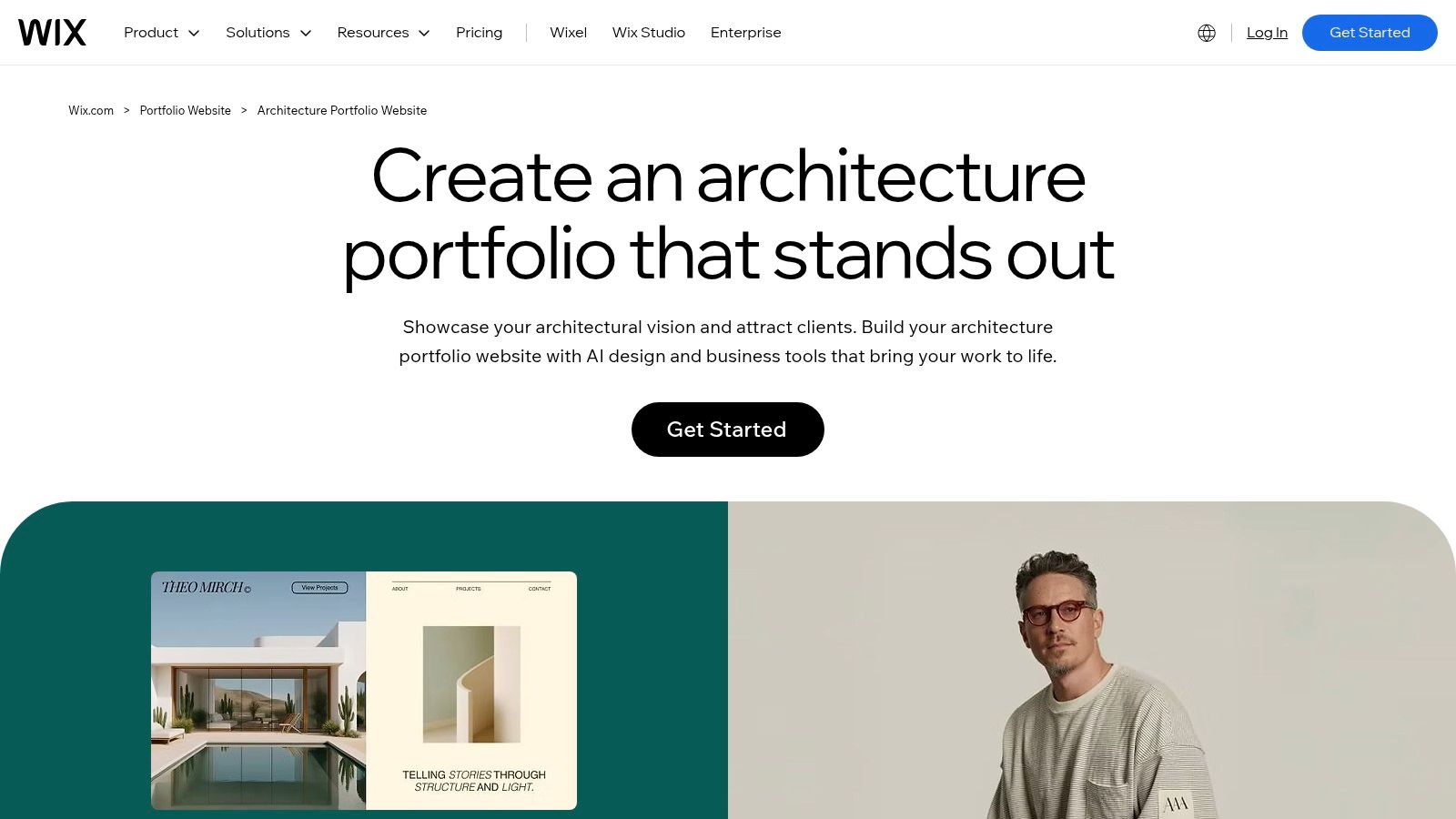
The platform’s strength lies in its balance of simplicity and functionality. The drag-and-drop visual editor, combined with templates specifically designed for architectural showcases, removes many technical barriers. These templates come pre-loaded with essential features like project galleries, sliders, and contact forms, allowing firms to focus on content rather than code. The inclusion of an AI builder that can generate a first-draft site from a simple brief further streamlines the process, offering a solid foundation that can be refined and personalized.
Strategic Breakdown: How to Leverage Wix
Wix offers a direct and efficient route to a polished portfolio, but its real value is unlocked through thoughtful use of its extensive features and app ecosystem.
- Template as a Launchpad: Start with one of the many curated architecture templates. These are designed with visual storytelling in mind, often featuring full-bleed image backgrounds and clean, grid-based layouts perfect for showcasing project photography.
- Leverage the App Market: Extend your site’s functionality with the Wix App Market. Add features like advanced booking forms for client consultations, professional blog layouts for sharing insights, or integrated social media feeds to build a more comprehensive brand presence.
- AI-Powered Foundation: For ultimate efficiency, use the Wix ADI (Artificial Design Intelligence) tool. Answer a few questions about your firm, and it generates a complete website draft, including text and images, which you can then customize to fit your specific brand identity.
Key Insight for Luxury Firms: While Wix is known for its accessibility, a premium aesthetic is achievable. The key is to override the template’s default settings with high-end brand assets. Invest in a custom font, develop a sophisticated color palette, and use only professional, high-resolution imagery to elevate the final product beyond its template origins.
Actionable Takeaways for Your Firm
- Explore the Architecture-Specific Templates: Go directly to the Wix portfolio section for architects. These templates are pre-vetted and structured to meet the needs of a design firm, saving you from sorting through irrelevant business themes.
- Test Both Editors: Wix offers its classic drag-and-drop editor for total creative control and the more structured “Editor X” for advanced responsive design. Test both to see which one aligns best with your technical comfort level and design goals.
- Plan for Scalability: While the free plan is useful for a trial, a professional firm must upgrade to a premium plan to remove Wix branding and connect a custom domain. Factor this cost into your budget from the start to ensure a professional outcome for your architecture portfolio website example.
Learn more at: Wix for Architecture Portfolios
4. Format
For architects and small firms prioritizing a streamlined, visually-led portfolio, Format offers a compelling and focused solution. This website builder is specifically engineered for creative professionals, stripping away the e-commerce and business complexities of other platforms to concentrate on what matters most: showcasing projects. It provides a curated selection of elegant, minimalist templates designed to frame high-resolution images, architectural drawings, and project narratives without distraction. Format is an excellent example of a platform that simplifies the process of creating a professional online presence.
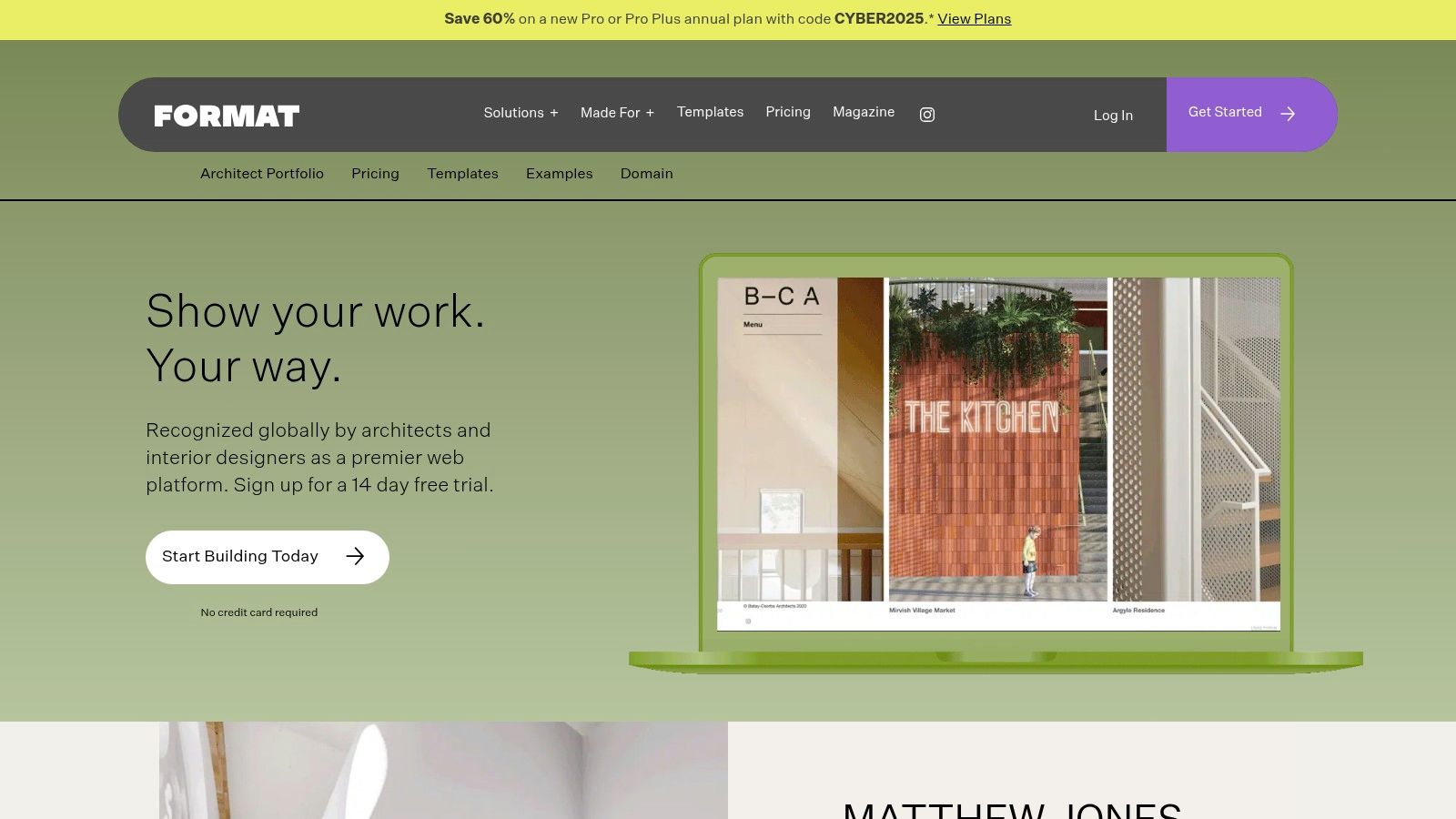
The platform’s key differentiator is its simplicity and specialized feature set. Where other builders aim to be a jack-of-all-trades, Format hones in on portfolio-centric tools. Features like private, password-protected client galleries are invaluable for sharing project updates or specific drawing sets with clients discretely. This targeted approach ensures that architects can build a clean, effective, and manageable site that puts their work at the forefront, appealing to clients who value clarity and sophistication.
Strategic Breakdown: How to Leverage Format
Format’s strength lies in its focused toolset, which can be strategically used to create a direct and impactful digital portfolio.
- Template Specialization: With over 90 templates, many are tailored for visual storytelling. Architects should choose themes that offer full-screen image displays and clean, legible typography to let the project photography speak for itself.
- Private Client Galleries: This feature is a significant value-add for client relations. Use it to securely share construction progress photos, finish options, or final design sets, enhancing the client experience with a professional, branded portal.
- Integrated Blogging: The built-in blog is an excellent tool for content marketing. Firms can publish project narratives, design philosophy articles, or case studies to demonstrate expertise and improve their site’s SEO performance.
Key Insight for Luxury Firms: While Format is simpler than other platforms, its client gallery tool offers a touch of exclusivity. Use this feature to deliver a premium, private viewing experience for high-value clients, reinforcing a sense of personalized service and confidentiality.
Actionable Takeaways for Your Firm
- Evaluate Content Limits: Before committing, carefully review the image, page, and video limits on Format’s pricing plans. Select a tier that accommodates your current portfolio and allows for future growth to avoid unexpected restrictions.
- Utilize SEO Tools: Take full advantage of the built-in SEO tools. Customize page titles, meta descriptions, and image alt-text for each project to improve your visibility in search results for specific architectural styles or locations.
- Create a Narrative for Each Project: Use the combination of gallery and text blocks to tell a compelling story for each project. A well-crafted narrative adds depth and context, turning a simple gallery into a powerful case study and a more engaging architecture portfolio website example.
Learn more at: Format
5. Behance
For architects seeking inspiration, competitive analysis, and a platform to showcase their work to a global creative community, Behance stands as an essential resource. Hosted by Adobe, this free, searchable gallery is less a website builder and more of a vast digital stage for creative portfolios. It allows architects to study countless presentation styles, from student concepts to professional masterpieces, making it an unparalleled tool for refining one’s own portfolio narrative and visual language. It is a prime example of how a community platform can elevate individual presentation skills.
Behance excels by providing an open, dynamic environment focused purely on the quality of the work presented. Its curated Architecture galleries, with powerful filters like “Most Appreciated” and “Most Viewed,” offer direct insight into what resonates with a design-savvy audience. This is not about building a standalone firm website; it is about participating in the creative zeitgeist, gathering feedback, and understanding how to frame a project to capture maximum attention and acclaim.
Strategic Breakdown: How to Leverage Behance
While not a replacement for a dedicated firm website, Behance is a powerful strategic tool for market research, inspiration, and establishing authority within the design community.
- Benchmark Presentation Quality: Use the platform to study how leading architects and emerging talents structure their case studies. Analyze their use of imagery, drawings, text, and layout to tell a compelling story for each project.
- Curate with Intent: A Behance portfolio is not a comprehensive archive but a curated highlight reel. Select only your strongest projects and present them with meticulous detail. This focused approach is more effective for attracting high-caliber attention.
- Engage the Community: Actively follow other creators, provide thoughtful comments, and appreciate work that inspires you. This engagement increases your own profile’s visibility and positions you as a knowledgeable voice in the architectural discourse.
Key Insight for Luxury Firms: Affluent clients often conduct their own research. A highly appreciated Behance project can serve as a powerful, third-party validation of your firm’s creative excellence and industry recognition. Use it as a supplementary marketing channel to reinforce the prestige established on your primary website.
Actionable Takeaways for Your Firm
- Focus on Project Storytelling: A Behance project is a long-scroll, visual essay. Structure your presentation with a clear narrative arc, from initial concept sketches and renderings to final, professional photographs. Your ability to showcase the process is as important as the final product.
- Optimize Your Cover Image: The project cover image is the single most important element for earning a click. It must be powerful, intriguing, and perfectly composed. This is where investing in top-tier architectural photography becomes critical. For a deeper dive into creating compelling visuals, discover these interior design photography tips for stunning photos.
- Use High-Resolution Assets: Behance is a visual platform that supports large, high-resolution images. Do not compromise on quality. Upload crisp renderings, detailed drawings, and stunning photographs to create an immersive and professional architecture portfolio website example that commands respect.
Learn more at: Behance Architecture Galleries
6. Archinect
For architects and students looking to integrate their portfolio within a dynamic professional ecosystem, Archinect serves as a vital community hub and career-focused platform. It goes beyond a simple portfolio host by connecting an individual’s work directly to job opportunities, industry discussions, and editorial content. Architects create a personal profile where they can upload projects and embed polished, full-screen PDF portfolios, making it a go-to resource for recruiters and firms in the U.S. seeking new talent. It is an excellent example of a portfolio that functions as both a showcase and a networking tool.
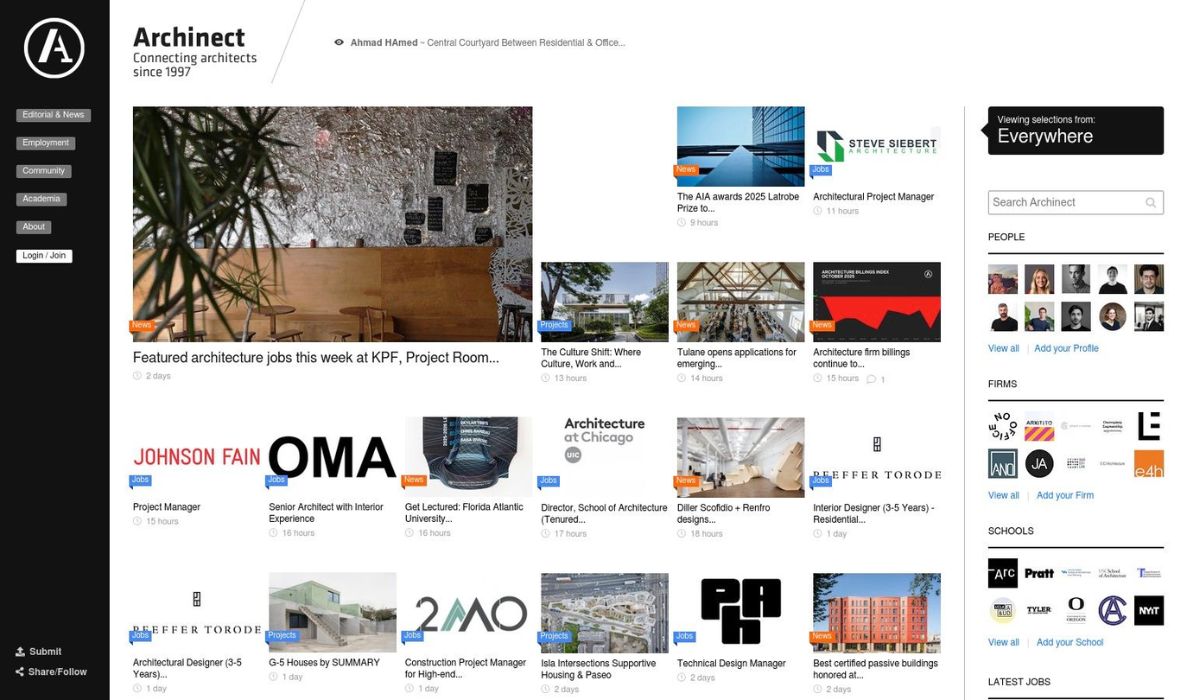
The platform’s strength lies in its highly targeted audience. Unlike general portfolio sites, everyone on Archinect is part of the architecture world, from seasoned partners at global firms to emerging students. This creates an environment where work is viewed by a knowledgeable and relevant audience. The integration of its portfolio feature with the “Talent Finder” job board means that a well-crafted profile can actively attract career opportunities from firms who subscribe to the service to scout talent.
Strategic Breakdown: How to Leverage Archinect
Archinect is more than a digital folder for your work; it’s a strategic tool for career visibility. Maximizing its potential requires understanding its community-centric nature.
- PDF Portfolio Integration: Archinect allows for embedding high-resolution PDFs, often via services like Issuu. This lets you present your portfolio exactly as it was designed, with full control over layout, typography, and the narrative flow of your projects, preserving the integrity of your brand presentation.
- Active Career Ecosystem: Your portfolio is not passive. It is directly linked to a job board actively used by employers. Maintaining an updated profile and portfolio ensures you are visible to firms and recruiters who pay for access to the Talent Finder database.
- Community and Content Engagement: Archinect features forums and editorial content that discuss best practices, including portfolio design. Participating in these discussions and staying informed on industry trends can provide insights that help refine your portfolio presentation to meet employer expectations.
Key Insight for Luxury Firms: While individuals use Archinect for job seeking, firms can use it for talent acquisition and brand presence. By encouraging key team members to maintain polished profiles, a firm showcases its collective talent. Accessing the Talent Finder (a subscription-based service) allows firms to proactively recruit top-tier individuals whose portfolios demonstrate an alignment with a high-end aesthetic.
Actionable Takeaways for Your Firm
- Craft a Dedicated PDF Portfolio: Don’t just upload a collection of images. Design a cohesive, branded PDF document that tells a story about your projects. This professional presentation is crucial for making a strong impression on potential employers or collaborators who see it as a reflection of your overall architectural design process steps.
- Complete Your Profile Meticulously: Fill out every section of your Archinect profile, including your bio, work experience, and skills. The platform’s search and filtering tools rely on this data, and a complete profile ranks higher and appears more professional to recruiters.
- Use High-Quality Thumbnails: When uploading individual projects to your profile, use compelling thumbnail images. These are the first visuals viewers will see, and they need to be strong enough to entice a click-through to your full project details or embedded PDF.
Learn more at: Archinect
7. Issuu
For architects and firms that have invested heavily in beautifully designed, print-ready portfolio books, Issuu provides an elegant solution for digital presentation. It is a digital publishing platform that transforms static PDFs into interactive, flippable online documents. This allows firms to present their carefully curated, multi-page portfolios online with the same narrative flow and visual pacing as a physical book, offering a sophisticated alternative to a standard webpage-based portfolio.
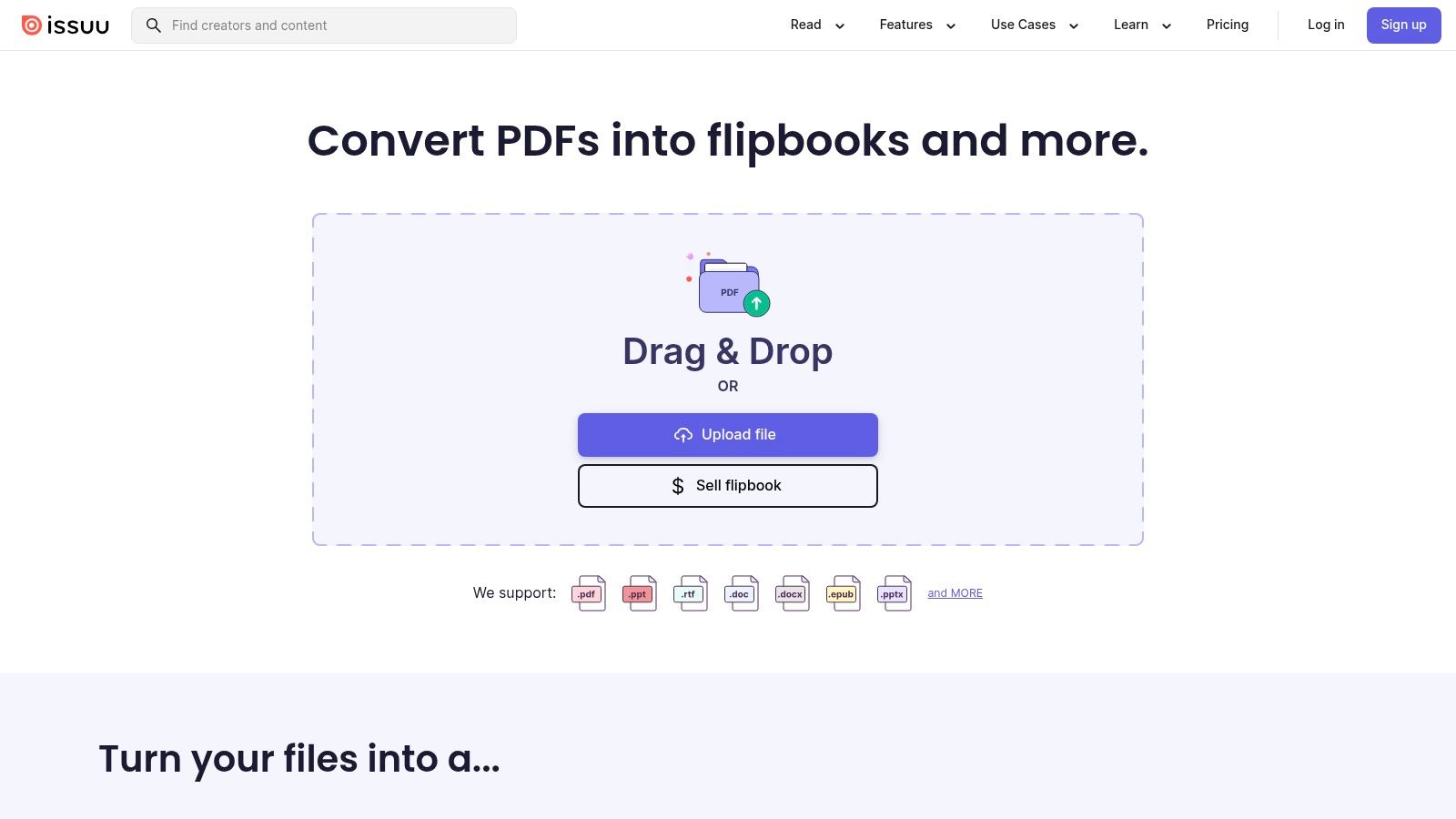
The platform’s strength lies in its high-fidelity flipbook viewer, which preserves the integrity of complex layouts, detailed drawings, and two-page spreads. This is particularly valuable for showcasing project narratives that unfold over several pages, a common format in architectural presentations. Instead of forcing a print layout into a vertical scroll, Issuu maintains the intended design, providing clients with a familiar and controlled viewing experience that feels premium and intentional.
Strategic Breakdown: How to Leverage Issuu
Issuu is most effective when used as a strategic supplement to a primary website, allowing you to offer a different kind of deep-dive experience.
- Embeddable Viewer: The platform’s core feature is its embeddable viewer. This allows you to integrate your full, high-resolution portfolio directly into a page on your firm’s website, providing a seamless user experience without forcing visitors to leave your domain.
- Preservation of Print Design: For portfolios designed with a strong graphic identity and specific typographic or layout rules, Issuu ensures that design intent is not lost in translation to the web. It is ideal for presenting detailed architectural drawings that benefit from its zoom and full-screen capabilities.
- Link Sharing for Specific Audiences: You can create and share direct links to your portfolio, which is perfect for targeted outreach to potential clients, competition submissions, or press inquiries where a comprehensive, book-style document is more appropriate.
Key Insight for Luxury Firms: While a great tool, Issuu should not be your only digital presence. Affluent clients expect a dynamic, easily navigable website. Use Issuu to host a “deeper look” version of your portfolio or specific project books, presenting it as an exclusive, in-depth resource linked from your main project pages.
Actionable Takeaways for Your Firm
- Optimize Your PDF for Digital Viewing: Before uploading, ensure your PDF is optimized for screens. This means using RGB color mode, compressing images appropriately to reduce load times, and ensuring text is vector-based for crisp rendering when zoomed.
- Invest in a Paid Plan: The free version of Issuu includes ads and limitations that can detract from a luxury brand image. A paid subscription removes branding, unlocks analytics, and allows for more seamless, unbranded embedding, which is essential for a professional presentation.
- Integrate, Don’t Just Link: Rather than just sending a link to your Issuu profile, embed the portfolio viewer on a dedicated page of your website. This keeps traffic within your ecosystem and provides a more integrated and professional architecture portfolio website example for potential clients to explore.
Learn more at: Issuu
Top 7 Architecture Portfolio Website Platforms Comparison
| Option | Implementation Complexity 🔄 | Resource Requirements ⚡ | Expected Outcomes 📊 | Ideal Use Cases 💡 | Key Advantages ⭐ |
|---|---|---|---|---|---|
| Webflow Templates Marketplace | Moderate 🔄🔄 — visual editing with CMS setup | One-time template ($49–$129) + Webflow hosting; moderate design time ⚡ | Polished, interaction-rich architecture sites with CMS for projects 📊 | Firms wanting high-polish portfolios with advanced interactions 💡 | Ready-made high-end layouts, built-in animations, CMS structure ⭐ |
| Squarespace | Low 🔄 — drag-and-drop, limited custom code | Subscription (≈ $16+/mo) includes hosting, domain and support ⚡ | Clean, mobile-optimized portfolio sites with built-in SEO/analytics 📊 | Small firms/solo architects seeking all-in-one simplicity 💡 | All-in-one hosting + templates + 24/7 support; easy maintenance ⭐ |
| Wix | Low–Moderate 🔄🔄 — flexible visual editor, some limitations | Free tier available; premium plans and apps increase cost ⚡ | Flexible, imagery-focused portfolios; AI can generate starter drafts 📊 | Quick launches, students, users wanting many template choices 💡 | AI builder, large template/app ecosystem, easy to learn ⭐ |
| Format | Low 🔄 — portfolio-first templates, minimal extras | Paid tiers with content/image caps; optional code access ⚡ | Streamlined portfolio presentation with client galleries 📊 | Creatives needing client sharing and focused portfolios 💡 | Client galleries, portfolio-optimized themes, low distraction ⭐ |
| Behance | Very Low 🔄 — upload/curate only (no site build) | Free with Adobe ID; no hosting control ⚡ | Wide discovery and inspiration; portfolio browsing and feedback 📊 | Inspiration, benchmarking, exposure to creative community 💡 | Large, free showcase audience; curated architecture galleries ⭐ |
| Archinect | Low–Moderate 🔄🔄 — profile + PDF embedding | Free profiles; some recruiter tools/subscriptions for employers ⚡ | Architecture-specific visibility and hiring connections 📊 | Job-seeking architects and those targeting industry audiences 💡 | Niche audience, job board (Talent Finder), recruiter access ⭐ |
| Issuu | Low 🔄 — publish and embed PDFs/flipbooks | Free tier limits pages/size; paid for analytics/branding ⚡ | Print-style, embeddable flipbook portfolios with fullscreen viewer 📊 | Sharing print-ready spreads and embeddable portfolio pages 💡 | Polished flipbook viewer; easy embed for portfolio sites ⭐ |
Your Digital Front Door: Elevating Your Practice with a Strategic Online Presence
The exceptional architecture portfolio website examples we’ve explored throughout this guide do more than just display beautiful projects. They function as powerful, strategic assets that articulate a unique brand identity, captivate a discerning audience, and actively generate high-value client inquiries. They prove that in the luxury market, a digital portfolio is not a passive archive; it’s your most persistent and persuasive advocate.
From the bespoke animations enabled by Webflow to the elegant, gallery-focused simplicity of Squarespace, each platform offers a distinct pathway to achieving digital excellence. The key is to move beyond mere presentation and embrace strategic communication. Your website must instantly convey your design philosophy, demonstrate a deep understanding of your ideal client’s lifestyle, and provide a seamless, intuitive user experience that reflects the meticulous quality of your built work.
Synthesizing Key Strategies for a High-Caliber Portfolio
Distilling the insights from our showcase, several core principles emerge as non-negotiable for architects and designers targeting the luxury sector. Implementing these will fundamentally elevate your online presence from a simple gallery to a client-generation engine.
- Storytelling Over Static Imagery: The most compelling portfolios weave a narrative around each project. They use high-quality photography, videography, and concise, evocative text to tell the story of the design challenge, the creative solution, and the resulting client experience.
- User Experience as a Brand Promise: A clunky, slow, or confusing website silently communicates a lack of attention to detail. An effortless, intuitive, and mobile-responsive user experience, on the other hand, reassures a potential client that you prioritize precision and quality in every facet of your practice.
- Clarity in Specialization: Affluent clients seek experts. Your website must immediately signal your niche, whether it’s minimalist residential design, sustainable commercial spaces, or historic preservation. This focus builds authority and attracts qualified leads who are already seeking your specific skill set.
Your Actionable Next Steps
Armed with these insights, the path forward involves a series of deliberate decisions. To transform your digital presence, consider the following roadmap:
- Define Your Core Narrative: Before you choose a platform or template, clarify your brand story. What is your unique design philosophy? What problems do you solve for your clients? This narrative will be the guiding force behind all your content and design choices.
- Audit and Curate Your Visuals: High-caliber clients expect high-caliber imagery. Invest in professional architectural photography and videography. Be ruthless in your curation; it is far better to show five exceptional projects than twenty mediocre ones.
- Select the Right Tool for the Job: Your choice of platform should align with your technical comfort, budget, and customization needs.
- For Maximum Creative Control: Webflow is the clear winner for those who want a completely bespoke, animation-rich site without writing code from scratch.
- For Elegant Simplicity: Squarespace and Format offer stunning, professionally designed templates that prioritize visual impact with minimal technical fuss.
- For All-in-One Solutions: Wix provides a user-friendly drag-and-drop editor with extensive features, suitable for those who want a straightforward process.
- For Community and Exposure: Platforms like Behance and Archinect can supplement your primary website, offering a built-in audience of peers and potential collaborators.
Ultimately, the best architecture portfolio website examples serve as a testament to a firm’s vision and professionalism. Your website is your digital front door, and for today’s luxury client, it’s often the very first interaction they will have with your brand. By applying these strategies, you can ensure that the first impression is one of unparalleled quality, clear vision, and undeniable expertise, paving the way for the high-value projects you deserve.
Ready to elevate your visibility and connect with a pre-qualified audience of affluent homeowners and design enthusiasts? Joining the Haute Design network places your firm alongside the most respected names in luxury architecture and design. Let us amplify your brand and showcase your portfolio to the clients who are actively seeking your level of expertise.