


Bringing a high-end home from an idea to a finished building is a complex, creative journey. The architectural design process steps provide a clear roadmap for this adventure, typically broken down into key phases like Pre-Design, Schematic Design, Design Development, and Construction Documentation. This structure ensures every decision is thoughtful, intentional, and perfectly aligned with your vision.
Embarking on a custom residential project can feel overwhelming, but a well-defined process brings order to the creative chaos. This isn’t about stifling creativity; it’s about focusing it. By breaking the project into logical phases, we make sure the big, foundational decisions are locked in before getting lost in the details. This simple discipline saves a tremendous amount of time and prevents expensive changes down the road.
The whole process is designed to turn your abstract ideas into a tangible, livable reality. It’s a true collaboration where your vision, lifestyle, and practical needs are translated into spatial solutions by your architect. Each step builds methodically on the last, creating a comprehensive and buildable blueprint for your dream home.
This infographic gives a high-level view of how the journey flows from initial concept to the final build.
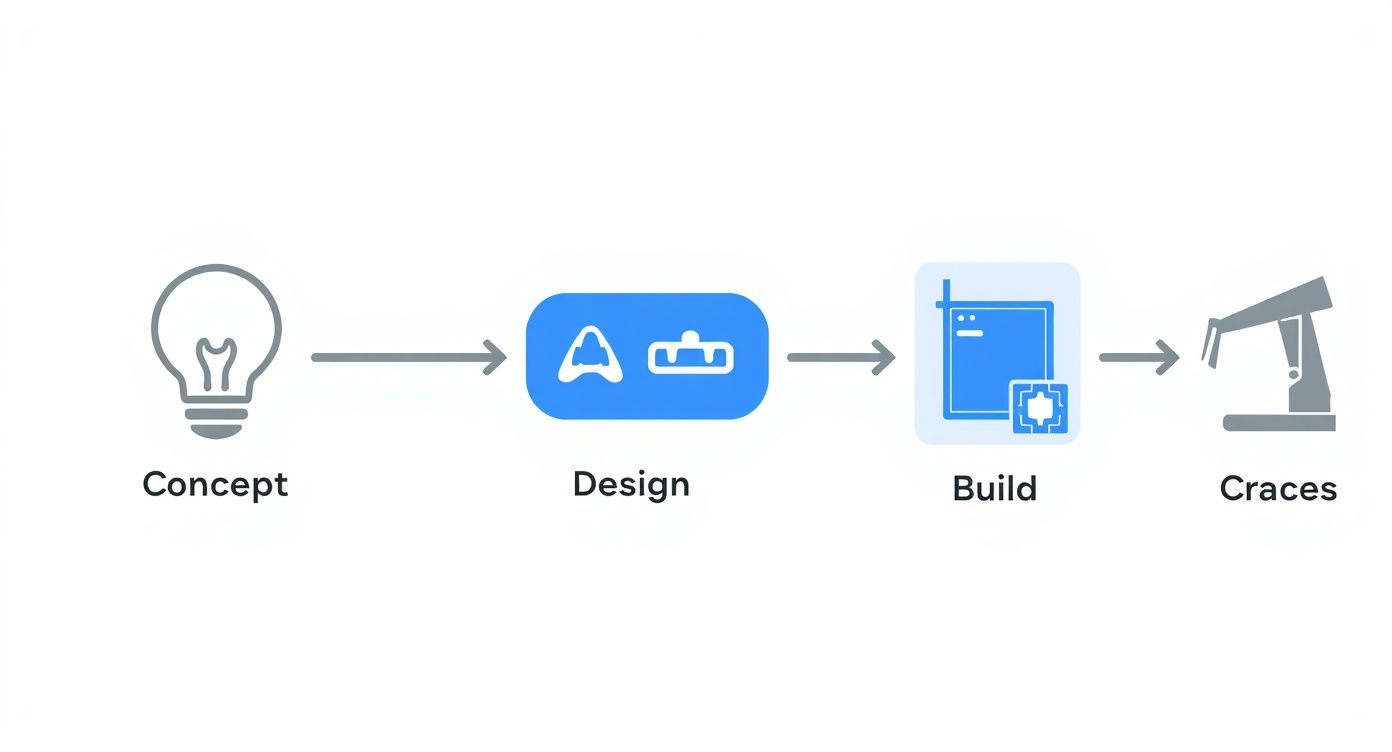
As you can see, the major stages—concept, design, and build—are distinct yet deeply interconnected parts of a single, continuous process.
To give you a clearer picture, here’s a quick summary of the core phases you’ll encounter.
| Phase | Primary Objective | Key Deliverables |
|---|---|---|
| Pre-Design | Establish project goals, budget, and feasibility. | Program document, site analysis, initial budget. |
| Schematic Design | Develop the big-picture concept and spatial relationships. | Floor plans, site plans, initial 3D models. |
| Design Development | Refine the design and select materials and systems. | Detailed drawings, material specifications, updated cost estimates. |
| Construction Docs | Create the final, detailed drawings for permits and construction. | A full set of construction blueprints and technical specs. |
| Bidding/Negotiation | Select a contractor to build the project. | Contractor proposals, signed construction contract. |
| Construction Admin | Oversee construction to ensure it aligns with the design. | Site visit reports, change order management, project closeout. |
This table maps out the journey, showing how each phase sets the stage for the next.
Following a methodical path does more than just create a timeline—it offers genuine peace of mind. It sets up clear communication channels, defines what gets delivered at each stage, and aligns expectations between you, your architect, and your builder. This framework is absolutely essential for managing the intricate details of a high-end home.
For instance, maybe you want to incorporate specific features that promote well-being. Thinking through how wellness architecture can shape your living environment—focusing on things like natural light, air quality, or a connection to nature—is something we weave in from the very beginning, not as a late-stage add-on.
By following a proven sequence, architects can systematically tackle zoning laws, structural engineering, and material selections. This ensures the final design isn’t just stunning, but is also buildable, compliant, and respects your budget.
Ultimately, this step-by-step approach puts you in the driver’s seat. It gives you regular, predictable moments to provide feedback and make key decisions, ensuring the home we build is a true reflection of your unique aspirations.
Every custom home starts as an idea, a feeling, a collection of images pinned to a board. But before we ever put pen to paper, there’s a crucial, foundational stage that happens first: pre-design.
Think of this as the strategic groundwork for the entire project. It’s less about drawing and more about deep listening, research, and planning. Getting this part right is what separates a beautiful house from a home that truly fits your life. We’re not just talking about square footage; we’re figuring out the very soul of the project.
The land itself is your project’s first partner, and we have to understand it intimately. A proper site analysis is far more than just looking at a property survey; it’s a forensic investigation into the opportunities and constraints baked into your piece of earth.
We have to dig into the details, and I mean all of them:
Missing a single detail here can cause massive headaches later. I once worked on a project where a little-known local ordinance about outbuildings was overlooked early on. Finding it deep into the design phase forced a complete rework of the site plan and cost the client months of delay. It’s a lesson you only need to learn once.
Once we understand the site, we need to define exactly what we’re building. This is where we create the architectural program—not a piece of software, but a detailed written brief that becomes our North Star for the project.
The program is the essential bridge between your dreams and the physical reality of your home. It’s a meticulously crafted list of every room, its purpose, its approximate size, and how it needs to connect to other spaces.
For a luxury home, this document gets incredibly specific. It might call for a kitchen that flows seamlessly into an outdoor terrace for entertaining, or a dedicated home office that’s acoustically isolated from the noisy, fun parts of the house.
This document keeps everyone on the same page and prevents the dreaded “scope creep.” It’s our shared agreement on the mission.
This first phase is all about collaboration and asking the right questions. Of course, its success depends on having the right team in place from the start. If you’re at the beginning of this journey, figuring out how to find an architect who gets your vision is the most important first step you can take. A solid pre-design effort ensures the creative work that follows is built on a smart, stable foundation.
After all the groundwork in pre-design, this is where the fun really starts. Schematic design is easily the most creative and collaborative phase of the entire process—it’s the moment your vision finally begins to take shape. All those abstract ideas from the architectural program are now translated into tangible concepts, sketches, and early models.
The goal here is to think big. We’re focused on the overall form of the home, its scale, and how the different spaces relate to one another. Forget about specific materials or window brands for now. Instead, we’re establishing the core layout and aesthetic that will serve as our North Star for the rest of the project.
Think of this phase as an open dialogue. We’ll present a few initial concepts using a variety of tools, all designed to help you feel the space long before a single shovel hits the ground.
We always start this exploration with simple, powerful tools that let us iterate quickly and freely. These aren’t meant to be polished final drawings; they’re instruments for thinking out loud and exploring possibilities together.
Here’s what that looks like in practice:
This is a period of intense creative problem-solving. We’ll typically explore two or three distinct concepts, each offering a different answer to the challenges and opportunities we defined back in pre-design.
Let’s ground this in a real scenario. Imagine we’re designing a custom kitchen for a client who lives to entertain. From pre-design, we know they need a seamless connection to an outdoor patio, a big central island for prep and casual seating, and space for professional-grade appliances.
In schematic design, we turn those needs into a spatial reality. One sketch might show a floor plan where a wall of glass doors retracts completely, literally erasing the line between the kitchen and the patio. A different concept might position the island to command a view of the main living area, so the host can chat with guests while cooking.
This back-and-forth is absolutely essential. By reviewing these early layouts, you can provide feedback like, “I love the open connection, but I really need more counter space right next to the range.” That input allows us to refine the design on the spot, making sure the final direction truly fits your lifestyle. It’s a whole lot easier—and cheaper—to move a wall on paper than it is once the framing is up.
The schematic design phase culminates in a major milestone: your approval of a single design concept. Once we’re here, we have a clear, agreed-upon direction for the entire project.
By the end of this stage, we’ll have:
With your sign-off on the schematic design, the project now has a solid conceptual foundation. We’ve defined the “what” and the “where.” This clarity gives us the confidence to move into the next phase, design development, where we’ll start layering in all the technical details and material specifics that will truly bring the vision to life.
With the schematic concept approved, we move from broad strokes to fine-tipped pens. This is the Design Development phase, where the architectural skeleton we created gets its muscle, sinew, and all the vital systems that bring it to life. We’re transitioning from an idea to a highly specific, buildable reality.
The main goal here is to flesh out every single part of the home with absolute precision. We’ll be making firm decisions on everything from major building components down to the smallest finishing touches, resolving all the big questions about how the home will look, feel, and perform.
This is a deeply collaborative period—not just between you and me, but also with a team of specialized consultants whose expertise is critical to a project of this caliber.
A high-end custom home is an incredibly complex machine; no single person has all the answers. During this phase, we bring a full team of engineers and specialists on board to coordinate the home’s core systems. This is an essential step to ensure every component works in perfect harmony.
Our consultant team almost always includes:
This phase is a constant loop of communication and problem-solving. For instance, the mechanical engineer’s plan for ductwork might run right into a structural beam. It’s our job to work together to find a creative solution that doesn’t compromise the design’s integrity or force you to live with lower ceilings.
This intricate coordination is what prevents major, costly surprises during construction. By resolving these system clashes on paper, we save an immense amount of time and money that would otherwise be spent fixing them on-site.
Let’s walk through a practical scenario: choosing the window package for a modern residence. In the schematic design, we agreed on expansive, floor-to-ceiling glass to capture a stunning view. Now, in design development, we have to get specific.
The conversation gets much more granular, balancing several competing factors:
Through detailed drawings, product research, and cost analysis, we’ll present you with clear, well-defined options. We might compare two or three different manufacturers, providing physical samples and performance data so you can make a deliberate, informed decision that will define a huge part of your home’s character.
By the time we wrap up design development, nearly every visible and technical element of the home is decided. This covers everything from the exterior cladding and roofing materials to interior details like cabinetry layouts, exact lighting fixture locations, and specific tile selections.
The drawings we produce at this stage are far more detailed than the schematic plans, often including enlarged layouts of complex spaces like the kitchen and primary bathroom. This stage effectively freezes the design. With these crucial decisions locked in, we have everything we need to advance to the final, most technical phase: creating the construction documents that will guide your builder.
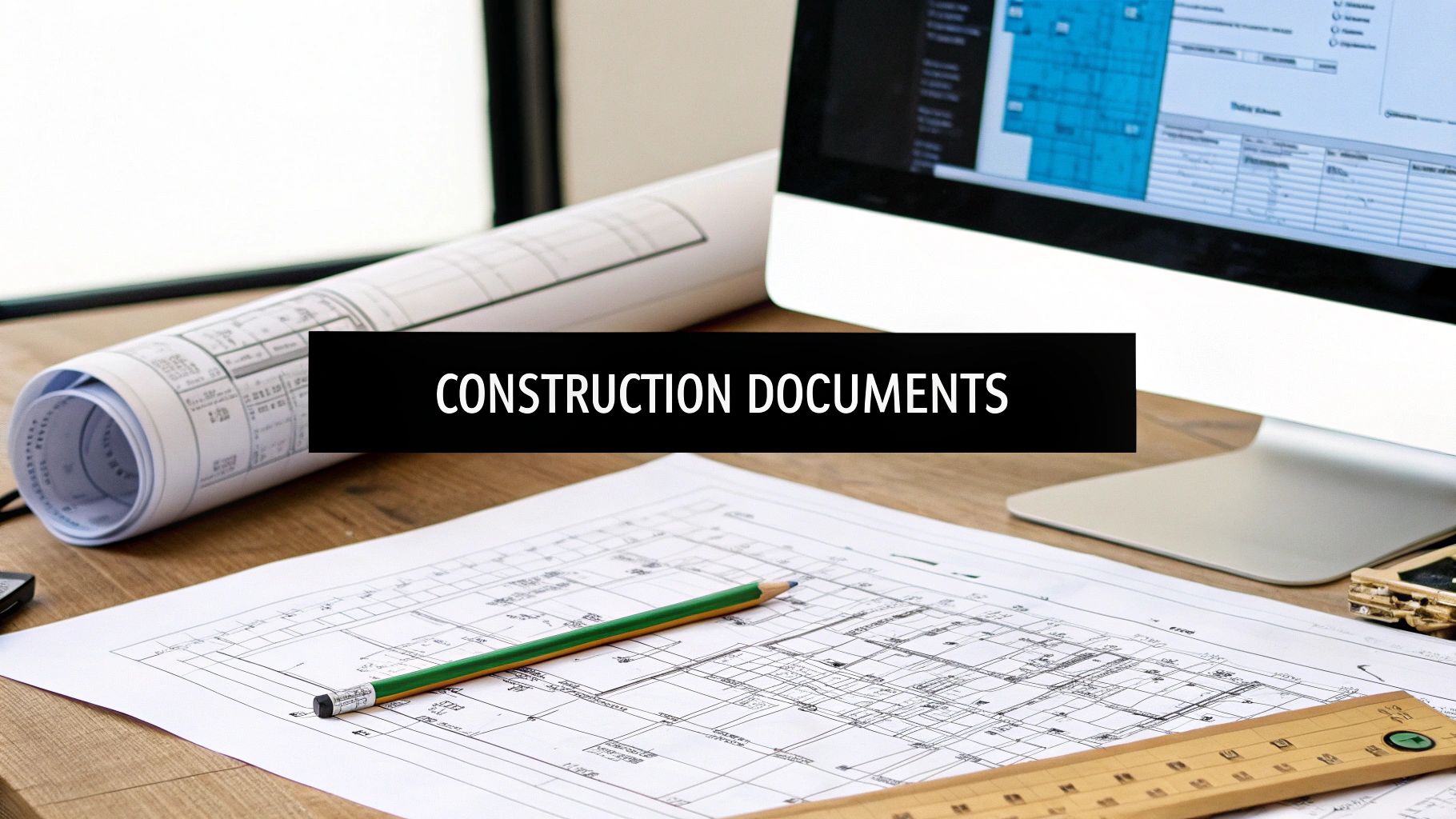
Once we’ve wrestled with all the big decisions in design development, the project shifts into its most technically rigorous phase: creating the Construction Documents. This is where the vision we’ve carefully honed becomes a precise, exhaustive set of instructions for the builder.
Think of it as the ultimate instruction manual for your home. Every detail matters because these documents are legally binding. They form the core of your agreement with the contractor, and they’re what the city will review to issue a building permit. Without them, you can’t get apples-to-apples bids from builders.
A full set of construction documents has two critical parts that work in tandem: the drawings and the specifications. Together, they leave no stone unturned, telling the builder everything they need to know.
I can’t stress this enough: a lack of detail in this phase is a direct line to budget overruns and construction headaches. I once stepped in on a project where the drawings showed a beautiful custom steel staircase, but the specifications for the finish were vague. The contractor assumed a standard painted finish in their bid. The client, however, had envisioned a costly blackened steel patina. That one oversight led to a tense change order for thousands of dollars after the contract was already signed.
Ambiguity is the enemy of a successful construction project. A well-executed set of construction documents leaves nothing to chance, ensuring the price you’re quoted is for the home you’ve actually designed. This level of detail protects both you and the builder from unexpected costs and disputes.
This whole process exists because of how the building industry has evolved. As buildings became more complex, the master builder role split into the specialized professions of architect and contractor. This separation led to the design-bid-build model, where architects must provide incredibly detailed documents for builders to price accurately. If you’re curious, you can learn more about the history of this project delivery model and see how these practices came to be.
By the time we’re done, we will have produced a complete architectural blueprint. For a high-end custom home, this isn’t a thin stack of papers. It can easily be a set of 50 or more large-format drawings plus a spec book running hundreds of pages long. It’s a massive undertaking that demands intense focus and tight coordination with all our engineering consultants.
A typical set includes:
With this meticulous package complete, the design work is officially done. Now, we have a bulletproof set of documents ready for the permitting office and for builders, giving us the confidence that they have everything they need to bring your vision to life.
After months—sometimes years—of meticulous planning, this is where the rubber meets the road. With a finalized set of construction documents, we shift from designing on paper to building in the real world. This is easily the most exciting phase, as the vision we’ve developed together finally starts to take physical form.
It all starts with bringing the right builder on board and then transitions into a period of active oversight from our team.
Our role here is to safeguard the integrity of the design, from the first shovel in the ground to the final coat of paint. This is where careful preparation pays off, ensuring the finished home is a true reflection of the plans.
Choosing a contractor is one of the most critical decisions you’ll make. It’s not just about getting a good price; it’s about finding a true partner for the project. We begin by inviting a curated list of pre-qualified builders—those with a proven track record in high-end residential construction—to submit a bid.
The goal isn’t just to find the lowest number. We’re looking for the best value, a blend of craftsmanship, financial stability, clear communication, and a genuine passion for quality.
When the bids come in, we scrutinize every line item. A bid that’s dramatically lower than the others isn’t a bargain; it’s a warning sign. It often means the contractor has either missed a crucial detail in the plans or is planning to use inferior materials or subcontractors.
We analyze bids by looking for:
This careful vetting process ensures you end up with a builder who is just as committed to achieving excellence as we are.
My job during the bidding process is to act as your advocate. I make sure we’re comparing apples to apples across all proposals, sniffing out any potential red flags or hidden costs before they can become a problem down the line.
Once construction kicks off, my role evolves into that of a construction administrator. It’s a common misunderstanding that the architect runs the job site—that’s the general contractor’s job. My responsibility is to be the client’s eyes and ears, ensuring the project is being built exactly as it was designed.
This involves a few core activities:
On a recent project, for instance, the framing crew misinterpreted a tricky detail for a vaulted ceiling. I caught the error during a routine site visit, just before they were about to close up the walls. A quick sketch on a piece of plywood and a five-minute conversation saved the client from a costly and time-consuming tear-out that would have compromised a major architectural feature of the home.
This phase is all about active collaboration. To get a better sense of how this all unfolds, this custom home building process guide offers a great overview of the journey from start to finish. Our continued presence on-site is the final, crucial check that ensures the home we designed together is the home you ultimately get to live in.
Navigating the architectural design process for the first time can feel a little daunting. It’s only natural to have questions about how long everything will take, what the costs look like, and what’s expected of you.
Getting these key questions answered upfront is the best way to start your project with clarity and confidence. Let’s break down some of the most common things clients ask when they start the journey of building a custom home.
When it comes to a high-end custom residence, there’s no one-size-fits-all timeline. The design phase alone—taking you from a rough idea to a full set of construction documents—will typically last anywhere from 6 to 12 months.
Several factors play a role here, including the project’s complexity, how quickly you can make key decisions, and the speed of your local permitting office. Once the design is locked in, you can expect the bidding and construction phases to add another 12 to 24 months. All told, it’s wise to plan for a two- to three-year journey from start to finish.
There isn’t a single standard for architectural fees; it really depends on the architect and the project scope. However, most fee structures fall into one of three common models:
No matter the approach, make sure the fee structure is spelled out clearly in your agreement before any work begins.
Your primary role as the client is to provide clear input, make timely decisions, and be honest about your vision and budget. Delays in decision-making are one of the most common reasons project timelines extend. Being engaged, especially early on, is critical for success.
Are you looking for an architect or designer who understands the nuances of luxury residential projects? The professionals at Haute Design are leaders in the field. Find the perfect partner to bring your vision to life. Learn more on hauteliving.com/designnetwork.