


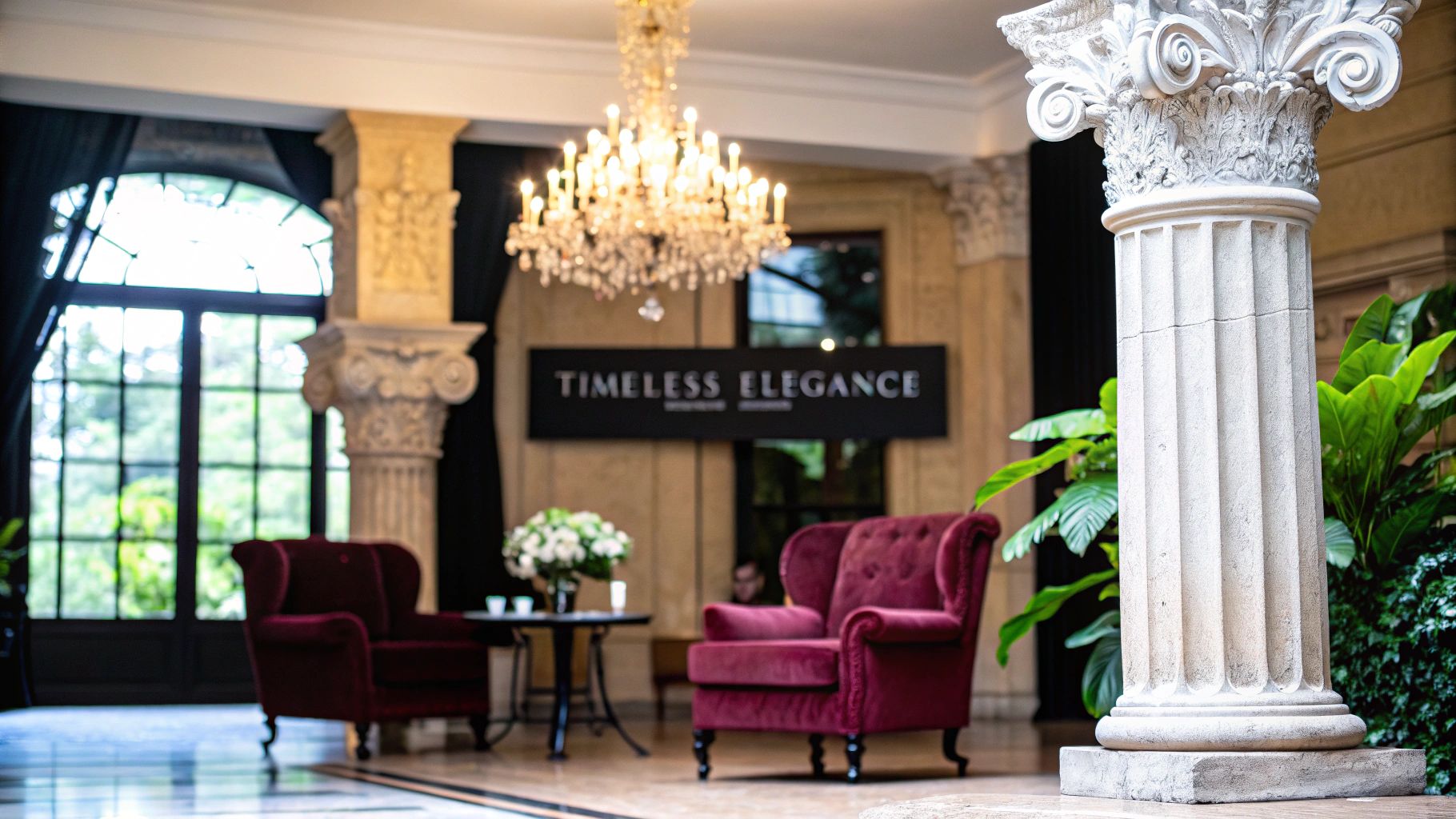
Classic interior design isn’t just a style; it’s a philosophy. It’s a timeless approach to creating spaces that are grounded in order, symmetry, and harmony. With deep roots in the principles of Greco-Roman antiquity, it crafts rooms that feel formal, elegant, and built to last.
What is Classic Interior Design
At its heart, classic design is an enduring language of beauty, not a passing trend. Think of it like a perfectly tailored suit or a cherished piece of classical music—its appeal is universal and permanent because it’s built on principles that have resonated for centuries. The ultimate goal is to create a profound sense of calm and order, where every single element has a clear purpose and contributes to a beautifully balanced whole.
This aesthetic is defined by an unwavering commitment to quality and a deep respect for history. It’s all about creating homes that feel both grand and genuinely inviting, sophisticated yet comfortable. For homeowners with a discerning eye, it’s a way to build a legacy—a residence that sidesteps fleeting fads in favor of lasting elegance. The focus is on curating an environment that feels intentional, considered, and gracefully composed.
The Guiding Principles of a Timeless Aesthetic
To truly grasp the essence of classic interior design, you have to understand its foundational pillars. These are the core concepts that inform every decision, from the precise placement of a settee to the final choice of silk drapery.
- Symmetry and Order: This is, without a doubt, the most recognizable hallmark of the style. A classic room is almost always organized around a central axis. Picture a living room with matching sofas perfectly mirrored across a fireplace or a dining room where identical crystal lamps flank a grand sideboard. This creates a powerful sense of visual stability and restfulness.
- Harmony and Cohesion: Nothing in a classic interior feels accidental. Every piece works in concert with the others to create a unified whole. The color palette is deliberate and restrained, textiles and wallcoverings complement one another, and the furniture styles all speak a common design language. The result is a seamless visual narrative where no single element jars the senses.
- Craftsmanship and Quality: Classic design is a celebration of the artisan’s hand. It champions high-quality, authentic materials—think solid hardwoods, natural stone like marble and travertine, and the finest silks, velvets, and linens. Furniture isn’t chosen just for its form but for its impeccable construction, its intricate detailing, and the story it tells.
We can distill these foundational ideas into a simple framework.
Core Tenets of Classic Interior Design
This table summarizes the foundational principles that define the classic interior design aesthetic, showing how timeless concepts are adapted for today’s luxury homes.
| Principle | Description | Modern Application |
|---|---|---|
| Balance & Symmetry | The arrangement of objects and structures around a central axis to create a sense of stability and formal order. | A pair of matching armchairs flanking a fireplace; identical nightstands and lamps on either side of a bed. |
| Focal Point | A central, eye-catching element that anchors the room, such as a grand fireplace, a dramatic chandelier, or a large piece of art. | A sculptural, modern light fixture in a traditional dining room or a bold, contemporary painting above a classic console table. |
| Order & Proportion | Based on classical Greek ideals, ensuring that all elements in a room relate to one another in scale and placement. | Furniture is scaled to the room’s architecture; moldings and trim are proportional to ceiling height. |
| Timeless Materials | A focus on natural, high-quality materials that have been used for centuries, like marble, hardwood, and fine textiles. | Using Calacatta marble for both a kitchen island and a primary bathroom, creating material continuity. |
| Elegant Details | Intricate details drawn from history, including carved moldings, decorative plasterwork, and artisanal furniture. | Incorporating custom millwork with subtle classical profiles or selecting hardware with an aged patina. |
Understanding these tenets is the first step toward appreciating the depth and sophistication of the classic style.
Classic design speaks a language of permanence. It’s not about being the latest thing; it’s about being the last thing you’ll ever need to change because its beauty is rooted in proven, timeless principles of balance and proportion.
With this foundation in place, we can begin to explore how these principles are expressed through the tangible elements of a room. We’ll soon delve into the specific architectural details, color palettes, and period furnishings that truly bring classic interior design to life, guiding you on how to create spaces that are both impressive and deeply personal.
Tracing the Roots of Timeless Elegance
To really grasp classic interior design, you have to appreciate its deep and layered history. This isn’t a style born from a single decade or a fleeting trend; it’s a sophisticated aesthetic that has been carefully refined over centuries. Think of it as a grand historical tapestry, woven with threads from different eras, each adding its own unique color and texture. Understanding these origins is the key to creating interiors that aren’t just beautiful, but also authentic and rich with meaning.
The story begins with the powerful architectural language of ancient Greece and Rome. These civilizations gave us the foundational grammar of the style: symmetry, order, and proportion. The mathematical precision of their temples, with their iconic columns and pediments, set a blueprint for structural harmony that designers have revered and referenced ever since. This Greco-Roman influence is the bedrock upon which all subsequent classicism is built.
The Flourish of Ornate Detail
Centuries later, the Baroque and Rococo periods took these classical ideals and ran with them in a dramatically different direction. The Baroque movement, emerging in the 17th century, was all about grandeur, drama, and opulence. It favored deep, rich colors, heavy textures, and intricate carvings to create a sense of awe and power. Just picture the gilded halls of Versailles—this was design meant to impress.
Following this, the 18th-century Rococo style offered a lighter, more whimsical response. It softened the dramatic intensity of Baroque with:
- A gentler, pastel-based color palette, featuring delicate ivories, pale blues, and soft pinks.
- Asymmetrical curves and flowing lines, often inspired by natural forms like shells and flowers.
- An emphasis on intimacy and comfort, shifting the focus from public grandeur to more personal, elegant spaces.
This era infused classicism with a romantic spirit and a focus on intricate, delicate craftsmanship that remains a hallmark of high-end classic interiors today.
Classicism is a continuous conversation across history. Each era adds a new chapter, building upon the last—from the disciplined order of antiquity to the expressive romance of the Rococo.
This visual timeline shows how these core design principles evolved, creating the rich vocabulary we draw from today.
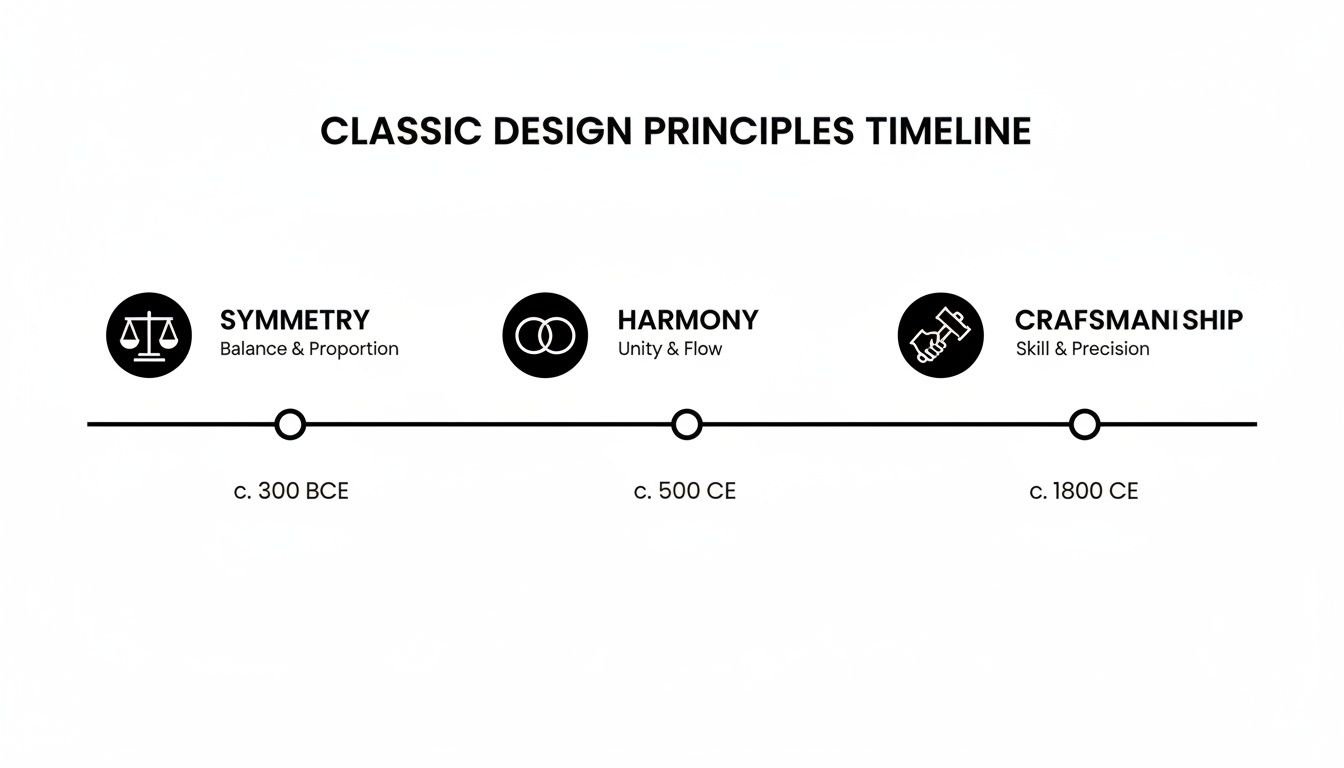
The graphic perfectly illustrates that while specific motifs change, the underlying pursuit of symmetry, harmony, and exquisite craftsmanship remains the constant thread holding it all together.
Refinement and Rebirth
The late 18th and early 19th centuries brought a return to the purity of ancient forms with the Neoclassical movement. Sparked by the rediscovery of Pompeii and Herculaneum, designers and architects once again embraced the clean lines and geometric order of the Greco-Roman world. This period stripped away the elaborate ornamentation of Rococo, favoring refined simplicity, straight lines, and logical, uncluttered arrangements. Neoclassicism is what gave classic interior design its signature formal elegance and intellectual rigor. You can see how Gilded Age architecture in America perfectly captured this spirit of refined grandeur.
Later movements added their own unique flavor. In the glittering 1920s, Art Deco exploded onto the scene, captivating the elite with its bold geometry and luxurious materials. This style marked a clear break from the flowing organic lines of the past, embracing sharp angles, zigzags, and sunburst motifs that screamed sophistication. By 1928, period analyses show that over 70% of high-society homes in major U.S. cities featured Art Deco elements, with chrome, glass, and lacquered wood dominating the scene.
Each of these historical moments contributed a vital layer to what we now call classic design. This rich heritage provides a vast palette for today’s top designers, allowing them to create spaces that feel layered, historically resonant, and profoundly elegant.
The Essential Elements of Classic Design
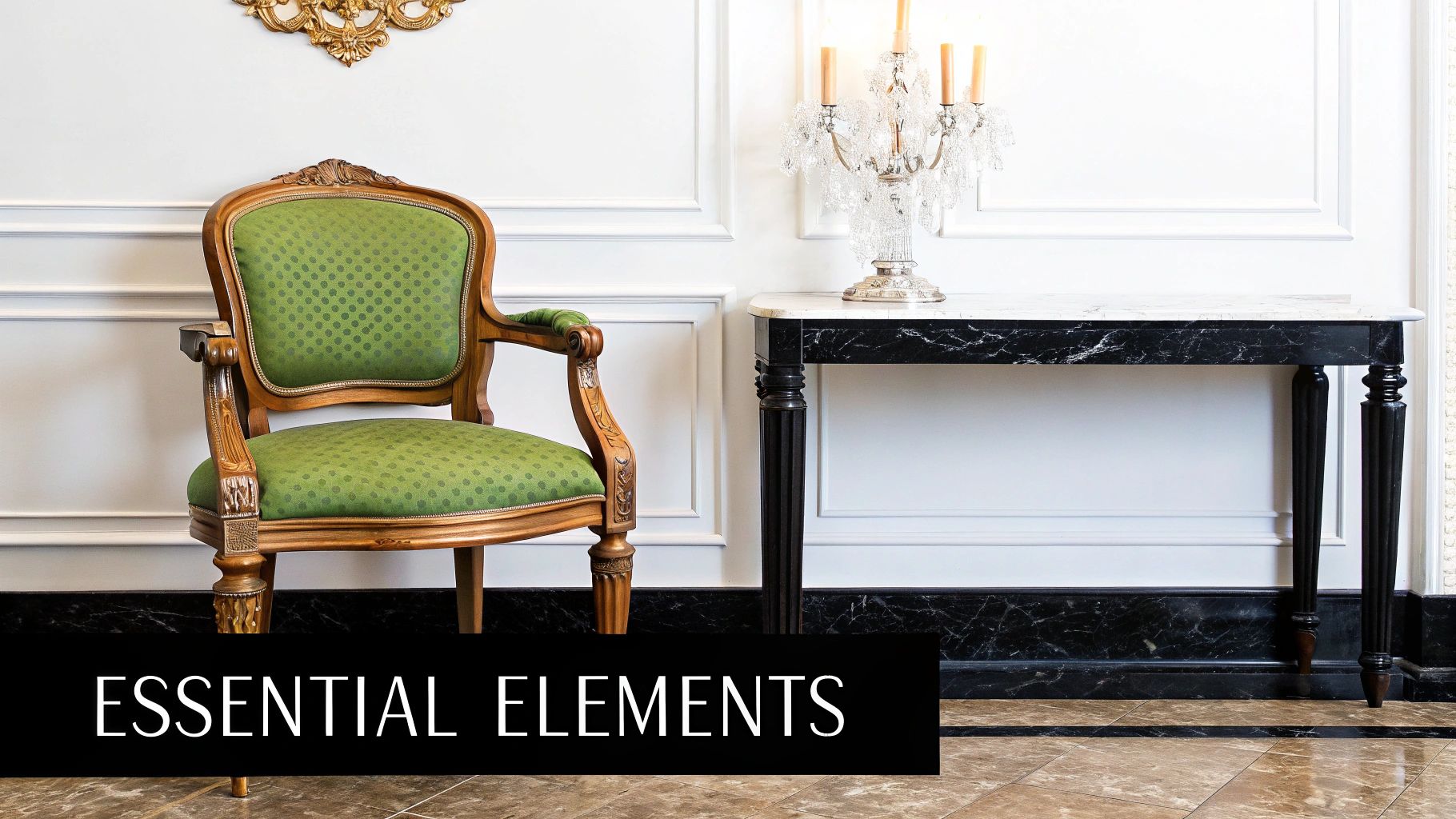
While principles like symmetry and order give classic design its structure, the real soul of a room comes from the elements you can see and touch. These are the carefully selected pieces that come together to create an atmosphere of cohesive elegance. Think of them as the instruments in an orchestra—each has its own distinct voice, but it’s their harmony that creates a beautiful symphony.
To truly capture an authentic classic look, you need to master five key pillars. These are the building blocks that elevate a space from ordinary to extraordinary, with each one adding its own layer of depth, texture, and historical weight. Understanding how they all interact is the secret to executing this distinguished style.
Architectural Bones: The Foundation of Form
Long before a single piece of furniture enters the room, the architectural details set the stage. Classic design absolutely depends on a strong structural foundation to convey a sense of permanence and grandeur. These aren’t just decorations; they are integral to the room’s very character.
Key architectural features include:
- Crown Molding and Cornices: These are the elegant transitions between wall and ceiling. They do more than just decorate a corner; they draw the eye upward, adding a subtle layer of detail that can make a room feel taller and more stately. This helpful guide to crown molding design is a great resource for exploring different styles.
- Columns and Pilasters: Pulled straight from Greco-Roman inspiration, columns are powerful tools. They provide both visual and structural support, defining spaces with an undeniable sense of order.
- Wainscoting and Wall Panels: Applied to the lower third of a wall, wainscoting adds texture and a touch of formality. It also protects the wall surface while contributing to a finished, layered aesthetic.
- Ceiling Medallions: Centered right above a chandelier, these ornate plaster details create a stunning focal point on the ceiling, beautifully anchoring the room’s main light source.
These features provide the “good bones” every classic room needs. They establish a formal canvas for the rest of the design, ensuring the entire space feels grounded in tradition.
The Deliberate Color Palette: Inspired by Nature
The color story in a classic interior is always intentional and serene. It draws its inspiration from the natural world, creating a backdrop that is both calming and deeply sophisticated. The goal here isn’t to shock or overwhelm, but to soothe the eye and unify the space.
The palette typically revolves around soft, muted tones. Think of creamy whites, gentle beiges, and soft grays as your foundation. From there, you can layer in accent colors found in a classical landscape—muted blues of the sky, soft greens from foliage, and the earthy yellows of aged parchment. Bold colors are used, but very sparingly, usually as a specific accent to add depth without breaking the room’s harmony.
A classic color palette doesn’t shout; it whispers. It’s a carefully composed background that allows the quality of the materials and the elegance of the forms to take center stage.
This restrained approach is what makes the interior feel so cohesive and tranquil. The colors work to highlight, not compete with, the room’s other elements, fostering an environment of understated luxury that is both impressive and inviting.
Period Furniture: A Legacy of Craftsmanship
Furniture is where the narrative of classic design really comes alive. Each piece is chosen not just for what it does, but for its form, its history, and the sheer quality of its construction. Unlike much of today’s disposable furniture, classic pieces are true investments—heirlooms that carry a legacy of artisanal skill.
Look for these defining characteristics:
- Materials: Rich, dark woods like mahogany, cherry, and walnut are mainstays, often polished to show off their intricate grain patterns.
- Form: Silhouettes are elegant, often featuring hand-carved details, gracefully turned legs, and sweeping curves. Iconic styles like Chippendale, Queen Anne, and Sheraton are constant points of reference.
- Upholstery: Exquisite fabrics are chosen to complement the wooden frames, adding a layer of comfort and opulence.
The philosophy is always quality over quantity. A classic room is never cluttered. Instead, it features a curated selection of beautiful pieces, each given enough space to be appreciated. Every chair, table, and cabinet is chosen for how it contributes to the room’s overall balance and symmetry.
Rich Textiles and Sophisticated Lighting
The final layers—the ones that add warmth, texture, and a touch of drama—come from luxurious textiles and thoughtful lighting. Textiles introduce softness and subtle color, while lighting creates ambiance and highlights the room’s best features.
Some of the most essential textiles are:
- Silk: Perfect for drapery and accent pillows, its natural luster adds a touch of formal elegance.
- Velvet: A favorite for sofas and armchairs, it provides a rich, plush texture and incredible depth of color.
- Linen and Cotton: For a more understated look, these natural fibers offer a lighter feel, often used for draperies or more casual upholstery.
Lighting in a classic space is both functional and decorative. A magnificent crystal chandelier often serves as the room’s dazzling centerpiece. Sconces on the walls provide soft, ambient light and reinforce the room’s symmetry, while table lamps with silk or linen shades create warm, intimate pools of light for reading or conversation. Together, these elements are what make a room feel complete, layered, and utterly timeless.
Bringing Classic Style into the Modern Home
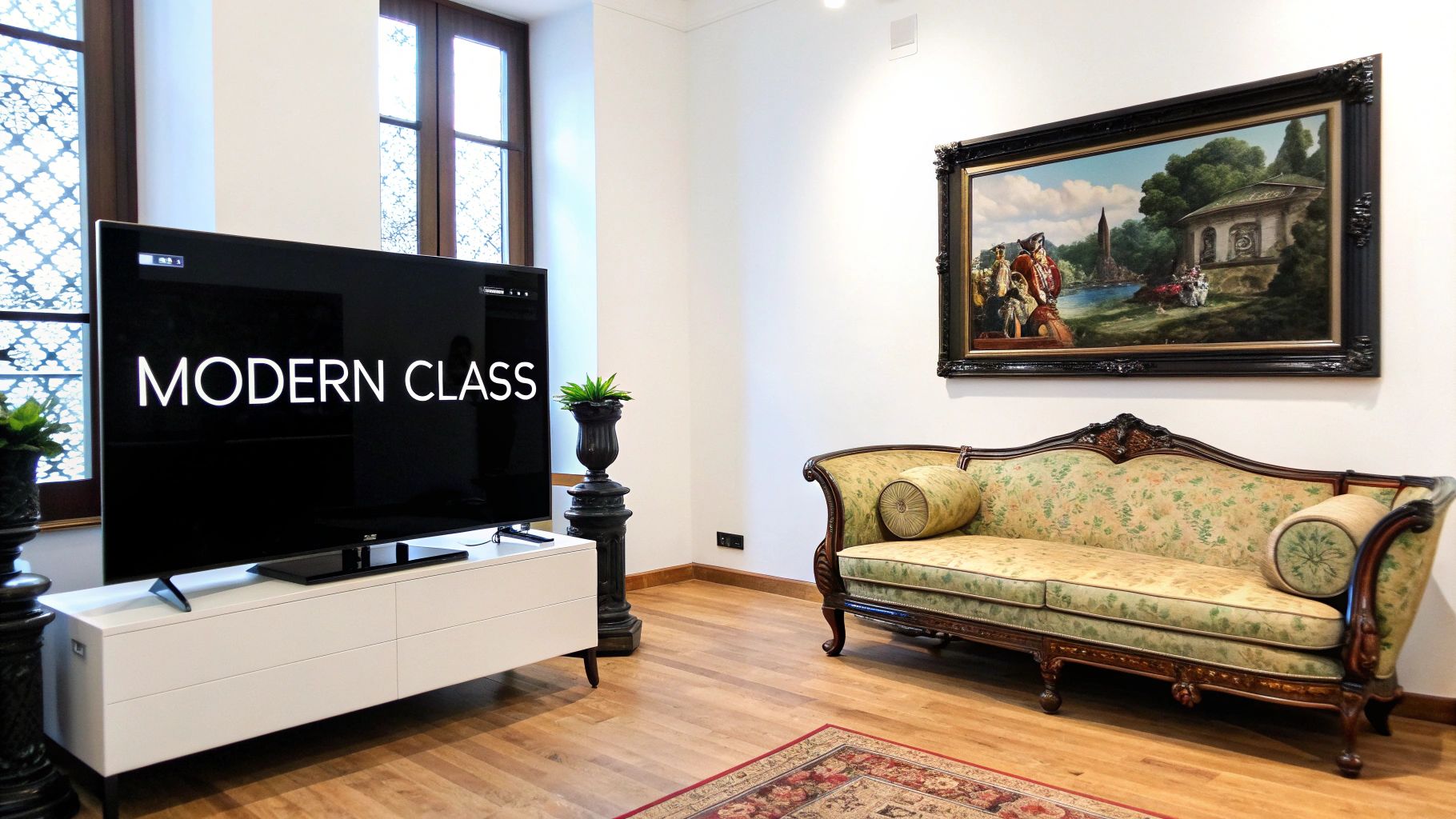
True classicism is timeless, but our lifestyles are anything but static. The real challenge—and where the magic happens—isn’t about recreating a museum-piece period room. It’s about translating the enduring principles of classic design into a home that feels relevant, comfortable, and perfectly attuned to contemporary life. This thoughtful fusion of old and new is often called Modern Classicism.
The idea is to spark a conversation between the past and the present. We want to hold on to the grace, symmetry, and exquisite craftsmanship of classic interiors while gently letting go of any stuffiness or rigid formality. This is how a home avoids feeling like a historical exhibit and becomes a living, breathing space that honors its roots while embracing today.
It’s a delicate balance, one that requires a curator’s eye to create a home that feels both deeply personal and enduringly elegant.
Fusing Old and New with Curated Juxtaposition
One of the most powerful techniques in our arsenal is the artful mix of furniture and decor from different eras. Picture a clean-lined, minimalist sofa across from a pair of ornate Louis XVI bergeres, with a refined, neutral palette tying the entire scene together. That intentional contrast creates a dynamic tension that is incredibly sophisticated and visually arresting.
The secret to making this work is to find a common thread—a unifying element that connects seemingly disparate pieces. Think about it in terms of:
- A Unified Color Palette: A simple, modern color story can make an antique, ornately carved chest feel perfectly at home next to a contemporary chrome floor lamp.
- Shared Lines or Shapes: The strong verticality of a modern abstract sculpture can subtly echo the form of classical columns or pilasters within the room’s architecture.
- Material Continuity: The rich warmth of a traditional mahogany dining table can be beautifully picked up in the bronze-finished legs of modern dining chairs.
This approach creates a space that feels collected and thoughtfully assembled over time, not just decorated. It’s about letting your furnishings tell a story.
Integrating Art and Technology Seamlessly
In any luxury home today, technology is a given and art is a vital expression of personality. The key to weaving them into a classic interior is to do so with subtlety and intention. With nearly 70% of high-end renovation projects now involving smart home features, getting this right is non-negotiable.
The essence of Modern Classicism is to honor the past without being imprisoned by it. It’s about creating spaces that are rooted in historical elegance but are built for the way we live right now.
When it comes to technology, the best strategy is often concealment. Custom millwork can be designed to hide a television behind panels that mimic the room’s wainscoting, while speakers can be discreetly integrated into ceilings and walls. This keeps the room’s serene, classic aesthetic intact while delivering all the conveniences we expect.
Contemporary art, however, deserves to be celebrated. A bold, abstract painting hung above a traditional marble fireplace becomes an electrifying focal point. It injects a modern sensibility and a jolt of energy, creating a striking contrast that enhances both the classic architecture and the contemporary artwork. It’s this very dialogue between old and new that defines a truly exceptional modern classic interior.
A Room-by-Room Guide to Classic Implementation
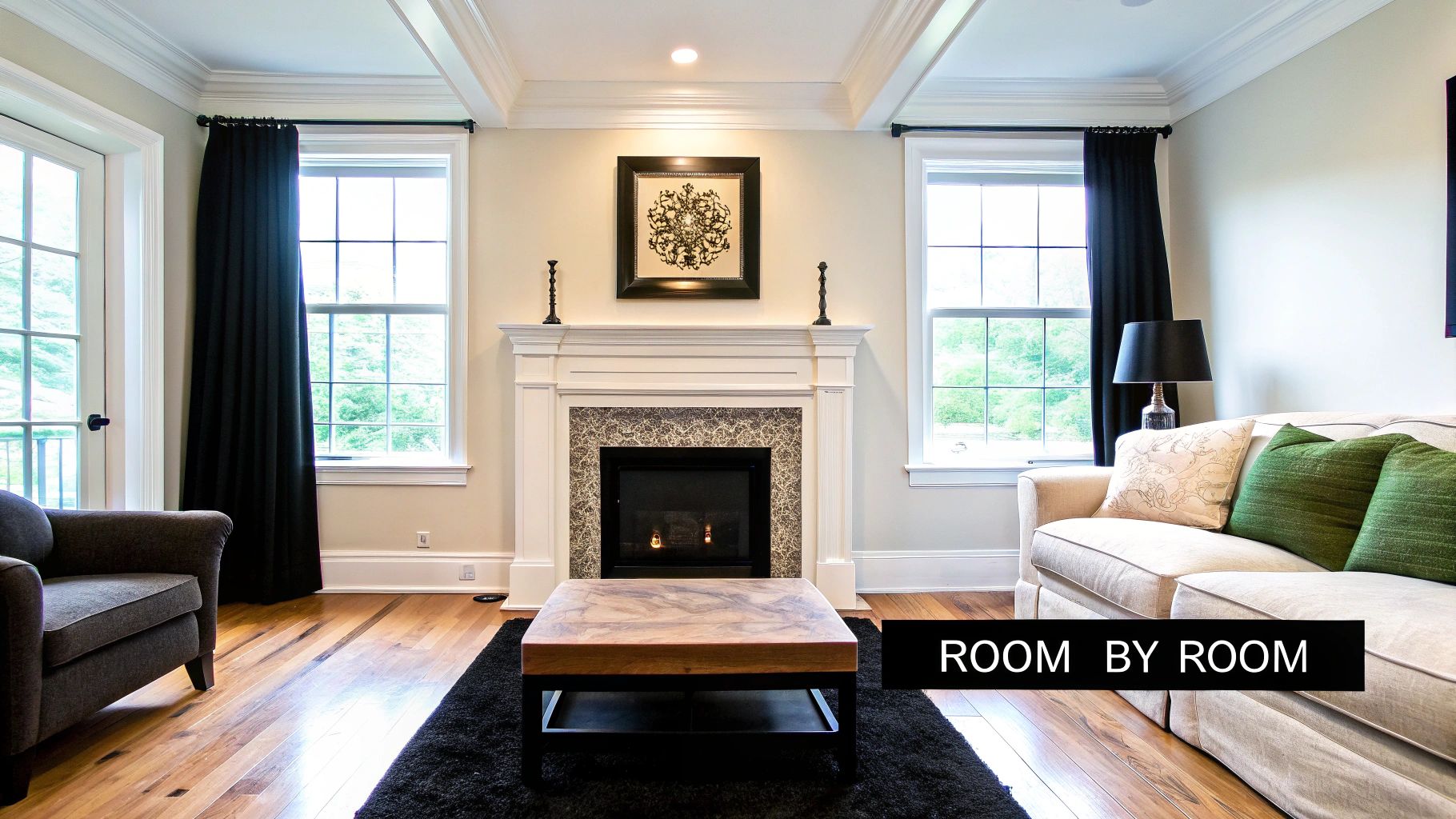
Translating the grand principles of classic design into real, livable spaces is where the artistry truly begins. It’s a room-by-room conversation, a careful balancing act between function and enduring style. Each space in the home offers a fresh canvas to apply the core ideas of symmetry, order, and elegance.
The real skill lies in tailoring the design to how a room is used without losing that inherent sense of grace. From the public-facing living areas to the most private sanctuaries, classic design can be molded to create interiors that are as practical as they are beautiful.
The Living Room: An Anchor of Symmetry
More often than not, the living room is the soul of a classic home. Its design should be a masterclass in balance and harmony. Look for the room’s central architectural feature—almost always a grand fireplace with a beautiful mantel—and let that be your anchor. Everything else should flow from this point in mirrored perfection.
Picture it: a pair of elegant sofas face off across a fine rug, their placement perfectly bisected by the fireplace. On opposite walls, matching console tables might stand, each holding identical lamps and thoughtfully chosen objects. This deliberate symmetry creates an immediate sense of calm and order, which is the very essence of classic interior design.
The Dining Room: A Stage for Elegance
Classic dining rooms are spaces of quiet drama, designed for refined gatherings. The focus here is less on casual comfort and more on creating a sophisticated sense of occasion. It’s about elevating the dining experience with statement pieces and luxurious touches.
To set the stage, you’ll need a few key elements:
- Statement Lighting: A magnificent crystal or wrought-iron chandelier hanging directly over the dining table isn’t just a suggestion; it’s essential. It serves as a stunning sculptural centerpiece while casting a warm, inviting glow.
- Elegant Window Treatments: Floor-to-ceiling draperies in heavy, opulent fabrics like silk or velvet don’t just frame the windows—they add a crucial layer of softness and texture. Their structured pleats contribute to the room’s formal elegance.
- A Substantial Table: The table itself should be a piece of fine craftsmanship, usually made from a dark, polished wood like mahogany. It provides a solid, beautiful anchor for the entire room.
The Bedroom: A Serene and Plush Retreat
In the primary bedroom, the formality of classic design softens into something more personal: a tranquil, deeply comfortable sanctuary. While symmetry is still a guiding principle, the emphasis shifts to texture, softness, and an atmosphere of quiet repose. Here, the bed—with its impressive headboard—is the undisputed star of the show.
To achieve this serene classicism, think in layers of rich, tactile materials. Imagine sinking your feet into a plush, high-pile wool rug, slipping into bedding made from the finest linens, or relaxing on a velvet-upholstered chaise lounge tucked into a corner. The color palette often lightens up here—soft creams, pale blues, and gentle grays are perfect for promoting a sense of peace.
The classic bedroom is a testament to the idea that true luxury is found in comfort and tranquility. It uses the principles of order and balance not for show, but to create a deeply restorative personal space.
This devotion to quality has deep roots. The Arts and Crafts Movement, which flourished between 1880 and 1910, was a direct reaction against mass production. It championed solid woods and visible joinery, and by 1910, this ethos had influenced 25% of American upper-class homes, leaving a legacy of artisanal pride. You can dive deeper into these historical shifts by exploring these insights into interior trends over the last 100 years.
Kitchens and Bathrooms: Classic Form Meets Modern Function
Bringing classic design into hardworking spaces like the kitchen and bathroom is all about blending timeless materials with the demands of modern life. The goal is to give these utilitarian rooms the same soul and elegance you find elsewhere, without compromising on practicality.
In the kitchen, this might mean pairing detailed, custom cabinetry with inset doors and elegant hardware alongside high-performance appliances. Countertops and backsplashes in classic marbles like Calacatta or Carrara provide a surface that is both breathtaking and durable.
In the same way, a classic bathroom could feature a freestanding clawfoot tub, a furniture-style vanity with carved legs, and fixtures in polished nickel. Using natural stone for floors and walls connects the space to the timeless material palette of antiquity, proving that even the most functional rooms can be infused with classic grace.
Achieving Flawless Execution with Professional Expertise
Translating the grand principles of classic design into a breathtaking reality is an art form in itself. It’s one thing to appreciate the theory, but quite another to navigate the intricate world of sourcing authentic antiques or commissioning custom millwork. The path from a brilliant concept to a perfectly executed room is paved with a thousand crucial decisions.
This is precisely where professional expertise is no longer a luxury, but a necessity. A truly exceptional classic home isn’t a DIY project; it’s a symphony conducted by a team of seasoned specialists. Top-tier interior designers, architects, and builders who live and breathe this aesthetic possess a deep, intuitive understanding of historical context, materials, and craftsmanship that makes all the difference.
Why Partnering with an Expert Is a Non-Negotiable
Think of working with a dedicated professional as an investment in both quality and your own peace of mind. A designer specializing in classic interiors ensures every detail—from the exact proportions of a ceiling medallion to the specific weave of silk drapery—contributes to a cohesive vision. They are the guardians of your project, preventing costly missteps while orchestrating countless moving parts.
The value they bring is immense:
- Authenticity and Sourcing: An expert knows the subtle tells of a genuine Louis XVI armchair versus a well-made reproduction. They have the connections to access auction houses, private dealers, and hidden showrooms that are simply off-limits to the public.
- Master Craftsmanship: Their little black book is filled with artisans who are true masters of their craft. They can commission bespoke furniture, intricate plasterwork, or hand-painted wallpaper, ensuring every detail is executed flawlessly.
- Project Cohesion: A professional is the conductor ensuring every player, from the architect to the final stylist, is working in perfect harmony.
Engaging a professional is the single most important step in creating a truly distinguished classic home. Their expertise elevates the project from merely beautiful to genuinely extraordinary, ensuring a legacy of timeless elegance.
Ultimately, entrusting your vision to an expert is the surest way to create a home that not only looks stunning but feels deeply authentic and masterfully curated. If you’re ready to take that step, learning how to choose an interior designer is the perfect place to start. Their guidance is what turns a well-decorated house into a timeless work of art.
Common Questions on Classic Design
Stepping into the world of classic interior design often sparks a few questions. It’s a style rooted in history and quality, which can sometimes feel intimidating. But the truth is, its core principles are remarkably adaptable. Let’s clear up some of the most common queries to help you approach this timeless aesthetic with confidence.
Getting these fundamentals right is the key to making smart decisions—the kind that lead to a home that feels both authentic to the style and a perfect reflection of your own life.
Can Classic Design Work in a Smaller Home?
Absolutely. While we often picture classic style in grand, sprawling estates, its soul lies in principles like symmetry, order, and proportion—all of which can be beautifully tailored to smaller spaces. The trick isn’t to shrink a grand hall, but to capture its essence. It’s like having a bespoke suit made; the same rules of masterful tailoring apply, whether for an elaborate three-piece or a simple, elegant blazer.
Success in a compact space comes down to a few key adjustments:
- Mind the Scale: Choose furniture that fits the room’s proportions. A single, perfectly crafted loveseat makes a far greater impact than a sofa that crowds the space.
- Lean into Light: A lighter color palette—think soft creams, pale grays, and muted blues—instantly makes a room feel larger and more open. A strategically placed mirror is your best friend here, as it bounces light around and adds a sense of depth.
- Go Vertical: Use design tricks to draw the eye upward. Floor-to-ceiling drapes or a wallpaper with a subtle vertical stripe can create the illusion of height, making the entire room feel more spacious.
How Do I Mix Classic Elements With Modern Furniture?
This is where the magic happens. Blending old and new, often called “transitional design,” creates interiors with real personality and depth. The aim is to spark a conversation between the two styles. A great starting point is the 80/20 rule: let 80% of the space anchor the dominant style (classic, in this case), and use the remaining 20% for contrasting modern pieces. Imagine classic architectural mouldings and luxurious drapery setting the stage for a clean-lined modern sofa and a bold piece of contemporary art.
To make it all feel cohesive, you need a common thread. This could be a color that appears in both a modern lamp and a classic rug, a shared material like brass or marble, or even a recurring geometric shape. A sleek, minimalist coffee table can look incredible on an antique Persian rug if their color palettes speak to each other. It proves just how flexible classic design can be.
What’s the Difference Between Traditional and Classic Design?
It’s a subtle distinction, but an important one. People often use the terms interchangeably, but they aren’t quite the same. Traditional design generally points to specific, ornate European styles from the 18th and 19th centuries—think Queen Anne, with its cabriole legs, or the intricate carvings of Chippendale furniture.
Classic interior design, on the other hand, is more of an overarching philosophy. Its DNA comes directly from the ideals of ancient Greece and Rome: order, symmetry, and a clean, harmonious balance.
Here’s another way to think about it: classic design is the fundamental grammar of architecture and interiors. Traditional design is one of its most beautiful and elaborate historical dialects. A classic space can certainly feature traditional pieces, but its main focus will always be on that pure, structured elegance that feels enduring and universal.
Ready to bring timeless elegance to your home with the help of a vetted professional? The premier platform Haute Design connects discerning clients with the nation’s top interior designers, architects, and builders. Find your perfect design partner today.