


Building a custom home starts long before the first shovel ever hits the dirt. The real work begins with three foundational pillars: shaping your vision, setting a realistic budget, and doing your homework on land and local rules. This upfront planning isn’t just a preliminary step; it’s the bedrock of your entire project, ensuring every decision that follows is purposeful and aligned with your ultimate goal.
Laying The Groundwork Before You Break Ground
The most critical phase of building a luxury home happens at a desk, not a construction site. It’s about translating your daydreams into a tangible, actionable plan. This is where you get to define what “home” truly means to you, setting the stage for a smooth and successful build.
This initial process is all about detail. You need to create a comprehensive wishlist, carefully distinguishing your absolute must-haves from the features that would be nice to include. Go beyond basics like square footage or the number of bedrooms. Think about how your family truly lives. Is a professional-grade kitchen with a massive island for entertaining at the top of your list? Or maybe a state-of-the-art home automation system is a non-negotiable for you. Getting these priorities down on paper gives your future design team a crystal-clear roadmap.
Defining Your Vision And Scope
The very first step is to clarify your vision, and this is about much more than just picking an architectural style like Modern Farmhouse or Coastal Contemporary. It’s about envisioning how you want to feel and live in the space every single day.
To help crystallize this vision, think through these areas:
- Lifestyle Needs: Do you work from home and need a quiet, soundproofed office? Are you a passionate art collector who requires specialized gallery walls and lighting?
- Future-Proofing: Consider your life five, ten, or even twenty years from now. Does it make sense to frame out an elevator shaft for future installation? Would a primary suite on the main floor add long-term value and convenience?
- Aesthetic and Materiality: What kind of atmosphere do you want to create? Start gathering inspiration—not just photos, but samples of textures, color palettes, and materials that speak to you, whether it’s the warmth of reclaimed wood beams or the timeless elegance of Italian marble.
This detailed vision becomes the north star for your entire project. It ensures every choice, from the initial floor plan to the final faucet selection, is made with intention.
Understanding The Market And Initial Research
Once your vision begins to take shape, it’s time to ground it in reality with some practical research. This means getting a handle on the current construction landscape. The global residential construction market was valued at nearly $5.3 billion in 2022 and is expected to climb to $8.3 billion by 2032, a surge driven by high demand in the luxury sector. For a project of this scale, it’s crucial to understand these dynamics. Platforms like Haute Design are invaluable here, connecting clients with vetted, top-tier professionals who are masters of their craft.
You can learn more by exploring expert insights on the residential construction market, but your research shouldn’t stop there. This is also the time to dig into potential land purchases. You have to verify local zoning laws, setback requirements, and any homeowners’ association (HOA) rules. These regulations can dramatically affect your home’s size, placement on the lot, and even what it can look like from the outside. Skipping this step is a recipe for expensive redesigns and frustrating delays.
The image below breaks down this essential flow, from idea to practical research.
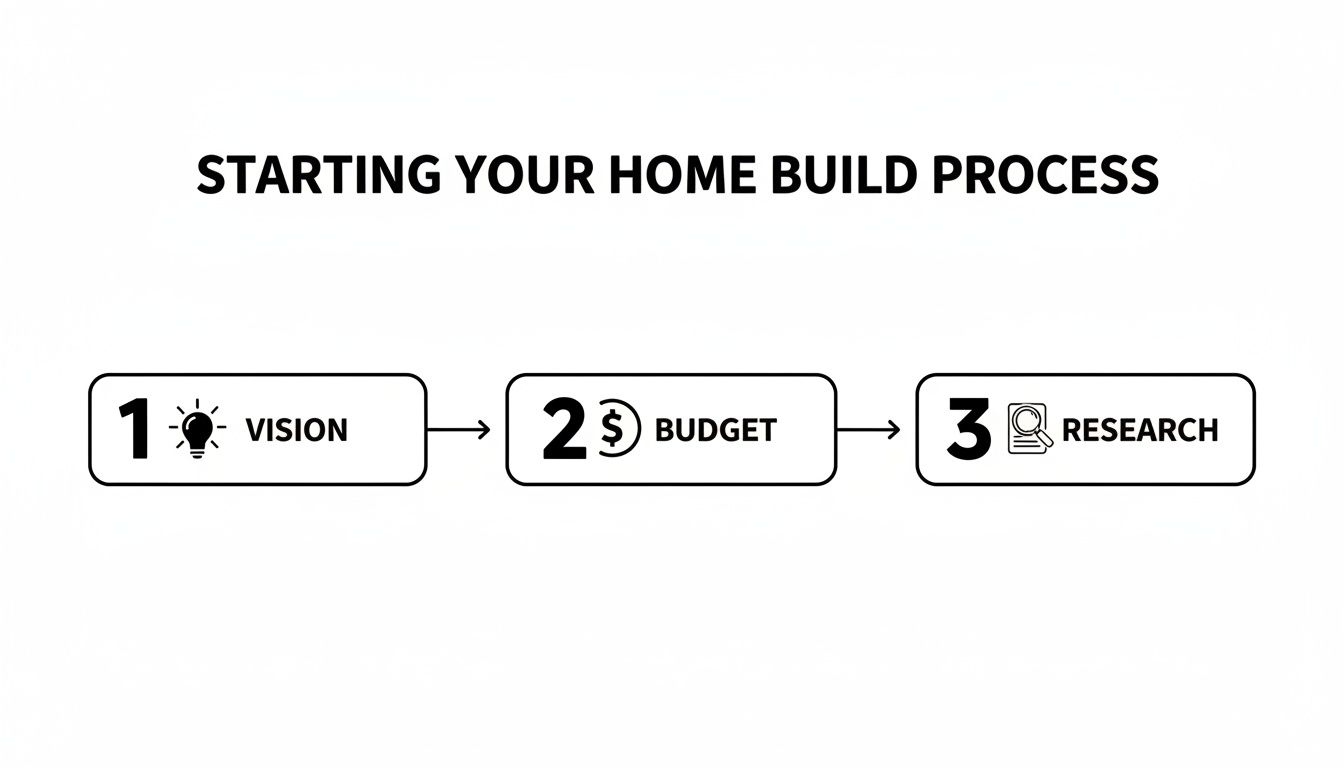
As you can see, a successful build is founded on a clear vision and diligent homework—well before any construction begins.
Before you get too far down the road, it’s wise to run through a quick feasibility check. This ensures all the core components are in place before you commit serious time and money.
Initial Project Feasibility Checklist
This checklist summarizes the critical checkpoints to verify before committing significant resources to your luxury home build, ensuring a smooth start.
| Checklist Item | Key Consideration | Why It Matters |
|---|---|---|
| Vision Clarity | Have you defined your non-negotiable features, lifestyle needs, and desired aesthetic? | A clear vision prevents scope creep and ensures the final home meets your expectations without costly changes. |
| Budget Outline | Do you have an initial, all-in budget range that includes land, design, construction, and finishes? | This sets realistic financial boundaries and helps you make informed decisions from day one. |
| Land Viability | Have you identified potential lots and conducted preliminary due diligence on zoning and utilities? | The land dictates the design. Unforeseen site issues can drastically inflate costs and timelines. |
| Team Research | Have you started identifying potential architects, designers, and builders who specialize in your desired style? | The right team is your most important asset. Their expertise is what brings your vision to life. |
Running through these points helps confirm that your project is not just a dream, but a viable undertaking ready for the next steps.
Assembling Your Custom Home Dream Team
Building a custom home isn’t just a construction project; it’s a deeply personal journey. The success of that journey rests almost entirely on the team of professionals you bring on board. This isn’t just about hiring a qualified architect and builder. It’s about finding true partners who grasp your aesthetic, respect your budget, and can translate the way you live into a functional, breathtaking space.
Let’s be clear: this process is far too complex to go it alone. Your core team will be your architect, an interior designer, and a general contractor or builder. While their roles are distinct, their work is completely intertwined. A truly exceptional home is born from seamless collaboration and open communication between everyone from the very start.

Identifying The Right Architect And Designer
Your architect is the visionary who draws the blueprint for your home. Your interior designer shapes the soul and flow of the spaces within. For a high-end luxury build, these two should work in tandem from day one. You’re not just looking for technical skills—you’re looking for creative chemistry.
Begin by immersing yourself in portfolios that truly resonate with you. Platforms like Haute Design are invaluable here, as they are specifically curated to connect discerning clients with elite professionals whose work defines luxury design. Once you’ve found a few whose style you love, it’s time to dig deeper.
- Request a project list. Ask to see recent projects that are similar in scope and style to what you envision.
- Talk to past clients. Go beyond a simple, “Were you happy?” Ask pointed questions. “How did the architect navigate an unexpected site issue?” or “How well did the designer manage the budget for the custom millwork?”
- Schedule consultations. This is a must. A face-to-face meeting is your chance to see if you click. Do they listen more than they talk? Are they asking thoughtful questions about your daily routines and what you value in a home?
A great architect designs a beautiful structure. An exceptional architect designs a beautiful life for the people inside it. The goal is to find someone who is as invested in your family’s future happiness as they are in the building’s aesthetic.
This vetting process isn’t about finding the most famous firm. It’s about finding the right creative partner for you.
Selecting Your General Contractor Or Builder
While the architect designs the “what,” the builder is responsible for the “how.” They are the ones who bring the plans to life, managing everything from subcontractors and material sourcing to timelines and budgets. This role demands an immense amount of trust and expertise. The relationship you build with them is one of the most critical of the entire project.
A common question is who to hire first. For a truly bespoke home, the architect typically comes first to develop the initial concept. However, I’ve found the best results come from bringing a trusted builder into the conversation early—once you have preliminary drawings. Their input on construction costs and methods at this stage is invaluable and can prevent expensive redesigns down the road. For a deeper dive, check out our complete guide on how to choose a home builder for your custom home.
When you sit down with potential builders, zero in on these areas:
- Relevant Experience: Have they built homes of this caliber, complexity, and finish level before? Don’t be afraid to ask for a tour of a completed project.
- Total Transparency: A reputable builder will operate with an “open-book” policy on costs and have a clear, transparent bidding process. You should know where every dollar is going.
- Communication Style: How do they keep clients in the loop? Do they use project management software? How often can you expect site meetings?
Setting up clear communication protocols with your entire team right from the beginning is the single best thing you can do to manage expectations and ensure your path to a new custom home is as incredible as the final result.
Getting a Handle on Your Construction Budget
Financing a custom home is a whole different ballgame than getting a mortgage for a house that’s already built. It’s a forward-looking process that starts with a construction loan and, most importantly, an incredibly detailed line-item budget. This financial blueprint is the bedrock of your project, the one thing that will keep your grand vision grounded in reality.
A construction loan doesn’t just land in your bank account. Instead, the funds are released in stages, or “draws,” as your builder hits specific milestones—think pouring the foundation or completing the framing. Lenders are essentially betting on the future value of your home, so they’re going to put your plans, your team’s credentials, and your budget under a microscope before they sign off on a high-value project.
Building a Bulletproof Line-Item Budget
Your budget can’t just be a single number you have in mind. It needs to be a living, breathing document that accounts for every conceivable cost. A vague budget is the fastest way to go over, while a detailed one gives you clarity and control, empowering you to make smart calls on where to splurge and where to save.
I always advise clients to think of it in three main buckets:
- Soft Costs: These are all the expenses that aren’t tied directly to bricks and mortar. We’re talking architectural fees, soil engineering reports, permit applications, and legal costs.
- Hard Costs: This covers the actual labor and materials for the build—everything from excavation and concrete to lumber, roofing, and windows.
- Finishing Costs: This is where the soul of your home comes to life. It includes all the beautiful details: high-end appliances, custom cabinetry, flooring, light fixtures, landscaping, and even smart home integration.
Getting a firm grasp on these costs is essential, especially right now. While global construction inflation is expected to ease to 3.9%, it’s projected to tick back up to 4%. In premium markets like Geneva and London, things get even more complicated with regional labor shortages and material price swings. For anyone building a luxury home, understanding these dynamics is key. Although nonresidential spending is softening, the high-end residential market is holding strong, with home prices climbing 2-3% each year. An experienced architect and builder, the kind you can find through a network like Haute Design, can navigate these numbers to keep your build on track. You can get more insights into these global construction market trends on Skanska.com.
Why a Contingency Fund is Non-Negotiable
I don’t care how meticulously you plan; a custom build will always throw you a curveball. It’s just the nature of the beast. You might hit an unexpected patch of rock during excavation, see lumber prices spike overnight, or simply fall in love with a design change mid-project. This is precisely why a healthy contingency fund isn’t just a good idea—it’s absolutely critical.
A contingency fund isn’t a matter of if you’ll use it, but when. It’s the financial shock absorber that protects your project’s quality and timeline when the unexpected happens.
For a luxury custom home, you need to set aside 15-20% of your total construction cost for this fund. I know that sounds like a lot, but trust me, it’s the single best way to avoid financial stress and ensure you can handle bumps in the road without having to compromise your vision. It buys you peace of mind.
Staying on Top of Expenses and Making Smart Trade-Offs
With your budget and contingency locked in, the last piece of the puzzle is tracking everything diligently. The best builders use project management software that gives you a real-time window into spending, right down to the line item. That transparency is everything.
You should be having regular budget meetings with your team to review progress, sign off on expenditures, and get ahead of any potential overages. This proactive approach lets you make smart trade-offs along the way. For instance, say that rare Italian marble you wanted for the primary bathroom comes in way over budget. No problem. You can sit down with your designer and look for savings elsewhere—maybe by selecting a beautiful but more cost-effective stone for the guest bathrooms.
It’s this kind of collaborative, transparent process that turns a financial plan on paper into the stunning finished home you’ve been dreaming of.
Navigating The Design and Permitting Maze
Once your team is in place, the project makes a pivotal shift. We move from the world of broad ideas and inspiration boards into the realm of hard-lined, detailed blueprints. This is where your vision truly begins to take shape, evolving from sketches into the complex construction documents your builder will use to physically create your home.
It’s an intense, collaborative period that runs alongside another critical task: securing all the necessary building permits.
Think of this phase as a detailed conversation between you and your architect, translated into technical language. They’ll take your discussions about lifestyle, flow, and aesthetics and turn them into meticulously drafted floor plans, elevations, and 3D renderings. Every single detail gets examined, from the workflow in the kitchen to the precise placement of each window to capture the best natural light. It’s a process of constant refinement.
From Concept To Construction Documents
The design journey isn’t a single step; it’s a progression. It begins with schematic designs—the initial sketches that map out the basic layout and overall form of the house. From there, your architect fleshes these out, bringing in structural engineers and beginning to specify materials. This is where you get into the fun stuff, selecting everything from the exterior stone and window packages to the interior finishes like flooring, tile, and cabinetry.
For a true luxury build, the level of detail is extraordinary. We’re talking about decisions like:
- Material Sourcing: Are you envisioning hand-cut limestone from a specific Texas quarry, or is it imported Italian marble for the primary bath?
- Systems Integration: How will the smart home automation, security systems, and high-efficiency climate control be woven invisibly into the home’s structure?
- Custom Millwork: Now is the time to design the bespoke cabinetry, built-in shelving, and architectural trim that will set your home apart and make it uniquely yours.
The ultimate goal here is to lock in every single selection before a shovel ever hits the ground. I can’t stress this enough: making changes once construction is underway is the number one cause of budget-busting overruns and frustrating delays. Getting a clearer picture of the architectural design process steps can really help you understand what to expect.
The Intricacies Of The Permitting Process
While all this creative work is unfolding, your architect and builder are simultaneously preparing a mountain of paperwork for the local building department. The permitting process can feel like a bureaucratic headache, but it’s a non-negotiable step that ensures your home is safe, structurally sound, and compliant with all local codes and zoning ordinances.
Getting a building permit isn’t a rubber-stamp exercise. It’s a painstaking review where officials check that every part of your plan—from the electrical wiring to the foundation depth—meets strict safety and land-use standards.
An experienced team is your most valuable asset here. They know the local jurisdiction, understand exactly what documentation is required, and know how to present it for the smoothest possible review. Some common hurdles that a good team can help you navigate include:
- Historical District Reviews: If your property is in a designated historic area, a special commission will likely need to approve the exterior design to ensure it complements the neighborhood’s character.
- Environmental Assessments: Building near wetlands, coastlines, or other sensitive habitats often requires detailed environmental impact reports before any work can begin.
- Zoning Variances: Does your design push the boundaries of standard zoning rules, perhaps by requesting a minor adjustment to a setback? You’ll probably need to apply for a variance, a process that can involve public hearings.
Staying Informed With Construction Market Data
Successfully navigating this phase also means keeping a pulse on the broader market. Trends in the construction industry can directly impact your project’s timeline and the availability of materials and labor. For example, we always watch housing starts data, as it’s a great indicator of market momentum.
The latest figures show 1,412,000 permits were authorized at a seasonally adjusted annual rate in October, a number that points to continued high demand for new construction. An experienced professional team uses this kind of data—which you can explore further in the U.S. new residential construction report on Census.gov—to anticipate potential bottlenecks. This data-driven foresight helps transform the complex permitting and design maze into a clear, manageable path forward for your project.
From Blueprint to Breaking Ground
With your permits in hand and every design detail meticulously captured on paper, the project’s entire energy shifts. This is the pivotal moment when your dream home starts its journey from a two-dimensional plan into a three-dimensional reality. The focus now moves from the design studio to the build site, kicking off with the critical tasks of locking in your builder and prepping the land for construction.
This phase is all about diligence and precision. The choices you make right now—from the contractor you hire to the fine print in your contract—will genuinely set the tone for the entire build. It’s where all that careful planning starts to pay off, creating a rock-solid foundation for a smooth and successful construction process.
Finalizing Your Builder and The Contract
Even if you’ve had a preferred builder in mind for months, now is the time for formal, competitive bids. Your architect will send the complete set of construction documents—the blueprints—to a shortlist of pre-vetted, reputable builders. The bids that come back will break down the cost of every single element of your home, from lumber and labor to project management fees.
Resist the temptation to jump at the lowest number. A bid that seems too good to be true usually is, often masking lower-quality materials or overly optimistic labor estimates. Instead, sit down with your architect and compare the bids line-by-line.
Here’s what to look for:
- Scrutinize the Allowances: Pay close attention to allowances, which are essentially budget placeholders for items you haven’t selected yet, like specific appliances or light fixtures. One builder might use a low allowance to make their total bid look more appealing, while another provides a more realistic, albeit higher, figure.
- Verify Subcontractor Quality: A great general contractor is only as good as their team. Ask who they intend to use for crucial trades like electrical, plumbing, and HVAC. Look for established experts.
- Assess Financial Stability: Don’t be shy about doing your homework. A financially sound builder is essential to keep your project on track and free from delays caused by their own cash flow problems.
Once you’ve made your choice, it’s time to sign the contract. This legally binding document is your single most important form of protection.
Your construction contract needs to be an ironclad agreement that leaves zero room for misinterpretation. It must clearly define the scope of work, payment schedule, change order process, and dispute resolution methods to protect your significant investment.
I always advise clients to have a real estate attorney review the contract. Ensure it includes a detailed timeline with clear penalties for unexcused delays and specific clauses on material quality and workmanship standards. This isn’t about a lack of trust; it’s about establishing clarity and accountability for everyone from day one.
Site Prep and Laying the Foundation
With the contract signed, the action finally moves to your property. The first physical steps are some of the most dramatic, as crews literally shape the ground where your home will stand. This initial phase, often called site work, is a carefully orchestrated sequence.
First comes site clearing and grading. The crew removes any trees, rocks, or debris from the building footprint. Then, heavy machinery grades the land, contouring it to ensure water drains properly away from your future foundation.
Next is excavation. The team digs out the earth for the foundation and any basement levels. Precision is everything here; the depth and dimensions must match the architectural plans to the inch. This is followed by pouring the concrete footings and foundation, which create the stable base upon which your entire home will rest.
Setting the Rhythm for Communication
As the foundation begins to take shape, it’s the perfect time to establish the communication rhythm that will carry you through the entire project. Your builder should schedule regular site meetings—usually weekly—for you, your architect, and the site supervisor. These meetings are your chance to see progress firsthand, ask questions, and tackle any small issues before they snowball.
This is also when your architect’s role often evolves into what we call construction administration. In this capacity, they act as your advocate on-site, ensuring the builder is adhering to the design, specifications, and quality standards you agreed on. Taking a moment to understand what is construction administration can give you incredible peace of mind that your vision is being executed flawlessly.
This timeline table outlines the crucial steps that bridge the gap between design finalization and the start of physical construction.
Key Pre-Construction Milestones
| Milestone | Typical Duration | Key Outcome |
|---|---|---|
| Builder Bidding & Selection | 2-4 weeks | A signed contract with a vetted, high-quality builder. |
| Permit Finalization | 1-3 weeks | All necessary building permits are officially issued by the local authority. |
| Site Staking & Survey | 3-5 days | The precise location of the house is marked on the property. |
| Utility & Temp Power Setup | 1-2 weeks | Water, electricity, and sanitation are established for the construction crew. |
| Site Clearing & Grading | 1-2 weeks | The land is prepared, cleared, and graded for a stable foundation. |
Following these milestones ensures that when the first shovel hits the dirt, every prerequisite for a successful build is already in place.
By thoughtfully selecting your builder, solidifying a comprehensive contract, and establishing clear communication from the moment you break ground, you create the perfect environment for turning a brilliant blueprint into a breathtaking custom home.
Navigating Your Custom Home Build: Common Questions Answered
Even the most meticulously planned custom home project comes with its share of questions. It’s completely normal to feel like you’re entering a new world, and facing these uncertainties head-on is the best way to move forward with confidence.
Let’s dive into some of the most common questions we hear from clients just starting their journey.
How Long Does It Really Take To Build a Custom Home?
There’s no one-size-fits-all answer, but for a high-end custom home, you should realistically plan for a timeline of 12 to 24 months. That’s from your very first conversation with an architect to the day you get the keys.
It’s helpful to think of this in two major stages. The pre-construction phase—everything from initial design sketches to complex engineering and navigating the permitting process—can easily take 4 to 8 months. Then, the actual on-site construction typically runs another 8 to 16 months, depending on things like the architectural complexity, the challenges of your specific property, and lead times for those one-of-a-kind materials you’ve chosen. Your project team will be able to give you a much more dialed-in schedule once the plans take shape.
What Are The Biggest Unexpected Costs I Should Plan For?
Surprise costs are almost always lurking in one of three places: the ground beneath your home, volatile material prices, or design changes you make after construction has already started. You simply can’t know what’s buried on a piece of land until you start moving dirt.
We’ve seen it all. Some of the most common budget-busters include:
- Unstable Soil: Finding out the ground can’t support the foundation as designed, leading to more complex and costly engineering solutions.
- Hidden Obstructions: Hitting a massive boulder or solid rock ledge that wasn’t on the survey and now needs to be blasted and hauled away.
- Utility Headaches: Realizing the connection to city water or sewer is far more difficult and expensive than anyone initially thought.
This is exactly why having a healthy contingency fund isn’t just a good idea—it’s essential.
A contingency fund of at least 15% of your total construction budget is the industry standard for a reason. This buffer is your project’s safety net, giving you the flexibility to handle the unexpected without sacrificing the quality or vision for your home.
Should I Hire an Architect or a Builder First?
For a project that is truly custom from the ground up, you should absolutely hire the architect first. The architect is the visionary who takes your ideas, lifestyle, and dreams and translates them into a concrete, buildable set of plans. They create the detailed blueprints that a builder needs to give you an accurate, reliable cost estimate.
Bringing a builder in without a design is like asking for a price on a car without specifying the model, engine, or features—you’ll only get a wild guess.
That said, the ideal scenario is to bring a builder you trust into the fold once the architectural design is taking shape. This collaborative approach allows the builder to offer invaluable, real-world feedback on construction methods and material costs. This early input can help refine the design for efficiency, potentially saving you a significant amount of money and preventing costly changes down the line.
Bringing your vision to life starts with assembling an exceptional team. Haute Design is dedicated to connecting clients with the most acclaimed architects, interior designers, and luxury builders in the country. Discover the premier network of luxury home professionals on Haute Design and ensure your home is crafted by the very best.