


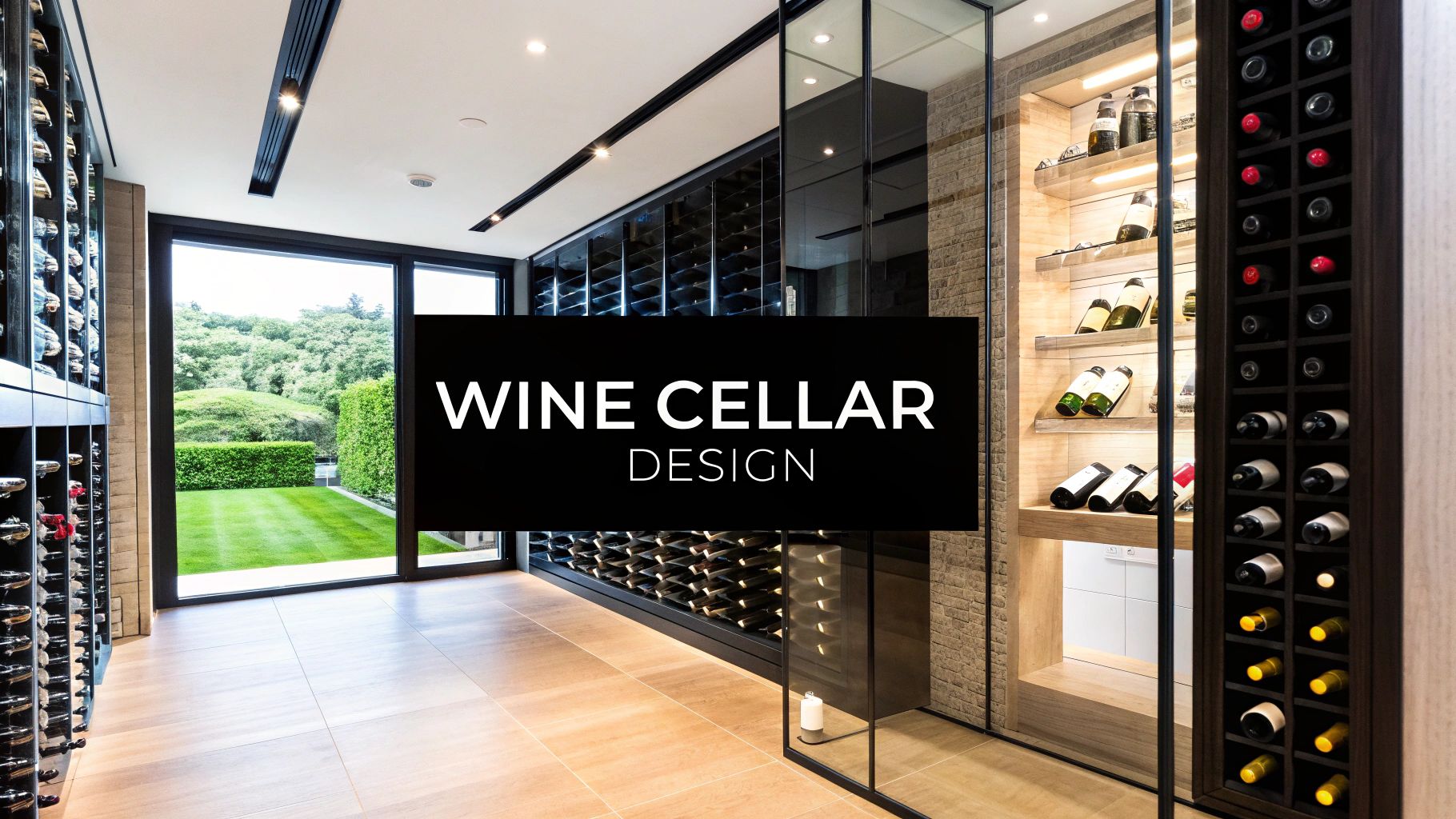
A custom wine cellar is so much more than a place to store wine. It’s a dedicated space, a personal gallery, that marries the science of preservation with the art of design. Think of it as the perfect blend of impeccable function and stunning architectural form—transforming a simple storage area into a showpiece for your collection and a beautiful backdrop for entertaining.
Defining Your Vision for a Custom Wine Cellar
Forget the old image of a dark, dusty basement. Today’s custom wine cellars are statements of personal style and hallmarks of sophisticated living. The journey to creating one doesn’t start with picking out wood or stone; it starts with a simple question: what is this space for?
Is it a quiet, meticulously organized vault for a serious collector? A dramatic, glass-enclosed feature for hosting lively tastings? Or perhaps an elegant, seamless extension of your living room? Nailing down the primary purpose of your cellar is the most important first step you’ll take.
Balancing Preservation with Presentation
At its heart, every exceptional wine cellar strikes a perfect harmony between protecting the wine and showcasing it beautifully. The aesthetic choices are what draw you in, but the science of preservation is the absolute foundation. Every single design decision has to support the tightly controlled environment your collection needs to thrive.
This means your vision needs to realistically account for a few key things:
- Collection Size and Growth: Are you planning for 500 bottles or looking ahead to a collection of 5,000? It’s always wise to build in room for future acquisitions.
- Primary Use Case: A space designed purely for aging will look very different from one meant for hosting. An entertaining-focused cellar might need a tasting counter, integrated seating, or specific display lighting.
- Desired Ambiance: Do you gravitate toward the classic, old-world feel of rustic stone and reclaimed wood? Or does a sleek, contemporary look with expansive glass and polished steel feel more like you?
A well-designed cellar today reflects far more than a collection of bottles; it tells a story of craftsmanship, culture, and personal taste. It’s an environment engineered to protect and designed to inspire.
To help frame your thinking, it’s useful to break down the design process into its core components.
Core Pillars of Custom Wine Cellar Design
This table provides a quick overview of the essential elements to guide your initial planning process.
| Design Pillar | Primary Objective | Impact on Your Collection |
|---|---|---|
| Climate Control | Maintain a stable environment (55°F & 50-70% humidity). | Prevents spoilage, cork shrinkage, and label damage. The single most critical factor for longevity. |
| Racking & Storage | Maximize capacity, accessibility, and display potential. | Ensures bottles are stored safely and can be organized for easy retrieval and inventory management. |
| Lighting & Finishes | Create the desired atmosphere while protecting the wine. | UV-free, low-heat lighting prevents light damage, while material choices define the cellar’s aesthetic character. |
| Location & Layout | Integrate the cellar into your home’s floor plan. | Determines the flow, visibility, and whether the space is a private retreat or a public centerpiece. |
Ultimately, these pillars work together to bring your concept to life.
From Concept to Cohesive Design
Turning your abstract ideas into a concrete blueprint is where the magic really begins. This is the stage where you define the look and feel that will steer the entire project. One of the best ways to do this is by creating a visual reference for your design team.
Putting together a collection of images, material samples, and notes is a powerful way to communicate your goals. Exploring how to create a mood board can be a fantastic exercise in clarifying your style, from the exact tone of the lighting to the texture of the stonework.
This foundational work ensures that every decision that follows—from the climate control system to the custom racking—is perfectly aligned with your vision for the ultimate wine sanctuary. The goal is a space that not only protects your collection flawlessly but also brings you a sense of pride and joy every time you step inside.
The Science of Perfect Wine Preservation
While the aesthetics of a cellar give it a soul, the science of preservation is its beating heart. At the end of the day, a custom wine cellar’s success boils down to one thing: its ability to create and maintain an environment of unwavering stability. This technical core is what elevates a beautiful room into a true sanctuary for aging wine.
Think of your cellar like a high-end Swiss watch. The cooling unit is the intricate, precise ‘movement’ that keeps perfect time. The insulation and vapor barrier? That’s the protective ‘casing.’ For the cellar to work, both must be in flawless harmony to shield the delicate contents from the outside world.
The Unbreakable Rules of Climate Control
Two factors tower above all others in wine preservation: temperature and humidity. These aren’t just suggestions; they are the strict parameters that determine whether your collection thrives or dies on the vine, so to speak.
- Temperature: You’re aiming for a constant 50-60°F (about 13°C). But honestly, what’s more important than hitting a specific number is preventing swings. Fluctuating temperatures cause the wine to expand and contract, which can nudge the cork out or, even worse, let damaging oxygen seep in.
- Humidity: The sweet spot is 50-70%. This moisture level is crucial for keeping corks plump and happy. A dried-out, shrunken cork is a wine’s mortal enemy—it compromises the seal and leads to oxidation, turning a prized vintage into expensive vinegar.
This chart really drives home how preservation, aesthetics, and function are all interconnected in a truly great cellar design.
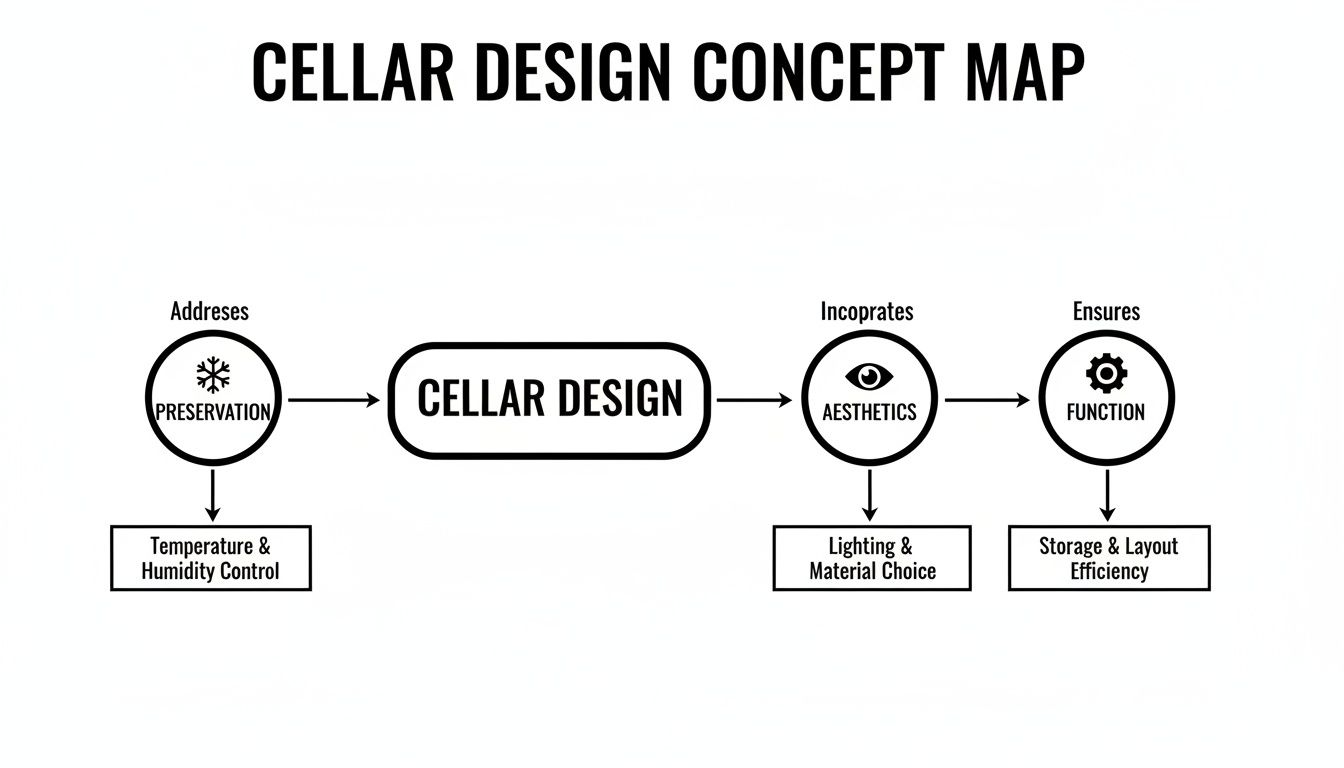
As you can see, while these three pillars are distinct, they have to overlap for the final design to be truly exceptional.
Choosing Your Cellar’s Engine: Cooling Systems
The cooling unit is the workhorse of your cellar, tasked with holding that perfect climate day in and day out. The right choice really depends on the cellar’s size, location, and your home’s layout. There are three main types you’ll encounter.
1. Self-Contained Units: These are the most straightforward systems, operating a lot like a window air conditioner. You mount them through a wall, and they vent heat into an adjacent space. They’re a great fit for smaller cellars or simple conversions where you just need to get the job done.
2. Split Systems: Here, the system is “split” into two parts: the evaporator (the cold side) and the condensing unit (the hot, noisy side). The quiet evaporator goes inside the cellar, while the condenser can be tucked away in a utility room or even outside. It’s a very popular choice that balances performance with minimizing noise and vibration inside the cellar.
3. Ducted Systems: This is the top-tier option for seamless integration. The entire mechanical unit is located completely outside the cellar, and conditioned air is delivered through discreet ductwork. It’s the go-to for high-end projects where clean lines, silence, and a flawless aesthetic are non-negotiable.
A cellar’s climate control system isn’t just an appliance; it’s a life support system for your collection. Investing in the right technology ensures your wine matures exactly as the winemaker intended.
The Invisible Shield: Insulation and Vapor Barriers
Beneath all the beautiful wood, stone, or glass lies a critical, unseen layer of defense. You simply cannot skimp on proper insulation and a vapor barrier—they are absolutely essential for creating that sealed, stable environment.
A vapor barrier is a must-have. It’s installed on the “warm” side of the cellar walls (meaning, the exterior side of the insulation). Its entire job is to stop moisture from the warmer outside air from getting into the insulation and condensing on your cold cellar walls, which is a recipe for mold and structural rot.
For this reason, closed-cell spray foam insulation is often the gold standard. It provides a fantastic insulation value (R-value) and acts as its own vapor barrier, killing two birds with one stone.
In the luxury home market, getting these technical details right is a huge part of the investment. We’ve seen a massive surge in custom cellar projects, with construction costs running from $40,000 for simpler installations to well over $250,000 for sprawling, elaborate builds. This huge range just shows how personalized these spaces are, with costs driven by size, materials, high-end climate systems, and custom racking. For a deeper dive, you can explore the details of custom wine cellar design costs on theprestigecellars.com.
Ultimately, mastering these technical elements is what ensures your custom cellar isn’t just a showpiece, but a perfectly functioning vessel that will protect and elevate your collection for decades to come.
Selecting Materials That Define Your Style
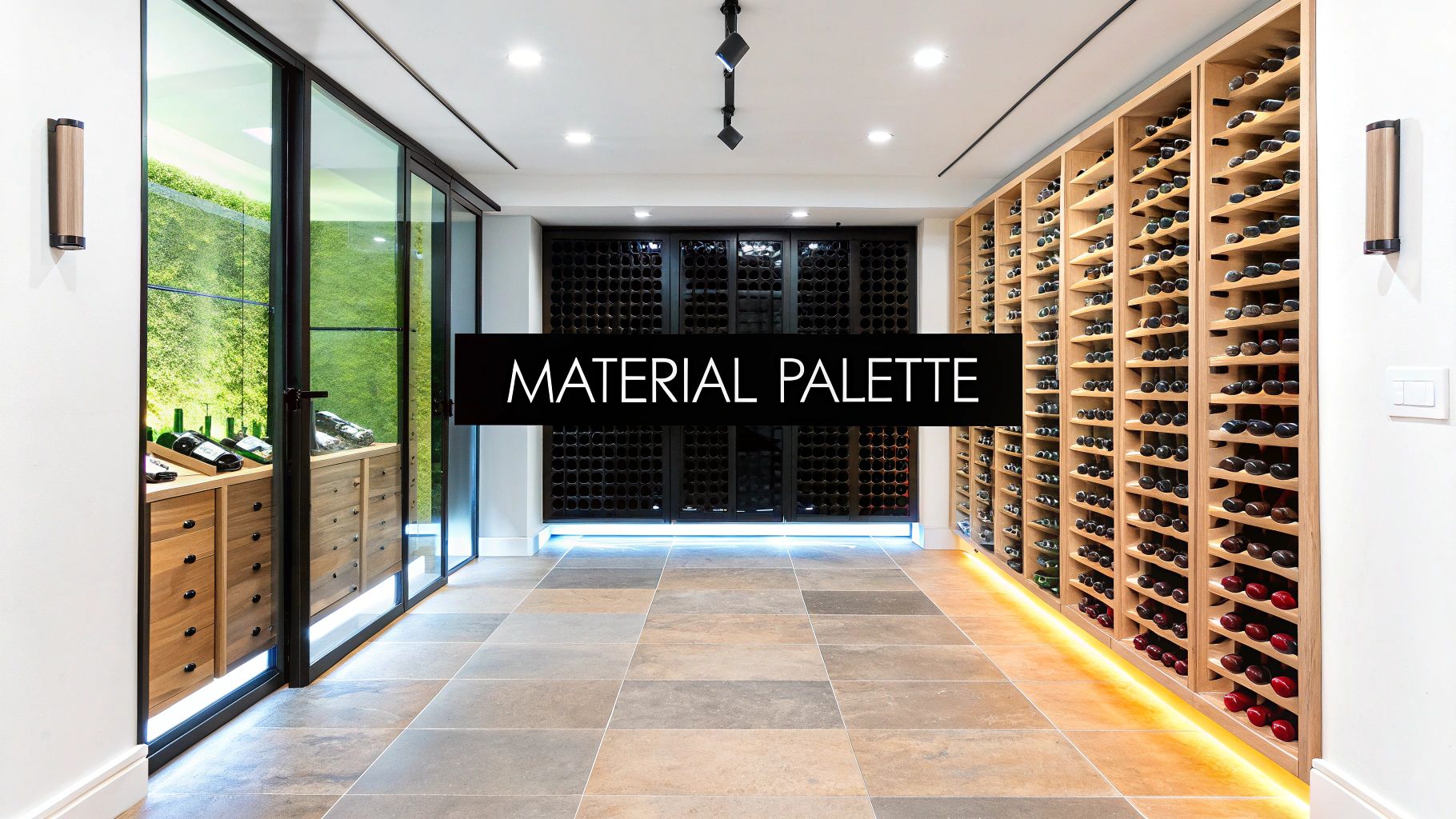
Once the technical bones of your cellar are in place—the insulation, vapor barrier, and climate control—it’s time for the fun part. This is where we move from engineering to artistry, selecting the materials and finishes that give your cellar its soul.
Think of it this way: the structure is the canvas, but the materials are your palette. Will it be a rustic Tuscan escape, a sleek modern gallery, or something that feels like a classic, wood-paneled study? The stone, wood, metal, and glass you choose will tell that story.
Crafting an Atmosphere with Walls and Flooring
The surfaces of your cellar—the walls and floors—set the entire mood. They are the backdrop for your collection, so their impact is huge. For a timeless feel, many collectors lean toward natural stone, brick, or reclaimed wood to evoke a sense of history and warmth.
On the other hand, if you’re aiming for a more contemporary look, polished concrete floors, sleek metal panels, or even back-painted glass create a clean, minimalist vibe. Just remember, these materials must stand up to a cool, humid environment. Hardwoods need to be properly sealed to prevent warping, and porous stones might require treatment to resist moisture.
The Rise of the Glass-Enclosed Cellar
One of the biggest trends in wine cellar design is transparency. Gone are the days of the cellar being hidden away in a basement. Today, it’s a showpiece—a jewel-box display that integrates your collection into your home’s living space.
This shift has made glass a dominant feature, with frameless glass walls and doors now appearing in over 70% of new luxury installations. We’re seeing collections showcased from living rooms, kitchens, and dining areas, all while being held at a perfect 55°F. In markets across North America and Europe, where developers have seen a 25% jump in demand for wine features, these stunning enclosures can add $50,000 to $100,000 to a home’s resale value. You can see more examples of these stunning wine cellar design trends at moderncellars.com.
Of course, achieving this look without compromising your wine requires specialized technology.
The secret to a great glass cellar isn’t the glass itself, but its thermal performance. It must be a beautiful, unyielding barrier between the cellar’s precise climate and the rest of your home.
This is where thermally insulated glass comes in. We exclusively use dual-pane units filled with an inert gas like argon. This prevents condensation from forming on the outside and dramatically slows heat transfer, letting the cooling system work efficiently instead of constantly battling the ambient room temperature.
Illuminating Your Collection with Strategic Lighting
Lighting is the final touch that brings a cellar to life. The trick is to create a dramatic, visually appealing atmosphere while introducing as little heat as possible. For this reason, LED (Light Emitting Diode) systems are the only real choice for modern wine cellars.
LEDs are the perfect solution for a few key reasons:
- Low Heat Output: They produce almost no heat, so there’s zero risk of accidentally “cooking” the wines right below them.
- No UV Radiation: Unlike older bulb types, LEDs emit no damaging ultraviolet rays, which can degrade wine labels and the wine itself over time.
- Design Flexibility: LEDs are incredibly versatile. We can integrate them as strips, spots, or puck lights directly into racking, under shelves, or along ceilings to create stunning, layered effects.
Great cellar lighting is all about creating depth. We often use soft, ambient light to give the whole space a warm glow, then add focused accent lights to highlight special bottles or display rows. Dimmers are a must, giving you total control to adjust the mood from a subtle glimmer to a brighter setting when you’re searching for that perfect bottle.
Designing Racking for Access and Aesthetics
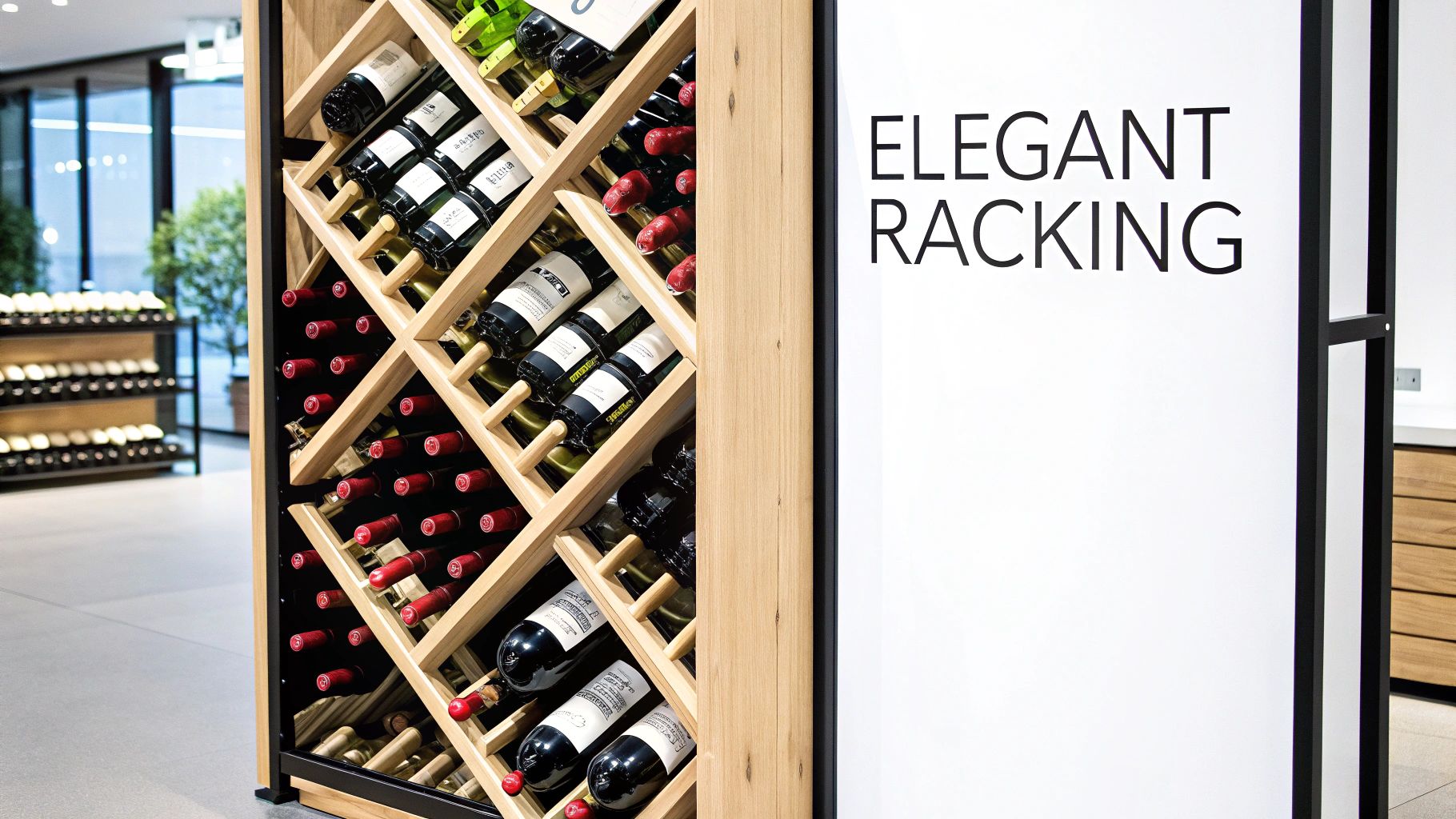
The racking is the very heart of a wine cellar. It’s the carefully engineered skeleton that holds your collection, balancing the practical demands of storage with the visual story you want to tell. Think of it as custom cabinetry for your most prized liquid assets; its design dictates how you’ll interact with and enjoy your wine for years to come.
Ultimately, the goal is a system that is as practical as it is beautiful. Great design ensures every bottle is securely cradled, easy to find, and presented in a way that transforms a simple storage room into a curated gallery.
Planning for Capacity and Collection Growth
One of the most common pitfalls I see in cellar design is underestimating future growth. A wine collection is a living thing; it rarely stays the same size. A design that perfectly fits 500 bottles today can feel frustratingly tight in just a couple of years.
So, the first step is an honest look at your collecting habits. Don’t just plan for the bottles you own now—plan for the ones you will own. A good rule of thumb is to design for at least 25% more capacity than your current collection.
This bit of foresight saves you from costly expansions down the road and keeps your cellar a source of joy, not a logistical headache. It’s a hallmark of professional design, where longevity is always front of mind.
Exploring Racking Styles and Layouts
Modern racking offers so much more than simple, uniform slots. The styles you choose will directly shape your cellar’s personality and day-to-day function. The most thoughtful layouts often blend different styles to create visual interest while meeting diverse storage needs.
Some of the most popular racking styles include:
- Individual Bottle Racking: This is the classic, high-density workhorse, storing bottles neck-out. It’s the most space-efficient way to handle the bulk of a collection.
- High-Reveal Display Rows: These racks tilt bottles forward at an angle, making the entire label visible. They are perfect for turning your most prized vintages into pieces of art.
- Diamond Bins and Cubes: Ideal for storing case quantities or grouping similar wines, these open bins add a traditional, rustic touch and offer flexible, bulk storage.
- Case Storage: Simple but crucial. Any serious collector who buys by the case needs dedicated shelving or floor-level nooks for original wooden cases (OWCs).
A cellar’s racking is more than just storage; it’s the choreography of your collection. The layout should guide your eye, tell a story, and make finding the perfect bottle an effortless pleasure.
Mixing these styles is where the magic happens. Imagine a wall of individual racking, dramatically interrupted by a single, beautifully lit high-reveal row that serves as a stunning focal point. For those with smaller spaces or who want to integrate storage into their main living areas, you can explore similar principles in this guide on how to build a wine cabinet.
Choosing Materials for Durability and Style
Your choice of material really sets the tone for the entire cellar. Traditional woods bring a sense of warmth and history, while sleek metal systems can create a sharp, contemporary edge. When making your choice, you have to weigh both the look and the unique demands of a cool, humid cellar environment.
| Racking Material | Key Advantages | Best For |
|---|---|---|
| Redwood & Mahogany | Naturally resists rot and mildew. Its beautiful grain offers a timeless appeal and it won’t impart any odors. | Classic, traditional, and transitional cellars seeking warmth and elegance. |
| Metal (Steel/Aluminum) | Offers a sleek, minimalist aesthetic with fantastic durability. Perfect for creating a modern “floating bottle” look. | Contemporary, industrial, and glass-enclosed cellars where a clean, open feel is the goal. |
| Acrylic | Creates a completely transparent, ultra-modern effect, making bottles appear to float in mid-air. | Showpiece cellars where the primary focus is on a dramatic, visually striking display of the wine itself. |
Finally, a truly custom wine cellar design must account for the wide world of bottle shapes. Your racking has to elegantly house everything from standard Bordeaux and wider Burgundy bottles to slender Rieslings and oversized magnums. A thoughtful designer will always integrate varied slot sizes and adjustable shelving to ensure every single bottle in your collection has a perfect home.
Integrating Smart Technology for Modern Collectors
A truly exceptional wine cellar today is more than just a beautiful space to store bottles. It’s an intelligent, responsive environment that actively protects your collection. Modern technology is what elevates a cellar from a simple, passive room into a dynamic guardian for your most prized wines, offering a level of control and insight that was once unimaginable.
This isn’t about adding gadgets just for the sake of it. The real art lies in seamlessly weaving these smart systems into the cellar’s design. The goal is to enhance preservation and give you complete peace of mind, all without compromising the aesthetic you’ve so carefully curated. The best technology is the kind that works invisibly in the background.
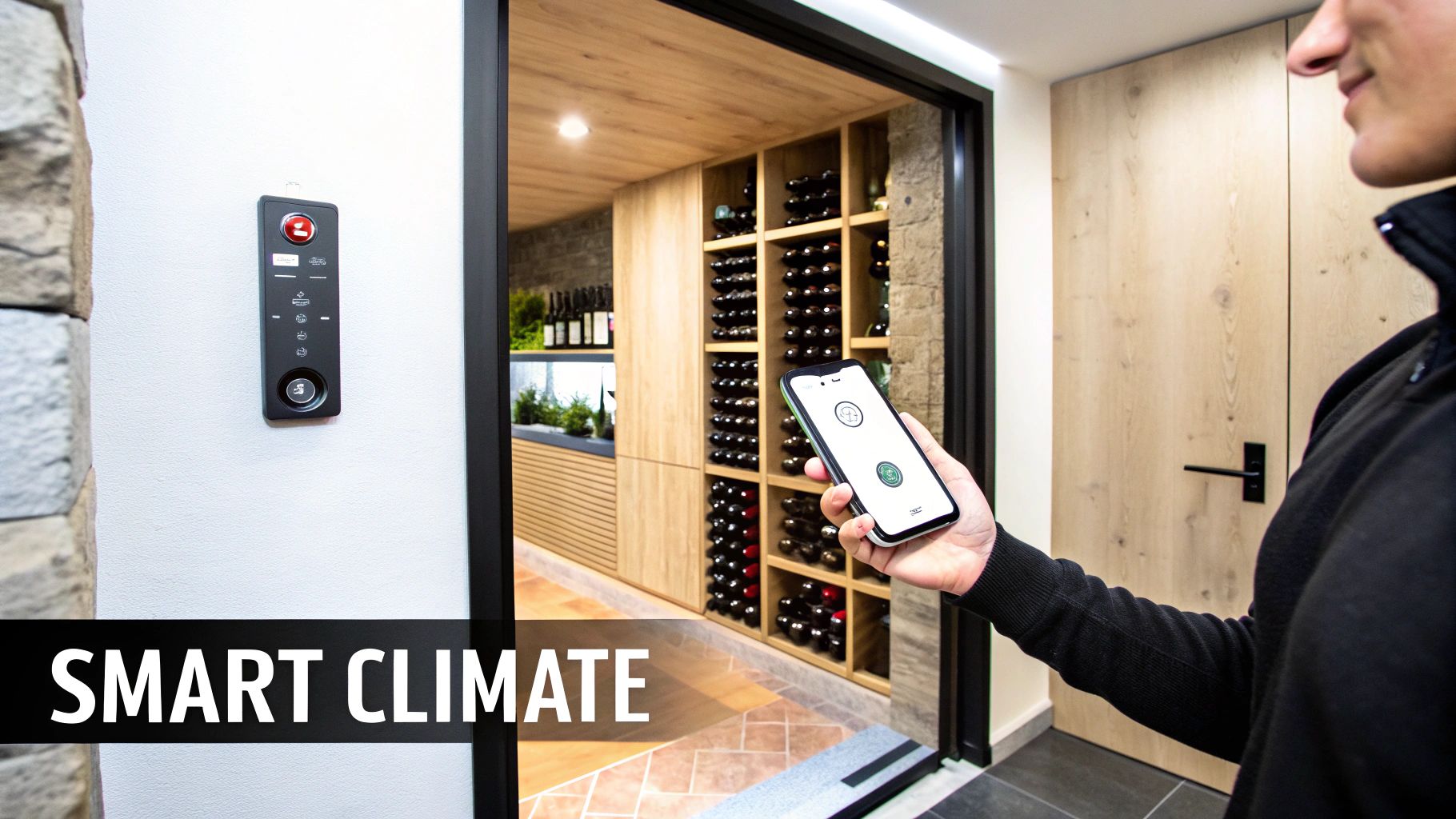
Automated Climate and Humidity Control
At the heart of any smart cellar is its automated climate control system. You can think of this as the cellar’s central nervous system, constantly monitoring and making micro-adjustments to maintain the perfect aging environment. These systems are a world away from a basic thermostat.
Today’s advanced units let you fine-tune temperature and humidity levels directly from your smartphone or tablet, whether you’re at home or halfway across the globe. This remote access is more than a convenience; it’s a safeguard. You’ll get instant alerts if conditions drift outside your set parameters—say, from a power outage or a door left ajar—giving you the chance to act before any harm is done.
Sophisticated Inventory Management
As your collection expands, keeping track of every bottle can feel like a full-time job. This is where sophisticated inventory management software comes in, transforming a tedious chore into a genuinely enjoyable part of the collecting experience. It’s like having a digital sommelier at your fingertips.
These powerful platforms allow you to:
- Scan and Catalog: Effortlessly add new acquisitions by simply scanning a barcode or label with your phone.
- Track Bottle Location: Pinpoint exactly where a bottle is by assigning it a specific rack and bin number. No more hunting for that special vintage.
- Log Tasting Notes: Keep a detailed journal of your thoughts, ratings, and impressions for every wine you open.
- Monitor Drinking Windows: Get timely advice on when a particular bottle is approaching its peak maturity, so you never miss the perfect moment to enjoy it.
Smart inventory systems give you the complete story of your collection. They don’t just tell you what you have; they help you understand its history, its potential, and how to best enjoy it.
Protecting Your Investment with Modern Security
For any valuable collection, security is non-negotiable. It’s a critical element that must be integrated from the very first design stages. The beauty of modern security tech is that it can provide robust, layered protection while remaining completely invisible to the eye.
The most effective and discreet security solutions include:
- Biometric Access: For the ultimate in access control, fingerprint or retina scanners ensure only authorized individuals can ever set foot inside.
- Discreet Sensors: Tiny motion detectors and door contact sensors can be hidden within the cellar’s architecture, ready to trigger a silent alarm or a notification on your phone if an unauthorized entry occurs.
- Surveillance Cameras: Small, high-definition cameras can be strategically placed to offer comprehensive monitoring without being obtrusive.
Integrating these features requires a thoughtful, design-first approach. When planned correctly, this technology becomes a seamless part of the cellar’s ecosystem, just like any other high-end feature in a modern luxury home. To see how these elements fit into a broader vision, you can explore more smart home automation ideas that bring convenience and security to the entire property. A skilled designer will work to conceal all wiring and hardware, preserving the clean lines and refined atmosphere your custom cellar deserves.
Partnering with Professionals to Build Your Cellar
Turning the dream of a world-class wine cellar into a reality isn’t a DIY project. Much like a fine wine relies on a master winemaker, an exceptional cellar is born from the collaboration of a specialized team. Bringing in the right professionals is the final, and most critical, piece of the puzzle, ensuring every technical detail and design choice works in perfect harmony.
Think of it less like hiring a contractor and more like commissioning a piece of functional art. The journey demands a shared vision, open communication, and a deep well of technical know-how. The right partnership makes the entire process feel seamless and results in a space that truly honors both your collection and your home.
Assembling Your Design and Build Team
Your dream team for a custom cellar typically includes a designer, a builder, and a refrigeration specialist. Often, you’ll find a single, specialized firm that brings all these experts under one roof. The designer is your visionary, translating your ideas into a workable blueprint. The builder is the artisan, handling the construction and materials. And the climate control expert is the engineer, designing the cellar’s all-important heart: its preservation system.
How do you find them? Start by looking through portfolios. You want to see a proven track record of creating cellars that match the style and scale you envision. The Haute Design network is an invaluable place to start, connecting you with vetted, top-tier professionals who live and breathe luxury residential projects.
The real value of a professional is their foresight. They see the challenges you can’t—like how to prevent condensation on a glass wall or navigate tricky building codes—and solve them before they become expensive problems.
The Project Journey from Concept to Completion
Knowing what to expect from the timeline can make the whole process much smoother. A well-managed project follows a clear, structured path, ensuring no detail is overlooked.
- Initial Consultation: This is where it all begins. You’ll sit down with your designer to discuss your collection, your aesthetic vision, your lifestyle, and your budget.
- Design and Material Selection: The vision takes shape. Your designer will create detailed drawings and present you with a curated palette of materials—from the wood for your racking to the stone for your floors.
- Technical Planning: While you’re dreaming of finishes, the team is hard at work behind the scenes finalizing cooling system specs, insulation plans, and electrical layouts.
- Construction and Installation: This is where the magic happens. The build-out kicks off with framing, insulation, and the vapor barrier, followed by the beautiful finishes, custom racking, and lighting.
- Commissioning and Handover: The climate control system is fired up and precisely calibrated. Once the environment is perfectly stable and ready for your collection, you’ll get a full tour of your new cellar.
The demand for these spaces is booming. The global market for built-in cellars is currently valued at over $1.2 billion and is expected to nearly double. This surge is fueled by passionate collectors, with a 28% jump in US luxury homes adding cellars in recent years. Today, about 50% of custom projects now feature integrated tasting rooms, highlighting a desire for spaces built for both perfect storage and memorable experiences. This trend naturally impacts project costs, which might start around $40,000 but can easily exceed $250,000 for truly bespoke installations. For a deeper dive, you can explore more data on the growing wine cellar market at cognitivemarketresearch.com.
Ultimately, investing in true professional expertise is the only way to safeguard your wine and add significant value to your home. A beautifully executed custom wine cellar is more than just an amenity; it’s a lasting legacy of taste, passion, and craftsmanship.
Common Questions About Custom Wine Cellar Design
When you start planning a custom wine cellar, it’s natural for questions to pop up. Getting a handle on the key variables from the very beginning helps set clear expectations and ensures the finished space is a perfect fit for both your collection and your home. Let’s walk through some of the most common questions we hear from collectors.
How Much Does a Custom Wine Cellar Typically Cost?
The truth is, the investment for a custom cellar can vary dramatically. A smaller, simpler conversion project might start around $40,000. On the other end of the spectrum, a large-scale, highly detailed cellar with frameless glass, bespoke millwork, and a top-of-the-line climate control system can easily climb past $250,000.
Several key drivers will shape your final budget:
- Size and Capacity: The bigger the cellar, the more you’ll invest in materials and labor. It’s a simple matter of scale.
- Climate Control System: A high-performance, fully ducted system is a much larger investment than a basic, self-contained cooling unit.
- Materials and Finishes: This is where personal style really comes into play. Premium woods, natural stone, and custom lighting will naturally have a bigger impact on the budget than more standard options.
- Integrated Features: If you’re dreaming of a tasting area, a wet bar, or advanced security measures, these additions will also influence the overall price.
What Is the Ideal Climate for a Wine Cellar?
For long-term aging, the absolute gold standard is an environment of unwavering stability. The ideal temperature is a constant 55-57°F (13°C). But here’s the crucial part: it’s the lack of fluctuation that truly protects your wine from aging too quickly, even more than hitting that exact number.
Humidity is just as important. You want to keep it steady between 50% and 70%. This moisture in the air is what keeps corks from drying out, shrinking, and letting damaging oxygen spoil the wine inside. A professional-grade climate control system isn’t a luxury; it’s essential for holding these precise conditions day in and day out.
Think of your cellar’s climate not just as a setting, but as a constant guardian. Its only job is to create an environment so stable that your wine can mature gracefully and predictably for decades to come.
Can an Existing Room Be Converted into a Wine Cellar?
Absolutely. An underused basement corner, a large closet, or even a spare room can be a fantastic candidate for a cellar conversion. That said, this is a highly technical undertaking that involves far more than just putting up some racks and plugging in a cooler.
A successful conversion demands that the room be completely sealed off from the rest of the house. This means installing proper insulation (closed-cell spray foam is a common choice), a vapor barrier on the “warm” side of the walls to stop condensation, and a fully sealed, exterior-grade door. Only then can a dedicated wine cellar cooling unit be installed to create and hold the ideal climate. Because this process requires such precision, bringing in a professional is the best way to guarantee the long-term integrity of your cellar.
Ready to transform your vision into a stunning reality? The experts at Haute Design connect you with the nation’s most distinguished designers and builders who specialize in creating extraordinary wine cellars. Find the perfect professional to craft your bespoke wine sanctuary at https://hauteliving.com/designnetwork.