


At its core, an Italian kitchen is more than just a place to cook. It’s a warm, inviting space designed to be the true heart of the home—a seamless blend of timeless beauty and everyday function. It’s where the Italian philosophy of la dolce vita—the sweet life—comes alive, celebrating family, food, and shared moments through exceptional craftsmanship and the finest materials.
The Enduring Allure of Italian Kitchen Design
Stepping into a genuinely Italian kitchen is an experience. It’s not about following a fleeting trend; it’s about creating a space where centuries of culinary tradition feel perfectly at home with modern life. This design philosophy is less about pure aesthetics and more about building the central hub of family life, where memories are forged over simmering sauces and lively dinners.
The guiding principle is a perfect marriage of bellezza (beauty) and funzionalità (functionality). Every single element, from the flow of the layout to the touch of the countertops, is chosen to make cooking a pleasure while creating an atmosphere of effortless elegance. This dual focus is what makes the kitchen as wonderful to work in as it is to look at.
More Than Just a Room
Unlike kitchens designed with a purely utilitarian mindset, an Italian space is built for gathering. It’s the spot where kids finish their homework, friends linger over a glass of wine, and generations connect while sharing cherished family recipes. This social aspect is absolutely fundamental to its appeal and a key driver of its value.
When you invest in an Italian kitchen, you’re investing in a lifestyle—one centered on warmth, hospitality, and the simple joys of daily life.
This lasting appeal is clearly reflected in market trends. The Italian kitchenware market alone was valued at USD 1,979.9 million in 2024 and is expected to climb to USD 3,581.6 million by 2033. This growth points to a global appreciation for spaces that honor Italy’s rich culinary heritage with both style and substance. You can explore the full research on the Italy kitchenware market on Grandview Research.
The Foundation of Lasting Value
For homeowners and designers, choosing an Italian-style kitchen means putting longevity and quality first. This decision elevates a property’s value by creating a bespoke, high-performance environment that will stand the test of time. The deep emphasis on master craftsmanship and authentic, natural materials ensures the kitchen remains a stunning and functional asset for decades.
At its heart, the Italian kitchen is a celebration of life itself. It’s where the art of cooking is respected, family is cherished, and beauty is woven into the fabric of daily routine.
With this understanding as our foundation, we can begin to explore the specific elements that bring this vision to life. From the iconic materials to the thoughtful layouts, each component plays a crucial role in crafting a space that feels authentically Italian. The following sections will guide you through these details, showing you how to achieve this timeless elegance in your own home.
Defining The Key Elements Of Authentic Italian Kitchens
To truly get to the heart of what makes an Italian kitchen so magnetic, you have to look past simple checklists. It’s about creating a space where materials, colors, and craftsmanship all come together to evoke a sense of warmth, history, and effortless living. An authentic Italian kitchen is a sensory experience, built from the ground up with real intention.
At its core, this design philosophy is about using materials that have a story to tell. Picture an old Tuscan farmhouse with stone floors worn smooth by generations of family life. That’s the spirit. We’re choosing materials that get better with age and develop a beautiful patina, not ones that just look shiny and new for a little while.
The Signature Material Palette
The soul of an Italian kitchen really comes from its connection to the earth. Materials are often pulled right from the landscape, which is why these spaces feel so organic and deeply rooted. This focus on natural, hard-wearing surfaces is a non-negotiable hallmark of the style.
- Timeless Natural Stone: Countertops and backsplashes are often the stars of the show, showcasing iconic Italian stones. Carrara marble, with its classic white and soft grey veining, brings a luminous quality. For a warmer, more rustic vibe, travertine is a fantastic choice, offering an earthy texture that feels almost ancient.
- Warm, Expressive Woods: You’ll rarely find sterile, flat-pack cabinets here. Woods like walnut, cherry, or oak are chosen specifically for their rich grains and deep, inviting tones. The finish is meant to celebrate the wood’s character, whether that’s a rustic, distressed look or a sleek, polished surface in a more modern take.
- Earthy Flooring: Underfoot, the materials ground the entire room. Terracotta tiles are the quintessential choice, their reddish-brown hues instantly making you think of a sun-drenched villa. You’ll also see natural stone or wide-plank hardwood floors, both picked for their incredible durability and timeless appeal.
To help visualize how these materials come together, here’s a quick overview of the most common choices and what they bring to the design.
Core Materials in Italian Kitchen Design
| Material | Primary Use | Aesthetic Characteristics | Best For |
|---|---|---|---|
| Marble | Countertops, Backsplashes, Islands | Elegant, luminous, with unique veining. | Creating a classic, high-end, and bright atmosphere. |
| Travertine | Flooring, Backsplashes, Sinks | Warm, porous, textured with a rustic, earthy feel. | Achieving a timeless, old-world, or rustic aesthetic. |
| Terracotta | Flooring, Decorative Tiles | Rustic, warm-toned, unglazed, earthy red-brown color. | Grounding the space with Mediterranean warmth and authenticity. |
| Rich Woods | Cabinetry, Beams, Shelving | Deep tones, visible grain, adds natural warmth. | Bringing character and a sense of enduring quality to cabinetry. |
| Wrought Iron | Pot Racks, Lighting, Hardware | Strong, dark, often with artisanal, hand-forged details. | Adding rustic, handcrafted accents and structural beauty. |
| Brass | Faucets, Hardware, Lighting | Warm metallic sheen that develops a rich patina over time. | Injecting a touch of lived-in luxury and traditional elegance. |
Each material doesn’t just fill a functional role; it contributes a layer of texture, history, and character to the overall design.
A Palette Inspired By The Mediterranean
The colors in an Italian kitchen are pulled straight from the surrounding sun, sea, and soil. The goal is a palette that feels warm and full of life, steering clear of anything that feels cold or clinical. It’s a careful balance of rich earth tones and bright, light-bouncing neutrals.
Think of sun-baked ochre, warm terracotta, deep olive greens, and the soft, buttery yellow of a lemon grove. These deeper colors are almost always balanced with a crisp white or a soft cream to keep the space feeling open and bright. This dance between rich color and airy lightness is absolutely central to getting the look right.
This concept map breaks down how the core ideas of beauty, function, and family all intersect in Italian kitchen design.
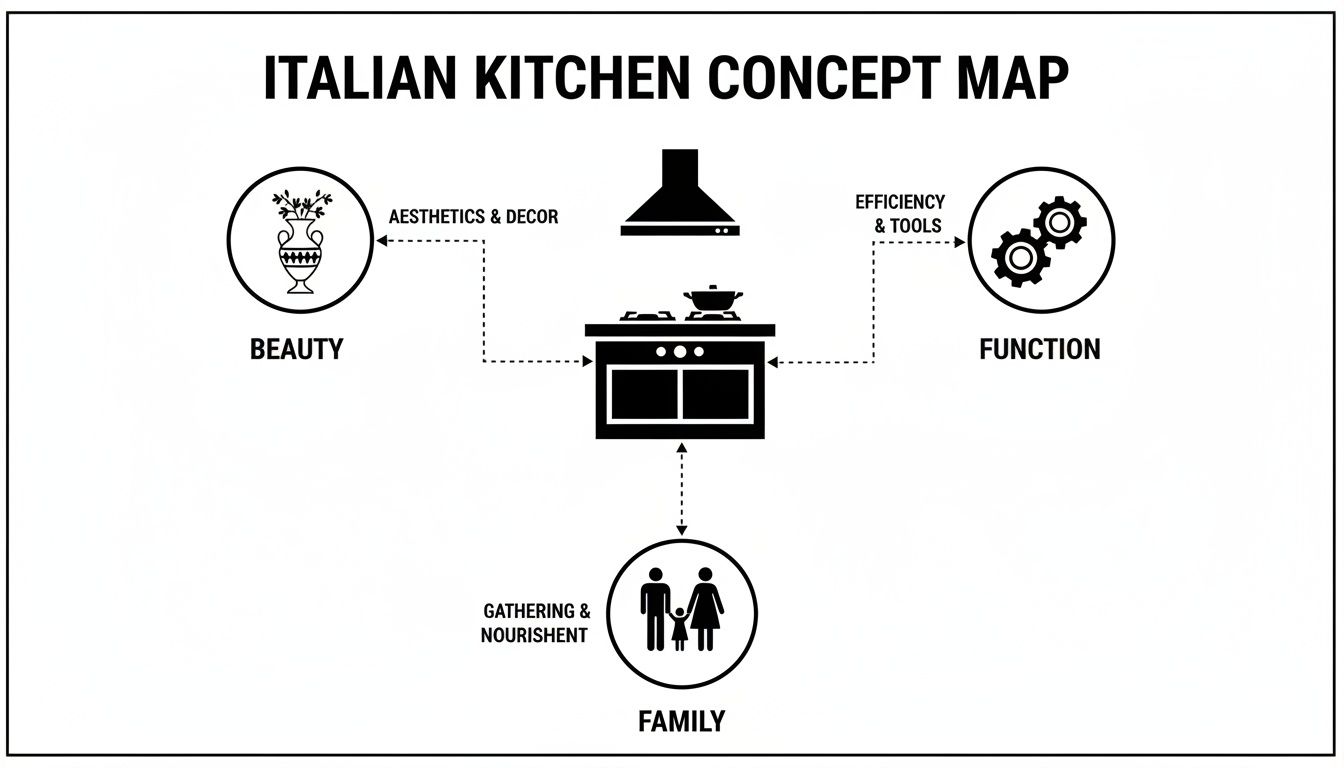
As you can see, no single element works in isolation. They all support each other to create a room that’s just as welcoming for a big family gathering as it is efficient for making a simple weeknight dinner.
The Central Role Of Superior Craftsmanship
This might be the most important element, and it’s the hardest one to just buy off a shelf: an unwavering dedication to superior craftsmanship. Italian design is synonymous with quality, and that is on full display in the kitchen. This isn’t about mass-produced, machine-made perfection; it’s about seeing and feeling the touch of a skilled artisan.
True Italian kitchen design is an investment in artistry. It’s found in the seamless joinery of bespoke cabinetry, the hand-laid pattern of artisanal tilework, and the substantial, satisfying weight of high-quality brass fixtures.
This focus on detail ensures the kitchen doesn’t just look incredible—it’s built to last for decades. Every drawer glides shut perfectly, every surface feels solid, and every faucet operates with precision. This underlying quality is the foundation for the entire aesthetic, turning a simple room into a lasting family legacy. Without that commitment, even the most beautiful materials will fall short of creating a truly authentic space.
Modern vs. Traditional Italian Kitchen Styles
Italian kitchen design isn’t a single, monolithic style. It’s a beautiful spectrum, balancing centuries of tradition against a relentless drive for innovation. When you’re deciding between a traditional or modern approach, it’s not about picking a side. It’s about understanding which aesthetic feels most authentic to your home’s architecture and, more importantly, to the way you live.
Ultimately, both paths lead to a space built on the core Italian principles: impeccable quality, intuitive function, and undeniable beauty.
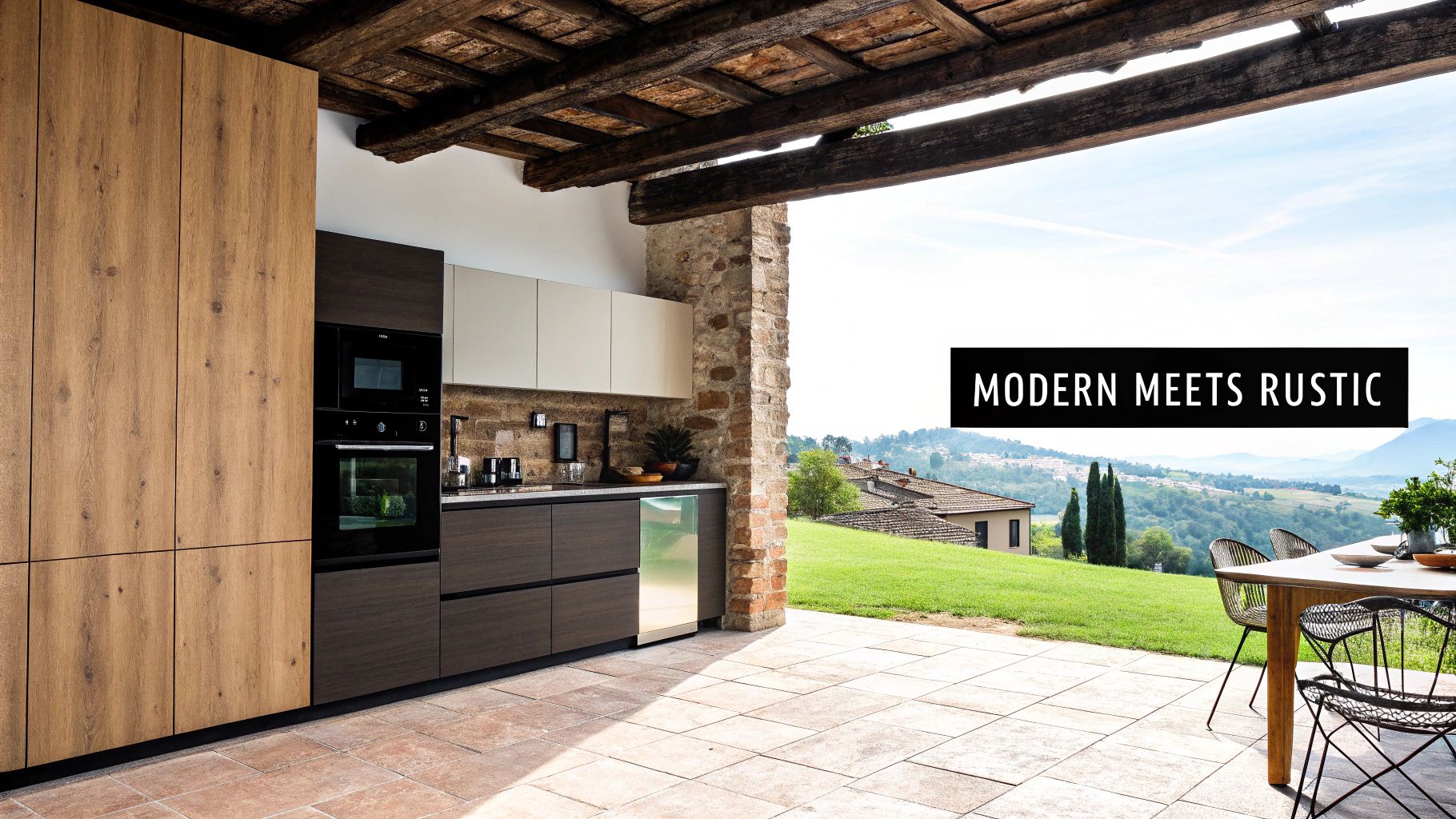
Think of the two main styles—traditional and modern—as different dialects of the same design language. Both are fluent in craftsmanship and hospitality, but they express those values in completely different ways. One speaks of history, warmth, and pastoral charm. The other communicates with clean lines, integrated technology, and material innovation.
The Heart of Traditional Italian Kitchens
A truly traditional Italian kitchen feels like you’ve just stepped into a Tuscan farmhouse, where every element has a story to tell. This style is all about warmth, texture, and a deep connection to its rustic roots. It’s a design that doesn’t just tolerate imperfections; it celebrates them, along with the beautiful patina that only comes from a lifetime of use.
You’ll know you’re in a traditional Italian kitchen by these features:
- Freestanding Furniture: Forget wall-to-wall fitted cabinets. Traditional designs often lean on standalone pieces like a heavy wooden hutch, a butcher block island, or an antique sideboard. This creates a layered, collected-over-time atmosphere.
- Exposed Architectural Elements: Stone walls, terracotta floors, and massive wooden ceiling beams aren’t hidden away. They are foundational design features that ground the space in authenticity.
- Ornate Details: Cabinetry often showcases raised panels, decorative carvings, and detailed moldings. Hardware is typically robust, made from materials like wrought iron or aged brass, adding an artisanal, handcrafted feel.
This approach is all about creating an atmosphere of enduring comfort. It’s a kitchen designed for long, slow Sunday dinners, where the warmth of the materials is every bit as inviting as the food on the table.
The color palette is pulled straight from the Italian countryside: think warm yellows, earthy reds, deep olive greens, and creamy off-whites. The result is a space that feels lived-in, welcoming, and timeless. For those drawn to this aesthetic, you can find incredible inspiration for blending rustic charm with contemporary comforts by exploring modern Tuscan interior design trends.
The Essence of Modern Italian Kitchens
Pioneered by world-renowned Italian brands, the modern kitchen is a masterclass in sophisticated minimalism. This style strips away all ornamentation to put the focus squarely on form, material, and flawless execution. It’s sleek, uncluttered, and exceptionally functional—a space designed for a fast-paced contemporary life that refuses to sacrifice an ounce of elegance.
Key characteristics of modern Italian style kitchens include:
- Minimalist Cabinetry: Flat-panel, handleless cabinets are the undisputed hallmark. They create long, unbroken lines that make any space feel larger and more serene. Finishes are often a dynamic mix of high-gloss lacquer, velvety matte Fenix, and innovative materials like technical woods or ceramics.
- Integrated Technology: Appliances are seamlessly built into the cabinetry, almost disappearing from view to maintain that clean, uninterrupted aesthetic. Smart home features, induction cooktops, and downdraft ventilation systems are common, reflecting a deep commitment to cutting-edge performance.
- Bold Material Choices: Natural stone is still a favorite, but here it’s used in dramatic, large-format slabs with striking veining. This is often paired with industrial materials like stainless steel, glass, and engineered composites to create a look that is both luxurious and incredibly durable.
This design philosophy is all about precision and purpose. Every line is intentional. Every surface is chosen for both its performance and its inherent beauty. The result is a kitchen that functions like a high-performance machine but looks like a piece of modern art—proving that Italian design continues to lead the world in both innovation and style.
Designing for Functionality and Family Life
Beyond the gleam of marble and the warmth of wood, an Italian kitchen is, at its core, an engine for living. Its design isn’t about creating a static, museum-like space. It’s about engineering a dynamic flow that supports the beautiful chaos of daily life, where cooking and gathering are one and the same. The layout is the invisible architecture that makes it all work, turning a simple room into the true heart of the home.
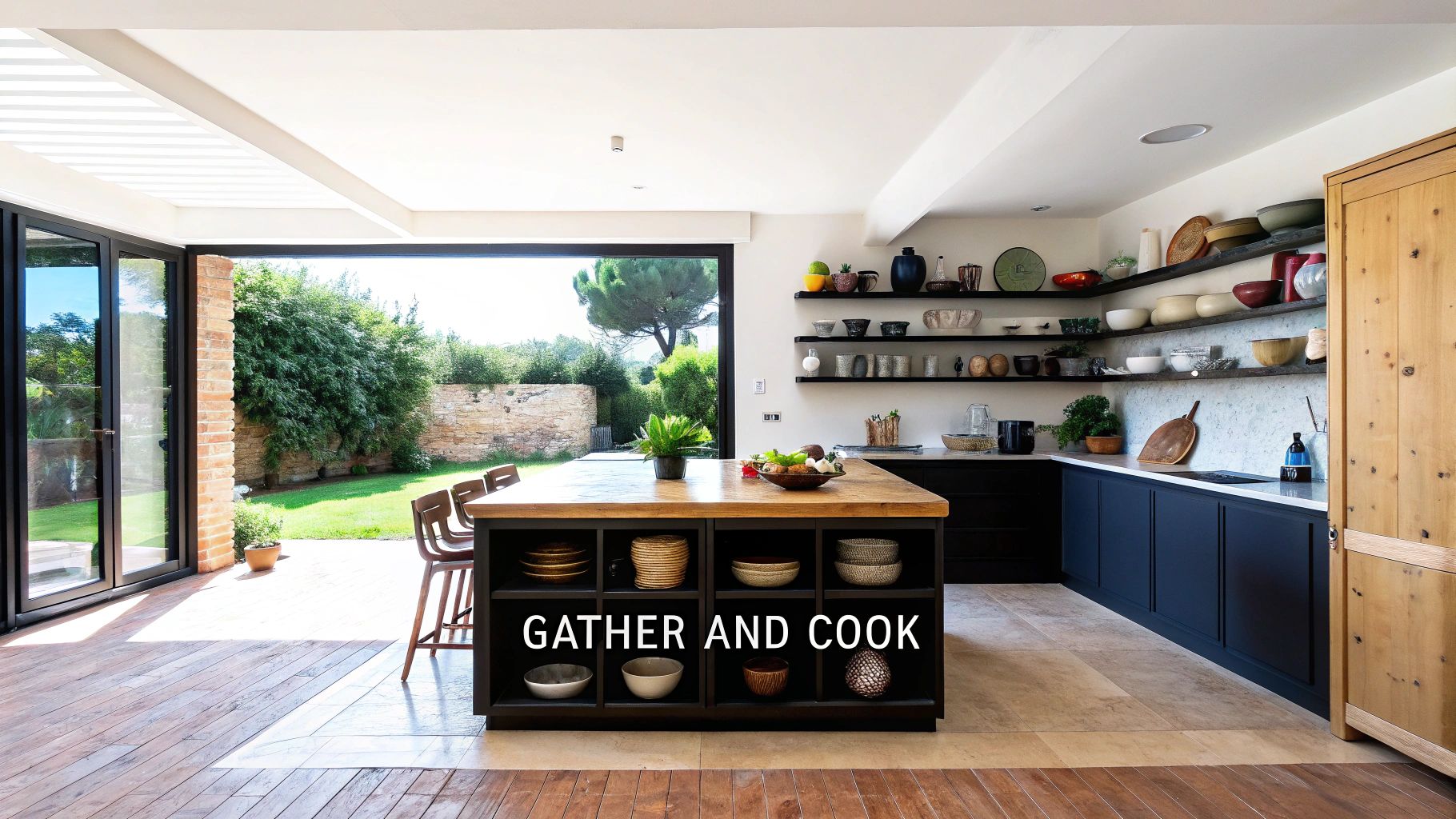
This entire philosophy is captured perfectly in the open-plan concept, a signature of modern Italian style kitchens. By knocking down the walls between the kitchen, dining, and living areas, the design cultivates an incredible sense of togetherness. The act of cooking is no longer a solitary task but becomes woven into the social fabric of the home, inviting easy conversation and shared moments.
Reimagining the Kitchen Workflow
The classic “kitchen triangle”—that efficient little path between the sink, refrigerator, and stove—gets a major upgrade in an Italian kitchen. Think about it: Italian cooking is often a communal performance with multiple people, several courses, and a lot going on at once. A simple triangle just can’t keep up. The layout needs to support several workflows simultaneously without anyone bumping elbows.
This is where distinct work zones come into play. For instance, you might have:
- A Prep Zone: Generous counter space, usually on a central island, dedicated to chopping vegetables, kneading dough, or assembling antipasti.
- A Cooking Zone: The area immediately surrounding the range, with pots, pans, and spices all within arm’s reach.
- A Cleaning Zone: Centered on the sink and dishwasher, thoughtfully positioned to keep dirty dishes out of the primary cooking theatre.
This zoning approach allows a whole family to cook together in harmony. Everyone has their own space to contribute to the meal. You can explore these functional layouts further with this excellent guide to interior design space planning.
The Multifunctional Central Island
The island is, without question, the centerpiece of the contemporary Italian kitchen. It’s so much more than extra counter space. It’s a multifunctional command center that acts as a prep station, a casual dining spot for breakfast, a serving buffet for parties, and a social hub.
An Italian kitchen island is like the communal table in a town piazza. It’s where everything happens—from rolling out pasta dough and sharing an espresso to helping with homework and catching up with friends over a glass of wine.
To really maximize its purpose, the island often incorporates key features like a secondary prep sink, a built-in wine fridge, or even a small cooktop. This transforms it from a passive piece of furniture into an active, indispensable part of the kitchen’s daily rhythm.
Smart Storage for Effortless Organization
A well-designed Italian kitchen looks effortlessly organized, but that’s an illusion born from highly intentional storage. The goal is to keep the space feeling uncluttered and serene, while also making sure every tool and ingredient is close at hand. This perfect balance is struck with a clever mix of concealed and display storage.
The global obsession with Italian cuisine is a huge driver of these design choices. The Italian food market is projected to be worth USD 25.52 billion in 2025 and is forecasted to hit an incredible USD 47.35 billion by 2034. This culinary boom inspires kitchens that make authentic food preparation a breeze, with features like built-in espresso stations or dedicated pasta-making areas. You can see more on the booming Italian food market on Fortune Business Insights.
To support this culinary focus, smart storage is non-negotiable:
- Fully Concealed Pantries: Large, walk-in, or pull-out pantry systems are used to hide away bulk items, small appliances, and dry goods. This keeps those beautiful countertops completely clear.
- Deep Drawers: In place of lower cabinets, you’ll often find deep, wide drawers. They are a game-changer for storing pots, pans, and dishes, making everything so much easier to see and grab.
- Open Shelving: Used sparingly and with great care, open shelves are the perfect spot to display beautiful, everyday items. Think artisanal pottery, gleaming copper pots, or essential cookbooks that add a touch of personal character and warmth.
Sourcing High-End Italian Brands and Materials
To truly capture the spirit of an Italian kitchen, you have to go beyond just the look and feel. The real magic lies in the materials and the brands that have perfected the art of kitchen design. For anyone serious about authenticity, this is where the project really comes to life. It’s about looking to the iconic Italian companies that have spent generations blending rich heritage with incredible innovation.
Choosing a premier Italian brand isn’t just about the logo on the drawer. It’s an investment in design that’s been considered from every angle, in materials that feel as good as they look, and in quality that’s built to last a lifetime. These aren’t just products; they’re complete kitchen systems designed to transform the heart of a home into a space that is both stunning and a joy to use.
Navigating Premier Italian Cabinetry Brands
Italian cabinetry is world-renowned for its impossibly sleek finishes and brilliant engineering. The best brands are masters of the clean, minimalist aesthetic, creating a calm exterior that cleverly conceals a world of smart functionality. When you’re specifying cabinetry for a high-end Italian kitchen, these are the names that set the standard:
- Boffi: A true leader in minimalist, architectural design. Boffi treats kitchens like sculpture, using exceptional materials like rich woods, stainless steel, and solid stone to create systems that are as functional as they are beautiful.
- Poliform: Known for its sophisticated and versatile approach, Poliform’s kitchens integrate beautifully into open-plan living spaces. Their refined finishes and exceptional quality make the kitchen a natural extension of the home’s main living area.
- Valcucine: A pioneer in both sustainability and user-focused design. Valcucine is celebrated for its innovative ergonomic features and unwavering commitment to using recyclable, non-toxic materials without ever compromising on a luxury feel.
Working with these top-tier brands usually means partnering with their dedicated showrooms or certified dealers. This relationship is key—they’ll help you navigate the vast customization options, understand the technical details, and manage international lead times, which can often stretch for several months.
Specifying Appliances and Fixtures
The soul of a great Italian kitchen is also found in its high-performance appliances and elegant fixtures. Italian brands lead the way in merging professional-grade function with breathtaking design, making sure every single element is both a powerhouse and a piece of art.
For appliances, look to names like Bertazzoni and Smeg. Their ranges, ovens, and cooktops offer precision performance wrapped in that iconic Italian flair. When it comes to fixtures, brands such as Gessi and Fantini create faucets and sinks that are like jewelry for the kitchen, crafted from beautiful materials like brushed steel and matte black. These details are what pull a design together; a single material choice, like marble, can define the entire feel of the room. For more inspiration, you might find some great ideas in our guide on stunning white kitchens with marble.
Integrating Smart Technology Seamlessly
Innovation has always been at the heart of Italian design. Today, that means weaving smart home technology into the kitchen without disrupting its clean, classic lines. The Italian kitchen and dining furniture market is on track to generate US$2.62 billion in revenue by 2025, a number driven partly by a growing appetite for connected appliances. This lines up perfectly with Italy’s expanding market for smart home solutions, where energy-efficient, remotely controlled devices are fast becoming the new standard. You can explore more data on the Italian furniture and appliance market on Statista.com.
The Italian approach to tech is subtle and purposeful. It’s not about gadgets for their own sake. Instead, you’ll find features like:
- Downdraft ventilation systems that rise silently from the countertop only when needed.
- Smart refrigerators you can manage from an app on your phone.
- Advanced induction cooktops offering incredibly precise temperature control.
The goal is to embed technology that makes life simpler and more efficient, but in a way that remains completely invisible until the moment you need it. This delicate balance ensures the timeless beauty of the design always takes center stage.
Bringing Your Vision to Life with Design Professionals
Bringing a high-end Italian kitchen from a mood board to reality is a journey filled with nuance and complexity. It’s about more than just picking beautiful finishes; it’s a process that demands a seasoned expert to navigate the intricate world of sourcing, installation, and creating a truly cohesive space.
This is precisely why an experienced design professional is so critical. A great architect or interior designer specializing in luxury kitchens acts as your guide, your translator, and your project manager. They ensure every single detail—from the specific veining in a marble slab to the precise finish on a cabinet pull—serves the overall vision while meeting the highest standards.
Finding the Right Design Partner
Frankly, choosing the right professional is the most important decision you’ll make in this entire process. You need to find someone whose portfolio speaks the language of Italian style kitchens fluently, not just someone with a passing familiarity. Look for a body of work that shows a sophisticated command of authentic materials and modern functionality.
When you’re interviewing potential partners, here are the things that really matter:
- Supplier Relationships: Do they have direct, established connections with top-tier Italian brands and international suppliers? This is absolutely essential for navigating sourcing, managing long lead times, and handling customs.
- Technical Expertise: A beautiful drawing is one thing, but a functional kitchen is another. Your designer must have a deep understanding of kitchen ergonomics, custom millwork, and the seamless integration of sophisticated appliances.
- Collaborative Approach: The best designer-client relationships are built on communication and trust. You want a partner who listens intently to your vision and lifestyle, guiding your decisions instead of just imposing their own style.
A great place to begin your search is on platforms that have already done some of the vetting for you. For instance, the Haute Design network features a curated list of leading interior designers and architects, making it easier to find a professional with proven expertise in luxury homes.
Building a Successful Collaboration
Once you’ve found your design partner, the real work begins. This is where your dream kitchen starts to take shape on paper and then, eventually, in your home. Your job is to communicate a clear vision for how you want the space to look, feel, and function day-to-day. Their job is to translate that vision into a meticulous, actionable plan.
A successful design partnership is a dialogue. The professional brings technical skill and industry knowledge; the client brings personal vision and lifestyle insight. Together, they create a space that is greater than the sum of its parts.
This final, crucial step is what protects your investment and guarantees a remarkable outcome. By placing your project in the hands of a true professional, you turn the potential stress of a complex renovation into the confidence of achieving a stunning reality. The end result is a kitchen that not only celebrates timeless Italian design but also perfectly tells your unique story.
Frequently Asked Questions
When you’re planning a project as significant as a high-end kitchen, questions are bound to come up. Below, I’ve answered some of the most common queries I hear from clients about bringing the beauty and function of Italian kitchen design into their homes.
What Is The Average Cost Of A High-End Italian Style Kitchen?
This is usually the first question, and the honest answer is: it varies dramatically. The final investment really depends on the scale of your project, the materials you fall in love with, and the brands you choose.
For a true luxury kitchen featuring premium Italian brands, you should anticipate a budget starting in the high five-figure range. It’s not uncommon for these projects to exceed $200,000, especially when you factor in bespoke cabinetry, stunning countertops like Calacatta marble, and top-of-the-line appliances from iconic manufacturers.
Working with a designer from the outset is the best way to get a realistic, detailed budget. We can help you navigate the options, balancing your vision with the real-world costs to ensure the final result is exactly what you dreamed of, without any last-minute financial surprises.
How Can I Incorporate Italian Style Into A Smaller Kitchen?
Absolutely. Italian design principles are incredibly versatile and can be adapted beautifully to smaller footprints. The trick is to shift the focus from quantity to quality, letting a few perfectly chosen elements make a powerful statement.
In a compact kitchen, every choice matters more. The goal is to create an impression of luxury and warmth through a few perfectly executed details rather than an abundance of features.
Here are a few strategies that work wonders in smaller spaces:
- Pick a “Hero” Material: A single, gorgeous slab of marble for the backsplash or a small island can instantly elevate the entire space. It becomes the undeniable focal point.
- Invest in Craftsmanship: Opt for beautifully made, clean-lined cabinets. The precision of the joinery and the quality of the hardware speak volumes about the room’s character.
- Keep the Palette Light: Warm whites, soft creams, and pale wood tones are your best friends here. They reflect light and create an open, airy feeling that makes the kitchen feel more expansive than it is.
- Get Smart with Storage: Seamlessly integrated appliances, clever pull-out pantries, and a few well-placed open shelves for your most beautiful items will provide all the function you need without the visual clutter.
Are Italian Kitchens Difficult To Maintain?
The maintenance really comes down to your material choices. There’s no getting around the fact that natural stones like marble are porous. They need to be sealed regularly to guard against stains and etching from things like lemon juice or wine. That said, many of my clients actually embrace the subtle patina that develops over time, viewing it as a sign of a well-loved, authentic kitchen.
If that doesn’t sound like you, there are fantastic alternatives. High-quality engineered quartz can mimic the look of natural stone almost perfectly but without the demanding upkeep. At the high end, Italian cabinetry and appliances are built to last. A good designer will walk you through the pros and cons of each material to find the perfect fit for your lifestyle.
What Lighting Works Best For An Italian Style Kitchen?
Lighting is everything in an Italian kitchen—it’s how you create that warm, inviting atmosphere that makes everyone want to gather. The best approach is always a layered one, using different types of light for different jobs.
Start with a showstopper over the island, like a sculptural chandelier or a row of elegant pendants. Look for fixtures in Murano glass or wrought iron to add an authentic touch. Next, get practical with task lighting; under-cabinet LED strips are non-negotiable for illuminating your prep surfaces.
Finally, bring it all together with dimmable ambient lighting to cast a soft, welcoming glow throughout the room—think of the warm light of a late Italian afternoon. And of course, if you can, maximize every bit of natural light.
Ready to bring your vision of a stunning Italian-style kitchen to life with the perfect design professional? Connect with the nation’s top-tier architects and interior designers at Haute Design. Discover curated experts who specialize in creating extraordinary living spaces.