


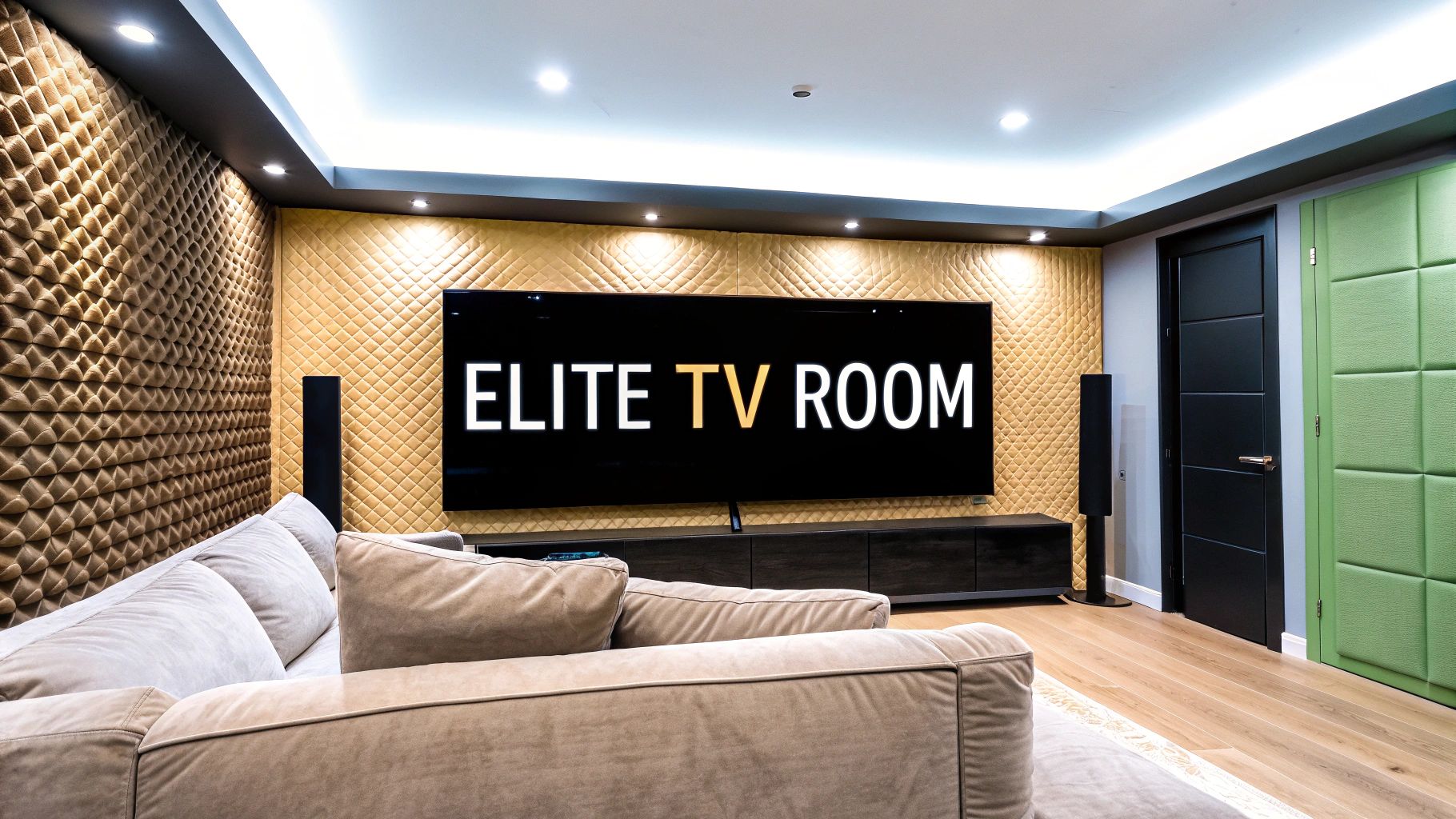
The concept of a ‘TV room’ has evolved far beyond a simple screen and seating arrangement. For today’s discerning homeowner, this space represents a bespoke sanctuary dedicated to immersive entertainment, sophisticated relaxation, and social connection. It’s a highly personal environment where cutting-edge technology, impeccable interior design, and individual style converge to create an unparalleled media experience. The modern TV room is no longer an afterthought but a central feature of luxury living, meticulously planned and executed to meet the highest standards of both performance and comfort.
This comprehensive guide moves past generic advice to explore ten distinct, high-end tv room design ideas, curated for those who demand exceptional quality and sophisticated aesthetics. Whether you envision a state-of-the-art cinematic screening room with calibrated acoustics or a seamlessly integrated media lounge that complements an open-concept floor plan, the possibilities are vast and inspiring. Each concept presented here is a blueprint for creating a space that is both technologically advanced and exquisitely appointed.
We will delve into the critical elements that define these elite spaces, providing actionable insights for homeowners, interior designers, and architects. From advanced acoustic engineering and strategic smart home integration to premium material selection and intelligent spatial planning, this roundup offers the detailed information needed to craft a media environment that truly elevates the home entertainment experience. These are not just ideas; they are frameworks for building functional works of art that redefine what a TV room can be.
1. Home Theater with Integrated Acoustic Design
For the ultimate cinematic immersion, a dedicated home theater with integrated acoustic design elevates the TV room from a casual viewing space to a professional-grade screening environment. This approach goes beyond simply adding speakers; it involves a holistic strategy where the room’s architecture, materials, and technology are engineered to deliver pristine, controlled sound. The core principle is to manage sound reflections, reverberation, and frequency response through strategically placed acoustic treatments that are artfully concealed within the room’s decor.
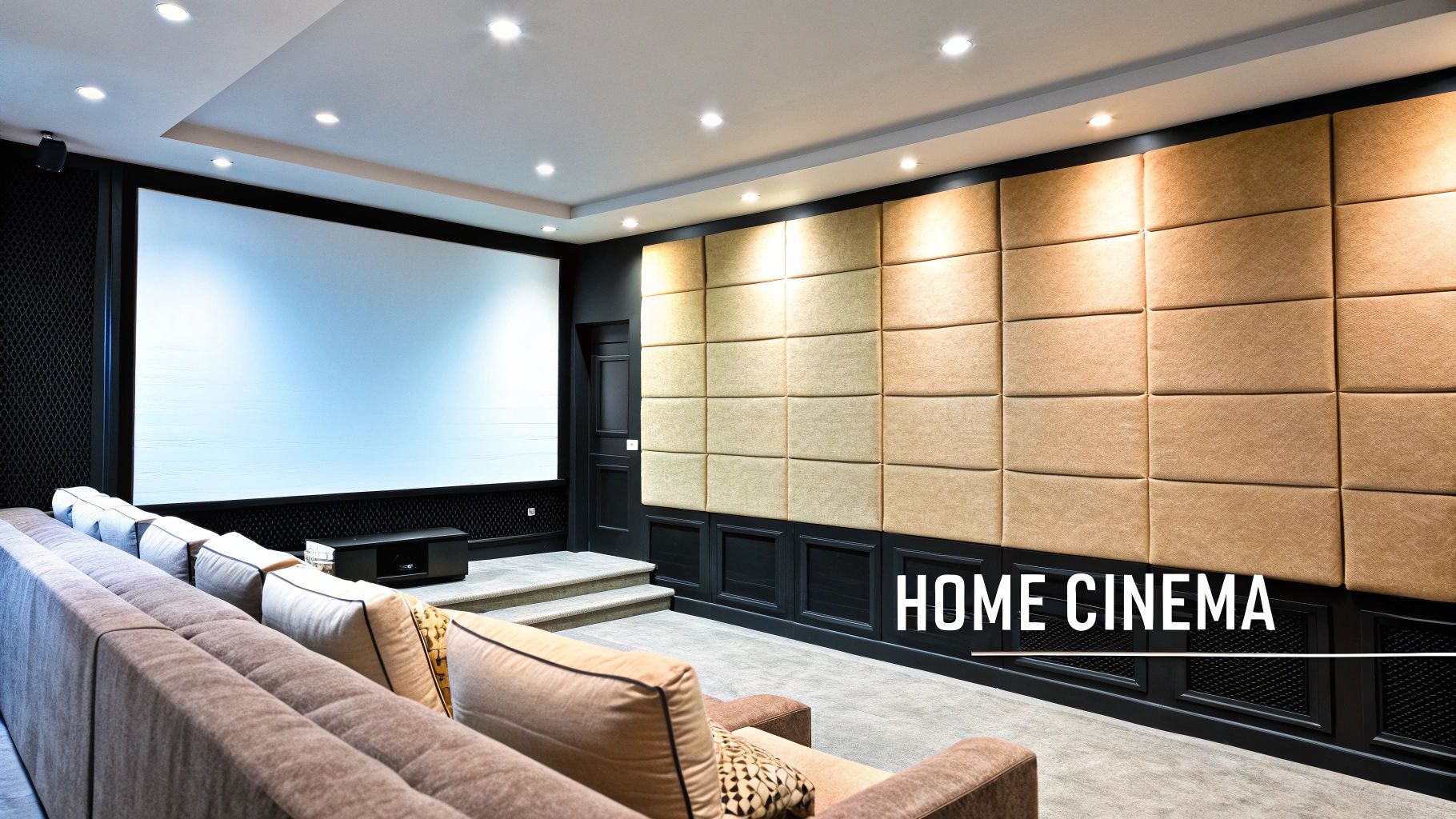
This design concept is essential for homeowners who demand a flawless audio-visual experience without compromise. By eliminating issues like echo and bass boom, the system can reproduce audio exactly as the director intended, resulting in crystal-clear dialogue and impactful sound effects. This level of precision is commonly seen in luxury residences, from Beverly Hills estates with custom Crestron automation to Miami penthouses featuring Meridian Audio systems, where performance and aesthetics must coexist perfectly.
Key Implementation Strategies
To achieve a seamless and high-performance result, consider these critical steps:
- Acoustic Treatment Integration: Work with designers to embed acoustic panels behind fabric walls, conceal bass traps in room corners, and use diffusers that double as decorative architectural elements. This ensures the technology enhances, rather than detracts from, the room’s sophisticated aesthetic.
- Early-Phase Planning: The most successful projects integrate AV and electrical infrastructure during the initial construction or renovation phases. This allows for clean, hidden wiring for speakers, projectors, and control systems, and ensures proper placement for optimal performance.
- Professional Calibration: Once installed, the system requires professional calibration. An expert will use specialized equipment to fine-tune audio levels, equalization, and timing based on the room’s unique acoustic properties, maximizing your investment.
Designer Insight: “A truly luxurious media room is a collaboration between an interior designer and an AV integrator. The goal is to make the technology disappear, leaving only the immersive experience. We often use acoustically transparent fabrics over wall panels to hide speakers and sound-absorbing materials, maintaining a clean, high-end look.”
By prioritizing the science of sound alongside high-end visual components, this approach provides one of the most sophisticated and rewarding tv room design ideas for discerning cinephiles.
2. Modern Minimalist Media Wall
The modern minimalist media wall transforms the television from a mere appliance into an integrated architectural element. This design philosophy centers on a sleek, clutter-free focal point where the display, storage, and technology merge seamlessly into a single, cohesive unit. It prioritizes clean lines, concealed wiring, and a “less is more” aesthetic, turning the TV area into a sophisticated and intentional feature of the room. The result is a calm, organized space where technology enhances, rather than dominates, the overall design.
This approach is perfect for homeowners who value both high-end technology and refined, understated interiors. By eliminating bulky entertainment centers and tangled cables, the media wall creates a sense of space and tranquility, making it ideal for contemporary living environments. This design ethos is frequently seen in Manhattan lofts adopting Scandinavian principles, modern Miami condos with polished walnut and marble installations, and Los Angeles homes where the media wall doubles as a backdrop for curated art and objects.
Key Implementation Strategies
To execute a flawless minimalist media wall, focus on precision and thoughtful integration:
- Custom Millwork and Integrated Storage: Commission custom-built cabinetry that features push-to-open doors and drawers, eliminating the need for hardware. This maintains a monolithic appearance while providing ample hidden storage for media components, accessories, and other items.
- Concealed Infrastructure: Plan for recessed electrical outlets and conduit for HDMI, ethernet, and speaker wires directly behind the TV mounting location. This must be done during the framing or renovation stage to achieve a completely cable-free look.
- Material and Lighting Harmony: Select a restrained palette of high-quality materials like solid wood, natural stone, or architectural concrete. Integrate recessed LED backlighting or strip lighting to create a soft glow that reduces eye strain and adds ambient depth without creating glare on the screen.
Designer Insight: “A successful media wall is all about proportion and subtraction. We start by selecting the right-sized display for the wall, then design the millwork around it. The goal is to create negative space and balance, so the technology feels like a quiet, intentional part of the architecture, not an afterthought.”
By blending form and function, the minimalist media wall offers one of the most elegant and impactful tv room design ideas for a modern home.
3. Open-Concept Media Living Space with Flexible Zones
Moving away from the dedicated, closed-off media room, this design integrates the entertainment hub directly into the primary living area. This approach creates a seamless, multifunctional space that supports both media consumption and daily life, reflecting the modern preference for open, interconnected floor plans. The key is to establish distinct “zones” for entertainment, dining, and conversation using strategic design cues rather than physical walls, maintaining a cohesive and expansive feel.
This concept is perfectly suited for luxury urban living, such as downtown loft conversions or modern condominiums in Miami, where maximizing space and light is paramount. It also defines new high-end builds in markets like Austin and Denver, where lifestyle flexibility is a key selling point. The design fosters a more social viewing experience, allowing for casual entertainment while other household activities continue uninterrupted in adjacent zones.
Key Implementation Strategies
To successfully create a unified yet zoned open-concept media space, focus on these techniques:
- Zone Definition with Furniture and Rugs: Use large-scale furniture, like a sectional sofa, to create a clear boundary for the primary viewing area. Anchor this zone with a substantial area rug that doesn’t overlap into other functional spaces, like the dining or kitchen area.
- Strategic Media Console Selection: Choose a low-profile, high-end media console that complements the overall living room decor rather than a bulky, traditional entertainment center. Brands like Restoration Hardware offer pieces that blend seamlessly with sophisticated aesthetics.
- Implement Layered, Zoned Lighting: Install a smart lighting system that allows you to control the brightness in each zone independently. Dim the lights over the seating area for movie night while keeping the kitchen or dining area softly lit for functionality.
Designer Insight: “In an open-concept space, the TV can’t dominate. We often use solutions like Samsung’s ‘The Frame’ TV or conceal the screen behind custom millwork. The goal is to ensure the room feels like a refined living space first and a media zone second.”
By blending form and function, the open-concept approach delivers one of the most versatile and contemporary tv room design ideas for modern luxury living.
4. Luxury Gaming and Entertainment Suite
Transforming the traditional TV room into a luxury gaming and entertainment suite caters to the sophisticated enthusiast who demands peak performance and refined aesthetics. This concept merges the high-fidelity experience of a home theater with the specialized, ergonomic requirements of competitive gaming and immersive entertainment. It is a comprehensive destination built around high-refresh-rate displays, multiple gaming platforms, and professional-grade equipment, all seamlessly integrated into a bespoke interior design.
This design is ideal for affluent clients who view gaming as a serious hobby or a professional pursuit, demanding a space that supports long sessions without compromising on comfort or style. By focusing on both technical performance and luxury materials, these rooms provide an unparalleled interactive experience. Such dedicated spaces are increasingly popular in the luxury homes of tech hubs like Silicon Valley and Austin, where discerning clients want an environment that is as technologically advanced as it is visually stunning.
Key Implementation Strategies
To engineer a world-class gaming suite that balances performance with high-end design, focus on these critical elements:
- Integrated Cable Management: Meticulous planning is required to conceal the extensive wiring for consoles, PCs, monitors, and peripherals. Custom cabinetry, raised flooring, and dedicated conduits are essential for achieving a clean, wire-free aesthetic that complements the luxury interior.
- Ergonomics and Comfort: Invest in high-end ergonomic seating from brands like Herman Miller Gaming to ensure comfort and proper posture during extended use. The layout should prioritize a comfortable viewing distance and easy access to all controls and equipment.
- Advanced Climate and Acoustic Control: High-performance gaming hardware generates significant heat and noise. Incorporate professional-grade cooling systems and acoustic treatments to manage fan noise, protect sensitive equipment, and ensure an immersive, distraction-free audio experience.
Designer Insight: “A high-end gaming suite is a technical masterpiece disguised as a luxury lounge. We collaborate with gaming specialists to specify the right tech, then design bespoke millwork and lighting to integrate it perfectly. The goal is a clean, uncluttered space where the technology feels powerful but not intrusive.”
By blending cutting-edge technology with sophisticated design principles, the luxury gaming suite stands out as one of the most dynamic and personalized tv room design ideas for the modern connoisseur.
5. Classic Library-Inspired Media Room with Wood Paneling
For those who value timeless elegance and intellectual charm, the classic library-inspired media room offers a sophisticated retreat. This design merges the gravitas of a traditional study or gentleman’s club with the functionality of modern entertainment. The concept is defined by rich, dark wood paneling, floor-to-ceiling built-in bookshelves, and sumptuous leather furnishings, creating an atmosphere of warmth, comfort, and understated luxury.
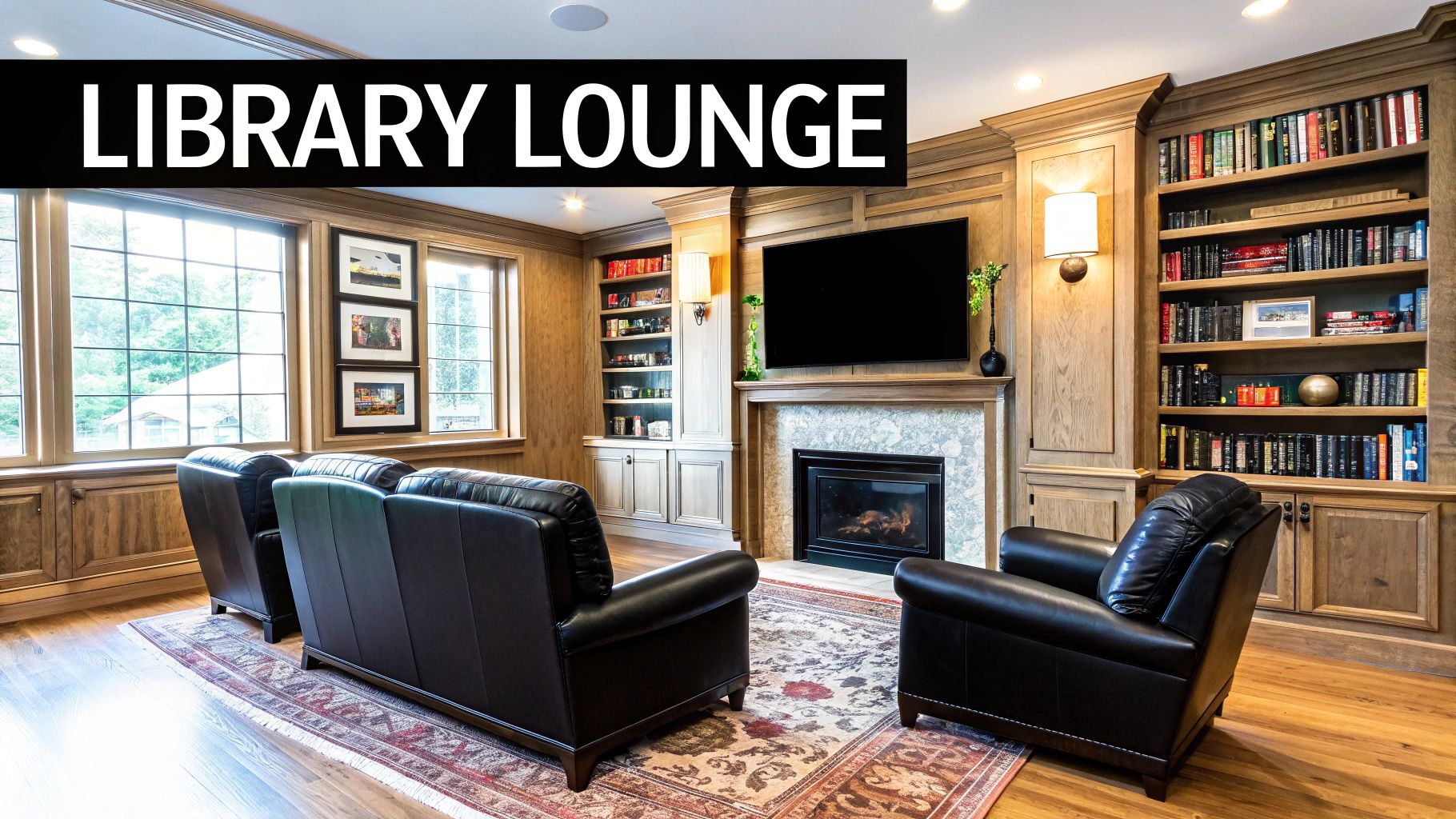
This approach is perfect for homeowners who appreciate heritage design and wish to create a multipurpose space for both quiet reflection and media consumption. The key is to artfully conceal technology within classic architectural elements, ensuring the room’s traditional character remains undisturbed. This aesthetic is frequently seen in distinguished properties like Boston Back Bay townhouses and elite New York City brownstones, where designers like Robert A.M. Stern have perfected the balance of classic form and contemporary function.
Key Implementation Strategies
To create an authentic and luxurious library-inspired media room, focus on craftsmanship and seamless integration:
- Conceal Modern Technology: Integrate the television within custom cabinetry or behind a sliding panel that mimics the surrounding bookshelves. Speakers can be hidden behind acoustically transparent fabric grilles painted to match the wood, maintaining a clean, classic facade.
- Prioritize Material Quality: Source high-quality solid woods like mahogany, oak, or walnut for paneling and shelving. Work with master carpenters who specialize in traditional joinery and finishing techniques to achieve an authentic, heirloom-quality result.
- Layered and Controlled Lighting: Use a layered lighting scheme to enhance the wood’s warm tones and create an inviting ambiance. Incorporate library-style picture lights, dimmable recessed lighting, and elegant table lamps to provide both functional and atmospheric illumination.
Designer Insight: “The challenge is making technology a polite guest in a traditional room. We often design custom millwork where a section of a bookshelf retracts to reveal the screen. This preserves the room’s primary identity as a library, ensuring the space feels refined and intellectual, not just like another media room.”
By prioritizing masterful craftsmanship and discreet technology, this concept delivers one of the most enduring and elegant tv room design ideas for a cultivated home.
6. Industrial-Chic Media Loft with Exposed Elements
The industrial-chic media loft transforms the TV room into a sophisticated, edgy sanctuary by celebrating the raw beauty of architectural honesty. This design aesthetic embraces exposed brick, visible steel beams, polished concrete floors, and oversized metal-framed windows. It juxtaposes these raw, utilitarian elements with high-end technology and luxurious furnishings to create a space that feels both authentic and refined, making it a powerful statement in urban design.
This approach is perfect for homeowners who value character and a connection to a building’s history, often found in converted warehouses or modern architectural homes. By highlighting structural elements instead of concealing them, the design delivers an authentic, layered atmosphere. This aesthetic is prominent in Brooklyn loft conversions in DUMBO, luxury residences in Chicago’s West Loop, and the arts district of downtown Los Angeles, where a blend of historic grit and modern luxury is highly sought after.
Key Implementation Strategies
To successfully execute an industrial-chic media space, focus on creating a harmonious balance between raw and refined elements:
- Balance Materials: Juxtapose the hardness of concrete and brick with soft, luxurious textures. Introduce a deep-pile wool rug, a velvet sectional sofa, or leather club chairs to add warmth, comfort, and a crucial sense of balance to the room’s aesthetic.
- Strategic Lighting Design: Counteract the cool tones of industrial materials with a warm, layered lighting scheme. Use track lighting to highlight architectural features like brick walls, add statement pendants with Edison bulbs for ambiance, and incorporate floor lamps to create intimate, cozy seating zones.
- Acoustic Management: Hard surfaces like brick and concrete can create significant sound reflection and echo. Integrate acoustic solutions artfully, such as large-scale abstract art printed on acoustic canvas, thick textile wall hangings, or custom-built bookshelves filled with books to absorb and diffuse sound effectively.
Designer Insight: “The key to a successful industrial media room is contrast. We pair a state-of-the-art, minimalist OLED screen against a century-old brick wall. The tension between the historic, tactile surface and the sleek, modern technology is what makes the design so compelling and dynamic.”
By carefully curating this blend of old and new, this approach provides one of the most distinctive tv room design ideas for those seeking a space with soul and urban sophistication.
7. Outdoor-Connected Media Lounge with Seamless Indoor-Outdoor Flow
For properties in favorable climates, this innovative approach dissolves the barrier between interior and exterior, creating a cohesive entertainment zone. The outdoor-connected media lounge extends the TV room into a patio, lanai, or poolside deck through expansive glass walls, bi-fold doors, or fully retractable pocket doors. This design philosophy is about creating a unified space where entertainment, relaxation, and nature converge, blurring the lines between the built environment and the landscape.
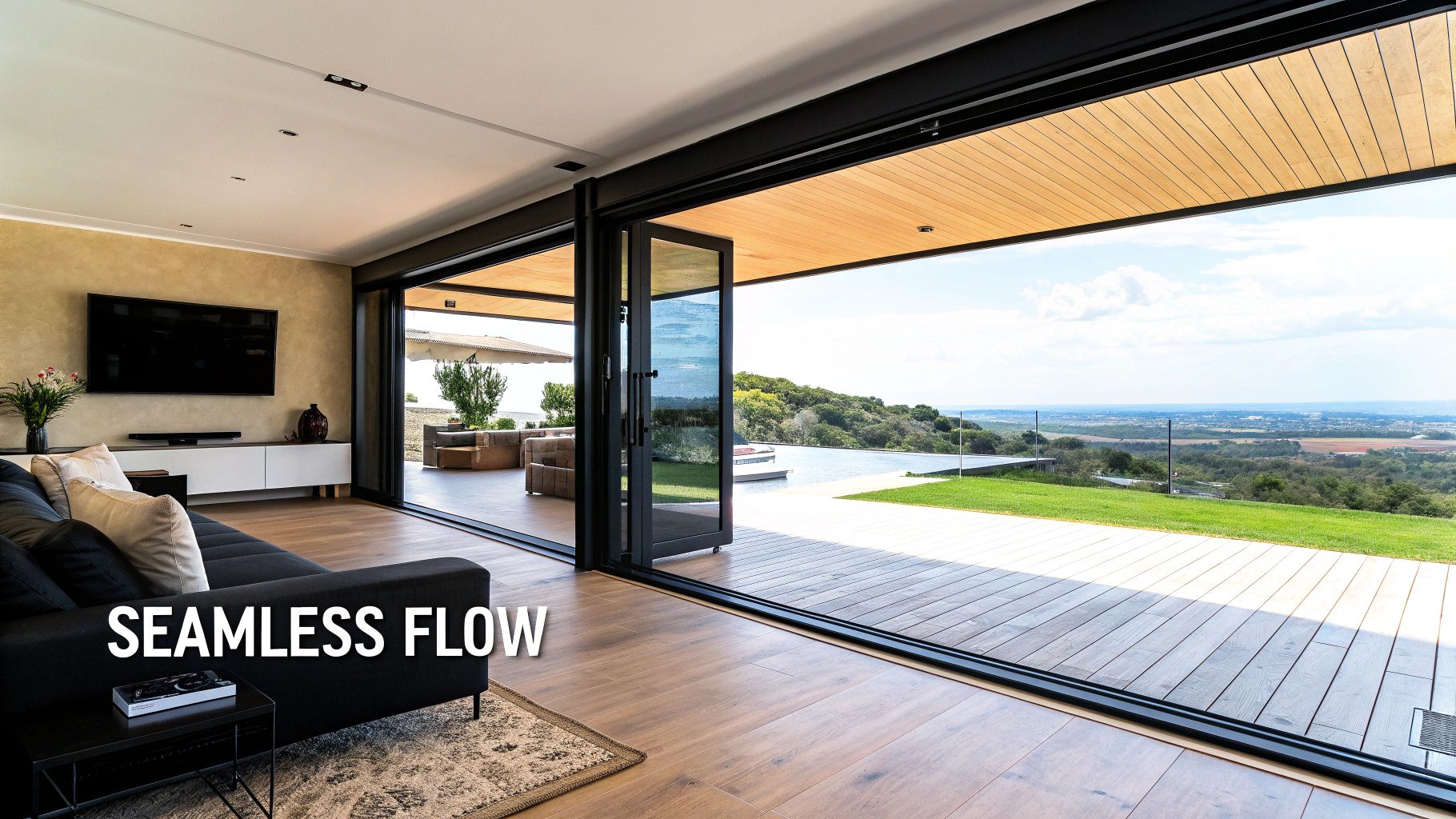
This concept is ideal for homeowners who value a fluid, open-plan lifestyle and want to maximize their property’s footprint for entertaining. It’s a signature feature in high-end new constructions from Southern California estates to Miami beachfront homes, where the view is as important as the interior. By integrating technology and design elements across both zones, the transition becomes imperceptible, offering a versatile space for everything from casual family viewing to hosting large social gatherings. For more inspiration on merging these areas, you can explore the latest trends in indoor and outdoor living.
Key Implementation Strategies
To create a functional and aesthetically pleasing indoor-outdoor media space, focus on these key details:
- Invest in Weather-Resistant Technology: Specify outdoor-rated televisions designed for bright, direct-sunlight conditions and weather-resistant architectural speakers that can be discreetly integrated into the landscape or patio structure.
- Create Design Cohesion: Use consistent or complementary flooring materials, color palettes, and furniture styles across both the indoor and outdoor areas. This visual continuity is crucial for achieving a seamless flow.
- Integrate Smart Automation: Implement a control system to manage motorized retractable screens for sun and insect protection, automated lighting scenes for ambiance, and climate control like outdoor heaters or misting systems for year-round comfort.
Designer Insight: “The key to a successful indoor-outdoor media lounge is creating a frictionless transition. We achieve this with level flooring thresholds and by mirroring material palettes. An indoor limestone floor might transition to a visually similar outdoor-grade limestone, making the two spaces feel like one continuous room when the doors are open.”
By merging technology with architectural openness, this approach transforms the traditional TV room into an expansive, resort-style entertainment experience, making it one of the most aspirational tv room design ideas for modern luxury living.
8. Art-Focused Media Gallery with Museum-Quality Lighting
For the discerning art collector, the TV room can transform into a sophisticated gallery where fine art is the protagonist and media technology plays a discreet supporting role. This design philosophy prioritizes the curation and exhibition of valuable collections, integrating entertainment capabilities seamlessly so they never detract from the aesthetic integrity of the space. The room is meticulously planned around the art, using museum-quality lighting and archival principles to both protect and showcase each piece.
This approach is essential for homeowners who view their living spaces as an extension of their passion for collecting, refusing to compromise on the presentation of their investments. It’s a common feature in the homes of New York City collectors and San Francisco tech executives, where art and design are central to the home’s identity. By treating the room as a private gallery first, the technology is artfully concealed, such as hiding a screen behind custom paneling or using a display that mimics artwork when not in use.
Key Implementation Strategies
To create a space that functions as both a high-end gallery and a media room, focus on these critical elements:
- Museum-Grade Lighting Systems: Invest in professional-grade lighting from brands like Artemide with high Color Rendering Index (CRI) values to display art in its true colors. Use adjustable, low-UV spotlights and wall washers controlled by a system like Lutron to create layered lighting scenes that highlight specific pieces without causing damage.
- Subtle Technology Integration: Work with an AV specialist to conceal technology. Options include motorized art lifts that reveal a screen, mirror TVs, or displays like Samsung’s “The Frame.” In-wall speakers hidden behind acoustically transparent materials ensure high-fidelity sound does not interfere with the gallery aesthetic.
- Climate and Archival Considerations: To protect valuable art, the room’s HVAC system must maintain stable temperature and humidity levels. Consult with art conservators to ensure all materials, from wall finishes to fabrics, are archival-quality and will not off-gas or damage the collection over time.
Designer Insight: “When designing for a serious collector, the art dictates the room’s layout, not the TV. We begin by plotting the placement of key pieces and engineering the lighting to gallery standards. The media system is then woven into the design with maximum subtlety. The goal is an elegant, cultured space that entertains without ever feeling like a conventional media room.”
This concept provides one of the most refined tv room design ideas, perfectly balancing a passion for art with the desire for modern entertainment.
9. Smart Home Entertainment Hub with Integrated Automation
Transforming the TV room into a smart home entertainment hub involves more than just advanced AV equipment; it’s about creating a centralized command center for the entire home. This forward-thinking approach integrates entertainment, lighting, climate, security, and motorized shades into one seamless, intuitive system. The technology is designed to be invisible, with control managed through elegant touch panels, voice commands, or a single smart device, creating an environment of effortless convenience and sophistication.
This concept is ideal for the technology-savvy homeowner who values unified control and automation. A single “Movie Night” command can dim the lights, lower the shades, adjust the thermostat, and start the film, curating the perfect ambiance instantly. This level of integration is a hallmark of luxury new builds in tech-centric areas like Silicon Valley and Seattle, where systems from brands like Crestron and Savant are specified to manage every aspect of the connected home. For a deeper look into this trend, explore these smart home automation ideas.
Key Implementation Strategies
To create a robust and user-friendly smart entertainment hub, focus on these critical elements:
- Robust Network Infrastructure: A high-performance entertainment hub relies on a powerful and stable network. Plan for enterprise-grade WiFi and extensive hardwired Ethernet connections during the construction or renovation phase to support high-bandwidth streaming and instant device communication.
- Professional Integration and Programming: Partner with a certified smart home integrator. They will design a cohesive ecosystem, install all hardware discreetly, and program custom scenes and schedules tailored to your lifestyle, ensuring the technology is intuitive and reliable.
- Scalable and Future-Proof System: Select a control system (like Control4 or Josh.ai) that is known for its compatibility with a wide range of third-party devices. This ensures you can easily add new technologies and upgrade components in the future without a complete system overhaul.
Designer Insight: “The ultimate luxury is simplicity. Our goal is to declutter the experience by consolidating all controls into one elegant interface. We conceal wiring, speakers, and processors within custom cabinetry and walls, so the client interacts with the experience, not the equipment.”
By centralizing control and automating routine tasks, this approach offers one of the most powerful and convenient tv room design ideas for the modern, connected home.
10. Luxury Lounge with Premium Beverage and Food Service
Transforming the TV room into a sophisticated, private club experience, this design concept integrates a full-service bar, premium beverage station, and elegant snack service area. It elevates the space from a mere media room to a comprehensive hospitality destination, perfect for entertaining distinguished guests. The focus is on creating a seamless blend of high-end entertainment and five-star service, where every element, from the bar top to the glassware, exudes luxury.
This approach is ideal for homeowners who frequently host and desire a self-contained entertainment wing that rivals the ambiance of an exclusive hotel bar or a VIP lounge. The design prioritizes both form and function, with layouts seen in Manhattan penthouses and Hamptons estates where hosting is central to the lifestyle. By incorporating professional-grade appliances from brands like Sub-Zero and Miele, the space becomes as practical as it is beautiful, ensuring service is always impeccable.
Key Implementation Strategies
To create an authentic and functional luxury lounge, consider these critical elements:
- Integrated Infrastructure: Plan for comprehensive plumbing, dedicated electrical circuits for appliances like ice makers and wine coolers, and proper ventilation. This foundational work is best done during initial construction or major renovations to ensure a clean, integrated finish.
- Professional-Grade Equipment: Select appliances that match the room’s scale and intended use. This includes under-counter refrigerators, wine preservation systems, and potentially small warming drawers or a high-end espresso machine to offer a full range of beverage and snack options.
- Material and Seating Selection: Invest in durable, high-end bar surfaces like quartzite or sealed marble. Pair this with elegant and comfortable bar seating, which is a key component in defining the lounge’s aesthetic. Explore various luxury living room seating ideas to find styles that complement your overall design.
Designer Insight: “The key to a successful entertainment lounge is zoning. The bar and service area should feel distinct yet connected to the primary viewing space. We use strategic lighting, changes in flooring materials, and elegant bar furniture to create a functional and glamorous hospitality hub within the home.”
By merging state-of-the-art AV with bespoke hospitality features, this concept delivers one of the most impressive and functional tv room design ideas for the consummate host.
10 TV Room Design Ideas — Side-by-Side Comparison
| Design | Implementation Complexity 🔄 | Resource Requirements ⚡ | Expected Outcomes ⭐📊 | Ideal Use Cases 📊 | Key Advantages ⭐ | Quick Tips 💡 |
|---|---|---|---|---|---|---|
| Home Theater with Integrated Acoustic Design | High 🔄 Professional installation, acoustic engineering, possible structural work | Very high ⚡ $50k–$200k+, dedicated room, climate control, specialists | ⭐⭐⭐⭐ Cinematic immersion and high luxury resale value 📊 | Private screenings, cinephiles, luxury homes | Immersive audio/visual, upgradeable tech, strong luxury appeal ⭐ | Consult AV + interior designers; plan electrical and cabling 💡 |
| Modern Minimalist Media Wall | Medium 🔄 Custom cabinetry and concealed wiring; precision fit required | Moderate ⚡ Affordable relative to theaters; quality materials & carpentry | ⭐⭐ Sleek, space‑efficient focal point for daily viewing 📊 | Small/modern homes, aesthetic-focused buyers | Timeless, low-maintenance, maximizes visual space ⭐ | Size TV to room scale; use wall-mounted soundbar and hidden outlets 💡 |
| Open-Concept Media Living Space with Flexible Zones | Medium–High 🔄 Requires furniture zoning, lighting and sightline planning | Moderate ⚡ Modular furniture, possible acoustic panels | ⭐⭐ Versatile multi-use space; maximizes perceived square footage 📊 | Open-plan homes, entertaining, families who value flexibility | Flexible layouts, good for gatherings, natural light distribution ⭐ | Use rugs and zoned lighting to define areas; ensure viewing angles work 💡 |
| Luxury Gaming and Entertainment Suite | High 🔄 Multiple platforms, cooling, networking and AV specialists needed | Very high ⚡ $75k–$250k+, high-spec gear, power and ventilation | ⭐⭐⭐ Peak gaming performance and streaming/production readiness 📊 | Esports, serious gamers, content creators | Performance-optimized, multi-platform capability, streaming-ready ⭐ | Prioritize cable management, ergonomic seating and professional cooling 💡 |
| Classic Library-Inspired Media Room with Wood Paneling | High 🔄 Skilled woodworking, bespoke joinery, careful tech concealment | Very high ⚡ $100k+ for materials and artisans | ⭐⭐ Timeless, refined ambiance that appeals to traditional buyers 📊 | Formal entertaining, collectors, traditional estates | Enduring aesthetic, quality materials, display and prestige ⭐ | Work with master carpenters; conceal tech and use warm layered lighting 💡 |
| Industrial-Chic Media Loft with Exposed Elements | Medium 🔄 Leverage existing structure; needs acoustic mitigation and finishes | Moderate ⚡ Often realized in existing lofts; selective treatments & furniture | ⭐⭐ Distinctive, character-filled spaces attractive to creatives 📊 | Urban lofts, creative professionals, design-focused buyers | Authentic aesthetic, flexible backdrop for eclectic pieces ⭐ | Soften hard surfaces with textiles and disguised acoustic panels 💡 |
| Outdoor-Connected Media Lounge with Seamless Indoor-Outdoor Flow | High 🔄 Structural openings, weatherproofing, integrated systems required | Very high ⚡ High build and integration costs; outdoor-rated tech and landscaping | ⭐⭐⭐ Resort-like entertaining, extended usable square footage 📊 | Warm-climate luxury homes, poolside entertaining, large gatherings | Indoor-outdoor continuity, high desirability in warm regions ⭐ | Use weather-resistant AV, retractable shades and storm protection plans 💡 |
| Art-Focused Media Gallery with Museum-Quality Lighting | High 🔄 Conservation-grade lighting, climate control and professional curation | Very high ⚡ Specialized HVAC, security, lighting and curator input | ⭐⭐⭐ Museum-standard presentation; elevates collection and prestige 📊 | High-net-worth collectors, homes-as-galleries | Gallery-quality display, rotates collections, strong cultural cachet ⭐ | Consult conservators, control humidity and reflections, secure displays 💡 |
| Smart Home Entertainment Hub with Integrated Automation | Very High 🔄 Complex system integration, programming, and ongoing updates | Very high ⚡ $100k–$500k+, robust network, integrator expertise | ⭐⭐⭐ Seamless control, energy/security benefits, high tech appeal 📊 | Tech-forward buyers, centralized home control, large estates | Convenience, automation insights, future-proof infrastructure ⭐ | Plan infrastructure early, choose proven platforms and enforce cybersecurity 💡 |
| Luxury Lounge with Premium Beverage and Food Service | High 🔄 Plumbing, ventilation, service workflow and hospitality design needed | Very high ⚡ $75k–$200k+, dedicated space, appliances and finishes | ⭐⭐ Hospitality-grade entertaining; strong appeal for hosts 📊 | Entertainers, hospitality-minded homeowners, event hosting | Full-service at-home hospitality, distinctive entertaining feature ⭐ | Work with hospitality designers; invest in ventilation and durable surfaces 💡 |
Crafting Your Signature Entertainment Space
We have explored a diverse spectrum of sophisticated tv room design ideas, moving far beyond the conventional concept of a simple viewing area. From the acoustically perfected home theater that rivals commercial cinemas to the sleek, minimalist media wall that disappears into the architecture, the modern entertainment space is a testament to personal expression and technological innovation. Each concept, whether it’s the classic warmth of a library-inspired media room or the edgy appeal of an industrial-chic loft, serves as a blueprint for creating an environment that is as functional as it is breathtaking.
The journey from initial concept to a fully realized, immersive space is built upon a foundation of intentional choices. It’s about understanding that the ultimate luxury lies not just in the size of the screen or the power of the speakers, but in the seamless integration of design, technology, and personal lifestyle. The most successful projects are those where every element works in harmony, creating an experience that is uniquely yours.
Synthesizing Vision with Execution
The key takeaway from these varied approaches is the critical importance of a holistic design strategy. An effective TV room is more than just a collection of high-end components; it is a meticulously orchestrated environment.
- Technology as a Design Element: The most forward-thinking tv room design ideas treat technology not as an add-on, but as an integral part of the architectural fabric. This means planning for integrated automation, concealed wiring, and strategic speaker placement from the earliest stages.
- The Power of Ambience: Lighting, materials, and acoustics are the unsung heroes of any elite media space. As demonstrated in the art-focused gallery and the outdoor-connected lounge, the right combination of ambient, task, and accent lighting can dramatically alter the mood and functionality of a room.
- Personalization is Paramount: Your media room should be a direct reflection of your passions. Whether that means incorporating a premium beverage station for hosting, designing a dedicated zone for high-performance gaming, or creating a cozy, family-centric den, the space must cater to your specific patterns of use and enjoyment.
Actionable Steps to Your Ideal Media Room
Transforming these ideas into reality requires a structured approach. The first step is to define your primary objective. Are you a film purist seeking cinematic perfection, a host who needs a flexible and social entertainment hub, or a family looking for a versatile space for daily life? Your answer will guide every subsequent decision, from layout to technology selection.
Once your vision is clear, begin documenting your non-negotiables. This could include specific screen technologies, seating capacities, or smart home integration features. A detailed brief is the most powerful tool you can provide to a design and build team. It minimizes ambiguity and ensures the final outcome aligns perfectly with your expectations. Engaging with professionals who possess a deep understanding of both luxury design and AV integration is not a luxury, it is a necessity for achieving a truly exceptional result.
Ultimately, crafting your signature entertainment space is an investment in your home’s value and, more importantly, in your quality of life. It’s about creating a dedicated sanctuary for relaxation, connection, and immersive entertainment. By prioritizing a clear vision, meticulous planning, and expert collaboration, you can develop a bespoke media room that will serve as a source of pride and pleasure for years to come, perfectly tailored to the way you live.
Ready to bring your vision to life with the industry’s top talent? The Haute Design network connects you with a curated directory of world-class interior designers, architects, and builders who specialize in creating bespoke luxury living spaces. Find the perfect professional to execute your unique tv room design ideas by exploring the vetted experts at Haute Design.