


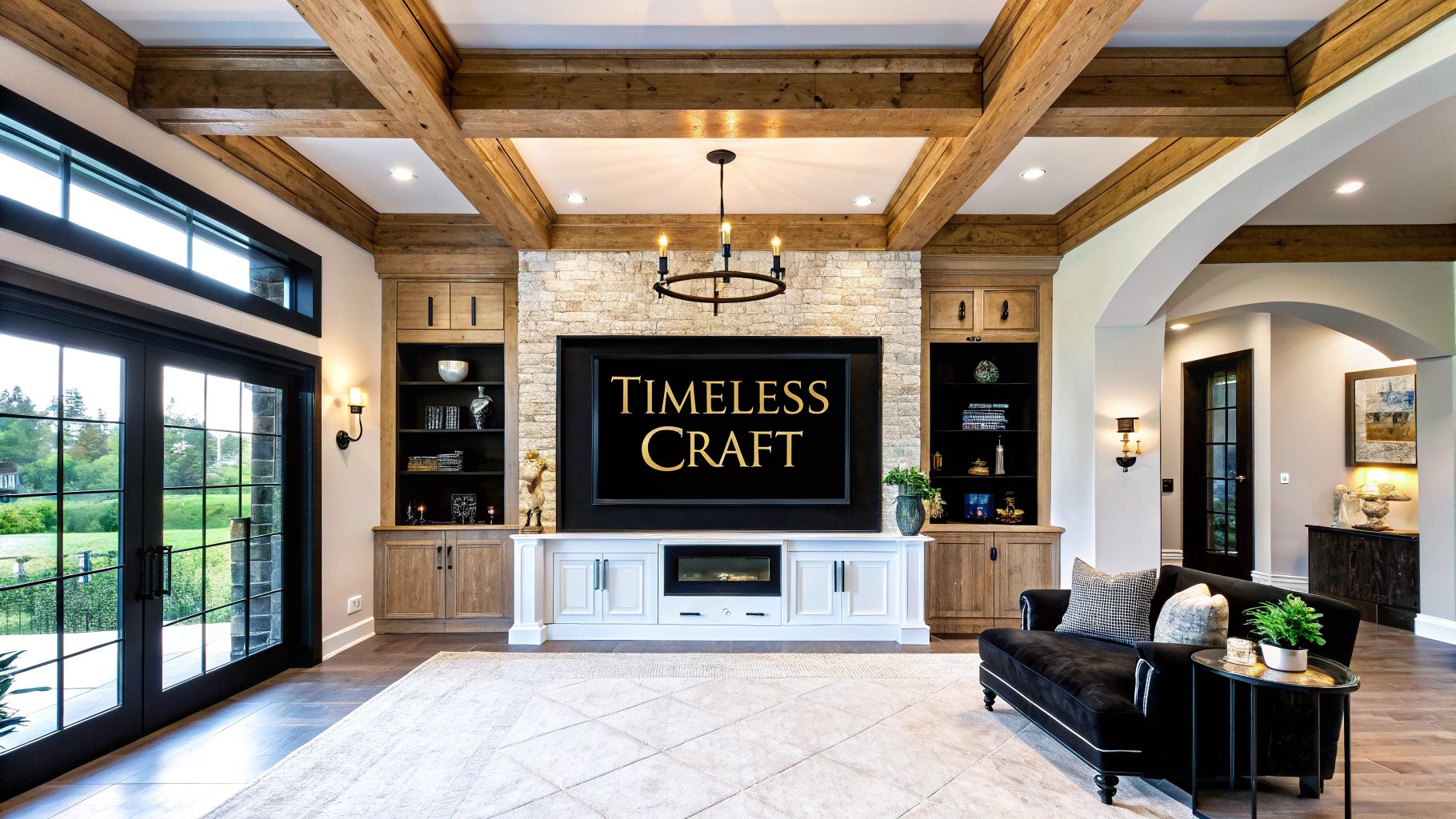
The heart of contemporary Craftsman design is a deep respect for its roots—the celebration of natural materials and honest-to-goodness craftsmanship—but viewed through a modern lens. It’s a style that feels both timeless and perfectly in step with how we live today.
The Soul of a New Craftsman Style
Picture this: you walk into a room where the warmth of hand-scraped white oak floors plays against the sharp, clean line of a quartz waterfall island. That’s the feeling of contemporary Craftsman. It steps away from the heavier, darker interiors of its early 20th-century origins and into spaces that are bright, open, and full of personal character.
This isn’t about recreating a period-perfect historical home. Instead, it’s about capturing a specific feeling—a dialogue between the past and present. The sturdy, authentic character of traditional workmanship meets the uncluttered calm of modern design. The result is a home that feels both sophisticated and completely livable, luxurious without being the least bit stuffy.
A Modern Interpretation of a Classic
So, what does this evolution actually look like? It’s a game of thoughtful subtraction and intentional addition. That classic, dark-stained trim might be simplified and painted a warm white, letting the home’s architecture speak for itself without dominating the room. The iconic built-in cabinetry is still there, but now you’ll see it with sleek, flat-panel doors and understated hardware.
The key ingredients of this evolved style include:
- Open and Bright Layouts: Unlike the distinct, separated rooms of original Craftsman homes, this style knocks down walls. It creates a seamless flow between the kitchen, dining, and living areas, filling the home with light.
- A Focus on Natural Light: Big, beautiful windows are a hallmark, often with simple black frames and no fussy treatments. The goal is to flood the space with sunlight and forge a stronger connection to the outdoors.
- Refined Material Palettes: This is where the magic happens. Rich, natural woods are paired with materials that provide contrast and texture—think honed marble, soapstone, matte black steel, and the soft glow of unlacquered brass.
At its core, contemporary Craftsman design is about creating a true sanctuary. It speaks to homeowners who appreciate the story behind an object—the artisan’s skill, the quality of the timber—but still need the clean aesthetic and function of a modern home.
The Resurgence of Authenticity
It’s no surprise this style is having a moment. In a world saturated with mass-produced goods, people are craving homes with real substance and character. The contemporary Craftsman approach is seeing a major revival, and we see it as a significant trend for 2025 and beyond.
Homeowners are actively seeking out this unique blend of handcrafted quality and modern ease. For more inspiration, explore the modern craftsman house designs on rbahomeplans.com. It’s a compelling choice for anyone building or renovating a home with soul and staying power.
Hallmarks of the Modern Craftsman Interior
Think of the contemporary Craftsman style as a beautifully restored classic car—it has the timeless soul and solid build of the original, but it’s been updated with a modern engine and a refined interior. It’s a style born from two distinct worlds: the rich, handcrafted warmth of the early 20th-century Arts and Crafts movement and the clean, uncluttered energy of modern design.
To really get a feel for this aesthetic, we need to go beyond broad strokes and look at the specific elements that give it such a unique character. These are the building blocks for a home that feels both authentic and perfectly suited for today.
The chart below breaks down this fundamental blend, showing how the style pulls DNA from both its Craftsman and Modern roots.
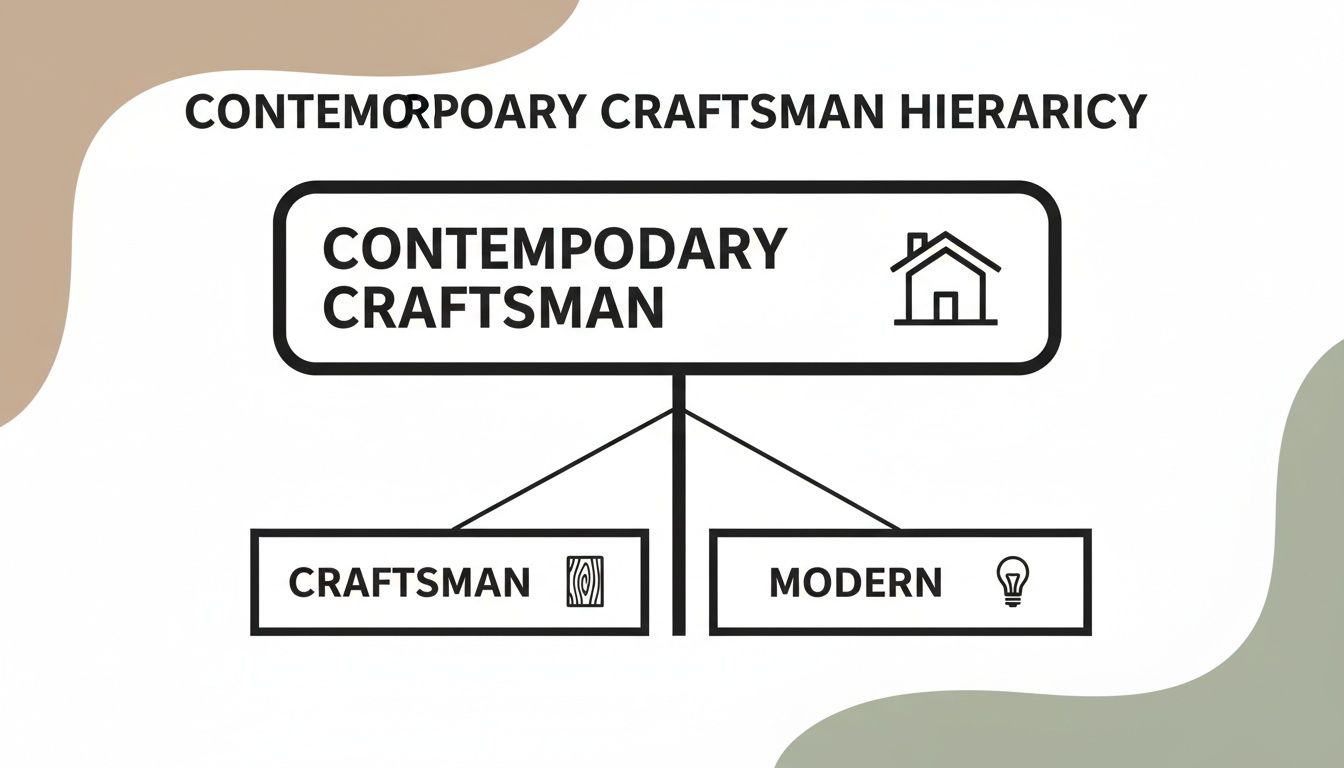
It’s clear this isn’t a case of one style dominating the other. Instead, it’s a thoughtful fusion that takes the very best from both—marrying the integrity of handcrafted details with the elegant simplicity of contemporary life.
To better illustrate this evolution, let’s compare how the core principles have been reinterpreted.
Traditional vs Contemporary Craftsman Elements
| Element | Traditional Craftsman Approach | Contemporary Craftsman Interpretation |
|---|---|---|
| Layout | Distinct rooms with defined purposes | Open-concept living; fluid, connected spaces |
| Millwork | Heavy, dark-stained, and often ornate trim | Clean, streamlined profiles in lighter woods |
| Windows | Multi-pane, cased in thick, dark wood | Large, unadorned windows to maximize light |
| Color Palette | Dark, earthy, and moody tones | Light, airy neutrals with natural accents |
| Lighting | Heavy, ornate fixtures (e.g., mica lamps) | Sculptural, minimalist fixtures; layered lighting |
| Fireplace | Massive brick or stone with a heavy mantel | Sleek surrounds of stone or tile; simplified form |
This table shows a clear shift from ornamentation to intentional simplicity, all while keeping the spirit of craftsmanship alive.
1. Open Layouts and Abundant Natural Light
One of the biggest shifts away from the original Craftsman home is the wholehearted embrace of open-concept living. Historic homes were designed with a series of smaller, distinct rooms, each with a clear function. Today, the focus is all about creating an expansive sense of flow and connection.
We now see walls coming down to merge living rooms, dining areas, and kitchens into one large, cohesive space. This isn’t just a trend for maximizing square footage; it’s a design choice that supports a more modern, interactive lifestyle. It also transforms natural light into a primary design feature, allowing it to flood the interior through large, often unadorned windows that frame the world outside.
2. Reimagined Millwork and Built-Ins
Millwork is, and always will be, the soul of a Craftsman home. But in its contemporary form, it’s far more refined and restrained. The heavy, dark-stained oak trim and elaborate details of the past have given way to cleaner lines and more streamlined profiles.
Think flat-panel cabinetry, simple baseboards, and built-ins that feel seamlessly integrated into the architecture rather than standing out as ornate features. The dedication to quality woodwork is still there, but the execution is purely modern. These elements provide crucial storage and architectural character without ever overwhelming the space.
The new Craftsman philosophy is “show, don’t shout.” The quality of the millwork speaks for itself through precise joinery and beautiful materials, not through excessive decoration.
3. Curated Materials That Mix Warmth and Modernity
The material palette is where you can really see the blend of old and new come to life. It’s a study in textural contrast, pairing honest, natural materials with sleek, contemporary finishes. This thoughtful combination is the secret to creating a space that feels both grounded and sophisticated.
Key material pairings often include:
- Warm Woods: Lighter-toned woods like white oak, rift-sawn oak, and walnut are absolute staples. They bring in natural warmth and are used for everything from flooring to cabinetry.
- Natural Stone: Surfaces like honed marble, soapstone, and slate add an earthy, organic feel. You’ll often find them on countertops and fireplace surrounds, where their natural texture can be appreciated.
- Sleek Metals: Matte black, oil-rubbed bronze, and unlacquered brass provide a touch of modern, industrial contrast in hardware, light fixtures, and window frames.
- Handmade Tile: Zellige or other artisanal tiles add subtle texture and beautiful imperfection to backsplashes and bathrooms, honoring the handcrafted ethos.
4. Sophisticated and Subdued Color Palettes
Forget the dark, heavy color schemes of a century ago. The contemporary Craftsman interior is defined by a much lighter, more atmospheric palette. The goal is to create a serene and inviting backdrop that lets the home’s architecture and rich materials take center stage. You can find stunning examples of how color and material shape the aesthetic in these interior Craftsman style homes.
The foundation is almost always built on warm whites, soft grays, and other complex neutrals. These are then layered with earthy tones pulled directly from nature—think mossy greens, deep blues, and rich terra-cotta. These accents add personality and depth without disrupting the overall sense of calm.
5. Layered and Intentional Lighting Design
In a modern Craftsman home, lighting is never an afterthought. It’s treated as a critical component that’s both functional and sculptural. A well-designed space uses multiple layers of light to build ambiance, highlight architectural details, and make the home feel alive.
This layered approach typically involves three distinct types of lighting:
- Ambient Lighting: This is the general, overall light from recessed cans or discreet ceiling fixtures that illuminates the whole room.
- Task Lighting: Think pendants over a kitchen island, under-cabinet lighting for food prep, or a reading lamp tucked into a cozy nook. It’s all about providing focused light for specific activities.
- Accent Lighting: Wall sconces, art lights, and uplighting are used strategically to draw the eye to textures, architectural features, and key pieces of furniture or art.
The fixtures themselves are often statement pieces, selected for their clean lines and natural materials, reinforcing the home’s thoughtful design philosophy.
Blending Artisanal Skill with Modern Luxury
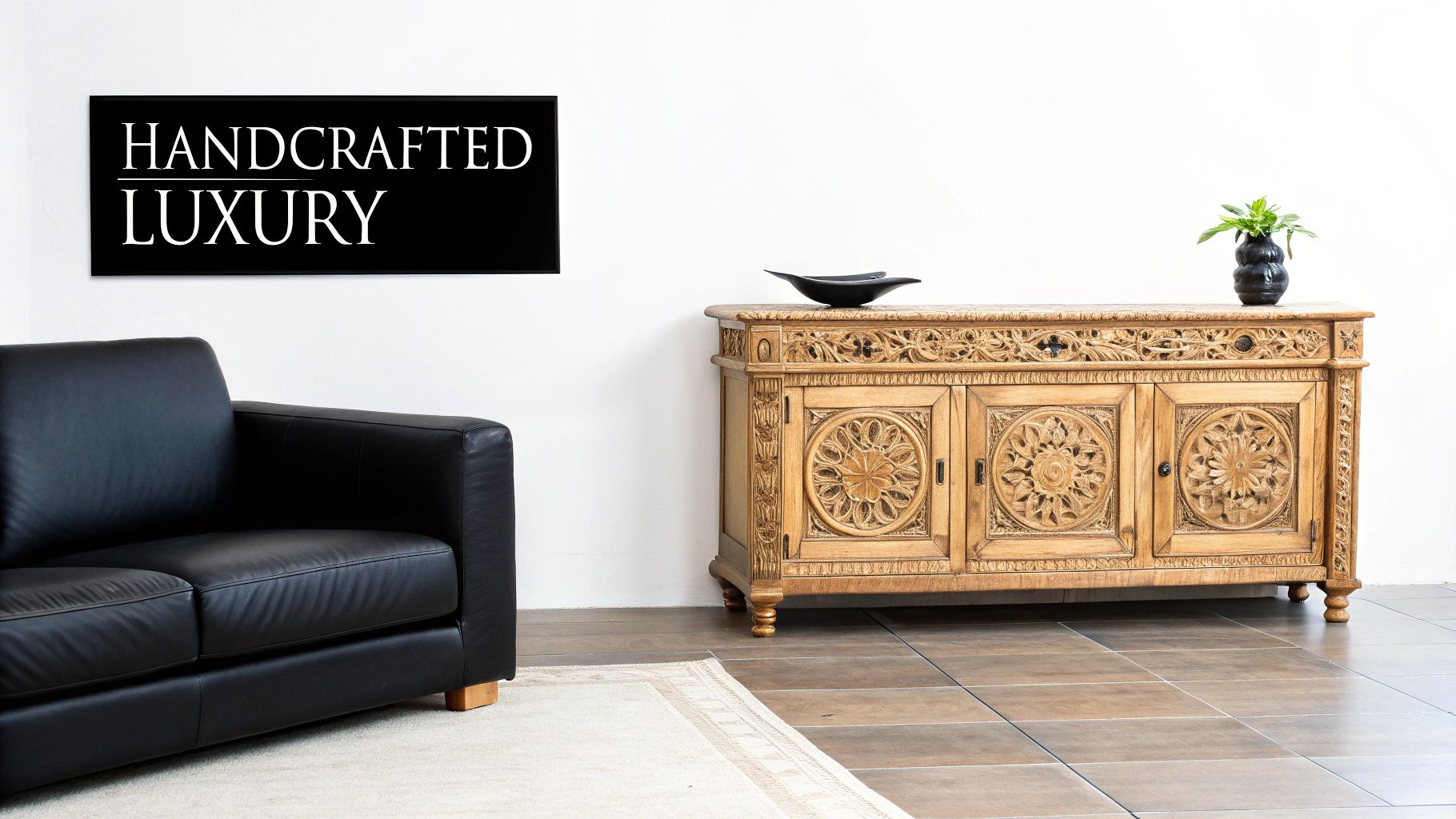
The real magic of contemporary Craftsman design happens where the touch of a master artisan meets the clean, sophisticated lines of modern luxury. This isn’t a battle between old and new—it’s a conversation. It’s about creating a dialogue between a handcrafted heirloom and a sleek, minimalist piece, making them feel like they were always meant to be in the same room. The goal is a curated, deeply personal space where every object tells a story of quality and intention.
Picture a living room where a custom, live-edge walnut console sits in perfect harmony with a low-profile Italian sofa wrapped in rich bouclé. This is the heart of the style. The table’s organic grain tells the story of the tree it came from, while the sofa embodies refined comfort. It’s this intentional, thoughtful mix that elevates both pieces beyond what they could be on their own.
This philosophy isn’t just for furniture. Imagine a minimalist, spa-like primary bathroom. The clean geometry of large-format porcelain tiles provides a serene backdrop, but it’s the backsplash of handmade Zellige tiles that brings the space to life. Each tile is slightly unique, catching the light with subtle imperfections that inject soul and texture into the room.
Commissioning Custom Statement Pieces
In this design ethos, luxury isn’t defined by a brand name on a label. It’s found in bespoke quality and one-of-a-kind artistry. It’s about commissioning pieces that are uniquely yours—elements so perfectly integrated into the home’s architecture that they become part of its very identity. This is where a partnership with master craftspeople is indispensable.
Working directly with an artisan unlocks a level of personalization that off-the-shelf simply can’t offer. Here are a few high-impact opportunities for custom work:
- Fireplace Surrounds: A fireplace is always a focal point. Why not make it unforgettable? You could work with a stonemason to design a surround from a single, dramatic slab of marble or soapstone. Or collaborate with a metalworker on a striking matte black steel facade.
- Architectural Staircases: A staircase can be more than just functional; it can be a sculpture. Commission a design that features hand-carved newel posts, custom-forged iron railings, or even floating treads made from beautiful reclaimed timber.
- Bespoke Cabinetry and Millwork: Think beyond the kitchen. Custom built-ins in a library, office, or living room can be designed to perfectly house specific collections or tech, elevated with details like hand-planed surfaces or intricate joinery.
This commitment to unique, handcrafted elements is more than just a design choice—it taps into a major cultural shift. The global market for arts and crafts is projected to hit $74.3 billion by 2033, a huge jump from $45.3 billion in 2024. This isn’t just a statistic; it shows a powerful, growing desire for quality, sustainability, and the unique story behind the things we bring into our homes. You can explore more on this and other interior design trends on Artsy.net.
Sourcing from Artisans and Small Studios
Finding these extraordinary pieces means looking beyond the usual big-box showrooms and connecting with the makers themselves. This process is about more than just a transaction; it’s about building relationships and discovering the narrative behind each creation.
Here’s where to start your search:
- Local Art and Craft Fairs: These events are treasure troves for discovering regional woodworkers, ceramicists, and textile artists whose work has a distinct local character.
- Online Artisan Marketplaces: Curated websites offer a global stage for skilled makers, connecting you with everything from custom lighting to hand-thrown pottery from around the world.
- Interior Designer Networks: A seasoned designer will have a trusted network of artisans they’ve worked with before. Tapping into their little black book can save you time and guarantee a high standard of quality.
Luxury in contemporary Craftsman design is defined by provenance and purpose. It’s the satisfying weight of a hand-forged door handle, the subtle texture of a handwoven rug, and the quiet confidence of knowing your home contains pieces that exist nowhere else in the world.
When you prioritize artisanal skill, you create a home that truly transcends trends. Each custom piece adds another layer to your home’s story, building lasting value and an undeniable sense of character. It’s an investment in quality and authenticity—a living environment that is genuinely one-of-a-kind. This is the ultimate expression of modern luxury: a home that has been carefully crafted, not just decorated.
Sourcing Furniture and Finishes with Authenticity
Moving from the blueprint to the real world is where the contemporary Craftsman vision truly comes alive. When you start sourcing furniture, hardware, and surface materials, you’re not just filling a room—you’re curating a collection of pieces that speak the same language of refined, honest design. This is where you make the critical choices that give the space its soul.
The mission is to find items that honor the style’s core values: genuine materials, clean lines, and a quality you can feel. Every piece, from the sofa to the cabinet pulls, should add to a story of thoughtful craftsmanship and modern comfort. This ensures the finished home feels layered and intentional, not just decorated.
Selecting Foundational Furniture Pieces
In a contemporary Craftsman home, the furniture pieces are the anchors. Look for strong, simple profiles that let the beauty of the materials do the talking. The sweet spot is a balance between sturdy, classic construction and an understated, modern elegance—anything overly ornate or fragile will feel out of place.
When you’re sourcing key furniture, here’s what to prioritize:
- Solid Wood Construction: Hunt for pieces built from solid hardwoods like white oak, walnut, or ash. The focus should be on things like visible joinery and rich grain patterns that put the maker’s skill on full display.
- Clean, Geometric Lines: Think sofas with simple track arms, coffee tables with straightforward rectangular shapes, and dining chairs with elegant, tapered legs. The forms feel modern, but the substance is timeless.
- Natural Upholstery: You’ll want to complement those beautiful wood frames with textiles that bring in texture and warmth. Upholstery in materials like linen, wool, aged leather, and bouclé adds that perfect layer of organic comfort.
Think of each furniture choice as a building block. A low-profile, leather-clad sofa can serve as a modern anchor, while a hand-scraped oak dining table introduces a clear note of traditional craftsmanship. Getting that balance right is the secret to the contemporary Craftsman look.
The Decisive Impact of Hardware and Fixtures
Often called the “jewelry of a home,” hardware and fixtures have an impact that far outweighs their size. In this style, they’re your secret weapon for introducing a sleek, modern edge against the warmth of natural wood and stone.
Choosing the right hardware is like selecting the perfect font for a document. The right choice clarifies the message and enhances the overall composition, while the wrong one creates instant dissonance.
Here are a few go-to finishes that create a cohesive look:
- Matte Black: This is a versatile classic. It offers a sharp, graphic contrast against light wood cabinetry and neutral walls, feeling modern, grounded, and undeniably sophisticated.
- Oil-Rubbed Bronze: As a slightly softer alternative to black, this finish has a deep, rich tone that pairs beautifully with the earthy color palettes common in Craftsman design.
- Unlacquered Brass: If you want a touch of living luxury, unlacquered brass is an excellent choice. It develops a natural patina over time, adding a layer of evolving character and history to the space.
Choosing Surfaces with Texture and Soul
Surface materials are where you can really play up that blend of organic and refined. These are the elements you touch and interact with every day—countertops, backsplashes, floors—and they are absolutely critical for setting the right tone. The goal is to choose finishes that feel as good as they look.
Prioritize materials that show off natural texture and subtle imperfections. A honed marble countertop, with its soft, matte finish, feels much more approachable than its polished cousin. In the same way, a backsplash of handmade Zellige tile brings a shimmering, imperfect quality that mass-produced tile just can’t match. These thoughtful details are essential components of high-quality architectural millwork, where material and form work in harmony to define a space. For a deeper dive, you can learn more about what is architectural millwork and see how it shapes luxury interiors.
Ultimately, sourcing for a contemporary Craftsman project is an exercise in mindful curation. It’s about looking past fleeting trends to find pieces with lasting quality, honest materials, and a real story to tell. By focusing on authenticity at every level—from a solid oak table to a hand-forged cabinet pull—you create a home that is not just stylish, but soulful.
Bringing the Contemporary Craftsman Vision to Life
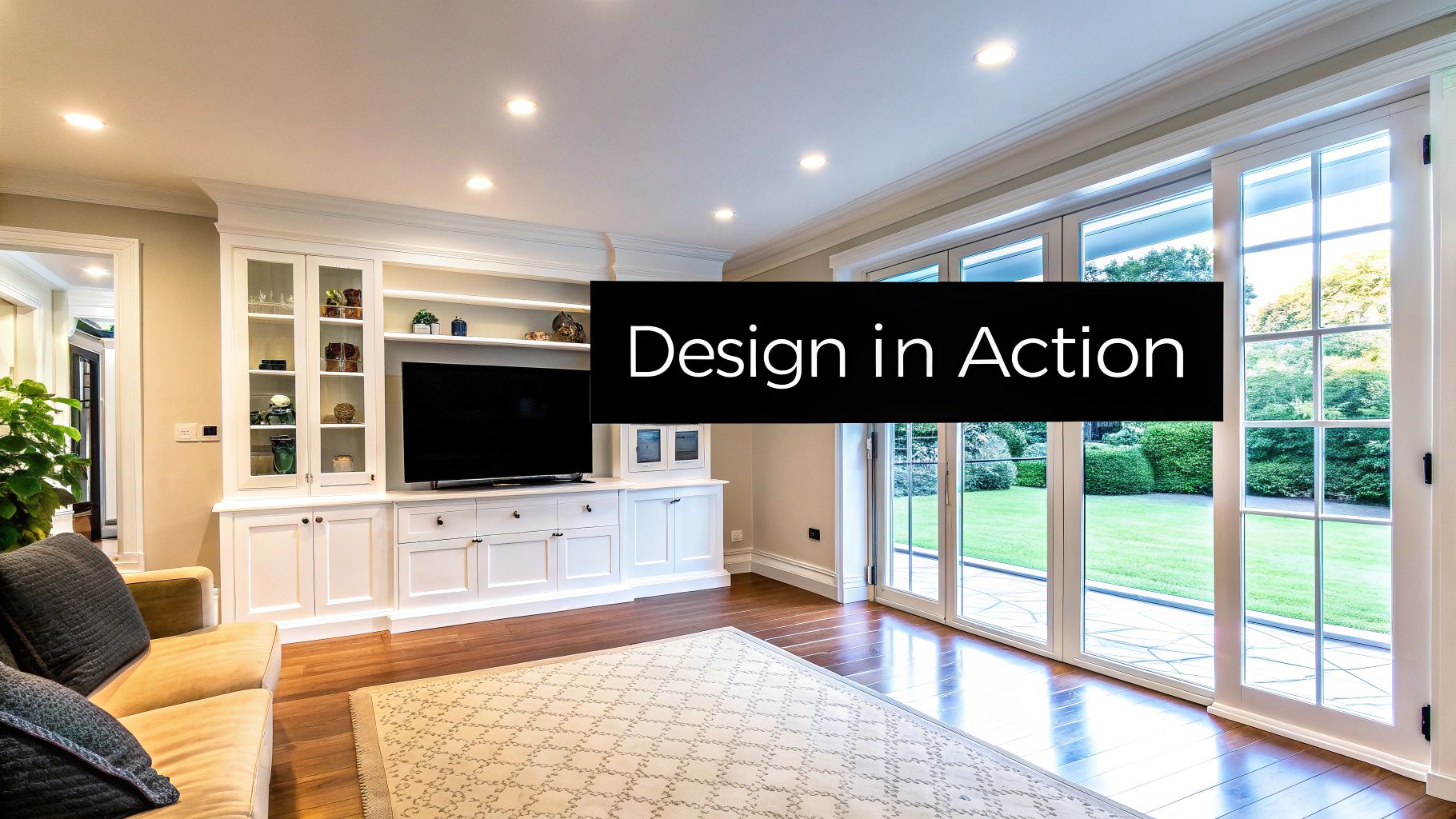
You can talk about theory all day, but to truly get the elegance and warmth of contemporary Craftsman design, you need to see it in action. The real story unfolds within the walls of thoughtfully executed projects, where abstract principles are translated into tangible, livable art.
Let’s look at a few mini case studies. These projects highlight the key decisions, challenges, and ultimate triumphs that come with creating authentic modern Craftsman spaces. They’re a perfect window into how a clear vision, paired with meticulous attention to detail, brings this sophisticated style to life.
Case Study 1: The Open-Concept Renovation
Picture a classic 1920s Craftsman bungalow. It had beautiful original details but was hindered by a dark, chopped-up floor plan. The homeowners loved its historic soul, but their modern, family-centric life demanded something more open. This project became a perfect illustration of how to honor the past while fully embracing the present.
The Goal: Carve out a bright, open-concept living area by connecting the kitchen, dining, and family rooms, all without stripping the home of its invaluable character.
The Challenge: How do you knock down walls without erasing the very details that make a home special? The design team had to be surgical, identifying which elements were essential to the home’s identity and which could be thoughtfully reinterpreted for a new era.
The Solution: The team made a few brilliant moves. They took down non-load-bearing walls but carefully salvaged the original Douglas fir trim and casings. Instead of discarding them, they used this original millwork to frame the new, wider openings between the now-connected spaces. This masterstroke preserved architectural definition while promoting an effortless flow. To anchor the new great room, an oversized island clad in durable soapstone became the central hub, a nod to the honest materials of the period.
The most successful contemporary Craftsman projects don’t just add modern elements; they weave them into the existing architectural narrative. The result is a home that feels evolved, not just renovated.
Case Study 2: The New Build with Integrated Tech
Building from the ground up presents the opposite challenge: how do you infuse a new house with soul? This family wanted the warm aesthetic of a classic Craftsman home but also demanded the seamless functionality of a fully integrated smart home.
The Goal: Design a home that feels established and handcrafted, with technology that is felt but not seen.
The Solution: This project was a masterclass in concealment, and custom millwork was the star of the show. In the living room, an entire wall of rift-sawn white oak built-ins was designed around a massive fireplace, becoming the architectural heart of the space.
- Concealed Media: A large screen simply disappears behind automated, flat-panel wood doors when not in use. No black mirror effect here.
- Hidden Audio: High-end speakers were installed flush with the ceiling and then plastered over, making them completely invisible. The result is immersive sound with zero visual clutter.
- Smart Controls: All lighting, climate, and security systems were managed through discreet, minimalist wall panels or voice commands, getting rid of the usual sea of clunky switches and thermostats.
The custom cabinetry, with its precise joinery and beautiful grain, remained the visual focus. Technology became a silent partner, enhancing daily life without ever competing with the home’s handcrafted feel.
Case Study 3: The Moody Library Retreat
Not every contemporary Craftsman space has to be light and airy. This final example, a home office and library, was designed as a cozy, enveloping retreat. It’s a great look at how the style can embrace darker, more dramatic palettes to evoke a powerful mood.
The Goal: Create a sophisticated and comfortable work-from-home space that feels both studious and deeply relaxing.
The Challenge: How to use a dark color palette without making the room feel small or oppressive. It’s a fine line to walk.
The Solution: The room was painted a deep, moody green-gray. This color created a stunning backdrop that made the warm wood tones of the custom walnut desk and built-in bookshelves absolutely sing. To keep the space from feeling heavy, the designers layered the lighting with precision.
- Ambient Light: A single, sculptural brass pendant provided soft, overall illumination.
- Task Lighting: Under-shelf LED strips lit the book spines beautifully, while an elegant desk lamp offered focused light for reading and work.
- Accent Lighting: Two slim, modern wall sconces flanked a piece of art, adding a gallery-like feel and another gentle layer of light.
The result was a room that felt intimate, rich, and sophisticated. It proves that contemporary craftsman interior design has the range to be both expansive and bright or cozy and dramatic. These real-world examples show that with a clear vision, the style can be adapted to create a home that is deeply personal and truly timeless.
Partnering with Design and Build Professionals
Bringing a sophisticated Contemporary Craftsman vision to life isn’t a solo act; it’s a collaborative art form. The magic happens when you bring together a skilled team—an architect, an interior designer, and a builder—who can work in perfect harmony to turn your ideas into a flawlessly executed reality. This professional partnership is really the final, and most crucial, step in creating a home that’s not just beautiful but truly built to last.
The value of this team simply can’t be overstated, especially now. We’re seeing a huge focus on investing in well-designed living spaces that genuinely enhance well-being and lifestyle. To put it in perspective, the global interior design market was valued at USD 184.21 billion in 2024 and is projected to climb to USD 273.55 billion by 2032. You can find more details on this expanding market on intelmarketresearch.com.
Aligning Your Vision with the Right Experts
Those first few conversations with potential partners are where you lay the entire groundwork for success. It’s absolutely essential to find professionals who not only have the technical chops but who also have a deep, intuitive feel for the nuanced philosophy of contemporary craftsman interior design.
Here’s what to focus on in those initial meetings:
- Communicating the Blend: You need to clearly articulate your vision for a home that strikes a delicate balance between traditional craftsmanship and clean, modern lines. I always advise clients to bring a portfolio of visual references—it’s the fastest way to show the exact aesthetic you’re aiming for.
- The Millwork Plan: Make it known from the start that high-quality, custom millwork is a non-negotiable. This is the time to discuss your ideas for integrated built-ins, streamlined trim, and other architectural woodwork that will become the soul of the space.
- Budgeting for Artisanal Elements: Be completely upfront about your intention to invest in custom, handcrafted features. A transparent conversation here ensures the budget realistically reflects the cost of unique, artisanal quality from day one.
The right professional team acts as a translator for your vision. They bridge the gap between your abstract ideas and the practical realities of construction, ensuring the final result is a cohesive and authentic reflection of your goals.
Taking the time to effectively vet and select the right partners is the most important decision you’ll make. For homeowners looking to assemble their dream team, understanding the process is key. You can explore a detailed guide on how to hire an interior designer to help navigate this decision with confidence.
Ultimately, a hand-picked team ensures your investment results in a timeless home that truly embodies your personality and vision.
Answering Your Top Questions
As you start to explore what a modern Craftsman home can be, a few common questions always seem to pop up. Let’s tackle them head-on, so you can move forward with your project confidently.
Is an Open-Concept Layout a Good Idea?
Without a doubt. In fact, an open layout is one of the hallmarks that separates a contemporary Craftsman from its historic predecessor. The original homes were known for their compartmentalized, distinct rooms, but today’s design philosophy is all about flow, light, and connection.
Merging the kitchen, dining, and living areas creates that bright, airy feel so many of us crave. The trick is to avoid a cavernous, undefined space. We maintain that essential Craftsman structure by using classic architectural cues—think substantial cased openings, coffered ceilings, or prominent beams—to subtly define each zone while keeping the sightlines clear.
What’s the Right Color Palette?
The deep, heavy colors of the past have given way to a much lighter, more sophisticated palette. To get that contemporary feel, start with a base of complex neutrals. Think warm whites, layered grays, and other soft, adaptable tones.
From there, you bring in accent colors drawn directly from nature. This is where the style really comes alive.
- Earthy Greens: Imagine the soft tones of sage, moss, or even a dramatic, deep forest green.
- Moody Blues: Consider anything from a muted slate blue to a classic, rich navy.
- Warm Tones: A touch of terra-cotta or a muted rust can add a beautiful, grounded warmth.
These colors work in harmony with the natural wood, creating an atmosphere that’s serene and elevated, never stark or cold.
A word of caution: People often default to a beige or creamy paint, but this can fight with the wood tones. A cooler neutral or a bold, high-contrast dark color often works much better, making the woodwork the true star of the show.
Can I Really Mix Different Metals?
Yes, please do! Mixing metals is one of the best ways to give a space that layered, thoughtfully curated look. The key to making it work in a contemporary Craftsman home is to create a clear hierarchy.
A great approach is to choose one dominant metal and then bring in one or two others as accents. For example, you might specify matte black for all your door hardware and window frames, then introduce unlacquered brass for a statement light fixture or the kitchen faucet. It’s all about creating intentional contrast, not a random collection of finishes.
Ready to build a home with enduring character and modern sophistication? The best place to start is with the right team. You can connect with the nation’s top design and building professionals on the Haute Design network.
Find the perfect architect or designer for your vision at https://hauteliving.com/designnetwork.