


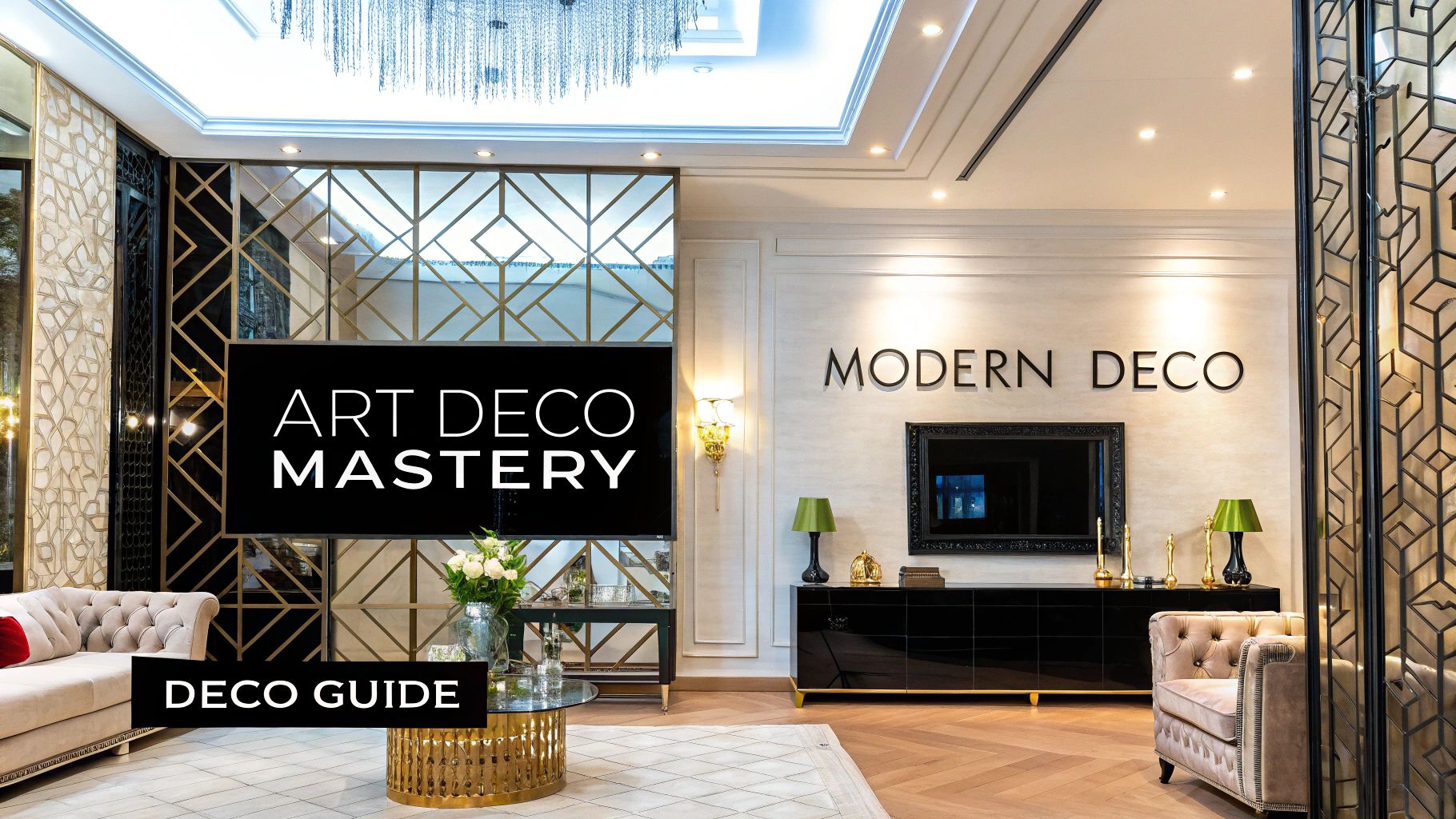
Step into any truly great room, and you can feel it—that perfect balance of history and modern life. Modern Art Deco achieves just this, bringing the unmistakable glamour of the Jazz Age into the 21st century with a sophisticated, livable twist. It’s not about recreating a museum piece; it’s about capturing the spirit of an era—the bold geometry, luxurious materials, and impeccable craftsmanship—and translating it for today’s most discerning tastes.
The Resurgence of Timeless Glamour
What we’re seeing now isn’t a simple revival. It’s a thoughtful reimagining of a golden age, tailored for the way we live now. This new interpretation trades some of the heavier ornamentation of the past for cleaner lines and a more restrained sense of luxury, one that feels impactful without being overwhelming. The result is an interior that’s grand but never ostentatious, and comfortable without sacrificing an ounce of style.
Think of it like this: one could wear a historical costume, or one could wear a couture gown inspired by a vintage silhouette. The first is a replica. The second captures an essence, making it not just relevant but deeply desirable for right now. That’s the heart of modern Art Deco.
A Style Rooted in History, Perfect for Today
It’s no surprise that this design movement is gaining momentum. In the world of luxury projects, there’s a clear turn back towards architectural historicism, a desire for spaces with soul. Recent surveys of top designers reveal a significant jump in the use of classic aesthetics like Art Deco, with 28% of designers now incorporating these styles—up from just 23% two years ago. This shift speaks to a collective craving for interiors with depth, character, and a real story. For a deeper dive, the 2025 designer trends report from 1stDibs offers some fantastic insights.
Modern Art Deco succeeds because it offers a powerful antidote to minimalism’s austerity and the endless cycle of fleeting trends. It champions quality, craftsmanship, and a bold, confident aesthetic that transforms a house into a legacy home.
Classic Art Deco vs Modern Art Deco Key Differences
To truly appreciate the nuance of this style, it helps to see how it has evolved. This table provides an at-a-glance comparison between traditional Art Deco and its contemporary reinterpretation, helping you quickly grasp the key shifts.
| Characteristic | Classic Art Deco (1920s-1930s) | Modern Art Deco Interpretation |
|---|---|---|
| Color Palette | High-contrast: black, white, gold, bold jewel tones. | Softer, more nuanced palettes; blush, navy, emerald, paired with warm neutrals. |
| Materials | Exotic woods, ivory, lacquer, chrome, early plastics. | Natural stone (marble, quartzite), polished brass/bronze, velvet, rich textiles. |
| Geometry | Rigid, symmetrical, and repeating patterns (sunbursts, ziggurats). | More organic and abstracted geometric forms; asymmetrical balance. |
| Ornamentation | Highly decorative and often ornate detailing. | Selective, edited ornamentation; focus on material quality over complexity. |
| Furniture | Large, sculptural pieces with a monumental feel. | Streamlined silhouettes that prioritize comfort and modern ergonomics. |
| Overall Vibe | Theatrical, opulent, and formal. | Sophisticated, curated, and livable luxury. |
Ultimately, the modern approach is about creating a feeling rather than a theme park. It’s a delicate dance between paying homage to the past and designing for the present.
Key Shifts in Modern Interpretation
This updated style is truly defined by a few key characteristics that set it apart from its historical predecessor. Getting these right is the secret to executing a project that feels both authentic and completely current.
- Softer Palettes: While the classic black-and-gold combination will always have its place, modern spaces often lean into more nuanced color schemes. Think deep emeralds, muted sapphires, and warm metallics paired with sophisticated neutrals.
- Material Honesty: There’s a profound respect for authentic, high-quality materials. We’re seeing a lot of natural stone, polished metals, and rich velvets used in ways that let their intrinsic beauty shine through.
- Functional Luxury: The furniture and layouts are designed for real life. Comfort and usability are just as important as the striking aesthetics, ensuring the space is as inviting as it is beautiful.
- Curated, Not Thematic: The goal is to achieve a collected, sophisticated look. It’s about layering elements gracefully to build a narrative, not about creating a period-piece interior that feels stuck in time.
Cracking the Code of Modern Art Deco’s Visual Language
To truly master Modern Art Deco, you have to learn to speak its language. This isn’t a style of random, flashy details; it’s a deliberate and sophisticated system of geometry, materiality, and light that exudes confidence and glamour. Getting a handle on these core components is like learning the grammar of the style—it gives you the power to create spaces that feel both authentic and excitingly new.
At its heart, Art Deco is a celebration of geometry. It’s bold, unapologetic, and finds its beauty in structure, symmetry, and repetition. These motifs are the foundational rhythm of the design, providing the order and beat for the entire composition.
The Enduring Power of Geometric Motifs
The classic shapes that defined the original movement are still the heroes today, but they’re now wielded with a more refined, contemporary touch. Instead of flooding a space, they are used with surgical precision to create powerful focal points and direct the flow of a room.
- Sunbursts: This quintessential motif, with its lines radiating from a central point, has broken free from its traditional home on mirrors. You’ll now find it as a striking metal inlay on a bespoke cabinet, in the form of a sculptural light fixture casting dramatic shadows, or even woven into the pattern of a plush, custom rug.
- Chevrons and Zig-zags: These patterns are pure energy, injecting a palpable sense of movement and dynamism into a space. In a modern setting, they might appear in sophisticated materials—think contrasting marble tiles on an entryway floor or as subtle, tone-on-tone wall paneling that adds texture without screaming for attention.
- Stepped Forms (Ziggurats): Drawing inspiration from ancient pyramids, these ascending, tiered shapes build architectural depth right into the decor. This motif is a natural fit for the silhouette of a grand fireplace mantel, the profile of a custom bookshelf, or the base of a statement table lamp.
This diagram shows how the fundamental principles of geometry, rich materials, and fine craftsmanship all come together to create the foundation of modern Art Deco design.
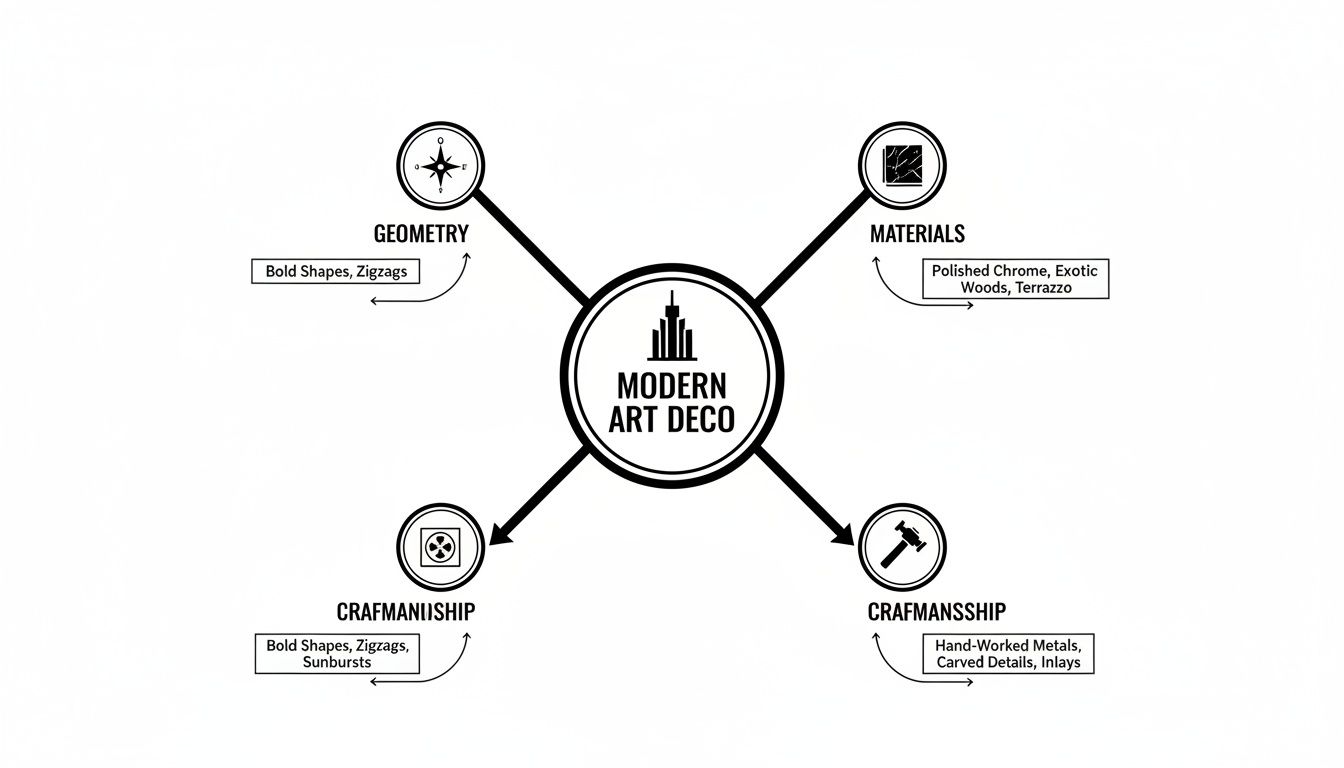
The key takeaway is that a successful Art Deco interior is never about just one of these elements. It’s always about the masterful interplay between all three.
The Trinity of Luxe Materials
If geometry is the skeleton, then the materials are the soul. Modern Art Deco relies on a specific trio of finishes—gleaming metals, sleek lacquer, and radiant mirrors—that work together to craft a truly multisensory experience of luxury. The real art is in layering these textures to strike that perfect balance of warmth, depth, and light.
The genius of modern Art Deco lies in its textural conversation. It’s the cool, smooth touch of lacquer against the warm glow of brass, all reflected and amplified by a strategically placed mirror. This interplay is what elevates a space from merely decorated to truly cinematic.
Consider the warm, ambient glow of polished brass. It’s used far beyond simple hardware; it becomes a defining feature, framing doorways, inlaid into furniture, or forming the very structure of a dramatic chandelier. Its golden tones are essential, keeping the bold geometry from feeling cold and adding a much-needed layer of warmth.
Then you have the deep, flawless finish of lacquer. Whether it’s on kitchen cabinetry, a statement console, or custom wall panels, lacquer provides a sleek, uninterrupted surface that feels incredibly polished and modern. It offers a depth of color that other finishes can’t touch, from inky blacks to rich jewel tones, reflecting light in a soft, almost liquid way.
Finally, mirrors are the style’s secret weapon for manipulating space and light. They are used as a true architectural element, not just a place to check your reflection. A large, sunburst-shaped mirror can be the primary artwork over a console, while antiqued mirror tiles can create a glamorous, moody backsplash in a home bar, beautifully amplifying candlelight for an intimate atmosphere.
Crafting a Sophisticated Color and Material Palette
In any design, color and material are what breathe life into a space. For modern Art Deco, they’re the language of the room—they set an immersive, evocative mood. While many people associate classic Art Deco with a high-contrast world of black, white, and gold, today’s interpretation has a much deeper, more emotionally resonant spectrum. We’re aiming to build a palette that feels both glamorous and genuinely livable.
This means we have to move beyond the expected combinations. The real art lies in layering tones and textures to create a multi-sensory experience that defines what modern Art Deco interiors are all about.
The New Neutrals and Jewel-Toned Accents
The foundation of a modern Art Deco palette is almost always a sophisticated, complex neutral. Forget flat, lifeless beige; think warm taupe, deep charcoal gray, and rich, buttery creams. These colors provide a calm, elegant canvas that allows the more dramatic elements to truly command attention.
Upon this canvas, we bring in bold, confident strokes of color. Deep jewel tones are a signature of the style, but their power comes from strategic, precise application.
- Emerald Green: This shade injects a sense of lush opulence and natural grandeur. Picture it on a velvet-tufted headboard or as the hero color in a dramatic, large-scale piece of art.
- Sapphire Blue: Deep and alluring, sapphire adds a cool, regal touch. It works beautifully on lacquered cabinetry in a home bar or as the color for a statement sofa that anchors an entire living room.
- Rich Burgundy or Ruby: These warm, intense reds cultivate an atmosphere of intimacy and drama. They’re perfect for accent chairs, plush area rugs, or a feature wall in a dining room designed for evening entertaining.
Understanding the emotional current these colors carry is vital. For designers looking to truly master their craft, it’s worth exploring the nuances of mastering interior design color psychology to create specific moods. It’s this knowledge that elevates a project from simply beautiful to unforgettable.
The modern Art Deco palette is a conversation between restraint and drama. A backdrop of sophisticated neutrals allows rich jewel tones to make a powerful statement without overwhelming the senses, creating a balanced and timeless appeal.
Achieving Harmony Through Textural Contrast
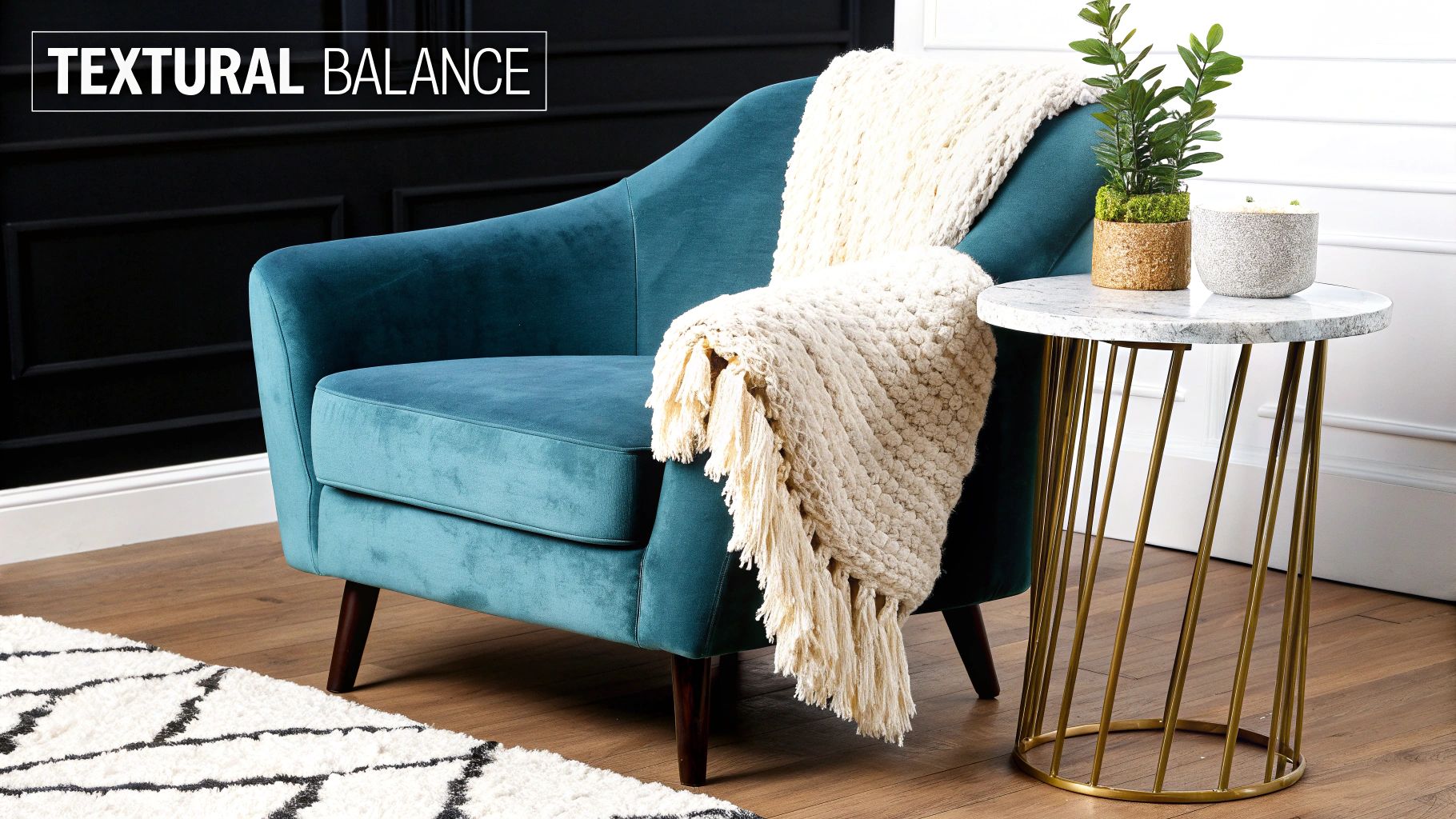
Of course, color is only half the story. The true genius of a modern Art Deco interior is revealed in its masterful use of texture. The entire style is defined by a dynamic interplay between hard, reflective surfaces and soft, inviting materials. This contrast is what makes a space feel both luxurious and comfortable.
Think of it as a balancing act. For every hard, sleek element, there must be a soft, tactile counterpart. This creates a satisfying tension, adding layers of visual and physical interest that pull you into the room and invite you to stay.
Key Material Pairings
To really nail this textural balance, focus on these classic yet contemporary pairings that are central to the modern Art Deco aesthetic:
- Polished Stone and Plush Velvet: The cool, veined surface of a marble coffee table or fireplace surround is perfectly offset by the soft, light-absorbing richness of a velvet sofa. This is a foundational contrast in the style.
- Gleaming Metal and Rich Wood: The warm glow of polished brass or bronze—on lighting, furniture legs, or inlays—is a striking counterpoint to the deep, organic grain of dark woods like walnut or ebony.
- Sleek Lacquer and Soft Bouclé: The high-gloss, reflective finish of a lacquered console feels incredibly modern when placed next to the nubby, inviting texture of a bouclé occasional chair or ottoman.
- Cool Glass and Warm Silk: A sleek glass tabletop adds a touch of crystalline clarity, which can be beautifully softened by the subtle sheen of silk drapery or a few well-placed throw pillows.
By thoughtfully orchestrating these colors and materials, you’re doing more than just decorating. You are crafting an environment—a sophisticated, layered, and deeply personal space that captures the enduring allure of Art Deco for a new era.
Choosing Iconic Furniture and Statement Lighting
In a well-designed space, the furniture and lighting do the heavy lifting. They’re more than just functional objects; they’re the elements that tell the story, setting the mood and defining the room’s entire character. When we’re working with a modern Art Deco aesthetic, this selection process becomes a delicate dance—a thoughtful curation that pays homage to a glamorous past while meeting the needs of today. The aim is to find pieces that are sculptural, beautifully made, and possess a certain confident weight.
It all starts with understanding the classic Art Deco silhouette. The furniture is known for its strong, streamlined forms, often playing with graceful curves, stepped profiles, and an almost architectural sense of solidity. These aren’t meant to be wallflowers; they’re designed to command attention, acting as functional sculptures within the space.
Selecting Art Deco Inspired Furniture
When you’re sourcing furniture, your focus should be on impeccable form and a real richness of materials. The best pieces often combine opulent textures in unexpected ways, which is a true signature of the Art Deco spirit.
- Rich Woods and Metallic Inlays: Look for pieces crafted from dark, exotic woods like ebony or rosewood. The most compelling examples are often detailed with fine lines of polished brass or chrome inlay. A simple console table with geometric brass detailing or a sideboard featuring a classic sunburst motif can instantly ground a room in sophistication.
- Curvaceous Upholstery: Sofas and armchairs are where you can really bring in softness and luxury. Look for sweeping curves and elegant channel tufting. Upholstery in rich velvets, bouclé, or supple leather—especially in deep jewel tones—adds that tactile quality so central to the style’s appeal.
- Sculptural Silhouettes: Every piece should have a distinct and powerful shape. Think of a club chair with a dramatic, scalloped back or a coffee table built on a tiered, ziggurat-style base. These forms aren’t just decorative; they’re the soul of the piece.
Integrating bespoke elements is also crucial for a high-end feel. Understanding the possibilities of custom work, such as exploring what is architectural millwork, allows you to create truly unique built-ins and furniture that fit the architecture and the client’s vision perfectly.
Lighting as the Jewelry of the Room
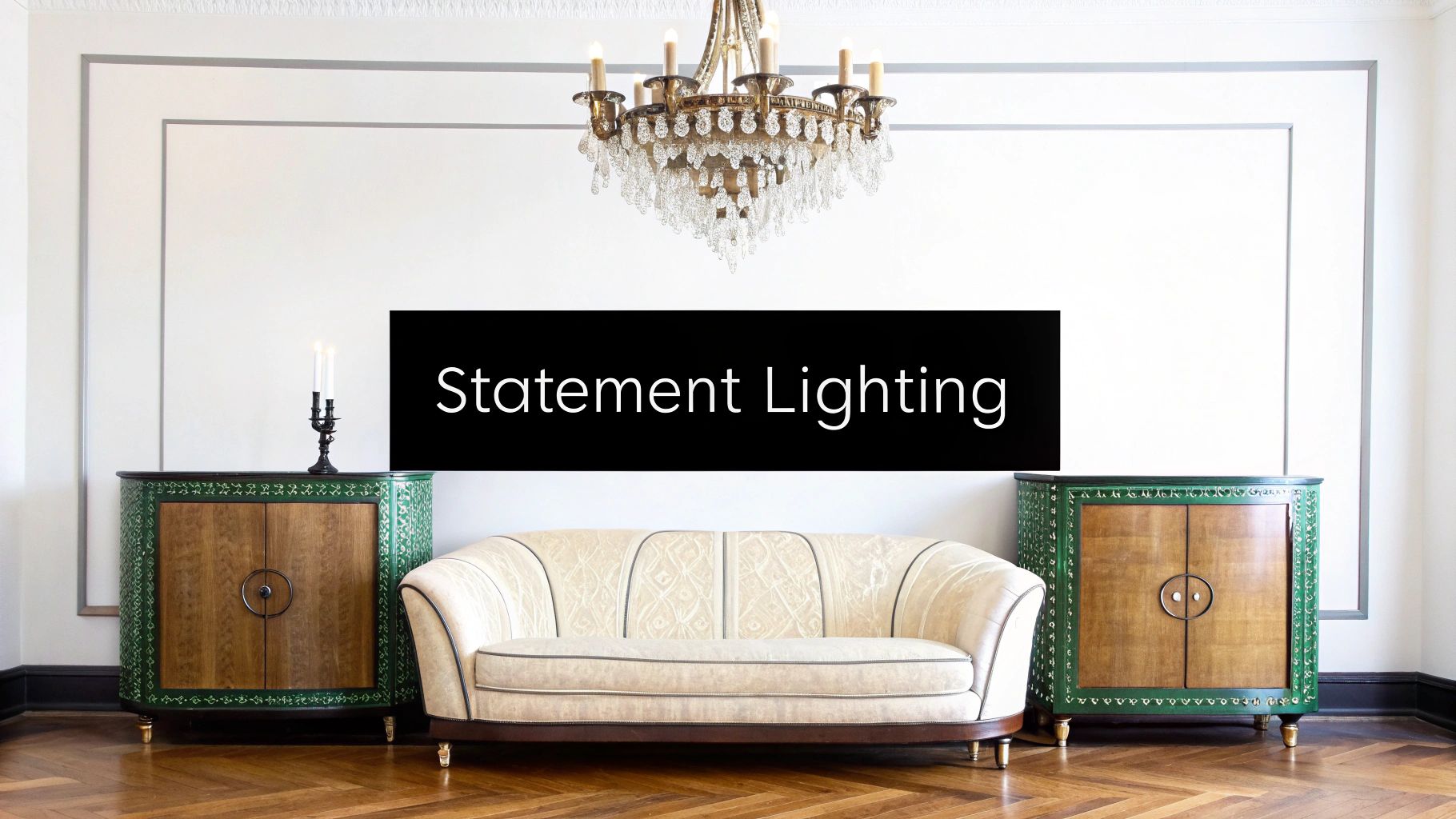
If furniture provides the bones of the room, lighting is the essential jewelry that completes the look. In a modern Art Deco space, light fixtures are never an afterthought. They are major focal points that inject drama, ambiance, and that signature geometric flair. Think of them as functional art installations that completely shape how you experience the space.
The most successful modern Art Deco spaces use lighting to create a layered, cinematic glow. A single overhead fixture is never enough; it’s the combination of a statement chandelier, sculptural sconces, and ambient table lamps that builds a rich and immersive atmosphere.
Choosing the right fixtures means considering both their physical form and the quality of light they cast. The goal is to wash the room in a warm, inviting glow that makes the luxurious materials and architectural details sing.
- Statement Chandeliers: Often the centerpiece, these fixtures should be grand. Look for materials like tiered glass, polished brass, or alabaster, and for geometric shapes—globes, tiered rings, or cascading crystal forms that evoke Jazz Age glamour.
- Geometric Sconces: Wall sconces are critical for providing ambient and accent lighting. Choose designs with strong lines, fan shapes, or stepped details to carry the Art Deco theme up the walls, perhaps framing a doorway or a significant piece of art.
- Sculptural Table Lamps: Lamps with bold, sculptural bases in ceramic, metal, or stone add another layer of light and visual interest right at eye level. They make seating areas feel more intimate and complete the layered lighting scheme.
Curating a Collected Look
To achieve a truly sophisticated look, you have to avoid the “theme-park” effect where everything matches perfectly. The real art is in curating a mix of bespoke commissions, new pieces, and carefully selected vintage finds. A genuine 1930s mirror hanging above a contemporary velvet sofa creates a fascinating dialogue between past and present.
It is this thoughtful curation that discerning clients are seeking in today’s design market. With the global interior design market valued at $136.12 billion and projected to hit $228.01 billion by 2033, the demand for distinctive, investment-grade interiors is clear. You can discover more insights about this growth on Halman Thompson. By pairing iconic forms with dramatic, layered lighting, you can craft a space that feels both timelessly glamorous and perfectly suited for modern luxury.
2 Inspiring Case Studies: Bringing the Vision to Life
Knowing the theory behind modern Art Deco is one thing, but seeing it come to life in a real space? That’s where the magic happens. Let’s walk through a couple of projects that show just how versatile this style can be. You’ll see how the core ideas—that irresistible mix of glamour, geometry, and craftsmanship—can be shaped to fit completely different homes and lifestyles.
Every great design starts with a problem to solve and a clear vision. By looking closely at the choices made in these projects, we can see how a designer layers materials, shapes, and light to tell a compelling story. This is where modern Art Deco interiors stop being an abstract concept and become a tangible, immersive experience.
Case Study One: The Metropolitan Penthouse
Our first project is a sprawling city penthouse. It had incredible views but suffered from a common problem: a living room that felt cold and generic. The client loves to entertain and needed a space that could be both a stunning backdrop for parties and a cozy personal retreat. The challenge was to inject drama and personality into a sterile white box without losing that bright, airy feeling.
The designer’s vision was a “jewel box in the sky.” The strategy was all about building layers of texture and architectural interest, using classic Art Deco motifs but at a bold, contemporary scale.
- The Fireplace as Sculpture: The original, forgettable fireplace was torn out. In its place, a monumental, floor-to-ceiling structure was built from book-matched Calacatta Viola marble. Its dramatic, ziggurat-style mantel instantly became the room’s powerful focal point.
- Architectural Wall Paneling: To give the room some much-needed depth, one large wall was treated with custom geometric panels. The stepped forms, finished in a deep charcoal satin paint, create subtle shadows and an architectural rhythm that draws your eye across the space.
- Layered, Cinematic Lighting: A grand, multi-tiered brass and crystal chandelier now anchors the main seating area. It’s supported by sleek vertical brass sconces and carefully placed uplighting that grazes the new architectural features, casting a warm, cinematic glow.
The result is a room that feels both grand and surprisingly intimate. The strong geometric lines are beautifully balanced by the soft, plush velvet of a sweeping curved sofa and rich silk-and-wool rugs. It’s a masterclass in how to balance bold statements with luxurious comfort, turning an anonymous space into a sophisticated hub for city living.
This project gets to the heart of modern Art Deco: you have to start with strong architectural bones. The custom paneling and statement fireplace weren’t just afterthoughts; they fundamentally reshaped the room’s character before a single piece of furniture came through the door.
Case Study Two: The Serene Bedroom Suite
This second project presents a completely different challenge: creating a master bedroom that feels glamorous but in a much softer, more serene way. The client wanted a tranquil sanctuary that felt luxurious and personal—no theatricality, nothing that would feel out of place in a space meant for rest.
Here, the designer leaned into a more muted palette, focusing on the tactile quality of the materials. The idea was to capture the elegance of the era through refined details and a harmonious blend of textures, rather than high-contrast drama.
Here’s how they did it:
- A Sophisticated Color Story: The walls were painted a soft, dusty rose, which immediately created a warm, enveloping feel. This was paired with deeper tones of burgundy and navy in the velvet headboard and accent chairs for richness and calm.
- Custom Lacquered Wardrobes: An entire wall of custom built-in wardrobes was finished in a high-gloss, cream-colored lacquer. The doors feature subtle, inlaid brass lines in a simple geometric pattern, which catch the light and add a touch of polish without overwhelming the room.
- Plush, Curvaceous Furniture: Every piece of furniture was chosen for its soft, rounded form. A channel-tufted velvet headboard, a pair of scalloped occasional chairs, and a circular ottoman all work together to create a sense of comfort, providing a perfect counterpoint to the clean lines of the wardrobes.
The outcome is a bedroom that is both incredibly chic and deeply restful. It’s proof that modern Art Deco doesn’t have to shout. By emphasizing texture, a nuanced color palette, and refined craftsmanship, the designer created a timelessly elegant escape that is the very definition of livable luxury.
Executing a Modern Art Deco Project Successfully
Turning a vision of Art Deco glamour into a real, livable space takes more than just a great eye. It’s a game of precision, partnership, and an absolute obsession with quality. The success of any modern Art Deco interior ultimately comes down to a well-managed process, where everyone—client and designer—is on the same page from the first sketch to the final walk-through. This is where the magic of inspiration gets real.
For homeowners, the first step is finding the right design partner. Look for a professional whose work shows a genuine grasp of scale, materials, and that tricky balance between a nod to history and the demands of modern life. When you find that person, don’t just show them pictures; talk about feelings. Do you want a grand, theatrical space for hosting parties, or a quiet, serene sanctuary just for you?
For Designers: Sourcing and Commissioning
For design professionals, this is where the real work begins—a careful dance of curation and project management. Bringing a modern Art Deco space to life means tapping into a global network of artisans and suppliers.
- Sourcing Materials That Feel Right: Authenticity is paramount. We’re talking about specifying genuine materials—book-matched marble, unlacquered brass that will patina beautifully over time, and rich, solid hardwoods. You can’t fake the feel of these materials.
- Commissioning Custom Pieces: Let’s be honest, off-the-shelf just won’t cut it. To get the scale and detail just right, you’ll almost certainly need to commission bespoke furniture, lighting, and millwork. This demands crystal-clear communication with fabricators and a hands-on review process.
- Managing Client Expectations: Projects of this scope are a major investment, both in time and money. Setting realistic timelines and being transparent about the budget is the key to a happy client. A solid plan is everything, and a deep understanding of project management for home renovation helps ensure the vision is realized without painful compromises or delays.
The Unwavering Importance of Craftsmanship
At the end of the day, what separates a good project from a truly extraordinary one is craftsmanship. It’s the perfect joinery in a metal inlay, the impossibly smooth finish on a lacquered cabinet, the crisp tailoring of an upholstered chair. These are the details where the real luxury of Art Deco lives.
In modern Art Deco, craftsmanship is the narrative. It tells a story of quality, intention, and timelessness. Investing in meticulous execution isn’t an expense; it’s a lasting contribution to the home’s value and legacy.
This focus on detail is what makes a space feel curated and whole. It’s the bridge between a beautiful idea and a flawlessly executed reality, creating a home that’s not just stunning to look at, but built to be cherished for generations.
A Few Common Questions About Modern Art Deco
Even with a crystal-clear vision, diving into a style as rich as modern Art Deco can raise some practical questions. Let’s tackle a few common ones head-on. Getting these answers sorted out early makes for a much smoother design process and ensures the final space feels authentic to the style and to you.
This isn’t about memorizing a rulebook; it’s about understanding the core principles so you can apply them with real confidence, whether you’re commissioning a full-scale project or just refining your own ideas.
How Can I Make Modern Art Deco Work in a Smaller Space?
Don’t let anyone tell you Art Deco is only for sprawling, grand rooms. It’s simply not true. In a more compact space, the secret is to think in terms of impact over volume. Instead of crowding the room, you select just a few knockout pieces that tell the story with power and grace.
- Lean on Mirrors: A large, well-placed mirror is your best friend. Something with a classic sunburst shape or a strong geometric frame can create a serious illusion of depth while bouncing light all over the room.
- Choose Streamlined Furniture: Look for pieces with slender profiles and elegant lines. Think of a console table with delicate brass legs or an armchair with a single, graceful curve—they define the style without eating up visual real estate.
- Make One Big Statement: A single, dramatic element can do all the heavy lifting. A sculptural chandelier or a bold, geometric rug can anchor the entire room, giving you that unmistakable Art Deco feeling without overwhelming the space.
What’s the Best Way to Mix Vintage and Modern Pieces?
This is where the magic really happens. Creating a conversation between different eras is what gives a modern Art Deco space its soul. You’re aiming for a curated, collected feel—not a museum exhibit. The trick is finding a common thread to tie the old and new together.
It might be a shared material. For instance, you could pair a vintage chrome lamp with a contemporary table that has its own polished metal details. Or, you could use color as the bridge; pull a jewel tone from a vintage art piece and use it for the velvet on a brand-new sofa. The final composition should feel completely intentional, as if each piece, no matter its age, was chosen to elevate the others around it.
The biggest mistake you can make is creating a caricature of the style. This is what happens when too many classic motifs are crammed into one space, making it feel more like a theme park than a sophisticated home. True modern Art Deco is about restraint and confident editing.
Another common pitfall is skimping on material quality. The opulent feel of Art Deco is entirely rooted in the authenticity of its materials—lacquer, marble, brass. Low-quality reproductions just can’t deliver that same tactile luxury and will always fall flat. Finally, don’t ever underestimate the power of a layered lighting scheme; bad lighting can make even the most beautiful finishes look dull and lifeless.
Are you an interior designer, architect, or builder specializing in creating extraordinary homes? Join the Haute Design network to connect with affluent clients who are actively seeking top-tier talent for their projects. Showcase your portfolio and elevate your brand at https://hauteliving.com/designnetwork.