


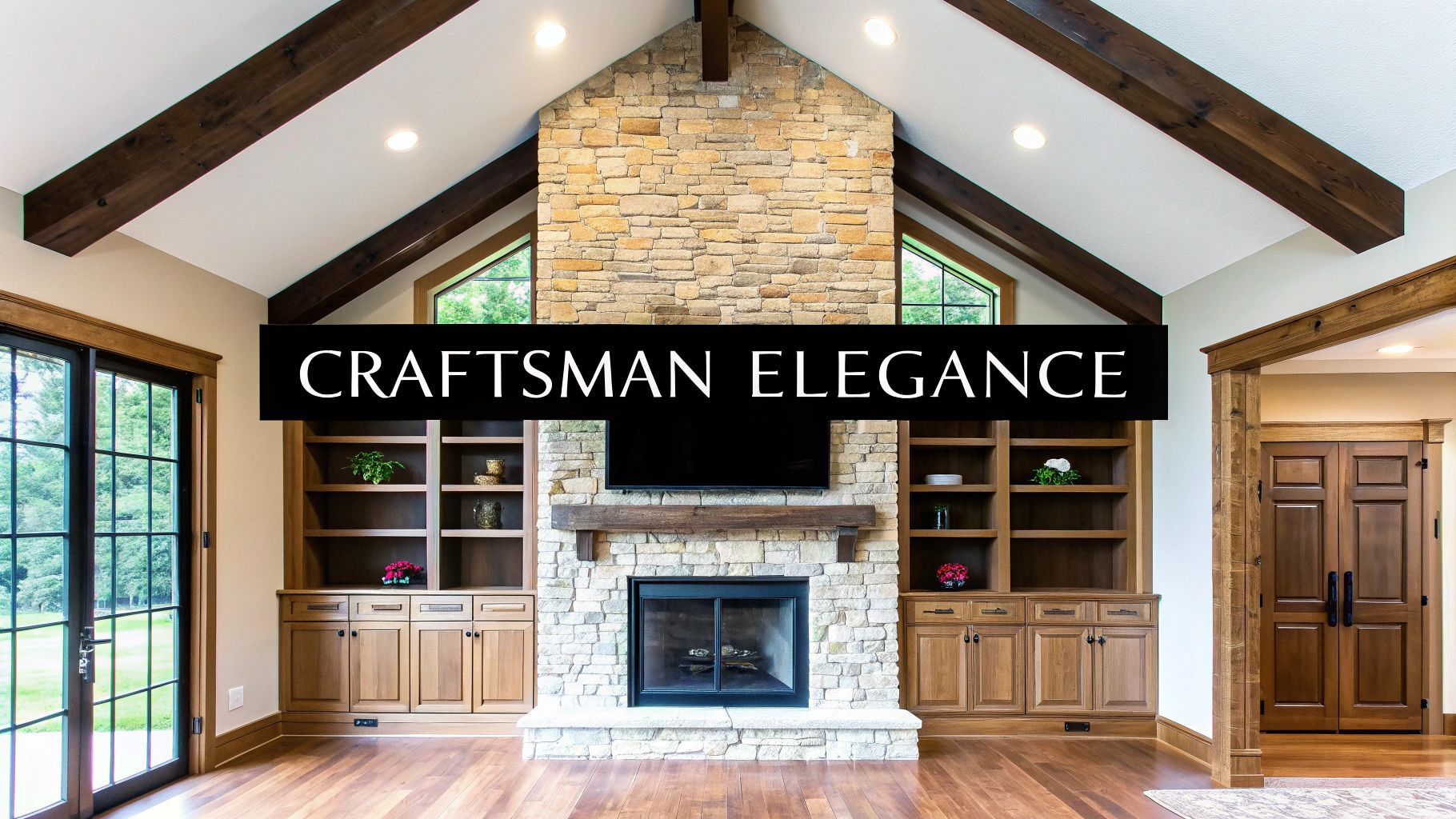
Step into a Craftsman home, and you’ll immediately sense a difference. It’s a feeling of substance, of quality, of a deep connection to the earth. This iconic American style is all about celebrating natural materials, championing handcrafted details, and creating spaces that are as functional as they are beautiful. At its heart, it’s a design philosophy that chooses honest workmanship over mass-produced frills every single time.
The Enduring Appeal of Craftsman Interior Design
The Craftsman interior is more than just an aesthetic—it’s a story. Born from the American Arts and Crafts movement, it was a direct, thoughtful rebellion against the stuffy, over-the-top ornamentation of the Victorian era. It was a call for simplicity, integrity, and a return to quality.
This isn’t a style that chases fleeting trends. It’s built on a foundation of timeless substance, finding profound beauty in the skill of the artisan and the raw character of the materials they work with. This focus on authenticity is exactly why it resonates so strongly today, especially with those who want a home that feels bespoke, meaningful, and genuinely lived-in.
A Philosophy of Authenticity
At its core, the Craftsman movement was a quest for honesty and harmony in the home. This philosophy rests on a few key pillars that continue to define its unique appeal for homeowners who value heritage and quality.
- Honoring Natural Materials: Wood is the soul of a Craftsman home. You’ll almost always find rich, warm oak celebrated for its distinctive grain and strength, complemented by earthy stone, classic brick, and handcrafted tile.
- Celebrating Handcrafted Quality: This is where the style truly shines. Think of custom built-in bookcases flanking a fireplace or stained-glass window panels that catch the morning light. Every detail is an opportunity to showcase incredible workmanship.
- Prioritizing Functionality: Craftsman interiors were designed for real life. Features like cozy window seats, intimate fireplace inglenooks, and clever integrated storage are seamlessly woven into the architecture, making them both beautiful and incredibly practical.
- Creating a Connection to Nature: The design always seeks to blur the lines between inside and out. Expansive windows, earthy color palettes, and a reliance on organic materials all work together to bring a sense of the outdoors into the living space.
The wood mouldings and accents are what make craftsman homes so darn special. The warmth and texture they bring are off the charts. You don’t open up a Craftsman home and make it an open concept. You embrace their quirky personalities and enhance them where you can.
This guide is your deep dive into the world of Craftsman design, from its historic roots to its most stunning modern interpretations. To better understand its place in the broader world of design, exploring Your Essential Interior Design Style Guide can provide valuable context. Now, let’s explore how to bring this warm, sophisticated, and utterly timeless look into your own home.

The Soul of a Craftsman Home: More Than Just a Style
To really get to the heart of what makes an interior Craftsman home so captivating, you have to go back to its beginnings. This wasn’t just another design trend; it was a full-blown philosophical movement. Think of it as a quiet, thoughtful rebellion against the stuffy, mass-produced excess of the late Victorian era.
The movement was a call for a return to what felt real: simplicity, masterful hand-craftsmanship, and a deep, meaningful connection to the natural world. Picture the typical Victorian parlor—a cluttered space overflowing with ornate factory-made furniture and heavy fabrics. The Craftsman philosophy swept all of that away, arguing that a home should be a sanctuary, built with integrity using honest materials that speak to the local landscape. It was a radical idea for its time.
At the center of this revolution was the visionary Gustav Stickley. His magazine, The Craftsman, wasn’t just influential; it became the bible of the movement.
From a Magazine’s Pages to a Nation’s Homes
Stickley’s publication did more than just showcase beautiful things. It offered blueprints, thoughtful essays, and practical advice that put the power of good design into the hands of ordinary people. The magazine championed a simpler, more authentic way of life, and the home was its ultimate expression. This message struck a chord with an American middle class hungry for homes that were both beautiful and functional.
The style took root and flourished across the country, becoming one of the most important architectural movements of the early 20th century. Its golden age was roughly between 1905 and 1930, fueled by the ideas laid out in Stickley’s magazine, which first hit newsstands in 1901. We saw the rise of the iconic ‘California bungalow,’ with its low-pitched roof and welcoming front porch. At the highest end of the spectrum, architects like Greene and Greene created breathtaking masterpieces like the 1908 Gamble House in Pasadena—an 8,000-square-foot work of art filled with exquisite teak woodwork. You can dive deeper into the story of the American Craftsman movement and its pioneers.
Understanding this history is key. When you choose to design a Craftsman home, you’re not just picking out wood finishes; you’re stepping into a story about quality, intention, and purpose.
“You don’t open up a Craftsman home and make it an open concept. You embrace their quirky personalities and enhance them where you can. It’s a labor of love really.”
This captures the spirit perfectly. You have to respect the home’s original character because every element was born from a clear set of beliefs that still resonate in high-end design today.
The Unmistakable Principles of the Craftsman Philosophy
This way of thinking translated directly into the architectural and interior details, creating a space that feels whole and intentional. These core principles are the very DNA of an authentic Craftsman home.
- Honesty of Materials: Nothing was hidden. Instead of covering up the home’s structure, it was celebrated. Exposed wood beams, stone foundations, and handcrafted joinery weren’t just functional; they were the main event.
- The Artisan is King: This movement put the skilled craftsperson back on the throne. Every built-in bookcase, every piece of hardware, every stained-glass panel was a testament to human skill over machine-made uniformity.
- A Deep Connection to Nature: Craftsman homes were designed to blur the lines between inside and out. Expansive windows, earthy color palettes, and the use of local wood and stone were all intended to pull the surrounding landscape into the home.
At its core, the Craftsman philosophy is a powerful statement: a home should be more than a building. It should be a beautifully crafted reflection of a life lived with intention—a set of values that feels more relevant than ever for luxury homeowners today.
Identifying the Signature Elements of a Craftsman Interior
To step into a true Craftsman home is to experience a space where every detail matters. It’s a feeling, a tangible sense of quality and intention. These signature elements aren’t just decorative flourishes; they are the physical manifestation of a philosophy that champions honesty, utility, and artistry. Learning to spot these features is the first step in understanding the very soul of the Craftsman style.
At its heart, this aesthetic is a love letter to wood. Where Victorian design often concealed a home’s structure behind paint and plaster, Craftsman interiors pull back the curtain, putting the rich, natural beauty of wood on full display. It’s the primary language of the home, speaking volumes about substance and permanence.
This philosophy was a direct, thoughtful rejection of the mass-produced fussiness of the Victorian era, turning instead toward nature and skilled handiwork for inspiration.
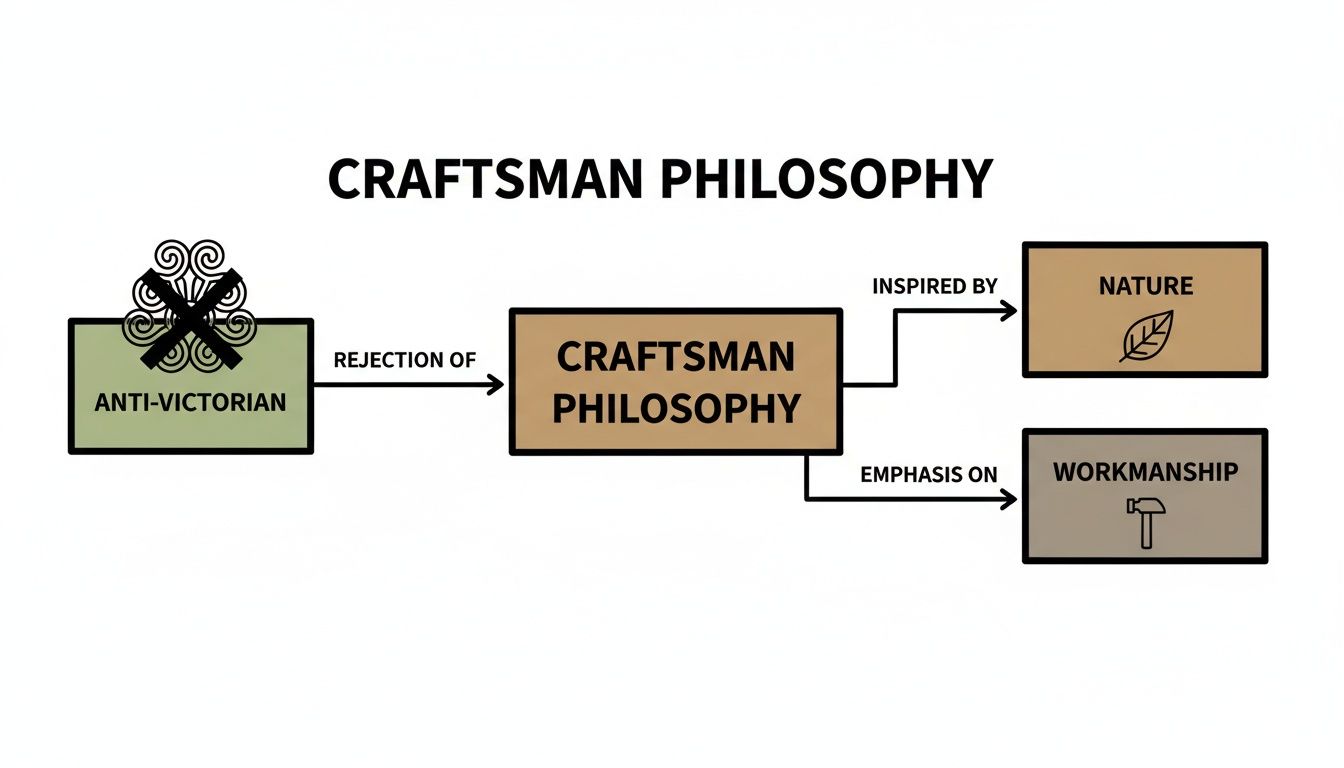
As the diagram shows, every signature element—from a simple window frame to an intricate built-in—grows from a deep respect for authentic materials and the artisan’s touch.
To help you identify these core components, we’ve broken down the essential architectural and design features that give Craftsman interiors their timeless character.
Key Architectural and Design Elements of Craftsman Interiors
| Element | Defining Characteristics | Common Materials | Typical Color Palette |
|---|---|---|---|
| Woodwork | Substantial, flat-profile trim; tall baseboards; wainscoting and paneling; exposed ceiling beams. | Quarter-sawn Oak, Fir, Mahogany, Pine | Rich, warm wood tones; stained, not painted. |
| Built-Ins | Integrated bookcases, window seats, buffets, and fireplace inglenooks; custom-fit and functional. | Oak, Cherry, Maple | Coordinated with the home’s primary woodwork. |
| Fireplace | A prominent, central hearth that acts as the room’s focal point; substantial and earthy design. | Fieldstone, Clinker Brick, Handcrafted Tiles | Natural stone grays, earthy brick reds, deep greens, and ochres. |
| Windows | Grouped in banks of two or three; double-hung with multi-pane uppers and single-pane lowers. | Wood frames, often with leaded or stained glass accents. | Clear glass to maximize light; art glass adds jewel tones. |
| Hardware | Hand-hammered or oil-rubbed finishes; simple, geometric shapes with an artisanal feel. | Bronze, Copper, Iron, Brass | Dark, patinated metallics that complement the wood. |
These elements work in harmony, creating an interior that feels both grounded and incredibly sophisticated.
The Prominence of Natural Woodwork
The most unmistakable feature of any Craftsman interior is the masterful and extensive use of wood. This is no whisper of trim; it’s a bold architectural declaration.
- Substantial Trim and Moulding: You’ll notice wide, flat casings around doors and windows, often with a simple, unadorned profile. The baseboards are characteristically tall and sturdy, giving the walls a solid, grounded presence.
- Wainscoting and Paneling: Rooms like dining areas and entryways are frequently wrapped in rich wood paneling or wainscoting that rises partway up the wall, adding a layer of warmth and showcasing the wood’s beautiful grain.
- Exposed Beams and Rafters: Ceilings are never an afterthought. It’s common to see exposed wooden beams or coffered ceilings that celebrate the home’s structure, transforming functional supports into stunning design features.
The wood of choice was often American quarter-sawn oak, highly valued for its incredible strength and its striking “ray fleck” grain pattern. This particular cut not only makes the grain pop but also resists warping—a perfect example of the movement’s dual focus on enduring beauty and practicality.
The Art of the Built-In
Functionality was a guiding principle of Craftsman design, which led to the brilliant idea of integrating furniture directly into the architecture. These built-ins were designed to maximize space, eliminate clutter, and offer bespoke solutions for everyday living. They represent the pinnacle of custom woodworking, elevating the entire room.
The wood mouldings and accents are what make craftsman homes so darn special. The warmth and texture they bring are off the charts. It’s a labor of love really.
This sentiment gets to the heart of it. These features weren’t add-ons; they were woven into the home’s original design, meticulously crafted to serve the family living there.
Some classic examples of these functional works of art include:
- Bookcases: Often found flanking the fireplace, these are far more than simple shelves—they are pieces of fine cabinetry.
- Window Seats: A hallmark feature, creating a cozy nook for reading while cleverly incorporating storage underneath.
- Buffets and Sideboards: In the dining room, a built-in buffet, perhaps with elegant leaded glass doors, was a common and coveted fixture.
- Inglenooks: These are small, intimate seating alcoves built right into the fireplace structure, creating a “room within a room” perfect for conversation.
These elements beautifully blur the line between furniture and architecture. Understanding the skill required to produce them is key, and you can explore this topic further in our detailed guide to high-quality architectural millwork.
The Fireplace as the Heart of the Home
In the Craftsman philosophy, the fireplace was much more than a way to heat the house. It was the symbolic heart of the home—the central point around which family life revolved. Because of this, it was always given a place of honor and treated with artistic care.
Craftsman fireplaces are typically substantial and earthy, built from natural, rustic materials that bridge the gap between the interior and the world outside. Look for surrounds made of rugged fieldstone, humble clinker bricks, or unique, handcrafted tiles from famous artisans like Batchelder or Grueby. A simple, thick wooden mantel shelf, often resting on clean-lined brackets, completes the look. This central hearth anchors the living space, radiating a sense of warmth and welcome that defines the entire home.
A Room-by-Room Guide to Craftsman Design
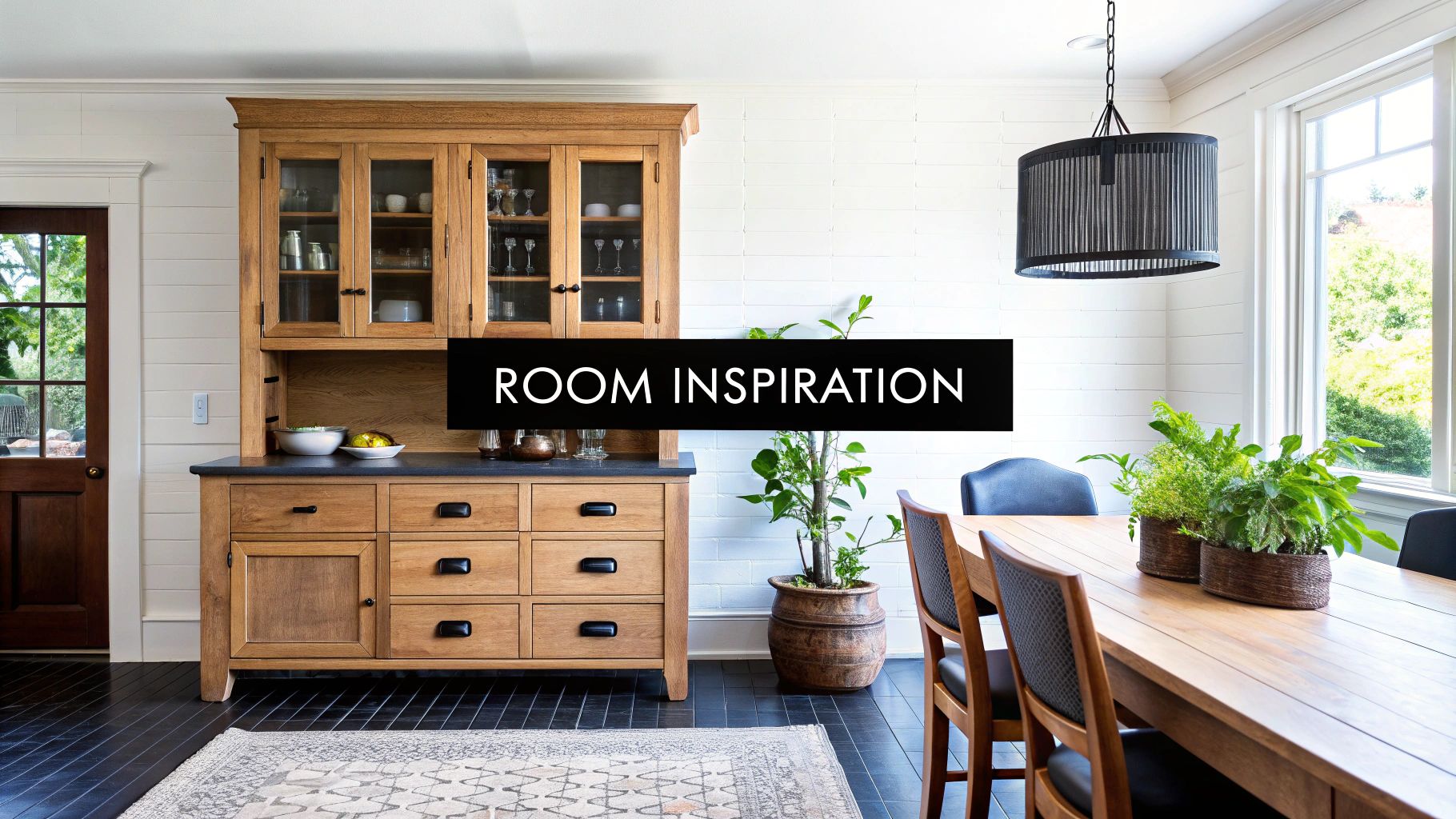
Thinking about Craftsman design is a lot like conducting an orchestra. Each room is its own instrument, playing a unique part, yet all contributing to a single, harmonious composition. While the foundational principles of the style never change, the way they’re expressed has to adapt to the function of each space.
This guide is a practical walkthrough for bringing that authentic Craftsman warmth into every key area of a luxury home. It’s about more than just copying a look; it’s about capturing the spirit of the style to create rooms that are inviting, practical, and beautifully cohesive.
The secret is in the layout and flow. A deep understanding of how to arrange these elements is what elevates a project from good to exceptional. For anyone starting this journey, a professional interior design space planning guide is an invaluable resource for translating a vision into a flawlessly executed reality.
The Living Room: An Inviting Hearth
The Craftsman living room was conceived as a sanctuary, a place for family to gather and relax. It intentionally moves away from vast, open-concept layouts, creating a more defined and intimate atmosphere that naturally encourages conversation and connection.
At its core, you’ll almost always find the fireplace. This is the undisputed heart of the room—not just a minor feature, but a commanding architectural statement. Think rugged fieldstone or handcrafted tile, crowned with a thick, simple wood mantel. Flanking this centerpiece, built-in bookcases provide the perfect frame while offering elegant, integrated storage.
Another feature you might find is the inglenook, a cozy alcove with built-in benches nestled right beside the fireplace. This “room within a room” is the epitome of intimacy, perfect for quiet reading or a heartfelt chat. The result is a space that feels grounded, warm, and profoundly welcoming.
The Dining Room: A Stage for Craftsmanship
Nowhere is the dedication to artistry more on display than in the Craftsman dining room. This space was purpose-built for formal entertaining and family dinners, and every detail reflects a deep respect for fine woodworking and functional beauty.
“You don’t open up a Craftsman home and make it an open concept. You embrace their quirky personalities and enhance them where you can. It’s a labor of love really.”
This sentiment perfectly captures the soul of the Craftsman dining room. To achieve that authentic, high-end feel, focus on these key elements:
- Built-In Buffet: A signature piece, the integrated sideboard offers beautiful storage for china and linens. Look for designs with leaded glass doors to add a delicate, artistic touch.
- Wainscoting: Rich wood paneling typically encircles the room, rising to shoulder height. This adds a sense of history and a layer of sophisticated warmth that you can feel.
- Statement Lighting: A period-inspired chandelier or pendant light acts as a stunning focal point above the dining table. Fixtures with mica shades or strong geometric lines work beautifully.
The Kitchen: Modern Function Meets Classic Form
Creating a modern Craftsman kitchen is a masterful balancing act. You’re aiming for a seamless blend of the style’s classic warmth with the precision and performance of today’s high-end appliances.
The foundation is always custom cabinetry, traditionally crafted from quarter-sawn oak, which is celebrated for its incredible durability and striking grain patterns. Cabinet fronts are typically understated, with clean Shaker-style or flat-panel designs that let the wood speak for itself. For countertops, natural materials are a must. Soapstone is a classic choice, prized for its durability and handsome dark patina, while honed marble can lend a brighter, more contemporary edge.
To finish the look, choose hardware in oil-rubbed bronze or hand-hammered copper. A backsplash of handcrafted subway tile or earthy slate ties all the elements together, creating a kitchen that’s as much a beautiful gathering spot as it is a functional workspace.
Bedrooms and Bathrooms: Serene Retreats
In the home’s private quarters, the Craftsman philosophy shifts toward creating pure tranquility. The focus remains on natural materials and honest simplicity, all in service of a restorative atmosphere.
For the bedroom, maintain the home’s woodwork but consider a slightly lighter stain to cultivate a brighter, airier feel. A built-in window seat can create a perfect reading nook, while simple, well-crafted furniture respects the home’s architectural soul.
In the bathroom, handcrafted tile becomes the star of the show. Whether on the floor or surrounding a tub, tiles with geometric patterns or rich, earthy glazes add immense character and texture. Pair them with fixtures in aged brass or polished nickel and a vanity that feels more like a piece of fine furniture. By prioritizing these honest, natural textures, you transform these private spaces into true retreats from the demands of the outside world.
Where Modern Living Meets Craftsman Soul
While the heart of Craftsman design beats with historical rhythm, its story is anything but finished. Top interior designers today are not just preserving this style; they’re reimagining it for a new era. This fresh, sophisticated take is often called “Neo-Craftsman” or Modern Craftsman.
This isn’t about erasing the past. It’s a thoughtful evolution, adapting the core principles of honest materials and skilled workmanship to the demands of contemporary luxury. The goal is a delicate balance: to keep the handcrafted warmth that makes these homes so beloved while creating spaces that feel brighter, more open, and perfectly suited to modern life. We’re shedding the heavier, darker elements that can feel out of place today, but holding on to the soul.
The enduring appeal of the Craftsman is undeniable. Even a decade ago, a major poll found that 43% of Americans named it their favorite home style. In today’s luxury market, that preference translates directly into value. Authenticated Craftsman homes command attention and inspire high-end renovations that masterfully blend heritage with innovation. For a deeper dive, you can discover why the Craftsman style remains so uniquely American.
Brightening the Classic Palette
Perhaps the most noticeable shift in Neo-Craftsman design is the move toward a lighter, airier atmosphere. Where traditional interiors were defined by dark-stained oak and a moody, earth-toned palette, the modern interpretation throws open the windows and lets in the light.
Designers now reach for lighter wood species like white oak, maple, or ash for trim, built-ins, and flooring. If they do use classic oak, it’s often with a natural or light-washed finish, not a heavy, dark stain. This one change can completely transform an interior, making rooms feel larger and more serene.
The wall colors have brightened, too. Deep greens and browns have given way to crisp whites, soft grays, and cool, muted blues. These shades act as a clean, modern canvas, allowing the natural wood grain to stand out as a celebrated textural feature rather than a dominant, heavy presence.
Reimagining the Floor Plan
Classic Craftsman homes were known for their distinct, separate rooms, each with a clear purpose. But the way we live now often calls for a better sense of flow and connection. The Neo-Craftsman approach cleverly opens up these traditional layouts, but stops short of creating a vast, undefined open-concept space.
The solutions are nuanced and intentional:
- Creating wider cased openings between the living and dining rooms to improve sightlines and light.
- Designing semi-open kitchens that flow into family spaces, often anchored by a large island that acts as a subtle boundary.
- Using consistent flooring and a unified color scheme to create a seamless transition throughout the main living areas.
This evolution is all about finding harmony. We’re aiming to keep the cozy, human-scaled feel of individual rooms while enabling the fluid movement and light that contemporary homeowners crave.
Integrating Modern Luxury and Technology
Marrying modern amenities with a handcrafted aesthetic is where the best designers truly shine. It’s about weaving in luxury materials and smart technology so seamlessly that they feel like they’ve always been there.
Imagine a classic quarter-sawn oak kitchen island, but topped with a sleek slab of Calacatta marble or rich soapstone. In a primary bath, you might find hand-molded Zellige tiles paired with minimalist, high-end plumbing fixtures in a modern matte black or unlacquered brass. And designer lighting, from sculptural pendants to discreet recessed fixtures, is layered to create both function and mood.
Smart home technology is integrated with the same subtlety. Thermostats, speakers, and security systems are chosen for their minimalist profiles or concealed entirely. Custom millwork is brilliant at hiding away charging stations and entertainment systems, ensuring that today’s conveniences never compromise the home’s timeless character. It is this thoughtful fusion of old and new that makes modern interior craftsman style homes so compelling.
Working with a Designer for Your Craftsman Home
Bringing a luxury Craftsman home to life is less a construction project and more an exercise in artistry. You can have a deep appreciation for the style’s principles, but translating that vision into a living, breathing space requires a level of expertise that only comes with experience. This is precisely why partnering with a seasoned interior designer or architect isn’t just a good idea—it’s essential.
Think of these professionals as interpreters. They speak the language of Craftsman architecture fluently, understanding its history and its soul. They can take your modern lifestyle needs and weave them into the home’s historic fabric, ensuring every detail, from the wood grain to the hardware finish, feels both authentic and personal.
Why Professional Guidance Is So Important
Nailing the high-end Craftsman aesthetic is all about nuance. It’s a thousand small decisions that add up to something truly special. A designer who specializes in this style brings a very specific and invaluable skill set to the project, steering you clear of common mistakes and elevating the final outcome.
Here’s where their expertise truly shines:
- Sourcing Authentic Materials: An experienced designer has a meticulously curated network of contacts. They know exactly who to call for that perfect quarter-sawn oak or those handcrafted Batchelder-style tiles that are so crucial to the interior craftsman style homes. This access is something you simply can’t get on your own.
- Navigating Historical Nuances: They can distinguish between a California Bungalow and a Prairie School design from a mile away. This deep knowledge is critical for ensuring that every built-in, trim detail, and finish is historically accurate and creates a harmonious whole.
- Balancing Old and New: Let’s be honest, integrating a Sub-Zero refrigerator or a smart home system into a historic-inspired space can be tricky. A great designer makes this fusion look effortless, preserving the home’s character while making it perfectly suited for today.
“You don’t open up a Craftsman home and make it an open concept. You embrace their quirky personalities and enhance them where you can. It’s a labor of love really.”
This quote gets right to the heart of it. A successful Craftsman renovation is a collaboration, a partnership dedicated to respecting the home’s original spirit. Your designer is the guide who makes sure every update feels intentional, not imposed.
Finding the Right Design Partner
The relationship you have with your designer is the single most important factor in your project’s success. You need to find someone whose work resonates with you and who has a portfolio that demonstrates a real feel for homes with character. When the stakes are this high, you can’t afford to take a chance.
This is exactly why networks that vet and showcase elite talent are so valuable. The Haute Design Network, for example, was created to connect discerning clients with the very best architects, builders, and interior designers in the business.
When you work with a Haute Design professional, you’re not just hiring a designer; you’re gaining a partner who has been recognized for their exceptional work in the luxury market. They have the deep knowledge of Craftsman design, the resources, and the vision to turn your dream into a lasting work of architectural art.
A Few Final Thoughts on Craftsman Interiors
Diving into a specific design style always brings up questions. For a style as rich and detailed as Craftsman, getting the nuances right is everything. Let’s walk through some of the most common things people ask when they’re drawn to this timeless aesthetic.
What Is the Main Difference Between Craftsman and Farmhouse Style?
It’s easy to see why people group these two together—both have a certain honesty and rustic appeal. But their hearts are in very different places. Farmhouse style is all about pastoral charm and down-to-earth practicality. Think wide-plank floors, shiplap, and a color palette that feels light, airy, and lived-in. It’s a style born from function, meant to be a bright and cozy spot for family to gather.
Craftsman, on the other hand, is a direct celebration of the artist’s hand. It’s about substance, skill, and the beauty of natural materials. The focus is on the quality of the work itself—the intricate dark wood trim, the finely joined built-in cabinets, and the earthy, artisanal tile. Here’s a simple way to think about it: Farmhouse is about rustic comfort, while Craftsman is about artisanal substance and architectural integrity.
Can a Craftsman Interior Feel Bright and Modern?
Absolutely, and it’s a beautiful way to interpret the style. The classic Craftsman look often leans into darker wood tones and cozier, more defined rooms, but a modern take can completely embrace light and openness. Many designers I work with are now using lighter woods like white oak or simply applying a clear, natural finish to traditional fir, which instantly brightens the entire home.
When you pair that lighter woodwork with a crisp white or a soft, warm gray on the walls, you create a stunning backdrop. It allows all those incredible architectural details to really stand out. By widening the doorways between rooms or introducing sleek, modern lighting, you can create a home that feels both authentic to its roots and perfectly in tune with how we want to live today—in spaces filled with light.
The key is to honor the home’s original structure while editing the palette. It’s not about erasing the character but allowing it to breathe in a brighter, more serene context.
Are Craftsman Homes a Good Real Estate Investment?
From a market perspective, Craftsman homes have consistently proven to be a fantastic investment. They hold their value exceptionally well, year after year. Why? Their appeal is timeless. The quality of construction and the unique aesthetic connect with a wide range of buyers who are looking for genuine character, not another cookie-cutter house.
In almost any market, you’ll find that a well-preserved or thoughtfully updated Craftsman commands a premium. Think about it: the original built-ins, the solid hardwood floors, the detailed trim—these are features that are incredibly expensive and difficult to replicate today. That inherent quality makes them a coveted asset. Investing in a Craftsman home isn’t just a design choice; it’s a smart financial move that pays off in both desirability and long-term value.
Ready to connect with a design professional who truly understands the art of the Craftsman style? Explore the Haute Design network to find vetted architects and interior designers who can bring your vision to life with unparalleled expertise. Visit our directory of design professionals to begin your search.