


So, what exactly is a general contractor? Put simply, they are the director of a blockbuster build. While an architect or designer creates the script—the blueprints and design documents—the general contractor is the master orchestrator responsible for bringing the entire production to life. Their job is to ensure every scene is executed flawlessly, on schedule, and within budget.
The Role of a General Contractor Explained

A general contractor, or GC, is the single point of responsibility for the day-to-day oversight of a construction site. This licensed professional is hired to translate a complex vision—often one of intricate design and luxury finishes—into a tangible, beautifully constructed reality. Their primary role is managing vendors, coordinating trades, and serving as the central communication hub for everyone involved.
Essentially, the GC takes the architect’s detailed plans and assumes full command of the project’s execution. This means they are not just managing tasks but also people, materials, and expectations. From the first shovel in the ground to the final walkthrough, their leadership is what holds everything together.
The Conductor of the Construction Symphony
Think of building a luxury home as orchestrating a symphony. The architect writes the musical score (the design), but the general contractor is the conductor who ensures every instrument—every trade, every material, every specialist—plays its part perfectly and in harmony. Without a skilled conductor, even the most brilliant score can result in chaos.
This leadership is absolutely critical in high-end construction, where precision is paramount. The GC is responsible for assembling a “cast” of highly skilled specialists for the project. This team typically includes:
- Subcontractors: These are the experts who handle specific trades, such as electricians, plumbers, masons, and painters.
- Artisans and Fabricators: For luxury projects, this can include masters of custom millwork, rare stone installation, or unique metalwork.
- Suppliers and Vendors: The GC manages the procurement and on-time delivery of all materials, from structural steel to imported finishes.
A skilled GC takes on several distinct but interconnected roles. We can break down their core duties into four pillars of responsibility.
The General Contractor’s Four Pillars of Responsibility
This table outlines the primary roles a General Contractor fulfills on any construction project, highlighting why each is especially crucial for delivering high-end results.
| Pillar of Responsibility | Core Functions | Why It Matters for Luxury Projects |
|---|---|---|
| Project Management | Oversees daily operations, scheduling, logistics, and site safety. The GC is the on-the-ground commander. | Precision scheduling is non-negotiable. Delays with one artisan can create a domino effect, impacting the entire project timeline. |
| Team & Trade Coordination | Hires, vets, and manages all subcontractors. They ensure the right specialists are on site at the right time. | High-end projects demand true masters of their craft. A top GC has a vetted network of the best tradespeople in the business. |
| Budget & Financial Oversight | Manages the project budget, tracks expenses, processes payments, and handles financial reporting for the client. | Financial transparency is key. The GC must expertly manage costs for custom materials and specialized labor to prevent overruns. |
| Quality & Risk Control | Enforces quality standards, manages inspections, obtains permits, and ensures compliance with all building codes. | Flawless execution is the standard. The GC is the final gatekeeper of quality, ensuring every detail meets the design intent. |
By mastering these four pillars, a general contractor transforms a complex set of plans into a cohesive, beautifully executed home.
From Blueprint to Reality
Ultimately, the general contractor’s purpose is to shoulder the immense burden of project management. They navigate the complexities of permits, inspections, scheduling, and quality control, freeing the client and designer to focus on the creative vision. By mastering the principles of construction project management best practices, they ensure the final product aligns perfectly with the initial design intent, delivering a home that is as soundly built as it is beautiful.
This role is a cornerstone of the economy. In the United States alone, general contractors are indispensable leaders in a construction industry projected to reach a market size of $3.7 trillion in 2025.
What a General Contractor Actually Does on a Luxury Build
When you step into the world of luxury construction, the role of a general contractor changes completely. It’s no longer just about managing schedules and ordering materials. On a high-end project, the GC becomes a curator of fine craftsmanship, the protector of a unique design vision, and a master of incredibly complex logistics.
They’re not just executing a plan; they’re orchestrating an entire performance. Their day-to-day involves navigating a maze of intricate details where even the smallest mistake can have a massive impact on the budget, the timeline, and the final architectural statement.
Navigating the Maze of Permits and Regulations
Long before the first shovel hits the ground, the GC is deep in the trenches of local bureaucracy. This isn’t just about filling out forms. For a luxury home with ambitious features—say, a cantilevered infinity pool or a multi-story subterranean wine cellar—the permitting process is a strategic battle.
The GC’s job is to ensure every piece of the design complies with a complex web of zoning laws, building codes, and environmental regulations. They become the project’s chief advocate, meeting with city inspectors, engineers, and municipal boards to get every necessary approval. Getting this right from the start is non-negotiable; a misstep here can stall a project for months, making this initial phase one of their most crucial responsibilities.
A top-tier general contractor knows that a pristine job site is a direct reflection of their commitment to quality. It’s not just about being clean—it’s about creating a controlled, professional environment where precision work can thrive and the client’s investment is protected from day one.
Mastering Complex Schedules and High-Stakes Logistics
In luxury construction, timing isn’t just important—it’s everything. The general contractor is the conductor of a complex orchestra, creating and managing a schedule that might involve dozens of specialized teams, many of whom could be flying in from around the world. Imagine coordinating the arrival of hand-carved millwork from a workshop in Italy with the precise schedule of the local installation crew. That’s the level of foresight required.
This logistical puzzle extends to sourcing materials. If the design calls for a specific slab of rare marble from a quarry in Brazil or a custom-fabricated floating staircase, the GC handles it. This involves:
- Vetting Global Artisans: Making sure materials and custom pieces meet punishingly high standards before they ever get on a boat.
- Managing International Timelines: Factoring in shipping, customs, and potential delays to prevent a ripple effect across the project.
- Site Prep for Specialists: Ensuring the site is perfectly prepared for the arrival of highly skilled artisans to do their specific work.
This kind of leadership is more critical than ever. The U.S. construction industry is currently facing a massive labor shortage, with a projected need for 499,000 new workers by 2026. This shortage could lead to $124 billion in lost output if not managed well. A well-connected GC with a deep network of trusted trades is your best defense against this challenge. You can read more about these industry trends in Deloitte’s 2026 outlook.
Enforcing Uncompromising Quality and Safety
At the end of the day, the general contractor is the ultimate guardian of quality. On a luxury project, this means every single detail—from the alignment of a light switch to the finish on a door handle—must be perfect. They are constantly on-site, conducting inspections, checking work against the architect’s plans, and flat-out refusing to accept anything that isn’t flawless.
This obsession with quality goes hand-in-hand with an ironclad commitment to safety. An elite GC runs an impeccably organized and secure worksite. They enforce strict safety protocols not just to meet regulations, but to protect the incredible artisans on site and the client’s substantial investment. Whether it’s ensuring proper scaffolding for delicate ceiling work or managing the installation of enormous glass panels, the GC’s oversight protects both people and property, making sure the design vision is realized without a single compromise.
Understanding Contractor Fee Structures
Talking money is often the most stressful part of any construction project. When you bring a general contractor on board, their fee is wrapped into a specific contract type. This contract isn’t just a piece of paper; it’s the rulebook that governs how costs are handled, who shoulders the financial risk, and how transparent the budget will be. Getting this right is absolutely critical for protecting your investment and fostering a healthy partnership.
Think of it like choosing how to pay for a world-class meal. You could go with a prix-fixe menu where the price is set in stone, or you could order à la carte, paying for each dish individually. Each option has its own set of pros and cons, and the same logic applies to construction contracts.
Fixed-Price Contracts: The Prix-Fixe Menu
A Fixed-Price contract, sometimes called a Lump Sum agreement, is as straightforward as it gets. The general contractor commits to delivering the entire project for one single, predetermined price. This gives you, the client, absolute budget certainty. The GC takes on nearly all the financial risk if material prices spike or labor takes longer than expected.
The catch? This model demands that every single detail—from the exact faucet model in the powder room to the specific finish on the kitchen cabinets—is locked in before the ink is dry. Any changes, known in the industry as change orders, will cost you extra. And since the contractor has little incentive to keep those new costs down, they can be pricey. This structure is perfect for projects with a very clearly defined scope where you don’t anticipate making changes along the way.
Cost-Plus Contracts: The À La Carte Experience
On the other side of the spectrum is the Cost-Plus contract. With this model, you agree to pay for the actual costs of labor, materials, and subcontractors (the “cost”), plus a pre-negotiated fee or percentage that covers the contractor’s overhead and profit (the “plus”).
This approach gives you incredible flexibility, allowing you to make design decisions and select materials as the project unfolds. It also offers total transparency, since every single receipt and invoice is documented and passed on to you. The main downside is the lack of a firm budget ceiling, which puts more of the financial risk squarely on your shoulders. It’s a model that works best when there’s a deep well of trust between you and your contractor.
A transparent general contractor will provide detailed, line-item budgets and regular financial reports, regardless of the contract type. This practice ensures you always know where your money is going and empowers you to make informed decisions throughout the project.
Guaranteed Maximum Price Contracts: A Hybrid Approach
A Guaranteed Maximum Price (GMP) contract cleverly blends the best of both worlds. It operates like a Cost-Plus agreement but comes with a firm cap on the total project cost. You pay for the actual costs plus the contractor’s fee, but only up to that “guaranteed maximum” amount.
If the project comes in under budget, the savings are often shared between you and the contractor, which creates a powerful incentive for them to work efficiently. This model gives you the design flexibility of a Cost-Plus contract with the financial security of a Fixed-Price one, making it a favorite for complex luxury builds where both adaptability and cost control are paramount. When handled correctly, it can also be a fantastic tool for value engineering in construction by encouraging the team to find innovative, money-saving solutions.
Choosing the right contract is the first step in a successful financial partnership with your GC.
Comparing General Contractor Contract Types
To make the decision easier, this table breaks down the key differences between the three main contract structures.
| Contract Type | How It Works | Best For | Client Risk Level |
|---|---|---|---|
| Fixed-Price (Lump Sum) | The client pays one single, predetermined price for the entire project. | Projects with a completely defined scope, minimal expected changes, and a strict budget. | Low |
| Cost-Plus | The client pays for all actual project costs (labor, materials) plus a percentage or fixed fee for the GC’s profit. | Projects where the scope is not fully defined or is expected to evolve. Requires high trust. | High |
| Guaranteed Maximum Price (GMP) | A Cost-Plus model with a firm ceiling. The client won’t pay more than the “guaranteed maximum.” | Complex projects needing both flexibility and budget protection. Savings are often shared. | Medium |
Each of these models has its place, and the best choice ultimately depends on your project’s complexity, your comfort with financial risk, and the level of design clarity you have at the outset.
The infographic below illustrates the key decisions a general contractor makes around permits, materials, and safety—all of which have a direct and significant impact on the project’s bottom line.
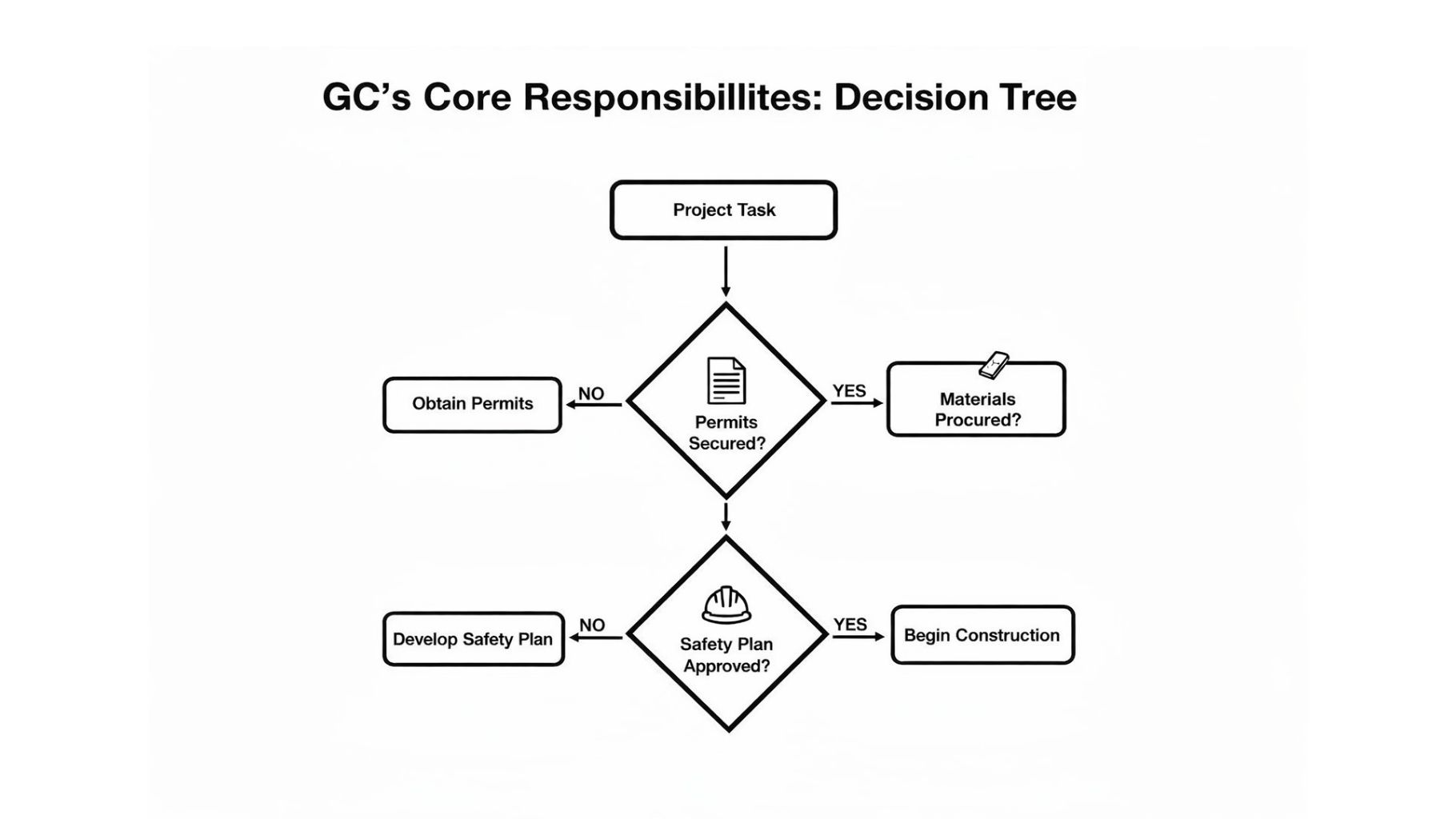
As you can see, every core responsibility involves critical financial choices, from navigating hefty permit fees to sourcing and protecting high-end materials.
This financial stewardship is more important than ever, as GCs in the luxury market are navigating serious economic headwinds. A great GC knows how to manage these challenges to keep your project on track and protect your budget.
How GCs Work with Architects and Subcontractors

A successful luxury build is never a one-person show; it’s a carefully choreographed performance with a large cast. At the center of it all is the general contractor, acting as the critical link between the creative vision and the on-the-ground reality. Their ability to manage the delicate dance between architects and subcontractors is what ultimately turns a stack of drawings into a stunning home.
To get a clear picture, think of the key players and their distinct roles. The architect is the visionary, the creative force who dreams up the design and details it in the blueprints. The subcontractors are the specialists—the master craftspeople who handle everything from intricate electrical systems to custom millwork.
The general contractor is the bridge connecting these two worlds. They are the chief interpreter and conductor, tasked with translating the architect’s creative language into a set of practical, buildable instructions for the tradespeople. This requires a unique blend of technical knowledge, sharp communication, and strong leadership.
Translating Vision into Actionable Plans
An architect’s blueprints are the heart and soul of a project, capturing every detail from the sweep of a staircase to the exact placement of a light fixture. But those plans don’t build themselves. The GC’s first major task is to take that grand vision and break it down into a logical sequence of construction steps.
This is a massive planning effort. The GC has to map out the entire order of operations, making sure the foundation is poured before the framers arrive, and that plumbing and electrical lines are run before any drywall goes up. On a luxury project, this sequencing is even more complex and unforgiving.
Imagine an architect has designed a primary bathroom with a seamless, floor-to-ceiling marble wall. The GC is responsible for coordinating a whole cast of characters:
- The plumbing subcontractor must place pipes and valves with absolute precision before the stone is even on site.
- The structural engineer needs to confirm the wall can handle the immense weight of the marble slabs.
- The stone fabricator and installer have to be managed through sourcing, transport, and the painstaking installation process.
Without the GC’s orchestration, these teams would be working in silos, a recipe for expensive mistakes and frustrating delays. They ensure every specialist sees how their work fits into the bigger picture.
A general contractor’s true value is measured not just by the quality of the final build, but by the harmony they create within the project team. They are the central hub of communication, preventing misunderstandings and ensuring everyone is working toward the same goal of flawless execution.
The GC as the On-Site Leader
Day in and day out, the GC serves as the architect’s eyes and ears on the job site. While the architect might visit periodically to check on progress, the contractor is there every day, making sure every detail aligns with the plans. They are the first line of defense, safeguarding the integrity of the design.
At the same time, the GC is the field commander for all the subcontractors. They hire, schedule, and manage every single trade, from framers and electricians to painters and finish carpenters. This isn’t just about giving orders; it’s about building a culture of accountability and excellence.
In a high-end build, where tolerances are razor-thin and finishes must be perfect, that on-site leadership is what makes the difference. The ability to unite dozens of independent specialists under a single, unified vision is the hallmark of a truly elite general contractor.
Hiring the Right General Contractor

Choosing a general contractor is probably the single most important decision you’ll make for your luxury home project. This isn’t just about hiring a builder; it’s about finding a partner you can trust with your vision, your investment, and the roof over your head.
The right choice can make the entire process feel seamless and rewarding. On the flip side, the wrong one can quickly spiral into a nightmare of delays, blown budgets, and incredible stress. To get this right, you need to do more than just compare a few bids—you need to dig deep into their credentials, past work, and client relationships.
Verifying Credentials and Experience
Before you even think about design details or timelines, you need to do a thorough background check. This isn’t optional; it’s the fundamental step that protects you from unqualified or even fraudulent operators.
Your first move is to confirm the basics: the contractor must be fully licensed, bonded, and insured for a project of your scale.
Start by looking up their license with your state’s contractor board to ensure they’re legally allowed to work. Then, confirm they carry two critical types of insurance:
- General Liability Insurance: This covers your property if it gets damaged by the contractor or their crew.
- Workers’ Compensation Insurance: This is crucial. It covers injuries to their employees on your job site, protecting you from being held liable.
Once the legal boxes are checked, it’s time to scrutinize their portfolio. You’re looking for projects that echo the style, complexity, and budget of your own. A contractor who excels at commercial renovations isn’t necessarily the right fit for a highly detailed residential estate. A strong, consistent portfolio of luxury homes is what tells you they have the specific expertise you need.
Asking the Right Questions
After you’ve shortlisted a few promising candidates, the interview process is where you truly get a feel for who they are. This is your chance to understand their methods, their communication style, and how they handle the inevitable challenges that pop up.
A contractor’s answers to tough questions reveal their problem-solving skills and commitment to transparency. Pay close attention not just to what they say, but how they say it—confidence and clarity are hallmarks of a true professional.
Don’t walk into that meeting unprepared. You need specific, probing questions that go far beyond, “How much will this cost?” Try asking things like:
- How do you ensure unwavering quality control, especially for high-end finishes and custom work?
- What’s your process for communicating project updates, budget tracking, and potential delays?
- Tell me about a challenging situation on a past luxury project and how you resolved it.
- Who will be my day-to-day contact, and how often can I expect to hear from them?
- How do you vet and select the subcontractors and artisans you bring onto a job?
Their answers will give you a clear window into how they operate and whether they truly prioritize their clients.
Identifying Red Flags to Avoid
Knowing what to look for is only half the battle; you also need to know what to avoid. Certain warning signs can signal that a contractor isn’t the right partner for a demanding luxury project.
Be wary of anyone who is evasive about providing references or tries to pressure you into signing a contract on the spot. An unusually low bid is another major red flag. While it might look tempting, it often means they’re cutting corners, using cheaper materials, or simply didn’t understand the full scope of your project.
Other warning signs include a lack of a professional online presence, poor communication from the very beginning, or an unwillingness to provide a detailed, line-item estimate. Ultimately, you have to trust your gut. If something feels off, it probably is. This decision will define your entire building experience, so take all the time you need to get it right.
Connecting with Elite Builders Through Haute Design
Finding a general contractor truly equipped for a luxury build can feel like an impossible task. The stakes are immense, and the builder you choose is the single most important factor in your project’s success. This is precisely where Haute Design comes in, turning a daunting search into a confident, streamlined selection.
We’ve already done the hard work for you by creating a curated network of elite building professionals. Each one has been rigorously vetted to meet the uncompromising standards of the luxury construction market. Our process goes far beyond a simple license check—we dive deep into their portfolio, their reputation for impeccable quality, and their track record of managing complex, high-value projects from start to finish.
The Haute Design Badge: A Symbol of Trust
When you see the Haute Design badge, it’s more than just a logo. Think of it as a seal of approval, a trusted symbol that a builder has proven their unwavering commitment to superior craftsmanship and client satisfaction.
This distinction is earned, not simply given. It’s a clear signal that a general contractor has a history of:
- Executing complex architectural visions with absolute precision.
- Managing project finances with exceptional integrity and transparency.
- Collaborating seamlessly with world-class architects and designers.
In short, the badge provides invaluable peace of mind. It assures you that your vision is in the most capable and professional hands possible. It cuts through the noise of the hiring process by pre-qualifying the industry’s best, letting you focus on finding the right personality and fit for your specific project.
By connecting clients with a pre-vetted roster of top professionals, Haute Design removes the uncertainty from the hiring process. Our network is built on a foundation of proven expertise, allowing you to bypass the guesswork and engage directly with builders who are masters of their craft.
Your Direct Connection to the Industry’s Best
Navigating the world of high-end construction requires a partner who deeply understands the nuances of luxury. Through our platform, you get direct access to a community of builders who specialize in creating extraordinary spaces. This curated connection ensures that every professional you consider is already operating at the absolute pinnacle of the industry.
We invite you to explore our network and see for yourself the difference that a truly elite general contractor can make. For those ready to start their journey, you can get a better sense of the professionals we partner with by viewing our list of the top luxury home builders who are setting new standards in design and construction.