


So, you have a vision for your dream home.So, you have a vision for your dream home. It’s a collection of ideas, magazine clippings, and daydreams. Schematic design is the exciting first step where an architect takes that abstract vision and begins to give it real, tangible form. This is the critical bridge between your initial wishlist and a workable building plan, where broad concepts are translated into the very first drawings of your home.
These initial sketches are all about defining the building’s scale, the layout of the rooms, and, most importantly, the overall flow of the space.
Defining The Blueprint Of Your Vision
Think of an author crafting a novel. Before they write a single chapter, they create a detailed outline that establishes the plot, the characters, and the setting. Schematic design works the same way. Your architect establishes the core elements of your home—the layout, the scale, and how different spaces will connect and interact—before getting lost in the finer details.
This stage is all about big-picture problem-solving. It’s where your architect synthesizes your wishlist, budget, and site information to shape a coherent design concept. The whole point is to explore possibilities, not to lock everything down just yet.
To get a clearer picture, here’s a quick breakdown of what this phase entails.
Quick Guide To Schematic Design
| Key Aspect | Description |
|---|---|
| Purpose | To translate the client’s vision and program into a basic architectural concept. |
| Focus | Big-picture elements: spatial relationships, scale, form, and overall flow. |
| Deliverables | Preliminary site plans, basic floor plans, and simple exterior elevations. |
| Mindset | Exploratory and creative. This is about testing ideas, not finalizing details. |
| Client Role | Active collaboration and providing feedback on the core concepts. |
Essentially, this table captures the essence of the schematic phase: it’s the creative, collaborative start that sets the direction for the entire project.
The Core Of The Creative Process
Schematic design is easily the most creative part of the architectural journey. It’s a whirlwind of sketching, back-and-forth conversations, and developing multiple design options to see what works best. The goal isn’t just to find one solution, but to explore different ways to solve the unique puzzle presented by your needs and the property itself.
During this process, your architect will produce a few key documents:
- Site Plans: These drawings show how the house will be positioned on your land, taking full advantage of sunlight, views, and access points.
- Floor Plans: You’ll see rough layouts for each level, showing the arrangement and approximate size of every room.
- Basic Elevations: These are simple exterior sketches that illustrate the home’s general shape, style, and massing from different angles.
It’s crucial to remember that these aren’t final blueprints. They are tools for conversation and decision-making. They give you the first real glimpse of what your future home could look and feel like, allowing you to give critical feedback while changes are still easy and inexpensive to make.
Schematic design is about making the right foundational decisions. Getting the scale, flow, and basic layout correct here prevents the need for costly and time-consuming revisions in later, more detailed phases of the project.
From Abstract Ideas To A Concrete Plan
So, what does schematic design look like in practice? It’s a collaborative storytelling process. We take your lifestyle, your aesthetic tastes, and your aspirations and translate them into a spatial language. For a luxury project, this goes far beyond just counting rooms and calculating square footage. It’s about crafting a home that actively supports and enhances your unique way of life.
This phase forces us to answer the most fundamental questions:
- How will the family gather and entertain?
- Where can someone find a quiet retreat for work or relaxation?
- How does the home connect with the surrounding landscape and blur the lines between inside and out?
By answering these questions with drawings, schematic design sets the stage for everything that follows. It makes sure the home’s “story” is sound before we start adding the finer details. This is the foundational work that turns a collection of ideas into a cohesive, buildable vision—a solid blueprint for your dream home, long before any concrete is ever poured.
From Idea To Initial Plan: Goals and Deliverables
Schematic design is where your vision starts to take real shape. It’s the bridge between all our initial conversations—the dreams, the wish lists, the abstract ideas—and a concrete, visual plan for your home. The main goal here isn’t to finalize every detail but to nail down the project’s core logic. We’re asking the big questions and making sure the fundamental concept is sound before we move an inch further.
Think of it as sketching the skeleton of your home. We’re not worried about the color of the paint or the style of the faucets just yet. Instead, we’re figuring out the bone structure: how the rooms flow together, how the house sits on your land, and what the overall shape and feel will be. Getting this right is everything, as it sets the direction for the entire project and helps avoid expensive backtracking later on.
This phase is all about big-picture problem-solving. By focusing on the major moves first, we work efficiently and ensure the foundation is solid. In the U.S. luxury home market, a thoughtful schematic design process has been shown to cut down on costly revisions by as much as 30%. It’s the single best way to keep a complex project on track. For a deeper dive into this, you can check out a full market analysis on reverse engineering schematic design.
Translating Vision Into Tangible Documents
At the end of this phase, you won’t be handed a thick set of construction drawings. What you will get is a clear, concise set of documents that tell the essential story of your home. These are the tools we’ll use to discuss, refine, and ultimately approve the core concept.
The drawings are intentionally broad. They give us just enough information to confirm we’re all on the same page about the home’s form, flow, and function, without getting lost in the weeds.
Here are the key deliverables you can expect to see:
- Preliminary Site Plan: This is the bird’s-eye view, showing exactly where your home will be positioned on the property. It maps out how the house connects to the landscape, including things like the driveway, key outdoor spaces, and how it’s oriented to capture the best views or ensure privacy.
- Preliminary Floor Plans: The heart of the schematic set. These drawings lay out the arrangement and approximate size of every room, establishing the home’s essential flow and how you’ll move through the spaces.
- Basic Exterior Elevations: These are straightforward, 2D drawings of what the house will look like from the outside—front, back, and sides. They establish the home’s overall character, its massing, the rooflines, and the general placement of windows and doors.
To bring these initial ideas to life, designers often rely on powerful tools. Software like AutoCAD is used for precise 2D drafting of plans and elevations, while programs like SketchUp or Rhino 3D are perfect for building simple 3D models that help everyone visualize the home’s form and massing.
The Core Deliverables
These documents are the foundation of our dialogue. Each one is designed to answer a fundamental question about your future home, ensuring the high-level concept aligns perfectly with your lifestyle before we move into finer detail. The table below breaks down what each deliverable does and the key decisions it helps you make.
| Deliverable | Purpose In A Luxury Context | Client Decision Point |
|---|---|---|
| Preliminary Site Plan | Strategically orients the home to maximize views, sunlight, and privacy while creating a natural flow between indoor and outdoor living spaces. | Does the home’s placement on the land feel right? Is the approach and arrival sequence what you envisioned? |
| Preliminary Floor Plans | Curates the living experience by defining the flow for daily life and entertaining. Establishes sightlines, circulation paths, and zones for public and private use. | Does the layout support your daily routines and social life? Are the rooms sized and arranged logically for your family? |
| Basic Exterior Elevations | Establishes the home’s architectural character and presence. This is the first look at the style, proportions, and overall aesthetic identity. | Does the initial look of the home match your personal style? Do you like the proposed rooflines and general massing? |
| Simple 3D Massing Model | Provides a tangible sense of the home’s volume, scale, and form in three dimensions, making it easier to understand its impact on the site. | Can you visualize the home’s overall shape and scale? Does it feel appropriately balanced on the property? |
Ultimately, each of these documents is a conversation starter. They are meticulously crafted to confirm the big-picture strategy for your home before a significant investment is made in the more detailed design phases that follow.
What This All Means For Your Project
In a luxury home, these early drawings are doing more than just arranging rooms. They’re scripting experiences.
For instance, if your dream is to host large gatherings, the schematic floor plan will show a clear, gracious path from the kitchen to the dining room and out to the pool terrace. If you’re an art collector, we’ll be designating gallery-ready walls from day one, thinking about their proportions and how they’ll catch the light.
The purpose of schematic deliverables is to answer the most important questions first. Does the layout support your daily routines? Does the home’s orientation capture the best natural light? Is the overall aesthetic aligned with your vision?
Likewise, the site plan for a waterfront estate won’t just plop the house down; it will angle the living spaces to capture those breathtaking views while carefully shielding the master suite from the neighbors. The elevations will begin testing an architectural language—be it sleek modernism or timeless traditional—that gives the home its soul.
Your approval on these schematic documents is a green light. It tells the design team that the foundational ideas are right, and it gives us the confidence to move forward into the next phase, where we’ll start layering in the detail that truly brings a home to life.
Understanding The Full Architectural Project Timeline
To really understand schematic design, you have to see it as one critical chapter in a much larger story. The architectural process is a journey, moving from abstract ideas to concrete, buildable plans. Each phase builds directly on the decisions made in the last one.
Think of it like planning a cross-country road trip. You wouldn’t just start driving west. First, you’d pull out a map, decide on the major cities you want to hit, and sketch out a general route. Schematic design is that first “map-making” stage for your home.
Before Schematic Design: The Conceptual Phase
Before your architect draws a single formal line, the project begins with what’s called conceptual design or programming. This is the pure brainstorming stage—all about conversations, ideas, and inspiration.
You’ll sit down with your design team and talk in broad strokes. You might share a Pinterest board, discuss how your family lives, and define your absolute must-haves. This phase is about capturing the feeling and the function you want, not the precise dimensions. It’s the “what if” stage, full of rough sketches that explore the project’s soul.
Schematic Design: The Vision Takes Form
This is where the magic starts to happen. Schematic design takes all those brilliant, abstract ideas from the conceptual phase and translates them into tangible, to-scale drawings for the very first time.
The creative energy from your initial talks gets channeled into creating the project’s foundational logic. Your architect develops the first real site plan, floor plans, and basic exterior views (elevations). This is where you lock in the big-picture elements—the home’s overall size, shape, and how the rooms flow together. We’re focused on getting the bone structure right, not picking out doorknobs just yet.
Schematic design is the essential link between a high-level concept and a detailed, buildable plan. It gives form and scale to the initial vision, creating the architectural framework upon which all subsequent details will be layered.
Approving the schematic design is like agreeing on the fundamental plot of a story before the author starts writing the individual chapters. You can explore a complete overview of the architectural design process steps to see how this stage sets the foundation for everything that follows.
After Schematic Design: The Detailing Begins
Once you’ve signed off on the schematic plans, the project moves into two increasingly detailed phases. This is where the broad strokes of the schematic drawings get filled in with all the specific information needed to build.
- Design Development (DD): In this phase, a thick layer of detail is added to the approved plans. The team starts selecting specific materials, finishes, and fixtures. They work closely with engineers to integrate the structural, mechanical, and electrical systems. Those simple exterior sketches now evolve to show specific window types, cladding materials, and other architectural features.
- Construction Documents (CDs): This is the final and most technical design phase. The team produces a highly detailed set of drawings and specifications—the official blueprint your builder will use. Every single component is documented, from the exact type of wall assembly to the precise location of every outlet and light switch. These are the documents used to get building permits and accurate construction bids.
Architectural Design Phases Compared
To put it all in perspective, it’s helpful to see these first few phases side-by-side. Notice how the focus shifts from the “why” and “what” to the “how,” with the level of detail increasing at every step.
| Phase | Primary Goal | Level of Detail | Key Client Decisions |
|---|---|---|---|
| Conceptual Design | Define the project’s core vision, goals, and high-level requirements. | Very Low | Overall budget, lifestyle needs, aesthetic preferences, room list. |
| Schematic Design | Establish the project’s fundamental size, form, and spatial layout. | Medium | Room adjacencies, floor plan flow, overall massing, site placement. |
| Design Development | Refine the design by selecting materials and integrating building systems. | High | Finishes, fixtures, cabinetry styles, window and door specifics. |
| Construction Docs | Create a complete set of technical instructions for permitting and building. | Very High | Final approval of all technical specifications before construction. |
As the table shows, Schematic Design acts as the crucial bridge. It takes the initial dream and gives it a solid, architectural form, creating the essential framework that will guide every decision that comes after.
The timeline below illustrates how the key deliverables—the site plan, floor plans, and elevations—come together during the schematic design phase, transforming your initial vision into a coherent plan.
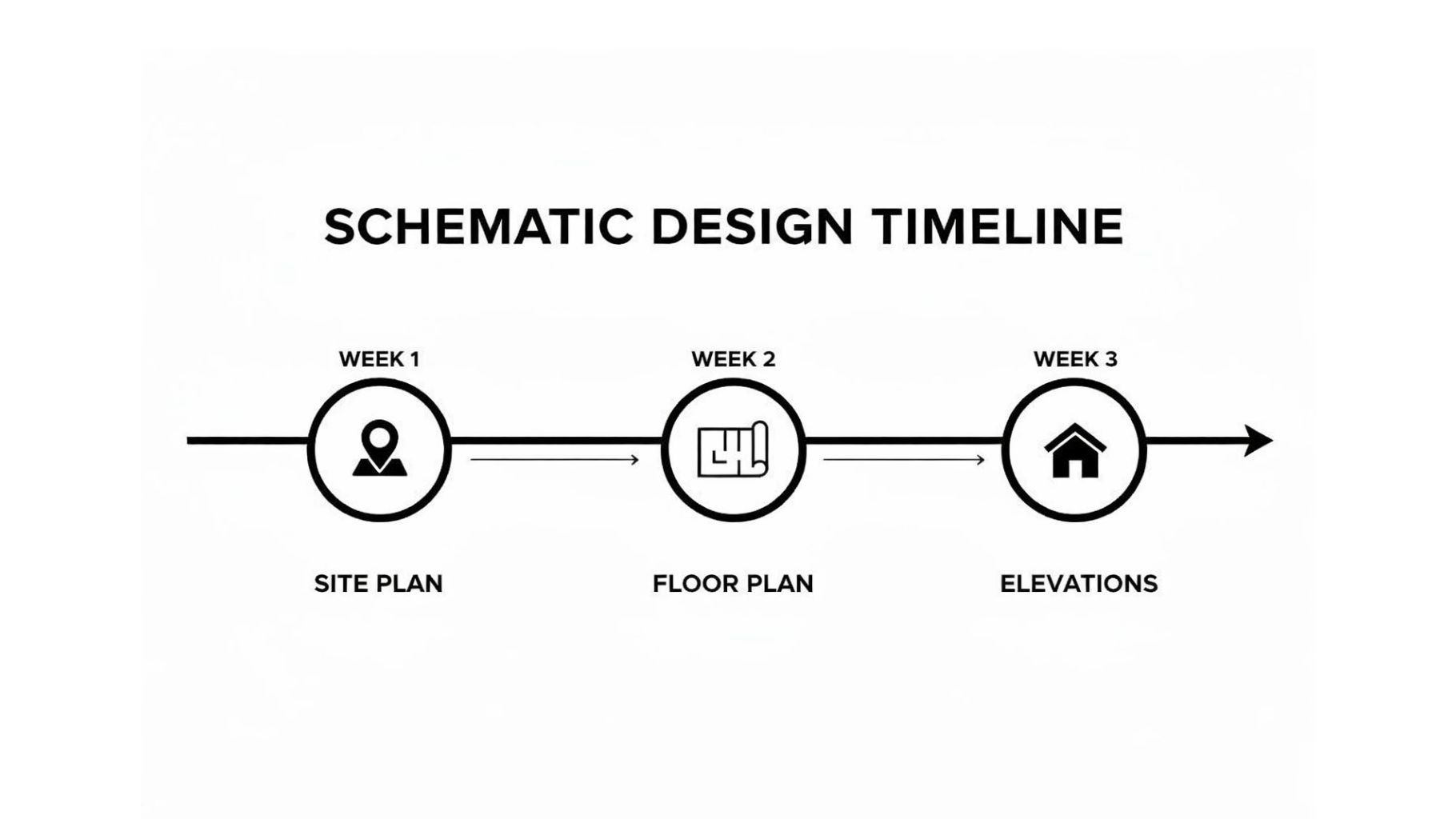
This progression is key. It ensures the project’s core components are thoughtfully organized before the team dives into the much more intricate work of detailed design.
Budgeting For The Schematic Design Phase
It’s crucial to get a handle on the time and money involved in schematic design right from the start. This isn’t just another line item on a budget spreadsheet; think of it as your single most important investment in cost control. By tackling the big, foundational decisions now, you sidestep the kind of expensive, last-minute changes that can derail a project once construction is already underway.
This is the phase where your high-level budget starts to become real. Instead of seeing it as a preliminary expense, consider it the most powerful tool you have for managing financial risk. The clarity you gain here is what prevents budget blowouts down the line and sets your project up for financial success from day one.
How Fees Are Structured
Typically, an architect’s total fee is calculated as a percentage of the overall construction cost. The schematic design phase will account for a specific slice of that total fee—usually somewhere in the range of 15-20%.
That upfront investment covers the intense creative and analytical horsepower required to turn your vision into a buildable plan. It’s a concentrated effort of exploring different avenues, solving complex spatial puzzles, and locking in the project’s fundamental direction before diving into the more granular (and costly) design work that follows.
Think of this phase as the project’s most critical financial checkpoint. Investing time and resources here to get the plan right is infinitely more cost-effective than making major changes during construction, which can inflate costs and cause significant delays.
A Smart Investment, Not An Expense
The financial ripple effect of a well-executed schematic design phase is huge. The architectural services market, which is the starting point for luxury projects like yours, was valued at USD 421.78 billion in a recent year and is poised for major growth. More importantly, solid schematic design has been shown to slash redesign costs by 20-35% in luxury builds simply because a well-defined initial plan prevents expensive backtracking. You can find more data on the growth of the architectural services market.
This early investment pays dividends by paving the way for a smoother, more predictable construction process. When you resolve the major design questions early on, you drastically reduce the chance of change orders—the number one cause of budget increases once the build starts. This thinking aligns perfectly with smart financial management. If maximizing project value is a priority, it’s worth taking a look at what is value engineering in construction and seeing how those principles can be applied right from the beginning.
Realistic Timelines For Luxury Projects
There’s no one-size-fits-all timeline for schematic design; it really depends on the project. For a high-end custom home, you could be looking at anywhere from a few weeks to several months.
The final duration hinges on a few key variables:
- Project Complexity: A home with a challenging site, unusual structural needs, or a host of bespoke features will naturally demand more time for creative problem-solving.
- Decision-Making Speed: The project’s pace often reflects how quickly you, the client, can provide clear feedback and make confident decisions on the concepts your designer presents.
- Regulatory Hurdles: If your property is in a historic district or an area with tough zoning laws, we may need to factor in time for preliminary reviews and approvals.
At the end of the day, the goal here is thoroughness, not speed. Rushing this stage almost always means you’re just kicking problems down the road, where they’ll resurface as costly delays and budget overruns that far outweigh any time you thought you saved. A thoughtful, well-paced schematic design phase is the foundation of a project that finishes on time and—just as importantly—on budget.
How Technology Is Transforming Schematic Design

The days of poring over flat, 2D blueprints to make sense of a home’s design are quickly fading. Technology has completely reshaped the schematic design experience, turning what used to be a static review of lines on paper into something far more dynamic and immersive. This shift is a huge advantage, especially in luxury projects where truly grasping the nuances of space, light, and flow is absolutely essential.
Modern tools give architects a powerful way to communicate their vision with incredible clarity. Instead of just asking you to imagine a room based on a floor plan, they can now invite you to virtually stand inside it. Moving from abstract drawings to a real, experiential understanding is a total game-changer for how clients and architects work together.
Moving Beyond The Blueprint
The big drivers behind this change are sophisticated 3D modeling and visualization programs. Software like Revit, SketchUp, and ArchiCAD lets architects build a digital twin of your future home. This isn’t just a simple block model; it’s a detailed virtual construction that brings the schematic design to life right before your eyes.
This approach gives you a much deeper sense of scale and how rooms relate to one another—something a paper plan could never do. You can see exactly how the morning light will stream into the kitchen or genuinely feel the grand volume of a double-height living room. It answers those critical, gut-feel questions about the home’s atmosphere long before a single shovel hits the dirt.
The industry has clearly embraced these tools. The market for construction design software, which is crucial for these modern workflows, was valued at USD 11.1 billion and is expected to more than double to USD 26.3 billion within the next decade. On a global scale, about 70% of architectural firms have integrated these digital tools into their process, which helps them work more efficiently and push their creative boundaries. You can explore more of the market trends in schematic design technology to see the full picture.
The Power Of Immersive Walkthroughs
Perhaps the most exciting development is the ability to do virtual walkthroughs. Using a VR headset or even just a screen-based tour, you can move through a digital model of your home as if you were really there. This kind of immersive experience provides an unparalleled gut-check on the design.
Here’s why it works so well:
- Spatial Clarity: You can instantly tell if room sizes, ceiling heights, and the overall flow feel right for your lifestyle.
- Rapid Iteration: Your architect can test out different ideas on the fly—like moving a wall or changing a window size—and show you the impact in real-time. This makes decision-making so much faster.
- Enhanced Communication: Complex architectural ideas suddenly become easy to understand, leading to a more collaborative and productive relationship with your design team.
By letting clients experience a design virtually, technology takes the guesswork out of the schematic phase. It ensures the plan you approve isn’t just intellectually understood, but truly felt—giving you far more confidence in the final outcome.
For a luxury project, this isn’t just a cool gimmick; it’s a sign that you’re working with a top-tier design professional. It shows a real commitment to clarity, precision, and a better client experience. When an architect invests in these tools, they’re really investing in your peace of mind and the ultimate success of your project, making sure the home that gets built is a perfect match for the vision you signed off on.
A Homeowner’s Guide To A Successful Schematic Design
Successfully navigating the schematic design phase really comes down to clear communication and your active involvement. Your role isn’t just to watch from the sidelines; you’re a crucial partner in the creative process. To make sure your vision comes to life, your design team needs the right input and feedback from you.
The cornerstone of this partnership is a well-thought-out design brief. Think of it as your project’s constitution. It should detail your absolute needs—like the number of bedrooms—but just as importantly, your wants. This is where you describe the feeling, the atmosphere, and the experiences you imagine for your home. It’s your chance to translate your lifestyle into a set of guiding principles for the design.
A visual mood board is the perfect companion to your written brief. Collect images of architecture, interiors, textures, and even landscapes that you’re drawn to. Sometimes a picture really is worth a thousand words, and this visual library gives your architect a tangible sense of your personal style that can be hard to articulate otherwise.
Preparing For Design Reviews
When your architect presents the first round of concepts, your feedback becomes the fuel that moves the project forward. To make these meetings truly productive, do a little homework. Consider your daily routines, how you like to host guests, and where your family gathers most often.
Thinking through these scenarios helps you look at the drawings with a purpose. You’ll be able to see beyond just the shapes of rooms and evaluate how the proposed layout actually works for the way you live. Of course, it helps to know what you’re looking at, and learning how to read architectural drawings like a pro can empower you to provide much more specific and constructive comments.
Critical Questions To Ask Your Architect
To get the most out of your design meetings, push past simple likes and dislikes. Asking probing, thoughtful questions ensures every decision is made with intention. This back-and-forth is what refines those initial sketches into a schematic design that feels completely right.
Here are a few essential questions to get the conversation started:
- How does this layout support our family’s daily routines and rituals?
- What are the opportunities for natural light with this orientation?
- Can you walk me through the experience of arriving home and moving through these spaces?
- How does this design connect the indoor living areas with the outdoors?
- What are the privacy considerations for each of the main living areas and bedrooms?
Your thoughtful questions and clear feedback are the most valuable contributions you can make during this phase. A successful schematic design is the product of a strong, collaborative partnership between you and your architect, ensuring the final plan is a perfect reflection of your unique vision.
Answering Your Questions About Schematic Design
Even with a solid grasp of the architectural process, you probably have a few practical questions about how schematic design really works. That’s completely normal. This is the foundational stage of your project, and feeling confident about the process is everything.
Let’s tackle some of the most common questions that come up during this creative, and absolutely critical, phase.
How Detailed Should The Schematic Design Be?
Think of it like building a skeleton. Schematic design needs to be detailed enough to clearly define the project’s overall scope, scale, and the relationships between spaces, but it shouldn’t get bogged down in the small stuff just yet.
This means you’ll see floor plans with accurate room dimensions, the overall shape of the building, general locations for windows and doors, and a clear sense of how you’ll move through the home. We intentionally hold off on specifying the exact tile for the bathroom or the precise type of wood for the floors—those finer details are layered in during the next phase, Design Development.
Can I Make Changes After The Schematic Design Is Approved?
Yes, but it gets trickier—and more expensive—the further along we go. The schematic phase is the best time to make significant adjustments. It’s when the design is most fluid and changes are relatively easy and cost-effective.
Once you approve the schematics and the project moves into Design Development, making a major change like moving a wall is a whole different ballgame. It can have a domino effect, impacting the structural, mechanical, and electrical systems that engineers are already designing based on the approved plans. It really pays to be as thorough and decisive as you can during this initial stage to avoid headaches and budget surprises down the road.
When Does Interior Design Fit Into This Process?
Ideally, your interior designer is at the table with your architect right from the start—during schematic design, not after. Their early input is invaluable for ensuring the architectural layout truly supports the interior flow, furniture placement, and overall feel you’re dreaming of.
For example, an interior designer can help determine the perfect wall length to showcase a major piece of art, refine a kitchen layout so it’s perfect for entertaining, or make sure a primary suite feels both grand and intimate.
Early collaboration between the architect and interior designer isn’t a luxury—it’s a necessity for creating a truly cohesive home. This partnership ensures the home’s bones and its soul are designed in harmony from day one.
What Is The Difference Between Concept And Schematic Design?
This is a great question, and the distinction is important. Think of it this way: Concept Design is the spark, the big idea. It’s the initial brainstorming where we capture the project’s spirit through inspiration images, rough sketches, and abstract ideas about feeling and function.
Schematic Design is the next step, where we take those abstract concepts and translate them into something tangible and measured. A concept might be a mood board for a “serene, nature-connected retreat,” while the schematic design is the actual site plan and floor plan showing exactly how the building is oriented and laid out to bring that vision to life. It gives form and dimension to the initial dream.
Are you an architect or designer looking to connect with clients on luxury projects? Join the Haute Design network to showcase your work to a discerning audience and gain the credibility that comes with being a part of an exclusive community of top-tier professionals. Learn more about joining our network.