



A living room with a high ceiling is so much more than an architectural detail; it’s a declaration of luxury and spatial freedom. When you step into a room with ceilings soaring 10 feet or higher, the immediate feeling is one of grandeur and openness. This vertical expanse becomes a designer’s canvas, presenting unique opportunities for dramatic lighting, oversized art, and sophisticated layouts that are simply impossible in a standard room.
The Grand Potential of High Ceiling Living Rooms
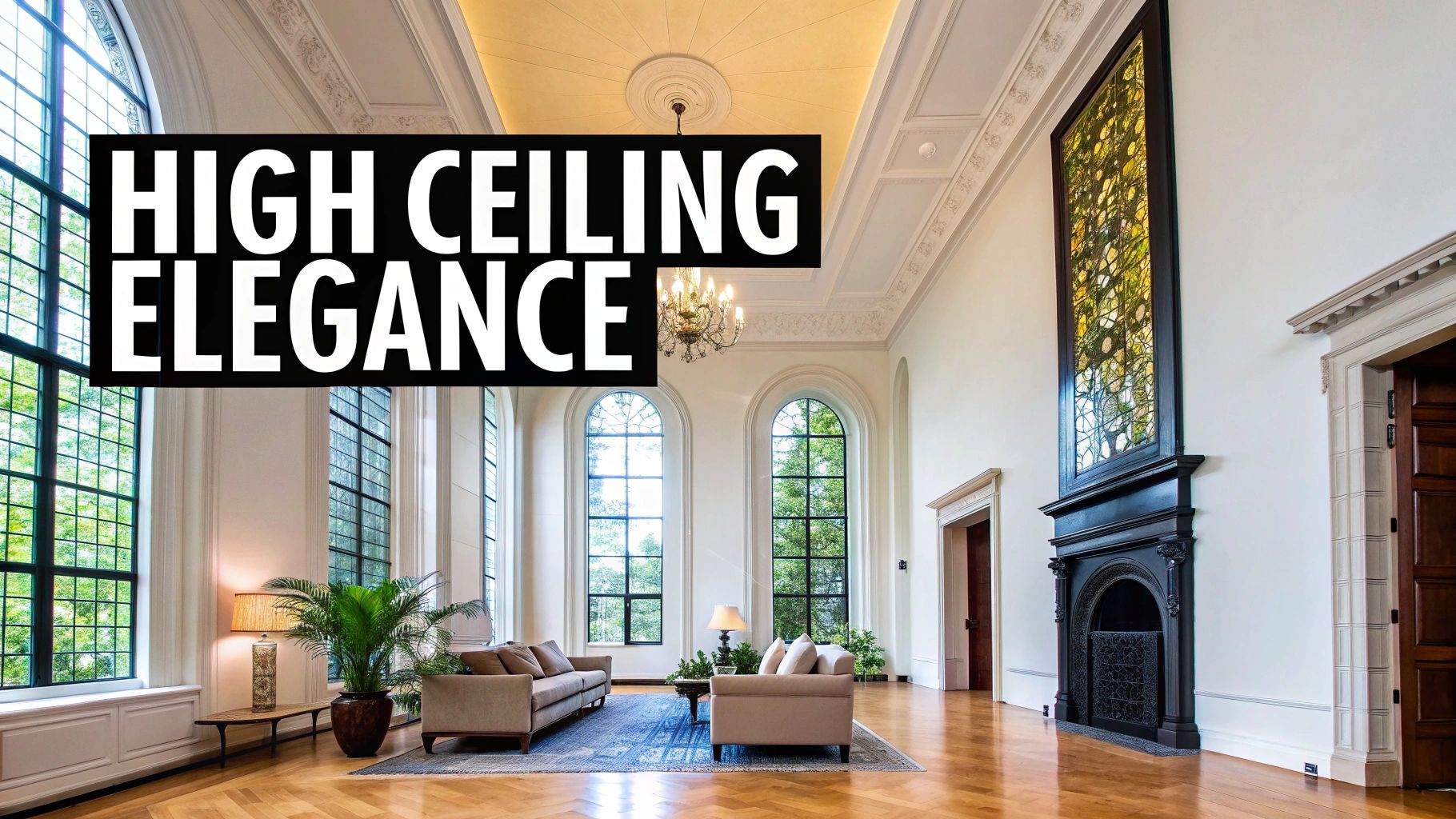
The appeal of a high ceiling living room goes far beyond its impressive scale. It fundamentally changes the experience of a home, turning an ordinary space into an airy, light-filled sanctuary. This isn’t just about perception; it’s a quantifiable asset. In luxury markets across the globe, properties with ceilings over 10 feet in primary living areas can command a 15-25% higher sale price per square foot. This premium is rooted in the immediate psychological impact—that vertical volume can make a room feel 30-40% larger, creating an ideal atmosphere for both entertaining and quiet relaxation. You can learn more about the value of vertical space in luxury real estate from industry reports.
Think of a standard eight-foot ceiling like a neatly framed photograph—it’s pleasant and contained. A high ceiling, on the other hand, is a panoramic landscape. It’s expansive, breathtaking, and brimming with possibility. The challenge, of course, is to harness all that potential without the room feeling cold, empty, or intimidating.
Moving Beyond Mere Space
A truly successful high-ceiling design treats that verticality as an active element, not just a void waiting to be filled. The goal is to strike that perfect, though sometimes difficult, balance between grandeur and intimacy. This guide is about moving beyond simply acknowledging the “extra space” and diving into the core principles that make these rooms genuinely exceptional.
We’ll focus on a few key areas to create a cohesive and inviting atmosphere:
- Harnessing Scale and Proportion: We’ll look at how to select furniture and decor that don’t just fit, but belong, commanding attention and grounding the room so nothing feels dwarfed by the height.
- Strategic Lighting Design: You’ll discover multi-layered lighting techniques that not only illuminate the entire volume of the space but also create cozy, human-scale zones within it.
- Managing Acoustics and Comfort: We’ll uncover practical solutions for common high-ceiling challenges like echoes and temperature imbalances, ensuring the room feels just as good as it looks.
- Artful Decor and Architectural Elements: Finally, we’ll explore how to use large-scale art, dramatic window treatments, and architectural details to draw the eye upward and infuse the space with character.
By mastering these concepts, you can transform a potentially cavernous room into a stunning architectural showcase that is both functional and awe-inspiring.
This guide serves as a clear roadmap for architects, interior designers, and discerning homeowners alike. You’ll learn to see your high ceiling not as a design problem, but as a grand canvas awaiting its masterpiece—ready to be shaped into a balanced, functional, and truly breathtaking living area.
Mastering Scale and Proportion for a Balanced Room
Standard furniture can look almost comically small in a living room with high ceilings. That soaring vertical space, which should feel grand and inspiring, can easily turn cold and cavernous if you’re not careful. The real secret to making these rooms feel inviting lies in a masterful handling of scale and proportion.
Think of your room as a stage. Every piece of furniture, every light fixture, every work of art needs to command its space with presence. Otherwise, your beautiful selections will look like lonely, undersized props on an empty set. The goal is a design that feels both impressive and comfortably human.
Grounding the Space with Intention
The first move in taming a voluminous room is to “ground” the design. You need to create a strong visual anchor that pulls everything together, establishing a clear purpose for the space. Without that solid foundation, the eye just wanders upward, and the actual living area feels undefined and adrift.
A large, bold area rug is one of the most powerful tools for this job. An undersized rug is a classic mistake—it only makes the room feel even bigger. You need a rug that’s substantial enough for at least the front legs of all your main seating to rest on it. This one move instantly carves out a conversational zone, making the vast space feel more intimate. In a generously sized room, a 9×12 or even a 12×15 rug is often the minimum you’ll need to get this right.
Selecting Furniture with a Strong Silhouette
With your foundation in place, it’s time to choose furniture with a substantial presence. Delicate, low-profile pieces will simply get swallowed up. You need items with visual weight and a strong silhouette that can hold their own against those towering walls.
This doesn’t mean everything has to be massive, but your key anchor pieces must have a commanding scale. Look for sofas with higher backs, armchairs with wider profiles, and coffee tables that are long and solid. It’s all about selecting pieces that feel deliberate and appropriately scaled for the architectural volume. For some great examples, you can explore these luxury living room seating ideas to get inspired.
Key Takeaway: In a high-ceiling living room, negative space is abundant. Your furniture’s role is not just functional; it’s sculptural. Each piece contributes to the overall composition and must be chosen for its ability to occupy space with confidence.
Layering different textures is another trick that adds perceived weight. Think about a plush velvet sofa, a chunky knit throw, or a solid wood console. These elements introduce a tactile richness that helps ground the room, making it feel cozier and more complete.
Applying the Rule of Thirds to Your Walls
Those vast, empty walls are often the most intimidating part of designing a high-ceilinged room. A common misstep is to hang everything at a standard height, leaving an awkward, barren void up above. To bring visual harmony to the space, borrow a concept from photography and apply the “Rule of Thirds” to your vertical planes.
Imagine your wall is divided into three horizontal bands: lower, middle, and upper. The trick is to have design elements that connect these zones, guiding the eye smoothly from the floor all the way up to the ceiling.
- Lower Third: This is your primary living zone, anchored by your furniture, area rug, and floor lamps. This section should feel solid and well-established.
- Middle Third: This is the perfect spot for large-scale art, a tall mirror, or an architectural feature like a fireplace mantel that extends well above the firebox. This zone acts as the visual bridge, connecting what’s happening on the ground with the space above.
- Upper Third: You can activate this space with dramatic drapery panels hung just below the ceiling, a breathtaking statement chandelier, or architectural details like exposed beams or elegant crown molding.
This strategic division keeps the room from feeling bottom-heavy. By thoughtfully layering elements at different heights—from a low credenza to a tall floor lamp, to art hung above eye level, and finally to a stunning pendant light—you create a cohesive design that truly celebrates the room’s height instead of being dwarfed by it.
Developing a Multi-Layered Lighting Strategy
Lighting a high ceiling living room is an art form, one that demands far more than just a single, dramatic chandelier. While a grand central fixture is a fantastic starting point, relying on it alone often creates what I call the “ballroom effect”—bright up near the rafters, but dim and shadowy down where people actually live.
A successful strategy means thinking in layers. You have to treat light as a tool to sculpt the atmosphere, define zones, and make a vast space feel functional and intimate.
Think of your lighting plan like a symphony. You need the full orchestra, not just a single soloist. This means skillfully weaving together three distinct types of light—ambient, task, and accent—to build depth, warmth, and visual interest. When these layers harmonize, they can transform a cavernous room into a beautifully illuminated and genuinely inviting home.
The Three Essential Lighting Layers
The foundation of any good lighting plan is ambient lighting. This is your general, overall illumination that makes the room usable. In a soaring space, this typically comes from a combination of a central statement piece (a sculptural pendant or a modern chandelier) and strategically placed recessed lights. Those recessed lights are critical; they wash the walls and fill in the corners, preventing the gloomy spots a single fixture can’t possibly reach.
Next, you bring in task lighting. This is focused light for specific activities, and it’s what truly brings the human scale back into the room. Picture a stylish arc floor lamp curving over a reading chair or a pair of elegant table lamps on console tables. These fixtures create cozy, functional nooks, making the large space feel much more personal and usable for everyday moments like reading, conversation, or working on a laptop.
Finally, you add the sparkle with accent lighting—the jewelry of your design. Its job is to highlight the room’s most impressive features. Use spotlights or wall washers to draw the eye to a stunning piece of large-scale art, the rich texture of a stone fireplace, or the graceful lines of an architectural detail. This layer adds drama and directs focus, ensuring the room’s impressive verticality is celebrated, not just tolerated.
A well-lit high ceiling living room feels balanced because light exists at multiple elevations—from the ceiling all the way down to the tabletops. This layering prevents the space from feeling top-heavy and ensures a comfortable, welcoming glow right at eye level.
Selecting and Placing Your Fixtures
Choosing the right fixtures is a delicate balance of style and scale. For a central pendant or chandelier, a trusted rule of thumb is to add the room’s length and width in feet, and then use that number as the diameter in inches. For example, a 20×25 foot room would feel right at home with a fixture around 45 inches in diameter.
The drop length is just as important. The fixture needs to hang low enough to feel connected to the living area, not lost in the void. A good target is to have its base at least 7 to 8 feet off the floor.
When it comes to recessed lighting, placement requires real finesse. Please, avoid arranging them in a rigid, grid-like pattern that screams “corporate office.” Instead, position them thoughtfully to wash walls with a soft glow or to highlight specific zones. Using gimbal (adjustable) recessed lights is a game-changer, giving you the flexibility to direct the beams precisely where you need them.
Properly managing natural light is also a huge part of the equation. For a deeper dive, our guide on mastering interior design window treatments offers expert advice on balancing brilliant daylight with essential privacy.
A multi-layered lighting strategy directly supports the core principles of designing for grand spaces: grounding the room, establishing a human scale, and creating visual harmony.
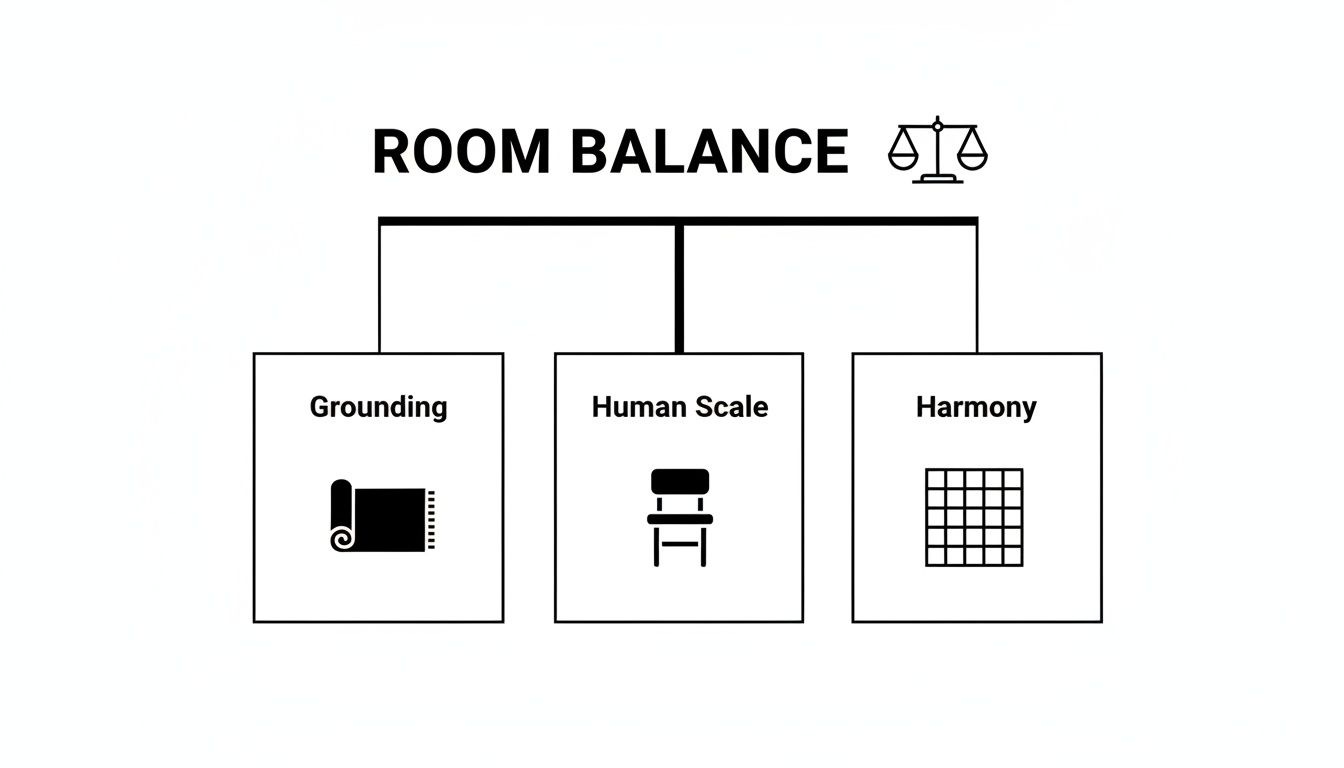
This visual hierarchy reinforces how crucial it is to connect the floor (Grounding) to the living area (Human Scale) and the walls (Harmony).
To bring all these elements together into a cohesive and flexible system, here’s a breakdown of how the layers function.
Lighting Strategy for High Ceilings
| Lighting Layer | Purpose in a High Ceiling Room | Recommended Fixture Types |
|---|---|---|
| Ambient (General) | Provides the foundational, overall light. Prevents dark corners and makes the space feel cohesive and evenly lit. | Large-scale chandeliers, sculptural pendants, architectural cove lighting, strategically placed recessed downlights. |
| Task (Focused) | Creates functional zones for activities like reading or conversation. Brings light down to human level, making the space feel more intimate. | Arc floor lamps, pharmacy lamps beside seating, table lamps on consoles and end tables, adjustable reading sconces. |
| Accent (Highlight) | Draws attention to architectural features, artwork, or textures. Adds drama, depth, and a sense of luxury. | Adjustable spotlights (track or recessed), picture lights, wall washers, uplighting for plants or columns. |
With these layers in place, the final, non-negotiable step is to install dimmers on every single light source. This simple addition is what gives you absolute control over the mood, allowing you to transition effortlessly from bright and energetic for a party to soft and subdued for a quiet evening in. It’s the key to making your design truly liveable.
Taming the Echo and Taming the Thermostat
Let’s be honest: a grand, beautiful room is useless if it’s uncomfortable to actually live in. The very same architectural features that give a high-ceiling living room its “wow” factor—the soaring walls and sheer volume—are also notorious for creating comfort challenges. Two of the biggest culprits are bad acoustics and uneven temperatures, but with a bit of foresight, they’re both completely solvable.
The most common acoustic issue you’ll run into is echo, or what designers call reverberation. Imagine a room with high ceilings, hardwood floors, and big windows. Sound waves have nowhere to go but bounce. It’s like trying to have a conversation in a racquetball court; the sound ricochets off every hard surface, creating a harsh, noisy environment where voices feel strained and music sounds muddy.
Soaking Up Sound with Soft Surfaces
The fix is surprisingly simple: introduce materials that absorb sound instead of reflecting it. This is where textiles become your most powerful tool, allowing you to soften the room’s soundscape while adding layers of comfort and style.
- Generous Area Rugs: Your first line of defense is a large, plush area rug with a quality pad underneath. Think of it as a giant acoustic sponge on the floor, immediately taming the room’s hard edges.
- Fabric Upholstery: When selecting sofas and chairs, lean towards textured fabrics like velvet, chenille, or bouclé. They’re far better at trapping sound waves than slick leather.
- Heavy Drapes: Floor-to-ceiling curtains in a substantial material like velvet or lined linen work wonders. They absorb sound, add a touch of drama, and make the space feel more intimate.
By layering these soft materials, you’re essentially “tuning” the room. You can transform it from a resonant echo chamber into a serene and inviting space where conversations are finally clear and comfortable.
Getting a Handle on Airflow and Temperature
The other big challenge is climate control. We all learned in science class that heat rises, and in a living room with a soaring ceiling, that simple fact can be a real headache. In the winter, all the expensive warm air can get trapped up high, leaving the area where you actually live feeling frustratingly chilly.
As American homes evolved from standard 8-foot ceilings, we saw a push towards more aspirational heights. The double-height cathedral ceilings of the 1990s, however, often came with a downside: heating and cooling bills that were 20-30% higher. Recent housing data shows that while 42% of new single-family homes now have ceilings of at least 9 feet, the design focus has shifted to making these grand spaces more practical. You can explore more about these modern ceiling height trends on The Plan Collection.
A modern ceiling fan is one of the most effective solutions out there. Forget the clunky designs of the past; today’s fans are sleek, sculptural, and can even act as a design centerpiece. In the winter, setting the fan to rotate clockwise at a low speed gently pushes the warm air that’s pooled at the ceiling back down into the living space. This simple trick creates a more consistent temperature and can make a huge difference in your energy bills.
Using Art and Architecture to Fill Vertical Space
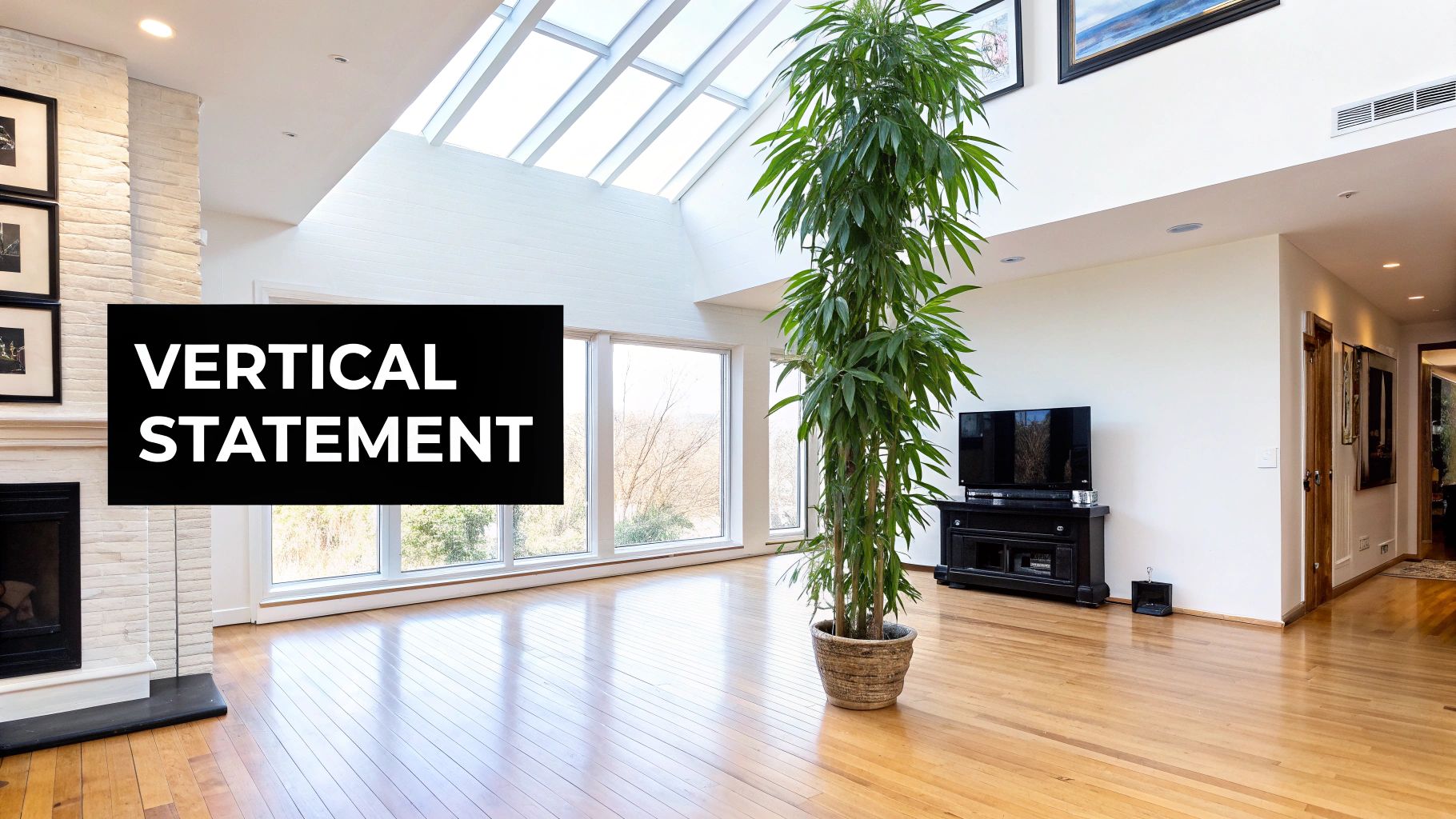
The vast, empty walls of a high ceiling living room aren’t a problem to be solved; they are your single greatest design opportunity. These soaring vertical planes are a blank canvas, inviting you to make a bold statement that defines the entire character of your space. The key is to think beyond standard decor and embrace strategies that celebrate height with intention and artistry.
Instead of scattering small pieces that just get lost in the expanse, our goal is to create powerful focal points that draw the eye upward. This creates a visual journey from the floor to the ceiling, making the room feel cohesive, considered, and complete.
Making a Statement with Large-Scale Art
A common mistake I see in tall rooms is hanging conventionally sized art at a standard height. This only makes the emptiness above feel more pronounced. To truly command the space, you need artwork with significant scale and presence. A single, oversized painting or a dramatic photographic print can anchor an entire wall, infusing the room with color, texture, and personality.
When selecting a piece, consider its orientation. A vertically oriented canvas will naturally emphasize the room’s height, guiding the gaze upward. Don’t be afraid to go big—a piece that is 60, 72, or even 84 inches in height can feel perfectly at home on a tall wall, turning it into a gallery-worthy feature. The goal is for the art to feel like an integral part of the architecture, not just an afterthought.
An alternative to a single piece is a vertically arranged gallery wall. This isn’t your standard collection of small frames. Instead, curate a tight grouping of larger works that climb the wall, creating a single, unified visual statement that occupies a significant portion of the vertical space.
Architectural Elements That Add Depth and Character
Beyond surface decoration, you can use architectural interventions to break up monotonous wall expanses and add lasting character. These built-in features become part of the room’s very bones, providing a texture and sense of permanence that art alone cannot.
One of the most effective strategies is installing elegant wall paneling or wainscoting. Traditionally, wainscoting sits on the lower third of a wall, but in a high ceiling living room, you have the creative license to play with that proportion. Extending paneling two-thirds of the way up the wall can create a sophisticated, tailored look that makes the entire room feel more grounded and intimate.
Another powerful architectural move is a dramatic floor-to-ceiling fireplace surround. Extending stone, tile, or plaster from the hearth all the way to the ceiling creates an undeniable focal point that commands attention and adds immense value. For more ideas, you can explore our guide on creating a stunning floor-to-ceiling fireplace feature that can transform a room.
By integrating architectural elements, you are not just decorating the walls—you are enhancing the room’s fundamental structure, adding layers of interest that feel both timeless and intentional.
Bringing Nature and Light Indoors
Living elements can be absolutely transformative in a high-ceiling space. Tall indoor plants—like a majestic Fiddle Leaf Fig, a graceful Kentia Palm, or a towering Bird of Paradise—serve as organic sculptures. They draw the eye upward naturally, connecting the floor to the ceiling while softening the room’s hard architectural lines. Try placing one in a corner or flanking a large window to create a stunning vertical accent.
Oversized mirrors are another essential tool in our kit. A tall, floor-length mirror leaned against a wall not only amplifies light and creates an illusion of even greater depth but also reflects the room’s best features. It acts as a dynamic piece of art, capturing different views and adding a layer of brightness and energy.
The resurgence of high ceilings is closely linked to where design is heading. Forecasts favor voluminous spaces filled with bold, sculptural elements, with projections suggesting that 65% of high-end projects will feature ceilings of 10 feet or more. These heights perfectly accommodate current “fat furniture” trends—think oversized sectionals and voluptuous chairs that need vertical clearance to avoid overwhelming a room. This approach supports a move toward immersive, comfortable environments that prioritize well-being over playing it safe.
Answering Your High-Ceiling Questions
Designing a living room with soaring ceilings is exciting, but it often brings up some very practical questions. Getting the details right—from window treatments to paint choices—is what separates a well-executed space from one that just feels… big.
Let’s walk through some of the most common questions clients and designers face.
How High Should My Curtains Be?
When you have all that vertical real estate, the rule is simple: go high and wide.
Mount your curtain rod just a few inches below the ceiling line or crown molding. Don’t stop at the edge of the window frame, either—extend the rod 6 to 12 inches beyond it on both sides. This simple trick makes your windows feel more expansive and grand, a perfect complement to the room’s height.
As for length, you have two elegant options. The fabric can just touch the floor for a clean, tailored look, or it can “puddle” slightly for a more romantic, luxurious feel. The one thing to avoid is high-water curtains; drapes that stop at the windowsill or hover above the floor will visually chop up the wall and defeat the purpose of that beautiful height.
What’s the Best Approach for Painting High Walls?
Painting a room with tall walls isn’t just about color; it’s about strategy. You’re essentially deciding how you want to handle all that volume.
- Create a Seamless Look: Painting the walls and ceiling the same color (or a very subtle variation) can make the space feel cohesive and boundless. This works wonders with lighter, softer colors, creating an airy, cloud-like effect that lets the architecture speak for itself.
- Add Definition with Contrast: The classic approach is a crisp white ceiling paired with a color on the walls. This keeps the room feeling bright and open. But for a more dramatic, intimate vibe, consider going darker on the ceiling. It can visually lower the ceiling just enough to make a vast room feel a bit cozier and more grounded.
A Quick Pro Tip: Always, always use a matte or flat finish on a high ceiling. Any hint of sheen will catch the light in unflattering ways and highlight every tiny imperfection, which becomes much more obvious on a large, uninterrupted surface.
Is Recessed Lighting Really Necessary?
Think of lighting in layers. While a show-stopping chandelier might be the star, recessed lighting is the indispensable supporting cast. It’s not strictly mandatory, but I almost always recommend it for a high-ceilinged room.
Recessed lighting provides the foundational ambient light that a single central fixture simply can’t. You can use it to wash walls in a soft glow, brighten up distant corners, or just ensure the entire space is evenly and beautifully lit. It’s the functional workhorse that makes sure your room works just as well for a quiet Tuesday night as it does for a Saturday evening party.
Are you an architect or designer looking to showcase your expertise in creating breathtaking luxury spaces? Join the Haute Design network to connect with affluent clients who value exceptional design. Become a member today and elevate your brand.