


In the world of luxury architecture, a stunning portfolio is only half the equation. The other half is built on relationships with clients, developers, brand partners, and influential peers. Strategic networking isn’t just about exchanging business cards; it’s about building a powerful ecosystem of opportunities. However, navigating the crowded landscape of industry gatherings can be overwhelming, making it difficult to discern which events will deliver a true return on investment.
The key is to invest your time and resources in the right places, selecting events that attract the right audience and offer genuine value. This guide curates the seven most effective platforms and architect networking events for 2025. It provides a strategic roadmap for practitioners who want to connect with purpose, from exclusive, high-net-worth circles to vital cross-disciplinary summits. We’ve eliminated the guesswork so you can focus on forging meaningful professional connections.
You will discover a mix of national conferences, regional trade shows, prestigious awards ceremonies, and specialized meetups tailored to the luxury design and architecture sector. Each entry details the target audience, typical timing, and why it matters for high-end architects. More importantly, this resource is designed for action. We provide direct links to each organization’s event calendar, offering a clear path to registration and participation. Consider this your essential guide to building the relationships that define a premier firm.
1. Haute Design
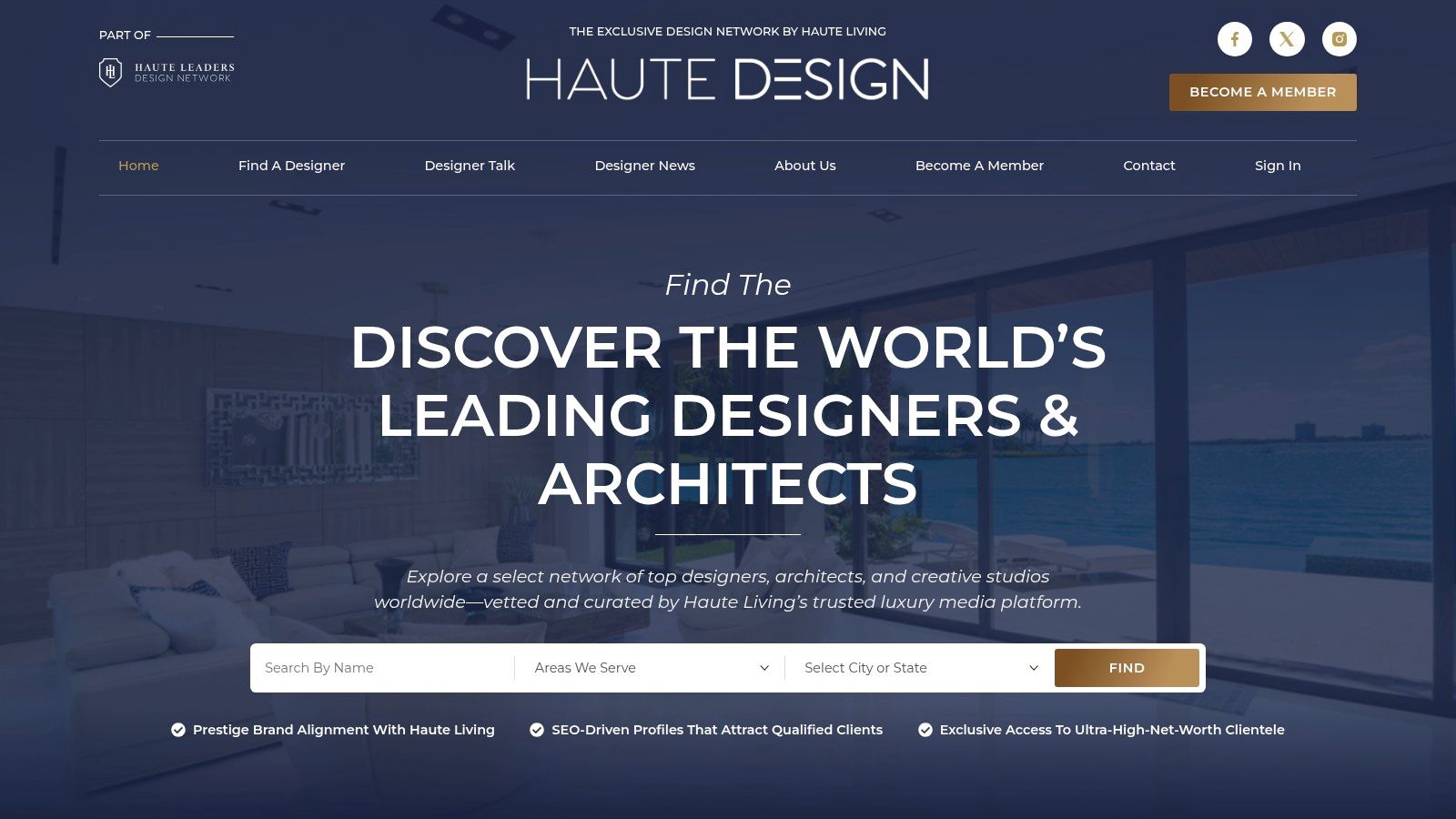
For established architects and luxury design firms, networking is less about volume and more about caliber. Haute Design, an exclusive, invitation-only network by the publishers of Haute Living, is engineered specifically for this purpose. It transcends a simple directory, functioning as a high-powered ecosystem that connects pre-vetted design professionals with an ultra-affluent clientele, developers, and influential industry partners. Its foundation in luxury media gives it a distinct advantage, positioning it as a premier platform for architects seeking not just leads, but brand-defining opportunities.
Haute Design is built on a legacy of trust and prestige, leveraging Haute Living’s two-decade reputation in the luxury market. This isn’t a platform where any firm can simply buy a listing; membership is a curated process. Professionals are hand-selected, ensuring that everyone within the network, from Kobi Karp Architects to Heather Hilliard Design, represents the pinnacle of the industry. This meticulous vetting process is the core of its value proposition, making the Haute Design badge a powerful symbol of credibility and excellence.
Core Features & Networking Advantages
The platform’s strength lies in its multi-faceted approach to creating meaningful connections and elevating a member’s brand presence.
- Exclusive Event Access: Members receive invitations to private Haute Leaders and Haute Design events. These are not typical trade shows; they are intimate gatherings that facilitate direct, high-level networking with ultra-high-net-worth individuals, real estate developers, and fellow industry titans in a sophisticated setting. This makes it one of the most effective architect networking events for forging powerful, direct relationships.
- Targeted Digital Exposure: Each member receives a professionally crafted, SEO-optimized profile designed to attract qualified, high-value leads. These profiles serve as more than a simple listing; they are comprehensive digital brochures. For a closer look at how top-tier firms present their work, you can review some of the best architecture portfolio website examples featured within the Haute Design network.
- Powerful Editorial Integration: Leveraging its media powerhouse status, Haute Design provides unparalleled editorial opportunities. Members are featured in Design Spotlight interviews and other content across Haute Living’s digital platforms, providing national exposure and third-party validation that money can’t typically buy. This alignment with a respected luxury publication significantly enhances a firm’s brand equity.
- A Curated, Multi-Disciplinary Network: The platform covers a wide array of specialties, including interior design, home building, landscape architecture, and more. This creates a powerful referral ecosystem where top-tier architects can connect with vetted professionals in adjacent fields to collaborate on large-scale luxury projects.
Who Is It For?
Haute Design is unequivocally tailored for established, high-end architecture and design firms. It is the ideal solution for practices that have already built a significant portfolio and are now focused on attracting premier projects and aligning their brand with the pinnacle of the luxury market. Emerging firms or those with a budget-centric model may find the selective nature and undisclosed pricing to be a barrier.
Access and Pricing
Membership to the Haute Design network is by invitation or application, followed by a vetting process. Pricing and specific membership tiers are not publicly available. Interested professionals must contact the Haute Design team directly through their website for a consultation to discuss costs, benefits, and eligibility. This exclusivity is part of its appeal, ensuring the network remains a concentrated group of elite professionals.
Website: https://hauteliving.com/designnetwork
2. American Institute of Architects (AIA)
As the foremost professional organization for licensed architects in the United States, the American Institute of Architects (AIA) serves as the industry’s gold standard for professionally organized architect networking events. Its platform is less of a singular event and more of a comprehensive ecosystem, offering a centralized calendar that spans national conferences, regional symposiums, and local chapter meetups, both in-person and virtual. This makes it an indispensable resource for architects seeking credentialed, high-value engagement.
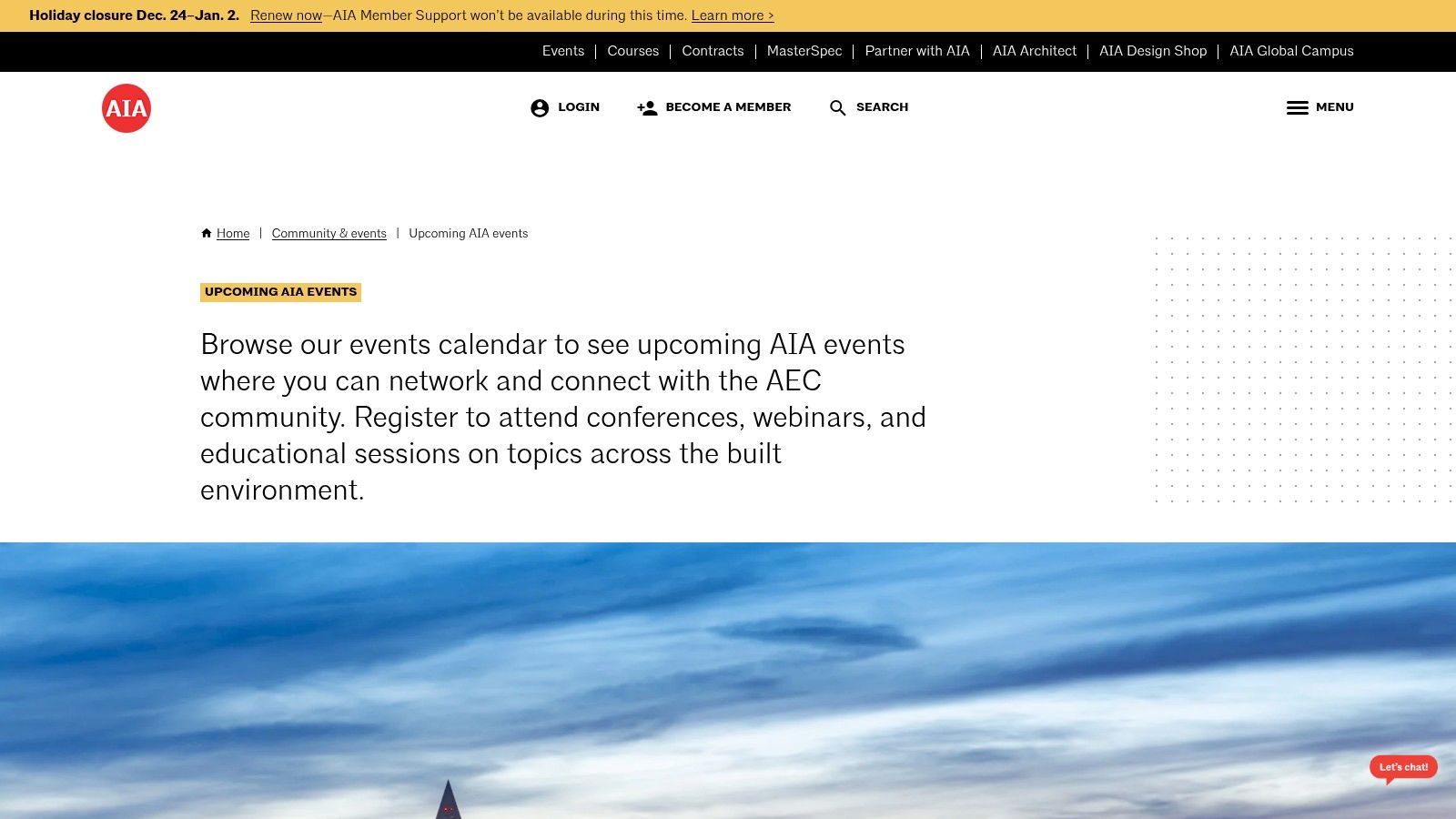
The crown jewel is the annual AIA Conference on Architecture & Design, a multi-day spectacle that draws thousands of firm leaders, emerging professionals, and industry partners. Beyond keynotes and an expansive expo floor, the conference offers architectural tours and specialized seminars, creating organic opportunities for connection. What truly sets the AIA apart is its integration of continuing education units (CEUs) into its programming, allowing professionals to fulfill licensure requirements while expanding their networks.
Maximizing the AIA Platform for Networking
To leverage the AIA effectively, think beyond just attending the national conference. The real value for many luxury architects lies in the curated, smaller-scale events hosted by local and state chapters. These gatherings often attract regional leaders and stakeholders in a more intimate setting.
- Strategic Filtering: Use the AIA events calendar’s filters to find niche events. Search for topics like “custom residential,” “historic preservation,” or “sustainability” to connect with architects who share your specific interests.
- CEU as a Connector: Don’t just attend CEU sessions passively. Arrive early and stay late to discuss the material with fellow attendees. These shared educational experiences provide a natural and professional conversation starter.
- Committee Involvement: For deeper, long-term connections, consider joining a local AIA chapter committee. This positions you as a dedicated industry leader and provides consistent interaction with influential peers. This proactive involvement is a powerful component of a successful strategy for marketing your architectural services to a discerning clientele.
Key Event Details
| Feature | Description |
|---|---|
| Primary Audience | Licensed architects, firm principals, emerging professionals, architecture students, and industry partners. |
| Event Type | National conference, regional meetings, local chapter events, virtual seminars, and workshops. |
| Pricing & Access | Varies by event. The national conference has tiered pricing for members and non-members. Local chapter events are often more affordable or free for members. |
| Unique Offering | A high concentration of licensed professionals and the seamless integration of AIA HSW/LU credits (CEUs) into networking opportunities. |
| Sponsor Presence | High at the national level, featuring major building material manufacturers, software companies, and service providers. |
Website: https://www.aia.org/community/events
3. Eventbrite (Architecture/AEC networking)
While dedicated industry organizations provide curated calendars, Eventbrite acts as a vast, decentralized marketplace for a diverse range of architect networking events. As a leading global ticketing platform, its strength lies in its sheer volume and variety, hosting everything from local AIA chapter happy hours and product showroom launches to independent AEC (Architecture, Engineering, and Construction) industry mixers. This makes it an essential tool for discovering hyper-local and niche opportunities that might not appear on larger, national calendars.
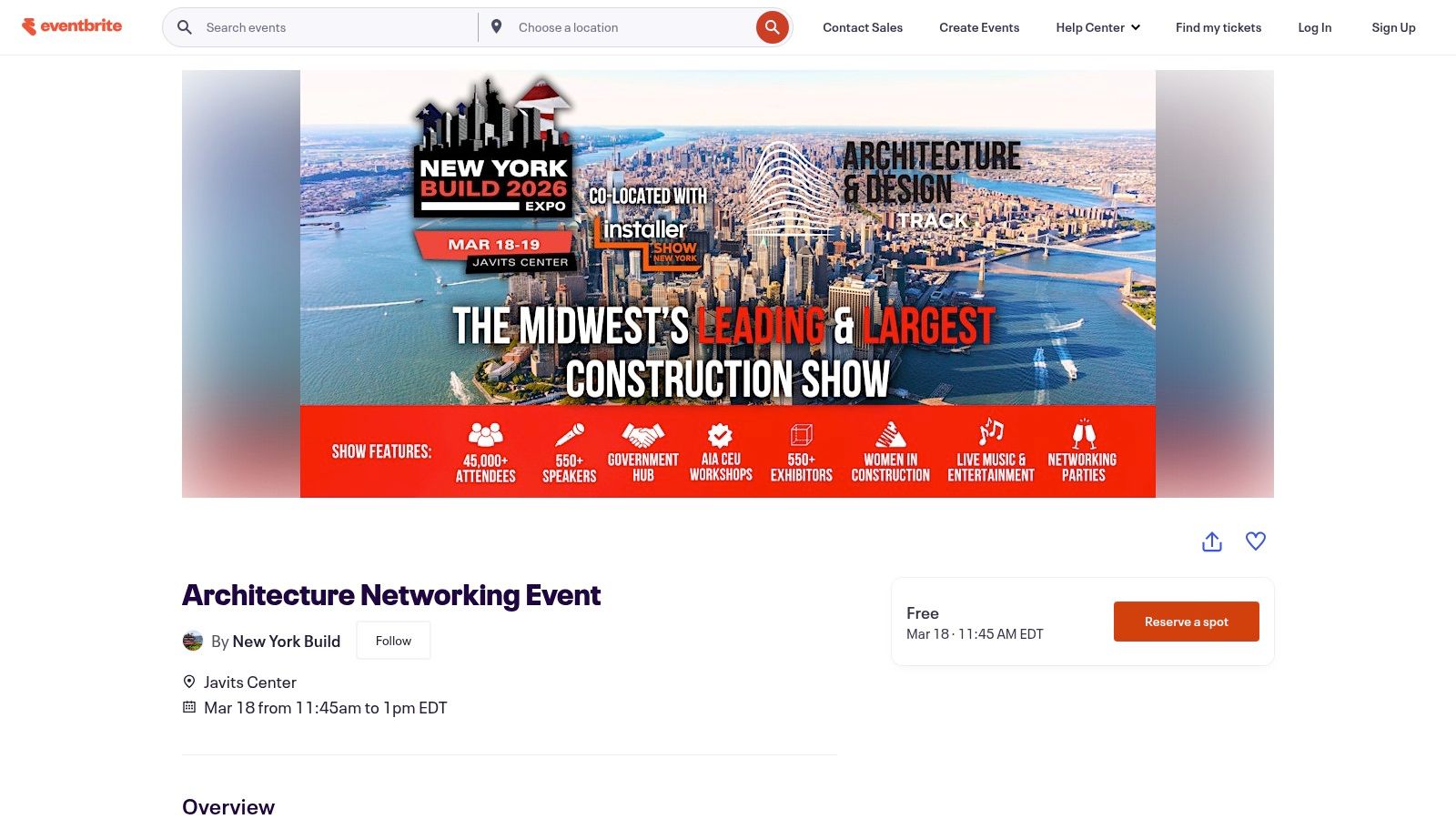
Eventbrite empowers individual organizers, meaning the quality and focus can vary significantly. However, for the discerning architect, this is also its advantage. You can find intimate panel discussions, emerging technology showcases, or specialized building-science talks organized by passionate local leaders. The platform’s user-friendly interface, with instant ticket delivery and mobile entry, simplifies the process of discovering and attending multiple events across different cities.
Maximizing the Eventbrite Platform for Networking
Success on Eventbrite requires a proactive and discerning approach. Since it’s an open marketplace, the onus is on you to filter for quality and relevance.
- Refined Keyword Searches: Go beyond a simple “architecture” search. Use specific terms like “Passive House,” “luxury residential design,” “AEC tech,” or “architect mixer” combined with your city name to uncover highly relevant gatherings.
- Vet the Organizer: Before registering, scrutinize the event organizer’s profile. Are they a reputable industry association, a respected firm, or a known consultant? A quick background check can help you distinguish high-value events from purely social or sales-oriented ones.
- Leverage “Side Events”: Pay close attention to events scheduled around major conferences or trade shows. Many brands and smaller groups host exclusive VIP mixers or after-parties, listing them on Eventbrite to manage RSVPs. These can offer more valuable networking than the main event itself. This approach can also be a key part of leveraging the best platforms to find architects by being present where they gather.
Key Event Details
| Feature | Description |
|---|---|
| Primary Audience | Varies widely by event: architects, designers, engineers, contractors, real estate professionals, students, and tech vendors. |
| Event Type | Local mixers, panel discussions, product launches, workshops, showroom openings, and conference side-events. |
| Pricing & Access | Broad range, from free RSVPs to paid tickets for workshops or galas. Access is open to anyone who registers via the platform. |
| Unique Offering | The largest volume and variety of hyper-local and niche AEC-related events, including many free or low-cost opportunities. |
| Sponsor Presence | Highly variable. Can range from no sponsors at grassroots meetups to significant brand presence at product launches or trade-show mixers. |
Website: https://www.eventbrite.com/
4. Meetup (Architecture/Design Groups)
While large-scale conferences offer high-impact engagement, Meetup provides a platform for consistent, ground-level architect networking events that are more informal and community-driven. It hosts a wide array of grassroots, recurring groups for architecture, urban design, and AEC professionals in cities across the country. These gatherings range from casual happy hours and firm tours to sketch walks and lectures, making it an excellent tool for continuous, low-pressure local relationship-building.
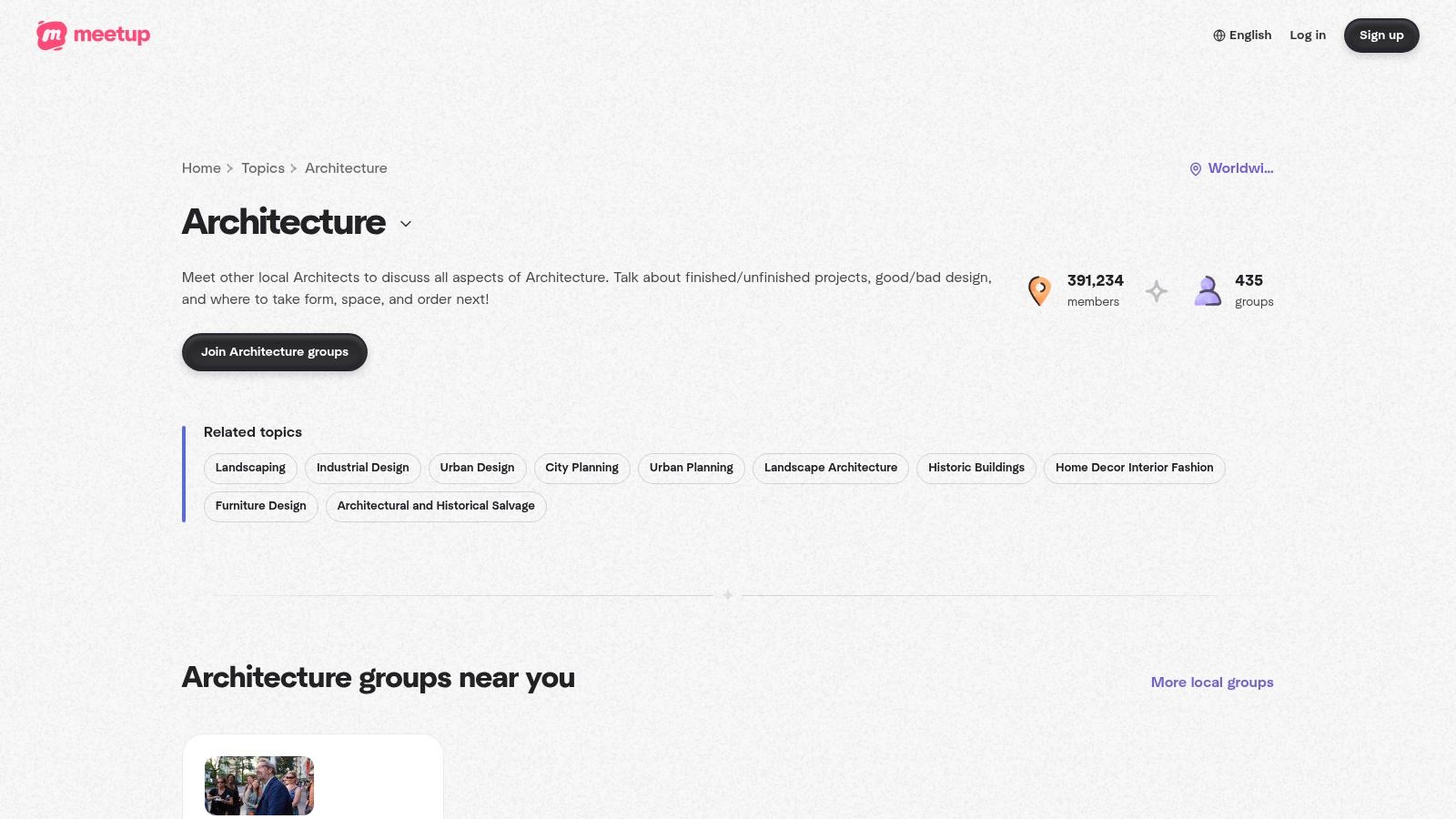
Meetup’s strength lies in its accessibility and frequency. Unlike annual or biennial events, active groups on the platform often host monthly or even weekly gatherings, allowing for the steady cultivation of professional relationships. This format is particularly beneficial for emerging professionals, architects new to a city, or those looking to connect with the local design community outside of formal industry obligations. The focus is less on lead generation and more on building genuine connections with peers who share a passion for the built environment.
Maximizing the Meetup Platform for Networking
Success on Meetup requires a more proactive and selective approach than with traditional industry organizations. The key is to find and engage with high-quality groups that align with your professional goals.
- Vet the Organizers: Before joining a group, look at the organizers’ professional backgrounds and the group’s past events. Groups led by practicing architects or established designers tend to attract a more professionally relevant audience.
- Diversify Your Attendance: Don’t limit yourself to just one “architecture” group. Explore related meetups focused on urban planning, real estate development, landscape design, or specific software (like Revit or Rhino user groups) to broaden your network across the AEC spectrum.
- Transition from Attendee to Contributor: The most valuable connections are often made by taking on a more active role. Offer to host a tour of your firm, volunteer to organize a future event, or present a short talk on a recent project or area of expertise. This demonstrates leadership and deepens your local industry presence.
Key Event Details
| Feature | Description |
|---|---|
| Primary Audience | Varies by group; typically includes architects, designers, students, urbanists, engineers, and design enthusiasts. |
| Event Type | Local in-person gatherings, happy hours, firm or project tours, lectures, urban walks, and virtual discussions. |
| Pricing & Access | Most events are free or have a low cost to cover minimal expenses. Access is open to anyone who joins the specific group on the platform. |
| Unique Offering | Consistent, informal, and hyper-local networking opportunities that facilitate ongoing relationship building in a low-pressure environment. |
| Sponsor Presence | Low to non-existent. Events are typically community-organized rather than corporate-sponsored. |
Website: https://www.meetup.com/topics/architecture/
5. Archinect Events
While large organizations offer structured conferences, Archinect Events provides a more curated and editorially-driven feed of architect networking events. Functioning as a high-quality aggregator, its platform focuses on the cultural and academic side of the industry, listing exhibitions, lectures, and symposiums often overlooked by larger professional bodies. This makes it an essential resource for architects seeking inspiration and connection within the creative and intellectual spheres of their profession.
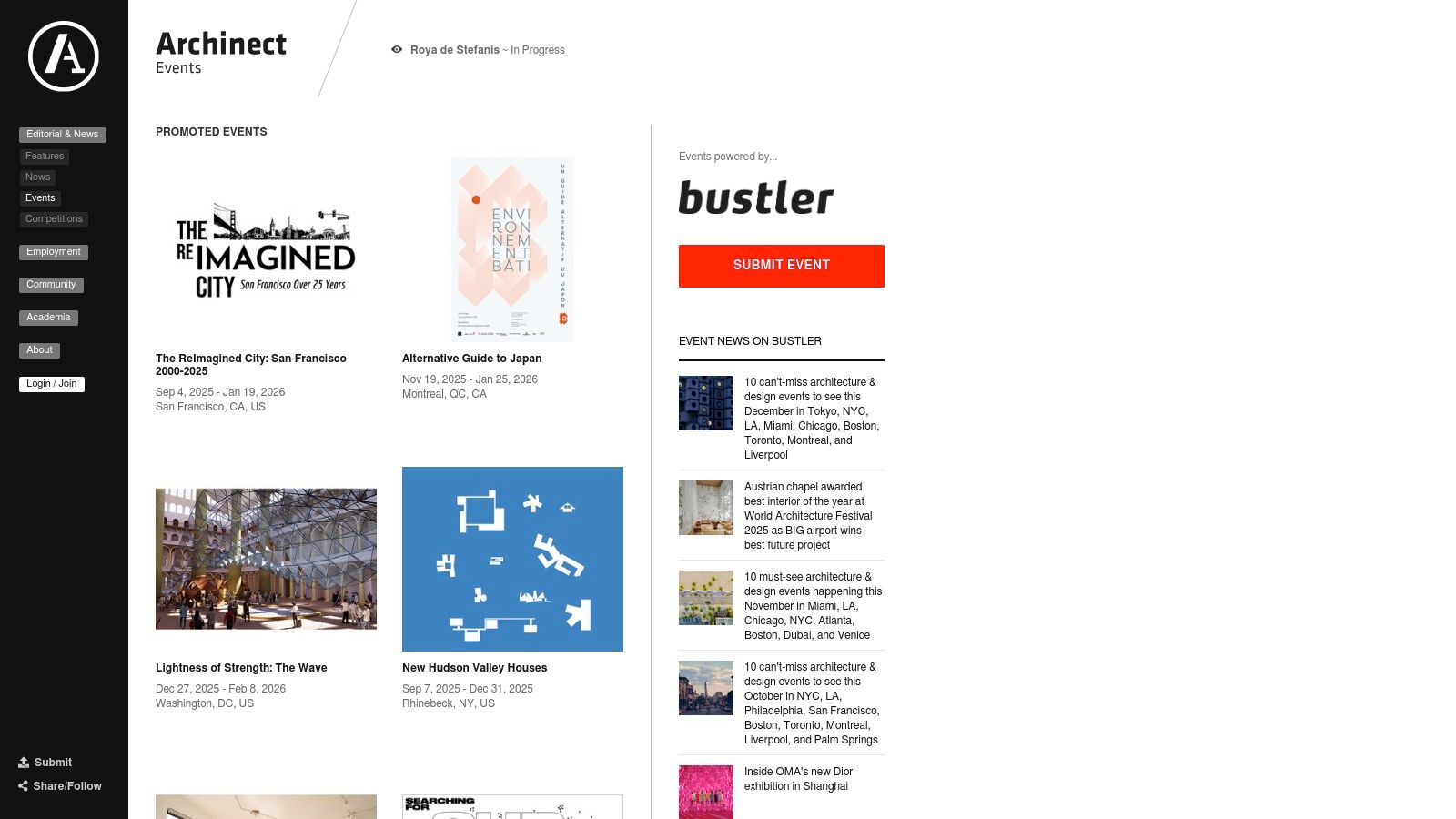
Archinect distinguishes itself by filtering out the noise of general business mixers, presenting a calendar rich with design-centric happenings. You’ll find listings for university lectures from visiting Pritzker Prize laureates, gallery openings featuring architectural photography, and city-specific design weeks. Because it aggregates events from museums, schools, and cultural institutions, Archinect offers access to networking environments that are less about direct sales and more about shared intellectual and aesthetic interests, fostering more organic conversations.
Maximizing the Archinect Platform for Networking
Success with Archinect involves using its feed as a discovery tool to access unique, high-quality gatherings. The key is to look beyond conventional conferences and embrace the diverse opportunities it highlights.
- Geographic Targeting: Use the platform’s location-based search to identify compelling events in your city or regions you plan to visit. This is an excellent way to connect with the local design community when traveling for a project.
- Follow the Institution: Pay attention to the hosting institutions, such as prominent architecture schools or museums. Attending their events consistently helps you build relationships with academic leaders and cultural tastemakers in the field.
- Prepare for Deeper Conversations: Events listed on Archinect, like a panel discussion on parametric design or a book launch, attract a self-selecting, intellectually curious audience. Come prepared to discuss concepts and ideas, not just your portfolio. This shift in focus can lead to more memorable and meaningful professional connections.
Key Event Details
| Feature | Description |
|---|---|
| Primary Audience | Academics, architecture students, design enthusiasts, and practicing architects interested in the cultural and theoretical side of the profession. |
| Event Type | Lectures, exhibitions, book launches, film screenings, academic symposiums, and design festivals. |
| Pricing & Access | Varies widely. Many listed events, such as university lectures, are free and open to the public. Others, like festivals, require tickets purchased through the host’s site. |
| Unique Offering | A curated calendar focused on culturally and academically significant events, providing a strong signal-to-noise ratio for architects. |
| Sponsor Presence | Generally low to none. The focus is on the content and presenters rather than a trade show floor, creating a more relaxed networking environment. |
Website: https://archinect.com/events
6. Urban Land Institute (ULI)
For architects whose work intersects with real estate development, urban planning, and investment, the Urban Land Institute (ULI) offers unparalleled architect networking events. ULI is not an architecture-centric organization; rather, it is a cross-disciplinary platform that brings together the full spectrum of real estate and land use professionals. This unique focus makes it an essential resource for architects looking to connect directly with the developers, investors, and public-sector leaders who commission large-scale and high-value projects.
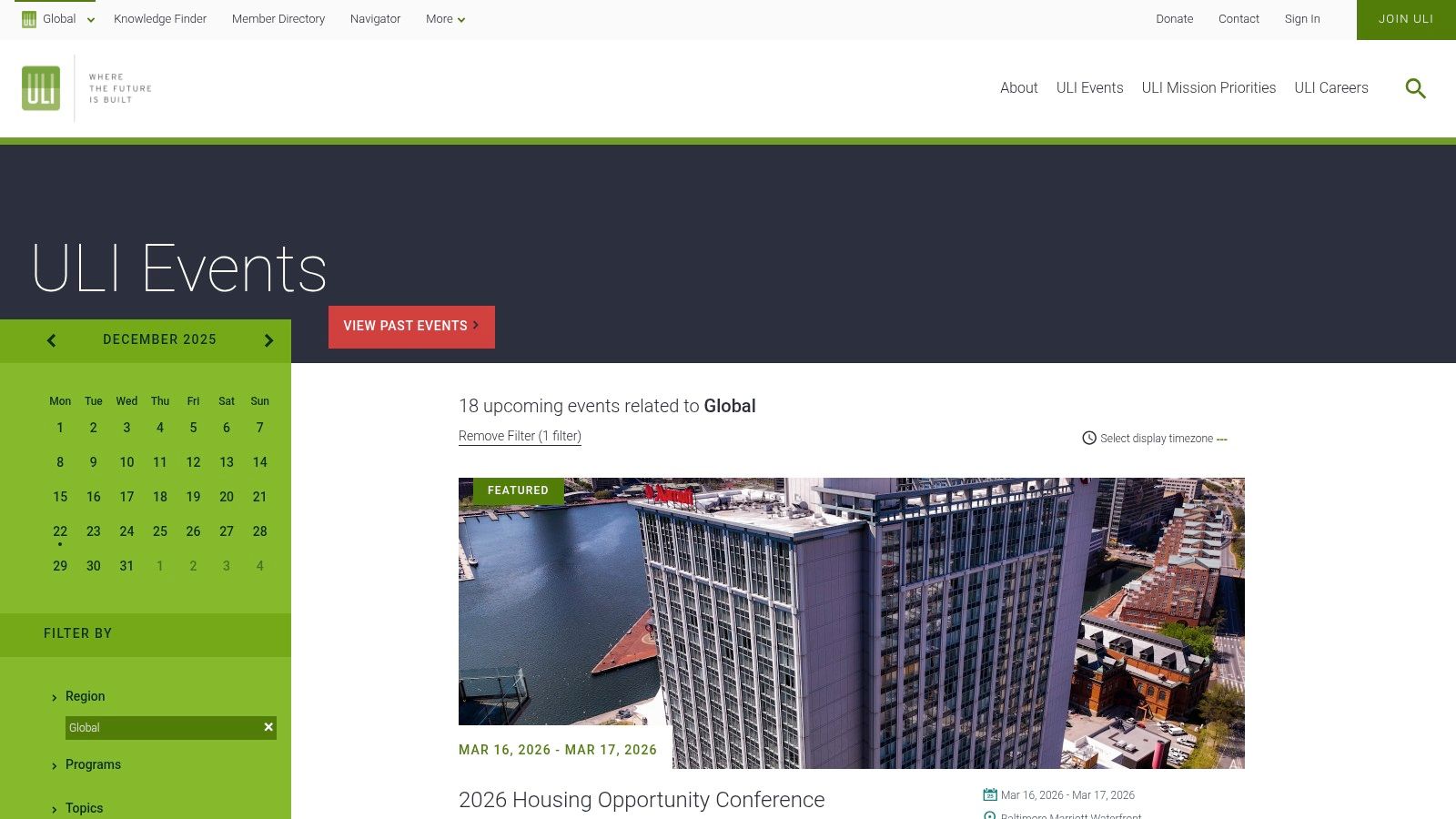
ULI’s event ecosystem is anchored by major national gatherings like its Spring and Fall Meetings, which attract thousands of industry heavyweights for high-level sessions, project tours, and structured networking. However, the real strength of the ULI platform lies in the year-round programming offered by its local District Councils across the country. These local events, from intimate panel discussions to site tours and social mixers, provide consistent and direct access to the decision-makers shaping the built environment in a specific region.
Maximizing the ULI Platform for Networking
To leverage ULI effectively, an architect must shift their focus from pure design discourse to the broader language of development, finance, and policy. Success here means understanding and engaging with the business drivers behind architectural projects.
- Target Local District Councils: While national meetings are impressive, consistent participation in your local ULI District Council events is key. This builds familiarity and trust with the regional developers and public officials who are your most likely future clients.
- Speak the Language of Development: Attend sessions on real estate finance, market trends, and public-private partnerships. Engaging in these conversations demonstrates that you are not just a designer but a strategic partner who understands the economic context of a project.
- Leverage Project Tours: ULI events frequently include exclusive tours of new developments. Use these as an opportunity to ask insightful questions of the project’s development team, demonstrating your expertise and initiating conversations with potential collaborators.
Key Event Details
| Feature | Description |
|---|---|
| Primary Audience | Real estate developers, investors, financiers, planners, public officials, brokers, and architects focused on commercial and urban projects. |
| Event Type | National meetings, regional conferences, and year-round local District Council events (panels, tours, mixers). |
| Pricing & Access | Varies significantly. National meetings have higher registration fees, with substantial discounts for ULI members. Many local events are affordable or member-exclusive. |
| Unique Offering | Direct access to the capital and decision-makers on the development side of the industry, bridging the gap between design and real estate business. |
| Sponsor Presence | High, featuring major development firms, financial institutions, law firms, and engineering companies rather than just building product manufacturers. |
Website: https://uli.org/events/
7. National Organization of Minority Architects (NOMA)
The National Organization of Minority Architects (NOMA) champions diversity and inclusion within the design professions, creating powerful and essential architect networking events. Its platform is a vital hub for minority architects to connect, find mentorship, and build partnerships, offering a national conference and an active network of local chapters. NOMA provides a supportive and collaborative environment focused on professional development, community advocacy, and celebrating the achievements of its members.
The cornerstone of its offerings is the annual NOMA Conference, a multi-day event that brings together professionals, students, and firm leaders from across the country. The conference features inspiring keynotes, practical workshops, and numerous social functions designed to foster genuine connections. What distinguishes NOMA is its dedicated focus on DEI-centric programming, creating a unique space for conversations and collaborations that might not happen elsewhere, while also offering sessions eligible for AIA continuing education credits.
Maximizing the NOMA Platform for Networking
To fully leverage NOMA’s resources, architects should engage at both the national and local levels. The national conference is a fantastic opportunity for broad exposure, while local chapter events provide consistent, relationship-building interactions within your immediate professional community.
- Engage with Local Chapters: Actively participate in your regional NOMA chapter. These groups host year-round mixers, panel discussions, and community projects that are invaluable for building a strong local network and finding regional collaborators.
- Focus on Mentorship: NOMA’s culture strongly emphasizes mentorship. Use events to connect with both seasoned professionals and emerging talent. Offering guidance or seeking advice is a respected and effective way to initiate meaningful professional relationships.
- Participate in DEI Discussions: Lean into the DEI-focused programming. These sessions attract passionate and forward-thinking leaders. Participating in these conversations can help you identify like-minded professionals and firms that are ideal partners for inclusive and community-focused projects.
Key Event Details
| Feature | Description |
|---|---|
| Primary Audience | Minority architects, firm principals, emerging professionals, architecture students, and firms committed to diversity, equity, and inclusion. |
| Event Type | National annual conference, local chapter mixers, regional symposia, virtual workshops, and award ceremonies. |
| Pricing & Access | Conference registration has tiered pricing for NOMA members, non-members, and students. Local chapter events are often low-cost or free for members. |
| Unique Offering | A strong, supportive community with DEI-focused programming, creating unparalleled opportunities for inclusive recruiting, mentorship, and business partnerships. |
| Sponsor Presence | Significant at the national conference, with a mix of design firms, manufacturers, and technology companies actively recruiting and building relationships. |
Website: https://www.noma.net/
Architect Networking Events: 7-Way Comparison
| Item | 🔄 Implementation complexity | ⚡ Resource requirements | 📊 Expected outcomes | 💡 Ideal use cases | ⭐ Key advantages |
|---|---|---|---|---|---|
| Haute Design | Selective vetting; high‑touch onboarding | High — paid membership, application time (pricing undisclosed) | High‑quality UHNW leads, editorial & SEO visibility | Established luxury firms seeking UHNW clients and prestige | Direct access to ultra‑high‑net‑worth audience; curated credibility |
| American Institute of Architects (AIA) | Formal membership/event registration; CEU processes | Moderate — membership & conference fees, travel/time | Professional networking, CE credits, industry visibility | Licensed architects pursuing CEUs and large‑scale professional networking | Large, reputable professional body; structured, CE‑eligible events |
| Eventbrite (Architecture/AEC) | Low — self‑service discovery and registration | Low — many free/low‑cost events; organizer fees vary | Broad contact variety; mixed lead quality depending on event | Finding diverse local or one‑off architecture/AEC events | Largest volume of listings; easy RSVP and ticketing |
| Meetup (Architecture/Design) | Very low — join groups, RSVP to recurring meetups | Very low — mostly free or low‑cost; local time investment | Local, informal relationships and steady networking | Early‑career pros or new‑to‑town building local networks | Consistent low‑pressure networking; practitioner‑hosted gatherings |
| Archinect Events | Low‑moderate — curated listings, external registration | Low — free listings; tickets usually via host sites | Targeted architect‑centric events and editorial highlights | Architects seeking discipline‑specific talks, exhibitions, festivals | High signal‑to‑noise for architecture programming; editorial curation |
| Urban Land Institute (ULI) | Moderate — membership and structured events | Moderate‑high — membership, event fees, travel | Cross‑disciplinary connections with developers and investors | Architects engaging with development, investment, and policy communities | Access to real‑estate/development networks and local chapters |
| National Organization of Minority Architects (NOMA) | Moderate — chapter membership and national conference | Moderate — membership and conference travel | Inclusive community, mentorship, recruitment and some CEUs | Professionals seeking DEI‑focused networks, mentorship, partnerships | Strong DEI community; multiple networking entry points and mentorship |
Build Your Network, Elevate Your Practice
Navigating the landscape of architect networking events is not merely about collecting business cards; it’s a strategic initiative to build the very foundation of your practice’s future. Throughout this guide, we’ve explored a diverse ecosystem of opportunities, from the broad, institutional reach of the American Institute of Architects (AIA) and the Urban Land Institute (ULI) to the grassroots, community-focused platforms of Meetup and Eventbrite. Each tool offers a unique value proposition, a distinct pathway to connect with peers, mentors, and potential collaborators who can shape your professional trajectory.
The key takeaway is that a truly effective networking strategy is not monolithic. It is a carefully calibrated blend of high-volume exposure and high-value, targeted engagement. Attending a major national conference might introduce you to hundreds of industry professionals, while a niche Archinect gathering or a NOMA chapter meeting could foster the deep, authentic connections that lead to landmark projects and lifelong partnerships. The modern architect must be agile, leveraging multiple platforms to build a resilient, multi-faceted professional network.
From Strategy to Action: Architecting Your Networking Plan
Transforming these insights into tangible results requires a deliberate and personalized approach. Your selection of architect networking events should be a direct reflection of your firm’s specific goals, whether that’s breaking into a new market, specializing in sustainable design, or securing commissions in the ultra-luxury residential sector.
Consider these critical factors as you build your annual networking calendar:
- Audience Alignment: Who do you need to meet? If your focus is high-end residential projects, an event geared toward commercial real estate developers may not be the most efficient use of your time. Platforms that curate their audience, like Haute Design, ensure every conversation is with a relevant, high-potential contact.
- Scale and Scope: Are you looking for broad industry visibility or intimate, in-depth discussions? A mix is often ideal. Use large trade shows for market research and trend-spotting, and reserve smaller, more exclusive events for building substantive relationships with key decision-makers.
- Return on Investment (ROI): Your investment isn’t just financial; it’s also your most valuable asset, your time. Calculate the potential return not just in new leads, but in knowledge gained, brand equity built, and strategic alliances formed. A single high-quality connection from a premium event can deliver more value than dozens of fleeting interactions at a general-interest meetup.
The Power of Curation in Luxury Design
For architects and designers operating in the luxury space, the quality of your network is paramount. Your brand is defined by the projects you create and the company you keep. This is where a curated community becomes an indispensable business tool. General networking platforms serve a purpose, but they cannot replicate the focused environment of an exclusive, vetted network.
By placing yourself in rooms where your ideal clients, partners, and collaborators are already gathered, you dramatically shorten the path from introduction to opportunity. It’s about working smarter, not just networking harder.
Engaging with a specialized network like Haute Design moves beyond simple lead generation. It is an act of brand positioning. It signals to the market that you are a peer among the elite, a practitioner at the pinnacle of the design world. These exclusive architect networking events provide a direct conduit to the ultra-high-net-worth individuals and top-tier developers who commission the industry’s most sought-after projects. By strategically combining broad industry engagement with these targeted, high-caliber opportunities, you can construct a powerful, self-sustaining ecosystem for your practice, ensuring a future defined by growth, influence, and exceptional design.
Ready to access a network built exclusively for the pinnacle of the design industry? Join Haute Design to connect with elite architects, affluent clientele, and premier developers at our exclusive, members-only architect networking events. Elevate your practice by securing your place among the best at Haute Design.