


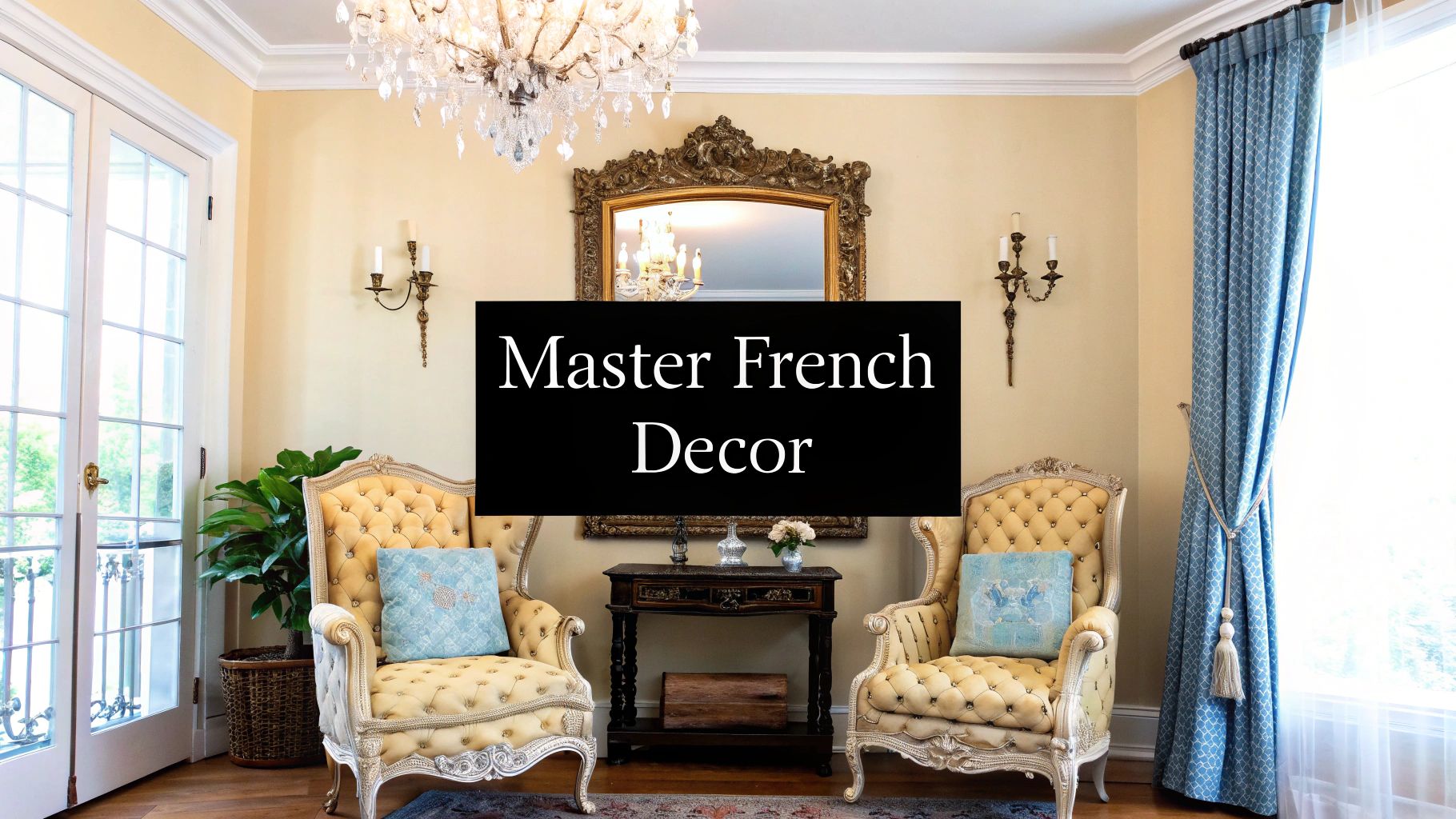
French style is, at its core, the art of creating a home that feels both impossibly elegant and utterly effortless. It’s a design language built on the idea of quality over quantity, where a treasured antique can share the same space with a sleek modern sofa, creating a look that feels collected over a lifetime, not just decorated in a weekend. The result is a home that’s personal, timeless, and deeply inviting.
The Timeless Allure of French Interior Design
The entire philosophy of French design can be captured in one beautiful phrase: ‘art de vivre’—the art of living. This isn’t just about decorating; it’s about crafting an environment that celebrates beauty, comfort, and the stories of your own life. The goal is never a flawless, untouchable showroom. Instead, it’s about curating a space that reflects a life well-lived, complete with all its beautiful imperfections.
This is a style that feels so authentic because it’s built on pieces with a soul. A giltwood mirror with a bit of tarnish, a deeply comfortable linen sofa, a beloved family heirloom—these are the stars of the show, valued far more than any mass-produced trend. Every object is chosen for its history, its craftsmanship, or its personal meaning, weaving together a rich, layered narrative within the walls of your home.
Embracing Perfectly Imperfect Spaces
One of the most captivating secrets to French style is its wholehearted embrace of imperfection. This is what keeps it from ever feeling stuffy or overly formal. It’s a masterclass in balance: the undeniable grandeur of ornate crown molding is brought back down to earth by the rustic texture of an old wooden farmhouse table.
The magic of French design lies in its ability to mix the opulent with the humble, the old with the new. It’s a curated dance between elegance and ease, where nothing is too perfect or precious to be used and enjoyed.
This approach ensures a home feels both welcoming and genuinely usable. It’s a look that has been honed over centuries, yet somehow it always feels fresh and relevant today. The key is learning to blend these different elements with confidence, creating a space that could only belong to you. Understanding how to mix aesthetics is a crucial skill, and our essential interior design style guide can help you master the art.
Core Tenets of the French Aesthetic
To really get this look right, you need to understand the foundational ideas that guide the French approach to design. It all starts here.
- Investment in Quality: Focus on acquiring well-made furniture and authentic materials. Things like solid wood, natural stone, and beautiful linens only get better with age.
- A Neutral Foundation: Walls are almost always a soft, neutral canvas—think creamy whites, warm grays, or subtle beiges. This calm backdrop makes the architecture and the furnishings the true focus.
- A Mix of Eras: The most sophisticated French interiors are never a time capsule. They effortlessly combine antique, vintage, and contemporary pieces to create a dynamic and timeless dialogue between the past and present.
Exploring the Spectrum of French Interior Styles
When we talk about “French style,” it’s easy to picture one specific look. But the truth is, French decor isn’t a monolith. It’s more like a family of distinct personalities, all sharing a common heritage of elegance and art de vivre, yet each shaped by its unique environment.
From the grand apartments of Paris to the sun-drenched farmhouses of Provence, the spectrum is rich and varied. Getting to know these nuances is the key. It allows you to either embrace one style wholeheartedly or, more interestingly, borrow elements from each to create a personal, layered interpretation of French living.
At the heart of it all is a shared philosophy. This isn’t just about aesthetics; it’s about a way of life that values quality, history, and the gentle beauty of imperfection.
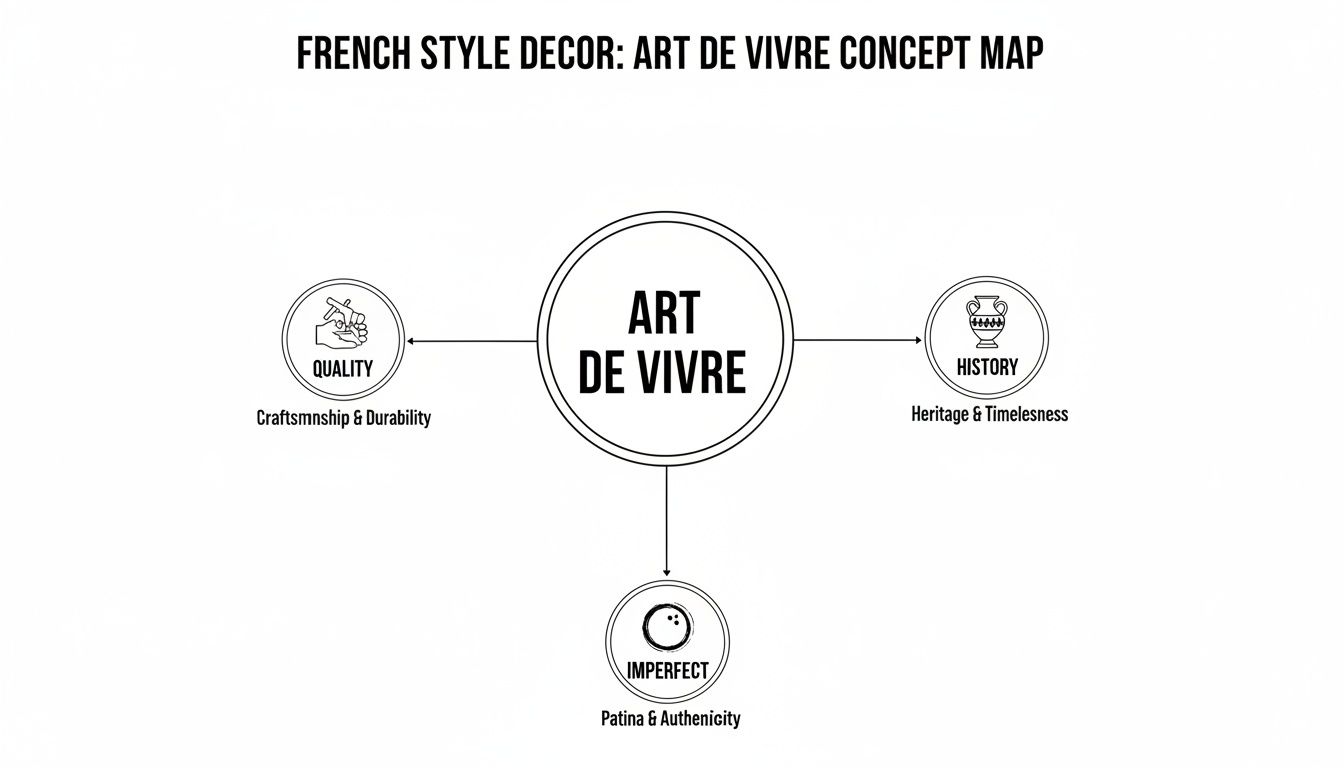
Whether you’re in a city flat or a country estate, the foundation is the same: a deep respect for craftsmanship, for pieces that have a story to tell, and for the kind of patina that only time can bestow.
Parisian Chic: An Urban Symphony
In the heart of the city, we find Parisian Chic. This style is born from its architectural inheritance—the quintessential Haussmannian apartment. Think soaring ceilings, ornate plaster moldings, and classic chevron floors. These aren’t just features; they are the soul of the space, a historic canvas to be honored, not hidden.
The real magic of the Parisian apartment lies in a masterful high-low mix. An extravagant, gilded Louis XVI mirror might hang directly above a clean-lined, contemporary sofa. This juxtaposition is everything. It stops the room from feeling like a stuffy museum and breathes life into it, creating a space that feels both sophisticated and completely of the moment.
The essence of Parisian Chic is restraint. It’s not about how much you can fit into a room, but about curating it with pieces that stand on their own merit.
French Country: Rustic and Refined
As we move out into the countryside, the entire mood shifts. French Country style is the warm, welcoming embrace of rural life. Here, the focus isn’t on ornate architecture but on celebrating the humble beauty of natural materials. Picture exposed wooden beams, rough-hewn plaster walls, and floors made of weathered stone or rustic terracotta.
There’s an undeniable sense of comfort and permanence to this style. Furniture is sturdy and practical, often crafted from solid woods like oak or walnut, yet it still possesses a certain grace with its gently curved lines. It’s the definition of lived-in elegance, a space that invites you to put your feet up and stay awhile.
The global appreciation for this kind of authenticity is only growing. The French home decor market, which includes essentials like carved wood furniture and ornate mirrors, was recently valued at USD 24,565.38 million. It’s projected to expand significantly, proving the enduring power of these classic design principles. For a deeper dive, you can explore the full analysis and trends in the French home decor market.
Provençal: Sun-Drenched and Simple
Journeying further south to the sun-baked landscapes of Provence, the aesthetic becomes even more relaxed and grounded. Provençal decor is a direct reflection of its Mediterranean climate and agrarian roots. The color palette is pulled straight from the earth and sky—warm ochre, rich terracotta, soft buttery yellows, and calming lavender blues.
Furnishings are kept simple and functional, often with painted finishes that have been artfully distressed to look as though they’ve faded in the sun for years. Natural light is the main event, with windows often left with minimal dressing to let the outdoors pour in. Textiles, like classic toile de Jouy or simple striped linens, add a final layer of effortless charm.
A Snapshot of French Decor Styles
To help visualize the differences between these iconic styles, this table breaks down their core characteristics.
| Characteristic | Parisian Chic | French Country | Provençal |
|---|---|---|---|
| Location | Urban apartments | Rural homes, manors | Southern farmhouses |
| Palette | Neutral (white, grey, black) | Warm neutrals, soft colors | Earthy, sun-baked hues |
| Materials | Marble, brass, velvet, plaster | Weathered wood, stone, linen | Terracotta, wrought iron |
| Key Feeling | Sophisticated, curated | Warm, rustic, comfortable | Relaxed, simple, natural |
Understanding these three pillars of french style decor gives you a powerful foundation. Whether you find yourself drawn to the polished elegance of Paris, the cozy charm of the countryside, or the rustic simplicity of Provence, each offers a beautiful and timeless path to creating a home with soul.
Core Elements of Authentic French Design
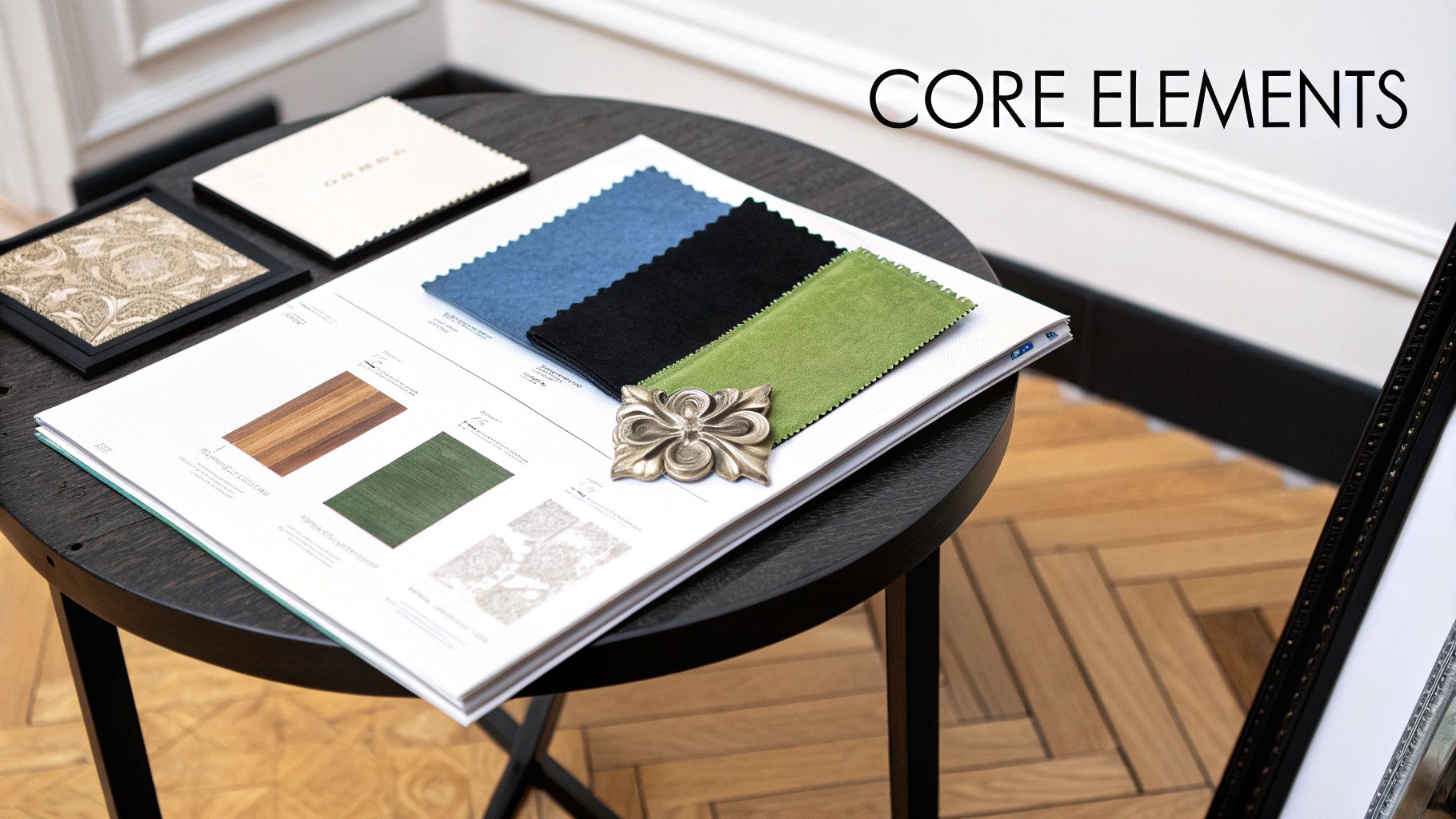
Once you get a feel for the different regional styles, you can start to see the common threads that run through all of them. Think of these as the fundamental ingredients in a classic French recipe; each is important on its own, but the real magic happens when they’re layered together with care. Getting a handle on these core materials, colors, and architectural details is the first step toward creating a space that feels authentically French.
This isn’t about perfectly replicating a room from a history book. It’s about learning the language of art de vivre and using it to express your own style—blending textures and finishes in a way that feels both curated and deeply personal.
The Significance of Architectural Bones
Long before a single piece of furniture arrives, the architecture itself sets the stage. In French design, the “bones” of a room aren’t just a quiet backdrop; they’re an active participant, lending a sense of history and grandeur that grounds everything else.
These are the features that do the heavy lifting:
- Ornate Moldings: Intricate crown molding, detailed wall paneling (boiserie), and elegant ceiling medallions add a layer of classical refinement. They frame the space, drawing the eye up and giving the walls a subtle, sculptural quality.
- Parquet de Versailles Flooring: You can’t get more iconic than herringbone or chevron wood floors. They introduce a timeless pattern and rich texture underfoot, and their geometric precision creates a stunning contrast with softer furnishings.
- Marble Fireplace Mantels: A stately marble mantel is often the heart of a French living room. It anchors the space, providing a touch of formality and a natural gathering point for family and conversation.
If your home doesn’t have these original details, they can often be masterfully added to create that distinguished canvas.
An Earthly and Elegant Color Palette
The color scheme in a French interior is almost always sophisticated and restrained, letting the textures, art, and statement pieces do the talking. The palette is pulled from nature and history, favoring nuance and subtlety over loud, overpowering hues. It all starts with a versatile neutral that amplifies natural light and creates an instantly serene atmosphere.
Think soft, chalky whites, warm greys, and muted beiges. These are then layered with gentle, desaturated colors like dove grey, pale celadon, or a dusty French blue. For a touch of Provence, the palette warms up with earthy tones—ochre, terracotta, and soft lavender—that echo the southern landscape.
The French approach to color is about creating a tranquil backdrop. The walls whisper, they don’t shout. This allows the art, the furniture, and the life within the room to become the true focal points.
A Masterful Mix of Materials
Texture is everything in french style decor. The constant interplay between different materials is what gives a room its soul, preventing it from ever feeling flat or one-dimensional. The French are true masters at this, effortlessly contrasting rustic elements with refined finishes to create a dynamic tension that’s both fascinating to look at and inviting to the touch.
This tactile sensibility comes from a deep respect for quality craftsmanship. France’s furniture and interior design market, valued at approximately USD 18 billion, is built on this very legacy of regional artisanship. The residential furniture segment alone makes up over 50% of the market, driven by a demand for these timeless, celebrated materials.
Here’s how some of these key materials work in harmony:
- Wood: From the polished gleam of a Louis XV commode to the raw, weathered grain of a farmhouse table, wood is indispensable. It brings warmth, history, and an essential connection to the natural world.
- Linen: Draping beautifully over windows or lending a relaxed elegance to upholstery, linen is a true staple. Its natural, slightly rumpled texture perfectly captures the French love for effortless style.
- Velvet: For a hit of pure luxury, you’ll find velvet on sofas or accent chairs. Its rich pile and deep, saturated color provide a wonderful counterpoint to more rustic elements like stone or raw wood.
- Wrought Iron and Gilt Metal: Metals add a necessary shimmer, whether it’s through an ornate chandelier, a gilded mirror frame, or simple curtain hardware. Gilt finishes introduce opulence, while blackened wrought iron adds a more rustic, handcrafted feel.
By understanding how to combine these core elements—the architectural grace, the subtle color palette, and the rich mix of textures—you can begin to build a space that feels genuinely French: layered, timeless, and absolutely full of character.
4. Furnishing and Lighting: The Soul of the French Home
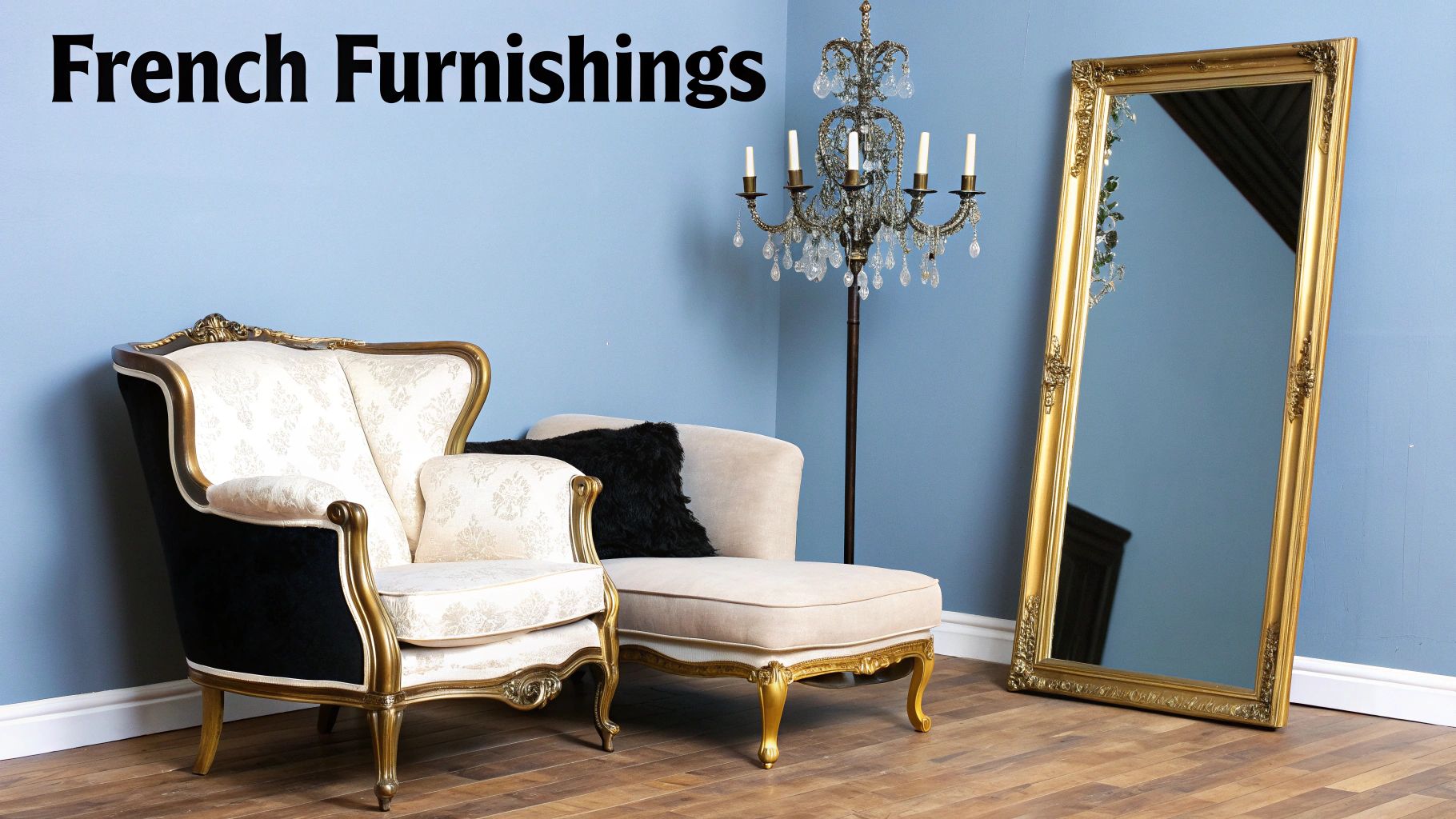
If architecture is the skeleton of a French-style home, then furniture and lighting are its soul. This is where the famous French art de vivre—the art of living—truly comes to life. The goal isn’t just to fill a room; it’s to curate it. Each piece is chosen with intention, creating a conversation between objects that balance graceful lines, deep comfort, and a sense of history.
The real magic happens in the mix. A room filled exclusively with priceless antiques can feel cold and untouchable, more like a museum than a home. Conversely, a space with only brand-new, modern pieces often lacks soul. The signature of French design is the masterful dialogue between these two worlds—placing a sleek, minimalist sofa beneath an impossibly ornate 18th-century giltwood mirror. This deliberate contrast creates a home that feels collected over a lifetime, not decorated in a weekend.
Crafting an Elegant Living Room
The French salon has always been a multi-purpose space, designed for both sparkling social gatherings and quiet, personal moments. The furniture must reflect this duality, offering silhouettes that are both beautiful to look at and genuinely comfortable to sink into.
You’ll often see iconic, historic forms anchoring the room like functional sculptures. Think of the classic bergère, a deep, welcoming armchair with its distinctive exposed wood frame, or a Louis XV-style sofa with its sinuous, curving cabriole legs. These pieces instantly lend a room a sense of grandeur.
But to keep it from feeling stuffy, these ornate anchors are often paired with simpler, clean-lined upholstery. A plush, contemporary sofa in a quiet neutral provides the perfect counterpoint, making the entire space feel both current and timeless. The secret is giving each piece room to breathe and make its own statement.
Creating a Serene Bedroom Retreat
Above all, the French bedroom is a sanctuary. It’s a space designed to be calm, romantic, and intensely personal. The furniture here whispers of comfort and understated luxury, creating a true escape from the clamor of the outside world.
An upholstered headboard is almost a given, immediately adding a layer of softness and texture. It might be a simple, tailored rectangle of linen or a more decadent, deeply tufted design, but its purpose is the same: to set a tone of relaxed elegance. This is frequently complemented by a freestanding antique armoire, a piece with far more character and soul than any built-in closet.
Other essentials for a truly French bedroom include:
- A delicate vanity table, a nod to old-world glamour.
- A small armchair or a chaise lounge tucked into a corner for reading.
- A pair of antique nightstands—often mismatched to enhance the “collected” feel.
The Art of French Dining Spaces
From a formal dining room to a cozy corner in a kitchen, French dining spaces are crafted to be inviting. The furniture is selected to bridge the gap between everyday meals and special occasions, setting the stage for good food and even better conversation.
In a French Country or Provençal home, a rustic, solid wood farmhouse table is often the star. Its weathered, imperfect surface tells a story of family gatherings and becomes more beautiful with every scratch and stain. Paired with simple ladder-back chairs, the effect is effortlessly charming.
For a more formal, Parisian apartment feel, you might see a more refined table with slender, elegant legs, surrounded by upholstered chairs. But even in its most formal iteration, French dining is never stiff. A touch of ease is always introduced, perhaps through relaxed linen slipcovers or a table with a subtly distressed finish.
Illuminating with Purpose and Style
Lighting in a French home is never an afterthought; it’s a primary decorative element. Fixtures are chosen with the same care as a piece of sculpture, selected for their form, their material, and the specific mood they create. The French are masters of layering light to build atmosphere and highlight the room’s best features.
Lighting in a French home is the jewelry that completes the outfit. A grand chandelier is the statement necklace, while wall sconces and table lamps are the delicate earrings and bracelets that add sparkle and depth.
The crystal chandelier is, of course, the most recognizable fixture. It injects a dose of glamour and history wherever it’s placed, from the living room to the bedroom—and yes, even in a well-appointed bathroom. The way its crystals catch and refract light creates a glow that no other fixture can replicate.
Beyond that single statement piece, a sophisticated mix of other light sources builds complexity:
- Wall Sconces: Typically used in pairs to flank a mirror, fireplace, or major piece of art, sconces provide a soft, ambient glow and a pleasing sense of symmetry.
- Table Lamps: Chosen for their beautiful bases—be it ceramic, brass, or carved wood—and topped with simple fabric shades, they provide crucial task lighting while doubling as decorative objects on consoles and side tables.
By choosing furniture with a story and lighting with a sculptural presence, you can move beyond mere decorating and begin to curate a home that truly captures the French spirit: a graceful, personal, and deeply comfortable work of art.
Mastering the Art of French-Inspired Accessorizing
If the furniture and architecture are the bones of a French-inspired home, the accessories are its soul. This is the final, crucial layer where a space truly comes alive with personality. The guiding principle here isn’t about filling every nook and cranny; it’s about curation over clutter. Every object should feel intentional, holding a story, a history, or some personal meaning.
This thoughtful approach is what gives French interiors that coveted, collected-over-time feel. It’s about resisting the urge to decorate for decoration’s sake and instead letting a few carefully chosen pieces make a quiet but profound impact. This is how you elevate a room from simply being well-designed to telling an intimate, personal story.
Weaving in Texture with Textiles
Textiles are essential for adding softness and tactile richness, providing a necessary counterbalance to the hard surfaces of wood, stone, and metal. They introduce warmth and comfort, and the French have a distinct preference for natural, high-quality materials that look and feel incredible.
- Linen Curtains: Often left unlined and unadorned, linen drapes are allowed to puddle elegantly on the floor, filtering sunlight in the most beautiful way. That slightly rumpled texture is the perfect embodiment of relaxed, chic imperfection. You can explore more sophisticated options by mastering interior design window treatments to find the ideal look.
- Velvet Pillows: A touch of plush velvet on a sofa or armchair immediately introduces a note of opulence. Think deep jewel tones or soft, muted shades that add a subtle color accent and a pleasing textural contrast.
- Toile and Ticking Stripes: These classic patterns bring just a hint of rustic charm without ever feeling overwhelming. A single toile cushion or a chair upholstered in a simple ticking stripe is often all it takes to add that perfect dose of visual interest.
The Strategic Power of Art and Mirrors
In a French interior, art and mirrors are never an afterthought—they’re foundational. An oversized, ornate mirror is practically a hallmark of the style. Whether it’s leaned casually against a wall or hung proudly over a mantel, its gilded frame acts as a piece of sculpture while brilliantly amplifying light and creating the illusion of more space.
The French treat mirrors as windows—not just to reflect a room, but to reflect a mood. A tarnished, antique mirror adds an immediate sense of history and mystery, hinting at stories from the past.
Art is always selected with a deeply personal eye. It’s never about matching the sofa; it’s about finding pieces that resonate. A mix of old and new—an antique oil portrait, a bold modern abstract, a delicate pencil sketch—can coexist beautifully, telling the story of the homeowner’s unique taste and journey.
The Finishing Touches: Personal Heirlooms
The most important accessories are the ones that are uniquely you. These are the objects that turn a beautifully designed space into a personal sanctuary. Think of it as styling with your own history.
This is where you can intentionally display treasured items:
- A stack of old, leather-bound books on a side table.
- A small collection of vintage silver that adds a subtle gleam.
- Fresh flowers are non-negotiable. A simple, unstructured bouquet of hydrangeas or roses in a rustic urn brings life and natural beauty indoors.
- Personal heirlooms, like a porcelain dish inherited from a grandmother or a meaningful souvenir from your travels, should be displayed with pride.
This devotion to artisanal and meaningful objects is a cornerstone of the French economy. The specialized design industry—encompassing everything from bespoke ceramics to heritage fabric houses—has grown into a major market. In fact, it recently reached a market size of €3.8 billion, supported by over 50,000 individual businesses. You can discover more about the growth of France’s specialized design sector and how its influence shapes global trends.
Bringing French Style Decor to Life
Taking the beautiful theory of French design and turning it into a real, lived-in home is where the magic really happens. This is where inspiration meets practical decisions, and the goal is to navigate the process with confidence, creating a space that feels authentic, elegant, and perfectly you.
The objective isn’t to create a museum piece or a historical reenactment. It’s about capturing a feeling—the French art de vivre—and weaving it into the fabric of your modern life.
Adapting French Style for Modern Homes
One of the first questions I often hear is whether the grandeur of classic French style decor can actually work in a smaller, contemporary home. The answer is an enthusiastic yes. The secret is in clever adaptation, not literal replication.
For example, instead of a massive giltwood mirror that might overwhelm the space, you could choose one with a more delicate frame and a cleaner profile. If you’re working with lower ceilings, you can skip the sprawling crystal chandelier. Instead, create beautiful layers of light with elegant wall sconces and a stunning table lamp.
It all comes back to the core principles:
- Quality Over Quantity: A few truly exceptional pieces will always make a stronger statement than a room crowded with mediocre furniture.
- A Neutral Foundation: Soft whites, warm greys, and muted creams are your best friends. They create an illusion of space and light, making any room feel larger and more peaceful.
- A Mix of Textures: Blending linen, velvet, silk, and weathered wood adds a rich, tactile depth that keeps the space from feeling flat.
Smart Investments and Savvy Savings
You don’t need an unlimited budget to achieve that coveted high-end look. It’s all about being strategic—knowing where to invest for the biggest impact and where you can be more economical. This thoughtful approach is what makes a home feel curated and personal, not just expensive.
Think of it as a balancing act. It makes sense to splurge on the pieces you interact with daily, like a beautifully constructed armchair or a solid wood dining table you’ll gather around for years. These items provide lasting comfort and quality. An authentic antique mirror or a signature light fixture are also worthy investments, as they serve as the room’s sculptural centerpieces.
So where can you save? Textiles like curtains and cushions, decorative objects, and even smaller side tables can often be found at a more accessible price point without sacrificing the overall aesthetic. This mix of high and low is the very definition of effortless French chic.
Common Mistakes to Avoid
The path to an authentic French interior is paved with subtlety, and a few common missteps can throw off the entire feel. The single biggest mistake is simply over-decorating. You have to resist the temptation to fill every wall and surface. Negative space is your ally; it gives your key pieces room to breathe and be truly appreciated.
Another trap is slipping into “theme” territory. Your home should never look like a stage set or a Parisian-themed hotel room. Stay away from matching furniture sets and cliché motifs. The aim is a space that feels like it has been thoughtfully collected over time.
Here are a few specific things to steer clear of:
- Too Many Ruffles and Frills: A little bit of softness goes a long way. Modern French style leans toward tailored, clean lines and simple elegance.
- Ignoring Comfort: What’s the point of a beautiful bergère chair if it’s too precious to sit in? French homes are designed to be lived in and thoroughly enjoyed.
- Forcing a Distressed Look: Real patina happens over time. Pieces that are overly manufactured to look “shabby chic” often come across as inauthentic and can cheapen a room’s sophistication.
By focusing on balance, personal curation, and the quiet art of restraint, you can bring the timeless elegance of French design into your own home. You’ll create a space that is not only stunning but also a true, livable reflection of who you are.
Ready to create your own extraordinary space? The top interior designers and architects who master these principles are part of the exclusive Haute Design network. Connect with distinguished professionals who can transform your vision into a timeless reality.