


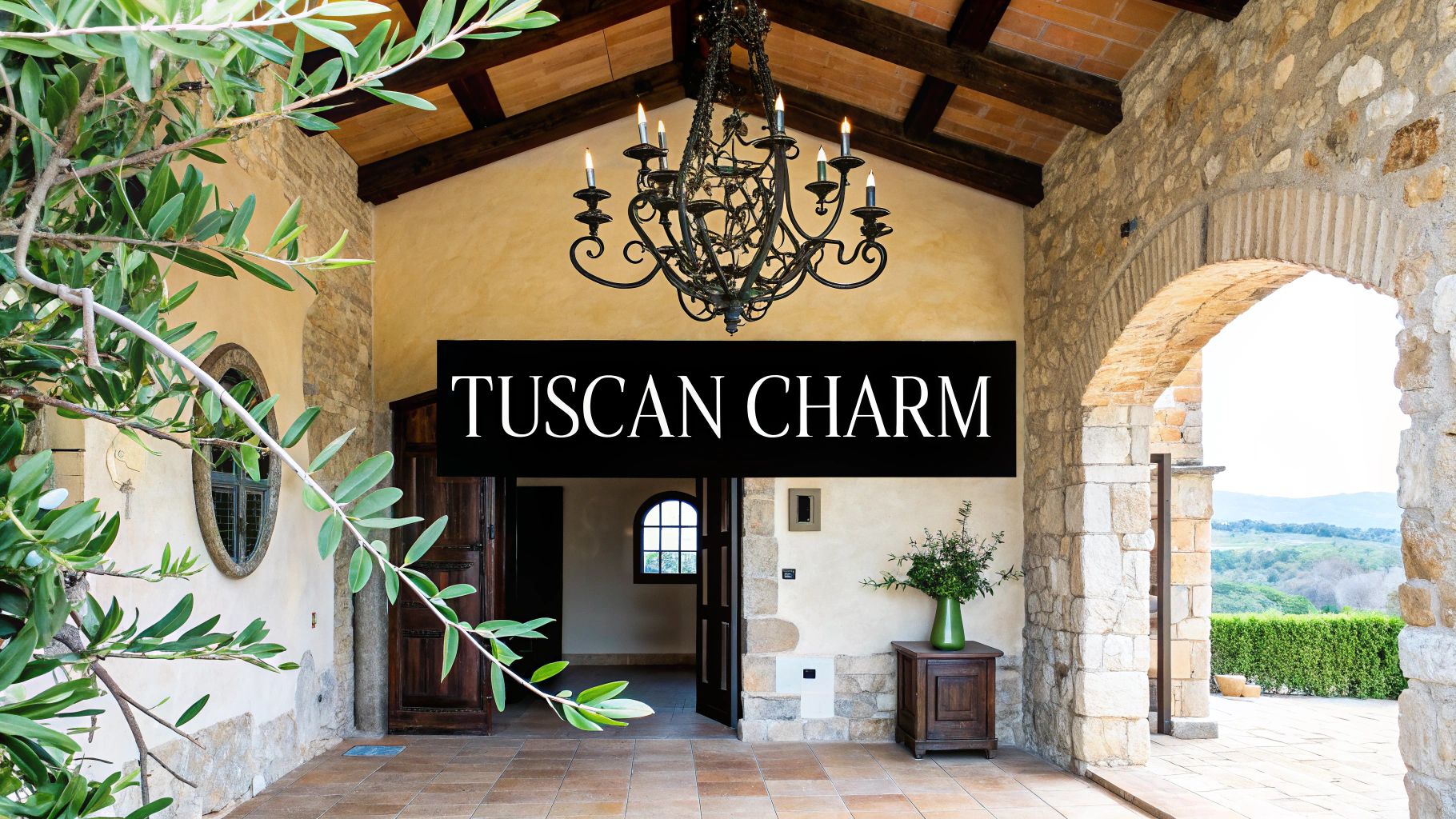
Tuscan-style interiors are all about bringing the warm, easygoing spirit of the Italian countryside right into your home. It’s a design that marries rustic simplicity with a quiet, unpretentious elegance, creating a space that feels both welcoming and deeply connected to the earth.
Think of it as crafting a sanctuary, a place where natural materials, earthy colors, and a comfortable, lived-in feeling are the top priorities.
The Enduring Allure of Tuscan Interior Design
Picture this: you’ve just stepped into a sun-drenched Italian villa. Above, weathered wood beams trace the lines of the ceiling, and underfoot, terracotta tiles offer a cool welcome. This is the very soul of the Tuscan aesthetic—a design that tells a story of heritage, fine craftsmanship, and a life meant to be enjoyed.
It’s so much more than just a checklist of decorative items. It’s a philosophy that puts genuine comfort and authenticity ahead of short-lived trends.
The reason this style has such staying power is its ability to create a real sense of home. It’s the opposite of a sterile, hands-off environment; it’s a warm embrace. It invites you to slow down, to gather with family and friends, and to find beauty in the everyday. That’s why it speaks so powerfully to those of us looking for a retreat from the breakneck pace of modern life.
What Makes This Style Timeless?
The real magic of a Tuscan interior is in its core principles. Every element is chosen for its link to the Tuscan landscape and its ability to age with grace, developing a beautiful, storied patina over the years.
The whole style rests on a foundation of a few key ideas:
- A Deep Connection to Nature: Materials are pulled straight from the earth—think stone, wood, and clay.
- An Emphasis on Comfort: Furniture is solid, inviting, and built for gathering, conversation, and relaxation.
- An Appreciation for Craftsmanship: You’ll see a celebration of handcrafted details everywhere, from wrought-iron fixtures to hand-painted ceramics.
The ultimate goal is to create a home that feels authentic to the people who live there, not just a reflection of what’s currently popular. It’s about building a story through design, where every single piece has a purpose and a place.
Your Roadmap to an Authentic Space
This guide is designed to be your room-by-room roadmap, moving past simple definitions to give you a practical path forward. We’ll unpack all the essential components you need to create a sophisticated and truly authentic Tuscan-inspired home. You’ll learn how to layer textures, select the perfect color palette, and find furnishings that hit that sweet spot between rustic charm and refined luxury.
Whether you’re planning a full renovation or just want to bring a bit of that Italian warmth into a single room, you’ll find strategies you can use right away. We’ll cover everything from the foundational materials that define the look to the small, finishing touches that make it all come alive.
By the end, you’ll have a clear understanding of how to create a Tuscan-style home that is not only beautiful but also deeply personal—a true sanctuary that feels both luxurious and lived-in for years to come.
The Core Elements: Crafting an Authentic Tuscan Feel
To truly capture the essence of Tuscan design, you have to think like an Italian artisan. It’s not just about picking items from a catalog; it’s about a masterful blend of three core elements: materials, colors, and textures. Think of it as a classic Italian recipe—every single ingredient is vital. If you leave one out, the entire dish, or in this case, the room, just won’t feel right.
By understanding how these components work together, you can move beyond simple imitation. The real goal is to create an atmosphere that feels warm, layered with history, and deeply connected to the sun-drenched Italian countryside.
This is less about following a strict rulebook and more about evoking a feeling—that sense of rustic ease and grounded comfort that defines the Tuscan way of life.
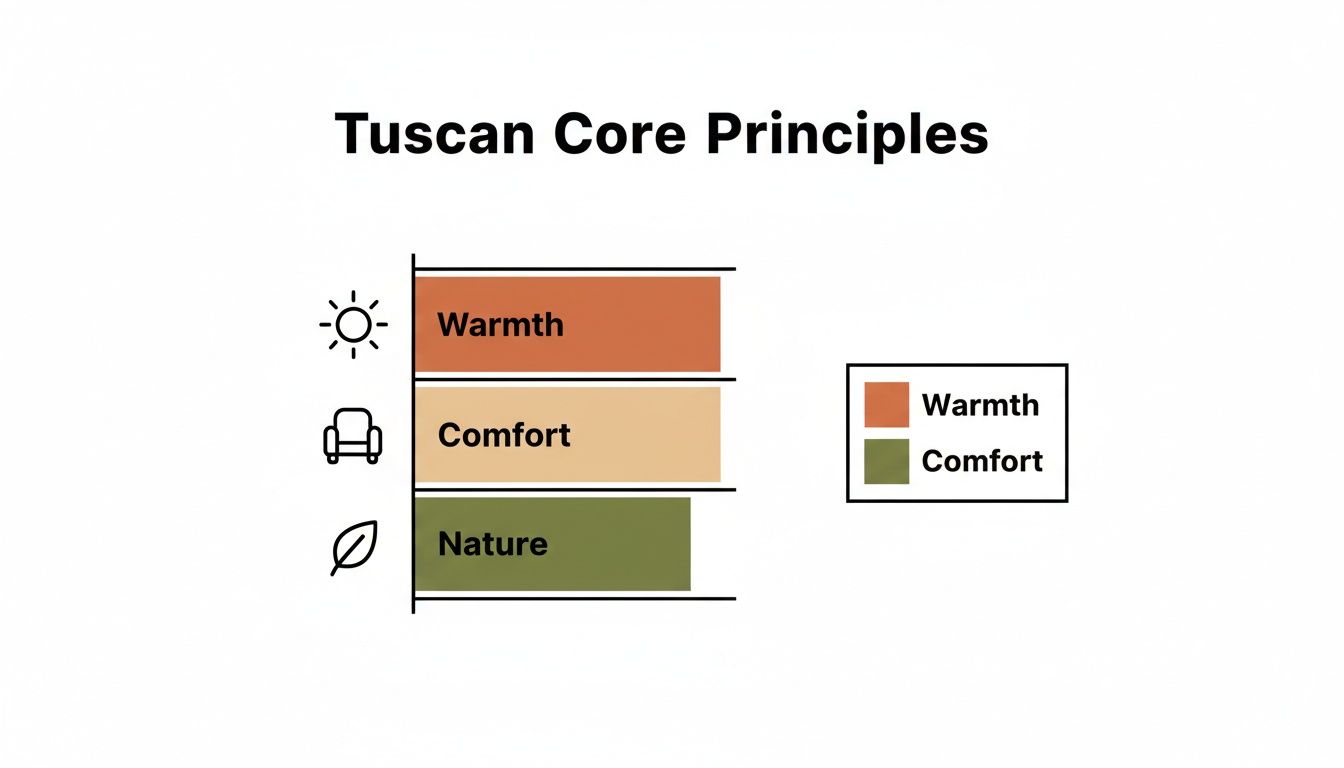
The style is really about capturing an emotional response—that feeling of sun-drenched simplicity and being firmly planted in nature.
Foundational Materials: The Building Blocks of Tuscany
The materials that form the backbone of Tuscan style are pulled straight from the earth. They are chosen for their honesty, durability, and the beautiful way they age over time. These are the sturdy, reliable bones of the design.
- Terracotta Tiles: The name literally means “baked earth,” and these iconic clay tiles instantly bring a rustic warmth to any space, from floors to patios. Their natural color variations, from a pale peach to a deep, rich red, add incredible character.
- Weathered Wood: Think of the massive, exposed beams crossing a ceiling, a chunky farmhouse dining table, or distressed wooden cabinetry. Woods like chestnut and oak, with their visible grain and time-worn patina, tell a story.
- Natural Stone: Travertine is a classic choice, celebrated for its creamy tones and naturally pitted surface, making it perfect for flooring, countertops, and grand fireplace surrounds. A rough-hewn stone accent wall can also add a powerful, rustic statement.
- Wrought Iron: This is where handcrafted elegance comes in. You’ll see it in everything from dramatic chandeliers and staircase railings to simple curtain rods and bed frames, providing a dark, sturdy contrast to the lighter stone and plaster walls.
These elements work together beautifully, creating an atmosphere that is at once rugged and refined, grounding the entire home with an undeniable sense of permanence.
To make these concepts clearer, here’s a quick summary of the core components that define the authentic Tuscan aesthetic.
Core Components of Tuscan Interior Design
| Element Category | Primary Examples | Atmosphere Contribution |
|---|---|---|
| Materials | Terracotta, Weathered Wood, Natural Stone (Travertine), Wrought Iron | Grounded, Rustic, Durable, Handcrafted |
| Colors | Ochre, Burnt Sienna, Terracotta, Olive Green, Creamy White | Warm, Sun-Baked, Earthy, Inviting |
| Finishes & Textures | Venetian Plaster, Limewash, Aged Leather, Rough Linen, Hand-Painted Ceramics | Tactile, Layered, Authentic, Lived-In |
This table shows how each element isn’t just a visual choice but a crucial contributor to the overall feeling of a room.
The Signature Color Palette: Inspired by the Landscape
The Tuscan color palette is a direct reflection of its sun-drenched hillsides. It’s warm, earthy, and deeply inviting. The trick is to layer these tones skillfully, creating depth and dimension that keeps the space from feeling one-note.
At its heart, the Tuscan palette is about bottling sunshine. The colors are muted yet rich, creating a backdrop that is calming and full of character without overwhelming the senses.
The primary colors are pulled directly from the soil and sun: think golden ochre, deep burnt sienna, and earthy terracotta. These warmer tones are beautifully balanced by softer hues like creamy whites and the gentle greens of olive groves and cypress trees. For practical advice on blending these shades, you can explore our guide on how to choose paint colors.
It’s worth noting how this palette has evolved. In the 1990s, heavy earth tones dominated 85% of Tuscan-inspired homes in the U.S., often resulting in dark, almost cave-like interiors. Today, that has shifted dramatically. Designers now report a 60% preference for lighter palettes that lean on soft beiges and muted olive greens to create brighter, more open rooms that still hold onto that essential, cozy warmth.
The Crucial Role of Texture: A Feast for the Senses
Texture is perhaps the most important—and most often overlooked—element in creating a truly authentic Tuscan interior. It’s the soul of the style, the very thing that separates a genuine space from a modern imitation.
Imagine running your hand across a wall in a Tuscan villa. You wouldn’t feel flat, smooth drywall. Instead, you’d feel the subtle, grainy texture of Venetian plaster or a soft limewash finish. This tactile quality adds a layer of sensory richness that paint alone can never replicate.
Here are a few other ways texture plays a vital role:
- The smooth, cool feel of aged leather on a classic armchair.
- The rough, natural weave of linen or heavy cotton on drapery.
- The slightly uneven surface of hand-painted ceramic tiles in a kitchen backsplash.
By layering these varied surfaces, you create an environment that feels dynamic, engaging, and collected over generations. Each texture adds another note to the symphony, resulting in a space that is complex, rich, and deeply comforting.
A Room-By-Room Guide to Tuscan Design
To truly capture the essence of Tuscan style, you need to think beyond a single room. It’s about creating a seamless, immersive experience that flows through the entire home. Each space should feel connected to the next, sharing a common language of materials and colors, yet still have its own unique personality.
Let’s walk through the key areas of a luxury property and explore how to translate that rustic Tuscan elegance into each one.
From the buzzing heart of the home—the kitchen—to the quiet sanctuary of the bedroom, we’ll look at layering materials, textures, and finishes. The aim is to create spaces that feel both authentic to their inspiration and deeply personal to you.
The Tuscan Kitchen: The Heart of the Home
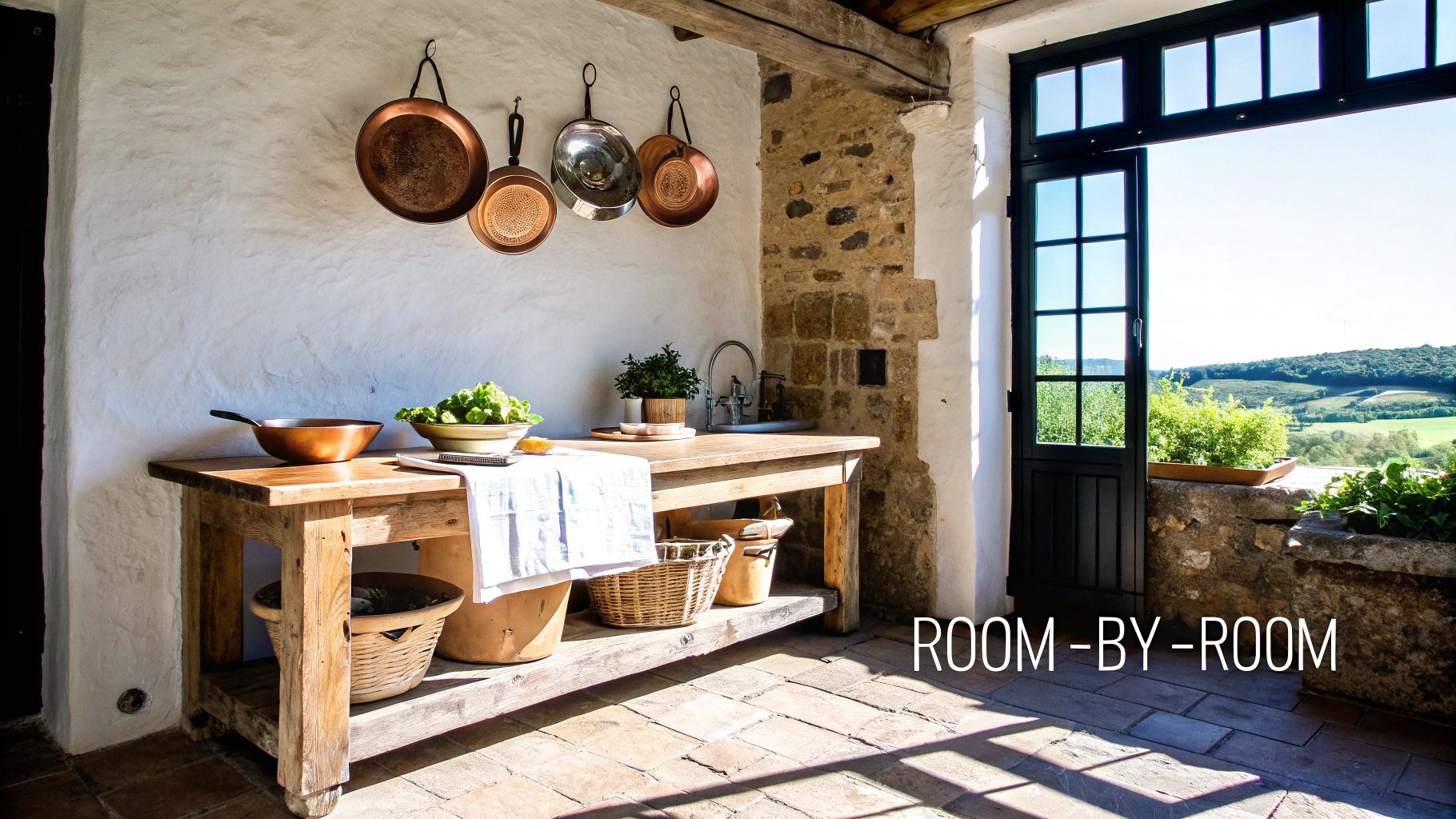
In Italy, the kitchen isn’t just for cooking; it’s the nerve center of the house. It’s where life happens. A Tuscan kitchen needs to feel warm, functional, and profoundly welcoming—a place designed for gathering, where a little mess is just a sign of a life well-lived.
The centerpiece is almost always a large, sturdy wooden table, preferably one showing the beautiful patina of age and use. This isn’t just a dining surface. It’s a prep station, a homework desk, and a place to share stories over a glass of wine. Simple, rustic chairs are all you need to complete the scene.
To really build the room’s character, focus on these details:
- Exposed Materials: If you have stone or brick walls, show them off. Structural beams? Leave them exposed. These elements add instant architectural interest and an incredible sense of history.
- Functional Decor: This is a working room, so let your tools be the art. Hang gleaming copper pots from a ceiling rack, fill ceramic jars with wooden spoons, and keep fresh herbs growing in terracotta pots on the windowsill.
- Natural Surfaces: Countertops should be crafted from materials like travertine, marble, or soapstone. And for the floor, nothing says Tuscany quite like terracotta tiles that only get more beautiful with time.
The Living Room: A Space for Gathering
A Tuscan living room is built for comfort and conversation, not formality. The natural focal point should be a substantial, prominent fireplace. It anchors the room and creates a magnetic pull, drawing people together, especially on cooler evenings.
When it comes to furniture, think comfort above all else. Oversized, plush sofas and armchairs in durable, natural fabrics like cotton, linen, or beautifully aged leather are perfect. The key is to arrange the seating to encourage interaction, with pieces oriented toward the fireplace and each other.
A successful Tuscan living room feels like it has evolved over generations. It’s a collection of sturdy, inviting pieces that ask you to sit down and stay a while, not a perfectly matched set from a showroom floor.
Wooden ceiling beams are a signature of the style, lending verticality and a rustic framework to the space. Walls should have a soft, tactile finish, like Venetian plaster or a simple limewash, in those classic warm, earthy tones. For lighting, a large wrought-iron chandelier provides a touch of drama, supported by simpler wall sconces and table lamps that cast a soft, ambient glow.
The Bedroom: A Serene and Simple Retreat
The Tuscan bedroom is your sanctuary. It should be a calm, uncluttered space designed purely for rest and rejuvenation. Here, the aesthetic is more restrained than in the home’s public spaces, with the focus on creating tranquility through a soft, muted color palette and carefully chosen materials.
A wrought-iron bed frame is a classic choice, its elegant lines adding structure without feeling heavy. Dress it with high-quality linens in natural fibers—think cotton or linen—in soft, neutral colors like creamy white, beige, or a pale sage green. The result is a bed that looks and feels incredibly inviting.
Keep the other furnishings minimal and purposeful. A simple wooden dresser, a rustic bench at the foot of the bed, and a comfortable armchair are all you need. Large, unadorned windows with simple linen curtains allow natural light to filter in, making the room feel airy and peaceful. For those who want to blur the lines between inside and out, exploring ideas for indoor-outdoor living can offer wonderful inspiration for connecting a bedroom to a private terrace or garden.
The Bathroom: A Rustic Spa Escape
Turn the bathroom into a private, spa-like escape by leaning into the natural materials that define Tuscan design. Travertine is a fantastic choice for both floors and walls; its warm, creamy tones and porous texture create a soothing, organic atmosphere.
A rustic wooden vanity, perhaps repurposed from an old chest of drawers, adds immediate character and warmth. Top it with a simple stone or ceramic vessel sink and finish it with classic oil-rubbed bronze or antiqued brass fixtures. A large, freestanding bathtub makes a luxurious focal point, while a walk-in shower lined with stone tiles feels both modern and perfectly in keeping with the rustic aesthetic.
Bringing Tuscan Style into the Modern Era
So, how do you capture the timeless soul of Tuscan design without making your home feel like a museum? The answer is a beautiful evolution of the style, often called “Modern Tuscan.” This isn’t about abandoning the core principles; it’s about reinterpreting them for the way we live today.
Think of it like this: a traditional Tuscan room might feature a heavy, brocaded tapestry, rich in history but also in weight. The modern approach might opt for a simple, luxurious linen throw. Both offer texture and warmth, but one feels light and current, while the other is deeply anchored in the past. Modern Tuscan design is all about striking that perfect balance between Old World character and the clean, bright feel of contemporary living.
The goal is a space that feels both rustic and refined, warm yet uncluttered. It’s a delicate dance, but it proves you don’t have to sacrifice modern comforts to enjoy the soulful personality of an Italian villa.
Lightening the Color Palette
The most immediate and impactful shift you’ll notice is in the color palette. The days of dark, heavy earth tones that could make a room feel small or dated are gone. Today’s interpretation is all about creating a brighter, airier backdrop that still radiates warmth and welcome.
Instead of being dominated by deep browns and burgundies, modern Tuscan interiors lean into a sophisticated family of neutrals.
- Foundation Colors: Start with walls and large surfaces in soft creams, warm beiges, or gentle off-whites. This simple change instantly makes a space feel larger and flooded with light.
- Accent Hues: This is where you bring in those classic earth tones, but more strategically. Think muted olive greens, soft terracotta, and dusty ochres used as accents on a single feature wall, through textiles, or in carefully chosen decor.
This lighter base lets the raw, natural materials—the wood beams, the stone floors—become the true stars of the show, creating a beautiful contrast that feels both rustic and incredibly fresh.
Streamlining Furniture and Fixtures
While classic Tuscan furniture often leaned toward the heavy, oversized, and ornate, the modern take favors cleaner lines and simpler shapes. The focus shifts from intricate carvings and busy details to the inherent, honest beauty of the materials themselves.
You’ll want to look for furniture with strong, simple forms. A solid wood dining table with clean, straight legs takes the place of one with elaborate, turned legs. A sofa with a crisp, squared-off frame upholstered in natural linen replaces a bulky, rolled-arm leather couch from a bygone era.
Modern Tuscan design is an exercise in thoughtful reduction. It asks, “What can we strip away?” By paring back the ornamentation, you allow the core elements of wood, stone, and light to speak for themselves, creating an atmosphere of calm sophistication.
Wrought iron still has its place, but it’s used with more restraint. Instead of a massive, heavily scrolled chandelier, you might see a fixture with a simpler, more geometric iron frame. This selective approach makes each piece feel more intentional and impactful.
Maximizing Natural Light and Open Space
A cornerstone of modern design is its reverence for natural light, an element that pairs perfectly with the Tuscan aesthetic. Heavy, layered draperies that block the sun are swapped out for simpler window treatments that invite the outdoors in.
Here are a few ways to embrace the light:
- Minimalist Window Coverings: Opt for simple linen curtain panels that diffuse sunlight softly. Often, the best choice is to leave windows unadorned, especially when you have beautiful views to frame.
- Large Windows and Doors: Arched windows and expansive glass doors not only flood rooms with light but also echo the architectural shapes found in classic Italian villas, forging a seamless connection between inside and out.
This emphasis on light and craftsmanship is why the style is seeing such a strong resurgence. Industry reports are already pointing to Tuscan aesthetics as central to 2025’s biggest design trends, with a 45% revival in handcrafted furniture. Earthy palettes are also forecasted to dominate 62% of high-end interiors. This blend of rustic soulfulness and quiet luxury is resonating with homeowners globally, cementing the Tuscan style’s place in modern design. You can learn more about these top interior design trends for 2025 to see how it’s shaping the industry.
By weaving in these modern sensibilities, you can create a Tuscan interior that feels personal, timeless, and perfectly suited for the life you live now—a look that honors its rustic roots while stepping confidently into the present.
How to Source Authentic Tuscan Decor
Creating a truly authentic Tuscan interior isn’t about buying a matching furniture set off a showroom floor. It’s more like becoming a curator—a collector of beautiful, storied objects. The real magic happens when you start hunting for pieces that feel like they’ve been gathered over a lifetime, each with its own story to tell.
Think of yourself as a storyteller. That weathered wooden credenza, the simple ceramic pitcher on the counter—every single item should add another layer to the narrative of a warm, lived-in, and deeply loved home. Let’s look at where to find these treasures, from sprawling antique fairs to the workshops of modern artisans who are keeping old traditions alive.
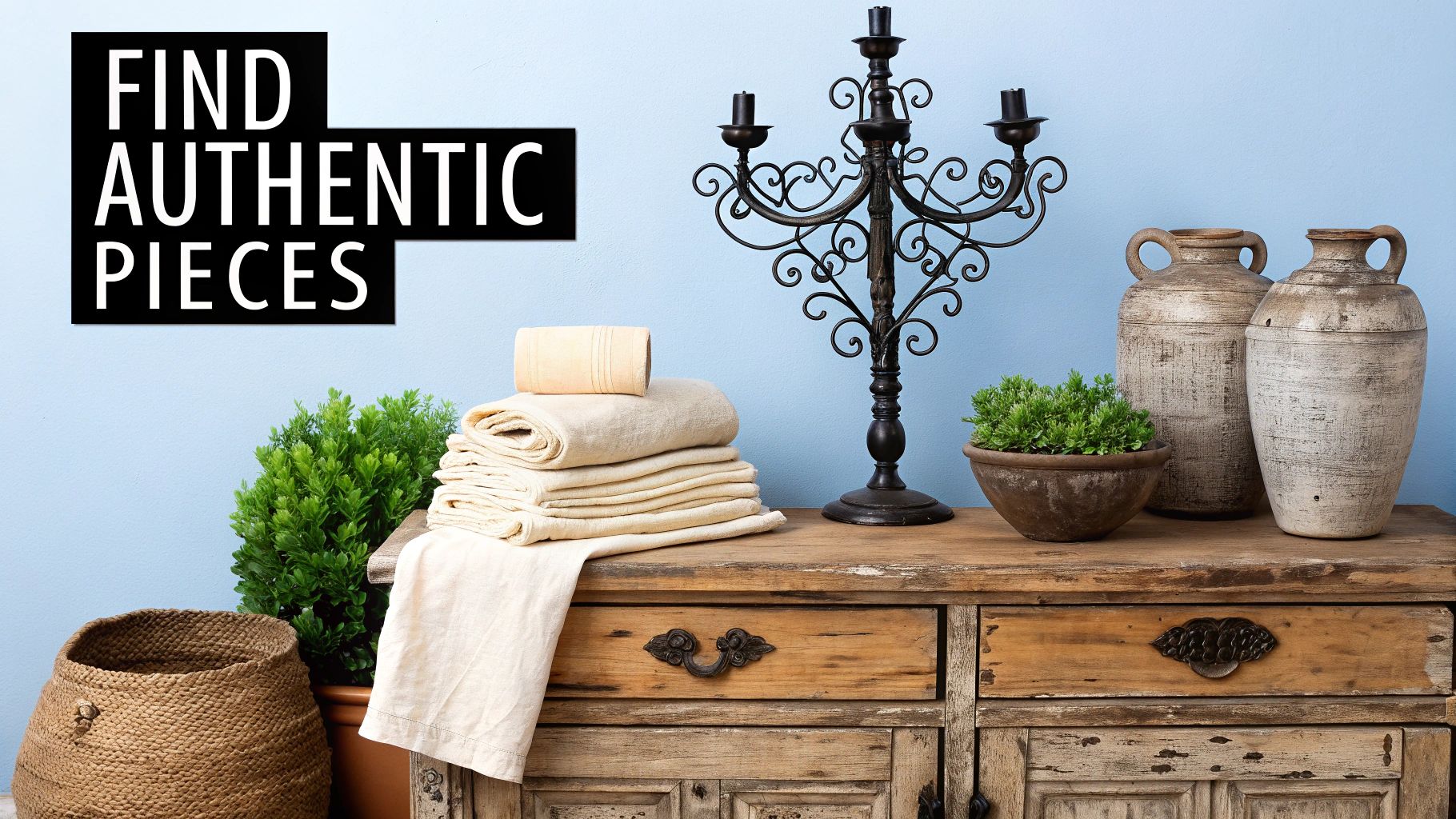
This thoughtful search is where the genuine character of your Tuscan style home interiors truly begins to emerge.
Identifying Key Furniture Pieces
In any Tuscan-inspired room, a few key pieces of furniture do the heavy lifting. They are the anchors that ground the space, setting that signature rustic-yet-elegant tone. These aren’t delicate or fussy items; they are substantial, beautifully functional, and crafted from solid, natural materials like wood and iron. Their charm lies in their sturdiness and the honest signs of a life well-lived.
As you start your search, keep an eye out for these foundational elements:
- The Farmhouse Table: This is non-negotiable. Look for a large, rectangular table built from thick, heavy planks of wood. Don’t shy away from imperfections. Scratches, nicks, and even a slightly uneven surface aren’t flaws—they’re the marks of authenticity.
- A Distressed Credenza or Sideboard: An essential for any dining or living space, a long, low storage piece provides both function and form. The best ones have a naturally weathered patina or a hand-painted finish that looks like it’s been there for generations.
- Wrought-Iron Elements: Nothing says Tuscany quite like handcrafted iron. A classic wrought-iron bed frame or a dramatic, scrolling chandelier can become a powerful focal point. The key is to find pieces that feel substantial and artfully forged, not thin and mass-produced.
The most successful Tuscan interiors feel assembled, not decorated. Mix a genuine antique find with a high-quality modern reproduction. This layering creates a dynamic and believable space that feels both personal and true to the style.
Sourcing Textiles and Fabrics
To balance the hard surfaces of stone, wood, and iron, you need softness and texture. The right textiles are crucial. In Tuscan design, fabrics are typically humble, natural, and chosen for their durability and feel. You’ll want to steer clear of anything synthetic or with a high-gloss sheen.
Build your textile palette with these materials:
- Linen: Absolutely perfect for drapery. Its naturally crumpled texture filters sunlight into a soft, ethereal glow that fills the room.
- Cotton: Think heavy cotton canvas or duck cloth. It’s the ideal choice for relaxed, inviting slipcovers on sofas and armchairs—practical, comfortable, and effortlessly chic.
- Leather: A well-worn leather armchair introduces a touch of classic, masculine elegance. Its rich patina only gets better with age, adding depth and warmth to any corner.
Finding Decor with a Story
The small details are what truly make a Tuscan room sing. This is where the fun really begins, as you hunt for unique objects at antique markets, estate sales, and specialty import shops. Look for things that feel handmade and purposeful.
This timeless appeal is fueling a major resurgence. Google Trends data reveals that searches for ‘Tuscany Furniture’ shot up in mid-2024, a trend projected to climb into 2025. It’s part of a bigger picture: a 19% increase in Tuscan decor queries during peak home renovation seasons. Homeowners are craving authenticity, a feeling that some believe adds a perceived 30% to a home’s value in certain luxury markets. You can discover more insights about these emerging home trends and what they signal for the future.
Focus on collecting pieces like hand-painted ceramics from Deruta, aged copper pots that have seen countless meals, rustic earthenware, and simple glass vessels. When you group these items together on open shelves or a sideboard, you create a beautiful, layered display that is both a work of art and a reflection of your own personal story.
Bringing Your Tuscan-Inspired Vision to Life
Creating a home that truly embodies the Tuscan spirit is more of an art than a science. Think of it less as a project to be completed and more as a lifelong process of curation. The goal isn’t to create a perfect replica of an Italian villa—it’s to capture that feeling of warmth, history, and effortless comfort that makes the style so timeless.
This is about investing in an atmosphere, a backdrop for a life well-lived. It’s about creating a home that feels both grounded and soulful, where layered textures and meaningful objects tell your story. The most authentic Tuscan interiors always feel as if they’ve evolved naturally over generations.
A Final Checklist for Success
As you get started, it helps to have a few guiding principles. Keep these points in mind to stay true to the heart of the Tuscan style while making it completely your own.
- DO: Start small if you’re feeling overwhelmed. Simply introducing a new sun-baked color on the walls or adding a single, substantial piece like a rustic farm table can completely shift the mood of a room.
- DON’T: Aim for perfection. The real charm of Tuscan design is found in its soulful imperfection. Those little nicks and scratches on a wooden beam or a worn spot on a terracotta tile are part of the story.
- DO: Layer your textures with abandon. The interplay between rough-hewn stone, cool plaster, soft linen, and polished wood is what gives a Tuscan room its depth and character.
- DON’T: Fall into the trap of clutter. Every object should feel intentional. Focus on handcrafted pieces, antiques with a past, and art that genuinely speaks to you.
The essence of a successful Tuscan interior is its ability to feel both elegant and utterly unpretentious. It should invite you to put your feet up, share a meal, and savor the simple beauty of everyday life.
Embarking on a full-scale renovation or a new build can feel like a monumental task. If you’re looking for an expert partner to navigate the complexities, knowing how to choose an interior designer who truly understands your vision is the most critical first step.
With a clear direction and a genuine appreciation for authentic beauty, you can build the welcoming, sun-drenched sanctuary you’ve been dreaming of.
Answering Your Tuscan Design Questions
Even the most well-laid plans can hit a few snags. As you start to bring the rustic elegance of Tuscany into your home, you’ll naturally have questions about making it work for your specific space and budget. Let’s tackle some of the most common queries I hear from clients.
Think of this as a practical chat to help you move forward with confidence, making sure your final design feels just right.
How Can I Make Tuscan Style Work in a Small Apartment?
This is a great question, and the answer lies in a more modern, edited approach. When space is at a premium, you can’t just shrink a grand villa down to size; you have to be selective.
Start with a lighter, brighter color palette. Think creamy whites or soft beige to open up the room and reflect light. Then, instead of going all-in, sprinkle in those character-defining Tuscan elements. A single accent wall with a subtle limewash texture can do wonders. A few terracotta pots on a windowsill or balcony instantly bring in that earthy warmth.
For furniture, choose pieces with cleaner lines and a smaller footprint. Avoid the temptation of a massive, ornate dining table. Instead, look for wrought iron in smaller doses—perhaps in a light fixture, a mirror frame, or curtain rods.
The key in a smaller space is suggestion, not saturation. A few perfectly chosen, authentic details will capture the Tuscan spirit far more effectively than a room crowded with heavy decor.
What’s the Real Difference Between Tuscan and Mediterranean Design?
This is a common point of confusion. Both styles share that rustic, sun-drenched, Old World feeling, but their inspiration—and their resulting color palettes—are quite different. The easiest way to think about it is countryside versus coastline.
- Mediterranean Style: This often pulls from the Greek isles, with a palette that mirrors the sea and sky. You’ll see brilliant whites paired with vivid blues. The whole vibe is airy, coastal, and often a bit more minimalist and sun-bleached.
- Tuscan Style: This is rooted in the inland Italian landscape. The colors are much earthier and more grounded. We’re talking about those warm, sun-baked golds, deep olive greens, and rich, rusty reds. Tuscan interiors also tend to feel a bit more substantial, with a more prominent use of dark woods, stone, and plaster.
Is It Expensive to Create a Tuscan-Style Interior?
It certainly can be, but it absolutely doesn’t have to be. If you’re sourcing genuine antiques, installing custom stone floors, and commissioning hand-forged ironwork, the costs can add up. However, the beauty of this style is its celebration of rustic, imperfect, and time-worn things, which makes it incredibly flexible for different budgets.
You can get creative. Look for reclaimed wood to build simple shelves or a beautiful mantelpiece. Hunt for second-hand furniture that you can distress yourself to give it that lived-in character. Terracotta tiles are often surprisingly affordable. For walls, you can use modern paint techniques to mimic the texture of Venetian plaster without the high cost. The trick is to invest in one or two high-impact pieces—like a solid wood dining table—and then build the rest of the room around them with more budget-friendly, authentic-feeling finds.
Ready to bring your vision for a luxurious Tuscan interior to life with the help of a leading professional? Explore the exclusive network at Haute Design to connect with a top-tier designer who can craft your dream space.