


A design concept is the central, unifying idea that serves as the strategic blueprint for a creative project. It’s far more than just a style or a theme; it is the core narrative that informs every single decision, from the grand architectural strokes down to the smallest decorative detail.
Understanding the Soul of a Project
Before a single material is chosen or a single wall is moved, every truly exceptional space starts with one powerful idea. This is the design concept—the project’s soul and its guiding story. Think of it as the critical difference between a room filled with beautiful things and a home that truly tells a story and makes you feel something.
A well-defined concept elevates a project from a checklist of client needs into an emotionally resonant experience. It acts as a filter for every choice, ensuring that each element, from the flow of the floor plan to the texture of a single door handle, supports a singular, unified vision. Without this foundation, even the most luxurious design can feel disjointed or arbitrary.
The Blueprint Analogy
Imagine you’re building a house. The architectural blueprints lay out the physical structure—where the walls go, the size of the rooms, the fundamental layout. The design concept is the layer on top of that blueprint, dictating the feeling and the experience of living within that structure.
If the blueprint answers the “what,” the concept answers the “why.” It digs into the project’s purpose and the atmosphere it aims to create, building a solid foundation for every aesthetic and functional decision that comes next.
A strong design concept acts as the project’s North Star. When you’re faced with countless choices for fabrics, finishes, and fixtures, it provides clear direction, preventing the design from getting watered down or losing its way. It’s the invisible thread that ties everything together.
This “big idea” is what separates a merely decorated room from an immersive, intentional environment. It’s the secret ingredient that makes a space feel completely harmonious.
The Core Components of a Design Concept
A truly effective design concept doesn’t just appear out of thin air. It’s built on three essential pillars that work together to turn an abstract idea into a concrete, actionable plan. These pillars provide the structure that ensures the final space is both beautiful and meaningful.
Below is a breakdown of these three core components that form the foundation of any powerful design concept.
| Component | Role in the Project | Key Questions It Answers |
|---|---|---|
| The Big Idea (Narrative) | This is the foundational story or the core feeling. It sets the emotional tone and purpose for the entire space. | Is this a “serene urban sanctuary,” a “vibrant family hub,” or a “minimalist gallery for art”? What story are we telling? |
| The Mood & Atmosphere | This defines the desired emotional response from anyone experiencing the space. It dictates the overall sensory experience. | Do we want the space to feel intimate and cozy, or open and grand? Energizing or calming? Sophisticated or playful? |
| The Tangible Elements (Palette) | This translates the abstract mood into physical reality through a curated selection of colors, materials, textures, and forms. | What specific materials will bring our story to life? How will color and light reinforce the desired mood? |
By establishing these components early on, designers create a robust framework that guides the entire project from start to finish. This structure ensures that every selection, no matter how small, reinforces the central narrative. When these elements combine seamlessly, a simple idea is transformed into a living, breathing space that is both cohesive and unforgettable.
The Building Blocks of a Masterful Design Concept
A powerful design concept isn’t some singular, flash-of-genius idea. It’s actually a thoughtfully constructed puzzle, where every piece fits together to create a unified whole. When you break down a great concept, you start to see these individual building blocks, each one essential for turning an abstract vision into a space you can actually live in and feel.
Think of it as a journey that moves from the emotional to the physical, from feeling to form. Understanding these components is the key to seeing why a high-end home feels so intentional and complete.
Crafting Mood and Atmosphere
Long before a single paint color is selected or a fabric swatch is approved, the designer has to define the mood and atmosphere. This is the emotional heart of the entire project—the feeling you want the space to whisper to you the moment you walk in. Are we creating a serene, spa-like retreat for quiet reflection, or a vibrant, energetic hub built for lively social gatherings?
Lighting does a lot of the heavy lifting here. Soft, layered, and warm lighting can wrap a room in intimacy and comfort. On the other hand, bright, crisp light pouring in from large windows can make a space feel open and invigorating. Texture is just as important, adding a layer of sensory detail. The rough feel of exposed brick, the cool smoothness of polished marble, and the plush give of a velvet sofa all contribute to the story the room is telling.
The Color and Material Palette
Once the mood is set, it needs a physical vocabulary to express itself. That’s where the color and material palette comes in. This is so much more than just a collection of nice-looking finishes; it’s a carefully curated selection of elements that bring the design’s story to life.
For instance, a concept built around “coastal serenity” would naturally lean into a palette of soft blues, sandy neutrals, weathered woods, and breathable linens. Contrast that with a concept like “urban jewel box,” which would demand rich gem tones, gleaming metallic accents, high-gloss lacquered surfaces, and sumptuous velvets. The consistency of this palette is what creates a seamless visual journey through the home. Each material should feel like it belongs. For a deeper look into how specific colors can shape our feelings, you can explore the principles of mastering interior design color psychology.
A design concept is like a musical composition. The mood is the key (major or minor), the spatial flow is the rhythm, and the material palette provides the specific notes and instrumentation. When played together, they create a beautiful and cohesive symphony.
The way these materials play off one another—the contrast and harmony—is what creates visual interest and guides your eye through the space, making the palette an active character in the design narrative.
Defining Spatial Flow and Layout
How a person actually moves through and uses a space is a huge part of the experience. Spatial flow is the art of choreographing that journey. It involves arranging rooms, furniture, and architectural details to create a path that feels both logical and emotionally right. It’s all about considering sightlines, circulation paths, and how to create distinct zones for different activities.
A well-thought-out layout always supports the concept’s goal. A home designed for entertaining, for example, might feature a wide-open floor plan where the kitchen, dining, and living areas melt into one another to encourage mingling. A concept focused on private retreat, however, might do the opposite, prioritizing enclosed, intimate spaces that offer solitude. The layout is the blueprint for how the story unfolds.
Ultimately, these three building blocks—mood, palette, and flow—aren’t isolated elements. They are deeply connected, constantly in dialogue with one another. A truly masterful concept ensures each one reinforces the others, creating a space that isn’t just seen, but deeply felt. This clarity is also vital for getting everyone on the same page; research shows that well-designed visual concepts can improve stakeholder comprehension by up to 40-60%. This isn’t a new idea—Florence Nightingale famously used visual diagrams to communicate complex health data, proving just how powerful design can be in making a compelling case.
Bringing the Vision to Life: A Practical Development Process
So, how does a client’s dream—that vague, hard-to-pin-down feeling—actually become a fully realized design concept? It’s a journey that marries deep, analytical thinking with pure creativity, following a structured path to ensure the final space is not only beautiful but a true reflection of the client’s vision. Think of it as an ongoing conversation between the client and designer, where abstract desires are slowly translated into a tangible, actionable plan.
It all starts with Discovery and Research. This is the foundation, where we gather the raw materials for the concept. This isn’t just a simple Q&A. It involves immersive interviews to understand not just what the client wants, but how they want to live. Designers dig into daily routines, passions, and even the needs a client might not know how to articulate, all to build a complete picture of their ideal lifestyle.
At the same time, we conduct a thorough analysis of the site itself. The designer studies the architecture, tracks the natural light as it shifts throughout the day, considers the surrounding landscape, and identifies any unique quirks or opportunities the property presents. This phase is all about listening—to the client, to the space, and to the environment.
Ideation and Conceptualization
With a wealth of information in hand, the designer then moves into the Ideation phase. This is where the first sparks of the “big idea” begin to fly. It’s a highly creative stage, filled with brainstorming, sketching, and pulling together inspirational images. The goal here isn’t to land on the final idea immediately, but to explore multiple directions before committing to one.
Let’s say a client wants a “serene urban retreat.” A designer might explore several different ways to bring that to life:
- A Minimalist Zen Sanctuary: This approach would focus on natural materials, uncluttered spaces, and a quiet, neutral palette.
- A Moody, Cocooning Haven: Here, we’d use deep, rich colors, plush textures, and soft, layered lighting to create a sense of embrace.
- A Biophilic Escape: This concept would center on blurring the lines between indoors and out, using living walls, abundant natural light, and organic forms.
This is the point where the concept starts to develop a distinct personality. The designer weaves together all the research from the discovery phase to propose a direction that not only looks stunning but also solves the client’s functional and emotional needs.
A great design concept isn’t just found; it’s meticulously built. It emerges from a deliberate process of inquiry, imagination, and iteration, ensuring the final vision is deeply rooted in both the client’s identity and the unique character of the space itself.
Refinement and Visualization
Once a core direction is chosen, the concept enters the Refinement and Visualization phase. This is where we translate the abstract idea into a concrete visual and material language. The designer crafts mood boards that go far beyond just pretty pictures; they are thoughtfully curated collections of textures, material samples, color palettes, and key furniture pieces that communicate the intended atmosphere.
Rough sketches and 2D floor plans evolve into detailed 3D models and photorealistic renderings. These tools are invaluable, allowing the client to virtually step inside their future home and get a real feel for the spatial flow, scale, and the interplay of light and materials. For a deeper dive into how all these stages fit into the bigger picture, you can explore the complete architectural design process steps. This back-and-forth is a critical feedback loop, enabling adjustments and refinements before any costly construction or purchasing decisions are locked in.
The flowchart below neatly illustrates this core creative progression, moving from an initial mood to a defined palette and, finally, to a functional flow.
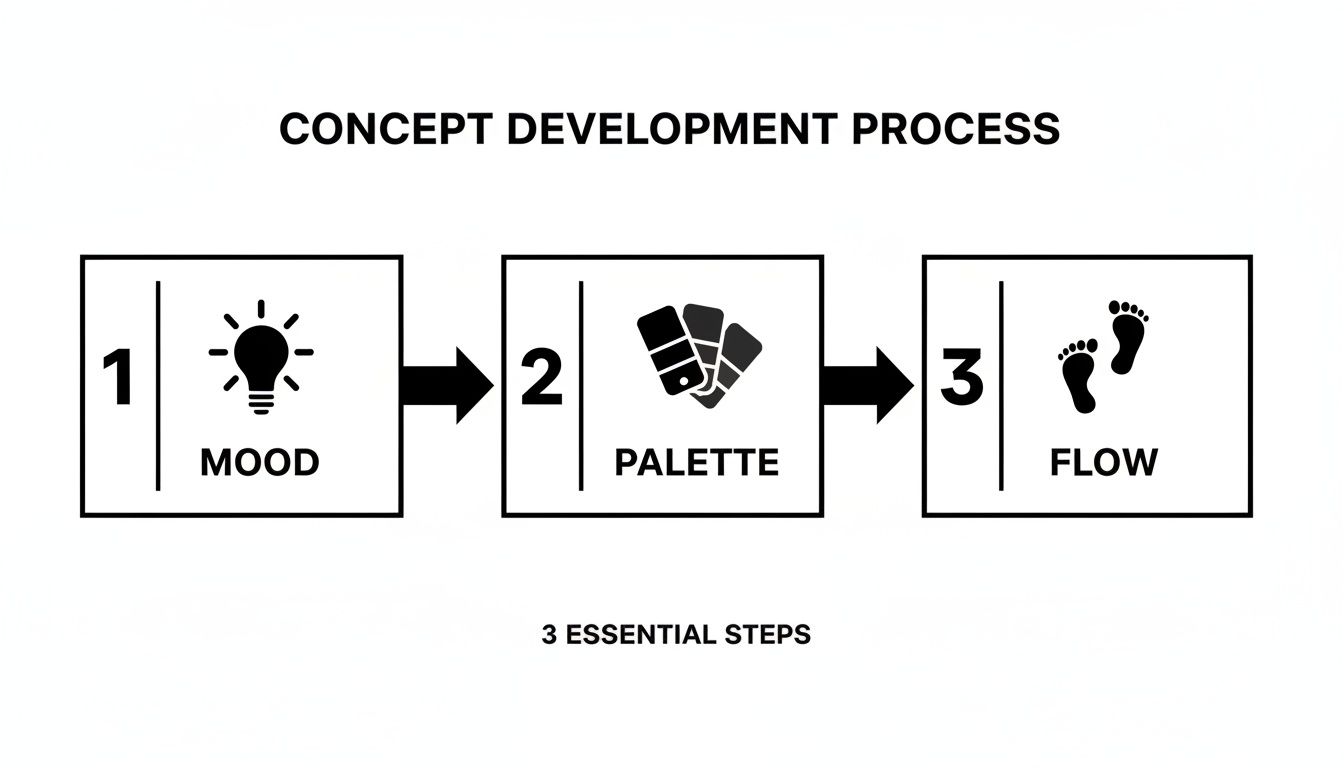
This visual journey shows how an emotional goal (Mood) gets translated into a tangible set of tools (Palette), which then guides the physical experience of the space (Flow). Through this structured yet fluid process, a simple desire for ‘a serene retreat’ evolves from a feeling into a detailed, actionable blueprint. Every choice, from the exact shade of white paint to the living room layout, is now guided by that clear, powerful central idea. The result is a home that feels cohesive, intentional, and deeply personal.
Seeing It in Action: Real-World Examples of Powerful Concepts
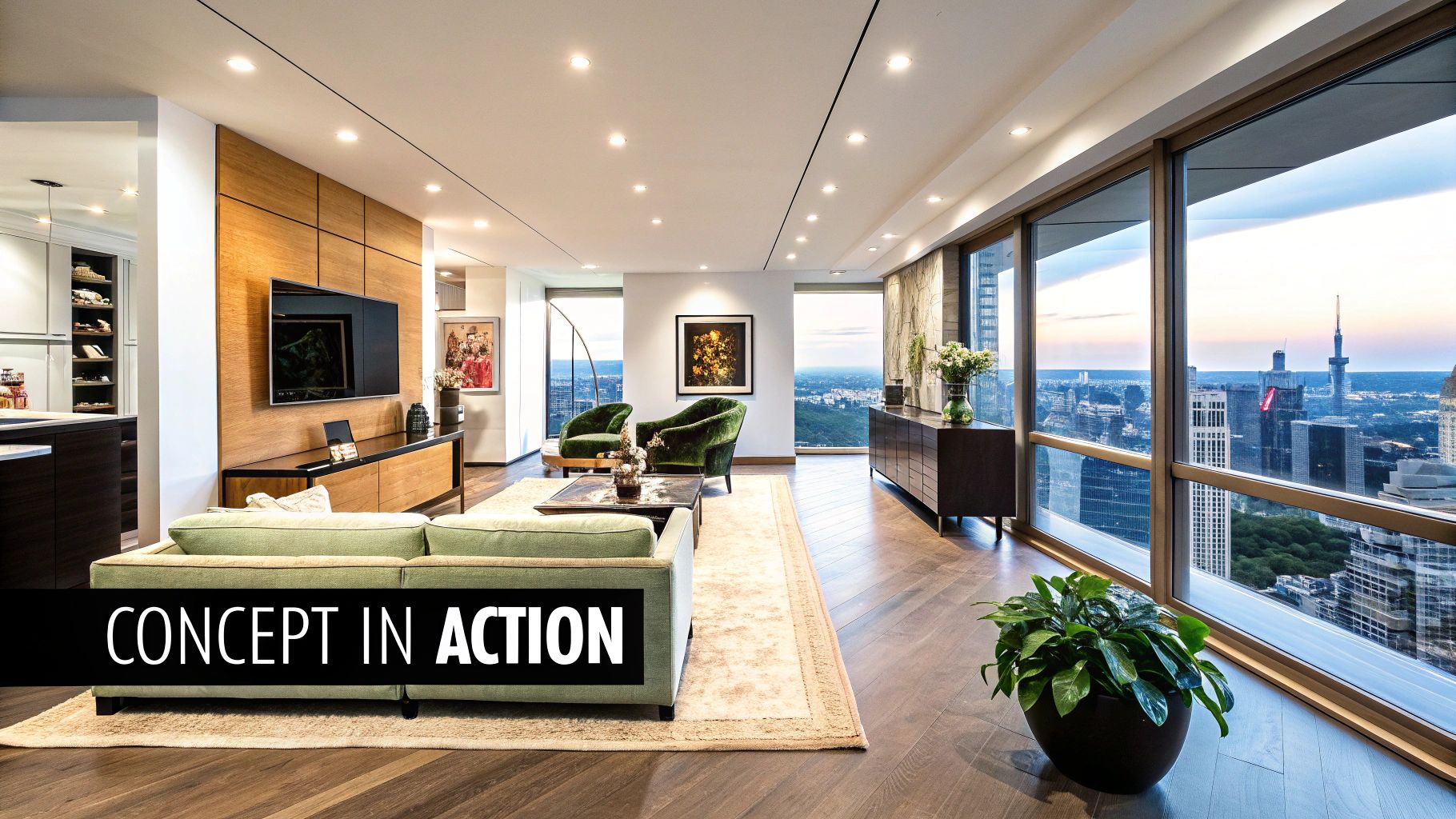
Theory is one thing, but seeing a powerful design concept come to life is where its magic truly becomes clear. The best examples show you the “why” behind the “what,” revealing how one compelling idea can orchestrate every single element in a home to create a cohesive and deeply personal experience.
Let’s break down two very different luxury projects to see how their core concepts were masterfully executed. By looking at the work of exceptional designers, we can trace the line from an abstract idea to the tangible choices that give a space its soul. Every material, form, and finish becomes part of a larger story.
Case Study 1: The Urban Jewel Box
Picture a penthouse apartment floating above a glittering city skyline. The client, a connoisseur of modern art and fine jewelry, wanted a home that was both a sophisticated gallery for their collection and an intimate, glamorous retreat from the world below. From this, the designer developed a guiding concept: the “Urban Jewel Box.”
This simple phrase became the filter for every decision that followed.
- Architectural Forms: The interior walls weren’t just flat planes; they were given faceted angles, echoing the intricate cuts of a gemstone. This created dynamic, shifting perspectives as you moved through the home, catching and refracting light in beautiful, unexpected ways.
- Material Palette: The material choices were a direct translation of the concept. High-gloss lacquered panels in deep sapphire and emerald were set against polished brass and bronze accents. Countertops were crafted from heavily veined marble, looking just like the natural inclusions inside a precious stone.
- Lighting Strategy: The lighting was layered to create a dramatic, glittering effect. Spotlights were precisely aimed to turn the art into focal points, while custom crystal chandeliers served as the centerpiece “jewels” in the main living and dining areas.
The result was a space that felt both incredibly opulent and perfectly curated. Every surface and light source worked together to reinforce the central story of a precious container for art and life, suspended high above the city.
Case Study 2: The First-Person Sanctuary
Now for a completely different brief. A designer was tasked with creating a home for a tech entrepreneur who needed a true escape—a space that would quiet the noise of a demanding career and feel perfectly tailored to their daily rituals. Drawing inspiration from forward-thinking creators like Errolson Hugh, the designer adopted the concept of “The First-Person Sanctuary.”
This concept flips the script. It prioritizes the user’s direct experience—comfort, function, and intuitive ease—above all else. The focus shifts from how the space looks to an outsider to how it feels and works for the person living in it.
A design concept focused on the “first person” ensures that every element is relentlessly practical and deeply comfortable for the individual. The design begins and ends with the question: “How does this serve the user’s immediate experience?”
This approach led to a series of intensely personal design choices that were a direct reflection of the client’s life.
- Intuitive Layout: The kitchen was mapped to the client’s specific cooking habits, with tools and ingredients placed exactly where their hand would naturally reach. A custom pocket built into the arm of a lounge chair was perfectly sized and angled for the client’s phone—a tiny detail that delivers immense daily convenience.
- Sensory Materials: The material palette was chosen for how it felt to the touch. Soft, matte-finished woods, worn leather, and natural linen fabrics created a calming, sensory-rich environment. The priority was on materials that feel good, not just ones that look impressive from afar.
- Personalized Zones: Instead of a generic open-plan layout, the home was carved into distinct zones for the client’s routines. There was a quiet reading nook flooded with perfect morning light, a media room with carefully optimized acoustics, and a bedroom designed purely for rest, with integrated blackout features and zero distracting technology.
By committing to “The First-Person Sanctuary,” the designer created a home that was more than just stylish; it was a seamless extension of the client. And that, right there, is the ultimate goal of a powerful design concept: to create a space that doesn’t just look beautiful, but feels undeniably, perfectly right.
Avoiding Common Mistakes That Weaken a Design Concept
Even the most brilliant luxury residential projects can go off the rails because of a weak or poorly executed design concept. Think of the concept as the foundation of a house; if it’s shaky, everything built on top of it will feel unstable and out of place. Knowing the common pitfalls is the first step toward building a vision that has real strength and clarity.
One of the most common traps is settling for vague, generic ideas. Phrases like “modern minimalism” or “coastal chic” are just starting points—they aren’t the concept itself. Without a unique story or a deeper point of view, these labels are just hollow words that lead to cookie-cutter results. A powerful concept has to answer the why. Why this particular style? Are we aiming for minimalism to create a sense of serene focus, or is it meant to be a quiet backdrop for a vibrant art collection?
Forgetting The Human Element
Another major mistake is designing a concept that completely ignores how the client actually lives. A space might look incredible in a design portfolio, but it’s a failure if it doesn’t support the daily routines and practical needs of the people who call it home. The concept must be the bridge that connects aesthetic goals with real-world function, not just a monument to a style that’s impossible to live with.
This disconnect often happens when a designer is more focused on getting a great photo for their website than on the client’s actual comfort. For example, an all-white, sparsely furnished living room might be visually striking, but it could feel cold and impractical for a family with young children. The best concepts always grow from a deep, empathetic understanding of the client’s life.
A design concept should function as a filter, not a rigid set of rules. When a new idea or request emerges, the question should always be: “Does this support our core narrative?” If the answer is no, it’s a distraction, not an enhancement.
Letting scope creep water down the original vision is another sure way to weaken a project. This happens when new ideas are constantly thrown into the mix without being measured against the core concept. The final result is usually a cluttered, disjointed space that has lost its soul. Setting firm design principles at the very beginning is the best way to protect the integrity of the big idea.
Weak Concept vs Strong Concept
The difference between a powerful and an ineffective design concept often comes down to its specificity, emotional resonance, and practicality. A strong concept acts as a North Star, guiding every decision and inspiring cohesive choices. A weak one, on the other hand, just creates confusion and leads to a fragmented outcome.
The table below breaks down the key differences between a concept that guides and one that gets in the way.
| Attribute | Weak Concept | Strong Concept |
|---|---|---|
| Clarity | Vague and generic (e.g., “A modern home”) | Specific and evocative (e.g., “An urban jewel box for an art collection”) |
| Foundation | Based on fleeting trends or imitation | Rooted in the client’s story, lifestyle, and the site’s unique character |
| Guidance | Leads to inconsistent and arbitrary decisions | Acts as a clear filter for every choice, from layout to finishes |
| Originality | Relies on overused styles and cliches | Offers a unique perspective and a fresh narrative |
| Emotion | Creates a visually pleasing but sterile space | Elicits a specific, intended emotional response (e.g., serenity, energy) |
By consciously sidestepping these common blunders, a design team can ensure the concept remains a powerful and effective guide from start to finish. This vigilance protects the very soul of the project, leading to a final space that isn’t just beautiful, but also cohesive, meaningful, and deeply personal. A strong concept, ultimately, is the best insurance against a disappointing result.
How to Confidently Evaluate a Designer’s Concept
As the client, you are the most important voice in the room. Your ability to understand and thoughtfully critique a designer’s proposal is what elevates a project from good to truly exceptional. This isn’t just about picking finishes; it’s about ensuring the soul of the project aligns with your vision.
Think of the design concept as the strategic blueprint for your home. It’s the core story that should resonate with you on a personal level, guiding every decision that follows. When a concept feels right, it’s because it’s more than just a collection of beautiful things—it’s a cohesive narrative about how you want to live.
Key Questions to Ask Your Designer
When your designer presents their concept, it’s the start of a critical conversation. Don’t be afraid to dig deep. Use these questions to test the strength and suitability of their vision.
- Does this genuinely reflect my personality and lifestyle? Look past the immediate aesthetics. Does the proposed atmosphere truly support how you and your family live, relax, and entertain?
- Can you explain the central story here? Ask the designer to articulate the “big idea” and show how the color palette, material choices, and key furnishings all support that narrative.
- How does this design solve my practical problems? A world-class concept marries beauty with function. It should address your specific needs for storage, traffic flow, and everyday comfort.
- Walk me through the emotional experience of the space. How are you meant to feel as you move from the entryway to the living room or into the private master suite?
This method of using a core idea to bridge research and final form isn’t new. The practice of creating a formal design concept really took hold in the mid-20th century, as industrial design pioneers began developing structured processes to connect human needs with real-world solutions.
Your confidence in a designer’s concept is born from clarity. The “big idea” should be so compelling and well-defined that every subsequent decision feels like a logical, inevitable step forward—not a guess.
Of course, this entire collaborative process begins with finding the right professional. Haute Design is your connection to a vetted network of elite designers who are not just creatives, but master communicators of sophisticated, deeply personal concepts.
Working with a Haute Design expert gives you the assurance that your project is being built on a brilliant and solid foundation. To help you find that perfect partner, take a look at our guide on how to choose an interior designer for more essential insights.
Frequently Asked Questions About Design Concepts
Even with a solid grasp of what a design concept is, a few specific questions always seem to pop up. Let’s tackle some of the most common ones head-on, clarifying the subtle differences between terms and the practical side of the process.
Think of this as a quick-reference guide to sharpen your understanding and clear up any lingering uncertainties about this crucial first step in any high-end project.
What Is the Difference Between a Design Concept and a Theme?
This is a fantastic question because the two are often confused. A theme is really a decorative style applied to a space—think “nautical” or “Hollywood regency.” It’s mostly about specific motifs and visual elements. A design concept, on the other hand, is the deep, foundational story that guides all the decisions.
The concept is the “why” behind every choice; a theme is just one potential aspect of the “what.” For example, a concept focused on creating “a tranquil coastal retreat” might borrow some nautical elements, but its true purpose is to evoke serenity through light, texture, and spatial flow. A powerful concept can drive an entire project without needing an obvious theme at all.
A theme is an aesthetic choice that sits on the surface of the design. A concept is the strategic and emotional core that gives the entire project its structure and meaning.
How Long Does It Take to Develop a Design Concept?
The honest answer? It depends. The timeline can shift quite a bit based on the project’s scale, how quickly decisions are made, and the depth of the designer’s own creative process. One thing is certain: this is a critical phase that should never be rushed.
- For a single room, you might see a solid concept come together in one to two weeks.
- For an entire luxury home, this stage could take anywhere from three to eight weeks, or sometimes longer.
This time is packed with deep research, collaborative client workshops, creative exploration, and the first round of visualizations. Investing this energy upfront builds a rock-solid foundation for the project, which ultimately saves a ton of time and prevents expensive mistakes down the line.
Can a Design Concept Change During the Project?
Yes and no. The core of the concept should absolutely remain consistent to maintain a cohesive vision. Think of it as the project’s North Star. However, it’s also a living document that can be refined as the project unfolds. Minor tweaks are completely normal, especially when you run into real-world challenges, like a specific material suddenly becoming unavailable.
What you want to avoid is a complete overhaul of the core concept mid-project. That kind of major pivot almost always leads to confusion, serious delays, and budget blowouts because it forces a restart on materials, layouts, and plans that were all based on the original idea. A well-defined concept phase is the best insurance against these kinds of drastic, costly changes.
At Haute Design, we specialize in connecting discerning clients with elite, vetted professionals who are masters of creating and communicating sophisticated design concepts.
Ready to find a designer who can translate your vision into an extraordinary reality? Explore our exclusive network.