



Understanding the Punch List’s Role in Project Success
At the end of a long and complex construction or design project, you’re finally at the finish line. The heavy lifting is done, but the job isn’t truly complete until every last detail is perfect. This is where the punch list comes into play.
Think of it as the project’s final to-do list, a formal document created during the last stages to record any work that doesn’t quite meet the agreed-upon contract specifications. It’s the official record of all the small fixes, adjustments, and corrections needed to take the project from “substantially complete” to 100% finished.

This process isn’t about pointing fingers or finding fault. Instead, it’s a crucial, collaborative quality control step. It ensures the final product—whether it’s a custom home or a commercial space—perfectly matches the client’s vision and the standards set out in the contract. This critical step is a fundamental part of the overall custom home building process guide.
The Purpose of a Final Walkthrough
The punch list is born from the final walkthrough. This is a detailed inspection where the client, general contractor, and sometimes the architect or designer walk the site together, eagle-eyed, to identify any remaining issues.
During this tour, the team is looking for specific discrepancies, such as:
- Incomplete Work: Any tasks specified in the scope of work that are still outstanding.
- Incorrect Installations: A light fixture hung at the wrong height or tiles laid in the wrong pattern.
- Damaged Items: Scuffs on a newly painted wall, a scratch on a window, or a dent in an appliance that occurred during construction.
- Functionality Issues: A faucet with low pressure, a window that won’t close properly, or an outlet that has no power.
The term “punch list” literally comes from the old-school practice of punching a hole next to each listed item on the paper document as it was completed. While today’s methods are often digital, the principle remains the same: methodically track and resolve every last detail until the job is done right.
To better understand what goes into a punch list, it helps to break down its core elements. The table below offers a quick snapshot of what you can expect to see on a well-organized list.
Punch List Core Components at a Glance
| Component | Description | Example |
|---|---|---|
| Location | The specific room or area where the issue is found. | “Kitchen, south wall” |
| Item Number | A unique ID for easy tracking and reference. | “PL-001” |
| Description of Issue | A clear, concise explanation of the problem. | “Paint scuff mark near outlet.” |
| Assigned Party | The subcontractor or trade responsible for the fix. | “Painter – ABC Painting Co.” |
| Date Identified | When the issue was first logged. | “2024-10-26” |
| Status | The current state of the item (e.g., Open, In Progress, Complete). | “Open” |
| Date Completed | The date the correction was finished and verified. | ” ” (empty until verified) |
This structured approach transforms what could be a chaotic process into a manageable, transparent system for everyone involved, ensuring nothing gets overlooked before the final sign-off.
Why the Punch List Is Your Project’s Most Important Safeguard
Don’t mistake a punch list for a simple to-do list of minor fixes. It’s so much more than that. Think of it as a powerful financial and legal tool that guides a project to an orderly, successful close. It’s the official bridge between a project being almost done and being truly finished, protecting everyone involved from ambiguity and expensive arguments.
Without this formal step, the end of a project can quickly spiral into a frustrating cycle of endless revisions and disagreements. The punch list cuts through the chaos. It creates a clear, documented path forward by defining the exact scope of work needed to finally fulfill the contract. This structure is absolutely critical for a smooth handover from construction to occupancy.
The Role of Substantial Completion
So, when does the punch list process officially begin? It all hinges on a key contractual milestone called substantial completion. This isn’t just a casual term; it’s the specific point when the property is safe and functional enough for its intended use, even if some minor cosmetic or mechanical issues are still waiting to be addressed.
Reaching substantial completion is a huge deal. It often kicks off the warranty periods and, most importantly, allows the owner to start using the space. But it definitely doesn’t mean the contractor’s job is over. Instead, it’s the signal that it’s time to create the definitive list of items that will carry the project across the finish line.
A project that is 99% complete can feel finished, but that final 1% often holds the most critical details that define client satisfaction. The punch list is the mechanism that ensures this last percentage is executed with the same diligence as the rest of the project.
Linking Final Payment to Final Performance
Here’s where the punch list gets its real teeth. Its most critical function is its direct link to the final payment, typically through a financial practice called retainage. This is a portion of the total project cost—usually 5% to 10%—that the client holds back from the contractor until every last item on the punch list is checked off and approved.
This provides a powerful, built-in incentive for the contractor to resolve all outstanding issues quickly and correctly. It transforms the punch list from a simple request into a contractual obligation with serious money attached.
- Financial Leverage for the Client: Retainage gives the client a safety net if the contractor drags their feet or fails to complete the agreed-upon fixes.
- A Clear Finish Line for the Contractor: The final, substantial payment is only released once the punch list is fully signed off.
- Dispute Prevention: By tying payment directly to performance, it minimizes arguments over what “done” really means and gets everyone working together to close out the project.
Ultimately, the punch list is a safeguard. It formalizes accountability, protects the client’s investment, and gives the contractor a clear and final set of tasks needed to close the books and get paid in full. It ensures the final product is delivered exactly as promised.
Who’s Holding the Clipboard? Roles and Responsibilities in the Punch List Process
A punch list isn’t a battleground; it’s a collaborative push to get a project over the finish line. When everyone knows their part, the process is smooth and professional. But when roles are fuzzy, you get delays, finger-pointing, and frustration. Getting this final stage right comes down to one thing: clarity on who does what.
The process usually kicks off with the general contractor. Before anyone else even walks the site, the GC should be doing their own sweep, creating a “pre-punch list” to catch the obvious stuff. This isn’t just good practice—it shows respect for everyone’s time and sets a professional tone for the final walkthrough.
This initial review forms the bedrock of the official punch list. From there, the process unfolds in a structured sequence, linking the final details of construction to the final payment.
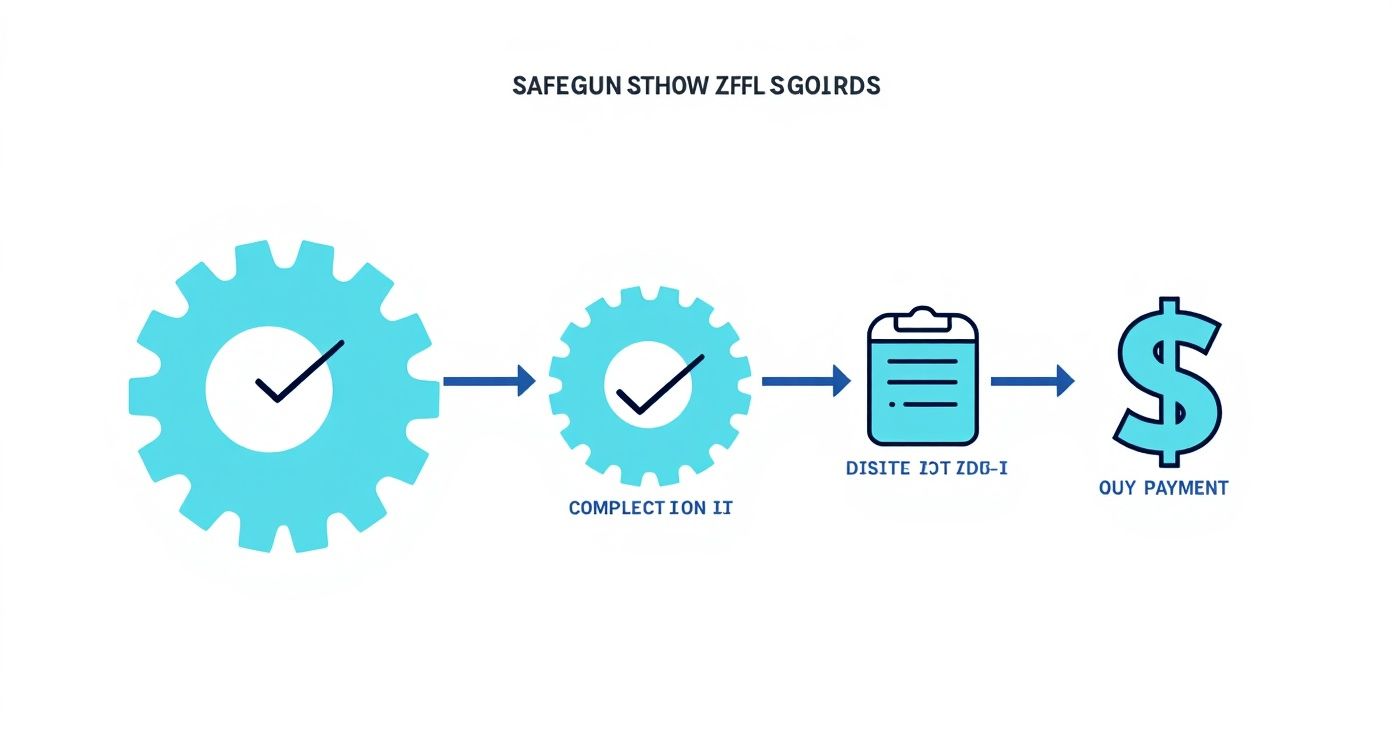
As you can see, the punch list is the critical gatekeeper standing between “substantially complete” and “project finished,” safeguarding that final payment until every last detail is perfect.
The Key Players and Their Part to Play
With the contractor’s initial list in hand, it’s time for the other key figures to step in. Each person brings a different lens to the inspection, ensuring that every angle—from technical specs to the final aesthetic—is covered.
- The General Contractor: The GC is the quarterback of this phase. They create the initial list, but their main job is executing the fixes. This means coordinating with all the subs—the painters, electricians, and plumbers—to get every item on the list checked off efficiently and correctly.
- The Architect or Designer: Think of them as the client’s expert advocate. Their job is to hold the finished work up against the original plans and specifications. With a trained eye for detail, they’re looking at design integrity, the quality of the millwork, the precision of a tile layout—all the subtle things that define a luxury build.
- The Owner or Client: Ultimately, the client gives the final nod. During the walkthrough, they have the chance to point out anything that doesn’t meet their expectations. Their signature is what confirms the project is truly complete and ready for handover.
This teamwork is absolutely essential. A great contractor who takes pride in this final phase can make all the difference. In fact, understanding how a builder handles their punch list process is a key part of learning how to choose a home builder for your custom home, as it speaks volumes about their commitment to quality.
A well-run punch list isn’t about one person dictating to another. It’s a structured conversation between professionals who all share the same goal: delivering an exceptional result.
To break it down even further, here’s a look at how these roles function side-by-side during this critical phase. Understanding this division of labor helps prevent overlap and ensures every base is covered.
Punch List Roles and Responsibilities
| Stakeholder | Primary Role | Key Responsibilities |
|---|---|---|
| General Contractor | Execution & Coordination | Creates the initial list, assigns tasks to subcontractors, manages repairs, and reports progress. |
| Architect/Designer | Quality & Compliance | Verifies work against design plans, inspects finish quality, and certifies that items meet aesthetic and technical standards. |
| Client/Owner | Final Approval | Participates in the final walkthrough, identifies any unsatisfactory items, and provides the final sign-off for payment release. |
When each person on the team is empowered to do their job well, the punch list becomes what it’s supposed to be: the final, satisfying step in creating a beautiful space.
Spotting Deficiencies in High-End Projects
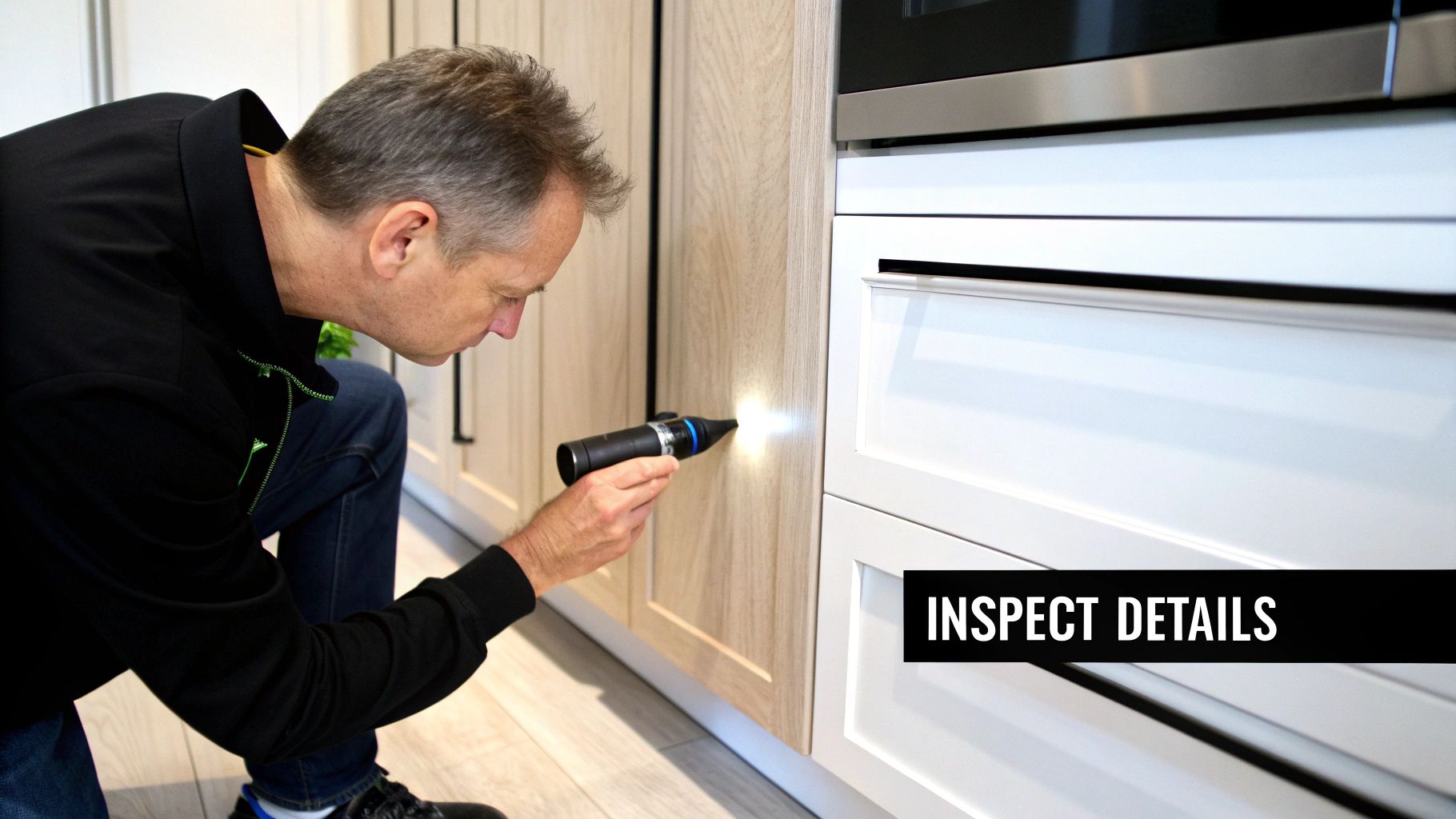
The final walkthrough is where your focus has to pivot. It’s time to stop admiring the big picture and start scrutinizing the tiny details. For luxury projects, this inspection is much more than a quick check for paint scuffs or a crooked outlet; you’re there to confirm a standard of excellence where even the smallest flaw can undermine the entire design.
To build a truly effective punch list, you have to train your eye to see what others miss. This means moving methodically through each space, using all your senses, and knowing the difference between what’s merely “acceptable” and what is truly “impeccable.” A structured approach is the only way to guarantee no detail, however small, slips through the cracks.
Breaking Down the Inspection Process
The best way to tackle a walkthrough without feeling completely overwhelmed is to categorize your inspection. I always tell my team to think in layers—start with the broad surfaces and then drill down into the intricate details. This systematic method keeps you organized and ensures every single element gets the attention it deserves.
First, start with the primary finishes. These are the canvas for the entire design.
- Walls and Ceilings: Scan for flawless paint coverage. There should be zero roller marks, drips, or shifts in sheen. Check for any visible drywall seams or nail pops. If you’re working with high-end wallcoverings, every single seam should be practically invisible.
- Flooring and Tile: Make sure there are no lippage issues where tiles are uneven. Look for cracked grout lines or scratches on delicate wood or stone surfaces. Patterns need to align perfectly, especially with something complex like a herringbone or mosaic installation.
- Doors and Windows: You have to test every single one. They must open, close, and lock smoothly, without any sticking or squeaking. Double-check that all the hardware is secure and completely free of blemishes.
In luxury construction, the standard is perfection. An item for your punch list isn’t just something that’s broken; it’s anything that falls short of the promised level of craftsmanship, from a misaligned cabinet pull to an inconsistent grout line.
Once the main surfaces pass muster, it’s time to shift your focus to the more specialized, functional elements that truly define a high-end space.
Scrutinizing Custom Work and Systems
This is where the real quality of a luxury project shines through—or doesn’t. Custom millwork, integrated technology, and bespoke fixtures demand an even closer look. These components are often the most expensive and complex, so their flawless execution is absolutely critical to the project’s success.
When you inspect these items, it has to be both a visual and a functional check.
- Custom Cabinetry and Millwork: Don’t just look—touch everything. Run your hand over surfaces to feel for absolute smoothness. Check for consistent grain matching across adjacent cabinet doors and drawer fronts. Ensure every door and drawer aligns perfectly and operates smoothly with its specified soft-close mechanisms.
- Integrated Smart Home Systems: Test every single feature. Do the automated lights respond instantly? Do the motorized shades operate silently and in perfect unison? You need to verify that all systems are calibrated and integrated exactly as laid out in the project scope.
- Plumbing and Electrical Fixtures: Turn on every faucet to check for proper water pressure and drainage. Flip every light switch, especially dimmers, to ensure they function without any flickering. Get down on your hands and knees and look closely at the outlets—they must be level and perfectly flush with the wall.
By systematically working through each category, from the broad finishes to the intricate systems, your what is a punch list inspection becomes a professional-grade quality control assessment. This is how you guarantee the final product truly lives up to the highest standards of luxury and design.
Managing the Punch List for a Smooth Finish
Getting the punch list written down is a major step, but the real test is in how you manage it. A messy, disorganized process can drag the final weeks of a project into a painful crawl, full of delays and crossed wires. Get it right, though, and you’ll glide into a professional, timely, and satisfying closeout.
The trick is to transform that static list into a living, breathing action plan. This all comes down to crisp communication, clear deadlines, and a true team effort between the client, designer, and general contractor. It’s the final, critical phase of project management for home renovation, where you turn a list of imperfections into a record of promises kept.
From Spreadsheets to Software
For years, the tools of the trade were a clipboard, a spreadsheet, or an endless email chain. They worked, mostly, but often left plenty of room for error. A crucial email gets buried, a verbal sign-off is misremembered, and suddenly you have a dispute on your hands. Thankfully, today’s dedicated punch list software provides a much more elegant solution.
These platforms act as a central hub where every single item is tracked, assigned, and updated in real time.
Here’s why they’re so effective:
- Photo Documentation: You can attach a photo directly to an item—say, “paint scuff on south wall”—leaving zero doubt about what needs fixing and where.
- Direct Assignments: Tasks are sent straight to the responsible subcontractor’s phone, complete with all the necessary details and an instant notification.
- Digital Sign-Offs: When the work is done, the sub can mark it complete and upload a photo for verification. This creates a clean, undeniable audit trail for everyone.
By corralling all communication into one shared space, these tools drastically reduce the odds of things falling through the cracks—a common headache that can hold up final payments and sour relationships.
Fostering Collaboration and Resolving Disputes
Even with the best technology, a smooth finish still depends on people. The first step is setting a firm—but fair—deadline for completing every item on the punch list. This gives the contractor a clear finish line to race toward and helps manage the client’s expectations for the final handover.
Of course, disagreements can still pop up. A client might feel a repair doesn’t meet their standards, while the contractor is confident the work is done. When you hit a roadblock like this, transparent communication is everything. The first place to look is always the original contract and architectural plans; these documents are the source of truth for defining the expected level of quality.
If you’re still at an impasse, bringing in the architect or designer to act as a neutral third party can be a great move. Their expert eye can determine if the work truly meets the project’s standards, providing the clarity needed to resolve the issue and close out the project on a high note.
Answering Your Top Punch List Questions
Even with a solid plan, the final stretch of any project can bring up a lot of questions. Getting the punch list process right can be the difference between a smooth, satisfying finish and a final few weeks filled with frustration. Let’s clear up some of the most common points of confusion.
Think of this as your field guide to navigating the final details with confidence, ensuring the project ends on a high note.
When Is a Punch List Created?
The punch list officially comes to life when the project hits a key milestone called “substantial completion.” This is a formal term in your contract, and it basically means the space is safe and can be used as intended. A few minor cosmetic tweaks might still be needed, but the heavy lifting is done.
The process usually kicks off with the general contractor doing their own pre-walkthrough to fix anything glaringly obvious. After that, they’ll schedule the formal walkthrough with you and your architect or designer. This is the main event where everyone walks the space together, and that collaborative inspection becomes the official punch list—the roadmap to the finish line.
Punch List Item vs. Warranty Item: What’s the Difference?
The real difference here boils down to one simple thing: timing. Knowing which is which is crucial because it determines who’s responsible for the fix and when it needs to happen.
- A Punch List Item is something identified before you make that final payment and officially close out the project. Think of a misaligned cabinet door, a paint scuff on the wall, or a faulty light switch you find during that final walkthrough. It’s work that wasn’t quite finished to the standards of the contract.
- A Warranty Item pops up after the project is done and you’ve paid the final bill. For example, if a faucet starts leaking three months after you’ve moved in, that’s a warranty issue. These defects in materials or workmanship are covered by the contractor for a set period, which is typically one year.
Here’s a simple way to think about it: A punch list is about fulfilling the promises made in the original contract. A warranty is about guaranteeing the quality of that work after the job is done.
Who Has the Final Say on Completion?
While your satisfaction is what matters most, it’s usually the architect or designer who contractually has the final authority to sign off on the punch list. They act as your expert representative, using their professional eye to confirm that every corrected item meets the quality and design standards laid out in the plans.
Their official approval is the green light that certifies the work is truly complete. This certification is what gives you the go-ahead to release the final payment to the contractor, including any funds held back (often called retainage).
Can You Add More Items to the Punch List Later?
In a perfect world, that final walkthrough is so thorough that you create one definitive punch list. The last thing anyone wants is a “rolling punch list” where new items keep getting added, because it can drag out the project’s end indefinitely.
That said, if a genuine defect was simply missed during the initial inspection, it can usually be added. What you want to avoid is adding new requests or very minor things after the fact, as it really disrupts the closeout schedule. The best approach is to be incredibly meticulous during that first walkthrough. Take your time, look everywhere, and make that first list as complete as possible.
At Haute Design, we connect discerning clients with top-tier professionals who understand that excellence is in the details. Discover designers, architects, and builders who master every phase of a luxury project, including the critical final punch list, by visiting our network. Find your perfect project partner at https://hauteliving.com/designnetwork.