


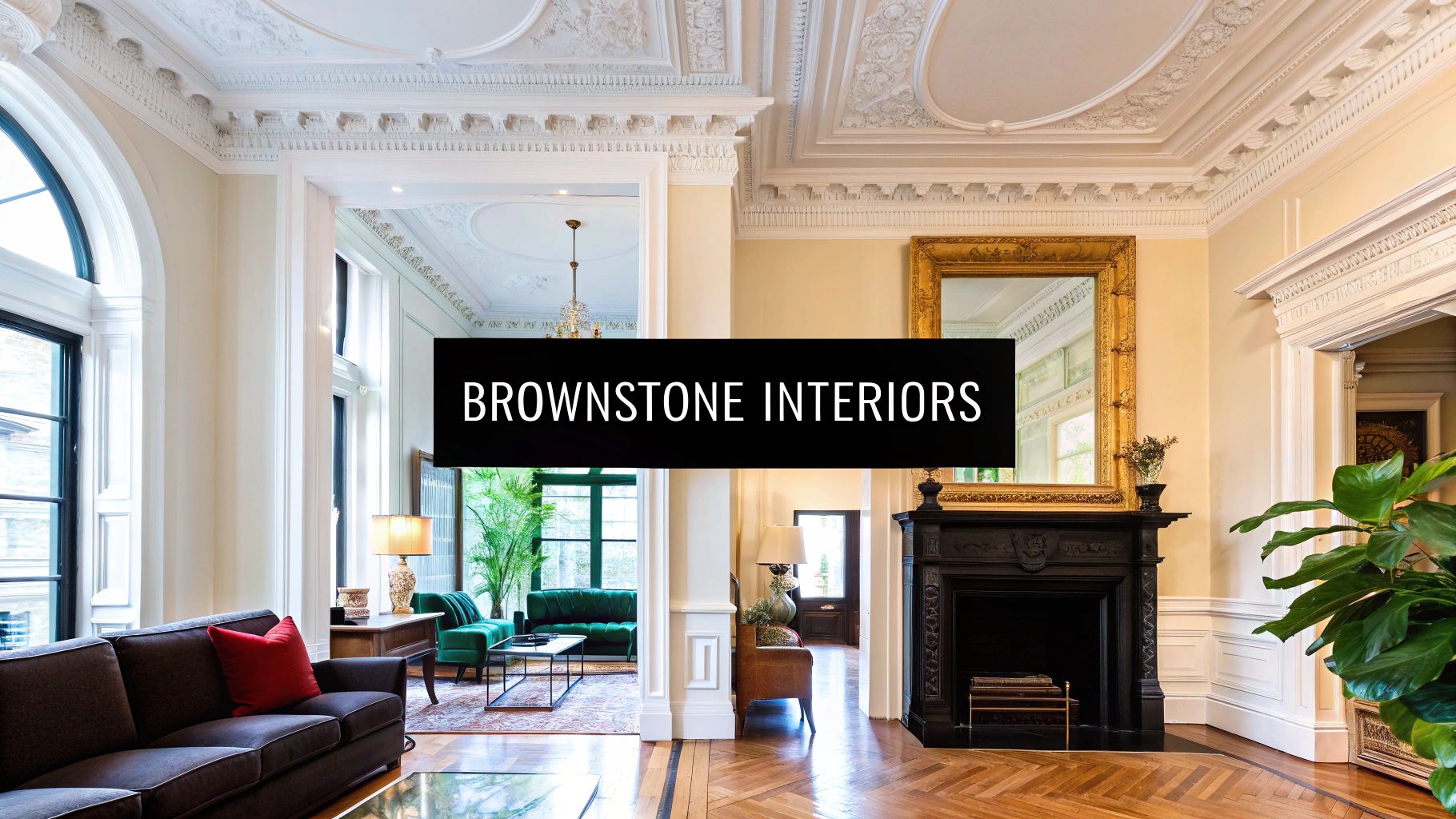
Designing a New York brownstone isn’t just an interior design project; it’s a conversation between the past and the present. You’re working with a home that has history etched into its walls, from the ornate plaster moldings down to the original marble mantels. The real art is in honoring that character while making the space work for a modern family.
The outcome is a home that feels layered and authentic—a place that tells a story, both of the city and of the people who live there now.
The Enduring Charm of Brownstone Interiors
Walking into a classic brownstone is an experience. You’re not just entering a house; you’re stepping onto a historical canvas. These homes aren’t blank slates waiting for a designer’s stamp. They come with a built-in narrative, and the first step in any renovation is learning to read it.
This architectural legacy is precisely what makes New York brownstone interior design so unique. It’s a process that starts with respecting what’s already there. The high stoops, soaring parlor-floor ceilings, and grand proportions weren’t just for show; they shaped the social and family life of a different time.
Reading the Architectural Story
To do a brownstone renovation right, you have to understand the “why” behind its original layout. The parlor floor, for example, was the public face of the home, designed to impress guests with its high ceilings and decorative flair. Down on the garden level, things were more practical—that’s where you’d typically find the kitchen and service areas.
This historical context is a powerful guide for modern design. Instead of fighting the home’s natural flow, you can lean into it. The parlor floor is still perfect for a dramatic living and dining area, while the garden level can become a cozy family hub that opens right out to the backyard.
A brownstone’s best features are often its original ones. The goal is to repair and celebrate elements like plaster moldings, wooden pocket doors, and fireplace mantels, making them livable for the next hundred years while preserving their irreplaceable character.
A Distinctly New York Heritage
The story of these homes is woven into the fabric of New York itself. Brownstones first appeared in the mid-19th century, built mostly between the 1840s and early 1900s. They were an elegant solution for the city’s growing middle class. The iconic reddish-brown sandstone, often sourced from Connecticut, was more affordable than limestone or marble, giving entire neighborhoods a warm, cohesive look.
Architecturally, you’ll see a lot of Italianate and Neo-Grec influences—think high stoops, ornate doorways, and gracefully arched windows. This history isn’t just a fun fact; it’s the very foundation of your design. For a deeper dive, you can learn more about NYC’s brownstone origins.
Before diving into a renovation, it’s crucial to identify the defining architectural features that give a brownstone its soul. The table below outlines some of the most common elements you’ll encounter.
Signature Architectural Elements of a Classic Brownstone
| Feature | Architectural Style | Design Purpose |
|---|---|---|
| The High Stoop | Italianate, Neo-Grec | Creates a formal entry, elevating the main living floor above the street for privacy and status. |
| Parlor Floor | Victorian | The primary entertaining space, featuring the highest ceilings (often 10-12 feet), large windows, and ornate details. |
| Plaster Moldings | Victorian, Neo-Grec | Decorative elements like crown molding and ceiling medallions that signify the importance of a room. |
| Fireplace Mantels | Italianate, Victorian | Typically marble or slate, serving as the focal point of parlors and primary bedrooms. |
| Pocket Doors | Victorian | Large, sliding wooden doors used to separate public spaces like the front and back parlors. |
| Hardwood Floors | All Eras | Often inlaid with intricate parquet patterns in formal rooms, adding warmth and texture. |
Recognizing and preserving these details is what separates a thoughtful renovation from a generic one. They are the irreplaceable elements that anchor the entire design.
Key Elements That Define Brownstone Character
So, what truly makes a brownstone a brownstone? It comes down to a few core features that shape the living experience.
- Vertical Layout: Life unfolds across multiple floors in a tall, narrow footprint. This is the central challenge and opportunity of brownstone living.
- The High Stoop: More than just stairs, this is the classic welcome, creating a grand transition from the public street to the private home.
- Parlor Floor Grandeur: This is the heart of the home’s historic character, with ceilings that can soar over 10 feet, oversized windows, and the most elaborate millwork.
- Original Millwork and Plaster: These are the crown jewels. Think intricate ceiling medallions, detailed crown molding, and original wooden trim that you simply can’t replicate today.
- Fireplace Mantels: Usually carved from beautiful marble or slate, these mantels anchor the main living spaces and serve as a testament to the home’s history.
When you start with an appreciation for this built-in character, you can create a design that feels both stunningly modern and deeply connected to its roots.
Optimizing the Vertical Brownstone Layout
The tall, narrow footprint of a classic New York brownstone is its greatest charm and, simultaneously, its biggest design puzzle. Life unfolds vertically across multiple floors, a reality that can feel at odds with the open, flowing layouts modern families crave. The secret to a successful new york brownstone interior design isn’t to fight this verticality, but to embrace it, creating a seamless journey from the garden level to the top floor.
It all starts with understanding the home’s original purpose. The parlor floor was the public showpiece, the garden level was the utilitarian heart, and the upper floors were private sanctuaries. By reimagining these roles for contemporary life, we can dramatically improve flow and function without stripping away the home’s historic soul. This strategic rethinking is the essence of smart spatial planning. For a deeper dive into the core principles, this guide to smarter design through spatial planning is an excellent starting point.
Reimagining the Parlor Floor
The parlor floor is where a brownstone puts on its best face. With ceilings often soaring 10 to 12 feet, this level was built to impress. The challenge today is preserving that grandeur while making the space work for casual, everyday living. While many homeowners want an open-concept feel, simply knocking down walls can erase the distinct architectural character of the front and back parlors.
A more nuanced approach is to create wide, elegant openings where pocket doors once stood. This maintains the visual separation and historic proportions while letting light and movement flow freely.
This concept map breaks down the core elements that give a brownstone its unique character.
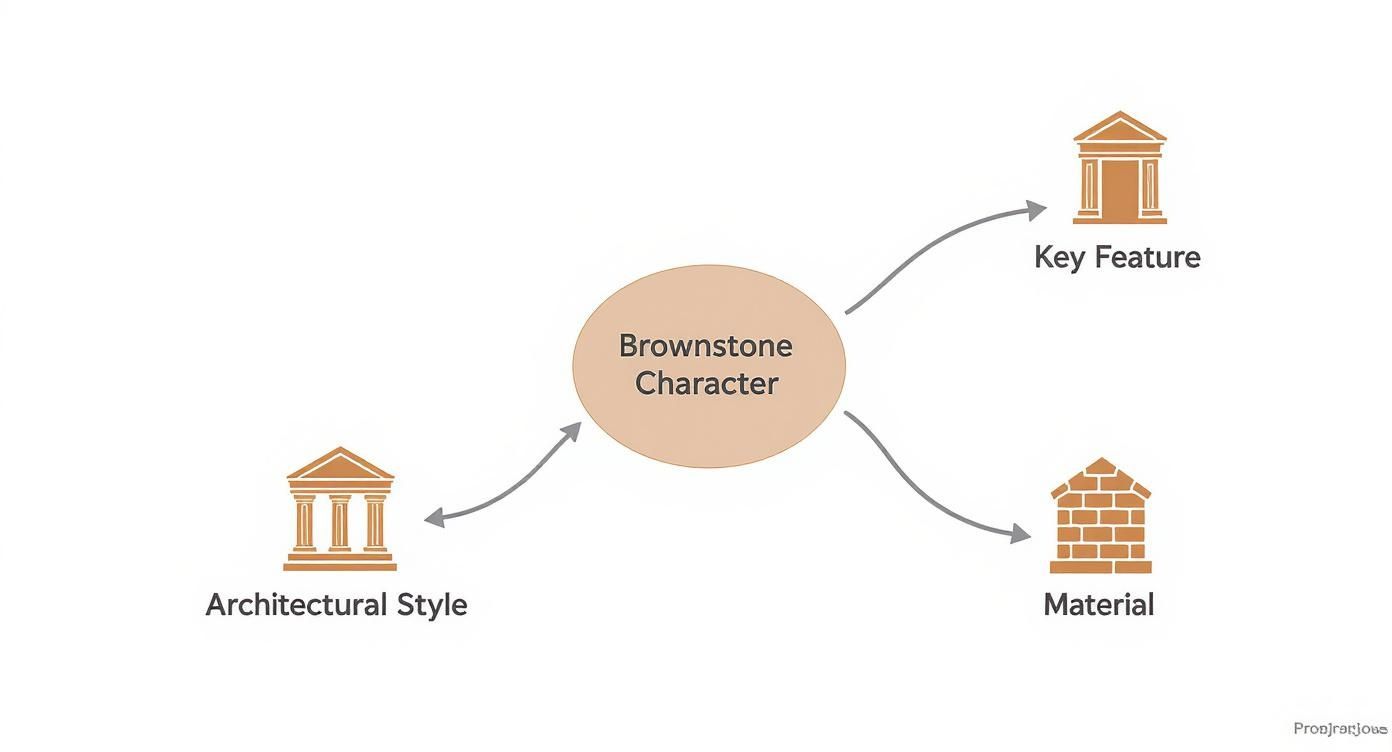
As the map shows, everything from the architectural style to signature features like the stoop and the brownstone sandstone itself comes together to create the home’s unmistakable identity.
Consider these strategies for a more thoughtful parlor floor:
- Restore Pocket Doors: If the original doors are still there or can be salvaged, restoring them offers incredible flexibility. Close them for formal events or slide them open for a connected, daily-living layout.
- Create Cased Openings: When doors are long gone, building wide, cased openings framed with period-appropriate millwork preserves a sense of architectural division without the physical barrier.
- Zone with Furniture: Use large area rugs and intentional furniture groupings to define distinct spaces—a living area up front, a dining space in the back—all without a single wall.
Transforming the Garden Level Hub
Historically a service floor, the garden level is now one of the most desirable spaces in a modern brownstone. Its direct access to the backyard holds massive potential to become a dynamic family hub. The lower ceilings here also create a cozier, more intimate atmosphere compared to the grand parlor upstairs.
The goal is to make this floor the center of daily life. This often means moving the kitchen down from the parlor floor to create a combined kitchen, dining, and family room that flows right into the outdoor space. Installing large glass doors or folding wall systems can practically erase the line between inside and out, making the garden a true extension of the home—a rare and coveted luxury in New York City.
The Staircase: A Home’s Central Artery
In a vertical home, the staircase is more than just a utility. It’s the spine that connects every level and a major opportunity to make a design statement. Restoring an original staircase, from its polished mahogany banister to its intricately carved newel post, can create a stunning focal point.
But the staircase can also be a barrier to light, contributing to the dark, windowless core that plagues many brownstones. Luckily, there are solutions.
Here’s how to bring light back to the center of the home:
- Install a Skylight: Placing a skylight at the very top of the stairwell is the single most effective way to flood the home’s core with natural light, letting it filter all the way down.
- Use Reflective Surfaces: A well-placed mirror on a landing or along a stairwell wall can work wonders, bouncing light into darker corners.
- Layer Your Lighting: A thoughtful lighting plan, including sconces on the walls and a beautiful pendant or chandelier in the stairwell, ensures the space is bright and welcoming day and night.
By treating each floor—and the connections between them—with clear intention, you can transform a series of stacked rooms into a cohesive, beautiful home that honors its past while fully embracing the present.
Balancing Historic Details with Modern Living
The real magic in a New York brownstone interior design project happens when you strike the right balance between past and present. It’s not about erasing history for the sake of modernity, or creating a museum piece that’s unlivable. It’s about a thoughtful conversation between the two.
Think of the brownstone’s original architecture as a beautiful, irreplaceable frame. Your job is to fill that frame with a picture of modern life, creating something richer than either element could be on its own.
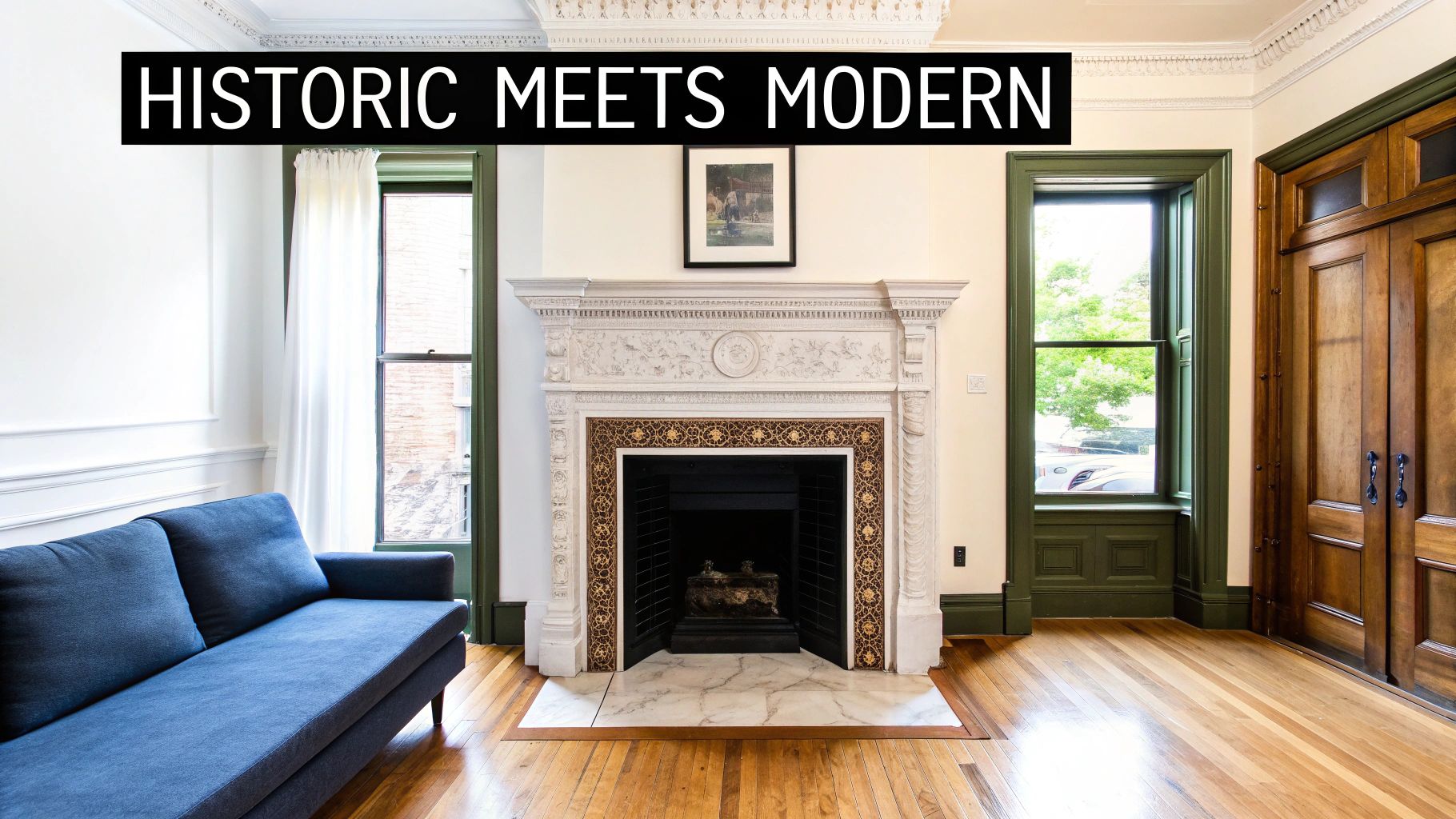
This is a philosophy of layering. A high-performance, minimalist kitchen doesn’t have to fight with a 150-year-old plaster medallion. In fact, the clean lines of the new can make the old detail feel even more special. The goal is a home that feels cohesive, deeply personal, and respectful of its own history.
Preserving the Irreplaceable Original Features
Before a single modern fixture is chosen, the first order of business is an architectural inventory. You have to identify, protect, and restore the gems that give a brownstone its soul. These features are the heart of the home, and their preservation is what elevates a project from a simple gut renovation to a truly thoughtful restoration.
The most successful brownstone interiors in Brooklyn and beyond are defined by this blend. They honor the soaring ceilings, intricate moldings, and grand fireplaces while making them work for today. Many of our favorite projects even retain elements like original pocket doors to add texture and a tangible link to the past.
Here are the key historic elements you should always fight to preserve:
- Ornate Ceiling Moldings and Medallions: Often caked under a century of paint, these plaster details are true works of art. Careful stripping and restoration can reveal breathtaking craftsmanship. Our guide to crown molding design dives deeper into how these elements shape a room.
- Marble Fireplace Mantels: As the original focal point of the parlor and primary bedrooms, these mantels are powerful anchors. Once cleaned and repaired, they can ground any design scheme, from the traditional to the starkly modern.
- Elegant Pocket Doors: If you’re lucky enough to have them, don’t let them go. Restoring these offers incredible flexibility, allowing you to choose between an open, flowing layout or intimate, separate rooms at a moment’s notice.
- Original Hardwood Floors: They might look rough, but don’t be too quick to replace them. The original wide-plank or parquet floors can almost always be salvaged, bringing a warmth and authenticity that new materials simply can’t replicate.
Layering in Modern Functionality
With the historic framework secured, you can start weaving in the comforts and aesthetics of modern life. The trick is to create contrast that feels intentional and complementary, not jarring.
The kitchen is the perfect place to see this in action. Imagine sleek, European-style cabinets and integrated appliances set against a beautifully weathered exposed brick wall. The juxtaposition makes you appreciate both the precision of the new and the texture of the old.
The best designs treat old and new as equal partners. A modern sculptural light fixture doesn’t compete with a Victorian ceiling medallion; it illuminates it, drawing the eye upward and celebrating the contrast in form and era.
The same principle applies elsewhere. In a bathroom, a floating vanity and a frameless glass shower can create a wonderful sense of light and space. But when they share the room with an original six-foot window and its historic casing, the entire space is elevated. The window remains the star.
A Sophisticated Palette That Bridges Eras
Color is the invisible thread that ties everything together. The right palette can make architectural details sing, amplify natural light, and create a seamless flow between historic and contemporary moments.
We generally find ourselves leaning into one of three approaches:
- Monochromatic Sophistication: Painting the walls, trim, and even the ceiling in a single, soft neutral—like a warm off-white or a sophisticated pale gray—unifies the space. This technique turns intricate moldings into subtle, textural shadows rather than loud statements.
- Dramatic Contrast: For a bolder look, wrap the walls in a deep, moody color like charcoal, navy, or a rich forest green. This makes the original restored trim pop in sharp, elegant relief, turning the millwork itself into graphic art.
- The Strategic Accent: Sometimes, a single wall is all you need. Using a bold color or a contemporary wallpaper on the fireplace wall, for instance, creates a modern focal point that still pays respect to its historic counterpart.
Ultimately, this balancing act is about respect. It’s about honoring the craftsmanship of the past while introducing the very best of contemporary design. The result is a home that isn’t just beautiful and functional, but one that is rich with character and stories.
Choosing Materials That Honor a Brownstone’s Legacy
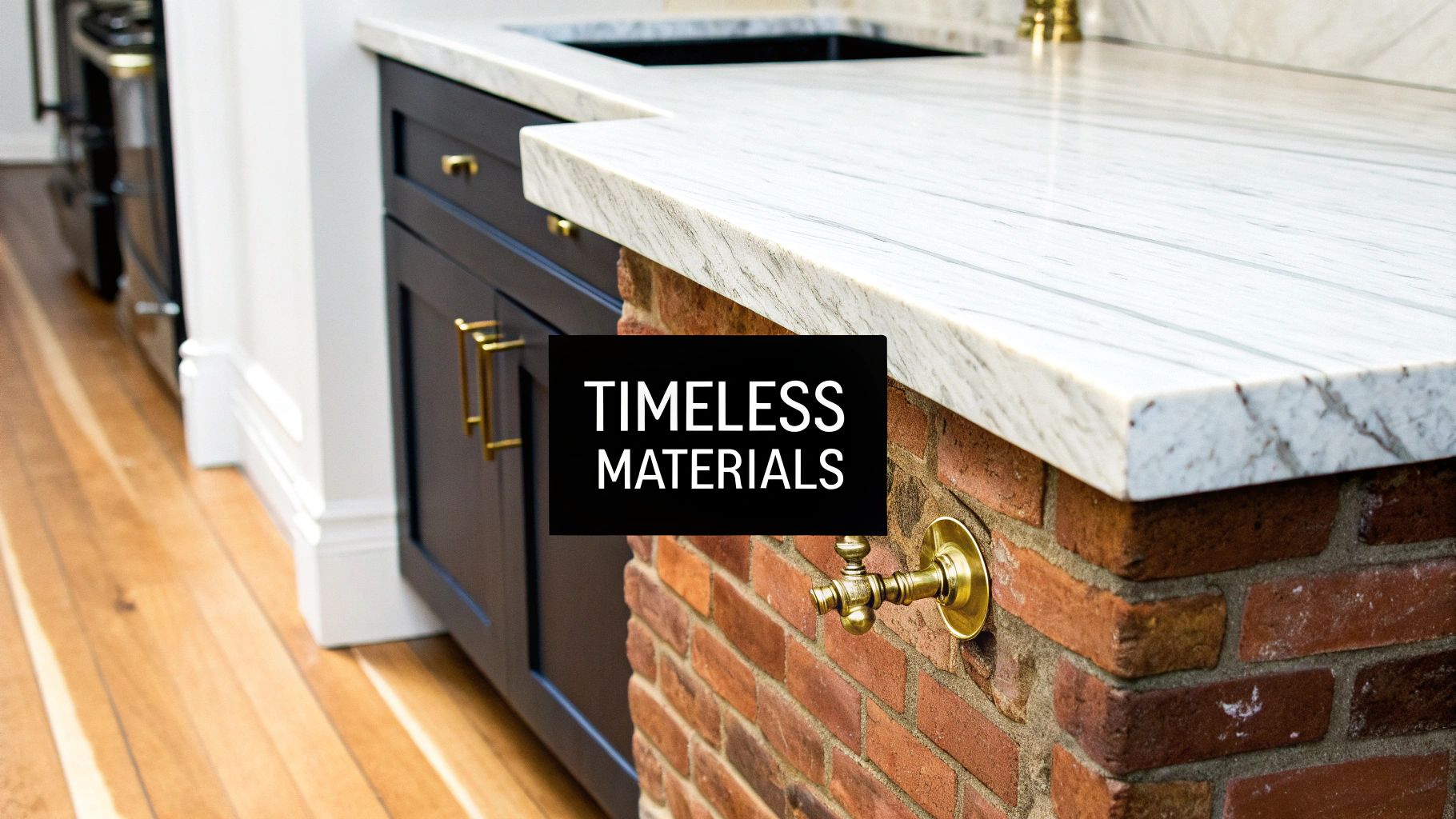
Selecting materials for a New York brownstone is an exercise in storytelling. The architecture itself is the main character, and every finish—from the floorboards underfoot to the brass pulls on a cabinet—has a supporting role. The goal is to choose materials that can stand up to modern life while feeling like they’ve been part of the home’s story all along.
This isn’t about creating a museum. It’s about choosing finishes that develop a rich character over time, ensuring your home feels both grounded in its history and perfectly suited for its future.
Building the Foundation with Authentic Flooring
Your floors set the stage for the entire design. Many brownstones hide a priceless asset under years of wear: original wide-plank or intricate parquet hardwood. Before you even think about replacement, it’s worth investigating what can be saved.
More often than not, these original floors can be expertly sanded, repaired, and refinished. The process reveals a depth of color and warmth that new materials simply can’t mimic. If you do need to install new flooring, stick to materials that respect the home’s era, like reclaimed longleaf pine or new white oak with a custom stain that complements the original woodwork.
The Art of Wall Finishes
In a brownstone, walls are more than just backdrops; they are textured canvases. Preserving original horsehair plaster should always be the first priority. Its subtle, imperfect surface has an organic quality that modern drywall can never quite capture.
Exposed brick is another signature element, but it’s best used with a light touch. An entire room of exposed brick can feel heavy and cave-like. Instead, treat it as an accent—a feature wall in a kitchen or a cozy garden-level den—where its raw texture can create a beautiful contrast against more refined finishes.
The most incredible thing about historic homes is how well-made they are. Our goal is always to repair as much damage as we can to original elements, while making sure that they become livable for the next 100 years.
For painted walls and trim, think about how the finish will interact with the light. A satin or eggshell paint on intricate moldings will catch the light beautifully, highlighting the craftsmanship without the distracting glare of a high-gloss, contemporary finish.
Timeless Surfaces for Kitchens and Baths
Kitchens and bathrooms are where historical character meets the demands of modern life. This is where “living finishes”—materials that age gracefully—truly shine.
Think of it like choosing a fine leather bag over a vinyl one. The one with natural imperfections is the one that gains character and tells a story over time.
- Marble and Soapstone Countertops: While quartz is undeniably practical, natural stones like Carrara marble or soapstone possess a timeless quality that feels right at home in a historic setting. They will etch and wear, but this patina is part of their charm.
- Unlacquered Brass Fixtures: Unlike modern coated brass, unlacquered brass darkens and develops a beautiful, warm patina with every use. It lends an immediate sense of age and authenticity to sinks, showers, and cabinetry.
- Handmade Ceramic Tile: For backsplashes and bathroom floors, consider handmade tiles like Zellige. The slight irregularities in their color and texture provide a softness and character that mass-produced options lack.
Sourcing Period-Appropriate Details
The final layer of authenticity comes from the details you touch every day. Getting the hardware and millwork right makes a huge difference in the finished space.
Here’s a look at how to swap standard choices for more authentic alternatives:
| Element | Standard Modern Choice | Period-Appropriate Alternative |
|---|---|---|
| Cabinet Knobs | Polished chrome, stainless steel | Unlacquered brass, polished nickel, antique bronze |
| Door Hinges | Standard butt hinges | Ball-tip or steeple-tip hinges in a matching finish |
| Baseboards | Simple 3-inch colonial style | Taller, multi-part baseboards (5-7 inches) with a cap |
| Light Switches | Standard plastic toggle switches | Push-button switches with brass or nickel plates |
By investing in these small but significant details, you create a cohesive narrative. The result is a home where every surface feels intentional and deeply connected to the building’s legacy—a space built to last another century.
Navigating a Brownstone Renovation Project
Taking on a brownstone renovation is as much a logistical puzzle as it is a creative journey. The dream of restoring ornate plasterwork and picking out the perfect slab of marble quickly meets the reality of permits, specialized trades, and a very different kind of budget. A truly successful new york brownstone interior design project is forged right here—in the meticulous planning that happens long before a single wall comes down.https://www.youtube.com/embed/2Zs06-AWzPw
Think of it less like building a new car and more like restoring a vintage one. You’re working within an existing, often delicate, framework that demands a special level of expertise and patience. The team you assemble, the budget you set, and your grasp of local regulations are the tools that will honor the home’s past while bringing it beautifully into the present.
Working with the Landmarks Preservation Commission
Most of New York City’s quintessential brownstone neighborhoods are designated historic districts. This means any work on the facade—and often significant interior changes visible from the street—falls under the watchful eye of the NYC Landmarks Preservation Commission (LPC). The LPC’s job isn’t to stop you from renovating, but to guide the process so it protects the neighborhood’s unique architectural fabric.
This oversight is a big reason why these homes hold their incredible value. But it does mean you need a clear strategy.
- Permit Tiers: Not all work is created equal in the LPC’s eyes. Simple repairs might get a quick “Certificate of No Effect,” while bigger changes like replacing windows or building an extension will require a more involved “Certificate of Appropriateness.”
- Expert Guidance: Dealing with the LPC is a specialized skill. An architect with a long track record in historic districts is non-negotiable. They know the unwritten rules, understand the guidelines, and can put together the detailed submissions needed for a smooth approval, saving you months of headaches and potential rejections.
Assembling Your Preservation-Minded Team
The success of your brownstone renovation truly rests on the team you hire. You need more than just technical skill; you need professionals who have a genuine feel for historic architecture. Your average contractor might be great at drywall, but they likely lack the nuanced touch required to restore 150-year-old plaster or repair original pocket doors.
Seek out architects and builders who specialize in historic homes. Their portfolios should be filled with projects like yours, and they should speak fluently about the unique challenges brownstones present—from sagging floor joists to plumbing systems snaked through plaster walls. Vetting this team is one of the most important things you’ll do. To learn more about the foundations of a successful project, check out our detailed guide on how to plan a home renovation.
Budgeting for Historic Realities
Budgeting for a brownstone renovation is a whole different ballgame compared to a new build or a standard apartment gut. The costs are almost always higher, and the potential for surprises is much, much greater.
The thing we love most is getting to know the history of each house that we work on and prepare it for the new life we are setting it up for in the next 100 years.
This perspective gets to the heart of it: you’re not just a homeowner, you’re a steward of the property. Budgeting for that responsibility means accounting for some very specific costs.
To help you get started, here’s a look at the common cost centers and what to keep in mind.
Brownstone Renovation Budget Considerations
| Project Area | Typical Cost Drivers | Preservation Note |
|---|---|---|
| Structural & Exterior | Façade restoration, repointing, foundation work, roof replacement, window restoration or approved replacement. | LPC approval is mandatory for all exterior work. Costs for skilled masonry and historic window specialists are significant. |
| Interior Architecture | Layout changes, stair restoration, plaster and molding repair, gutting outdated systems (plumbing, electrical, HVAC). | Restoring original details is labor-intensive. Moving walls can trigger structural upgrades and complex engineering reviews. |
| Mechanical Systems | Upgrading to modern HVAC, electrical panels, and plumbing lines within existing plaster walls and floor joists. | Integrating modern systems without damaging historic fabric requires careful planning and skilled tradespeople. |
| Finishes & Millwork | Reclaiming or sourcing period-appropriate wood flooring, custom-milling moldings, tile, stone, custom cabinetry. | Sourcing authentic materials costs more than standard off-the-shelf options. Artisan-level skill is needed for installation. |
| “Soft” Costs | Architect and engineer fees, LPC filing fees, expeditor costs, permits, and a crucial contingency fund. | These professional fees are essential for navigating the complex approval process. Never skimp on your contingency. |
Let’s break down some of those key budget items further:
- Specialized Labor: Restoring plaster moldings or intricate woodwork isn’t a job for a general carpenter; it requires true artisans, and their expertise comes at a premium.
- Structural Surprises: After decades of settling, you never know what you’ll find when the walls come down. A healthy contingency fund—typically 15-20% of the total construction cost—isn’t just a suggestion; it’s essential.
- Material Authenticity: Finding period-appropriate materials, from reclaimed hardwood to custom-milled moldings, is an investment that costs more than a trip to a big-box store.
Preserving a brownstone’s soul is a significant investment, but it’s one that pays off. Today, New York City brownstones can command anywhere from $3.5 million to over $20 million, with their value held firm by their historic exclusivity. The original brownstone sandstone is so scarce it makes new construction of this kind virtually impossible, ensuring these homes remain prized, irreplaceable assets. Navigating the complexities of a thoughtful renovation is how you protect and enhance that incredible, enduring value.
Answering Your Brownstone Design Questions
Stepping into a New York brownstone renovation is an incredible journey, but it’s one that naturally comes with a lot of questions. We get it. From the big practicalities of daily life to the finer points of design, knowing what to expect is crucial.
Think of this as a conversation with an expert who’s been there before. We’ve pulled together the most common questions we hear and are sharing the straight answers you need to move forward with confidence.
How Can I Get More Natural Light into a Dark Brownstone?
This is the classic brownstone dilemma. Their long, narrow footprint often leaves the middle of the house feeling like a cave. But don’t despair—there are some truly effective architectural tricks to flood your home with light.
Here are the solutions we turn to time and again:
- Install a Skylight: This is the single biggest game-changer. Placing a skylight over the central staircase turns the entire stairwell into a channel for sunlight, pulling light down through the core of the house and illuminating every level.
- Open Things Up: Swap out solid wood doors for ones with glass panels, especially on the main floors. This simple change allows light to travel from the sunny front rooms all the way to the back. We also look at widening the openings between rooms on the parlor floor to create an better flow of both light and life.
- Choose Lighter Finishes: It might sound simple, but the right paint makes a huge difference. Light, reflective colors—think soft whites, warm neutrals, or the palest of grays—will amplify whatever natural light you have. A satin or eggshell finish will also bounce light around far more effectively than a flat, matte paint.
Are Brownstones Really That Hard to Heat and Cool?
Honestly, they can be. With their old-school construction, tall ceilings, and original (and often drafty) windows, keeping a brownstone comfortable year-round can be a challenge. Those original single-pane windows and clunky heating systems were not designed for modern standards of efficiency.
But with the right upgrades, you can make your home incredibly comfortable:
- Modernize Your Windows: If you have original windows, restoring and properly weather-stripping them can work wonders. If they’re beyond repair and the Landmarks Preservation Commission approves, investing in high-performance, historically accurate replacements is one of the best decisions you can make.
- Rethink the HVAC: A single thermostat trying to control four or five floors just doesn’t work. Installing a modern, high-efficiency HVAC system with multiple zones is key. This lets you set the temperature for each floor independently, saving energy and keeping everyone comfortable.
- Insulate Strategically: While insulating the original brick walls can be a major undertaking, you absolutely must ensure the roof is well-insulated. This is where most heat is lost in the winter and gained in the summer. Any new extensions should also be built with top-tier insulation.
What Are the Biggest Renovation Surprises I Should Plan For?
A 150-year-old building has a lot of stories hidden within its walls. No matter how thorough your initial inspections are, you have to go into the project expecting the unexpected. The secret is to build that possibility directly into your budget and timeline from day one.
The thing we love most is getting to know the history of each house that we work on and prepare it for the new life we are setting it up for in the next 100 years.
This mindset is everything—renovation is a process of discovery. Here are the things we tell clients to be ready for:
- Structural quirks: After more than a century, floors settle. You might open up a ceiling to find sagging joists, or discover a crack in a foundational beam that needs immediate attention before any cosmetic work can even start.
- Antique systems: Finding old knob-and-tube wiring or ancient cast-iron plumbing is incredibly common. These systems are not up to modern safety codes and will require a full replacement, which can be a substantial, unplanned cost.
- Hidden damage: Demolition day is when the real secrets are revealed. We often uncover evidence of old leaks, termite damage, or shoddy repairs from decades past. This is precisely why a contingency fund of 15-20% of your total construction budget isn’t just a nice-to-have—it’s absolutely essential.
Are you an interior designer, architect, or builder looking to connect with a discerning clientele? Join the exclusive network at Haute Design and showcase your work to an audience that values exceptional quality and craftsmanship. Find out more and apply for your membership.