


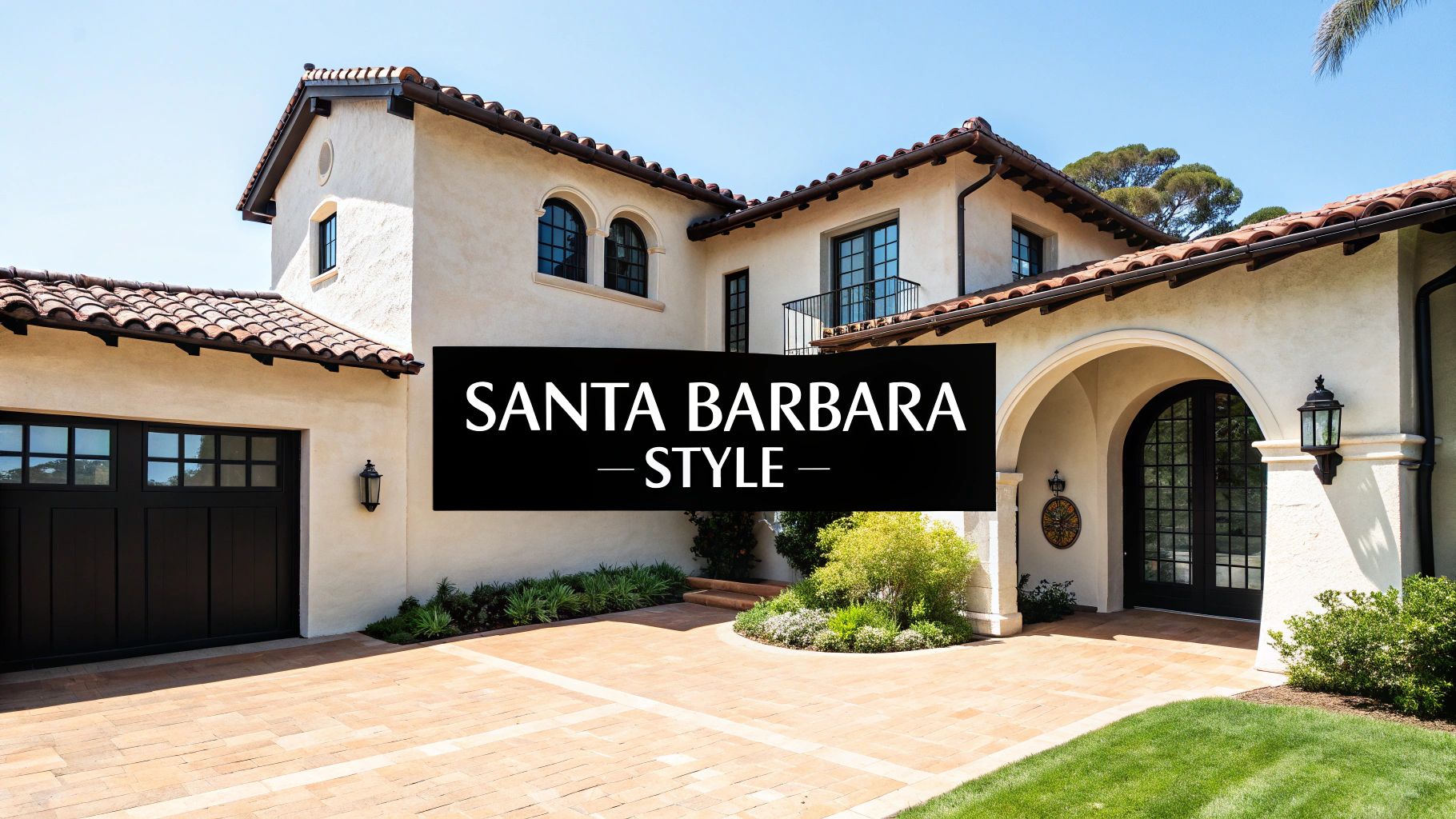
Picture a home that feels like a permanent escape to the coast. That’s the feeling a Santa Barbara–style home evokes—an architectural style born from Spanish Colonial Revival but polished for the way we live today. It’s an effortless mix of Mediterranean romance, earthy materials, and a real, tangible connection to the outdoors.
What Defines a Santa Barbara Style Home
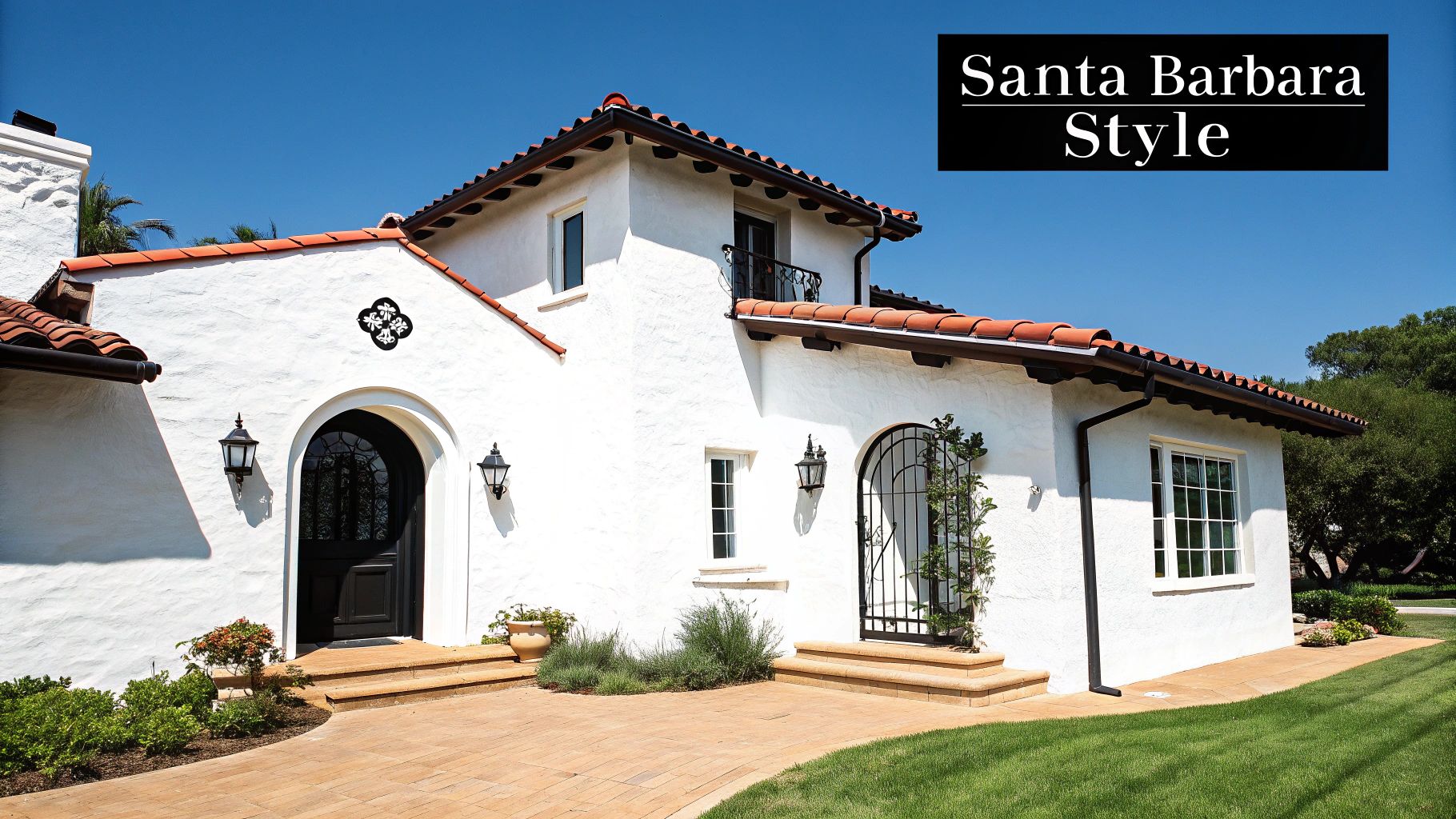
The Santa Barbara style is much more than a checklist of features; it’s a whole vibe. It creates a sense of calm and understated elegance, striking a perfect balance between historic roots and the laid-back rhythm of California coastal life. This style tells a story about its place, its climate, and its culture, which is why it remains one of the most sought-after designs in the American West.
At its heart, a Santa Barbara–style home is meant to blend into its surroundings. The look was famously cemented after the 1925 Santa Barbara earthquake, when the city’s leaders decided to rebuild with a unified, Spanish-inspired aesthetic. That move created an architectural identity that feels both intentional and completely natural—historic, yet perfectly suited for modern life.
The Signature Visual Language
To really get this style, you have to know its key ingredients. These are the elements that work together to create that cohesive, inviting look you can spot from a mile away. Think of them as the foundational vocabulary of the design.
The most recognizable characteristics include:
- Crisp Stucco Walls: Nearly always painted in a bright white or a warm off-white, these thick walls create a clean, minimalist backdrop and do a great job of insulating the home from the sun’s heat.
- Low-Pitched Red Tile Roofs: Those iconic terracotta clay tiles aren’t just for looks. They’re incredibly durable and ideal for a Mediterranean climate, reflecting heat and lasting for decades.
- Graceful Arches: You’ll see arches everywhere—framing doorways, windows, and covered walkways known as loggias. They soften the home’s angles and create elegant transitions from one space to another.
- Wrought Iron Accents: From gates and window grilles to railings and light fixtures, dark, intricate ironwork provides a beautiful, bold contrast against the bright white stucco.
A true Santa Barbara style home doesn’t just look the part—it lives it. The entire design is built around a seamless flow between the indoors and outdoors, often with a private courtyard or patio that functions as another living room.
An Invitation to the Outdoors
This connection to the landscape is everything. The floor plans are often U-shaped or H-shaped, designed to wrap around a central courtyard and blur the lines between the house and the garden. These private outdoor retreats are the key to creating the serene, resort-like atmosphere that truly defines the lifestyle. This is just the beginning; now we can dive deeper into what makes this architectural style so timeless.
The Story Behind Santa Barbara Architecture
The effortless elegance of a Santa Barbara–style home isn’t an accident. It’s a legacy written in smooth stucco and sealed with rustic clay tiles, born not from a fleeting trend but forged from disaster. To really get to the heart of this style, you have to go back to one pivotal day in California history.
On June 29, 1925, a powerful earthquake shook the coastal city, leaving much of its downtown core in ruins. But out of that devastation came a remarkable opportunity. Instead of just rebuilding, community leaders and influential architects saw a chance to reimagine the entire city with a unified, romantic vision.
They made a conscious choice to create an aesthetic that celebrated California’s romanticized Spanish past, steering clear of the architectural jumble that had come before. The dream was to build a city that felt like it belonged on the Mediterranean coast of Spain—a place of timeless beauty and harmony.
The Birth of a Unified Vision
At the forefront of this movement were visionaries like community activist Pearl Chase and architects George Washington Smith and Lutah Maria Riggs. They passionately championed the Spanish Colonial Revival style, convinced its clean lines, earthy materials, and human scale were perfectly suited to the region’s climate and culture.
Their goal was ambitious. They weren’t just putting up new buildings; they were crafting an identity, a sense of place that would define Santa Barbara for generations.
The 6.8 magnitude earthquake of 1925 acted as the ultimate catalyst for this rebirth. In its wake, city officials mandated that all new construction had to honor the region’s Spanish-colonial heritage. This was a landmark decision that cemented the city’s unique character and led to Santa Barbara becoming the first city in the U.S. to establish an architectural review board to enforce a specific aesthetic. You can learn more about the broader context of Spanish Colonial Revival architecture and its impact here.
This deliberate planning is exactly why a Santa Barbara–style home feels so grounded and authentic today. Every arch and every tile tells a piece of this incredible comeback story.
Establishing an Architectural Legacy
Creating the Architectural Board of Review was a groundbreaking step in American city planning. This group was given the power to approve or deny building plans based on how well they fit the established Spanish aesthetic. It was a bold move that ensured the city’s reconstruction would be guided by a single, artistic principle rather than haphazard commercial interests.
This concerted effort ensured that from the grand Arlington Theatre to the humble storefronts, a consistent design language would prevail—creating a city that felt more like a curated experience than a random collection of buildings.
This commitment to aesthetic unity has had an incredible lasting impact. The guidelines put in place nearly a century ago still influence development in Santa Barbara, preserving the city’s one-of-a-kind charm.
Key Figures and Their Influence
While it was a community-wide effort, a few key people left a truly indelible mark on the Santa Barbara style.
- George Washington Smith: Often called the father of the style, Smith was a Yale-trained architect who actually moved to Santa Barbara to become a painter. His own home, which he named “El Hogar,” became a blueprint for the Spanish Colonial Revival movement. His designs are still revered for their elegant proportions and authentic details.
- Lutah Maria Riggs: A gifted architect who started her career with Smith, Riggs later became a leading designer in her own right. She brought a refined, sophisticated sensibility to the style and had a hand in many of Santa Barbara’s most iconic buildings and private estates.
- Pearl Chase: A tireless civic leader, Chase was the political and community force behind enforcing the new architectural standards. Her relentless advocacy is a huge reason the vision became a lasting reality.
Their collective work transformed a city recovering from tragedy into an architectural jewel. The Santa Barbara–style home we know and love today is a direct result of their foresight, proving that great design can emerge from the most challenging circumstances and create a legacy of beauty that continues to inspire.
Key Architectural Elements You Will See
To really get to the heart of a Santa Barbara-style home, you have to look at its fundamental building blocks. These aren’t just aesthetic flourishes; they’re the pieces that work together to create that signature feeling of harmony, history, and casual elegance. Think of them as the essential ingredients in a time-honored recipe for California coastal living.
Each feature plays a specific role, whether it’s keeping the home naturally cool or carving out a private, tranquil outdoor space. When you break them down, you can really see the thoughtful design that has made this style so timeless and sought-after.
Thick Stucco Walls and Red Tile Roofs
The first thing that usually catches your eye is the classic pairing of clean, white walls and a warm, terracotta roof. The exterior walls are made of thick stucco, almost always finished with a smooth, hand-troweled texture. This isn’t just for show—that substantial construction provides excellent thermal mass, which helps keep the home cool on hot days and a bit warmer on chilly nights.
Crowning the structure is the iconic low-pitched red clay tile roof. These barrel-shaped tiles, often laid in a slightly imperfect, staggered pattern, are a perfect match for the Mediterranean climate of coastal California. They’re incredibly durable, fire-resistant, and do a great job of reflecting solar heat, which naturally contributes to the home’s cooling. This simple combination of white stucco and red tile is the visual calling card of a Santa Barbara home.
The story of how this style became so defined is fascinating, and it was actually born from disaster. The infographic below shows how the 1925 earthquake became the very thing that unified the city’s architectural vision.
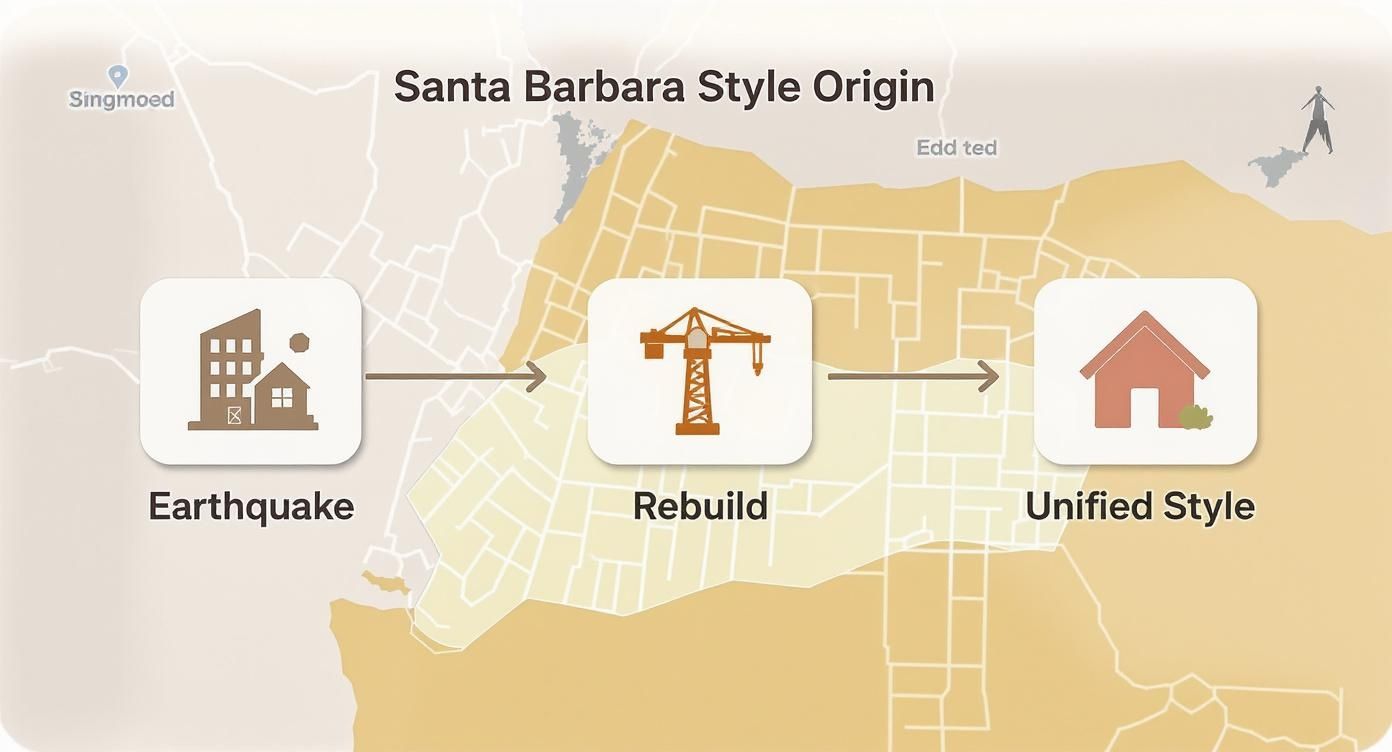
As you can see, a moment of crisis prompted a beautiful and deliberate rebuilding effort, weaving the Spanish Colonial Revival aesthetic into the very DNA of the city.
Elegant Arches and Artistic Ironwork
Another feature you’ll see everywhere is the graceful use of arches. They frame doorways, windows, and the covered walkways known as loggias. Arches beautifully soften the strong, rectangular lines of the structure, adding a touch of romance and creating elegant, inviting transitions from one space to the next.
Playing off the soft curves of the arches is the bold, dark contrast of wrought iron. This material is used for both practical and decorative purposes, adding a layer of authentic craftsmanship.
- Balconies and Window Grilles: You’ll often see intricate iron railings and grilles that add security and beautiful detail.
- Gates and Fences: Ornate iron gates frequently mark the entrance to a courtyard, creating a formal sense of arrival.
- Light Fixtures and Hardware: The look is completed with sconces, chandeliers, and door handles made of dark, forged metal.
These elements are so fundamental to the style that you see them with incredible consistency. In fact, surveys of historic homes in the area reveal that over 90% of residences built between 1925 and 1940 feature at least three of these signature elements. Red-tile roofs, in particular, are found on about 85% of them.
To help you keep track of these defining characteristics, here’s a quick summary of the core elements and what they bring to the design.
Core Elements of Santa Barbara Style Homes
| Architectural Element | Description | Primary Function |
|---|---|---|
| White Stucco Walls | Thick, hand-troweled plaster with a smooth or slightly textured finish. | Provides thermal mass for natural insulation and a clean, bright aesthetic. |
| Red Clay Tile Roof | Low-pitched roofs with barrel-shaped terracotta tiles. | Durability, fire resistance, and reflecting solar heat to keep interiors cool. |
| Arches | Rounded openings for doors, windows, and covered walkways (loggias). | Softens the structure’s lines and creates elegant, flowing transitions. |
| Wrought Iron | Hand-forged iron for railings, gates, window grilles, and light fixtures. | Adds decorative detail, security, and a contrasting handmade element. |
| Courtyard | A central, enclosed outdoor space that often acts as the heart of the home. | Creates a private outdoor living area and blurs the indoor-outdoor boundary. |
These components are the building blocks, but it’s how they come together that truly defines the home.
The Central Role of the Courtyard
The courtyard is arguably the most important element for shaping the lifestyle of a Santa Barbara home. This isn’t just a backyard; it’s a private outdoor room that often serves as the home’s emotional and functional center. The house itself is frequently designed in a U- or H-shape that wraps around this space, erasing the lines between inside and out.
The courtyard is a sanctuary—a place for quiet relaxation, outdoor dining, and entertaining. It is often anchored by a classic Spanish-style fountain, which adds the soothing sound of running water and enhances the tranquil atmosphere.
This focus on a seamless flow to the outdoors is at the core of the design philosophy. French doors and large windows are strategically placed to ensure that views of the courtyard and gardens are framed from multiple rooms, making the landscape a genuine part of daily life. If you’d like to dive deeper into this concept, you can explore our guide on mastering the art of indoor-outdoor living.
By understanding how these architectural elements work, you can start to see how they form a cohesive and beautiful whole—creating a home that both honors history and serves as a perfect backdrop for modern living.
Creating the Interior Look and Feel
When you walk into a Santa Barbara–style home, it should feel like a natural extension of the sun-drenched exterior. The whole point is to blur the line between inside and out, creating a space that feels both grounded and incredibly light. We’re aiming for an atmosphere built on texture, warmth, and genuine craftsmanship.
This isn’t an aesthetic that chases fleeting trends. Instead, it’s all about a timeless, lived-in quality. Every choice, from the flooring to the light fixtures, should tell a cohesive story of relaxed elegance. Think of it as decorating with a deep sense of place, where the interior spaces echo the same Spanish Colonial and Mediterranean soul as the architecture itself.
The Foundational Material Palette
The real magic of a Santa Barbara interior starts with its surfaces—what you see and what you touch. These materials are chosen for how they feel and how they play with the abundant California light, creating a rich sensory experience that forms the canvas for everything else.
Here are the undisputed stars of the show:
- Terracotta and Saltillo Tiles: These classic clay floor tiles are the absolute hallmark of the style. With their warm, earthy reds and subtle imperfections, they bring instant character to entryways, kitchens, and living areas. They feel wonderfully cool underfoot and only get better with age as they develop a rich patina.
- Hand-Troweled Plaster Walls: Forget flat, perfect drywall. Here, interior walls have a life of their own, finished with a smooth or lightly textured plaster that catches and diffuses light in a soft, almost organic way. This subtle depth is what keeps the white walls from feeling cold or stark.
- Substantial Wood Beams: Heavy, dark-stained wood beams are practically non-negotiable. They give the ceilings architectural weight, draw your eye upward, and introduce a powerful rustic element that contrasts beautifully with the bright, airy walls.
The guiding principle here is authenticity. Materials should look and feel real, like they were sourced from the earth and shaped by hand. This focus on natural texture is what gives these interiors their soulful, enduring appeal.
Crafting a Warm and Earthy Color Scheme
The color palette inside a Santa Barbara home is deliberately serene. The goal is to create a calm, inviting environment by mastering the art of layering neutrals and using color with real purpose.
The foundation is almost always a shade of warm white or creamy off-white for those plaster walls. This creates a bright, reflective backdrop that makes the most of the natural light, helping spaces feel open and expansive. Choosing the right white is crucial, and if you want to go deeper, it’s worth mastering interior design color psychology to select shades that truly evoke the right feeling.
From this neutral base, you can begin to layer in other earthy tones:
- Warm Wood Tones: These deep browns and rich walnuts show up in the ceiling beams, doors, window frames, and furniture, adding essential depth and contrast.
- Terracotta and Ochre: These hues echo the clay of the roof and floor tiles, pulling that warmth and connection to the landscape right into the home.
- Soft Greens and Blues: Think of the muted shades of sagebrush, olive trees, or the distant Pacific. These colors are best introduced subtly through textiles, artwork, or decorative tile accents.
This calm canvas sets the stage perfectly for pops of vibrant, artistic detail.
Adding Character with Furniture and Decor
The furniture in a Santa Barbara home needs to feel substantial and timeless. I always look for pieces with strong silhouettes and classic forms, usually crafted from dark, heavy woods like walnut or oak. Scale is key here; the furniture has to be robust enough to hold its own against thick plaster walls and high, beamed ceilings.
It’s the decorative elements, though, that really complete the look and add layers of personality.
- Forged Ironwork: That beautiful wrought iron from the exterior comes inside. You’ll see it in chandeliers, curtain rods, and stair railings, creating a consistent design language.
- Hand-Painted Tiles (Azulejos): These colorful, patterned tiles are a fantastic way to create a focal point. They inject a dose of handcrafted artistry as a kitchen backsplash, on staircase risers, or framing a fireplace.
- Woven Textiles: To soften all the hard surfaces of tile and plaster, you need natural fibers. Linen, cotton, and wool—used in rugs, curtains, and upholstery—add a layer of comfort and warmth, especially when they have subtle patterns or rich textures.
By carefully layering these materials, colors, and accents, you create an interior that isn’t just beautiful but is a true reflection of the Santa Barbara ethos: a personal sanctuary of casual, timeless elegance.
Designing Your Private Outdoor Oasis
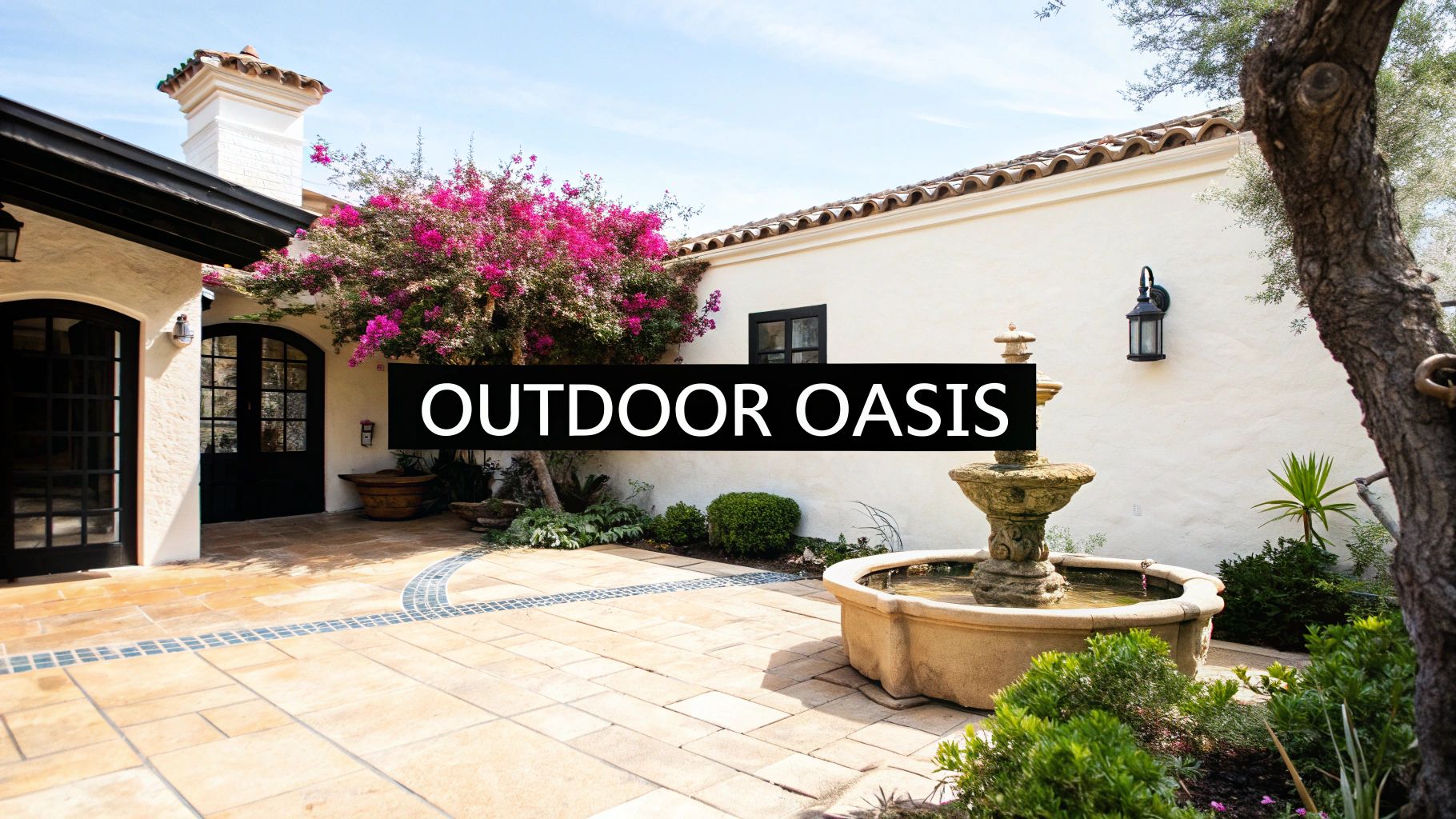
When you’re designing a Santa Barbara style home, the garden isn’t just an afterthought—it’s an essential, living extension of the interior. The entire philosophy hinges on blurring the line between indoor comfort and outdoor serenity. We’re not just creating backyards; we’re crafting private sanctuaries that feel like open-air rooms.
This is where that iconic, relaxed California lifestyle really shines. Courtyards, patios, and loggias (those beautiful covered walkways) are the main tools we use to get that seamless flow. A classic U-shaped floor plan, for instance, naturally wraps around a central courtyard, turning it into the home’s visual and social heart. This layout lets multiple rooms open directly onto the space, encouraging a constant, easy connection with the outdoors.
The Essential Mediterranean Planting Palette
The right plants are what truly bring the space to life. You want a palette that feels authentic and is low-maintenance enough to thrive in a coastal climate. The goal is to layer textures, colors, and fragrances that transport you to a Mediterranean hillside. These plants are picked for their sculptural forms and resilience as much as for their beauty.
Here are a few staples that define a Santa Barbara garden:
- Bougainvillea: This is the showstopper. A vibrant, climbing vine that provides an explosion of color—magenta, red, or orange—against crisp white stucco.
- Olive Trees: With their silvery-green leaves and beautifully gnarled trunks, a mature olive tree adds a sense of history and an elegant, sculptural feel.
- Lavender: Whether in borders or pots, lavender brings a soothing fragrance and a soft purple hue that instantly adds to the garden’s tranquil mood.
- Agave and Succulents: These are the architectural workhorses. Their strong, dramatic shapes provide a fantastic contrast to softer, more delicate plantings.
The core idea is to create a garden that feels established, romantic, and effortlessly connected to its environment. It’s about weaving a rich tapestry of textures and scents with flowering vines, fragrant herbs, and structural plants.
Hardscaping and Water Features
While plants give you softness and color, the hardscaping is what provides the structure and function for your outdoor oasis. The materials should always feel rustic and natural, as if they grew right out of the landscape and complement the home’s architecture.
Flagstone or terracotta pavers are the go-to choices for patios and pathways. They provide an earthy, textured surface underfoot that feels cool in the summer heat. Plus, they age beautifully, developing a rich patina over time that only enhances the garden’s timeless quality. For a deeper look into layouts and material choices, it’s worth exploring professional guides on how to design an outdoor space that feels perfectly pulled together.
Finally, no Santa Barbara courtyard feels quite complete without the gentle sound of water. A classic Spanish-style fountain, often adorned with colorful, hand-painted tiles, becomes an immediate focal point. It does more than just look beautiful; it provides a soothing auditory backdrop that masks neighborhood noise and turns the courtyard into a true sensory retreat. This is what transforms a simple patio into a serene, private haven—the very spirit of a Santa Barbara home.
The Modern Evolution of a Classic Style
How does an architectural style born a century ago still feel so relevant and sought-after? The secret is in its ability to adapt. The classic Santa Barbara home isn’t some relic frozen in time; it’s being constantly and thoughtfully reinterpreted for the way we live now. This evolution, often called “Modern Santa Barbara” or “Montecito Style,” knows how to honor its roots while fully embracing the present.
The fundamentals are still there—the white stucco walls and red tile roofs are absolutely non-negotiable. But today’s architects and designers are paring back the details for a cleaner, more minimalist feel. They’re stripping away some of the heavier, more ornate ironwork and decorative flourishes, instead favoring crisp lines and uncluttered forms.
This subtle shift results in a home that feels both timelessly elegant and incredibly current. It’s a sophisticated marriage of rustic, historical charm and sleek, contemporary refinement—a perfect backdrop for a relaxed but polished lifestyle.
Merging Classic Forms with Contemporary Needs
The biggest changes are happening on the inside. Where traditional floor plans often had a series of smaller, walled-off rooms, the modern Santa Barbara home is all about open-concept living. Walls have come tumbling down to create breezy, flowing spaces that merge the kitchen, dining, and living areas into one big, beautiful, and functional space.
This layout is a direct answer to how we live today—it’s more social, more casual, and just feels more connected. To make these open interiors truly sing, designers are introducing elements that drench the home in natural light.
- Expansive Windows and Doors: Forget small, deep-set openings. Think massive, steel-framed glass doors and picture windows that practically erase the boundary between inside and out.
- Minimalist Decor: When it comes to furniture, the new rule is clean lines and neutral palettes. The emphasis is on high-quality materials and uncluttered surfaces, which cultivates a real sense of calm.
- Streamlined Details: You’ll still find arches, but they might be simpler and less pronounced. Interior finishes are often pared back, letting the strength of the architecture do the talking.
The soul of the Santa Barbara style—its deep connection to history and the landscape—is still very much intact. The modern approach simply filters it through a contemporary lens, one that prioritizes light, space, and beautiful simplicity.
This thoughtful evolution isn’t just a trend; it’s backed by the city’s deep-seated commitment to its own architectural identity. Consider this: over 40% of Santa Barbara’s housing was built before 1970, and more than 80% of new projects must go through a rigorous architectural review. This process ensures that even the most modern interpretations respect the city’s aesthetic. You can learn more about this dedication by exploring Santa Barbara’s architectural heritage and city planning.
The modern Santa Barbara style home is living proof that great design doesn’t have to be a museum piece. By expertly balancing its iconic features with contemporary sensibilities, it remains one of the most powerful and compelling expressions of California living—a style that honors its past while looking confidently to the future.
A Few Common Questions About Santa Barbara Style
When you start digging into a specific architectural style, a lot of practical questions pop up. Whether you’re dreaming of building from the ground up, buying an existing home, or just borrowing a few ideas, getting a handle on the key details can make all the difference. Let’s tackle some of the most common questions that come my way.
I’ll give you some straightforward answers to help you understand what it really takes to bring this timeless look to life, from the initial budget to how these homes perform over the long run.
What Does It Cost To Build This Style?
Let’s be upfront: building a true Santa Barbara style home is an investment. The cost comes down to the specialized materials and the skilled hands needed to put them together. While prices can swing wildly depending on your location, the home’s footprint, and the level of finishes you choose, a good ballpark figure is anywhere from $400 to over $1,000 per square foot.
So, what’s driving that number?
- The Real Deal Materials: We’re talking about authentic clay roof tiles, hand-troweled stucco, custom wrought iron, and those gorgeous heavy timber beams. These aren’t off-the-shelf items.
- Artisans Who Know Their Craft: You can’t just hire any crew. You need roofers who understand how to lay tile for that perfectly imperfect look and plasterers who can achieve that signature smooth, undulating finish.
- Structural Finesse: Arches, courtyards, and thick, solid walls aren’t part of a standard home build. They require more complex engineering and take more time on site.
When you’re putting together a budget, make sure you’re accounting for both the top-tier materials and the expert labor required to do them justice.
How Can I Add This Style To My Current Home?
You don’t have to go all-in on a massive renovation to get a taste of the Santa Barbara aesthetic. Sometimes, it’s the smaller, thoughtful changes that best capture the style’s spirit and charm.
A great place to start is the color palette. A coat of warm, creamy white paint on the walls can instantly shift the mood. Swapping out your generic exterior lights for dark, wrought-iron sconces is another quick win that makes a big impact. Out in the garden, try adding some large terracotta pots filled with Mediterranean plants like lavender, citrus trees, or a small olive tree.
One of the most effective updates I’ve seen is adding hand-painted Spanish-style tiles. Use them for a kitchen backsplash or on the risers of a staircase. It’s a beautiful way to inject that authentic, handcrafted artistry into a space.
If you’re ready for a slightly bigger project, consider a new front door—something rustic and arched in a dark wood—or resurface your patio with classic Saltillo tiles.
Are These Homes Energy Efficient?
Absolutely. The original designs were brilliant examples of passive cooling, perfectly suited for the warm, dry climates they were born in. Those thick stucco walls have incredible thermal mass, which means they absorb the sun’s heat during the day, keeping the inside cool, and then slowly release that warmth at night.
You’ll also notice the windows are often smaller and set deep into the walls. This wasn’t just for looks; it was a strategic way to minimize the harsh afternoon sun and keep the interior from overheating.
Today’s Santa Barbara homes can be even more efficient. We can now combine that old-world wisdom with modern technology. By incorporating high-performance windows, adding state-of-the-art insulation inside those thick walls, and installing modern HVAC systems, you get a home that has all the timeless beauty with none of the energy-wasting drawbacks. It’s the perfect blend of past and present.
Ready to bring your own vision of luxury living to life? The most distinguished professionals are waiting for you at Haute Design. Connect with the nation’s top interior designers, architects, and builders who specialize in creating extraordinary environments. Find your perfect design partner today.