


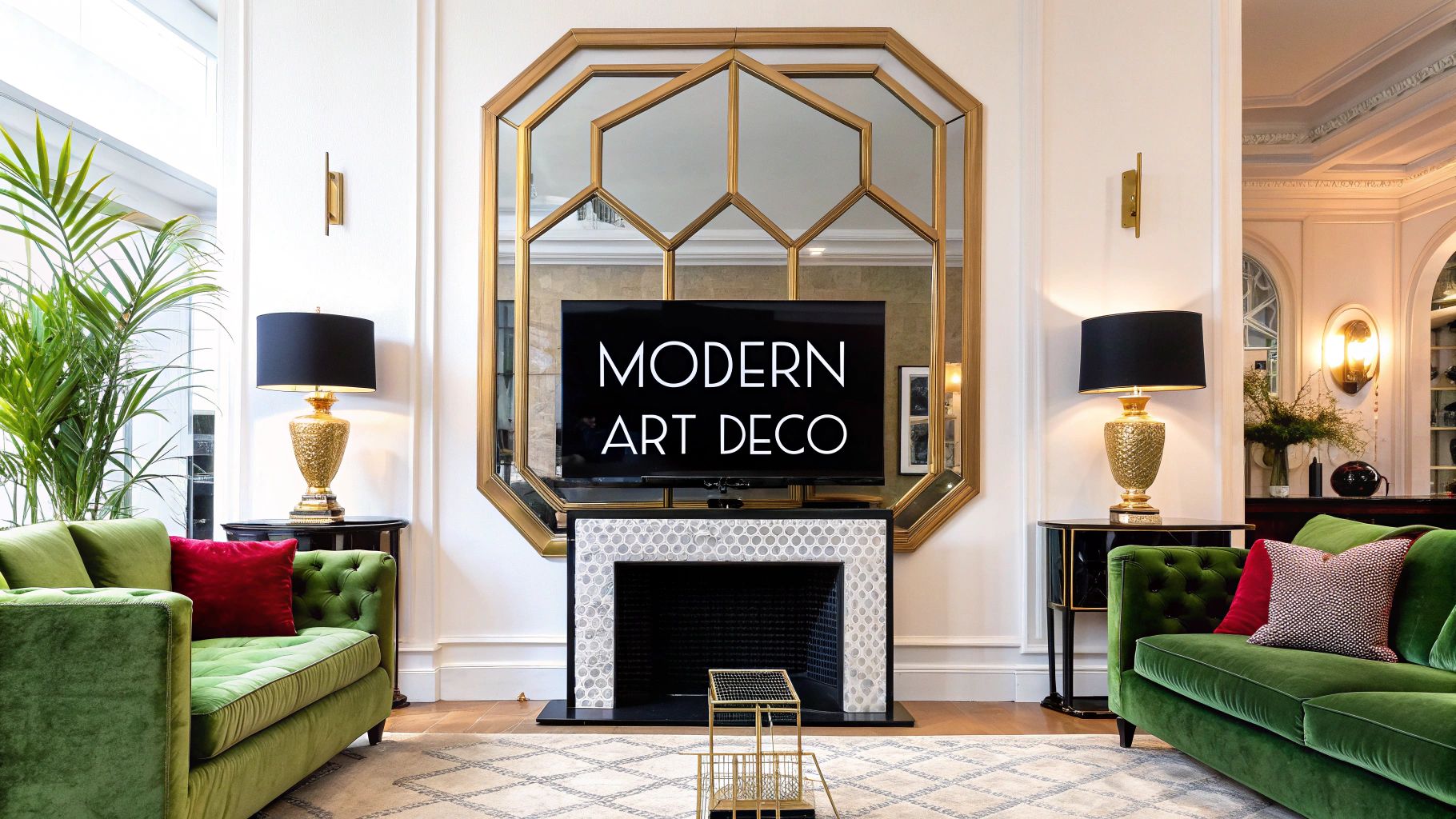
Modern Art Deco isn’t just a revival; it’s a complete reimagining of the classic 1920s style for today’s world. We’re taking all the glamour and ditching the stuffiness, blending opulent details with the clean lines and comfort we expect in a modern home. It’s all about creating spaces that feel both luxurious and genuinely livable, using streamlined forms, rich materials, and bold geometric patterns in a more refined, curated way.
Defining Modern Art Deco: A Timeless Fusion
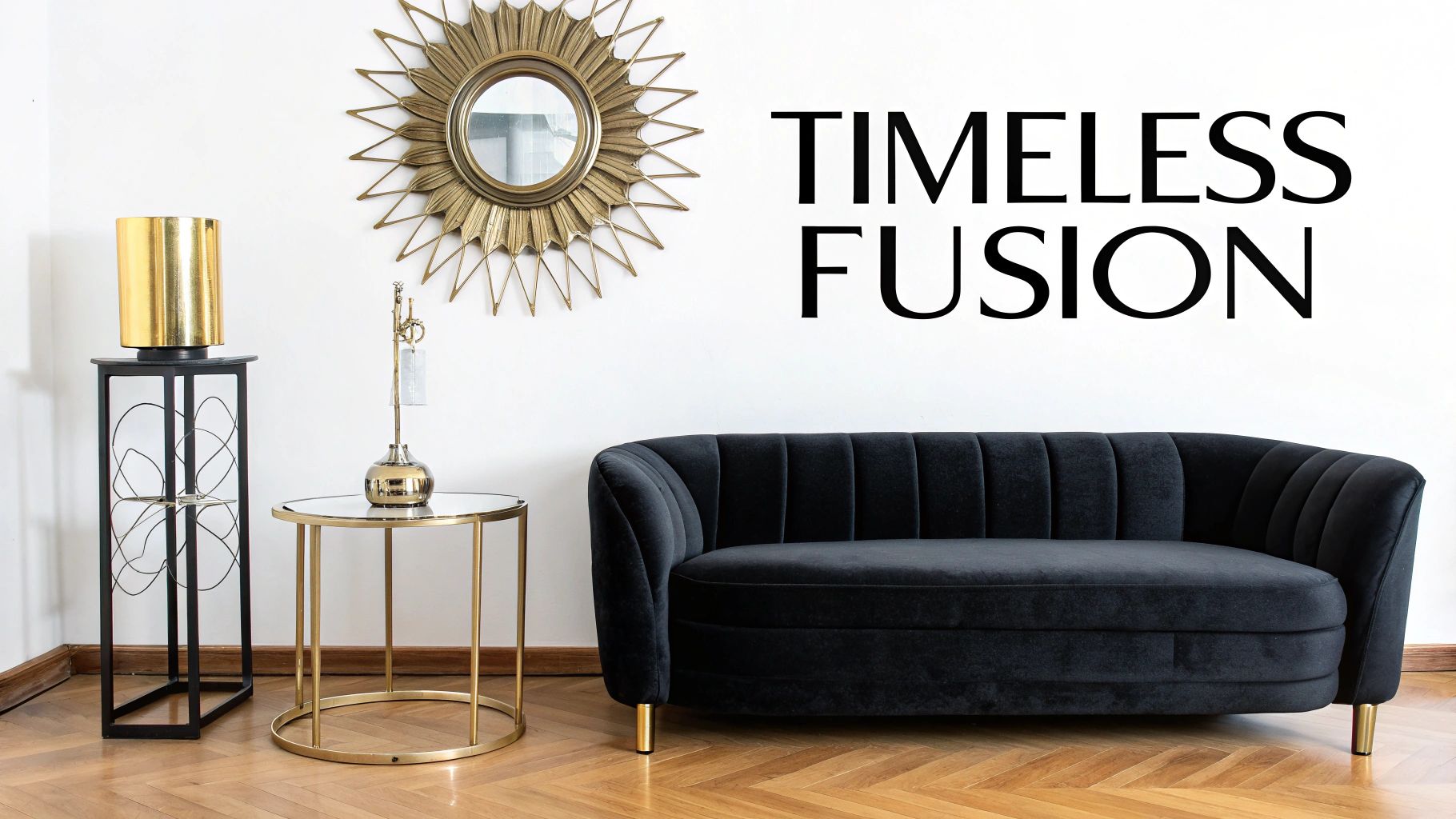
The magnetic pull of Art Deco has fascinated designers for a solid century, and its modern iteration is proof that great style never really fades. The key is understanding that we aren’t trying to create a period-perfect replica of a 1920s salon. That would feel like living in a museum.
Instead, the goal is to capture the spirit of the era—that incredible sense of optimism, sophistication, and forward-thinking design—and weave it into a home that works for right now. This fusion creates spaces that feel both grand and inviting, striking that perfect balance between the maximalist glamour of the Roaring Twenties and the edited, clean aesthetic we value today.
The Historical Roots of a Modern Style
To really nail the modern look, you have to appreciate where it came from. The original movement got its name from the 1925 Exposition Internationale des Arts Décoratifs et Industriels Modernes in Paris and dominated the design world between 1919 and 1939. It was a full-on celebration of the machine age, defined by sleek geometry, symmetry, and a mix of new materials like chrome with timeless luxuries like jade and lacquer.
This was a bold break from the flowing, organic shapes of Art Nouveau. It was all about industrial richness and a streamlined vision for the future. You can see incredible examples of this historic style in the New York Public Library’s digital collections. That historical depth is what gives the modern interpretation its soul.
To truly understand how this style has evolved, it helps to see the classic and contemporary approaches side-by-side. The core principles are still there, but the execution has shifted to feel more relevant and relaxed.
| Characteristic | Classic Art Deco (1920s-1930s) | Modern Art Deco (Today) |
|---|---|---|
| Color Palette | Dark, dramatic hues; heavy use of black, gold, and deep jewel tones | Neutral bases (cream, gray) with bold jewel tones as accents |
| Materials | Exotic woods, ivory, lacquer, chrome, glass, and brass | Velvet, marble, polished metals (brass, gold), high-gloss finishes |
| Patterns | Layered, complex geometric motifs; chevrons, sunbursts, zigzags | A single statement pattern on a rug, wallpaper, or textile |
| Furniture | Large, imposing pieces with lacquered finishes and intricate inlays | Streamlined silhouettes, channel tufting, focus on comfort and form |
| Overall Feel | Ornate, formal, and unapologetically opulent | Curated, sophisticated, and balanced; glamorous yet livable |
This table highlights the shift from an all-encompassing decorative scheme to a more thoughtful, curated application of Art Deco’s most iconic elements.
The biggest difference today lies in the execution. It’s less about rigid rules and more about creating a specific mood.
Today’s modern Art Deco is less about historical accuracy and more about evoking a feeling. It’s a curated blend of iconic shapes and luxurious textures within a functional, modern layout.
Key Distinctions in Contemporary Application
So, what really sets the modern version apart? It comes down to subtlety and balance. While a classic Deco room might feel visually dense, its contemporary counterpart uses those glamorous elements more strategically to create breathing room.
- Edited Color Palettes: Instead of flooding a space with dark, heavy colors, a modern palette often starts with a neutral foundation. Think cream, soft gray, or even a crisp white. Then, deep jewel tones like emerald, sapphire, or black are brought in as powerful, deliberate accents.
- Selective Opulence: You don’t need to layer a dozen ornate patterns to make an impact. A modern designer will often pick one hero piece to anchor the room. This could be a dramatic sunburst mirror, a rug with a bold geometric print, or a show-stopping channel-tufted velvet sofa.
- Functional Glamour: In a modern Art Deco space, every piece has to earn its keep. Furniture is chosen not just for a beautiful silhouette but for its everyday usability. The result is a home that feels elevated and special without ever sacrificing practical comfort.
The Foundational Elements: Color Palettes and Materials
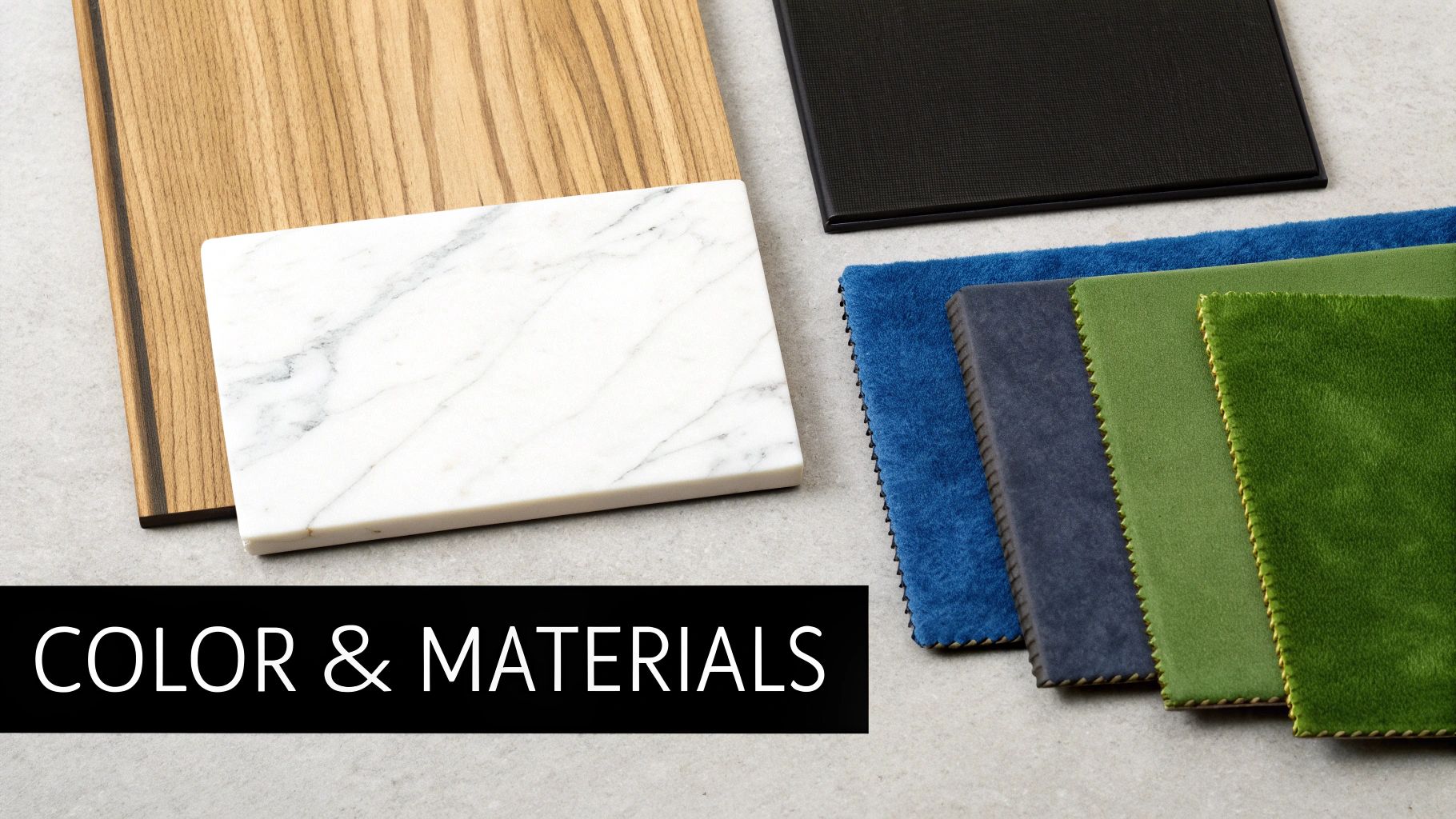
The very soul of a modern Art Deco space is born from its foundational choices—the specific colors and materials that create its signature atmosphere of curated luxury. Unlike its historic predecessor, which often embraced dense, dramatic palettes, the contemporary approach is all about strategic contrast and textural depth. It’s a delicate dance between bold statements and understated elegance.
The entire process really begins by establishing a sophisticated backdrop. Instead of overwhelming a room with heavy tones, I always recommend starting with a refined neutral base. Think warm creams, soft taupes, or even a crisp, gallery-style white. This creates the perfect canvas, allowing the richer, more iconic Deco elements to truly command attention.
Crafting The Perfect Color Palette
With your neutral foundation in place, the real drama can begin. The modern Art Deco palette is defined by its confident use of deep, saturated accent colors. These aren’t just subtle hints; they are bold, deliberate choices that inject glamour and personality into the room. The secret is balance—using these powerful hues thoughtfully rather than everywhere.
Consider these high-impact color strategies:
- Deep Jewel Tones: Introduce shades like emerald green, sapphire blue, ruby red, or amethyst purple. A single velvet sofa in a rich emerald or a feature wall painted in a deep sapphire can anchor an entire room.
- Monochromatic Power: A high-contrast black and white scheme is quintessentially Art Deco. Imagine polished black marble floors against creamy white walls, punctuated with metallic accents. It’s a timeless and graphic look that feels both classic and incredibly current.
- Earthy Sophistication: For a warmer, more subdued take, lean into colors like terracotta, deep ochre, and burnished gold. These tones pair beautifully with dark woods and brass finishes, offering a less formal yet equally luxurious feel.
Understanding how these colors influence a room’s mood is crucial. For a deeper dive, you can explore the principles behind mastering interior design color psychology to make choices that are not only beautiful but also emotionally resonant.
A successful modern Art Deco palette is never an accident. It’s a curated conversation between light, dark, neutral, and bold, where each color plays a specific role in the overall design narrative.
This controlled approach is what keeps the design from feeling like a period piece. Instead, it reads as a sophisticated, modern interior with a glamorous edge. The goal is to evoke opulence, not replicate it verbatim from a history book.
Layering Iconic Materials And Finishes
Materials are where the tactile richness of modern Art Deco truly comes alive. This style is an unapologetic celebration of luxurious, high-quality surfaces. Layering a variety of textures is absolutely essential for creating the visual depth and interest that defines the look. The interplay between glossy and matte, hard and soft, is what makes these spaces so compelling.
Your material selection should be just as intentional as your color choices. I suggest focusing on a core group of iconic materials and distributing them throughout the space to create a cohesive, elegant theme.
Essential Modern Art Deco Materials
| Material | Application & Effect |
|---|---|
| Polished Metals | Brass, chrome, and gold finishes on lighting, furniture legs, hardware, and mirror frames. They add reflective shine and an immediate sense of glamour. |
| Rich Velvets | Upholstery for sofas, armchairs, and headboards. Velvet introduces a soft, plush texture and captures light beautifully, enhancing deep jewel tones. |
| Lacquered Wood | High-gloss finishes on sideboards, cabinets, and tables. The reflective surface adds a sleek, polished feel synonymous with the machine-age origins of Deco. |
| Statement Marble | Veined marble for coffee tables, countertops, or fireplace surrounds. It brings a natural, organic pattern and a sense of timeless weight and luxury. |
| Mirrored & Glass Surfaces | Antique mirror panels, glass tabletops, and decorative objects. These elements bounce light around the room, making the space feel larger and more luminous. |
When combining these elements, think about creating moments of contrast. For instance, place a soft velvet armchair next to a sharp, lacquered wood side table. Or, position a gleaming brass floor lamp on a dark, geometric rug. It’s this careful juxtaposition of materials that builds a dynamic interior, achieving a perfect harmony between historic grandeur and modern comfort.
Choosing Furniture And Lighting With Deco DNA
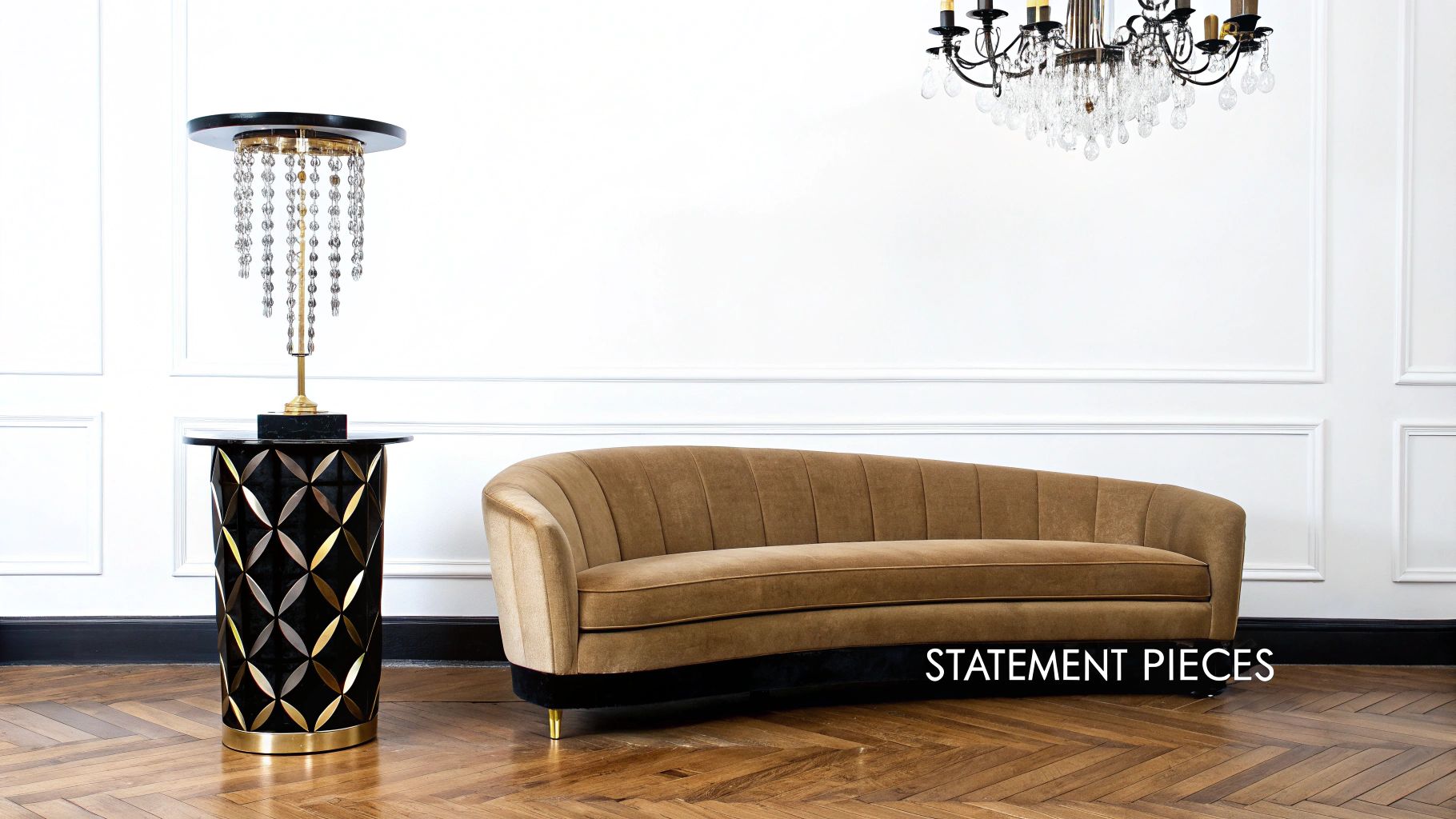
Once you’ve established the perfect backdrop with your color palette and materials, it’s time to bring in the personality. Furniture and lighting are where a room truly comes to life, and in modern Art Deco design, these pieces are the sculptural heroes of the space.
They aren’t just afterthoughts; they carry the “Deco DNA” through their striking silhouettes, lavish textures, and geometric confidence. The aim is to find pieces that feel both substantial and impossibly elegant. Think of a sofa with strong, clean lines that suddenly gives way to a dramatic curve, or a light fixture that doubles as the room’s jewelry.
Identifying Statement Furniture Pieces
The right furniture is what makes a modern Art Deco look truly convincing. You’re on the hunt for pieces with inherent drama and a clear tie to the style’s core principles—even if the piece itself is a contemporary creation. This isn’t about curating a museum; it’s about capturing an essence.
Keep an eye out for these signature characteristics when you’re sourcing key items:
- Curvaceous Silhouettes: Look for sofas and armchairs with rounded, almost enveloping shapes. A gentle curve or a scalloped back immediately channels the glamour of the 1920s and 1930s.
- Channel Tufting: This distinct vertical stitching adds a fantastic texture and a sense of linear rhythm to upholstery. It’s a hallmark of the style, especially on headboards and accent chairs in rich velvet.
- Luxurious Upholstery: Fabric choice is everything. Deep jewel-toned velvets, buttery leathers, and even mohair provide that necessary tactile richness and depth of color.
- Strong Geometric Lines: For case goods like sideboards and consoles, seek out bold, symmetrical forms, stepped details, or sunburst patterns created with wood inlay or metallic accents.
A single, perfectly chosen piece—like a deeply curved velvet sofa or a lacquered credenza with brass hardware—can establish the entire Art Deco narrative for a room. It becomes the anchor around which all other elements revolve.
Let’s say you’re designing a living room. Don’t just look for a sofa; hunt for the sofa. A piece like a crescent-shaped sectional in sapphire blue velvet immediately sets a glamorous tone. Pair it with a set of nesting side tables with marble tops and polished brass frames, and the whole look becomes intentional and cohesive.
Balancing Scale And Proportion
One of the biggest mistakes I see in modern Art Deco interiors is a space that feels too heavy or cluttered. While the furniture is often bold, balance is absolutely crucial. A room filled with nothing but statement pieces will feel chaotic, not sophisticated.
The secret is in the artful mix of scale. For every large, visually dominant piece, you need several smaller, more understated items to give the eye a place to rest.
A Practical Scenario
Imagine you’ve fallen in love with a substantial, channel-tufted bed with a towering headboard. This is your star. To balance its presence, think about these pairings:
- Sleek Nightstands: Instead of bulky matching tables, go for something slender and leggy—maybe with mirrored fronts or a simple metallic frame. This contrast in form keeps the bed as the undisputed focal point.
- Understated Bench: A simple upholstered bench at the foot of the bed adds function without competing for attention. A clean, waterfall-edge design in a neutral fabric works beautifully.
- Minimalist Lighting: Rather than big, ornate table lamps, consider wall-mounted sconces on either side of the bed. It frees up surface space and adds a layer of soft, ambient light that feels much more considered.
This approach ensures the room feels balanced and serene, allowing your showstopper piece to truly shine without overwhelming the space. It’s about creating a curated composition, not just a collection of loud objects.
Lighting As Functional Jewelry
In any Deco-inspired interior, lighting is so much more than a practical necessity. It’s one of the primary decorative elements. I always tell my clients to think of light fixtures as the functional jewelry of a room—they add sparkle, drama, and that final touch of elegance.
The right lighting also plays beautifully with the reflective qualities of metallic and lacquered surfaces, creating a dynamic interplay of light and shadow that’s central to the Art Deco mood.
Look for fixtures that feature these iconic elements:
- Tiered Designs: Chandeliers and pendants with multiple, cascading tiers of glass or crystal are pure Deco.
- Geometric Shapes: Sconces and ceiling lights in fan, sunburst, or hexagonal shapes reinforce the style’s love of geometry.
- Frosted or Ribbed Glass: These materials diffuse light beautifully, casting a soft, glamorous glow that is both flattering and atmospheric.
- Metallic Finishes: Polished brass, chrome, and gold are the go-to finishes here, adding essential warmth and reflectivity.
A dramatic tiered chandelier suspended over a dining table or a pair of sculptural brass sconces flanking a fireplace can instantly elevate a room, infusing it with that signature Deco opulence.
Mastering Geometric Patterns And Ornate Details
Once you’ve established the foundation with your color palette, materials, and key furniture pieces, it’s time to layer in the details that give modern Art Deco its soul: its signature geometric patterns and ornate accents. This is where the room’s personality truly comes alive.
It’s a balancing act, though. The idea is to capture that visual energy and luxe charm without creating a heavy-handed historical reproduction.
The trick is to think of patterns as architectural features, not just decoration. The original Art Deco era often layered multiple, competing motifs. Today’s approach is more refined. We champion a single, powerful pattern to create a knockout focal point. This selective geometry is what makes the style feel so fresh and sophisticated right now.
Deploying Signature Geometric Patterns
The classic Art Deco playbook is full of inspiration—think chevrons, sunbursts, fan shapes, and stepped forms. These are the DNA of the style. In a modern space, these patterns work best when you use them with confidence, but also with restraint. A single, bold application can define an entire room.
Here are a few high-impact ways I’ve seen this done beautifully:
- Feature Wallpaper: A geometric wallpaper on one wall—say, behind a headboard or a sleek console table—creates instant drama. Look for large-scale prints in high-contrast colors like black and gold or a deep navy and cream for a truly definitive statement.
- Statement Rugs: A great area rug is the perfect canvas for a bold Deco motif. I love using a large rug with a powerful sunburst or chevron design to anchor a seating area. It pulls all the furniture together into a single, dynamic composition.
- Intricate Tilework: Kitchens and bathrooms are fantastic places to play with geometry. A fan-shaped mosaic tile for a backsplash or a classic black-and-white stepped pattern on a bathroom floor adds a shot of glamour that feels both timeless and completely unexpected.
This focused approach ensures the pattern is a highlight, not just background noise. It’s all about making one powerful choice that celebrates the style’s graphic roots.
The Art Of Accessorizing With Ornate Details
Beyond the big patterns, the final, shimmering layer of modern Art Deco design comes from ornate details and thoughtfully chosen accessories. These smaller elements are what add texture, reflection, and personality, completing that luxurious atmosphere. This is your chance to bring in intricate forms and high-shine finishes in a more subtle, distributed way.
Mirrored surfaces are a must. They were prized for their ability to bounce light and create an illusion of space, and that still holds true. But think beyond a simple framed mirror. Consider using antiqued mirror panels on cabinet doors or even as a striking backsplash. A multi-faceted, Venetian-style mirror can also act as a piece of sculptural art above a fireplace.
In modern Art Deco, accessories are not clutter. They are the final, carefully chosen jewels that complete the ensemble, each piece contributing to the overall narrative of refined glamour.
When you’re choosing decorative objects, look for pieces with a strong sculptural quality and a hint of history.
- Sculptural Objects: Think about pieces with strong, defined forms. A pair of polished brass greyhound statues on a console, a faceted crystal decanter sitting on a bar cart, or a sleek bronze bust on a bookshelf—these all add to that curated, elegant feeling.
- Bold Artwork: Art is absolutely essential for injecting personality. I recommend choosing pieces that echo the geometric themes of the style. Abstract paintings with strong lines or stylized figural prints that hark back to the 1920s are perfect.
- Architectural Embellishments: Don’t forget the bones of the room. Details like well-executed crown molding can frame a space beautifully, adding a layer of classic sophistication that perfectly complements the Art Deco aesthetic. To explore this further, our guide to crown molding design offers some fantastic ideas on how it can elevate your interior.
By layering these patterns and details with a discerning eye, you’ll create a modern Art Deco space that feels rich, dynamic, and uniquely yours—a seamless blend of historical elegance and confident contemporary style.
Room By Room Application: Living Spaces To Kitchens
Translating the grand principles of modern Art Deco into tangible, livable spaces is where the design truly comes alive. The secret is adapting the style’s inherent glamour to the function of each room. This ensures the design feels both intentional and practical.
A living room, for instance, calls for a different application of Deco DNA than a kitchen, but a cohesive thread of opulence can—and should—connect them all. This room-by-room approach lets you dial the intensity up or down, creating a home that flows beautifully from one space to the next.
The Glamorous Yet Inviting Living Room
The living room is often the centerpiece of a home’s design story, making it the perfect stage for a confident display of modern Art Deco. The goal here is a delicate balance: creating a space that feels undeniably glamorous for entertaining, yet comfortable enough for a quiet evening in. It’s about crafting a showplace that’s also a sanctuary.
Your anchor piece is almost always the seating. A curved velvet sofa in a deep jewel tone like emerald or sapphire instantly sets a luxurious tone. Pair it with armchairs that feature strong geometric lines or channel tufting to build a sophisticated and inviting arrangement.
From there, it’s all about layering in the details:
- Statement Coffee Table: Look for a piece with a marble top and a polished brass or chrome base. The mix of cool, hard stone and warm, reflective metal is quintessentially Deco.
- Layered Lighting: Combine a dramatic, tiered chandelier as the main light source with elegant wall sconces for ambient glow and a sculptural floor lamp for focused task lighting.
- A Bold Rug: Anchor the entire seating area with a large rug. A classic Art Deco pattern, like a sunburst or a bold geometric print in a high-contrast palette, works perfectly.
The Serene And Luxurious Bedroom Retreat
In the bedroom, the focus of modern Art Deco shifts from dramatic entertaining to a more personal, serene luxury. Here, the principles of symmetry and rich texture are paramount. They work together to create a tranquil, restorative escape that still feels exceptionally chic.
Symmetry is your best friend in a Deco-inspired bedroom. Start with the bed as the central axis and build a balanced composition around it. A tall, upholstered headboard—especially one with channel tufting or a gracefully curved silhouette—makes a fantastic focal point.
To craft this sanctuary, consider these elements:
- Symmetrical Nightstands: Flank the bed with a matching pair of nightstands. Mirrored or lacquered finishes work beautifully here, adding a touch of high-shine glamour.
- Plush Textiles: Layer the bed with luxurious materials. Think silk pillows, a cashmere throw, and high-thread-count linens in a soft, muted color palette to create a sense of calm.
- Reflective Accents: A sunburst mirror hung above the bed or a sleek, metallic-framed floor mirror leaning against a wall can make the room feel larger and more luminous.
The progression below illustrates how you can layer Art Deco patterns across walls, floors, and decor to build a cohesive look from the ground up.
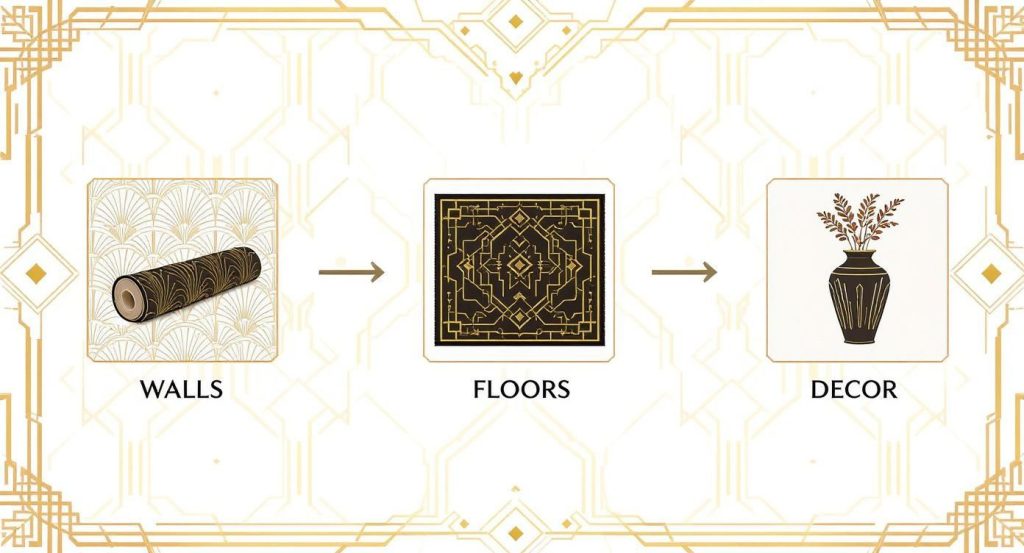
Starting with a foundational pattern on a large surface like the walls or floor creates a strong anchor for the smaller decorative elements to play off of.
The Unexpected Elegance Of Kitchens And Bathrooms
While not the most obvious candidates for Art Deco glamour, kitchens and bathrooms offer a fantastic opportunity to inject unexpected elegance. In these functional spaces, small, deliberate touches with hardware, tile, and fixtures can make a huge impact without compromising practicality.
This approach is gaining serious traction. In fact, recent design surveys show Art Deco as the leading style designers are looking to emulate, surpassing even Midcentury Modern. This revival corresponds with an estimated 30% rise in demand for Art Deco furniture and decor over the last five years. It’s clear clients are craving durable, well-crafted products with timeless appeal.
In the kitchen, think of your hardware as the room’s jewelry.
Swapping standard knobs and pulls for hardware with strong geometric shapes—hexagons, elongated bars, or fan-like forms in polished brass or chrome—is a simple yet powerful upgrade.
For a bigger commitment, a backsplash is the perfect canvas. Fan-shaped mosaic tiles or a bold chevron pattern in black and white can create a stunning focal point. If you’re looking for more ideas, our guide on selecting a luxury kitchen backsplash design is a great place to start.
In the bathroom, the floor is an ideal place to make a statement. A black-and-white geometric tile pattern immediately establishes that Art Deco feel. Pair this with a clean-lined vanity featuring metallic accents, and choose faucets and light fixtures with stepped details or sleek, angular forms to complete the sophisticated look.
Answering Your Modern Art Deco Design Questions
Stepping into the world of modern Art Deco is thrilling, but I know it can feel a bit intimidating, too. The vision of glamour and geometry is crystal clear in your mind, but when it comes time to actually hang the mirror or choose the paint, practical questions always pop up. How do you pull it off in a tiny apartment? Can you really mix it with the furniture you already own?
I get these questions all the time. This section is here to address those common sticking points with clear, practical advice. Think of this as your personal guide to navigating the nuances and bringing your modern Deco vision to life with confidence.
Is Art Deco Too Bold For A Small Space?
This is easily one of the most common concerns I hear. The short answer? Absolutely not. But you have to be clever about it. While the original Art Deco movement was all about grand, palatial scales, today’s interpretation is far more flexible. In a smaller room, the trick is to aim for selective impact instead of wall-to-wall opulence. You don’t need a massive lacquered armoire to make a statement.
Instead, I always recommend focusing on a few key strategies:
- Think Vertically: Use tall, slender pieces to draw the eye upward. A beautiful étagère with a slim metallic frame or drapes hung high and wide in a luxe fabric will instantly create the illusion of a higher ceiling.
- Embrace Reflection: Mirrored furniture, high-gloss lacquered finishes, and glass tabletops are your best friends in a compact room. They work wonders by bouncing light around, making the entire space feel brighter, bigger, and more open.
- Get Leggy: Choose sofas, consoles, and chairs that have slender, visible legs. This creates a little breathing room underneath the furniture, which prevents that heavy, cluttered feeling that can make a small space feel even smaller.
In a cozy living room or a small bedroom, a single, perfectly chosen statement piece is all you need. A stunning sunburst mirror over a console or a pair of elegant brass wall sconces flanking the bed can deliver that full Art Deco punch without eating up a single inch of floor space.
It’s all about being strategic. You can capture all the glamour and sophistication of modern Art Deco, proving that the style is really about attitude, not just square footage.
Can I Mix Modern Art Deco With Other Styles?
Yes, and you absolutely should! A home that feels truly personal and sophisticated rarely sticks to a single, rigid style. Blending aesthetics is what creates a layered, curated look, and modern Art Deco plays surprisingly well with others. The key to making it work is to find a common thread—it could be a shared love for clean lines, a complementary color, or even a deliberate contrast in texture.
For instance, Art Deco and Mid-Century Modern are practically made for each other. Both design movements celebrate strong, sculptural forms and an appreciation for high-quality materials. Picture a sleek, Mid-Century walnut sideboard. Now, hang a bold, geometric Art Deco mirror above it. They work together beautifully because they both value elegant, functional design.
Another pairing I love is Deco with a minimalist backdrop. This can be incredibly chic. Imagine a mostly neutral, uncluttered room where the only moments of high drama come from a plush velvet armchair in a deep jewel tone and a tiered glass chandelier. The contrast is what makes it work—the minimalist setting allows the Deco pieces to be appreciated as sculptural art, making a much more powerful statement.
How Can I Get The Look On A Budget?
Creating a luxurious modern Art Deco interior doesn’t mean you need a bottomless bank account. It’s all about being smart with your resources and focusing your spending on the details that deliver the most impact. You can build a convincing Art Deco atmosphere by being strategic about where you splurge and where you get creative.
Here are a few of my go-to budget-friendly tips:
- Paint is Your Power Tool: Never, ever underestimate what a can of paint can do. A deep emerald green or sapphire blue on a feature wall can instantly set a dramatic Deco mood. Even just painting your trim in a high-contrast black or gold can be transformative for a tiny cost.
- Hardware and Lighting are Key: This is a classic designer trick. Swap out the boring, generic knobs on your cabinets or an old dresser for new hardware with geometric shapes in brass or chrome. Hunt for vintage-style lighting at flea markets or online—a great fixture is often the fastest way to add authentic character.
- DIY a Sunburst Mirror: That iconic Deco mirror is a fantastic weekend project. All you need are some wooden dowels, gold spray paint, and a simple round mirror from a craft store. It’s a project that delivers major style points for minimal cash.
- Accessorize with Textiles: You can introduce so much glamour with affordable textiles. Velvet pillows, a faux fur throw blanket, or even curtains with a subtle geometric pattern will completely shift the energy in a room.
By focusing on these high-impact areas, you can evoke the rich, intentional spirit of modern Art Deco, no matter what your budget looks like.
Ready to bring in a professional to help bring your modern Art Deco vision to life? The Haute Design network is home to the nation’s top interior designers and architects who specialize in creating extraordinary luxury spaces. You can explore their portfolios and find your perfect match.