


Hiring an architect is a foundational decision, and your success hinges on laying the groundwork before you ever speak to a candidate. This means translating your abstract ideas into a concrete project brief, defining your budget, and understanding your property’s potential. A well-prepared client is an architect’s ideal partner.
Defining Your Vision Before You Hire an Architect

Before you even think about interviewing architects, the most crucial work starts with you. I’ve seen countless projects succeed or stumble based on this initial step. A great collaboration isn’t just about an architect’s talent; it’s built on the clarity of your vision.
When you approach a firm with a well-defined brief, you immediately establish yourself as a serious, thoughtful client. It sets the stage for a creative and efficient partnership right from the start. Trust me, this initial effort is the single best investment you can make in your project’s outcome.
This isn’t about having all the answers. It’s about asking the right questions of yourself and articulating your goals in a way a creative professional can run with. This process helps you hire an architect who designs more than just a beautiful structure—they create a home that truly understands your lifestyle.
Translating Lifestyle into a Design Brief
Your future home should be a direct reflection of how you live. The best way to start is by moving beyond aesthetics for a moment and thinking about your daily routines, habits, and what you hope for in the future. A truly functional design brief is a narrative of your life.
To get started, consider these practical prompts to build your brief:
- Daily Flow: Where does your family gather in the morning? How do you entertain guests—is it formal dinner parties or casual outdoor get-togethers? Do you need a dedicated space for work, a hobby, or fitness?
- Privacy and Openness: Do you dream of open-plan living areas that flow seamlessly, or do you prefer distinct, private rooms for quiet and focus?
- Future Needs: Are you planning for a growing family, aging in place, or creating a multi-generational home? Your five- and ten-year plans are critical design inputs.
This self-reflection forms the heart of your project brief, giving potential architects a powerful tool to understand what you truly need. For a deeper look into what follows this initial stage, you can explore our detailed guide on the architectural design process steps.
A great architect listens not just to what you say you want, but for the underlying needs your lifestyle implies. The more detail you provide about your daily life, the more attuned their design solution will be.
Establishing Your Non-Negotiables
Every luxury project involves compromises, but it’s crucial to identify your absolute must-haves from day one. These are the core elements that will define the project’s success for you. Is it a professional-grade kitchen, a seamless indoor-outdoor connection, or a primary suite that feels like a private sanctuary?
Creating a “must-have” versus “nice-to-have” list provides immediate focus. This isn’t just about features; it can include principles like maximizing natural light, achieving a specific level of energy efficiency, or preserving a mature tree on your property. This clarity prevents detours and ensures the final design aligns with your deepest priorities.
It’s also wise to consider the evolving demands of the profession. Today, the U.S. Bureau of Labor Statistics projects that employment for architects will grow, with about 7,800 openings each year over the next decade. Many firms are seeking professionals who are agile and digitally fluent, especially as client demands for sustainable design and smart home technology increase. Knowing your priorities in these areas can help you find an architect with the right modern expertise. Read more about current architecture market trends to understand what skills are in demand.
Sourcing and Vetting Elite Architectural Talent

Finding the right architect for a luxury home is rarely about casting a wide net online. The true visionaries, the ones who create truly exceptional spaces, operate within tight-knit professional circles. They’re found through trusted referrals, not broad-stroke advertising. Your mission is to tap into these networks.
The goal here is quality, not quantity. Forget about gathering dozens of names. Instead, aim to identify three to five firms that truly resonate with the scale, style, and ambition of your project. This focused approach saves an immense amount of time and leads to far more productive conversations right from the start.
Where to Find Top-Tier Architects
Your search should begin with the people already excelling in the luxury home space. High-end builders, landscape architects, and interior designers you admire are your most valuable resource. They have firsthand experience and can speak to an architect’s collaborative spirit, precision, and ability to deliver on a demanding job site.
Here are the most reliable channels for sourcing candidates:
- Industry Referrals: Ask luxury builders or interior designers for their top recommendations. A referral from a fellow professional is one of the strongest endorsements an architect can receive.
- Architectural Awards: Keep an eye on accolades from organizations like the American Institute of Architects (AIA) or features in high-end design publications. These awards are a clear signal of peer-recognized excellence.
- Curated Design Platforms: Specialized platforms offer a shortcut to discovering pre-vetted talent. For a closer look, our guide on the best platforms to find architects is a great starting point. Services like Haute Design connect discerning clients with an exclusive roster of top-tier professionals, giving you confidence from day one.
With a global workforce of over 5 million architectural professionals and a market valued at around $249.2 billion, a targeted strategy is non-negotiable. This landscape makes curated platforms and trusted referrals more critical than ever.
Analyzing Portfolios Like a Pro
Once you’ve built your shortlist, it’s time to dive into their portfolios. This isn’t just about admiring beautiful photography; it’s a forensic analysis. You’re looking for concrete proof that a firm can execute a project with your specific complexity and scope.
Look beyond the surface. Do you see a consistent design philosophy? A thoughtful response to each unique site? A mastery of materials? A great portfolio tells a story of creative problem-solving and vision, not just a highlight reel of finished rooms.
Look for consistency in quality, not just in style. An elite architect’s portfolio should demonstrate a high level of execution across a variety of projects, proving their adaptability and commitment to excellence regardless of the aesthetic.
Performing Essential Due Diligence
Vetting is the final, crucial step that moves beyond the portfolio. This is about verifying credentials and getting honest, real-world feedback on what it’s truly like to work with the architect. It’s the due diligence that safeguards your investment.
Your vetting checklist should cover these three non-negotiables:
- Verify Licensure: First, confirm the architect is licensed to practice in your state. You can usually do this through the state’s architectural licensing board website. It’s a fundamental check on their legal and ethical standing.
- Speak with Former Clients: Ask for two or three references from clients with projects similar to yours. In these conversations, dig into their communication style, how they managed the budget, and how they handled the inevitable curveballs. This is your best window into the actual client experience.
- Talk to Builders: If you can, get a builder who has worked with them on the phone. A builder offers a unique perspective on the quality of the drawings, on-site problem-solving skills, and overall teamwork. A glowing review from a builder is a massive green flag.
This rigorous vetting process lays the groundwork for a successful partnership, ensuring you find an architect with the vision and professionalism to bring your dream home to life.
Conducting an Insightful Architect Interview
Once you’ve narrowed down the field based on stunning portfolios and solid credentials, it’s time for the most crucial step: the interview. This is where you find out if the person behind the beautiful designs is the right partner for you.
A successful project is built on more than just great taste; it hinges on communication, chemistry, and how you’ll navigate the inevitable bumps in the road together. This conversation is your chance to see how they think, listen, and solve problems in real-time.
Moving Beyond The Portfolio
You’ve already seen their work, so the goal here isn’t a rehash of their greatest hits. Instead, you want to uncover their process. Think of it as peeling back the curtain on the glossy photos to see the collaboration, decision-making, and problem-solving that went into them.
A truly great architect for your project will be as skilled a listener as they are a brilliant designer. Is this a one-way presentation, or is it a two-way conversation? You’re looking for a partner who is genuinely curious about your vision, not just eager to impose their own.
Pay close attention to how an architect responds to your “what if” scenarios. A great partner will engage with the problem collaboratively, exploring possibilities with you. A less ideal candidate might become defensive or dismissive of potential challenges.
Questions That Reveal True Working Style
To get a feel for how an architect truly operates, you need to ask questions that invite stories, not just simple “yes” or “no” answers. These questions are designed to reveal how their design philosophy holds up when faced with the real-world pressures of a complex project.
Use these targeted questions to guide your conversation and reveal an architect’s true working style and philosophy.
Architect Interview Question Checklist
| Category | Key Questions to Ask | What to Listen For |
|---|---|---|
| Design & Collaboration | “Can you walk me through a project where the client’s initial vision was very different from the final outcome? How did you navigate that evolution together?” | Their ability to guide a client while respecting their core goals. Do they sound like a partner or a dictator? |
| Problem-Solving | “Tell me about a time you had to deliver a high-end result with a challenging budget or an unexpected site constraint. What creative solutions did you find?” | Evidence of resourcefulness and creativity under pressure. Are they a problem-solver or a problem-identifier? |
| Communication & Ego | “How do you prefer to receive client feedback, especially if it’s critical of a design element you’re passionate about?” | A direct window into their collaborative spirit. Look for openness and a lack of defensiveness. |
| Team Leadership | “Describe your relationship with the builders and engineers you typically work with. How do you handle disagreements on-site?” | Proof they can lead the entire project team, which is critical for a smooth construction phase. |
These questions are just a starting point. The best interviews flow naturally into deeper discussions about your specific project, your lifestyle, and your aspirations for the home.
What to Listen For in Their Answers
The substance of their answers is only half the story. How they communicate is just as critical, especially since you could be working together for years.
Look for these vital signs of a great partnership:
- Clarity and Transparency: Do they explain complex architectural concepts in a way that’s easy to understand, or do they hide behind jargon? Are they upfront about potential challenges?
- Enthusiasm for Your Vision: Do their eyes light up when you talk about your ideas? A great architect will be energized by your project’s potential and see it as an opportunity to build on your vision.
- Active Listening: Are they truly hearing you out, or are they just waiting for their turn to speak? Signs of a good listener include asking thoughtful follow-up questions.
- A Can-Do Mindset: When you bring up a potential hurdle, is their first instinct to explore solutions or to list all the reasons it can’t be done? You want a partner who sees possibilities, not just problems.
Ultimately, this interview is about establishing trust. The most acclaimed architect in the world won’t be the right fit if the personal chemistry is off. You’re looking for someone with the talent to design your dream home and the temperament to make the journey an inspiring one.
Getting Down to Brass Tacks: Contracts, Fees, and Scope of Work
Once the interviews wrap up and you’ve found an architect whose vision resonates with yours, the conversation shifts. Now it’s time to get into the details that truly form the foundation of your project—the legal and financial framework.
Don’t underestimate this phase. A clear contract, a transparent fee structure, and a meticulously defined scope of work are your best protection against misunderstandings and budget overruns. Think of this agreement not as a mere formality, but as the shared blueprint for a successful partnership.
Decoding Architectural Fee Structures
One of the first things you’ll discuss is how the architect will be compensated. There’s no single standard, and the best approach really depends on the scale and complexity of your project. For a high-end custom home, you’ll generally encounter one of three models.
Here’s what you can expect to see:
- Percentage of Construction Cost: This is quite common. The architect’s fee is set as a percentage of the total build cost, typically somewhere between 8% and 15%. It’s straightforward, but be aware that it can create a potential conflict if project costs start to climb.
- Fixed Fee (Stipulated Sum): Here, you agree on a flat fee for the entire scope of work upfront. This is great for budget certainty, but it demands an incredibly detailed and well-defined project scope from day one to avoid disputes over what is or isn’t included.
- Hourly Rate (Time and Materials): With this model, you’re billed for the actual hours worked by the architect and their team. It provides a lot of flexibility, especially for initial consultations or projects where the scope is still evolving, but it obviously lacks the predictability of a fixed fee.
Getting familiar with the pros and cons of each will help you negotiate an arrangement that feels fair and aligns with your project’s needs. For a more detailed look into project finances, it’s worth taking the time to understand how to decode luxury home construction costs.
The Anatomy of a Strong Architectural Contract
The contract is the single source of truth for your project. It needs to be comprehensive, clear, and leave absolutely no room for interpretation. If you’re handed a vague agreement, consider it a major red flag.
Before you even think about signing, make sure it covers these essentials:
- A Clearly Defined Scope of Work: This is the heart of the contract. It should list every single service the architect will provide, from initial concept sketches and 3D modeling to construction documents and on-site administration. No assumptions.
- Detailed Payment Schedule: The contract must specify exactly when payments are due, tying them to tangible project milestones like the completion of schematic design or permit approval.
- Terms for Additional Services: What happens if you want to add a wine cellar mid-project? The contract needs to outline the process and cost for any work that falls outside the original agreement.
- Ownership of Documents: Usually, the architect retains the copyright to the plans, while you are granted a one-time license to build the project. This should be explicitly stated.
- Dispute Resolution Protocol: If disagreements arise, this clause outlines the steps you’ll both take—such as mediation or arbitration—to resolve them without things escalating into a legal battle.
The flowchart below offers a simple way to think about whether an architect is the right fit before you get to the contract stage.
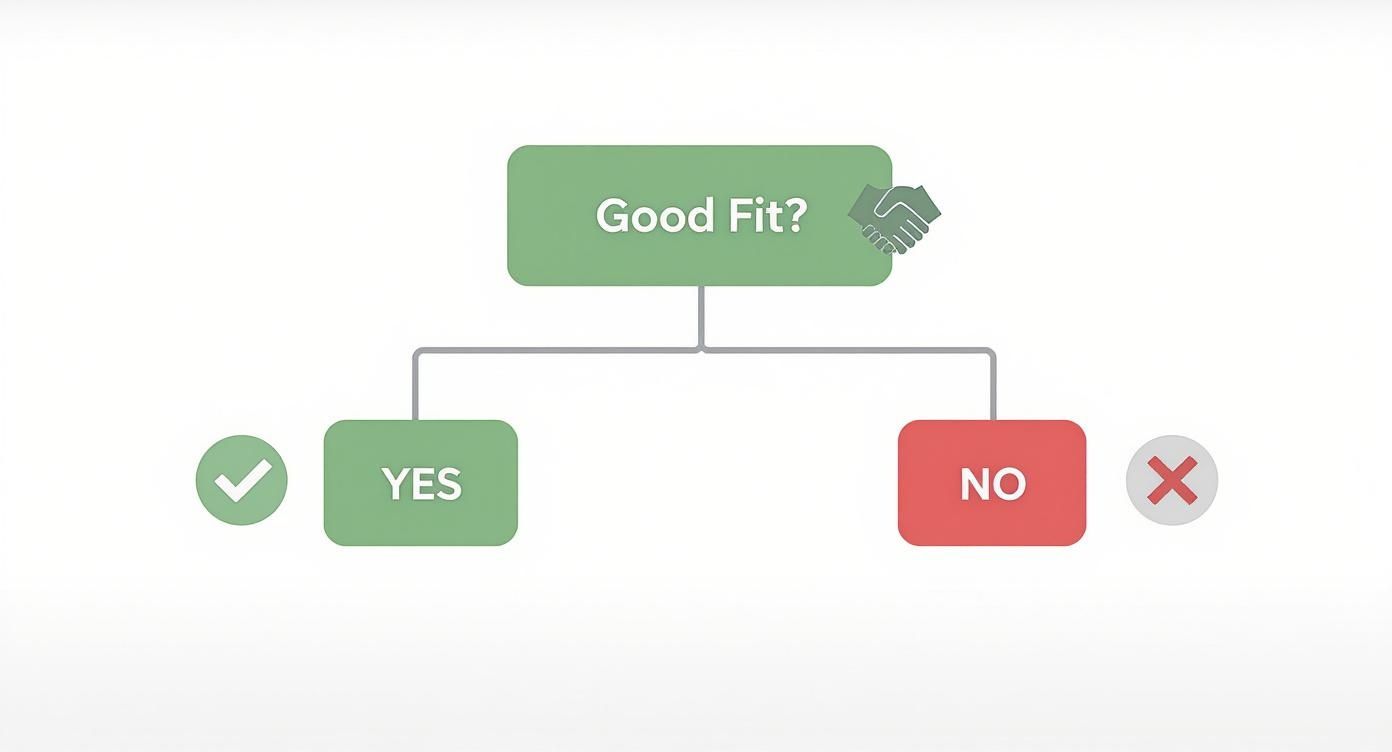
As the graphic shows, a “yes” on hiring comes after you’ve confirmed an alignment on style, communication, and process. The contract is where all of that is formally documented.
A Word of Advice: Never sign a contract that feels rushed or contains terms you don’t fully understand. For a project of this scale, it’s always smart to have your attorney review the agreement before you commit. That small investment upfront can save you an immense amount of stress and money down the road.
Forging a Strong Client-Architect Partnership
Signing on the dotted line isn’t the end of the hiring process; it’s the beginning of a long-term creative collaboration. A truly exceptional custom home rests on two foundations: the one poured into the earth, and the one you build with your architect on trust, communication, and mutual respect.
The path from a set of drawings to a finished home is never a straight line. It’s a living, breathing process filled with countless decisions, necessary revisions, and the occasional curveball. By actively nurturing a strong partnership, you turn potential points of friction into moments of innovation, making the entire journey as rewarding as the final home.
Set the Rhythm for Communication
From the very beginning, your relationship needs a clear operational rhythm. Ambiguity is the enemy of a smooth project. The most successful projects I’ve been a part of establish a communication plan from day one, which stops small questions from escalating into big delays.
This isn’t about micromanaging; it’s about creating efficiency. Agree on a regular meeting schedule—maybe a weekly site visit or a bi-weekly video call to review progress. More importantly, designate a single point of contact on both sides. This simple move prevents conflicting feedback from different family members and ensures the entire team is working from the same playbook.
Also, figure out how you’ll communicate. Will you use a project management tool for tracking milestones, email for official sign-offs, and texts for urgent, on-site matters? Defining these channels keeps critical details from vanishing into a digital black hole.
A great client-architect relationship runs on organized, predictable communication. It builds a stable framework for decision-making and feedback, which frees up mental space for creativity to thrive and keeps everyone aligned on the vision.
Clarify Who Decides What
One of the biggest sources of stress on any custom project is confusion over who has the final say. While you are the ultimate decision-maker, you have to empower your architect to manage certain details to keep the project moving forward.
It’s about collaboration, not running every small choice up the flagpole.
Get clear on these roles early on:
- Aesthetic Choices: You, of course, have the final word on finishes, colors, and the key design features that define your home’s soul.
- Technical Solutions: This is where you lean on your architect’s expertise. Trust them to select the right structural system or the most effective waterproofing detail for the design.
- Minor Field Adjustments: Empower your architect and builder to solve small issues on-site without needing your sign-off for every single tweak. This level of trust is essential for maintaining momentum.
This division of labor respects your role as the visionary while leveraging your architect’s professional judgment. You steer the “what” and “why,” and they expertly handle the “how.”
The Art of Giving Good Feedback
Feedback is the lifeblood of the design process, but the way you deliver it makes all the difference. Your architect is dedicated to bringing your vision to life, and giving them clear, timely, and constructive input is the most direct path to success. Vague comments like, “I just don’t like it,” are a dead end.
Instead, get specific. For example, rather than saying a room feels “off,” try something like, “The ceiling height in here feels a bit lower than I imagined. Can we explore options to create a greater sense of volume?” This gives your architect a concrete problem to solve. It’s also incredibly helpful to circle back to your original inspiration board to anchor the feedback in the project’s foundational goals.
Remember, creating a custom home is an iterative process. Revisions aren’t just normal; they’re a healthy part of getting every detail just right. When you treat feedback as a collaborative problem-solving exercise, you foster a positive environment where the best ideas can surface. This is how you truly co-create your dream home.
Common Questions About Hiring an Architect
Even after you’ve carefully built a shortlist of potential architects, a few practical questions often pop up before you sign on the dotted line. This is a good thing—it means you’re thinking through the details. Getting these answers sorted out now will give you the confidence to move forward.
Tackling these common concerns early on is the best way to prevent surprises later and make sure everyone is on the same page from day one. Let’s walk through some of the questions I hear most often.
How Much Does an Architect Cost for a Luxury Home?
For high-end residential projects, you can generally expect architectural fees to fall somewhere between 8% and 15% of the total construction cost. That range isn’t pulled out of thin air; it’s directly tied to the project’s complexity, the architect’s experience and reputation, and the specific services they’ll be providing.
A complex build on a steep hillside with intricate custom millwork will naturally push that fee toward the higher end of the scale compared to a more straightforward design. It’s absolutely crucial to get clarity on this from the very beginning. Your contract should spell out exactly what’s included in that percentage to avoid any unexpected invoices down the road.
What Is the Difference Between an Architect and a Draftsman?
This is a critical distinction, especially when you’re building a luxury home where every detail matters and safety is non-negotiable. A licensed architect has gone through years of rigorous university education, a long professional internship, and a series of difficult licensing exams. They are legally qualified and insured to oversee a project from the first sketch to the final walkthrough.
A draftsman or building designer, while skilled at creating technical drawings, doesn’t have that same level of education, licensure, or legal liability. For a project as complex and valuable as a custom home, hiring a licensed architect isn’t just a good idea—it’s essential for navigating tricky building codes, ensuring structural integrity, and bringing a sophisticated design vision to life.
An architect is responsible for the ‘why’ and the ‘how’—blending art, function, and legal requirements. A draftsman’s job is to document the ‘what.’ For a luxury home, you need the comprehensive vision and accountability that only a licensed architect can offer.
How Involved Should I Be in the Design Process?
Your involvement is the secret sauce, but the role you play will change as the project moves forward. During the initial discovery phase, your input is everything. This is when we translate your lifestyle, needs, and dreams into a real design concept. Be prepared to be deeply involved here.
Once the project moves into the nitty-gritty of technical drawings and construction administration, your role will naturally shift. You’ll move from being a co-creator to more of a decider, giving timely approvals on materials, fixtures, and other key elements your architect presents to you.
The key is to find a comfortable, collaborative rhythm. You have to trust their expertise to manage the technical complexities, but you remain the ultimate decision-maker. This partnership is what ensures the finished home is a perfect reflection of your vision.
Finding the right architect for your luxury project takes time and careful consideration. At Haute Design, we make that process easier by giving you access to a curated network of the nation’s most respected and pre-vetted architects. Discover elite talent and begin your project with confidence.