



Picture this: you walk into a room, and your gaze is instantly pulled upward, tracing an unbroken column of stone or steel from the floor all the way to the ceiling. That’s the undeniable impact of a floor-to-ceiling fireplace. It’s so much more than just a source of warmth; it’s a powerful architectural statement that can anchor a sprawling open-concept space, add breathtaking vertical scale, and truly define the entire atmosphere of a home.
The Definitive Guide to Floor-to-Ceiling Fireplaces
The floor-to-ceiling fireplace has moved well beyond its humble origins as a simple hearth. Today, it stands as the ultimate focal point in modern luxury interiors. Think of it as a vertical anchor, the one element that can unify a soaring two-story great room and bring a sense of grandeur that’s hard to achieve otherwise. This isn’t just a design choice—it’s about crafting an experience and establishing the very soul of a space.
This guide is designed to help you turn that grand vision into a stunning reality. We’ll explore why this feature has become such a cornerstone of high-end contemporary design, hopefully inspiring you to see what’s possible in your own home. It’s a true investment in both ambiance and architectural integrity.
An Architectural Centerpiece
It’s no surprise that the floor-to-ceiling fireplace has grown in popularity alongside the trend toward open-plan living. When you remove walls, you need strong architectural elements to ground the space, and these structures do more than just warm a room; they organize it.
- Creates a Focal Point: In a large, open area, a towering fireplace gives you a natural gathering spot. It keeps the room from feeling like a vast, undefined hall.
- Enhances Verticality: By drawing the eye upward, it creates the illusion of higher ceilings, making the entire room feel more expansive and dramatic.
- Defines Zones: A smartly placed fireplace can subtly separate the living area from the dining space without putting up a single wall, preserving that open, airy feeling everyone loves.
A Mark of Modern Luxury
This design trend has become a hallmark of sophisticated, contemporary homes. In major markets like New York, Los Angeles, and Miami, floor-to-ceiling fireplaces are practically a standard feature in new luxury developments. In fact, some projects are seeing installation rates of over 70% in their high-end units. That kind of adoption rate tells you everything you need to know—it’s become a must-have for buyers with discerning taste. You can read more about the latest fireplace trends in residential architecture on The Plan Collection.
Choosing Your Fireplace Technology
Before you even think about the stone, tile, or marble that will define your floor-to-ceiling fireplace, you have to decide on its engine. The technology you choose—gas, wood, or electric—is the heart of the entire installation. It dictates everything from the daily experience and maintenance routine to the installation’s complexity and cost.
This decision is no longer a simple choice between the romance of wood and the convenience of gas. Modern advancements have given us hyper-realistic electric models and incredibly efficient, clean-burning systems that answer today’s demand for both beauty and performance. In fact, the market for linear fireplace inserts, a go-to for these dramatic vertical designs, is expected to hit $954.58 million by 2032. This isn’t just a trend; it’s a clear move toward smarter, more sustainable hearths. You can explore more on the top fireplace trends and market growth at Global Sources.
This is where the principles of good design meet practical engineering.
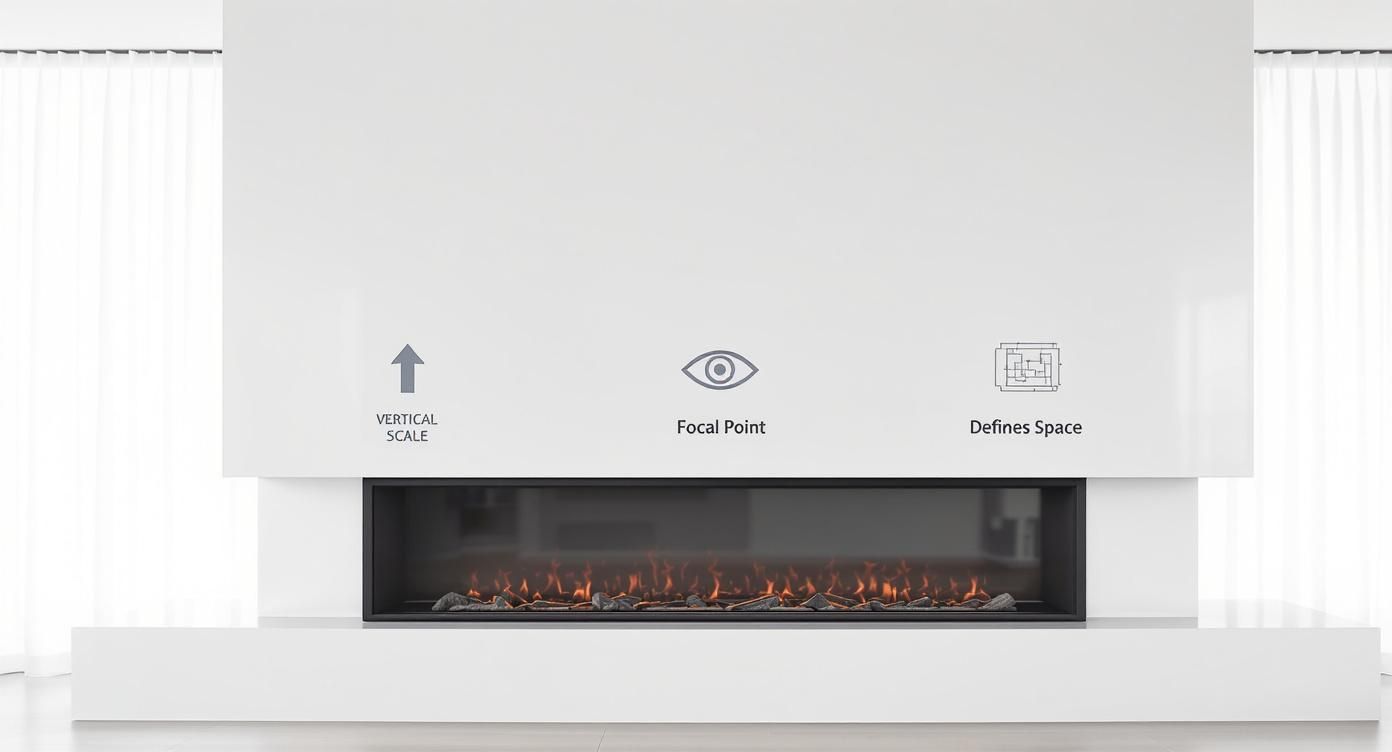
As you can see, a floor-to-ceiling installation isn’t just about height; it’s about creating a powerful architectural anchor that organizes the entire room. Let’s look at the primary technologies to find the perfect fit for your vision and lifestyle.
To make this decision easier, here’s a quick comparison of the three main types.
Fireplace Type Comparison for Floor to Ceiling Designs
| Feature | Gas Fireplace | Wood-Burning Fireplace | Electric Fireplace |
|---|---|---|---|
| Ambiance | Consistent, controlled flame. Clean and modern aesthetic. | Authentic crackle, scent, and radiant heat. Rustic and traditional feel. | Realistic flame effects via LED or water vapor. Highly versatile look. |
| Heat Output | Excellent, reliable heat source. Easily adjustable. | High heat output, but can be inconsistent. Radiates warmth long after the fire is out. | Optional heat. Can be used for ambiance only or as a supplemental heater. |
| Installation | Requires gas line and venting. Direct vent models are safest. | Most complex. Requires a chimney, hearth, and proper clearances. | Easiest by far. No venting or fuel lines needed. Just an electrical outlet. |
| Maintenance | Low. Annual servicing of the burner and pilot is recommended. | High. Requires regular ash cleaning, wood storage, and annual chimney sweeping. | Virtually none. Occasional dusting and light bulb changes may be needed. |
| Cost | Mid-to-high initial cost for the unit and installation. Low operating costs. | Highest initial cost, especially for masonry. Ongoing cost for firewood. | Lowest initial cost. Very low operating costs. |
| Best For… | Homeowners who want beauty and convenience with the push of a button. | Purists who crave the authentic sensory experience of a real fire and don’t mind the upkeep. | Apartments, condos, or any space where venting is difficult or impossible. Ultimate design freedom. |
Each option offers a distinct experience, so the “best” choice really comes down to your priorities for ambiance, effort, and installation flexibility.
The Classic Appeal of Wood-Burning Fireplaces
For the purist, nothing can replace the raw, elemental experience of a real wood fire. The crackle of the logs, the distinct aroma, and the deep, radiant warmth create an atmosphere that’s simply unmatched. A wood-burning fireplace is a commitment, but one that rewards with an authentic, primal connection to fire.
However, this traditional path comes with real-world considerations.
- Traditional Masonry: This is the classic, built-on-site fireplace that demands a robust foundation and a full-scale chimney. While timelessly beautiful, it’s also the most complex and expensive to build, especially in an existing home.
- High-Efficiency Units: A fantastic modern alternative, these factory-built fireplaces are enclosed systems that burn wood far more completely. They generate more heat from less wood and produce significantly fewer emissions, making them a much smarter, more responsible choice.
Remember, choosing wood means sourcing and storing logs, cleaning out ash, and scheduling annual chimney sweeps. It’s a hands-on experience, and for many, that’s precisely the point.
The Effortless Convenience of Gas Fireplaces
Gas fireplaces offer the beautiful ambiance of a dancing flame with the incredible ease of a remote control. They provide consistent, adjustable heat without any of the work or mess that comes with burning wood. This combination of elegance and simplicity has made them the go-to choice for countless modern luxury homes.
For a modern touch, many homeowners prefer a low-maintenance option over a traditional fireplace. Gas and electric units offer sleek designs with minimal upkeep, fitting seamlessly into contemporary lifestyles.
There are two main types of gas systems you’ll encounter:
- Direct Vent: This is the gold standard and the type we almost always recommend. It’s a sealed system with a glass front that pulls combustion air from outside and vents all exhaust back outside through a coaxial pipe. It’s highly efficient and, most importantly, protects your indoor air quality.
- Vent-Free: These units are easier to install because they don’t require an external vent. However, they use air from inside the room for combustion and release byproducts back into that same space. Many local building codes restrict their use due to air quality and safety concerns.
The Modern Versatility of Electric Fireplaces
Once dismissed as a weak imitation, electric fireplaces have made a stunning comeback. Today’s high-end models feature incredibly realistic flame effects that can honestly fool the eye, offering design flexibility that the other types can only dream of. They are the ultimate problem-solvers.
Because they don’t need venting, chimneys, or gas lines, electric fireplaces can be installed virtually anywhere. This opens up amazing possibilities for apartments, interior rooms, or any spot where a traditional fireplace would be impossible.
- LED Technology: Advanced models use sophisticated LED lighting to project lifelike flame patterns, creating a mesmerizing sense of depth and movement.
- Water Vapor Models: These are the real showstoppers. Using ultrasonic technology, they create a fine water mist that, when hit with LED lights, perfectly mimics real flame and smoke. It’s all the beauty of fire with absolutely no heat, making it a safe and stunning feature you can enjoy year-round.
Selecting Materials for Maximum Impact
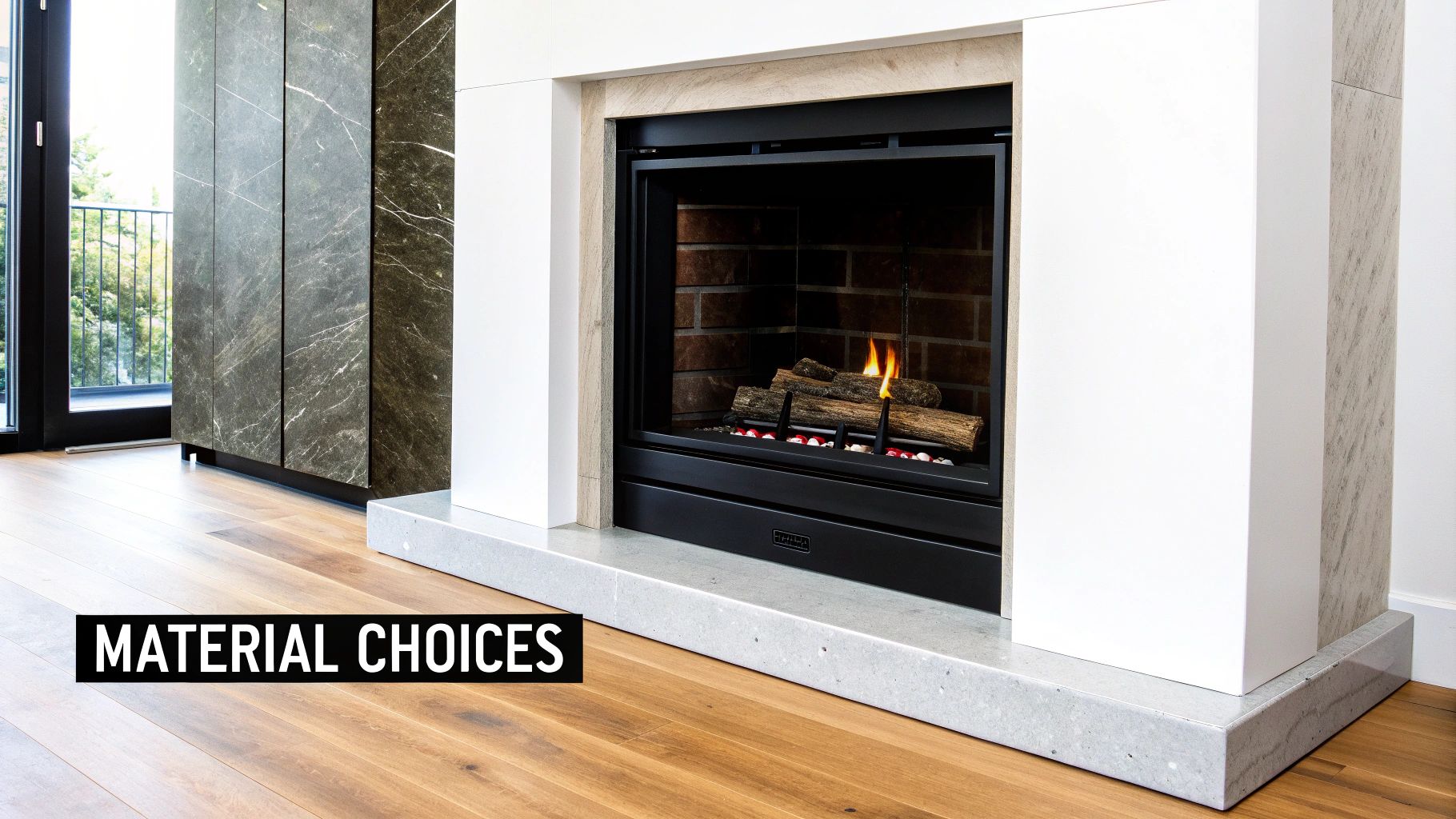
If the technology behind your floor-to-ceiling fireplace is its engine, the material you choose for the surround is its very soul. This is what transforms a functional heat source into a breathtaking work of art. It’s the choice that will define the entire character of your living space.
Think of the material as the lead actor in your room’s design story. Polished marble speaks a language of classic luxury, while raw, board-formed concrete tells a tale of industrial chic. The right selection doesn’t just complement your home’s architecture; it elevates it, creating a powerful first impression that lasts.
The Timeless Allure of Natural Stone
For centuries, natural stone has been the go-to material for hearths, and for good reason. It brings an unparalleled sense of permanence, organic beauty, and a direct connection to the earth. Each slab is a geological fingerprint, guaranteeing your floor-to-ceiling fireplace is a one-of-a-kind masterpiece.
Marble is the undisputed champion of opulence. Its dramatic veining and polished sheen create an immediate sense of grandeur. Calacatta and Statuario marbles, with their bold, flowing patterns, are perfect for a high-contrast statement. For a more subtle, classic elegance, a softer Carrara marble is a flawless choice.
The enduring appeal of natural stone lies in its ability to be both a bold statement and a neutral backdrop. Its inherent variations in color and pattern mean it can anchor a room’s design while still allowing other elements, like furniture and art, to shine.
Limestone and travertine offer a warmer, more understated alternative. Their honed, matte finishes provide a soft, textural quality that feels both ancient and modern. These stones work exceptionally well in homes aiming for a relaxed, organic luxury. As more homeowners prioritize natural elements, this trend aligns with broader movements in design, which you can explore through the core principles of what is sustainable architecture.
Modern Minimalism with Plaster and Concrete
For those who crave a clean, monolithic look, plaster and concrete are the ultimate materials. They allow the form of the fireplace to take center stage, creating a seamless, sculptural presence that is both powerful and understated. It’s an approach that celebrates shape over pattern.
Venetian plaster, applied by hand in thin, layered coats, can be burnished to a high sheen or left with a soft, matte finish. Its subtle tonal variations create a sense of depth and movement, giving the fireplace a smooth, almost liquid-like surface that feels incredibly sophisticated.
Concrete, on the other hand, offers a raw, industrial edge. It can be poured into custom forms for sharp, clean lines or left with the textured imprint of wooden boards for a more rustic feel. Pigments can even be added to create shades ranging from light gray to deep charcoal, providing a versatile canvas for any modern interior.
- Best for Minimalist Designs: These materials create an unbroken vertical line that enhances the architectural impact.
- Customizable Texture: From silky smooth plaster to rugged concrete, the finish can be tailored to the exact aesthetic you’re after.
- A Neutral Foundation: Their neutral palettes provide the perfect backdrop for statement art or bold furniture.
The Sleek Sophistication of Metal and Tile
Metal and tile introduce a different kind of drama—one of precision, reflection, and pattern. These materials are perfect for adding a touch of glamour or a bold graphic element, pushing the design in a more contemporary or even futuristic direction.
Large-format steel panels, whether in a blackened patina or a brushed stainless finish, create a sleek, commanding presence. They’re often seen in modern industrial lofts and minimalist homes, adding a touch of sharp, clean-lined sophistication. For a warmer metallic option, brass and bronze introduce a sense of luxe, old-world glamour that pairs beautifully with rich velvets and dark woods.
Large-format tiles, especially porcelain slabs that mimic the look of marble or concrete, offer incredible design versatility. They can provide the visual impact of a massive stone slab but are often lighter and more cost-effective. These tiles can be used to create:
- Seamless Looks: With minimal grout lines, large slabs can create a nearly uninterrupted surface.
- Bold Patterns: From geometric designs to bookmatched marble effects, tile opens up a world of creative possibilities.
- Textural Finishes: Options range from high-gloss polishes to matte, stone-like textures.
Ultimately, the material you choose is a deep reflection of your personal style. It’s the final, crucial decision that will determine whether your floor-to-ceiling fireplace feels classic and stately, raw and elemental, or sharp and modern.
Navigating Structural and Safety Requirements
Bringing a monumental floor-to-ceiling fireplace from concept to reality involves so much more than just picking out beautiful materials. Beneath the surface of that stunning stone or sleek plaster lies a critical foundation of engineering, codes, and safety protocols. This technical groundwork isn’t just important—it’s everything. It ensures your architectural centerpiece is not only breathtaking but also structurally sound and perfectly safe for your home.
Think of it as the strong, invisible skeleton that supports the entire vision. Cutting corners here simply isn’t an option.
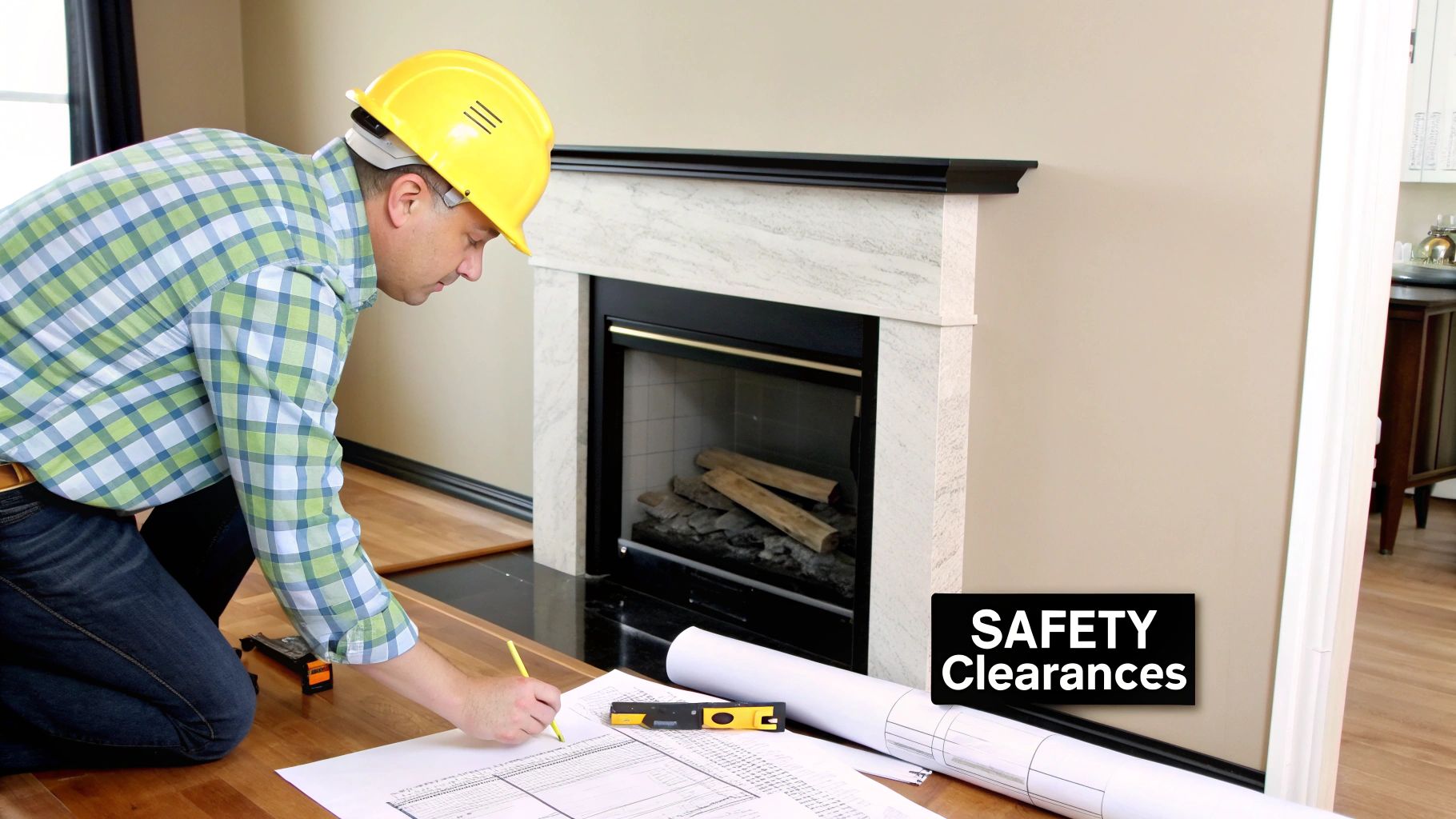
To get this phase right, you need to tackle three core areas head-on: the structural load, the venting pathway, and the non-negotiable safety clearances. Each plays a crucial role in the long-term integrity and performance of your fireplace.
Handling the Structural Load
A floor-to-ceiling fireplace, especially one wrapped in heavy natural stone or cast concrete, puts a tremendous amount of weight on your home’s structure. We’re not talking about a piece of heavy furniture; a typical masonry fireplace can weigh several tons. All of that load has to be safely transferred all the way down to the foundation.
You can’t just build it on a standard subfloor. That’s a recipe for disaster. The floor joists underneath simply weren’t designed for that kind of concentrated weight and could sag or even fail over time. This is precisely why a structural engineer must be one of the first people you call.
Their job is to analyze your home’s existing frame and design the right reinforcements. This often means:
- Pouring a new concrete footing in the basement or crawlspace directly under the fireplace location.
- Adding support columns to transfer the weight from the fireplace down to that new footing.
- Reinforcing the existing floor joists with extra lumber or steel to prevent any bending or sagging.
This foundational work is the bedrock of a safe installation. It’s what ensures your dramatic new fireplace remains a stable, permanent feature for generations.
“A common mistake is underestimating the sheer weight of a floor-to-ceiling structure. The first conversation should always be with a structural engineer, even before finalizing the design. Their calculations dictate what is possible and ensure the home can safely support the vision.”
Mastering Venting and Chimney Paths
For any wood-burning or direct-vent gas fireplace, figuring out a safe and clear path for the chimney or vent pipe is a make-or-break challenge. This isn’t just about sticking a pipe through the roof. It’s a complex system that must be meticulously planned to get combustion byproducts out of your home safely and efficiently.
The vent has to travel through multiple floors, ceilings, and possibly an attic before it terminates above the roofline at a very specific, code-compliant height. For the best performance, this route needs to be as straight and vertical as possible. Any bends or jogs have to be carefully calculated to ensure they don’t choke off the flow of exhaust.
This is where a detailed plan becomes absolutely essential. A skilled professional will map out the entire run before a single wall is opened up, identifying any potential conflicts with plumbing, wiring, or structural beams. Knowing how to interpret these plans is a huge asset for a homeowner, and our guide on how to read architectural drawings like a pro can give you a real edge.
Adhering to Safety Clearances
Here we get to the most critical safety aspect of all: maintaining proper clearances to combustibles. This is the mandatory empty air space required between the fireplace unit, its chimney, and anything that could potentially catch fire—wood framing, drywall, insulation, you name it.
Every fireplace manufacturer spells out these minimum clearances in their installation manual, and they are legally enforced by local building codes. These aren’t suggestions; they are absolute, unbendable rules. Ignoring them creates a serious fire hazard, and you can be sure an inspector will have a tape measure out to check them before signing off.
Key areas to watch are:
- Framing: The wood studs and headers that frame the fireplace chase must be kept at a precise distance.
- Mantels and Surrounds: Even decorative wood elements must respect the minimum clearance rules.
- Adjacent Walls: Specific air gaps are required between the fireplace enclosure and the walls behind and beside it.
Ultimately, working with an experienced, certified installer is the only way to guarantee every single code is met. It’s how you get peace of mind to go along with that stunning design.
The Real Cost of a Floor-to-Ceiling Fireplace
A floor-to-ceiling fireplace is a serious investment, but one that pays dividends in both ambiance and home value. To get it right, you need to understand the full financial picture from the get-go. The final price isn’t just the fireplace unit you pick out; it’s a blend of the core components, the skilled labor to put it all together, and any prep work needed to make it happen.
I find it helps to think of the budget in three layers: the unit itself, the surround material, and the installation. This way, you can see exactly where every dollar is going.
The starting point is the fireplace insert. An electric unit is often the most accessible entry point, with quality linear models typically starting around $2,000 to $5,000. Gas fireplaces usually land in the $5,000 to $10,000 range, while a high-efficiency wood-burning fireplace will often have the highest upfront cost for the unit alone.
Breaking Down the Primary Expenses
After you’ve chosen the “engine” of your fireplace, the materials for the surround become the next major part of the budget. This is where your design choices really start to shape the final cost. You can get a high-end look with large-format porcelain tiles for a more moderate price, whereas opting for massive, seamless slabs of natural stone like marble or limestone will push you into a premium bracket.
Finally, you have the labor—and this is a critical piece of the puzzle. Installing a floor-to-ceiling fireplace is a complex job that brings together several trades. You’ll likely need carpenters for framing, an electrician, a certified gas fitter, and of course, the specialized artisans who finish the stone or plaster. Depending on how intricate the design is, labor costs can easily meet or even surpass the cost of the materials.
The most common budgeting mistake I see is when clients focus only on the fireplace and the stone they’ve fallen in love with. They forget about the “invisible” costs—framing, structural support, drywall, and specialized labor. These are just as real and must be planned for from day one to avoid any unwelcome surprises down the road.
Uncovering Potential Hidden Costs
A few things can pop up and add unexpected expenses to your project. Knowing about them ahead of time makes for much more realistic financial planning.
- Structural Modifications: What if the wall you’ve chosen can’t support the weight of a two-story stone facade? An engineer will need to get involved to design reinforcements, which adds to both material and labor costs.
- Gas or Electrical Work: If you need to run a new gas line or a dedicated electrical circuit, the price can range from a few hundred to several thousand dollars, depending on how far it has to travel and how difficult it is to access the area.
- Venting and Chimney Construction: For gas or wood fireplaces, the cost to run the venting up through multiple floors and out the roof can be significant. It gets especially tricky if the path has to navigate around existing beams or other structural hurdles.
- Demolition and Removal: Are you replacing an old fireplace? The cost to safely tear out and dispose of the old one needs to be included in your budget.
This is exactly why a detailed, itemized quote from your contractor is non-negotiable. It’s more than just a list of numbers; it’s a financial roadmap for your project.
This kind of investment reflects a broader trend: these fireplaces are becoming a signature feature in luxury homes. The global hearth market was recently valued at a staggering USD 20.84 billion, with North America driving much of that demand. You can explore more on the hearth market’s growth and value at Grand View Research. This isn’t just about a cozy fire; it’s a calculated investment in your home’s long-term appeal and value.
Assembling Your Professional Project Team
Let’s be clear: a floor-to-ceiling fireplace is a serious architectural undertaking, not a weekend DIY job. The success and safety of a feature this grand hinge entirely on the skill and coordination of the team you bring on board. Assembling the right group of experts from day one is the single most critical step you’ll take. It’s what makes the difference between a seamless project and a series of costly headaches.
Think of it like producing a film. You need a director to shape the creative vision, a structural engineer for the technical execution, and a master artisan to handle the hands-on craft. For your fireplace, these roles are filled by an interior designer, an architect, and a specialized installer.
Defining the Core Roles
Your interior designer is the visionary, the creative lead. They’ll focus on the aesthetic, ensuring the fireplace becomes a natural, breathtaking extension of your home’s style. They guide the selection of materials, finishes, and proportions to achieve that perfect visual harmony.
The architect is the technical authority, responsible for the structural blueprint. They’ll figure out how to safely support the immense weight of the structure and map out the crucial venting paths. Getting this right is fundamental, and our guide on how to choose an architect provides a practical overview to help you make this vital decision.
Finally, the specialized installer or contractor is the craftsperson who physically builds the vision. This isn’t a job for a general handyman. You need someone with proven, specific experience in large-scale hearths, whether that involves complex masonry, intricate finishing work, or certified gas line and flue installations.
A common pitfall is assuming one person can do it all. While some design-build firms offer an all-in-one service, you must confirm that the individuals handling each part of the project have deep, specialized expertise. When you’re dealing with fire, venting, and structural loads, there’s no room for a jack-of-all-trades.
Vetting Your Potential Partners
Finding the right people demands some homework. As you interview candidates, treat it like you’re casting for the most important roles in a production—because you are.
Have a checklist of pointed questions ready to go:
- Licensing and Insurance: Start with the basics. Ask to see their general contractor’s license and proof of liability insurance. This is your essential protection and is completely non-negotiable.
- Portfolio of Similar Work: Don’t just look at pretty pictures. Ask to see examples of floor-to-ceiling fireplaces they have completed. This proves they understand the unique challenges of vertical scale and structural weight.
- References from Past Clients: A good professional will be happy to connect you with former clients. Talk to them. Ask about the process, communication, budget, and if the final product met their expectations.
- Knowledge of Local Codes: Quiz them on their familiarity with local building codes. An experienced pro will speak fluently about clearances, venting requirements, and structural mandates in your specific area.
This is where platforms like Haute Design become so valuable. We connect homeowners with a curated network of pre-vetted, high-end architects, designers, and builders who specialize in exactly this kind of luxury project. It streamlines the search and gives you confidence that your ambitious vision is in truly capable hands from the very beginning.
Answering Your Questions
When you’re considering an architectural statement piece as significant as a floor-to-ceiling fireplace, questions are bound to come up. Let’s tackle some of the most common ones we hear from homeowners.
How Much Value Does a Fireplace Add to a Home?
Pinning an exact dollar figure on a feature like this is tough, but a beautifully executed floor-to-ceiling fireplace is a serious luxury upgrade. It absolutely boosts a home’s appeal and what buyers perceive its value to be. More often than not, it becomes the unforgettable centerpiece that makes a property stand out.
Real estate pros will tell you that a dramatic focal point like this can definitely help command a higher sale price. It works its magic not by adding a specific percentage, but by forging an emotional connection with potential buyers and distinguishing the home from everything else on the market.
Can I Install This Fireplace in an Existing Home?
The short answer is yes, you can absolutely retrofit a floor-to-ceiling fireplace. However, this isn’t a weekend project; it’s a major undertaking that requires a team of seasoned professionals from start to finish.
First, a structural engineer has to verify that the floor can handle the immense weight. Then, you have to find a clear, safe path for the chimney or venting system, all while adhering to strict safety clearances from any combustible materials. Bringing in an experienced architect and contractor from the very beginning to assess the feasibility isn’t just a good idea—it’s essential.
A common misconception is that adding a major feature like a fireplace is mostly cosmetic. In reality, the structural and safety planning are the most critical phases, ensuring the installation is both beautiful and built to last.
What Is the Most Low-Maintenance Option?
If you’re looking for effortless ambiance, electric fireplaces are the clear winner. They produce zero emissions, need no venting, and leave behind no ash or soot to clean up. The latest models use surprisingly realistic LED and water vapor technology to mimic a live fire.
For those who want a real flame without the fuss, a direct-vent gas fireplace is your next best bet. These are completely sealed systems, so they won’t affect your indoor air quality. They just need a quick annual service and can be turned on with the flip of a switch or a remote. You get all the cozy atmosphere of a real fire without any of the work that comes with a wood-burning hearth.
Ready to create an architectural masterpiece in your own home? The journey begins with finding the right professionals. At Haute Design, we connect you with the nation’s most distinguished architects, interior designers, and builders who specialize in luxury projects like floor-to-ceiling fireplaces. Explore our network of vetted experts and start your project with confidence.