


After a period of supercharged growth and fierce competition, the luxury real-estate market is finally catching its breath. What we’re seeing isn’t a downturn, but a clear shift towards stability. The market is moving from an all-out sprint to a more measured, strategic pace, putting discerning buyers back in the driver’s seat.
The Evolving Landscape of Luxury Real Estate
The ground rules for high-end property deals have fundamentally changed. The days of non-stop bidding wars and inventory that vanished overnight are behind us, replaced by a more balanced and thoughtful environment. For anyone involved—affluent homeowners, investors, designers, or builders—reading this new terrain correctly is crucial.
This is a normalization. After years of frankly unsustainable velocity, the market is reverting to conditions that reward careful negotiation and deliberate property selection. It’s a whole new ballgame, with a fresh set of opportunities and challenges for everyone.
What’s Really Changed?
The most profound shift is the end of hyper-competition. Recent figures paint a clear picture: sales velocity has slowed down significantly, a direct consequence of inventory levels rising and giving buyers more breathing room.
Just look at the numbers. The sales ratio for luxury homes fell to a mere 14.06% in January, a staggering drop from the 37% peak just two years ago. This data, highlighted in Pacaso’s market analysis, confirms what we’re seeing on the ground: buyers are no longer being cornered into making frantic, above-asking offers just to get a deal done.
To give you a clearer picture, we’ve broken down the major shifts into a quick summary.
Key Luxury Real Estate Market Shifts at a Glance
This table captures the essence of the new market dynamics, offering a snapshot of what’s different and why it matters.
| Market Trend | Key Characteristic | Implication for Stakeholders |
|---|---|---|
| Cooling Competition | The ratio of sales to new listings has dropped dramatically, indicating fewer bidding wars. | Sellers need sharp pricing; buyers have stronger negotiating power. |
| Growing Inventory | More high-end properties are coming onto the market and staying there longer. | Buyers have more choices; developers face more competition. |
| Price Moderation | Explosive price growth has slowed to a more sustainable, predictable rate. | Investors can expect more stable returns; sellers must justify their asking price. |
| Return of Discretion | Buyers are taking their time, prioritizing quality and long-term value over speed. | Designers and architects must deliver exceptional, unique value to attract buyers. |
These trends are intertwined, creating a market that rewards patience, quality, and smart strategy over pure speed.
Navigating the New Normal
So, what does this all mean in practical terms?
For sellers, it means that pricing has to be spot-on and backed by solid data. For buyers, this is a prime opportunity to negotiate better terms and find a property that genuinely fits their vision, without the pressure of a dozen competing offers.
This market isn’t soft; it’s smart. Buyers at this level aren’t just shopping for square footage—they’re evaluating per-square-foot value, lifestyle alignment, and market momentum.
And for the professionals—the architects, designers, and builders—the focus must now be on creating undeniable value that truly stands out. In a field that’s less crowded but far more discerning, quality is everything. The following sections will dig deeper into these trends, providing a clear roadmap for what comes next.
Decoding Price and Inventory Dynamics
Basic economics tells us that when supply goes up, prices should come down. But the high-end real estate market has always played by a different set of rules. What we’re seeing right now is one of the most fascinating market shifts in years: a flood of new properties hitting the market while prices hold firm—and in some cases, even climb.
This isn’t a market contradiction; it’s a clear sign of the luxury sector’s unique resilience. The general housing market gets rattled by every economic tremor, but the affluent buyer pool is far more insulated. Their purchasing power is deep and consistent, creating a strong demand floor that props up values, even when there are more homes to choose from.
So, instead of a price collapse, the surge in inventory has simply brought a much-needed sense of balance back to the market. The frantic, high-pressure environment of the last few years has finally cooled off. Buyers now have the luxury of time and choice, two things that were incredibly scarce not long ago. This shift allows for more measured decisions and thoughtful negotiations without compromising the inherent value of a premier property.
The Numbers Behind the Trend
The data tells a compelling story of a market flush with both choice and confidence. A recent mid-year report reveals that luxury home inventory has hit a two-year peak. We’re talking about a staggering 40.4% jump for single-family properties and a 42.6% rise for attached luxury residences compared to this time last year.
And yet, prices haven’t blinked. The median sale price for luxury single-family homes actually edged up 1.8% year-over-year. Attached luxury homes saw even more impressive growth, with prices climbing 8.4%. For a deeper dive into the numbers, check out The Mid-Year Report 2025 from Coldwell Banker Luxury.
This chart paints the picture perfectly, showing how the boom in inventory hasn’t dragged prices down with it.
You can clearly see that even as the number of listings shot up, the median sale price continued its steady upward march—a testament to just how strong underlying buyer demand really is.
Interpreting the New Market Equation
What does this equilibrium of high inventory and stable prices really mean for those of us in the industry? It signals a market that has matured from a frantic sprint to a strategic marathon. Buyers are no longer being rushed into reactive, emotional decisions. Instead, they’re taking their time, carefully weighing their options, and focusing on long-term value, build quality, and how a home truly fits their lifestyle.
In this “smart market,” value is no longer just about the price per square foot. It’s about the whole story—the craftsmanship, the location, the design, and the emotional pull of the property. Buyers have options, and they’re using that leverage to find a home that genuinely connects with them.
This environment puts an even greater premium on exceptional quality. For architects, designers, and builders, the goal is no longer just to get a project to the finish line. It’s about creating something that truly stands apart in a more crowded field. Understanding what goes into the final price tag is critical, which is why our guide on decoding luxury home construction costs is a must-read for anyone looking to see how material choices and design complexity shape a property’s ultimate value.
What This Means for Stakeholders:
- For Sellers: Your pricing strategy has to be spot-on and backed by data. With more competition, a home needs to be impeccably staged and marketed to grab the attention of today’s discerning buyers.
- For Buyers: This is your moment. The expanded inventory gives you negotiation leverage and the freedom to find a property that checks every single box, all without the stress of a bidding war.
- For Developers: Your project must have a unique edge. Whether it’s through sustainable design, integrated smart home technology, or one-of-a-kind amenities, differentiation is absolutely essential to attract investment.
At the end of the day, today’s luxury market is defined by this sophisticated balance. More choice hasn’t watered down value; it has simply raised the bar for what it means to be a truly exceptional property.
A Global View of Luxury Real Estate Hotspots
To truly understand the luxury market, you have to think globally. High-net-worth individuals don’t see borders the same way others do; for them, premier properties in cities like London, Dubai, or Singapore are simply key assets in a diversified portfolio. Keeping an eye on where this international capital is flowing is the best way to spot the next big opportunity.
The old guard of New York, Paris, and London still holds tremendous sway, of course. But they’re no longer the only game in town. A massive wave of wealth creation in other parts of the world is redrawing the map, funneling serious investment into both these traditional safe havens and a new class of rising metropolitan stars.
Established Hubs and Emerging Powerhouses
Traditional luxury capitals have a staying power built on deep-rooted economic stability, cultural prestige, and a proven history of preserving wealth. Take London’s prime market—it remains a powerful magnet for international buyers who value its political stability and world-class amenities. Likewise, Paris has a timeless allure, attracting buyers who are investing as much in a lifestyle as they are in property.
But let’s be honest, the most exciting growth stories are happening elsewhere. A city like Dubai has completely remade itself into a global hub for the ultra-wealthy. It’s a masterclass in attracting capital, leveraging favorable tax policies, a pro-business environment, and an unparalleled luxury lifestyle to pull in money from Europe, Asia, and beyond.
The infographic below really puts the current market dynamics into perspective, showing the interplay between inventory and price appreciation.
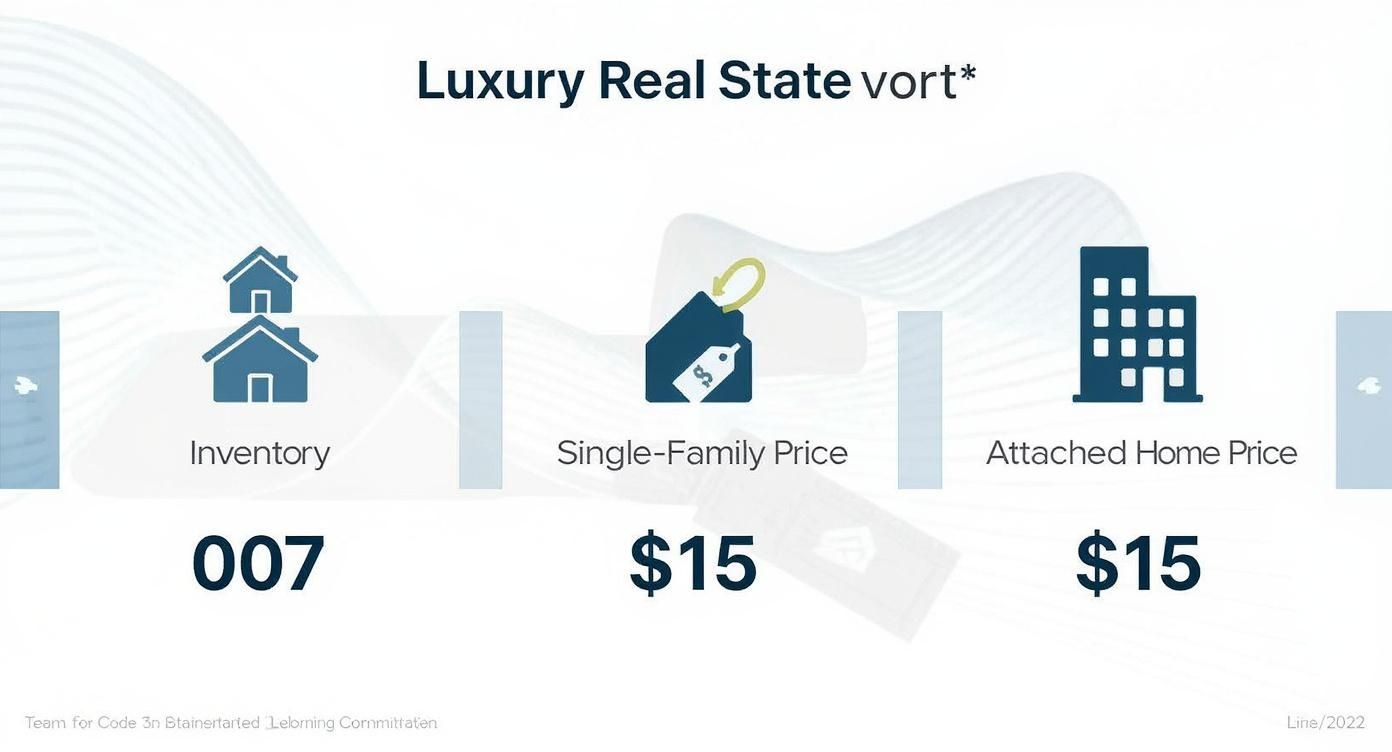
What this tells us is that even as more properties come onto the market, prices are holding strong—especially for attached homes. That’s a clear signal of robust and sustained buyer demand.
The Asia Pacific Momentum
The Asia Pacific region, in particular, has become a formidable engine of growth. We’re not just talking about a momentary blip; this is a fundamental, structural shift in global wealth. Rapid economic expansion and a quickly growing affluent class are creating intense demand for high-end properties in the region’s key cities.
The numbers back this up in a big way. The global luxury real estate market hit an estimated USD 289.6 billion in 2023. By 2032, it’s projected to nearly double, reaching around USD 515.3 billion. That’s a compound annual growth rate of 6.5%, and much of that explosive growth is being powered by what’s happening in Asia Pacific. You can dive deeper into the numbers behind this global market growth from Dataintelo.
The mobility of global wealth is the primary force shaping luxury real estate hotspots. Capital flows to where it feels most secure and has the greatest potential for lifestyle return, not just financial appreciation.
This global perspective isn’t just academic—it’s essential context for anyone working in the luxury space. The trends shaping demand in one city often create ripple effects felt thousands of miles away.
The following table gives a snapshot of the projected growth and underlying drivers for some of the world’s most-watched luxury markets.
Projected Growth in Top Global Luxury Markets
A comparative look at forecasted price growth and key market drivers in leading international luxury real estate hubs.
| City/Region | Projected Annual Growth | Primary Market Drivers |
|---|---|---|
| Dubai | 4-5.9% | Strong economic growth, pro-business policies, “safe haven” status. |
| Sydney | 3-4.9% | Supply shortages, rising international interest, high quality of life. |
| Paris | 2-3.9% | “Olympic effect,” strong prime market demand, enduring lifestyle appeal. |
| Miami | 2-3.9% | Continued corporate relocations and domestic wealth migration. |
These forecasts highlight how different factors—from major sporting events to government policy—can shape a city’s fortunes on the world stage.
So, what’s really moving the needle for these international markets? A few key forces are at play:
- Wealth Preservation: When the global economy feels shaky, prime real estate in politically stable countries looks like one of the safest places to park money.
- Lifestyle Migration: The wealthy are increasingly chasing quality of life. They’re moving to places that offer security, wellness, and unique cultural experiences.
- Golden Visa Programs: Investment-for-residency programs in countries like Portugal and Greece are a direct pipeline for high-net-worth individuals, giving local luxury markets a significant boost.
For designers, architects, and developers, tuning into these global currents is no longer just a good idea—it’s critical. It tells you which design aesthetics will click with a Russian or Chinese buyer versus an American one. It informs what amenities are now non-negotiable. A high-end project in Miami requires a fundamentally different approach than one in Sydney to truly capture the attention of the global elite.
Getting to Know the New Luxury Home Buyer
If you want to understand where the luxury real estate market is headed, you have to look past simple net worth. The real story is in who today’s affluent buyer is—what drives them, how they think about money, and what they truly want in a home. The old, one-size-fits-all image of a “luxury buyer” is gone, replaced by several distinct groups who all react to the market in very different ways.
On one side, you have the ultra-wealthy cash buyers. For the most part, this group doesn’t flinch at things like rising interest rates. When they buy a multi-million dollar property, it’s less about market timing and more about a strategic move for their portfolio or simply acquiring a home that fulfills a lifelong dream. They represent a steady, reliable source of demand for the most elite properties on the market.
Then you have the aspirational affluent buyers. These are the folks who are much more tuned in to the wider economy. They often need financing or plan to sell other assets to make their luxury purchase happen, so they naturally become more careful when borrowing costs go up or the market feels uncertain. For anyone pricing or selling homes in the entry-to-mid-level luxury space, knowing how this group thinks is absolutely critical.
The New Power Player: The Equity-Rich Buyer
A powerful new force has stepped into the ring, sitting right between those two poles: the equity-rich buyer. Think of homeowners who bought their place years ago, maybe for a modest sum, and have watched its value skyrocket. Now, they’re cashing in that massive equity to finally make their move into the luxury market.
This group is a game-changer. Their buying power isn’t just from cash in the bank; it’s from wealth they’ve built. This makes them confident, but they’re also smart shoppers. They’re not just looking for a bigger house—they’re looking for a clear and tangible upgrade in quality, location, and the lifestyle that comes with it.
Today’s luxury purchase is less about owning the biggest house on the block and more about securing a home that delivers a specific, highly personal experience. It’s an investment in lifestyle, wellness, and pure convenience.
From Sprawling Estates to Thoughtfully Designed Homes
One of the biggest shifts we’re seeing is the move away from sheer size. The era of the sprawling, formal mansion is fading. In its place is a demand for smaller homes that are just plain smarter in their design. Quality of craftsmanship and a unique architectural vision now trump raw square footage, hands down.
This “quality over quantity” mindset has huge implications for architects and builders. A home that’s 5,000 square feet but is perfectly executed with custom finishes, seamless technology, and a brilliant floor plan will sell faster—and for more—than a generic 10,000-square-foot house every single time.
What Today’s Luxury Buyer Really Wants
The new luxury consumer has a very clear checklist. If you’re designing, building, or selling to them, aligning your project with these priorities is the key to success.
- Real Architecture: Buyers are tired of cookie-cutter designs. They’re actively searching for homes with a point of view, created with unique materials, innovative layouts, and a fluid connection between the inside and outside.
- Integrated Tech: A modern luxury home is a smart home, period. This means more than a few cool gadgets. Buyers expect intuitive, background systems that manage everything—security, lighting, climate, and entertainment—without a second thought.
- Wellness and Sustainability: Features that promote a healthy life aren’t just a bonus anymore; they’re a requirement. We’re talking dedicated home gyms, spa-like bathrooms, advanced air and water purification, and construction that’s both sustainable and energy-efficient.
- Turnkey, Please: The demand for move-in-ready homes has never been stronger. High-earning buyers are usually short on time and have zero interest in managing a renovation. A home that is impeccably finished and ready to be enjoyed from day one will always command a premium.
At the end of the day, the new luxury buyer is sophisticated, well-researched, and focused on their lifestyle. They aren’t just buying a piece of property; they’re investing in an environment that reflects their values and makes their daily life better. For designers, builders, and developers, the path forward is clear: understand this new vision of luxury and deliver it.
Architectural and Design Trends Defining Luxury Homes
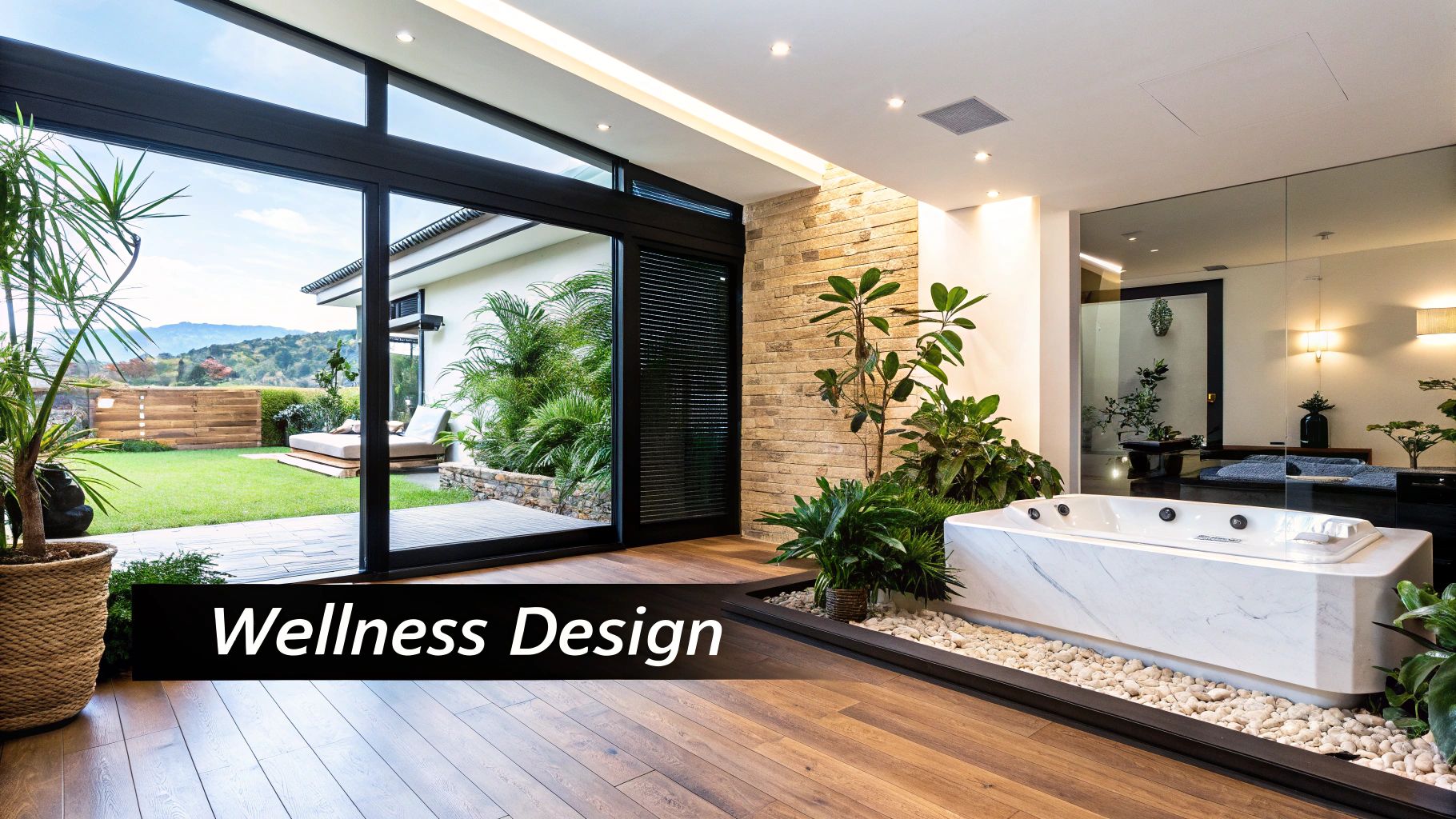
As the market evolves, the very definition of a “luxury” property is being rewritten. It’s no longer a simple calculation of square footage or the number of bedrooms. Today, the most desirable homes are distinguished by their design intelligence, impeccable craftsmanship, and the specific lifestyle they offer.
The single biggest theme I’m seeing is a decisive shift toward quality over quantity. Discerning buyers are consistently choosing smaller, more thoughtfully designed homes over sprawling, impersonal estates. An immaculately crafted 5,000-square-foot residence with bespoke finishes and a unique architectural vision will almost always command more interest and a higher price per square foot than a generic 10,000-square-foot mansion.
This new reality places architects and interior designers squarely at the center of the value equation. It’s their ability to create spaces that feel both beautiful and intuitive that now commands the real premium.
The Rise of Wellness and Biophilic Design
A deep-seated focus on personal well-being is fundamentally reshaping how luxury homes are laid out. These properties are no longer just places to live; they are personal sanctuaries, meticulously designed to improve health and promote tranquility. This has fueled incredible demand for dedicated wellness amenities.
What was once a bonus feature is now considered standard in new luxury builds. We’re talking about:
- Private Home Gyms outfitted with professional-grade equipment and dedicated space for yoga or Pilates.
- Spa-Like Sanctuaries featuring steam showers, infrared saunas, and even cold plunge pools.
- Advanced Filtration Systems for both air and water, creating a truly healthy indoor environment.
Working in tandem with this wellness movement is biophilic design—the principle of seamlessly connecting a home with the natural world. This is far more than just adding a few potted plants. It means designing with massive glass walls that blur the lines between indoors and out, creating interior courtyards that flood a home’s core with light, and layering in natural materials like raw stone and warm woods.
Smart Homes and Sustainable Living
Integrated technology is another absolute must-have. A modern luxury home is an intelligent one, where complex systems operate effortlessly in the background. Buyers expect a single, unified platform that manages everything from lighting and climate to security and entertainment—all with simple, voice-activated controls.
The ultimate luxury is convenience. Buyers want technology that simplifies their lives and anticipates their needs, giving them a sense of total control without ever feeling intrusive or complicated.
Sustainability has also graduated from a niche interest to a core expectation. Affluent buyers are acutely aware of their environmental footprint and want homes that align with their values. This directly translates into demand for:
- High-performance, energy-efficient windows and insulation.
- Rooftop solar panels paired with battery storage systems like a Tesla Powerwall.
- Geothermal heating and cooling solutions.
- Rainwater harvesting systems for landscape irrigation.
These aren’t just eco-friendly gestures; they represent superior engineering and deliver long-term operational savings, which only adds to a property’s overall value. As the technology gets even smarter, you can see how AI is reshaping luxury interior architecture to create living spaces that are even more personalized and efficient.
Finally, the need for adaptable living spaces has become absolutely critical. The post-pandemic world cemented the importance of having rooms that can serve multiple functions. A home office that elegantly converts into a guest suite, a media room that doubles as a cozy family lounge, or a formal dining area that feels just as right for intimate dinners as it does for large gatherings are all highly prized. These flexible layouts ensure a home can evolve with its owner, making it a much smarter long-term investment.
Actionable Strategies for Industry Professionals
Knowing the luxury real estate market trends is one thing. Actually capitalizing on them is another beast entirely. We’ve covered the “what” and the “why” behind the market shifts; now, it’s time for the “how.” This is where we translate that market intelligence into a practical playbook for the professionals actually shaping the high-end property landscape.
The goal here is to move from simply observing to taking intentional, strategic action. For every trend we’ve explored—from the soaring demand for wellness amenities to the rise of the equity-rich buyer—there’s a direct, corresponding opportunity. Thriving in today’s market isn’t about luck; it’s about a precise, data-informed approach that aligns with your specific role.
For Real Estate Agents and Brokers
In a market that’s finally found its balance, your expertise in pricing and positioning has become your single greatest asset. With inventory now at a two-year high, just listing a property and waiting for the phone to ring simply won’t cut it. The game has shifted from pure exposure to intelligent, targeted conversion.
Today’s affluent buyers aren’t just shopping for square footage—they’re meticulously evaluating per-square-foot value, lifestyle alignment, and market momentum. They only make a move when logic and emotion align perfectly.
To really connect with this modern buyer, you need to sharpen your tactics.
- Price It Right, From the Start: Lead with an aggressive, data-backed pricing strategy. I’ve seen countless homes priced just 3-5% above their true market value get completely overlooked. Overpriced listings almost always end up chasing the market downward with a series of painful price cuts.
- Sell the Story, Not Just the House: You need to craft a compelling narrative around the property that speaks directly to the new buyer’s priorities. Showcase the home’s wellness features, smart technology, and adaptable spaces through high-end video tours and professional staging that sells a complete lifestyle.
- Go After the Equity-Rich: Develop marketing campaigns that specifically target long-time homeowners in established, desirable neighborhoods. These are the buyers with immense purchasing power, and they’re actively looking for that next-level home to move into.
For Developers and Home Builders
The clear trend toward “quality over quantity” should be your new design mandate. The market is handsomely rewarding smaller, more intelligently designed homes that put craftsmanship and functionality far ahead of sheer, cavernous size. Your next project needs to reflect this undeniable shift in what buyers truly value.
Make sure your development pipeline is aligned with these critical trends:
- Focus on the “Missing Middle”: There’s a massive, underserved demand for high-quality, architecturally distinct homes that aren’t sprawling mansions. Projects in the 4,000-6,000 square foot range, but with absolutely exceptional finishes, are hitting the market’s sweet spot right now.
- Integrate Wellness and Sustainability as Standard: Features like dedicated home gyms, spa-inspired primary bathrooms, and energy-efficient systems shouldn’t be optional upgrades anymore. They are core expectations for luxury buyers today.
- Build Turnkey, Move-In-Ready Properties: The demand for homes that require zero work has never been stronger. High-net-worth buyers are notoriously time-poor and will pay a significant premium for a property that is completely finished. In fact, effective custom home builder marketing that wins clients now hinges on showcasing this immediate, hassle-free value proposition.
For Architects and Interior Designers
Frankly, your role has never been more critical in defining a property’s ultimate value. With buyers prioritizing unique design and impeccable execution, your vision is what separates a standard listing from a home that people will fight over.
It’s time to lean into these design-forward principles:
- Champion True Biophilic Design: This goes way beyond adding a few potted plants. Think about designing spaces with massive window walls, interior courtyards, and a palette of natural materials that create a genuine, seamless connection to the outdoors.
- Design for Ultimate Flexibility: Get creative with multi-functional spaces that can adapt to a family’s changing needs—a home office that can easily convert into a guest suite, or a living area designed to feel just as good for intimate gatherings as it does for large-scale entertaining.
- Specify Smart and Sustainable from Day One: You have to be working with builders to integrate smart home systems and sustainable technologies from the earliest design stages. A home that is both intelligent and eco-conscious is the new, unwritten standard of modern luxury.
Common Questions on Today’s Luxury Market
Making sense of the luxury real estate market often raises more questions than answers. Whether you’re considering buying, selling, or investing, getting a clear picture of what’s happening on the ground is essential. Here are some straightforward answers to the questions we’re hearing most often.
Think of this as a way to connect the big-picture trends to your own strategy. We’ll touch on market timing, what buyers really want right now, and how economic shifts are playing out for high-end properties.
Is It a Good Time to Buy a Luxury Property?
For savvy buyers, the current market is a breath of fresh air. Inventory has hit a two-year high, which means you finally have choices and a bit more breathing room to negotiate. The frantic, over-asking bidding wars that defined the last few years have cooled off considerably, leading to a much more rational buying process.
Prices are still climbing, but at a healthier, more sustainable pace. The real advantage is that you can actually take your time to find a home that fits your vision, rather than making a reactive decision under pressure. It’s a fantastic window for a strategic purchase.
We’ve entered a “smart market”—one that rewards patience and due diligence. Buyers now have the leverage to look past the hype and focus on genuine value: the quality of the build, the uniqueness of the location, and how a property truly aligns with their lifestyle.
What Features Are Buyers Looking for in Luxury Homes?
Lately, it’s all about an elevated quality of life. The features that are truly moving the needle are those that make a home a sanctuary—effortless, healthy, and deeply personal.
Here’s what’s at the top of the list:
- Seamless Smart Home Integration: Buyers expect to manage security, climate, lighting, and entertainment with a simple tap. It’s no longer a novelty; it’s a baseline expectation.
- Dedicated Wellness Spaces: This goes beyond a spare room with a treadmill. We’re talking professional-grade home gyms, serene yoga studios, and primary bathrooms that feel like a private spa, complete with saunas or steam showers.
- Eco-Conscious and Efficient Systems: Sustainability is a key marker of modern luxury. Solar panels, geothermal heating, and sophisticated air and water filtration systems are huge selling points.
- Exceptional Outdoor Living: The backyard is now a seamless extension of the home. Think fully equipped gourmet kitchens, resort-style pools, and thoughtfully designed spaces for entertaining.
How Are Rising Interest Rates Affecting the Luxury Market?
The luxury segment doesn’t move in lockstep with the rest of the housing market when it comes to interest rates. A huge portion of deals, especially at the very top, are all-cash transactions. For these buyers, mortgage rates are simply irrelevant.
Where we do see an impact is with the “aspirational” luxury buyer—the professional or entrepreneur who needs financing to make the jump into a high-end property. For this group, higher borrowing costs can shrink their budget or make them pause to reconsider their timing. So, while the ultra-high-end remains largely unaffected, rate hikes introduce a note of caution for those just entering the luxury tier.
Ready to connect with the visionaries shaping tomorrow’s luxury homes? Haute Design is the premier network linking affluent clients with the nation’s most distinguished architects, interior designers, and builders. Discover top-tier talent and elevate your next project today.