


A well-crafted portfolio is more than just a gallery of past work; it’s a strategic tool designed to attract and convert high-value clients. It communicates your unique design philosophy, demonstrates your process, and provides social proof of your expertise. For affluent homeowners, real estate developers, and fellow design professionals, a portfolio is the primary vetting instrument. It’s where the story of a space begins and where a client’s confidence is won or lost. Yet, knowing where to find compelling interior designer portfolio examples or which platform best suits your own work can be a significant challenge.
This article eliminates the guesswork. We have curated a detailed list of platforms and standout portfolios that excel in visual storytelling and client engagement. From dedicated design communities like Houzz and Behance to versatile website builders such as Squarespace, we break down what makes each example effective.
You will find a strategic analysis for each selection, complete with direct links and screenshots to guide your exploration. Our focus is on providing actionable takeaways, so you can learn from the best and apply these proven strategies to your own portfolio. This is your blueprint for creating a powerful presentation that not only showcases your talent but also drives business growth.
1. Haute Design
Haute Design is a premier, invitation-only network that elevates the traditional concept of an interior design portfolio. Rather than serving as a simple static gallery, it functions as a dynamic platform connecting elite designers with an affluent, pre-qualified audience of homeowners, developers, and high-net-worth clients. Curated by the luxury media authority Haute Living, membership signifies a mark of distinction and credibility in the competitive high-end market.
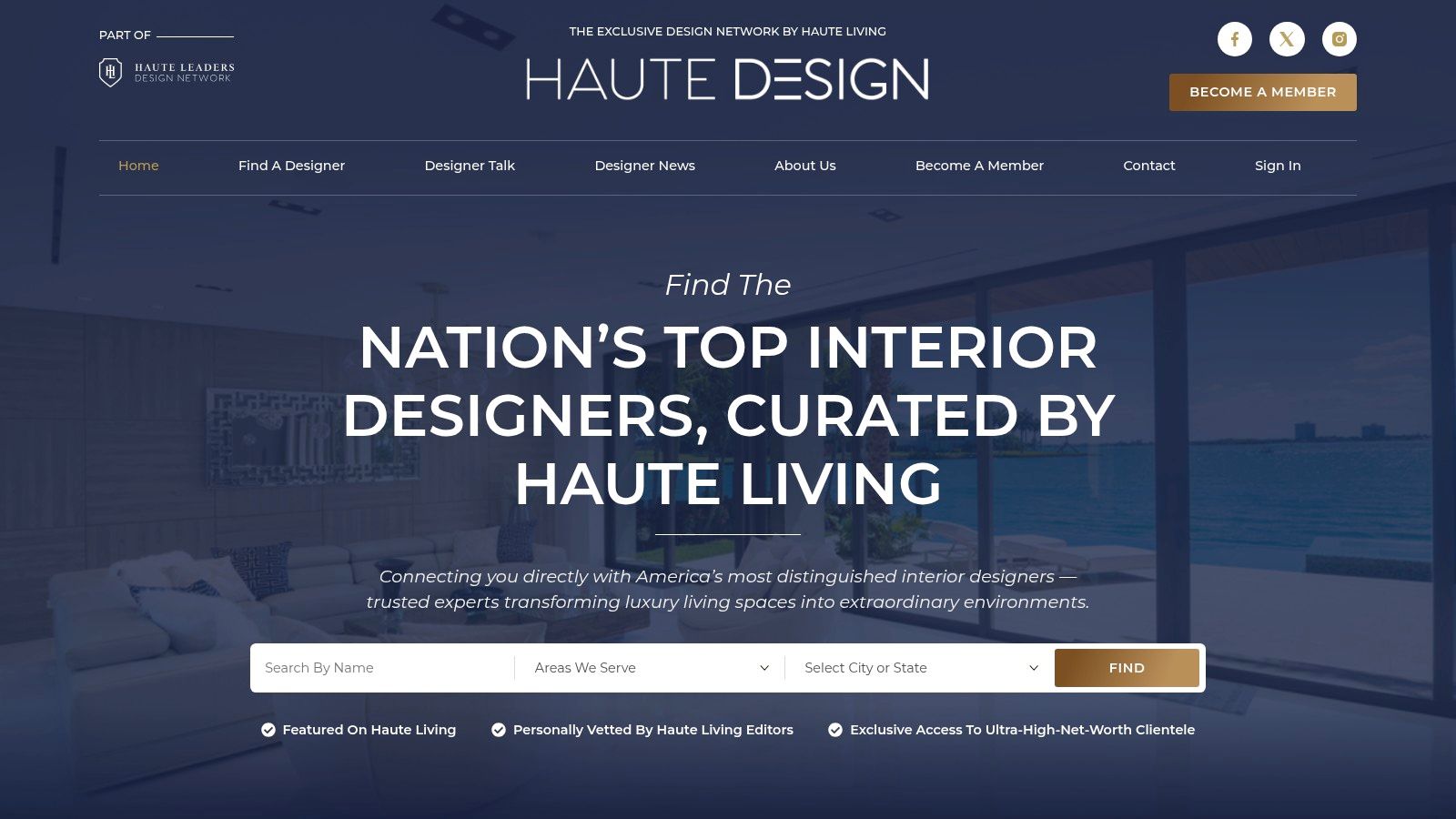
The platform’s strength lies in its integration of portfolio presentation with high-impact editorial exposure. Designers don’t just upload images; they become part of a curated ecosystem where their work is showcased through in-depth interviews, project spotlights, and features on Haute Living. This approach transforms a portfolio from a passive showcase into an active brand-building and lead-generation tool.
Strategic Analysis & Key Benefits
Haute Design is not merely a directory; it is a strategic marketing and networking partner for designers targeting the ultra-luxury sector. Its value proposition is built on three core pillars: Credibility, Exposure, and Access.
- Build Instant Credibility: Membership is selective and vetted, allowing designers to leverage the Haute Living brand. The “Haute Design” badge acts as a powerful trust signal for elite clients, immediately distinguishing a member from the broader market.
- Targeted High-Value Exposure: The platform places member portfolios directly in front of its exclusive audience. This includes visibility in a searchable national directory and ongoing editorial features like “Designer Talk,” which drive qualified leads.
- Exclusive Networking Opportunities: Members gain access to private Haute Leaders and Haute Design events. These gatherings provide direct, invaluable face-to-face networking opportunities with potential clients, developers, and top-tier collaborators who are otherwise difficult to reach.
Actionable Takeaway: Instead of relying solely on a personal website, luxury interior designers can use Haute Design to amplify their best work. Leverage the platform’s editorial features to tell the story behind a project, providing a “behind-the-scenes” narrative that resonates with discerning clients and builds a stronger brand connection.
How to Leverage Haute Design
To maximize the platform, focus on its integrated features. A designer’s profile serves as a central hub, showcasing their best work while linking to dedicated editorial content that builds authority. For designers seeking multi-million dollar projects, the ability to connect with vetted architects, builders, and landscape professionals within the same exclusive network creates powerful referral and collaboration opportunities.
While membership details and pricing are not public and require an application, this exclusivity is a key part of its appeal. The platform is designed for established professionals whose target market aligns with the Haute Living demographic.
Website: Haute Design Network
2. Houzz
Houzz is a massive, multifaceted platform that combines a professional directory with a visual inspiration engine and an e-commerce marketplace. For those seeking interior designer portfolio examples, it serves as an immense, searchable library of real-world projects from thousands of U.S.-based professionals. Its key differentiator is the direct integration of portfolios with client reviews, project cost details, and direct contact options, creating a comprehensive research and hiring hub.
Unlike a curated gallery, Houzz provides a raw, extensive look at the market. Its powerful filtering tools allow you to narrow down portfolios by metropolitan area, specific room (e.g., “luxe primary bathroom”), style (e.g., “transitional,” “modern”), and even budget range. This makes it an invaluable tool for understanding regional design trends and identifying local talent.
Strategic Analysis and Key Features
Houzz excels at connecting visual inspiration directly to the professionals who created it. You can browse millions of photos and, with a click, land on the designer’s “Pro” page. These pages function as standardized digital portfolios, showcasing project galleries, professional credentials, and, most importantly, verified client reviews.
Key Takeaway: The power of Houzz lies in its scale and structure. It’s less about a single “perfect” portfolio and more about the ability to compare dozens of real, active professional portfolios side-by-side, complete with social proof in the form of client testimonials and project budgets.
Practical Application for Users
To leverage Houzz effectively, use its tools strategically:
- Create Ideabooks: Save images that align with your vision. Over time, you’ll see which designers’ work you save most frequently, revealing a natural fit.
- Filter with Intent: Don’t just browse. Use the advanced filters to find designers in your specific service area who have experience with your project’s scope and budget.
- Analyze Reviews: Pay attention to feedback on communication, process, and budget management, not just the final aesthetic.
Accessing Houzz for browsing portfolios and projects is free for consumers. For design professionals, the platform offers a suite of paid tools called Houzz Pro for lead generation and business management, and you can learn more about how Houzz fits into the landscape of top platforms for finding luxury interior design firms.
Website: https://www.houzz.com/professionals/interior-designer/probr0-bo~t_11785
3. ArchDaily
ArchDaily is a globally recognized editorial platform and resource for architecture and design professionals. While its scope is broader than just interiors, its highly curated project features serve as an exceptional source of interior designer portfolio examples presented as professional case studies. The platform showcases built projects from around the world, documented with high-quality photography, architectural plans, and concise, descriptive narratives.
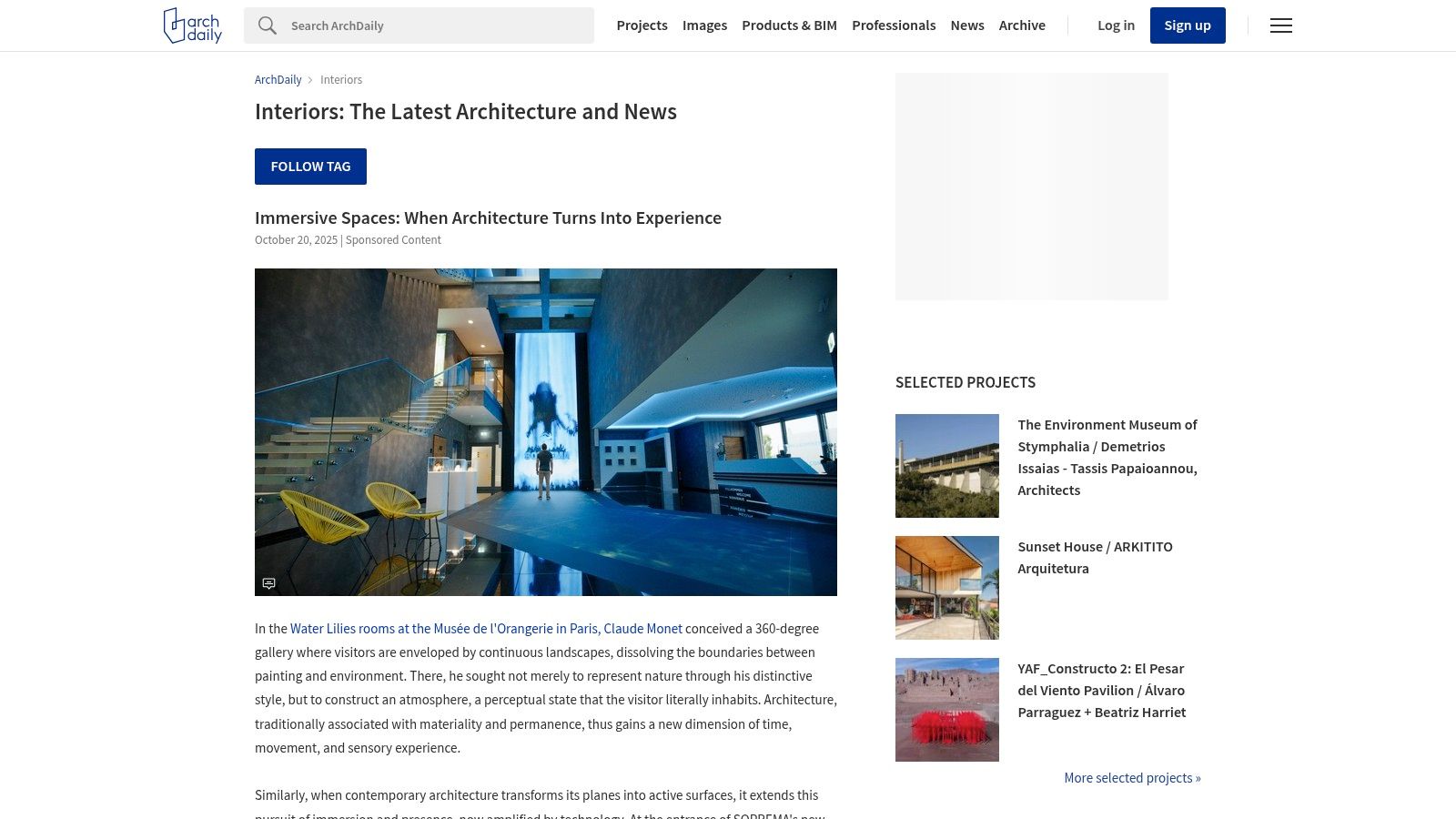
Unlike a direct portfolio hosting site, ArchDaily operates as a high-standard publication. This makes it an invaluable learning tool for designers looking to understand how to professionally document and present their work. Each project is a masterclass in storytelling, detailing the concept, materials, and execution, providing a template for creating a compelling portfolio narrative.
Strategic Analysis and Key Features
ArchDaily’s strength is its editorial rigor and comprehensive documentation. Projects featured in its “Interiors” section are not just visually appealing; they are complete case studies. Many posts include floor plans, section drawings, material lists, and detailed photography credits, offering a behind-the-scenes look at the project’s construction and design intent. This level of detail sets a high benchmark for professional presentation.
Key Takeaway: ArchDaily provides a blueprint for structuring a high-impact project case study. It demonstrates how to combine stunning visuals with technical details and a clear narrative to communicate a project’s full story, a crucial skill for any top-tier designer’s portfolio.
Practical Application for Users
To get the most out of ArchDaily, approach it as a research and educational resource:
- Study the Narrative: Analyze how the descriptive text frames the project, explains design challenges, and highlights key features. Note the concise, professional tone.
- Deconstruct the Visuals: Observe the types of shots used, from wide-angle room views to detailed close-ups on materials and joinery. Pay attention to how photography supports the story.
- Trace Back to the Source: Use the provided links to the architectural or design firms to see how their professional websites present the same projects, offering a direct comparison.
Accessing ArchDaily’s articles and project features is completely free and does not require an account. It is not a marketplace or a portfolio-building tool but rather an inspirational and educational platform setting the standard for design documentation.
Website: https://www.archdaily.com/tag/interiors
4. Etsy
Etsy is a global marketplace renowned for handmade and vintage items, but it has also become a powerful resource for digital creative assets. For emerging interior designers or those looking to refresh their presentation, Etsy offers thousands of downloadable portfolio templates. This makes it a unique entry in this list, focusing not on viewing finished portfolios but on providing the foundational tools to create a compelling one.
Unlike bespoke website design, Etsy provides an accessible, low-cost starting point. Designers can find a vast selection of professionally structured templates compatible with popular software like Canva, Adobe InDesign, and PowerPoint. These templates often include pre-designed layouts for project case studies, mood boards, and FF&E (Furniture, Fixtures, and Equipment) schedules, allowing designers to focus on content rather than layout from scratch.
Strategic Analysis and Key Features
Etsy’s strength lies in its democratization of professional design tools. It provides immediate access to a wide variety of aesthetic styles and formats (US Letter, A4, 16:9 widescreen) at a fraction of the cost of custom graphic design. The platform’s review system is crucial, as it allows users to gauge the quality and usability of a template before purchasing.
Key Takeaway: Etsy is a strategic launchpad for creating polished interior designer portfolio examples. It empowers designers to produce high-quality, professional-looking documents efficiently, ensuring their project work is presented in the best possible light without a significant upfront investment.
Practical Application for Users
To get the most out of Etsy for portfolio creation, follow a clear process:
- Define Your Software: Filter searches based on the program you are most comfortable with, whether it’s the user-friendly Canva or the industry-standard InDesign.
- Vet the Seller: Look for shops with a high number of sales and overwhelmingly positive reviews. Read comments to check for ease of use and quality of support.
- Check the Inclusions: Ensure the template includes the specific page layouts you need, such as project showcases, “About Me” pages, and client testimonials.
Most templates are available for instant digital download after purchase, typically costing between $20 and $40. It is important to note that digital downloads are not accessible through the Etsy mobile app; users must access their purchases via a web browser.
Website: https://www.etsy.com/market/portfolio_template_interior_design
Transforming Your Portfolio from a Gallery into a Growth Engine
We have journeyed through a diverse landscape of platforms and tools, each offering a unique canvas for showcasing your design genius. From the high-end, curated community of Haute Design to the versatile website-building power of Squarespace and the creative springboard of Behance, it’s clear that a modern portfolio is far more than a simple collection of images. It is a strategic, multi-faceted business asset designed to attract, engage, and convert your ideal clientele.
The most compelling interior designer portfolio examples we analyzed share a common DNA. They move beyond just presenting finished projects; they tell a story. They strategically use high-quality visuals, thoughtful project descriptions, and intuitive navigation to communicate a distinct brand identity and a clear value proposition. They understand their target audience and tailor the user experience to meet their expectations, whether it’s an affluent homeowner seeking a luxury transformation or a commercial developer looking for a visionary partner.
Synthesizing Your Strategy: Key Takeaways
Recalling the standout portfolios, several core principles emerge as non-negotiable for success. These are the threads that connect a visually pleasing gallery to a powerful client acquisition tool.
- Narrative is Paramount: Your portfolio must tell a story about your process, your philosophy, and the problems you solve for clients. Use project descriptions to guide the viewer through the journey, from the initial challenge to the final, stunning result.
- Quality Over Quantity: A tightly curated selection of your best, most relevant work will always outperform an exhaustive, unfocused catalog. Each project should serve a specific purpose and showcase a key strength.
- User Experience (UX) is King: A confusing, slow, or poorly organized portfolio is a critical business liability. Prioritize clean layouts, intuitive navigation, and fast loading times to respect your visitor’s time and attention.
- Platform Alignment: The tool you choose must align with your business goals. A designer targeting local residential clients might find Houzz invaluable, while one aiming for publication in top-tier magazines may benefit more from a bespoke Squarespace site and a presence on a platform like ArchDaily.
Your Actionable Next Steps
With these insights in mind, it’s time to translate inspiration into action. The journey from an average portfolio to an exceptional one is an iterative process, not an overnight transformation.
- Audit Your Current Portfolio: Review your existing projects with a critical eye. Which ones truly represent your brand and attract your ideal client? Be ruthless in culling outdated or weaker examples.
- Define Your Core Narrative: What is the unique story only you can tell? Write a concise brand statement and ensure every element of your portfolio, from the “About” page to project descriptions, reinforces it.
- Select the Right Tool(s): Based on the examples, determine which platform best serves your needs. Do you need an all-in-one website builder like Squarespace, a community-focused platform like Houzz, or a niche, luxury network like Haute Design?
- Invest in Professional Assets: High-resolution photography and videography are not expenses; they are investments. The quality of your visual assets directly communicates the quality of your work.
Ultimately, the best interior designer portfolio examples demonstrate a deep understanding that a portfolio is a living, breathing extension of your brand. It should evolve as your skills, style, and business goals mature. By implementing these strategies and choosing the right tools, you can elevate your portfolio from a passive gallery into a proactive, powerful engine for business growth, consistently attracting the clients and projects you’ve always dreamed of.
Are you ready to position your work alongside the industry’s elite and connect with an affluent, design-savvy audience? Join the exclusive, invitation-only network at Haute Design. Showcase your portfolio to a targeted demographic actively seeking high-end design professionals by exploring your partnership opportunities with Haute Design today.