


An interior design business plan isn’t just a loan application—think of it as the blueprint that shapes every decision you make. It turns your creative vision into a strategic playbook, defining your brand, pinpointing your ideal clients, and mapping out a path to profitability.
Laying The Foundation For Your Design Firm
Facing a blank page can feel intimidating. Yet, creating this plan should mirror your design process: sketch out the big picture first, then fill in the details. This document is the project you tackle before any mood boards or site visits—your core framework for success.
At its heart, the opening section goes beyond standard templates. It weaves your story into a compelling narrative that resonates with investors, collaborators, and those first clients you’re eager to impress.
Define Your Unique Story And Mission
Start by exploring what truly motivates you. Maybe you fell in love with reclaimed wood during childhood summers in your grandfather’s workshop, inspiring a focus on sustainable interiors. Or perhaps designing calm, minimalist spaces has become your specialty for high-pressure executive suites.
From that personal spark, craft a mission statement that speaks directly to your future clients. For instance:
- Too Vague: “Deliver outstanding interior design solutions.”
- On Point: “Create serene, functional workspaces that boost productivity and well-being for busy executives.”
This exercise transforms your personal journey into a clear mission and distinct brand identity.
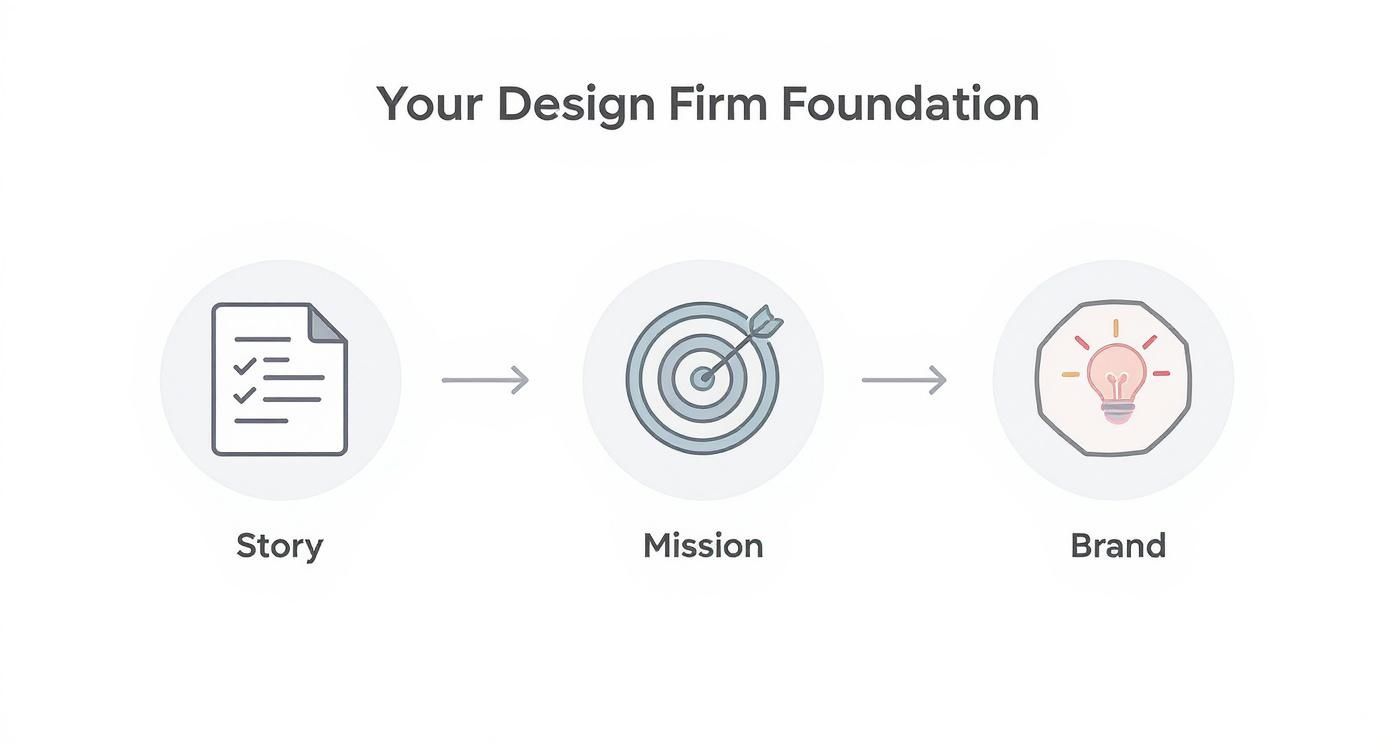
Crafting A Memorable First Impression
The executive summary is your one-page elevator pitch. Investors often decide in seconds whether to read on. Treat this section like the foyer of a beautifully designed home: inviting, concise, and hinting at the magic inside.
Your executive summary should spotlight your unique value, target audience, and growth potential—all in a polished, engaging tone.
Weave your story, mission, and competitive edge into this snapshot. Make it clear you’re not just another designer—you’re an entrepreneur with a clear vision and a plan to turn it into a thriving business.
Getting to Know Your Market and Competitors
Before you can carve out your niche in the design world, you have to truly understand the landscape. A solid market analysis isn’t just a box to check in your interior design business plan; it’s the intel that sharpens your strategy and lights up your unique path to success. This is about more than just grabbing generic data—it’s about becoming the go-to expert in your local area.
The good news? You’re stepping into a growing field. The global interior design market was pegged at around USD 138.63 billion in 2024 and is on track to hit USD 208.16 billion by 2033. This boom is fueled by urbanization and a real hunger for spaces that are both beautiful and functional, which signals a fantastic opportunity for new firms. Diving into global interior design market trends shows just how much innovation in eco-friendly materials and smart home tech is shaping client expectations.
While this big-picture view is encouraging, your business will sink or swim based on local success. This is where rolling up your sleeves and doing targeted research becomes your greatest asset.
Pinpointing Your Ideal Client
It’s time to get specific. Forget broad demographics like “homeowners aged 30-50.” You need to build a detailed persona of the person you want to work with. Who are they, really? What are their daily frustrations and biggest dreams for their home?
Let’s imagine your ideal client is “The Busy Executive.” Her life is a whirlwind of high-stakes decisions and a demanding schedule. She values efficiency, tranquility, and a home that feels like a genuine retreat. Her pain points aren’t just an outdated kitchen; they’re the mental load of decision fatigue, a complete lack of time, and the need for someone to deliver a seamless, turn-key experience.
Your analysis should uncover details like:
- Lifestyle Triggers: Are they recent empty-nesters finally ready for their dream home? New parents desperate for a functional nursery? Or remote workers trying to carve out a productive home office?
- Design Values: Do they rave about sustainability, get excited by the latest home tech, or prefer a classic, timeless aesthetic that will endure for decades?
- Hangout Spots: Where do they get their inspiration? Are they scrolling Pinterest for hours, flipping through architectural digests, or following specific design influencers on Instagram?
Understanding these nuances is everything. It allows you to tailor not just your services but your entire marketing message to speak directly to their needs, making your firm the only logical choice.
Sizing Up the Local Competition
Think of your competitors as a free masterclass in what works—and what doesn’t—in your town. Don’t just give their websites a quick once-over. A thorough competitive analysis is how you find the gaps in the market that you were born to fill.
Start by identifying three to five direct competitors in your city or region. You can often find well-regarded firms on curated lists. For instance, you can get a better sense of how to find luxury interior design firms to see who the top players are. Once you have your list, it’s time to go deep.
Your competition isn’t just someone offering a similar service; they’re a goldmine of market intelligence. Pick apart their pricing, their branding, and what their past clients are saying. This is how you’ll find your unique angle.
I recommend creating a simple comparison chart to keep your findings organized. It’s a great way to visualize the competitive landscape and see exactly where your advantage lies.
| Competitor Feature | Firm A (Luxury Focus) | Firm B (E-Design Specialist) | Firm C (Family-Friendly) |
|---|---|---|---|
| Primary Service | Full-service, high-end residential | Online consultations, mood boards | Practical, durable family spaces |
| Pricing Structure | High flat fee + percentage of budget | Tiered packages by room | Hourly consultation rate |
| Online Presence | Polished portfolio, minimal social | Active on Instagram, strong blog | Pinterest boards, client testimonials |
| Identified Weakness | Intimidating for smaller projects | Lacks in-person project management | Outdated website, poor photography |
| Opportunity for You | Offer a “Luxe Lite” package | Emphasize your hands-on approach | Showcase a modern, high-quality portfolio |
This exercise isn’t about imitation. It’s about spotting the unmet needs. If every designer in your area is a minimalist, there might be a huge opening for a firm that specializes in vibrant, eclectic, or traditional styles. Your competitive analysis will directly shape your unique selling proposition (USP), making it a true cornerstone of your interior design business plan.
Structuring Your Services and Operations
A brilliant vision is only as good as the operational foundation it’s built on. This is where your interior design business plan gets down to the nuts and bolts, turning your creative firm from a great idea into a real, functioning business. It’s all about defining what you sell and how you deliver it, so you can spend your time designing, not putting out fires.
One of the first big shifts I see successful designers make is moving beyond a simple hourly rate. It’s easy to track, sure, but it can punish you for being efficient and often makes clients anxious about spiraling costs. A much smarter approach is to develop structured service packages.
Defining Your Service Offerings
Your services should be a direct answer to the problems you uncovered during your market research. Think about creating different tiers or entry points to attract a broader range of clients.
For instance, you could build out your offerings like this:
- The Consultation Package: This could be a “Designer for a Day” session for a fixed fee. It’s perfect for clients who just need a professional eye on paint colors, furniture layout, or styling but plan to handle the purchasing and legwork themselves.
- The E-Design Package: A fantastic remote option. You provide mood boards, floor plans, and a clickable shopping list, empowering DIY-savvy clients on a tighter budget to execute a cohesive, professional design.
- Full-Service Design: This is your signature, all-inclusive experience. You handle everything from the initial concept to the final, picture-perfect installation, including managing contractors, procurement, and all the tiny details in between.
When you define your packages this clearly, you stop being just a hired hand and become a strategic partner. It also brings much-needed transparency to your pricing, helping clients self-select the investment level that feels right for them.
Building Your Operational Workflow
Once you’ve nailed down what you’re selling, you have to map out how you’ll deliver it flawlessly every time. This is the operational backbone of your business—everything from your legal setup to the software that keeps you from going crazy.
First up, your legal structure. For many solo designers, a Limited Liability Company (LLC) is the way to go. It separates your business assets from your personal ones, giving you crucial liability protection. It’s a non-negotiable step that protects you and immediately adds a layer of professionalism.
Next, you need to document your client’s journey with you, from the first hello to the final goodbye. A tried-and-true workflow often looks something like this:
- Initial Inquiry & Discovery Call: The first touchpoint to see if the project is a good fit.
- On-Site Consultation & Proposal: Where you meet the client, dive deep into their vision, and present a detailed proposal.
- Contract & Onboarding: The official kickoff. To protect your business, it’s crucial to use a well-drafted agreement. You can learn more by exploring a guide to professional interior design contract templates.
- Design Phase: All the creative magic—concept development, mood boards, sourcing, and client presentations.
- Execution & Project Management: The logistical heavy lifting of ordering, tracking, and coordinating with trades.
- Installation & Final Reveal: The best part! This is where you bring the vision to life.
Building a repeatable, efficient workflow isn’t just a nice-to-have; it’s essential. It guarantees a consistent client experience, cuts down on mistakes, and is the only way you can scale without burning out.
Finally, you can’t run a modern design firm without the right tech. The global interior design software market was valued at USD 5.37 billion in 2024 and is projected to hit USD 9.66 billion by 2030. That tells you everything you need to know: technology is central to how we work. Tools for project management, 3D rendering, and accounting aren’t luxuries anymore—they’re necessities for getting things done right and keeping clients happy.
Building Your Client Acquisition Engine
A stunning portfolio is table stakes in this industry. But it won’t pay the bills if your ideal clients never lay eyes on it. This is where the marketing and sales section of your interior design business plan comes in—it’s the engine that will drive consistent leads and create predictable growth for your firm.
Too many talented designers make the mistake of waiting for the phone to ring. We’re not doing that. This plan is about building a proactive, repeatable system to get your work in front of the right people, at precisely the right time. Let’s turn that creative talent into a profitable business.
Optimizing Your Digital Showroom
Think of your website and social media profiles as your digital storefront. They need to do more than just showcase beautiful spaces; they have to be finely tuned machines designed to attract and convert your ideal client. And that machine is fueled by exceptional visuals.
Professional photography is not a “nice-to-have.” It’s a non-negotiable investment. Grainy, poorly lit photos of your best work will actively hurt your brand and undermine your credibility before a client even speaks to you. If you’re just starting out, learning some fundamentals can be a game-changer. There are plenty of great interior design photography tips that can help you bridge the gap until you can hire a pro.
Beyond the images, your online presence has to be discoverable. This is where local Search Engine Optimization (SEO) becomes your secret weapon. It’s all about strategically weaving keywords like “luxury interior designer in Aspen” or “kitchen renovation specialist in Beverly Hills” throughout your website, blog posts, and project descriptions.
Your online portfolio should function as a lead magnet, not just a gallery. Every project you showcase should be optimized with local keywords to ensure clients in your service area can find you when they’re ready to hire.
By zeroing in on local SEO, you’re positioning your firm to show up the moment a high-intent client starts searching. It’s about being the answer they’re looking for, right in their own backyard.
Building A Powerful Referral Network
While a strong digital game is critical, some of your best, most qualified leads will come from old-fashioned, real-world relationships. Your business plan must map out a deliberate strategy for connecting with other professionals who serve the same type of clientele you do.
Start thinking of architects, high-end real estate agents, and custom home builders as strategic partners. These are the people who often get to a client first, and a warm referral from them is worth its weight in gold.
Your networking strategy needs to be intentional and consistent:
- Identify Key Partners: Who are the top 5 real estate agents selling luxury homes in your target neighborhoods? Who are the 3 most respected custom builders? Make a list.
- Offer Mutual Value: This isn’t a one-way street. Don’t just ask for leads. Offer to provide a free design consultation for their top client or feature their beautiful construction work on your Instagram.
- Maintain Relationships: Nurture these connections. A quarterly coffee, a quick check-in email, and sending a referral their way when you can will keep you top of mind.
This creates a powerful, symbiotic lead generation system that works alongside your digital efforts, giving you multiple streams of new business opportunities.
Your Marketing Channel Action Plan
To keep all this on track, your interior design business plan needs a clear, actionable roadmap. This table breaks down your primary marketing channels, outlining what you’ll do, who you’re trying to reach, and how you’ll measure success. It’s your guide to spending your time and money where it counts.
This isn’t just a list of things to try; it’s a commitment. It transforms marketing from a guessing game into a measurable, core part of your business operations.
| Channel | Primary Action | Target Audience | Key Metric |
|---|---|---|---|
| Local SEO | Publish one geo-targeted blog post per month about local design trends. | Homeowners in specific high-value zip codes actively searching for designers. | Ranking improvements for “interior designer [Your City]”. |
| Post high-quality project images and behind-the-scenes Stories three times per week. | Aesthetically-driven potential clients and future brand partners. | Engagement rate and website clicks from your profile link. | |
| Professional Networking | Attend one local real estate or builder association event per quarter. | Real estate agents and builders working with clients needing design services. | Number of qualified referrals received per quarter. |
| Email Marketing | Send a monthly newsletter with project reveals and design tips to your subscriber list. | Past clients and warm leads who have shown interest in your work. | Open rate and consultation requests generated from emails. |
This plan holds you accountable, giving you a clear framework to execute, measure, and refine your client acquisition efforts as your business grows.
Mapping Out Your Financial Future
This is where your creative vision meets the hard reality of the bottom line. For many designers, crunching the numbers for their interior design business plan can feel intimidating, but this is precisely where your dream transforms into a business that can actually last.
Let’s cut through the complexity and build a financial roadmap you can feel confident about. A solid financial plan isn’t just for getting a loan; it’s your day-to-day guide for making smart decisions. It tells you exactly how many projects you need to land, what your pricing really needs to be, and when you can finally expect to see a profit.
Projecting Your Startup Costs
Before you can make a dollar, you have to spend a few. Getting a handle on your startup costs is the first real step in building your financial projections. It’s an area where I’ve seen countless new business owners trip up, underestimating the initial cash burn and running into problems almost immediately.
You have to think through every single line item, no matter how small.
- Legal and Admin: This covers things like registering your business as an LLC, getting the right professional licenses, and maybe having an attorney look over your client contracts.
- Essential Tech: Think beyond the laptop. You’ll need subscriptions for design software like AutoCAD or SketchUp, a good project management tool, and accounting software.
- Marketing and Branding: Set aside a budget for professional headshots, a well-designed website, and quality business cards. You might also want a small fund for an initial marketing push.
- Insurance: This is absolutely non-negotiable. At the very least, you need professional liability insurance (often called errors and omissions) to protect yourself if a client claims you were negligent.
A detailed startup budget isn’t about crushing your dreams—it’s about giving them a solid foundation. Skipping over the small costs now just creates major financial headaches down the road.
Once you have your list, I always recommend adding a 15-20% contingency fund on top. Trust me, unexpected expenses always find a way to pop up. This buffer isn’t just money; it’s peace of mind.
Forecasting Income and Expenses
With your initial costs mapped out, it’s time to look ahead. You’ll want to project your financial performance for at least the first one to three years. This means creating a pro forma income statement, which is really just an educated guess about your future revenue and ongoing expenses.
Forecasting income can feel like gazing into a crystal ball, but you can ground it in reality. Use the service packages you’ve already defined. For instance, if your goal is to land two “Full-Service Design” projects and four “Consultation Packages” each quarter, you can start to calculate potential revenue. Just be conservative in your estimates for the first year—it almost always takes longer to ramp up than you think.
At the same time, you’ll list your recurring costs:
- Fixed Costs: These are the bills you pay no matter what, like software subscriptions, insurance premiums, or any studio rent.
- Variable Costs: These expenses ebb and flow with your workload. Think marketing spend, fees for contractors, and ordering material samples for projects.
It’s also smart to keep an eye on the bigger picture. The health of the interior design industry is often linked to the economy. While the U.S. market is projected to be around USD 27.2 billion by 2025, it’s sensitive to things like interest rates that affect new construction and home renovations. Building a flexible business model that can serve clients at different budget levels is a smart move. You can find more data on the interior design market’s economic dependencies on ibisworld.com.
Performing a Break-Even Analysis
The break-even analysis is a huge milestone in your interior design business plan. It finally answers the big question: “When will my business actually start making money?”
The formula itself is pretty simple. You just divide your total fixed costs by your average profit margin per project. The number you get tells you how much revenue you need to bring in (or how many projects you need to finish) just to cover all your expenses.
Let’s say your fixed costs are $2,000 a month and you know your average project has a 40% profit margin. A quick calculation shows you need to bill $5,000 that month just to break even.
Suddenly, a vague goal like “become profitable” becomes a concrete, measurable target. That number is your north star, guiding your sales and marketing efforts until your business is officially self-sustaining.
Presenting Your Funding Request
If you’re going after a loan or trying to bring on an investor, this section is your pitch. They need to see more than just your passion for beautiful spaces; they need a clear, logical path to getting their money back, plus a return.
Be specific and justify every dollar. Don’t just ask for a lump sum. Break it down using the startup costs you’ve already figured out.
| Funding Allocation | Amount | Justification |
|---|---|---|
| Technology & Software | $5,000 | For essential design and project management software licenses and a new computer. |
| Marketing Launch | $3,500 | To fund website development, professional photography, and initial digital ads. |
| Operating Capital | $6,500 | To cover the first three months of fixed expenses before reaching profitability. |
| Total Request | $15,000 |
When you present this table alongside your income projections and break-even analysis, you’re showing that you’ve done the hard work. It proves you understand the financial realities of your business and have a credible plan for success. You’re not just a designer; you’re a serious entrepreneur.
Common Business Plan Questions Answered

Putting together an interior design business plan can feel daunting. No matter how clear the template is, you’re bound to hit a few roadblocks with specific questions. I get it. Over the years, I’ve seen designers get stuck on the same few points.
This section is built to address those common hurdles. Think of it as a quick FAQ to give you the clarity you need to push through and finalize a plan you can feel genuinely confident about.
How Long Should My Plan Be?
Forget about a magic page count. The sweet spot for a comprehensive business plan is usually between 15 and 30 pages, and that includes your financial documents and any appendices. The real goal here is substance, not length.
Your executive summary needs to be a powerful, one-page hook that gets people excited about your vision. From there, each section should have just enough detail to clearly lay out your market, your process, how you’ll get clients, and what the numbers look like. Honestly, a sharp, well-researched 20-page plan is far more impressive to a lender than a vague, 50-page document that rambles on.
What Is the Biggest Mistake to Avoid?
If there’s one pitfall I see more than any other, it’s unrealistic financial projections. It’s so easy to get carried away with excitement, painting a picture of massive revenues while totally underestimating the dozens of small, sneaky expenses that can eat into your profit.
Ground your financial forecasts in reality. Investors and loan officers are trained to spot inflated numbers and unsupported assumptions. Demonstrating a conservative, data-backed financial plan builds immense credibility and sets you up for sustainable, long-term success.
Anchor your numbers in real market data. Look at what your local competitors are charging and be realistic about how many clients you can land in your first year. This approach shows you’ve done the hard work and have a firm grasp on the challenges ahead.
Do I Need a Plan if I’m Not Seeking Funding?
Yes, absolutely. Thinking a business plan is only for getting a loan is a huge mistake. A better way to see it is as the strategic roadmap for your entire firm—the architectural blueprint, if you will.
The process of writing it is where the real value lies. It forces you to get brutally honest about every part of your business:
- Who is my ideal client, really?
- What makes my firm different in a sea of designers?
- How will I consistently find and win new projects?
- What does success actually look like for me, and how will I measure it?
For any entrepreneur, especially a solopreneur, this document becomes your accountability partner. It keeps you focused on your vision, helps you anticipate problems, and gives you clear goals to strive for.
How Often Should I Update My Plan?
Your interior design business plan shouldn’t be a “set it and forget it” document. Treat it as a living, breathing guide that evolves as your business does. Markets shift, new opportunities pop up, and your strategy needs to keep pace.
Make a point to sit down and formally review your plan at least once a year. You should also pull it out anytime something significant happens. A few triggers for a refresh could be:
- Adding a new service, like e-design.
- A major new competitor opening up in your area.
- Big economic shifts that change how clients are spending.
Keeping your plan current ensures your strategy is always relevant. It’s the core discipline that allows you to confidently pivot toward new opportunities or navigate unexpected challenges.
Ready to elevate your design business and connect with a clientele that values luxury and expertise? Join the exclusive network at Haute Design. We provide the platform and credibility to showcase your work to high-net-worth individuals actively seeking premier design talent. Learn more about becoming a member of the Haute Design network.