


When you hear the term high end interior designer, what comes to mind? For many, it’s images of expensive furniture and lavish rooms. While that can be part of it, the reality is much deeper.
A high-end designer is more like a master tailor than a salesperson at a clothing store. One helps you pick something that fits, while the other crafts a garment made exclusively for you, considering every curve and contour. They are bespoke creators who manage every single detail of a project, from the initial sketch to the final, perfectly placed accessory.
Beyond Aesthetics: The Core Principles of High End Design
The biggest misconception is that luxury design is just about a big budget. While high-quality materials are certainly a factor, the real value is in the custom-tailored service and the flawless execution that comes with it.
A true high-end designer wears many hats: they’re a visionary, a meticulous project manager, and your staunchest advocate. They are the conductor of a complex orchestra, coordinating architects, specialized artisans, and contractors to ensure every note—every detail—contributes to a harmonious and deeply personal final product.
This all-encompassing approach is what truly sets luxury design apart from standard decorating. It’s not just about creating a room that looks stunning in a photograph; it’s about crafting a space that functions seamlessly with your lifestyle. The designer gets to know your daily routines, your values, and even your future aspirations, translating those abstract ideas into a tangible, beautiful, and livable environment.
The Bespoke Service Model
At its core, high-end design is a service, not a commodity. The entire process is built on a strong foundation of trust and close collaboration, ensuring the final space is an authentic reflection of you. You’re not just hiring a decorator; you’re entering a partnership where the designer’s expertise, creativity, and exclusive network are entirely at your disposal.
What does this bespoke model actually look like in practice?
- Deep Personalization: Your space is designed from a blank slate, built around your story and specific needs. It’s not about picking a style from a magazine; it’s about inventing a style that is uniquely yours.
- Exclusive Access: These designers open doors to a world you can’t otherwise access. Think custom furniture makers, artisans who work with rare materials, and craftspeople with skills passed down through generations.
- Comprehensive Project Management: Every single detail is managed for you. From reviewing architectural plans and navigating building codes to overseeing installation and placing the final piece of art, they handle it all. This not only saves you an incredible amount of time but also prevents headaches and costly mistakes.
This infographic helps visualize the difference between the bespoke, all-inclusive service of a high-end designer and the more conventional, “off-the-rack” design solutions.
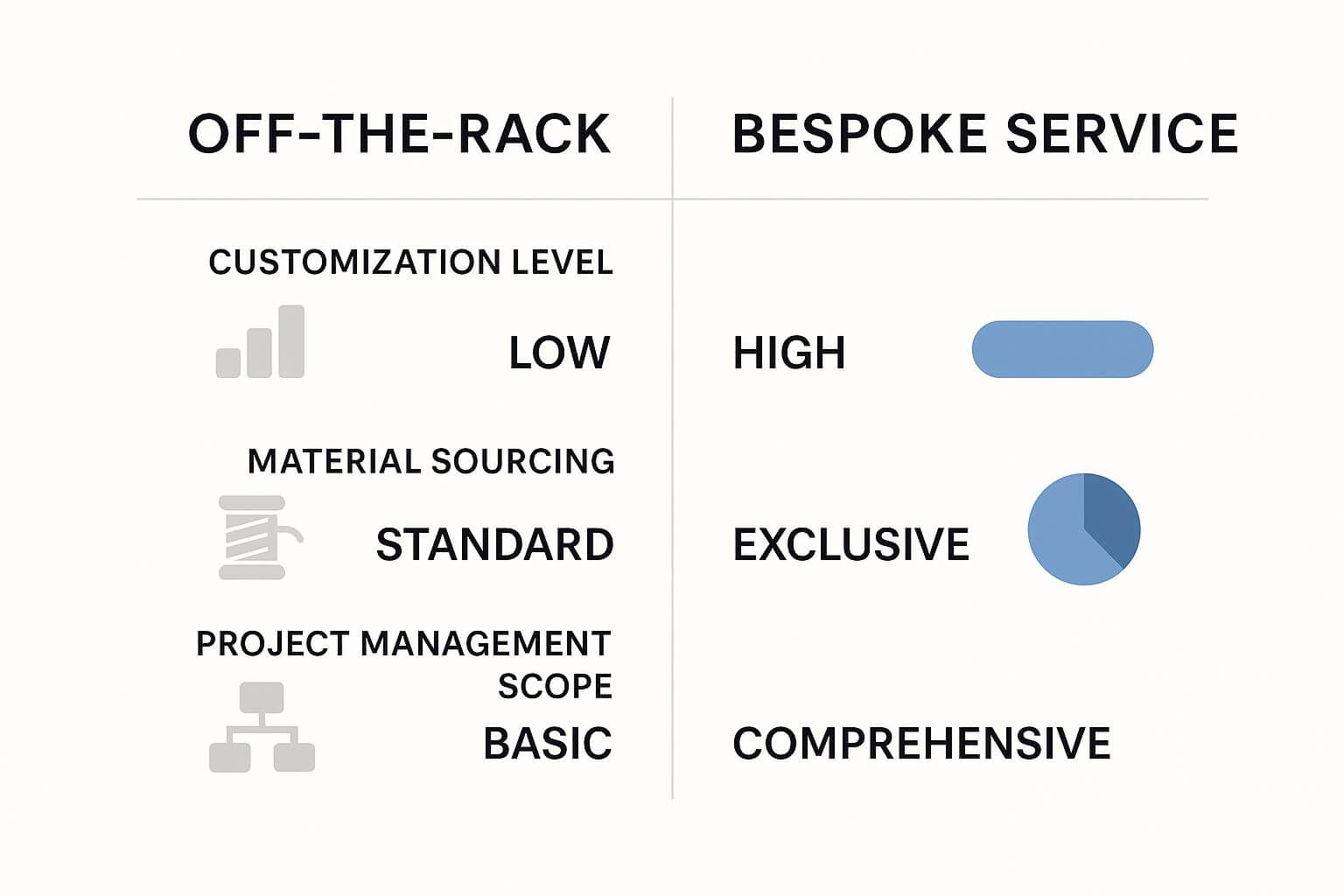
As you can see, the path of luxury design offers a level of customization, exclusive sourcing, and complete project oversight that standard services simply can’t match.
To make the distinction even clearer, let’s break down the key differences in a side-by-side comparison.
High End vs Standard Interior Designer Services
| Attribute | High End Interior Designer | Standard Interior Designer |
|---|---|---|
| Scope of Work | Full-service management from architectural planning to final installation. | Primarily focused on decoration, furniture selection, and space planning. |
| Client Involvement | Collaborative partnership; designer manages all logistics, freeing up the client’s time. | Higher client involvement required for sourcing, purchasing, and coordination. |
| Sourcing | Access to exclusive trade-only showrooms, custom artisans, and unique global finds. | Relies on retail stores, online vendors, and standard trade suppliers. |
| Customization | Bespoke everything: furniture, lighting, textiles, and architectural details are often custom-made. | Primarily uses off-the-shelf items with some light customization options. |
| Project Oversight | Acts as the single point of contact, managing architects, builders, and all vendors. | Typically coordinates with contractors but doesn’t manage the entire build process. |
| End Result | A completely unique, cohesive environment tailored to the client’s life and story. | A well-decorated space that reflects current trends and client preferences. |
This table shows that while both professionals aim to create beautiful spaces, the high-end designer operates on a different scale, offering a truly comprehensive and worry-free experience from start to finish.
A Growing Market for Bespoke Living
It’s clear that more and more people are seeing the value in this level of service. The global luxury interior design market was valued at an impressive USD 128 billion in 2024 and is expected to climb to USD 190 billion by 2030. This isn’t just a fleeting trend; it’s a fundamental shift. Clients increasingly recognize that hiring a high-end designer is a smart investment—not just in their property’s value, but in their own quality of life. You can explore more insights into the luxury interior design market growth and see the full research for yourself.
Ultimately, a high end interior designer doesn’t just design a house; they craft a home. They create a backdrop for your life that is as unique as your own signature, ensuring every element works in perfect harmony. This commitment to a truly custom experience is what defines luxury in the world of interior design.
The Signature Services of a Luxury Design Firm
When you partner with a high-end interior designer, you’re not just hiring someone to pick out paint colors and arrange furniture. You’re investing in a comprehensive, white-glove service that creates an environment perfectly in sync with your life. These professionals are the creative directors and logistical captains of your entire project.
Think of it like commissioning a custom-built yacht. You wouldn’t simply buy parts off the shelf and hope they fit. You’d work with a master builder who engineers every single component to work in perfect harmony. In the same way, a luxury design firm orchestrates every element of your home, ensuring a cohesive and impeccably executed vision from the ground up.
The work begins long before the first fabric swatch is ever considered. It starts with an intensive discovery phase where the designer gets to know your routines, your passions, and your aspirations. This deep understanding becomes the bedrock of a truly personal space.
From Blueprint to Bespoke Furniture
One of the most critical services is detailed spatial planning. This is so much more than just placing furniture on a floor plan. A top-tier designer pores over architectural blueprints, often collaborating with architects to optimize flow, sightlines, and the entire spatial experience. They consider how natural light will travel through a room at different times of the day, making sure every square inch has a purpose.
This meticulous approach is what creates spaces that feel both grand and intimately personal. If you’re curious about the technical side, you can explore how designers master this craft in our detailed interior design space planning guide.
After the space is perfected, the firm focuses on the custom elements that make a home truly one-of-a-kind.
- Custom Millwork and Cabinetry: This is about designing built-in bookcases, kitchen cabinetry, and architectural moldings crafted specifically for your home, guaranteeing a perfect fit and flawless finish.
- Bespoke Furniture Design: When a piece from a showroom just won’t do, these designers will design and commission custom sofas, tables, or lighting from their exclusive network of skilled artisans.
- Exclusive Material Sourcing: They have access to materials the public never sees—think specific marble slabs from a family-owned quarry in Italy or hand-woven textiles from a small, remote atelier.
These services ensure that every single detail, no matter how small, contributes to the unique story your home tells.
Full-Scale Project Management
Perhaps the most invaluable service a high-end designer offers is full-scale project management. They become your single point of contact and staunchest advocate, shielding you from the immense stress and complexity of a large-scale project. This turnkey approach is the very definition of a luxury experience.
A luxury designer acts as the central hub of communication, conducting the intricate orchestra of architects, contractors, electricians, and artisans. This keeps everyone working from the same vision and on the same schedule, preventing costly mistakes and frustrating delays.
As project managers, they handle several crucial functions:
- Procurement and Logistics: They manage the ordering, tracking, and quality inspection of all furniture, fixtures, and materials. This often involves navigating complex international shipping and customs for those rare finds.
- Budget Management: A detailed budget is created at the start and then meticulously managed. You receive transparent reports, ensuring the project stays on financial track without any surprises.
- Quality Control: The designer is on-site regularly to oversee construction and installation, making sure the craftsmanship is held to the highest possible standard. Their trained eye spots imperfections that others would easily miss.
- Final Installation: The journey culminates in the “white glove” installation. The team places every piece of furniture, hangs every work of art, and styles every surface to perfection, revealing a completed, move-in-ready home.
Ultimately, these signature services turn what could be an overwhelming ordeal into an enjoyable, creative partnership. When you entrust your home to a high-end interior designer, you’re securing an expert dedicated to bringing your vision to life with precision, artistry, and unmatched expertise.
What Makes a Truly Great Interior Designer?
Finding an elite interior designer goes far beyond scrolling through a gallery of beautiful photos. While a stunning portfolio is a must-have, the real qualities that set a great designer apart from a good one are often working behind the scenes. These traits are what create a seamless, high-value experience, resulting in a home that isn’t just decorated, but thoughtfully crafted around you.
A premier designer brings a unique and authentic creative vision to the table. Their work doesn’t just chase the latest trends; it has a distinct personality and point of view. Think of it this way: anyone can play a cover song, but it takes a true artist to compose an original piece of music. That same originality is what ensures your space will feel timeless and entirely your own.
This vision is always paired with an obsessive attention to detail. These professionals spot the things most of us miss—from the way a shadow from a light fixture will travel across a wall to the specific texture of a hand-stitched seam. This meticulous approach guarantees a level of polish that elevates a project from well-done to truly extraordinary.
From Big Ideas to Flawless Execution
Of course, a creative eye is only half the story. High end interior designers are also masters of logistics, turning ambitious concepts into concrete reality. One of their most powerful, yet invisible, assets is their network—a closely guarded “black book” of contacts built over many years in the industry.
This network isn’t just a list of suppliers. It’s a curated ecosystem of trusted partnerships with exclusive artisans, craftspeople, and vendors from around the globe. This is what makes the seemingly impossible, possible.
- Sourcing Exclusive Materials: Instead of picking from a standard catalog, they can source marble directly from a specific quarry in Italy, famed for its one-of-a-kind veining.
- Commissioning Bespoke Pieces: They can work directly with a renowned lighting artist to design a custom chandelier that becomes the soul of a room—a piece no one else will ever have.
- Accessing Master Craftsmanship: Their relationships unlock access to master woodworkers or textile artists who can create custom furniture and fabrics tailored to the exact vision.
These connections deliver a level of quality and customization that’s simply out of reach otherwise.
A designer’s network is the bridge between imagination and craftsmanship. It’s what transforms a creative vision into a flawlessly executed reality, ensuring every single element is not just sourced, but perfectly curated.
The Business Side of Beauty
At the end of the day, a luxury design project is a major investment, and it has to be managed with absolute precision. This is where sharp business acumen becomes just as critical as creative talent. A premier designer is also an expert project manager who navigates the financial and logistical maze with ease.
They excel at creating detailed, transparent budgets and sticking to them, preventing costly surprises down the road. They also develop realistic timelines and expertly coordinate the moving parts—from contractors to artisans—to keep the project flowing smoothly. This financial stewardship protects your investment and, just as importantly, gives you peace of mind.
Finally, the foundation of it all is exceptional communication. A top-tier designer doesn’t just hear you; they listen. They work to understand your vision, your lifestyle, and even the needs you haven’t yet articulated. They are clear when explaining their concepts and transparent about the process, keeping you in the loop at every critical stage. This is how a potentially stressful process becomes an enjoyable, collaborative journey.
How Technology Shapes Modern Luxury Design
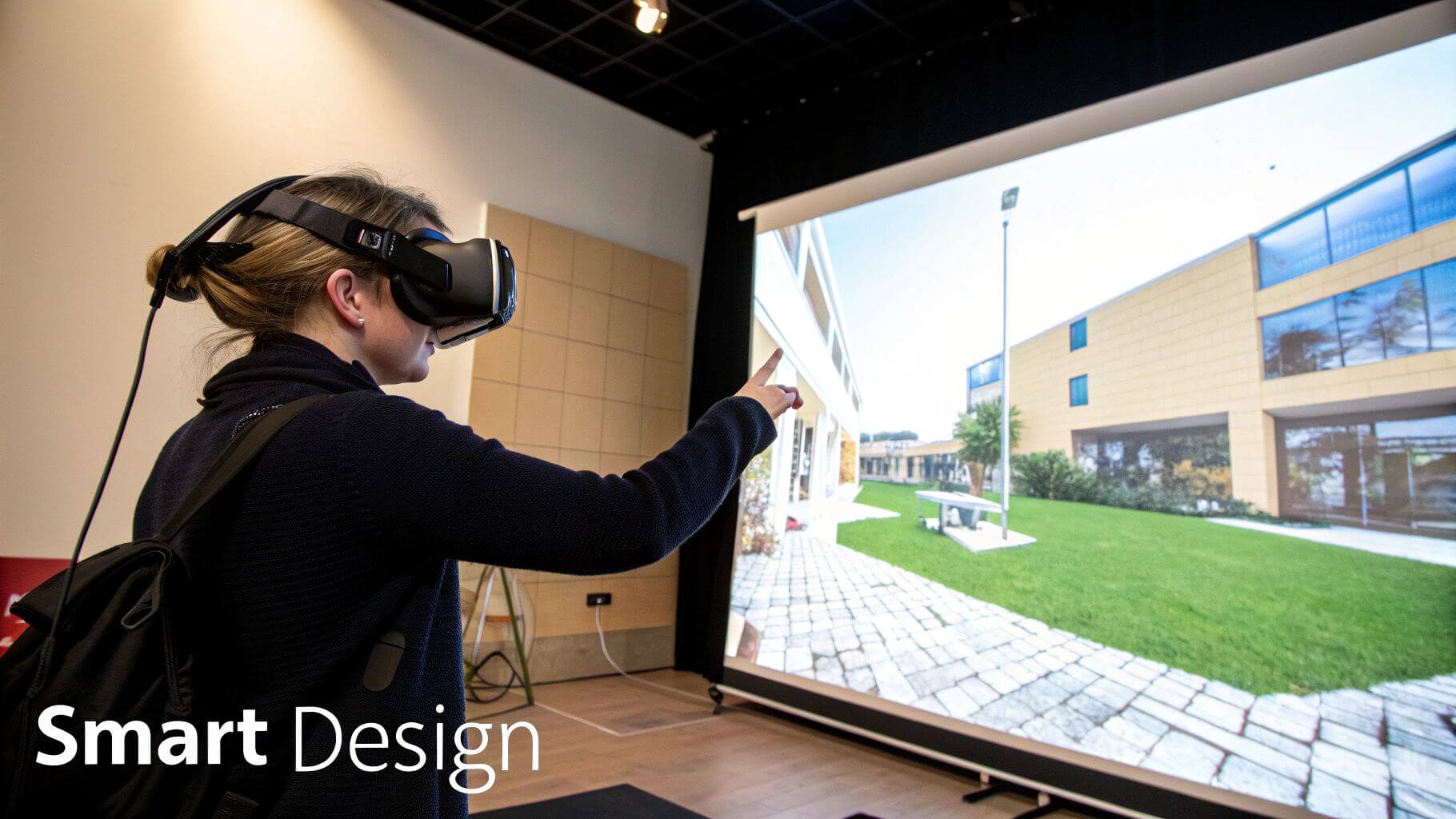
In the world of luxury interiors, technology has evolved from a simple tool into an essential creative partner. It’s no longer just about digital mood boards. Today, high-end interior designers use a sophisticated suite of tech to visualize, communicate, and bring their visions to life with breathtaking accuracy.
Think about it: you wouldn’t expect an architect to build a skyscraper without a detailed blueprint. In the same way, modern designers construct a complete “digital twin” of a space long before any physical work begins. This process eliminates guesswork and gives clients the clarity they need to make confident decisions.
The numbers back this up. The global interior design software market was valued at USD 5.37 billion in 2024 and is expected to hit USD 9.66 billion by 2030. This incredible growth shows just how fundamental these tools have become. If you’re curious about the details, you can read the full research about the interior design software market.
Visualizing the Future with Digital Precision
One of the biggest game-changers has been the rise of photorealistic 3D renderings and virtual reality (VR) walkthroughs. These aren’t just fancy pictures; they are powerful communication tools that bridge the gap between imagination and reality.
A flat, 2D floor plan shows you a layout, but it can’t capture the soul of a room. A 3D rendering, on the other hand, can show you precisely how the afternoon sun will pour through a window and catch the grain of a custom walnut cabinet. This is the level of detail that turns a good design into a great one.
Virtual reality pushes this even further. Clients can slip on a headset and literally “walk” through their future home, getting a true sense of scale, flow, and atmosphere. This allows them to make choices based on a genuine spatial experience, not just an abstract idea.
This technology fosters a deeply collaborative process. Before anyone commits to sourcing rare marble or commissioning expensive furniture, both the designer and the client can see exactly how every piece of the puzzle fits together.
- Photorealistic 3D Renders: These are stunning, static images that showcase a space from various angles, complete with realistic textures, lighting, and shadows.
- Virtual Reality (VR) Walkthroughs: An immersive journey that lets you explore a digital model of the room as if you were truly standing in it.
- Augmented Reality (AR) Tools: Some designers use AR to overlay digital models of furniture onto a client’s actual space through a phone or tablet.
Integrating Smart Home Functionality
Beyond the design phase, technology is woven directly into the experience of living in a luxury home. Today, an exceptional home is expected to be as intelligent as it is beautiful. High-end interior designers are now experts at seamlessly integrating complex smart home systems that elevate comfort, convenience, and security.
This is about much more than just sticking a smart speaker on a counter. It’s about designing a holistic ecosystem where lighting, climate, entertainment, and security work in perfect concert, all managed from a single, intuitive interface.
The real art is making the technology feel almost invisible. It should enhance the owner’s lifestyle without disrupting the home’s aesthetic. Common integrations include:
| Feature | Description |
|---|---|
| Automated Lighting | Lighting scenes that shift throughout the day to support natural circadian rhythms or create the perfect ambiance for any occasion. |
| Climate Control | Smart thermostats and automated window treatments that collaborate to maintain ideal temperatures and optimize energy efficiency. |
| Integrated Entertainment | Hidden speakers, drop-down projector screens, and multi-room audio systems that offer incredible performance without any visual clutter. |
| Advanced Security | Discreet cameras, smart locks, and sensors that are built into the home’s design for elegant, always-on protection. |
These intelligent systems are redefining what’s possible. To see where this is all heading, check out our article on how AI is reshaping luxury interior architecture. In modern luxury, technology isn’t an afterthought—it’s part of the very fabric of the home.
Your Step By Step Guide to Hiring a Designer
Taking on a luxury design project is a thrilling journey, but the most critical decision you’ll make is choosing the right creative partner. Finding the perfect high-end interior designer isn’t just about picking someone with a beautiful portfolio; it’s about finding a professional whose vision, personality, and process truly click with your own.
Think of it as an interview for a long-term collaborator. This is someone you’re entrusting with your home, your investment, and your vision for the future. A successful partnership starts right here, with a thoughtful and deliberate selection process.
Homing In On Your Vision and Budget
Before you even start looking for a designer, the first step is to look inward. Spend some real time clarifying what you want to achieve. Gather inspiration—not just images, but textures, materials, and even feelings that capture the atmosphere you’re dreaming of. This isn’t about boxing a designer in, but about giving them a clear and authentic starting point.
At the same time, you need to get serious about your budget. A luxury design project is a significant financial commitment, and having a realistic financial framework from day one is essential for keeping things on track. Your budget should cover everything: design fees, furniture, materials, any construction, and a healthy contingency for those inevitable surprises. Being upfront about your numbers lets potential designers know immediately if they’re the right fit for the scale of your project.
Researching and Shortlisting Designers
With a clear vision and budget, you can start the search. The goal is to find a handful of high end interior designers whose work truly speaks to you. Look for a consistent point of view and an aesthetic that feels authentic to them—and to you.
Good research means looking in a few key places to find the best talent.
- Dive Into Portfolios: Don’t just skim. Really scrutinize a designer’s online portfolio. Do you see versatility in their projects? Do they have a masterful command of color, scale, and texture?
- Check Industry Publications: Top-tier design magazines and respected blogs are fantastic resources. They feature the work of premier designers, giving you a curated look at the industry’s best.
- Ask for Referrals: Talk to your network. Architects, luxury real estate agents, or friends who have gone through this process are often the best source for trusted recommendations.
Curated networks can also be a great shortcut. If you want to connect with verified professionals, exploring the top platforms to find luxury interior design firms can introduce you to pre-vetted talent, saving you a lot of time in the initial discovery phase.
The Consultation and Interview
Once you’ve narrowed your list down to three to five designers, it’s time to schedule consultations. This initial meeting is a two-way street. You’re assessing their professionalism and personality, but they’re also getting a feel for your project and whether you’re a good match for their firm.
This conversation is about more than logistics; it’s about chemistry. You’ll be working closely with this person for months, possibly years, so a comfortable and trusting rapport is absolutely essential for a successful collaboration.
Come to the meeting prepared with thoughtful questions that go deeper than what you can see in their portfolio. Their answers will tell you everything you need to know about their process, communication style, and how they run their business.
Critical Questions to Ask a Designer
- How would you describe your signature style and design philosophy? This helps you understand their core creative DNA.
- Can you walk me through your design process from concept to completion? A clear, well-defined process is the mark of an experienced professional.
- How do you manage project budgets and timelines? You’re looking for transparency and a rock-solid system for financial and logistical oversight.
- What is your fee structure? Designers use different models (hourly, flat fee, cost-plus). Make sure you understand exactly how they charge before moving forward.
- How involved do you expect me, the client, to be in the project? This is crucial for aligning expectations around your role and decision-making.
- Can you provide references from a few past clients? Speaking directly with people who have worked with them before offers invaluable, unfiltered insight.
By following these steps, you can move forward with confidence, knowing you’ve found a true expert to bring your vision to life.
Common Questions About High-End Design Projects
Stepping into the world of luxury design is exciting, but it naturally comes with a few practical questions. Getting clear on the fundamentals from the start helps you build a strong, collaborative partnership with your designer and ensures the whole process runs smoothly. Let’s walk through what you need to know.
What Is a Realistic Budget for a High-End Project?
Every project is different, of course, but luxury interior design is a serious investment in your home and lifestyle. The budget can swing dramatically depending on the project’s size, your location, and just how custom you want to go.
As a general starting point, a full-service design for a single room often begins in the high five figures. For a complete home renovation, you’re typically looking at a six-figure starting point that scales up from there.
Your total investment is usually split into two key areas:
- Furnishings and Materials: This bucket holds everything you see and touch—all the furniture, lighting, fabrics, artwork, and unique architectural finishes.
- Design Fees: This covers the designer’s creative vision, expertise, and the immense amount of time they spend managing every detail of your project. These fees might be a flat rate, an hourly charge, or a percentage of the total project cost, which is often between 15% and 35%.
Being open and honest about your budget from your very first conversation is one of the most important things you can do to set your project up for success.
How Long Does a Luxury Design Project Take?
Patience is a virtue, especially when you’re creating a truly one-of-a-kind space. A high-end project takes significantly longer than a standard decorating job simply because almost every single element is custom-crafted or sourced from exclusive artisans from all corners of the globe.
Just to give you an idea, a single room—from the first sketch to the final pillow fluff—can take anywhere from 4 to 8 months. A full-home overhaul can easily stretch to 12 to 24 months, and sometimes even longer if there’s construction or architectural work involved. Lead times for custom furniture, international shipping, and the schedules of top-tier contractors all play a big part in the timeline.
How Involved Do I Need to Be?
You can be as hands-on or as hands-off as you like, but at its heart, this is a partnership. Your designer is there to handle the countless moving parts and day-to-day complexities, but your insight is absolutely essential at key decision points.
The best client-designer relationships are built on trust. You bring the vision and the personal story of how you want to live, and the designer brings the expertise and skill to make it a reality.
You’ll typically be most involved at the beginning—during the discovery phase, when concepts are presented, and as you make final selections. Once you’ve given your approval on the big decisions, many clients are happy to step back and let their designer orchestrate the intricate dance of ordering, tracking, and installation, with regular updates to keep them in the loop.
Ready to find a proven professional who can answer all your questions? The Haute Design network is home to the country’s most respected interior designers, architects, and builders. Find your perfect design partner today.