


Before you can even think about finding the right architect, you have to get crystal clear on what, exactly, you want to build. This all starts with creating a detailed project brief—a document that maps out your vision, your lifestyle, and your budget. Think of it as the essential roadmap for every productive conversation you’ll have with potential candidates.
Translating Your Vision into a Project Brief
A well-crafted project brief is arguably the single most important tool in your search. It’s what turns a collection of abstract ideas into a structured plan that a professional can actually understand and execute.
Without that clarity, you’re opening the door to miscommunication, endless changes, and budgets that spiral out of control. The real goal here is to articulate your needs so precisely that an architect can immediately get a feel for the soul of the project.
Defining Your Design Tastes and Lifestyle Needs
Let’s start by getting more specific than “modern” or “traditional.” The best designs grow out of how you actually live your life, day in and day out. A truly useful project brief answers the practical questions that will ultimately shape the floor plan and flow.
To get the ball rolling, consider these points:
- Daily Routines: How does your family really use your home? Think about the morning rush versus a quiet evening. What parts of your current space just work, and what causes daily friction?
- Must-Have Features: What are the non-negotiables? Maybe it’s a chef’s kitchen with a massive island for entertaining, a sun-drenched home office, or that seamless indoor-outdoor living space you’ve always dreamed of.
- Aesthetic Preferences: Go ahead and collect those inspirational images, but then take the next step and analyze why you love them. Is it the warm wood tones, the high ceilings, or the way the afternoon light hits a certain wall?
This is the kind of detail that gives an architect a tangible foundation to build upon. If you’re looking at a major project, our guide on how to plan a home renovation for success can give you even more insight into this crucial first phase.
Establishing a Realistic and Comprehensive Budget
Your budget isn’t just one big number. It’s a strategic plan for how you’ll allocate your resources. I’ve seen it time and again: homeowners focus solely on the construction estimate and get blindsided by the other significant expenses. A well-thought-out budget anticipates the full financial picture.
A transparent and detailed budget is foundational to a successful architect-client relationship. It aligns expectations from day one and provides a framework for making informed decisions throughout the design and construction process.
The infographic below breaks down the three core components you need to plan for.
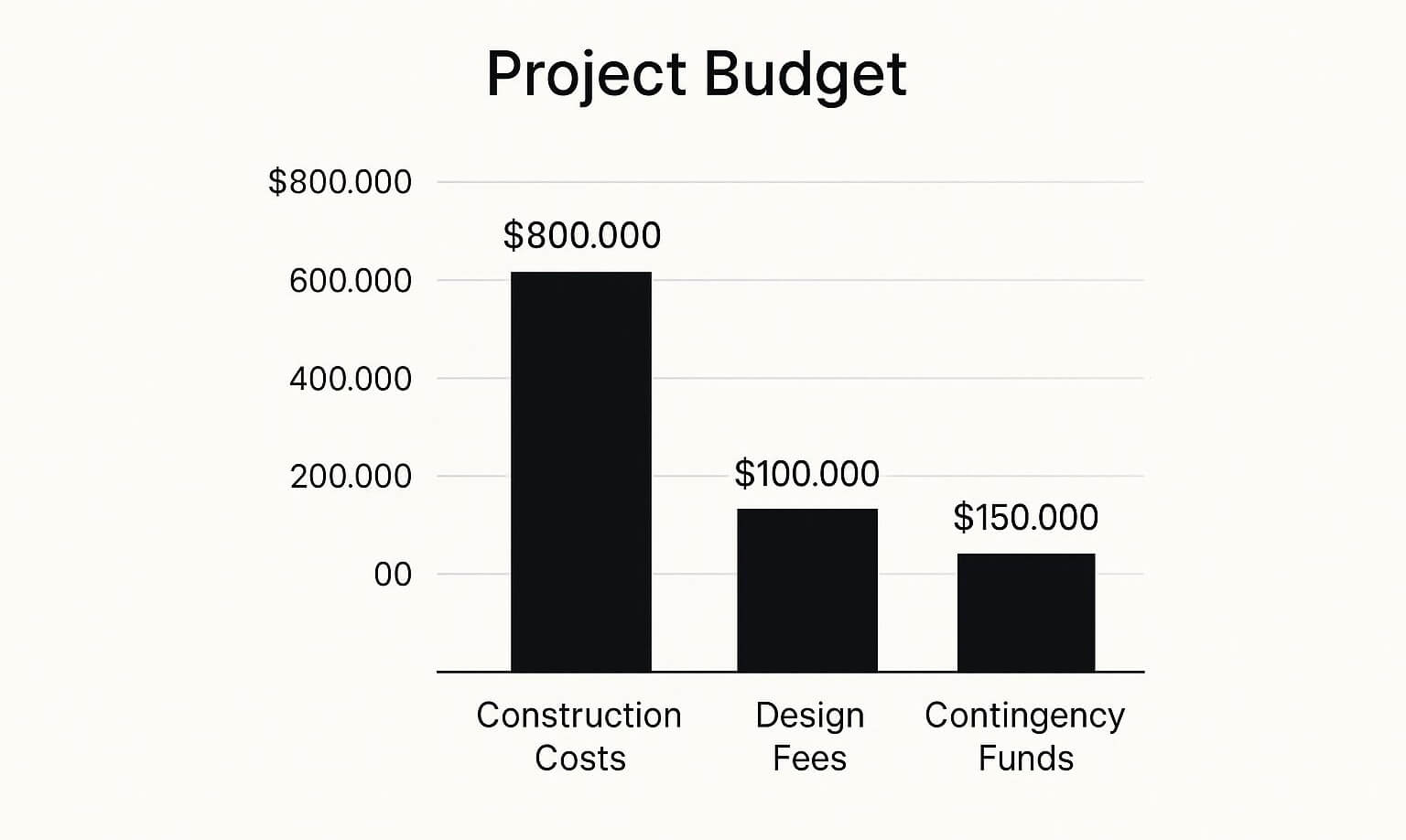
This visual makes it clear that design fees and a contingency fund aren’t afterthoughts—they are critical, planned expenses. Recognizing this is especially important right now. The industry is seeing a major shift, with more architects focusing on sustainable design and complex adaptive reuse projects that require very specialized expertise and planning. You can discover more about architecture market trends shaping 2025 on lviassociates.com.
Where to Find Vetted Architectural Talent
With a clear vision for your project, the next step is finding the right talent to bring it to life. This is where the real search begins—building a shortlist of exceptional candidates. The trick is knowing where to look.
You want to avoid the endless, often frustrating scroll through generic search results. A much better strategy is to tap into a few select channels where quality is the price of entry. This way, you’re sourcing from a pool of proven professionals whose work and reputation match the caliber of your home.
The Power of Curated Platforms
One of the most effective starting points is a curated professional network. Think of it as a gallery versus a warehouse. Instead of an overwhelming list of unvetted options, these platforms do the initial legwork for you, featuring only distinguished and reputable professionals.
Haute Design, for example, offers a significant advantage by ensuring a baseline of quality and credibility from the outset. You can browse a directory knowing that every architect listed has been handpicked for their expertise, particularly in luxury residential projects.
This focused approach saves an incredible amount of time. Rather than sifting through firms that don’t align with your needs, you get direct access to leading architects on the Haute Design network. It’s a direct line to top-tier local and national architects who truly understand the nuances of high-end design.
Leveraging Trusted Personal Referrals
While premier platforms provide incredible reach, don’t underestimate the power of a trusted personal referral. In the luxury market, firsthand experience is gold. A recommendation from a respected professional can offer insights you’ll never find in a portfolio.
Your best sources for these referrals are often other professionals in the high-end home space:
- Custom Home Builders: They’re on the front lines, working with architects day in and day out. They know who delivers clear, buildable plans and who collaborates well when challenges arise on-site.
- High-End Interior Designers: An interior designer’s work is deeply connected to the architectural envelope. They often have established relationships with architects who share a similar aesthetic and commitment to detail.
- Luxury Real Estate Agents: Agents who specialize in affluent properties have a keen eye for quality. They know the architects behind the most admired and valuable homes in your area.
When you ask for a referral, go deeper than just, “Who’s good?” Ask about the architect’s communication style. How did they handle unexpected issues? Were they respectful of the budget and timeline? These questions give you a real-world picture of what it’s like to work with them.
Sourcing Methods at a Glance
Deciding where to focus your search depends on what you value most—efficiency, personal insight, or breadth of options. Each method offers a different path to finding the right architect for your project.
To help you decide, here’s a quick comparison of the most common approaches.
Comparing Architect Sourcing Methods
| Sourcing Method | Best For | Pros | Cons |
|---|---|---|---|
| Curated Networks (Haute Design) | Efficiency and Quality Assurance: Quickly finding pre-vetted, high-caliber architects specializing in luxury homes. | – Vetted professionals only – Focus on luxury residential – High-quality portfolios – Time-saving | – Smaller pool of candidates than a broad search – Limited to network members |
| Personal Referrals | Insider Knowledge: Gaining deep, candid insights from trusted professionals who have worked with the architect directly. | – Honest, firsthand feedback – Insights on work style – Pre-established trust – Strong local connections | – Can be a limited network – Potential for biased opinions – May not align with your specific aesthetic |
| Architectural Publications | Design Inspiration: Discovering architects whose work has been recognized and featured for its innovative or aesthetic merit. | – Showcases award-winning talent – Great for identifying specific styles – High aesthetic standard | – Featured work may not be recent – Less info on process/collaboration – Firms may have limited availability |
| General Online Searches | Broad Exploration: Casting the widest possible net to see a large volume of firms in a geographic area. | – Massive number of results – Good for initial market research – Access to smaller or newer firms | – Time-consuming to vet – Quality is highly variable – Lacks a filter for specialization |
Ultimately, the best approach is often a blend. You might start with a curated platform like Haute Design to build a strong initial list, then cross-reference those names with your personal network to see if anyone has firsthand experience. This combined strategy gives you both quality assurance and invaluable real-world insight.
Evaluating Portfolios and Verifying Credentials
Now that you have a solid shortlist, the real work begins. It’s time to shift from broad discovery to a much deeper evaluation. A stunning portfolio is one thing, but it’s just the glossy cover. To find the right partner, you need to look past the beautiful final photos and understand the story behind them.
This stage is all about peeling back the layers. You’re not just looking for design talent—you’re assessing technical skill, problem-solving prowess, and how they handle pressure when things inevitably go sideways. After all, the breathtaking minimalism of a project like the Rose Wynwood residence presented by Binst Architects isn’t just magic; it’s the result of immense technical planning and execution.
Getting this right means you’re judging candidates on the full scope of their abilities, not just their highlight reel.
Looking Beyond the Final Photos
Every portfolio is carefully curated to showcase an architect’s best work. Your job is to read between the lines and dig for the details that aren’t immediately obvious.
When a project catches your eye, don’t just admire it. Get ready to ask some pointed questions that reveal the how and why behind the what:
- What was your specific role here? Were they the lead architect from day one, or did they come in later? Knowing their exact contribution gives you a clearer picture of their influence on the final outcome.
- How did the initial budget compare to the final cost? This gets right to the heart of their ability to manage scope and design within real-world financial constraints.
- What was the biggest unexpected challenge during construction? Every significant project hits a snag. Their answer tells you everything about their problem-solving skills and how they collaborate with builders under fire.
The most telling conversations come from asking an architect about a project’s challenges, not just its triumphs. This is where you see their resilience, transparency, and ability to navigate the messy reality of construction.
Verifying Professional Standing and Skills
Once you’ve dug into their portfolio, it’s time for some essential due diligence. Verifying an architect’s professional credentials isn’t just a formality—it’s a critical step in protecting your investment and ensuring you’re working with a legitimate, qualified professional.
First things first: confirm their license. A quick check with your state’s architectural licensing board will verify they are legally cleared to practice and will flag any public disciplinary actions. It’s a simple step that provides immense peace of mind.
Beyond the license, you need to get a sense of their technical chops. Architecture today is a global affair, with firms often collaborating with specialized BIM experts and engineers across continents using sophisticated digital tools. As global workforce trends in architecture show, modern practice demands expertise in everything from sustainable design to virtual reality modeling.
Finally, and perhaps most importantly, speak with their past clients. Make it a priority to conduct thorough reference checks with at least two of them. Ask about their communication, their responsiveness, and the overall experience. This kind of firsthand feedback is pure gold, giving you an unfiltered look at what it’s actually like to have them on your team.
Leading Productive Architect Interviews
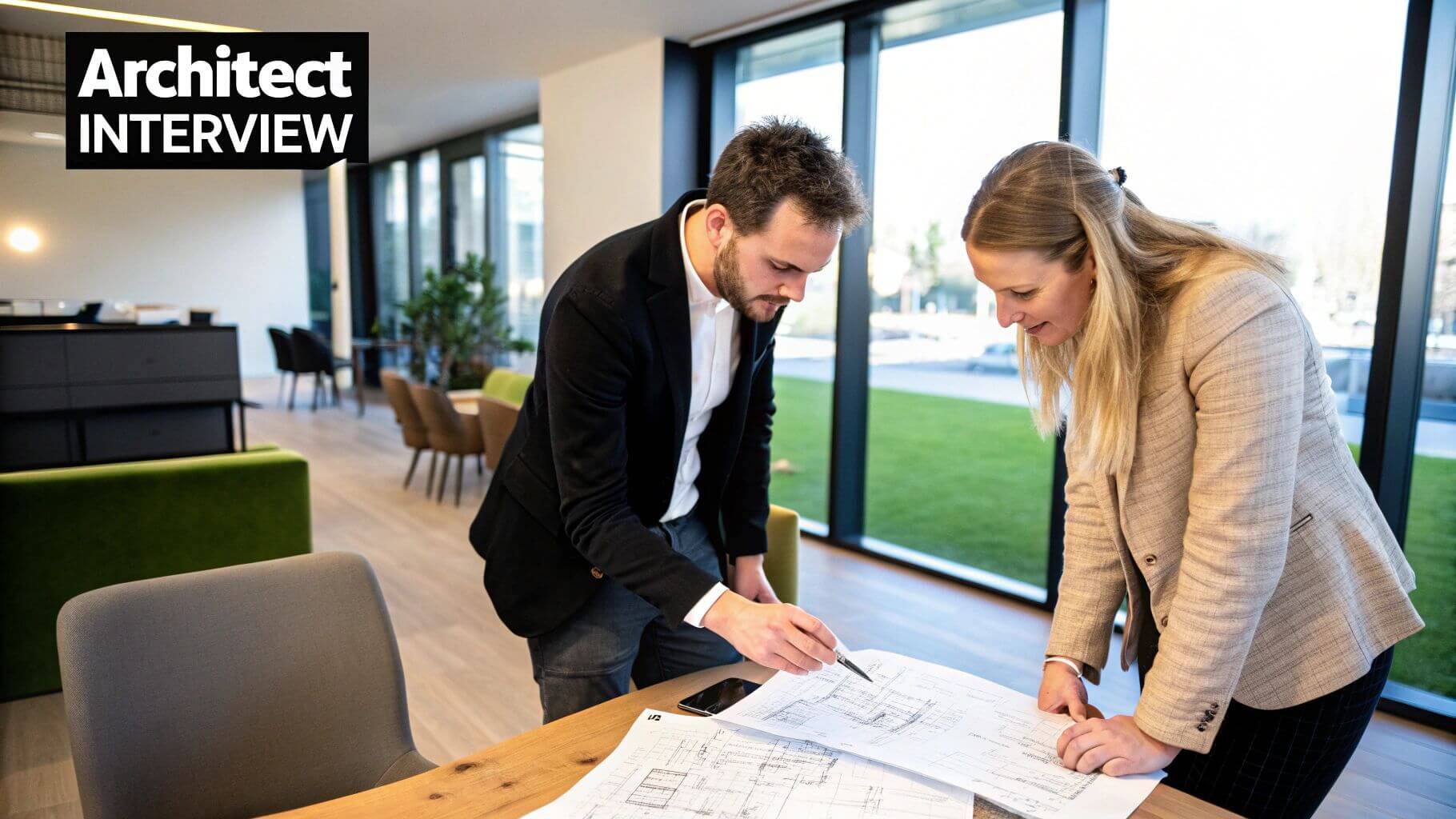
This is where the rubber meets the road. Portfolios show what an architect has built, but a real conversation reveals how they think, listen, and solve problems. You’re moving beyond the glossy photos to see if the human connection is there.
After all, you aren’t just hiring a designer. You’re bringing on a partner for what will be a deeply personal and financially significant journey. Your goal here is to get a feel for their personality, their communication style, and that all-important creative chemistry. You need an ally you can trust.
Asking Questions That Reveal Their Process
To really understand an architect, you have to get them talking. Ditch the simple “yes” or “no” questions. Instead, use open-ended prompts that encourage them to tell a story and show you how their mind works. This is your window into their design philosophy and how they navigate the inevitable bumps in the road.
Here are a few questions I’ve found to be incredibly telling:
- “Walk me through your design process, from our first conversation to handing over the keys. Where do you see me, the client, most involved?” This immediately tells you how collaborative they truly are and sets clear expectations for your role from the start.
- “Tell me about a time a client’s vision didn’t quite align with your professional recommendation. How did you navigate that?” Their answer is pure gold. It reveals their communication skills and whether they prioritize a true partnership or their own ego.
- “How do you typically work with the general contractor and the rest of the build team once construction starts?” This peels back the curtain on their on-site demeanor and their ability to lead the entire project team.
While they answer, pay close attention to how well they listen to you. Are they genuinely curious about your vision and lifestyle, or are they just waiting for their turn to talk about their signature style? The right architect hears what you’re saying and, more importantly, helps you find the words for what you haven’t yet articulated.
The best interviews feel less like an interrogation and more like your very first design session. A great sign is when the architect starts asking you as many thoughtful questions as you’re asking them. It shows they’re already invested.
Clarifying the Financials and Logistics
Once you feel that creative spark, it’s time to shift gears to the practical side of things. Trust me, any ambiguity around fees and billing is a recipe for stress down the line. A true professional will be an open book about their financial structure, and you should feel completely comfortable digging into the details.
Don’t be shy about asking direct, practical questions about how they run their business:
- “What is your fee structure? Is it a percentage of the construction cost, a fixed fee, or hourly? And what services are specifically included and excluded?”
- “How do you handle billing? What does the payment schedule typically look like throughout the project?”
- “If we need to make changes to the project scope, how does that work, and how are any additional services billed?”
This part of the conversation is a crucial test of their professionalism. A confident, experienced architect will welcome these questions. They know that a crystal-clear financial understanding is the foundation of a great working relationship, allowing you to move forward with absolute confidence.
Making Your Final Choice and Securing the Contract
You’ve done the heavy lifting—poring over portfolios, conducting insightful interviews, and diligently checking references. Now, you’ve arrived at the final, crucial step. This is where the entire process of finding the right architect comes together, culminating in your choice of a creative partner and formalizing that relationship.
Making this call is part art, part science. It often boils down to a blend of proven expertise and your own intuition. Trust that gut feeling about who you’ll collaborate with best, but make sure it’s reinforced by the hard facts you’ve gathered. Who truly grasped your vision? Whose communication style felt like a natural fit?
Once you have your answer, it’s time to move from conversation to commitment. The next step involves reviewing the architect’s formal agreement. In many cases, this will be a standard contract from the American Institute of Architects (AIA). These documents are comprehensive for a reason: they are built to protect both you and the architect by clearly defining every component of the project ahead.
Understanding the Key Contract Clauses
Don’t be tempted to just skim the fine print. A thorough review at this stage is your best defense against costly misunderstandings down the road. While having your attorney look over any significant contract is always a wise move, there are several key areas you absolutely must understand yourself before signing.
Be sure to scrutinize these critical clauses:
- Scope of Work: This section needs to be crystal clear. It should detail every single service the architect will provide, from the earliest conceptual sketches to overseeing the final construction details. Make sure it matches your expectations to a T.
- Fee Schedule and Payment Terms: The contract must transparently outline the fee structure. Will it be a fixed fee, a percentage of construction costs, or hourly rates? It should also specify exactly when payments are due and what project milestones trigger them.
- Deliverables and Timeline: What, exactly, will you get and when? The agreement should list specific documents for each phase (like floor plans, 3D renderings, or construction documents) and map them to an estimated timeline.
- Ownership of Designs: This is an important one. Typically, the architect retains the copyright to their drawings, while you are granted a license to build the project one time. Get comfortable with what this means for you.
The contract isn’t just a formality; it’s the blueprint for your entire professional relationship. It establishes the rules of engagement, defines what success looks like for both parties, and provides a clear framework for navigating any challenges that might pop up.
Finalizing this step is especially critical in today’s market. Demand for high-end architectural services is climbing. Recent industry data, like the projected architectural employment on bls.gov, points to a healthy outlook for future workloads, making top talent more sought-after. In this competitive climate, securing your chosen architect with a rock-solid contract is more important than ever. It ensures they are fully committed to bringing your vision to life.
Answering Your Lingering Questions About Hiring an Architect
As you narrow down your choices, you’ll likely find a few practical questions coming to mind. Getting clear answers to these common queries isn’t just about ticking boxes; it’s about building a solid foundation of trust and understanding before the real work begins.
Let’s walk through some of the things clients often ask at this stage.
How Much Does an Architect Really Cost?
This is always a top-of-mind question. Generally, you can expect architectural fees to fall somewhere between 8% and 15% of the total construction cost. But it’s rarely a single, flat number. Most architects structure their fees in one of three ways: a percentage of the total project cost, a fixed fee agreed upon upfront, or a simple hourly rate.
For a custom luxury home, it’s absolutely critical to get this in writing. The architect’s proposal should clearly outline exactly what’s included—from the first conceptual sketches and detailed construction documents all the way through to their site visits during the build. No ambiguity.
What’s the Difference Between an Architect and a Designer?
This is a big one, and the distinction matters immensely. A licensed architect has gone through years of demanding education, a lengthy supervised internship, and has passed a grueling state board exam. They are legally qualified, professionally insured, and ultimately responsible for the health, safety, and welfare of the public in relation to their designs.
A building designer or draftsperson might be very talented, but they don’t carry the same legal standing or depth of training. When your project involves complex structural work, intricate building codes, and official permits, hiring a licensed architect isn’t just a good idea—it’s essential for protecting your investment and ensuring a safe, fully compliant home.
An architect’s license is more than a piece of paper; it’s a mark of proven competence and accountability. It confirms they can manage the entire process—from design and engineering coordination to construction administration—giving you a level of assurance that’s non-negotiable for a high-value project.
How Long Will the Design Process Take?
Building a custom home is a marathon, not a sprint, and patience is a virtue here. The design phase alone for a new luxury home can easily take 6 to 12 months. For exceptionally large or detailed projects, it can stretch even longer.
This isn’t just one long, drawn-out process. It’s broken into methodical stages to ensure every detail is right:
- Schematic Design: This is the “big idea” phase where initial concepts, general layouts, and the overall form of the home are explored.
- Design Development: Here, we refine the chosen design, start selecting materials, and define the home’s systems (like HVAC and electrical).
- Construction Documents: This is the most intensive phase, resulting in the highly detailed drawings and specifications the builder will use to bring your home to life.
The final timeline really depends on the complexity of your home, how quickly you make decisions, and, frankly, how efficient your local permitting office is.
Should I Hire an Architect Before I Buy Land?
If you can, absolutely. Bringing an architect on board before you commit to a piece of property is one of the savviest moves you can make. It allows them to perform a professional feasibility study on a site you’re considering.
An architect will spot red flags you might miss. They’ll dig into zoning laws, look at the land’s topography, analyze sun exposure, and identify potential issues with drainage or building restrictions. These are the kinds of things that can dramatically alter your design possibilities—and your budget. A bit of expert advice upfront can save you from the heartache of buying a beautiful piece of land that can’t actually accommodate the home you’ve been dreaming of.
Finding the right architect is the first, most crucial step in creating a home that is uniquely yours. On the Haute Design network, we connect you with a curated community of the nation’s leading architects, each vetted for their proven expertise in luxury residential design.
Explore their portfolios and find an architect to bring your vision to life.