


The modern bathroom has evolved far beyond its utilitarian origins into a personal sanctuary for wellness and rejuvenation. As the pace of life accelerates, the demand for spaces that promote tranquility and mindfulness has grown, making spa inspired bathrooms a cornerstone of luxury residential design. This shift is about more than just aesthetics; it’s a commitment to creating an environment that actively reduces stress and enhances well-being. A true spa-like bathroom engages all the senses, blending natural materials, sophisticated technology, and thoughtful design to replicate the restorative experience of a high-end wellness retreat.
In this comprehensive guide, we will explore eight essential elements pivotal in crafting these serene spaces. From the foundational choice of natural stone surfaces and the luxury of a freestanding soaking tub to the immersive experience of multi-function shower systems, each component plays a critical role. We will delve into the impact of color palettes, strategic lighting, and minimalist organization.
For affluent homeowners and design professionals, understanding these principles is key to creating a bathroom that is not just visually stunning but truly transformative, providing a daily escape and a powerful tool for personal care. This article provides the actionable insights needed to bring that vision to life.
1. Natural Stone and Marble Surfaces
The foundation of many world-class, spa inspired bathrooms is the extensive use of natural stone and marble. This design choice instantly conveys luxury and a connection to the natural world, creating an environment of serene permanence. Materials such as Carrara and Calacatta marble, travertine, limestone, and slate are not just surfaces; they are statement pieces that define the room’s character. Their inherent variations in veining, color, and texture ensure that no two bathrooms are exactly alike, offering a bespoke and organic aesthetic.
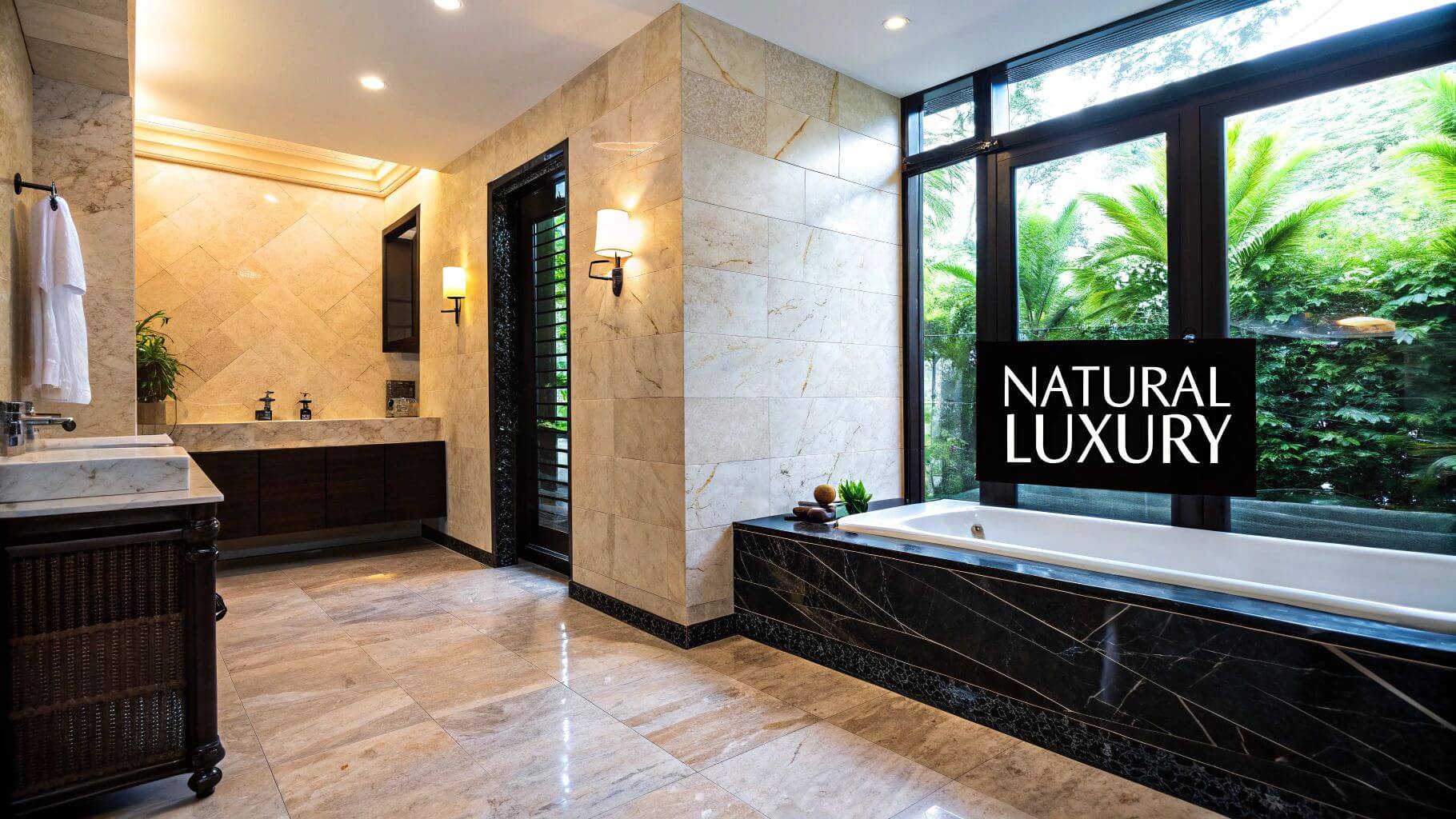
This approach is about creating a cohesive, immersive experience. Imagine the seamless look of large-format limestone tiles flowing from the floor up the shower walls or the dramatic impact of a book-matched marble slab serving as a vanity backsplash. Esteemed designers like Kelly Wearstler and luxury suppliers such as Ann Sacks have long championed this method, demonstrating how stone can transform a functional space into a personal sanctuary.
Key Implementation Strategies
To successfully integrate natural stone, focus on both aesthetics and practicality.
- Finishes for Function: Opt for a honed or leathered finish on flooring. These less-polished surfaces provide superior slip resistance compared to a high-gloss polish, which is crucial in a wet environment.
- Minimize Grout: Use large-format tiles or solid slabs. This design choice reduces the number of grout lines, creating a cleaner, more monolithic look that is also significantly easier to maintain.
- Material Pairing: If mixing stones, create a visual hierarchy. Pair a marble with dramatic, busy veining (like Calacatta Gold) with a more subdued, solid-toned limestone or slate to avoid overwhelming the space.
- Ultimate Comfort: For the ultimate spa experience, install radiant heating beneath the stone floors. This feature eliminates the cold shock of stone underfoot, adding a layer of tangible luxury, especially in cooler climates.
Expert Insight: Proper maintenance is non-negotiable for preserving the beauty of natural stone. Sealing the stone every 6-12 months is essential to protect it from staining and moisture damage. Always use pH-neutral cleaners specifically formulated for stone to avoid etching or discoloration.
2. Freestanding Soaking Tubs
A freestanding soaking tub is the quintessential centerpiece in modern spa inspired bathrooms, serving as a sculptural focal point that promises deep relaxation. Unlike standard built-in models, these tubs are designed for full-body immersion, transforming a routine bath into a restorative ritual. Crafted from materials like stone resin, acrylic, or even copper, they offer a powerful statement of luxury and comfort, detaching the act of bathing from the purely functional and elevating it to an experience.
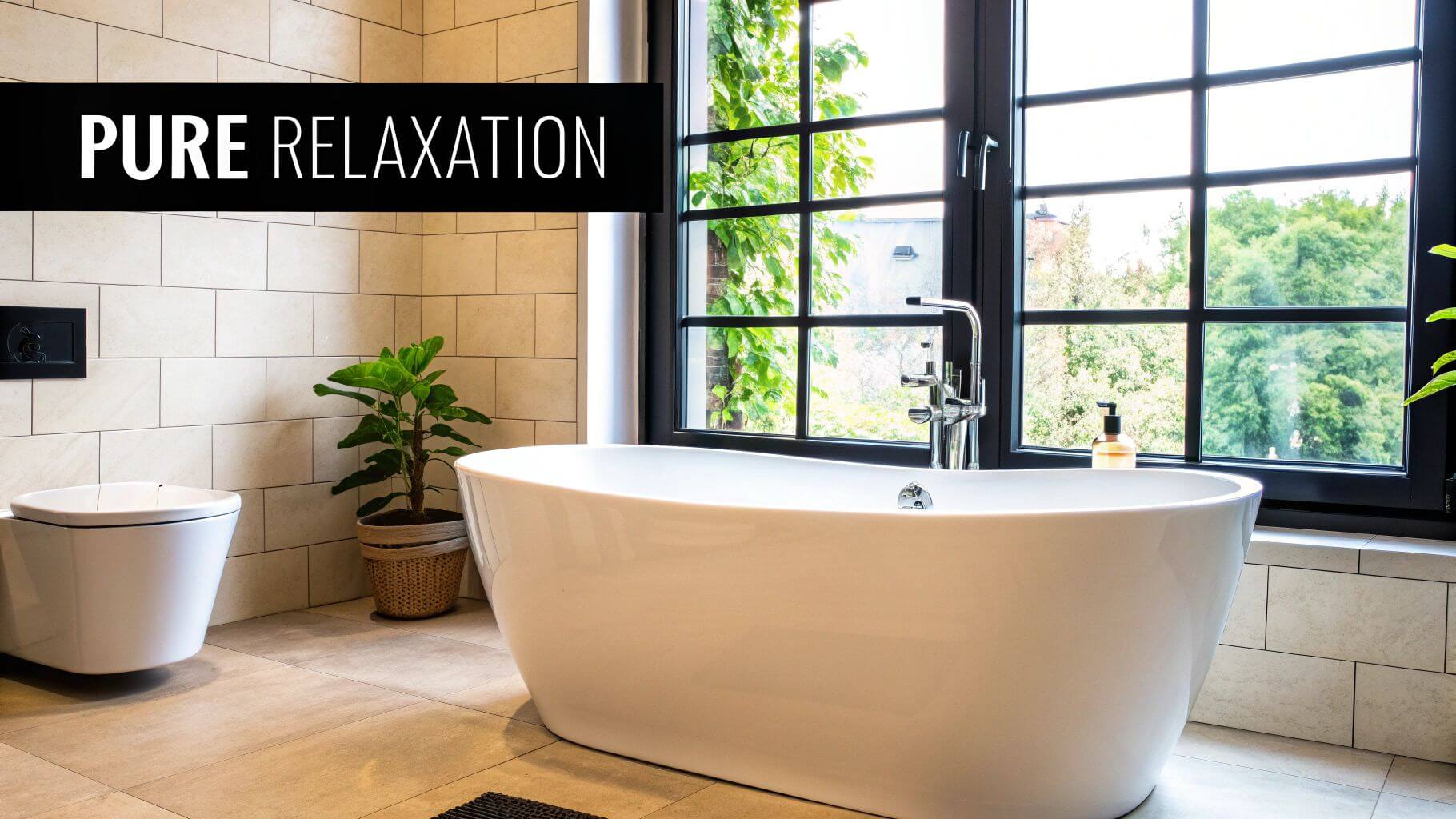
This design element is about creating a deliberate destination for tranquility within the bathroom. Iconic designs like the Victoria + Albert Barcelona tub or the minimalist forms from Boffi showcase how a tub can anchor the room’s entire aesthetic. Often positioned near a window to capture natural light or under a statement chandelier, the freestanding tub becomes an invitation to unwind, echoing the serene layouts found in exclusive wellness retreats and luxury hotel suites.
Key Implementation Strategies
Proper placement and technical considerations are vital for integrating a freestanding tub effectively.
- Strategic Positioning: Place the tub where it creates the most visual impact, but also consider plumbing logistics. An exterior wall can often simplify plumbing runs. Ensure there is adequate space around the tub for cleaning and movement.
- Select the Right Filler: Choose between a floor-mounted or wall-mounted tub filler. The spout should extend far enough to clear the tub rim by several inches, ensuring a clean and splash-free flow of water.
- Material Matters: Consider the material’s heat retention properties. Acrylic tubs are lightweight and excellent at keeping water warm for longer periods, whereas stone resin offers a substantial, high-end feel with good thermal mass.
- Plan for Capacity: These deep tubs require a significant amount of hot water. Confirm your home’s water heater has the capacity to fill the tub completely without running cold, a crucial detail for a truly relaxing soak.
Expert Insight: Before purchasing, measure all doorways, hallways, and stairwells. A common oversight is selecting a beautiful one-piece tub that cannot physically be maneuvered into the bathroom. Some models can be assembled on-site, but it’s critical to confirm this beforehand.
3. Rain Showerheads and Multi-Function Shower Systems
A key element in transforming a standard shower into a hydrotherapy retreat is the installation of an advanced shower system. The experience in many spa inspired bathrooms is defined by rain showerheads and multi-function systems that mimic the sensation of a warm, tropical downpour. These setups go beyond simple function, featuring large-diameter heads (8 to 16 inches) that create an immersive, full-body cascade, promoting deep relaxation and melting away stress.
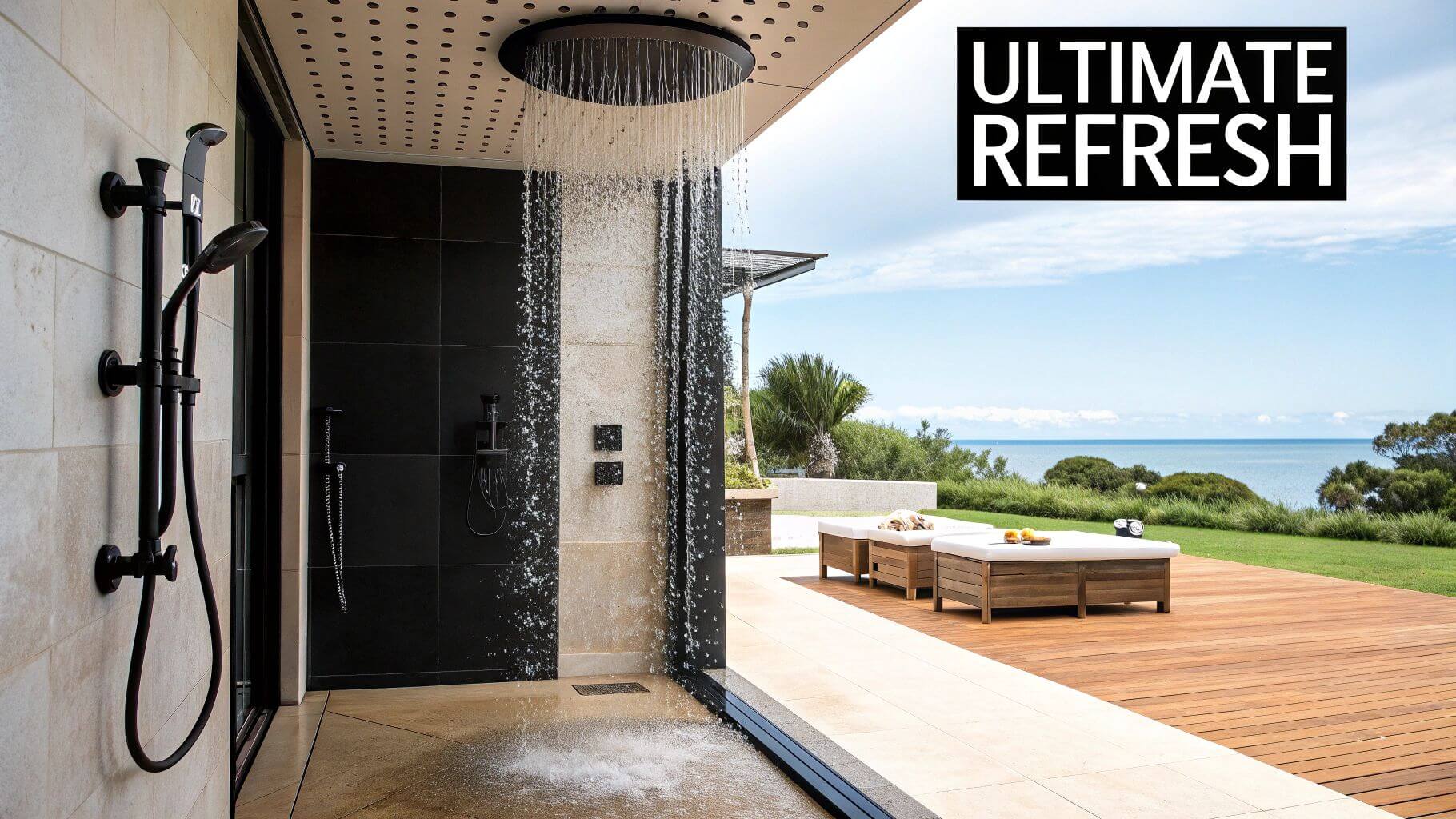
The philosophy is to create a multi-sensory, therapeutic event rather than a routine task. Leading brands like Hansgrohe, Kohler, and Grohe have perfected this with systems that often include body jets, handheld wands, and digital controls. High-end hotels such as the Four Seasons and W Hotels feature these sophisticated installations, like the Hansgrohe Raindance or Kohler DTV+ systems, to provide their guests with an unparalleled in-room spa experience.
Key Implementation Strategies
To properly integrate a luxury shower system, technical considerations are as important as aesthetics.
- Optimal Placement: Mount the rain showerhead directly overhead using a ceiling-mounted or high-arched wall-mounted arm. This ensures the water falls straight down for the authentic rainfall effect, rather than at an angle.
- Water Pressure and Volume: Ensure your home’s water pressure is at least 45 PSI for optimal performance. You may also need a larger drain to handle the increased water flow and a high-capacity or tankless water heater to support sustained use.
- Temperature Stability: Install a thermostatic valve. This essential component maintains a consistent water temperature, preventing uncomfortable or dangerous fluctuations when water is used elsewhere in the house.
- Combine and Conquer: Pair the overhead rain showerhead with a handheld spray. This adds immense practicality for rinsing the shower enclosure, washing pets, or when you prefer not to get your hair wet.
Expert Insight: For a truly immersive experience, the height of the showerhead is critical. A ceiling-mounted arm of at least 9 inches is often recommended to allow the water droplets to form properly and create the signature gentle “rain” sensation before reaching you.
4. Neutral and Earthy Color Palettes
The foundational aesthetic of most spa inspired bathrooms is a carefully curated palette of neutral and earthy tones. This design philosophy creates a calming, serene environment that promotes mental clarity and deep relaxation. The approach draws directly from nature, incorporating shades of warm white, cream, beige, taupe, soft gray, and subtle sage greens. It avoids high contrast, relying instead on subtle variations in tone to build a sophisticated and timeless backdrop.
This intentional color scheme allows natural materials, architectural details, and statement fixtures to command attention without visual competition. Pioneers of this style, such as Belgian designers Axel Vervoordt and Vincent Van Duysen, have demonstrated how these restrained palettes evoke the tranquil atmosphere found in world-class wellness sanctuaries, from the minimalist Aman Resorts to Japanese onsen-inspired luxury ryokans. The power of color psychology in interior design is key to achieving this effect, as neutral tones are inherently soothing to the human eye.
Key Implementation Strategies
To master a neutral palette, focus on creating depth and warmth through layering and texture.
- Layer Tones for Depth: Instead of a single neutral, layer at least three to five different shades from the same family. For example, pair a cream wall with beige tiles, a taupe vanity, and off-white linens to create a rich, multi-dimensional look.
- Introduce Tactile Texture: A neutral palette comes alive through texture. Integrate a variety of finishes like matte wall paint, honed stone countertops, ribbed wood paneling, and natural linen textiles to add visual interest and a tactile quality.
- Choose Warmth Over Starkness: Opt for warm whites with yellow or beige undertones over stark, clinical whites. Paint collections from Farrow & Ball or Benjamin Moore offer curated spa-inspired colors that provide a cozier, more inviting feel.
- Add a Grounding Element: Incorporate one slightly darker neutral, such as a deep charcoal stone or a rich espresso-toned wood, to act as a grounding element. This anchors the lighter tones and prevents the space from feeling undefined.
Expert Insight: Always test paint colors and material samples directly in your bathroom. Lighting conditions, both natural and artificial, dramatically alter how colors appear. View samples at different times of the day to ensure the chosen palette maintains its serene quality under all lighting scenarios.
5. Natural Light and Strategic Lighting Design
The essence of spa inspired bathrooms is not just about materials but about ambiance, and nothing shapes ambiance more profoundly than light. A sophisticated lighting strategy prioritizes maximizing natural daylight and complementing it with a layered artificial lighting scheme. This approach moves beyond a single overhead fixture to create a dynamic environment that can be bright and energizing for morning routines or soft and restorative for evening relaxation, mimicking how world-class spas use light as a therapeutic tool.
This philosophy is about creating adaptable, human-centric illumination. Imagine a bathroom with large windows or a skylight flooding the space with morning sun, enhanced by a smart control system like those from Lutron that allows for pre-set scenes. Renowned architects like Peter Zumthor, famed for his work on the Therme Vals spa, demonstrate how manipulating light can elevate a space from merely functional to profoundly experiential, using shadow and brightness to sculpt the room’s emotional impact.
Key Implementation Strategies
To achieve a truly professional lighting design, focus on creating layers and ensuring user control.
- Layered Lighting: Combine three types of lighting for full functionality. Use ambient (recessed downlights), task (vanity sconces), and accent (a small spotlight on an art piece or textured wall) lighting on separate circuits for maximum control.
- Warmth and Color: Specify LED fixtures with a warm color temperature of 2700K to 3000K. This range emulates the soft, calming glow of incandescent bulbs and candlelight, which is ideal for a relaxing atmosphere.
- Strategic Placement: Install vertical sconces on either side of the vanity mirror at eye level (approximately 66 inches from the floor). This positioning provides even, shadow-free illumination for grooming tasks, a far superior solution to a single overhead light.
- Privacy Without Sacrifice: For windows where privacy is a concern, use frosted, reeded, or textured glass. These options diffuse light beautifully, maintaining brightness while obscuring views and adding a decorative element.
Expert Insight: Integrate a high-quality dimming system across all lighting circuits. The ability to adjust the intensity of each light layer is the single most important factor in transforming your bathroom’s mood. Advanced systems can even offer circadian rhythm lighting, which automatically adjusts color temperature throughout the day to support your natural sleep-wake cycle.
6. Minimalist Design and Clutter-Free Spaces
A core principle behind the most serene spa inspired bathrooms is the disciplined embrace of minimalism. This philosophy prioritizes simplicity, functionality, and visual tranquility by methodically removing unnecessary elements. By streamlining fixtures and integrating abundant concealed storage, this approach keeps personal items out of sight, creating an environment that feels spacious, organized, and psychologically calming. The goal is to cultivate a space where the mind can rest, unburdened by visual noise.
This intentional design choice is about curating a restorative experience rather than just a functional room. Pioneers of this aesthetic, such as architect John Pawson and firms like Norm Architects, demonstrate how clean lines and unadorned surfaces transform a bathroom into a private sanctuary. The focus shifts from ornamentation to the inherent quality of the materials and the calm induced by an ordered environment, echoing the uncluttered ethos of a professional spa.
Key Implementation Strategies
To achieve a truly minimalist and clutter-free bathroom, strategic planning is essential.
- Prioritize Concealed Storage: Design ample built-in storage solutions before finalizing the layout. Think seamless, handle-less cabinetry, mirrored medicine cabinets, and custom vanity drawers to hide everyday items.
- Decant and Unify: Transfer necessary countertop items like soap and lotion into a matching set of high-quality, reusable containers. This small change creates immediate visual harmony and reduces brand-related clutter.
- Integrate Functional Elements: Opt for built-in shower niches instead of hanging caddies and choose wall-mounted faucets to keep countertops clear. These choices contribute to a clean, unbroken aesthetic and simplify cleaning.
- Edit Your Belongings: Keep only essential, daily-use items on display. Store everything else away, implementing a “one in, one out” rule for products to prevent accumulation. Proper organization is key to maximizing small spaces for a stylish home.
Expert Insight: The success of a minimalist bathroom lies in its storage architecture. Use drawer organizers and compartmentalized trays within vanities. This ensures that even concealed spaces remain orderly, making it effortless to find what you need and maintain a clutter-free environment day-to-day.
7. Natural Materials and Organic Textures
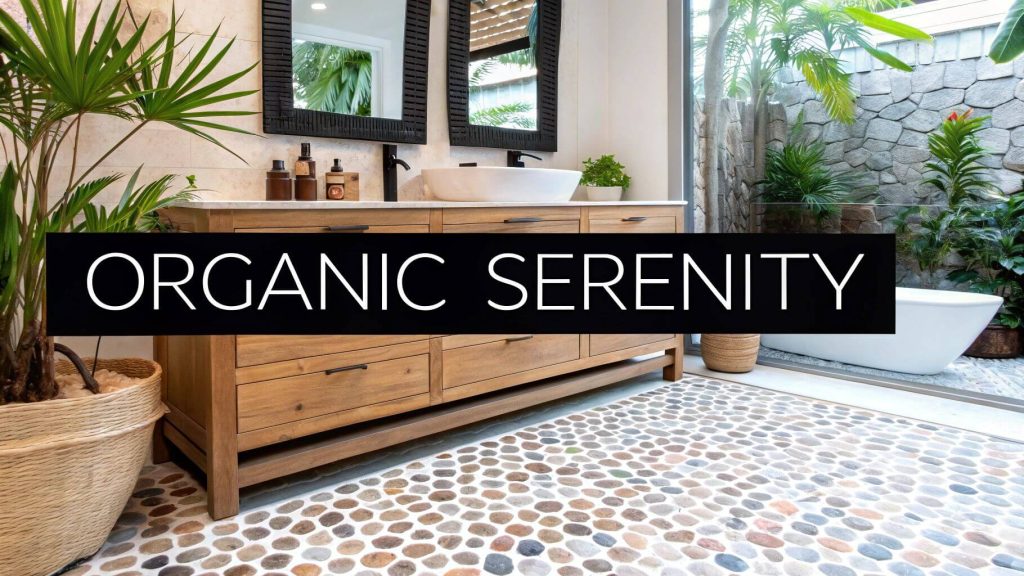
The essence of many authentic, spa inspired bathrooms is the thoughtful integration of natural materials and organic textures. This design philosophy brings the grounding, calming elements of nature indoors, fostering a profound sense of connection and tranquility. Materials like rich teak wood, sustainable bamboo, smooth river rocks, and natural fiber textiles are used to contrast the hard, cool surfaces typical of a bathroom. This approach, rooted in biophilic design, transforms a functional area into a restorative environment that engages the senses.
This method is about creating a layered, sensory-rich space. Imagine the warmth of a reclaimed wood vanity against a cool slate wall, or the unique tactile sensation of a pebble tile shower floor underfoot. Esteemed wellness destinations like COMO Shambhala and Six Senses resorts masterfully employ this concept, using local woods and stone to create bathrooms that feel both luxurious and deeply connected to their natural surroundings. This strategy shifts the bathroom’s purpose from purely utilitarian to holistically rejuvenating.
Key Implementation Strategies
To successfully weave natural elements into your bathroom, balance aesthetic appeal with long-term durability in a wet environment.
- Wood Selection: Opt for woods with natural resistance to moisture and decay, such as teak, cedar, or ipe. These are ideal for shower benches, bath caddies, and flooring.
- Strategic Plant Life: Introduce low-light, humidity-loving plants like pothos, snake plants, or ferns. They not only purify the air but also add a vital, living element to the design.
- Textural Contrast: Create a dynamic and engaging space by pairing different textures. Combine the smooth surface of a river rock vessel sink with the rugged grain of a live-edge wood countertop.
- Proper Sealing: To ensure longevity, all wood surfaces must be properly sealed. Use a high-quality, marine-grade varnish or a spa-specific sealant to protect against water damage, warping, and mold growth.
Expert Insight: Proper ventilation is paramount when introducing organic materials like wood and live plants into a bathroom. Install a high-capacity, low-noise exhaust fan to control humidity levels effectively. This simple step prevents mold and mildew, preserving both the air quality and the integrity of your natural materials for years to come.
8. Heated Floors and Temperature Control Features
A core element of the professional spa experience is the precise control of environmental temperature to promote relaxation and comfort. Recreating this in spa inspired bathrooms involves more than just a good HVAC system; it requires integrated heating elements that provide a consistent, enveloping warmth. Radiant floor heating systems, both electric and hydronic, are the cornerstone of this approach, transforming cold stone or tile into a source of gentle, ambient heat and eliminating the shock of cold surfaces underfoot. This foundational comfort is a defining characteristic of true luxury.
This focus on thermal comfort extends beyond the floor. Features like heated towel racks from Amba Products, programmable thermostats, and steam generators from innovators like Mr. Steam allow for a completely customized environment. High-end hospitality brands such as Ritz-Carlton and W Hotels integrate systems from manufacturers like Nuheat and WarmlyYours to deliver this level of luxury.
This holistic approach to temperature regulation elevates a bathroom from a functional space to a therapeutic retreat, where warmth contributes to muscle relaxation and a profound sense of well-being, a key concept explored in modern wellness architecture.
Key Implementation Strategies
To effectively integrate temperature control, a strategic and system-based approach is required.
- Comprehensive Coverage: For the most uniform warmth and to prevent cold spots, install radiant heating across the entire bathroom floor, including under floating vanities and in front of the shower, not just in high-traffic zones.
- Smart Scheduling: Utilize a programmable or smart thermostat to pre-heat the floors. Setting it to warm the bathroom 30 minutes before your typical morning routine ensures the space is at the perfect temperature when you enter.
- Maximize Efficiency: Install a high-quality insulation board directly beneath the heating system. This crucial layer prevents heat from escaping downwards into the subfloor, directing it upwards for faster warming and significant energy savings.
- Towel Warmer Placement: Install heated towel racks on a dedicated GFCI-protected circuit. Position them within easy reach of the shower or bathtub to provide the immediate comfort of a warm towel, completing the spa-like sensory experience.
Expert Insight: Proper sensor placement is critical for accurate temperature readings. The floor thermostat sensor should be positioned in an open area, equidistant between heating cables, and away from direct sunlight, heat vents, or drafty doorways to ensure the system operates efficiently and maintains a consistent temperature.
Spa-Inspired Bathroom Elements Comparison
| Item | Implementation Complexity 🔄 | Resource Requirements ⚡ | Expected Outcomes 📊 | Ideal Use Cases 💡 | Key Advantages ⭐ |
|---|---|---|---|---|---|
| Natural Stone and Marble Surfaces | High – requires skilled installation; heavy materials | High cost, proper structural support, regular sealing | Durable, unique luxury spa aesthetic; heat retention | Luxury spa-inspired bathrooms, floors, walls, vanities | Timeless elegance, increases home value, natural sustainability |
| Freestanding Soaking Tubs | Medium – plumbing complexity, floor reinforcement needed | Significant space and higher plumbing cost | Deep soaking, visual centerpiece, flexible placement | Spacious bathrooms (100+ sq ft), relaxation focal point | Dramatic focal point, variety of styles, easy cleaning around tub |
| Rain Showerheads and Multi-Function Systems | Medium to High – complex plumbing, possible water heater upgrade | Moderate to high cost, water and power needs | Therapeutic, wide coverage shower experience | Spa-level showers, luxury bathrooms with high ceilings | Full-body coverage, multiple spray options, modern focal point |
| Neutral and Earthy Color Palettes | Low – paint and finish selection | Minimal, cost-effective | Calming, timeless backdrop enhancing natural light | All bathroom sizes, base aesthetic for spa environments | Psychological calm, versatile, enhances space perception |
| Natural Light and Strategic Lighting Design | Medium to High – lighting layers, wiring, possibly skylights | Moderate to high cost, professional design and installation | Adjustable ambiance, improved mood and functionality | Bathrooms requiring natural light and layered lighting | Energy efficient, mood enhancing, highlights architecture |
| Minimalist Design and Clutter-Free Spaces | Medium – requires careful storage planning | Moderate, possible custom cabinetry | Organized, spacious feeling, mental clarity | Small to medium bathrooms emphasizing simplicity | Easier cleaning, timeless look, promotes tranquility |
| Natural Materials and Organic Textures | Medium – maintenance and ventilation needed | Moderate cost, ongoing plant care and sealing | Biophilic connection, sensory richness, warm environment | Bathrooms integrating nature, wellness-focused spaces | Stress reduction, antimicrobial properties, unique character |
| Heated Floors and Temperature Control Features | High – requires pre-floor installation, electrical/plumbing work | High upfront cost, specialized systems | Consistent warmth, energy efficiency, therapeutic comfort | Cold climates, luxury renovations, whole bathroom heating | Eliminates cold shock, silent, zoned heating, increases home value |
Crafting Your Personal Wellness Retreat
Creating a bathroom that transcends mere functionality and becomes a personal wellness retreat is an art form rooted in intentional design. The journey from a standard washroom to an immersive, restorative sanctuary is not about a single, transformative element, but rather the masterful layering of sensory details and sophisticated materials. As we’ve explored, the foundation of exceptional spa inspired bathrooms is built upon a curated selection of core principles, each contributing to an atmosphere of serene luxury.
The tactile richness of natural stone and marble surfaces sets a grounding, organic tone, while the sculptural elegance of a freestanding soaking tub provides a stunning visual and experiential centerpiece. This is complemented by the dynamic, therapeutic power of advanced rain showerheads and multi-function systems, which transform daily routines into moments of indulgence. These tangible features are harmonized by an aesthetic framework of neutral and earthy color palettes, creating a canvas of calm that soothes the mind.
Synthesizing Ambiance and Comfort
Beyond the core fixtures and materials, the true mastery of spa inspired bathrooms lies in cultivating the perfect ambiance. This is where strategic design elevates the space from beautiful to truly restorative.
- Illuminating Serenity: The interplay between abundant natural light and a multi-layered lighting design is crucial. It allows you to tailor the mood, from bright and energizing in the morning to soft and tranquil in the evening, ensuring the environment always supports your needs.
- The Power of Simplicity: A commitment to minimalist design and clutter-free organization is non-negotiable. This discipline creates a sense of visual peace, allowing the mind to unwind without distraction and reinforcing the spa-like feeling of order and calm.
- Textural Harmony: Integrating organic textures, such as bamboo, teak, and linen, introduces warmth and softens the hardscape of stone and porcelain. This textural dialogue engages the senses and deepens the connection to nature.
- Invisible Luxury: Finally, the unseen elements of comfort, like radiant heated floors, provide a foundational layer of luxury. This thoughtful integration of technology ensures the space feels as good as it looks, completing the immersive sensory experience.
Embracing these concepts allows you to move beyond imitation and toward genuine innovation in personal wellness design. The ultimate goal is to create a holistic environment where every element works in concert to promote relaxation, rejuvenation, and well-being. This is not just a bathroom renovation; it is an investment in your daily quality of life, a bespoke sanctuary engineered for personal renewal.
Ready to transform your vision into a flawlessly executed reality? The most exceptional spa inspired bathrooms are brought to life by top-tier professionals. Find vetted and celebrated interior designers, architects, and builders on Haute Design who specialize in creating bespoke luxury living spaces.
Explore the Network of Elite Design Professionals on Haute Design