


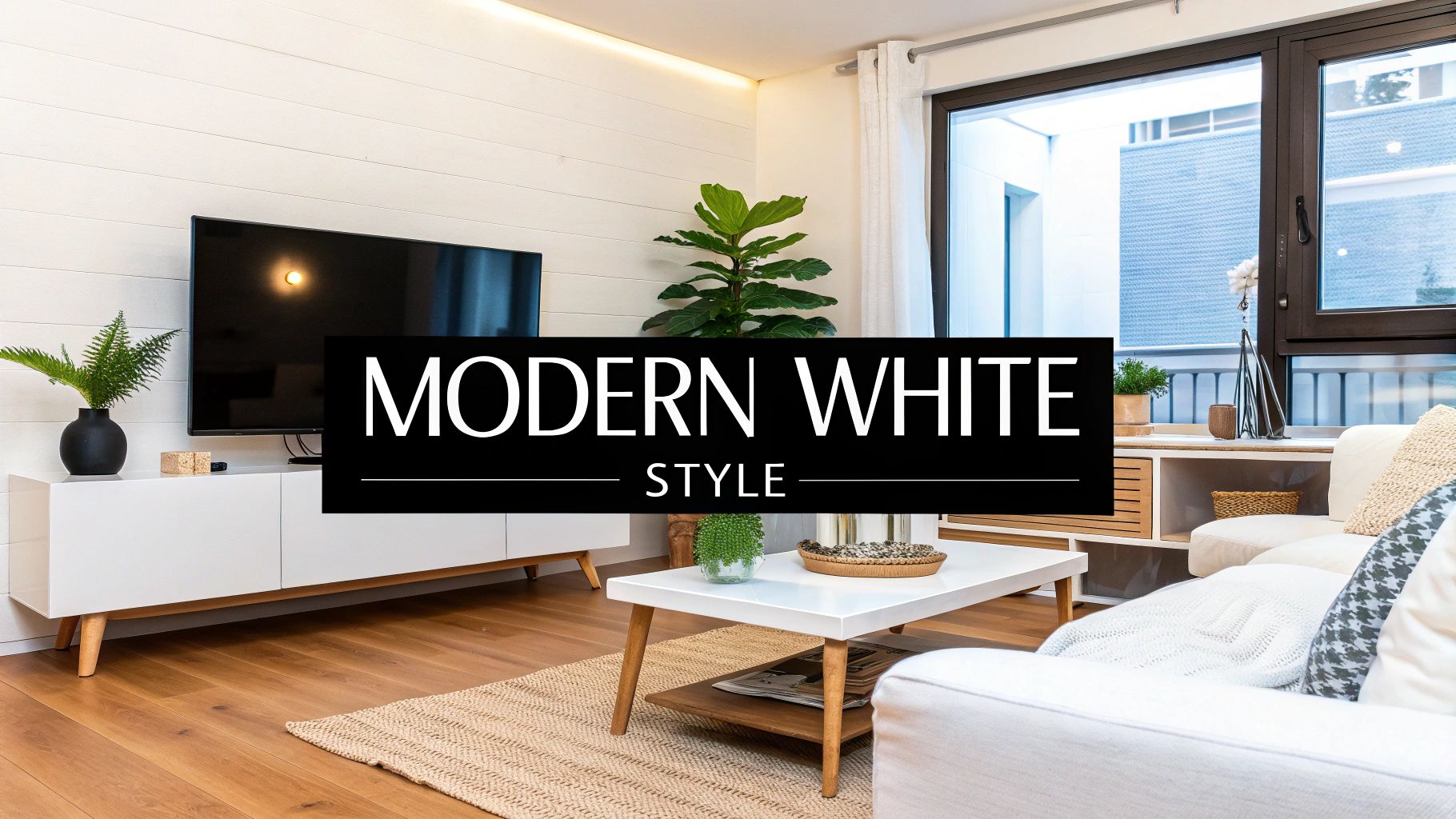
The modern white living room is more than a design choice; it’s a canvas for personal expression, tranquility, and timeless elegance. Far from being a singular, stark aesthetic, an all-white palette offers a versatile foundation for a multitude of styles, from the cozy warmth of Scandinavian minimalism to the bold drama of high-contrast contemporary design. An expertly designed modern white living room feels intentional, layered, and anything but sterile, serving as a testament to sophisticated restraint and meticulous curation. It is a foundational approach that enhances architectural details, amplifies natural light, and provides a serene backdrop for art and life.
This guide moves beyond generic advice, offering a curated roundup of eight distinct and actionable approaches to creating a sophisticated modern white living room. We will dissect each style, providing expert insights, practical implementation tips, and real-world examples to help you craft a space that is both luminously beautiful and uniquely yours.
Whether you’re an architect planning a new build or a homeowner refining an existing space, you will discover how to leverage the power of white to create an environment that is anything but plain. For those seeking to connect with professionals who master these styles, curated networks of top-tier interior designers are an invaluable resource for bringing these visions to life.
1. Scandinavian Minimalism with Natural Textures
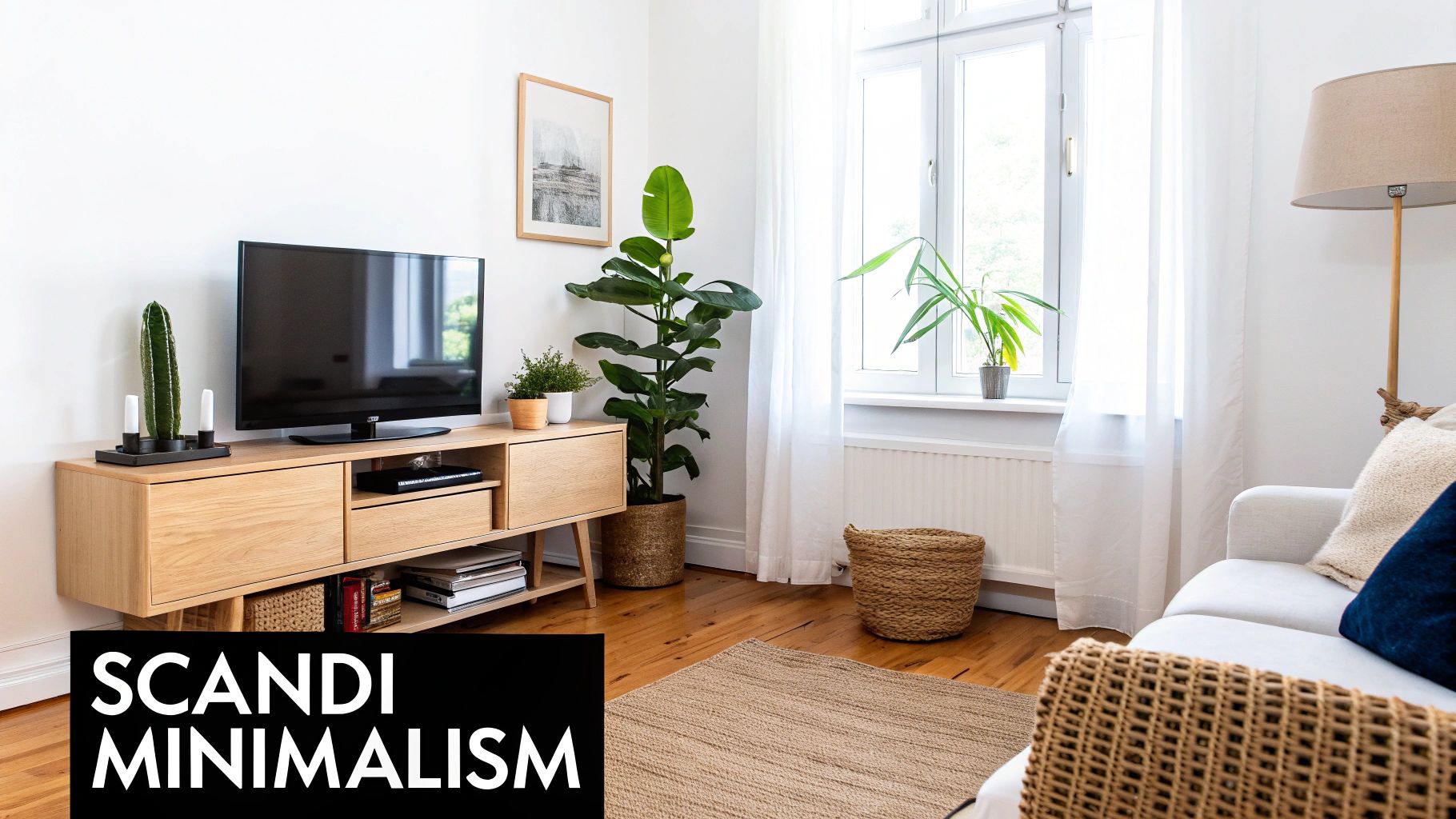
The Scandinavian approach to a modern white living room champions simplicity, functionality, and a deep connection to the natural world. This style moves beyond a sterile, all-white aesthetic by layering warm, organic elements over a clean, neutral foundation. It’s a design philosophy that prioritizes comfort and tranquility, creating a space that feels both modern and deeply inviting.
The core principle involves using a base of white walls and minimalist furniture, then methodically introducing natural materials. Think of light woods like oak, ash, or maple, alongside tactile fabrics such as linen, wool, and sheepskin. This blend prevents the white from feeling cold or impersonal, instead fostering a sense of serene warmth. Renowned design houses like HAY and Muuto consistently showcase this balance, pairing crisp white interiors with furniture that celebrates the inherent beauty of natural wood grain and organic forms.
Implementation Strategy
To successfully execute this look, focus on a curated interplay of color and material. A monochromatic white palette serves as your canvas, but it requires subtle complexity to avoid flatness.
- Layer White Tones: Do not stick to a single shade of white. Instead, combine at least three to four different tones like bright white for trim, a softer ivory for walls, and a creamy off-white for textiles. This creates visual depth and sophistication.
- Emphasize Texture: The key to warmth in a white room is texture. Introduce a variety of surfaces: a rough-woven linen sofa, a chunky knit wool throw, smooth ceramic accessories, and a plush sheepskin rug. The contrast is what makes the space feel rich and considered.
- Incorporate Natural Wood: Select key furniture pieces, like a coffee table or sideboard, with a visible light wood grain. This direct connection to nature is central to the Scandinavian ethos.
- Warm Lighting: Use light bulbs with a warm temperature (2700K-3000K). This golden-hued light will make the white surfaces glow and prevent the room from feeling clinical or stark.
This design style is an excellent choice for those seeking a peaceful, uncluttered environment that still feels personal and comfortable. For more information on this design philosophy, you can explore this essential interior design style guide.
2. Monochromatic White-on-White Luxury
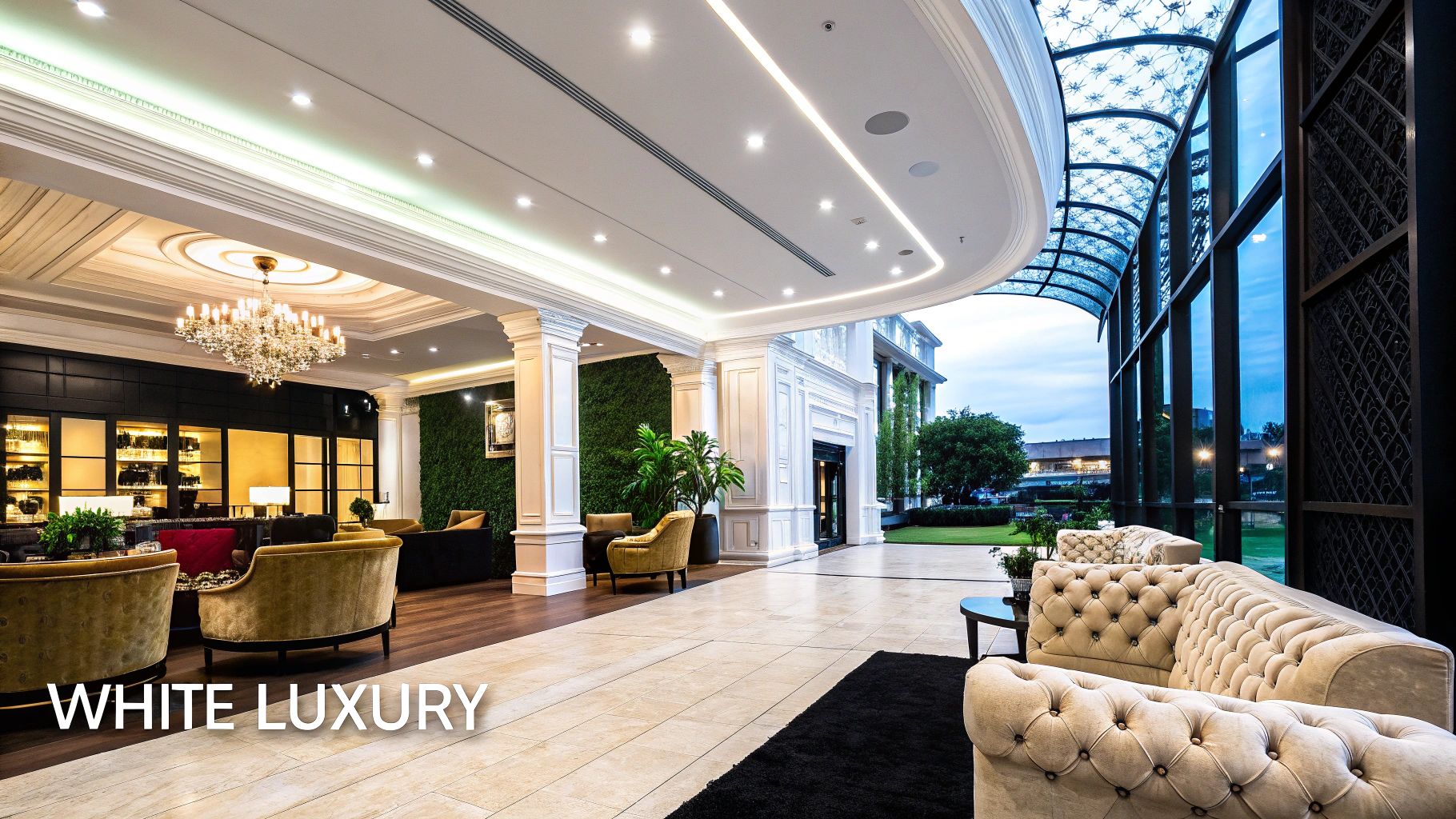
The monochromatic approach to a modern white living room elevates the concept to a level of pure, unadulterated sophistication. This design strategy moves beyond simple white walls by layering various shades, sheens, and textures of white to create a rich, tactile, and high-end environment. It is a masterclass in subtlety, where visual interest is generated not by color, but by the nuanced interplay between materials.
The core principle is to build a complex, layered world using only the white spectrum. This creates a serene, gallery-like atmosphere reminiscent of a luxury hotel suite or a high-fashion boutique. Designers like Kelly Hoppen and Victoria Hagan have perfected this style, using materials like velvet, silk, lacquer, and marble in shades from bone to ivory to brilliant white. This meticulous curation of materials prevents the space from feeling stark, instead enveloping occupants in a calm, luxurious cocoon.
Implementation Strategy
Executing a successful white-on-white design requires a disciplined eye and a focus on high-quality materials. The goal is to create depth and warmth without introducing contrasting colors.
- Vary Sheens and Textures: This is the most critical element. Combine matte-finish walls with a high-gloss media console, a soft chenille sofa, a slub-silk pillow, and a polished marble coffee table. The way light reflects differently off each surface is what creates visual dimension.
- Layer Warm and Cool Whites: Avoid using a single, sterile white. Instead, mix warm whites with creamy undertones (ivory, alabaster) with cooler, crisper whites. This tonal variation adds depth and prevents the room from feeling flat or clinical.
- Incorporate Sculptural Forms: In a monochromatic scheme, shape is paramount. Add at least one piece with a strong sculptural quality, such as an architectural floor lamp, a uniquely shaped armchair, or a significant piece of abstract art.
- Invest in Performance Fabrics: To maintain the pristine look, choose high-performance fabrics for sofas and chairs that are treated for stain resistance. This makes a luxurious white living room practical for everyday life.
This design is ideal for those who desire a tranquil, elegant, and exceptionally chic living space. For more inspiration on creating a high-end feel, explore these luxury home design ideas.
3. Modern Farmhouse with White Shiplap
The modern farmhouse style offers a compelling blend of rustic charm and contemporary sophistication, making it a popular choice for a modern white living room. This approach uses a crisp white palette as its foundation to create a bright, airy atmosphere while layering in the warmth of natural and reclaimed materials. Its signature element, white shiplap walls, provides subtle texture and architectural interest, preventing the space from feeling flat and elevating it beyond a simple coat of paint.
Pioneered by designers like Joanna Gaines of Magnolia and refined by studios such as Studio McGee and Amber Interiors, this style masterfully balances clean lines with cozy, lived-in comfort. The design philosophy centers on creating a welcoming environment that feels both curated and relaxed. By combining vintage-inspired fixtures, reclaimed wood accents, and comfortable textiles against a backdrop of clean white, the modern farmhouse look achieves a timeless appeal that is both family-friendly and effortlessly elegant.
The following infographic summarizes the key characteristics of the Modern Farmhouse style for quick reference.
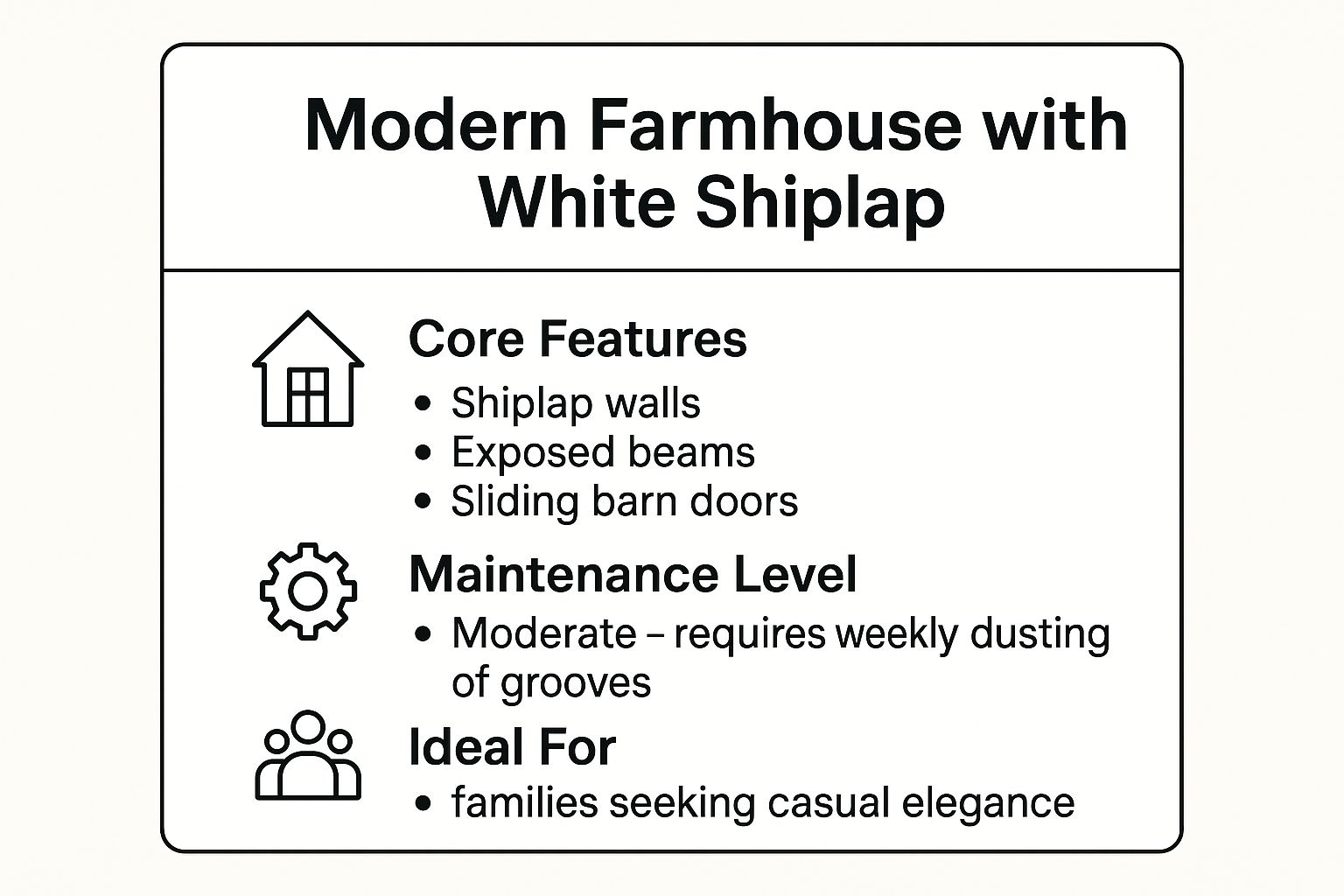
This summary highlights how the style achieves its signature look through specific architectural features while remaining a practical choice for those seeking a sophisticated yet casual living space.
Implementation Strategy
To successfully bring this style to life, focus on achieving a harmonious balance between rustic character and modern simplicity. The white shiplap provides the perfect canvas for this interplay.
- Create a Cohesive White Base: Paint the shiplap walls, trim, and ceiling in the same shade of soft white. This creates a seamless, expansive feel and allows the textural details to become the primary focus.
- Introduce Modern Contrast: Incorporate black metal accents through lighting fixtures, window frames, or furniture legs. This sharp contrast adds a contemporary edge and prevents the rustic elements from overwhelming the design.
- Layer Natural Textures: Soften the clean lines with a variety of textiles. Use oversized linen or cotton slipcovered sofas, chunky knit throws, and jute or wool area rugs to add warmth and comfort.
- Incorporate Authentic Materials: Use reclaimed wood for key elements like a fireplace mantel, floating shelves, or a coffee table. These pieces add history and character that cannot be replicated with new materials.
This approach is ideal for those who want a living room that feels bright, open, and inviting, with a strong connection to both classic American architecture and modern design principles. It creates a durable, comfortable, and stylish space perfect for everyday life.
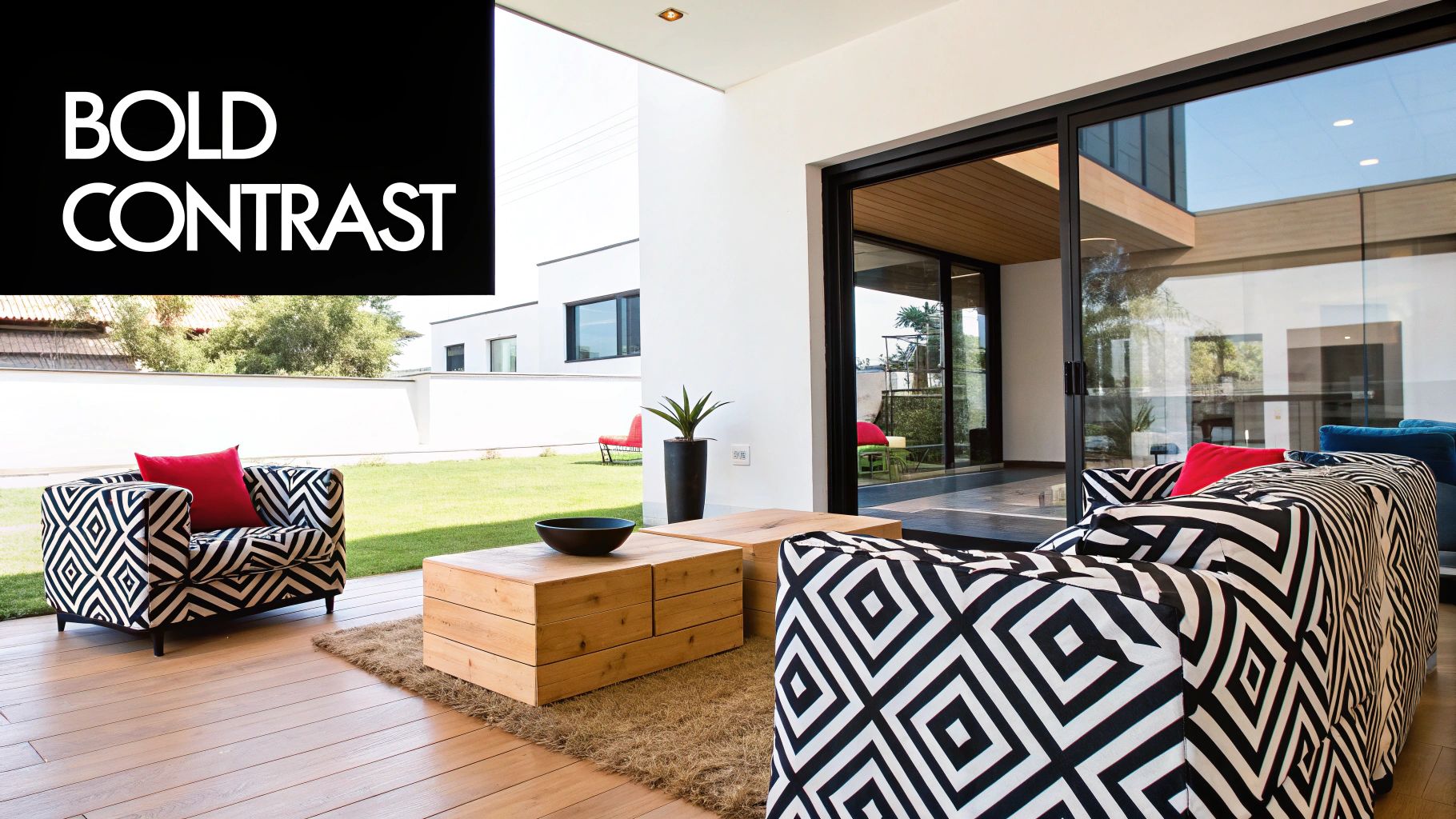
4. Contemporary White with Bold Black Accents
A contemporary take on the timeless black-and-white palette, this approach uses a modern white living room as a canvas for dramatic, high-contrast black accents. It’s a design strategy that commands attention, creating a space that feels both sophisticated and visually dynamic. The key is to maintain white as the dominant color, which preserves an open and airy atmosphere while using black to anchor the room and define its architectural features.
This striking balance creates a sense of intentionality and modern luxury. The contrast is not just about color but about creating graphic lines and focal points that guide the eye. Designers like Joseph Dirand and Ryan Korban are masters of this style, often using black architectural elements like window frames or furniture to create a bold statement against pristine white walls. The result is a curated environment that is clean, powerful, and unequivocally chic, proving that a monochromatic scheme can be rich with personality.
Implementation Strategy
Achieving this high-impact look requires a disciplined and strategic approach to color placement. The goal is to create contrast that feels deliberate and balanced, not chaotic or overwhelming.
- Follow the 80/20 Rule: To maintain the room’s bright and spacious feel, dedicate approximately 80% of the visual space to white and off-white tones. Use the remaining 20% for black accents to ensure they make an impact without dominating the room.
- Ground the Space with Black: Use black for grounding elements that provide structure. Think black metal legs on a white sofa or coffee table, slim black window frames, or a dark-toned area rug. This adds weight and definition.
- Choose a Statement Piece: Instead of scattering many small black items, consider one or two significant black statement pieces, such as a sculptural armchair, a large piece of abstract art, or a sleek media console. This creates a stronger, more confident focal point.
- Vary Finishes and Textures: Introduce different finishes to add depth. A matte black finish on a light fixture offers a soft, contemporary feel, while a glossy black surface on a side table can add a touch of glamour. This interplay prevents the scheme from feeling flat.
This design is ideal for those who appreciate bold, graphic aesthetics and want to infuse their modern white living room with a strong sense of architectural character and sophistication.
5. Coastal White with Blue Accents
The coastal approach to a modern white living room translates the serene and airy feel of seaside living into a sophisticated interior. This style uses a crisp white base to mimic sandy shores and bright, open skies, then layers in various shades of blue to evoke the calming presence of the ocean. It’s a design that achieves a perfect balance between casual, relaxed comfort and a refined, elegant aesthetic, creating a space that feels like a permanent retreat.
The essence of this design is to capture the spirit of the coast without resorting to clichés. Instead of overt nautical themes, the focus is on a carefully curated color palette and natural textures. It involves pairing white walls and slipcovered furniture with accents ranging from deep navy to soft sky blue. Designers like Mark D. Sikes and brands such as Serena & Lily are masters of this look, creating interiors that feel both timeless and refreshingly modern by using classic blue and white combinations in new and inspiring ways.
Implementation Strategy
To execute this style effectively, concentrate on building depth through color variation and texture while maintaining a light, uncluttered feel. The white provides the canvas, while the blues add personality and tranquility.
- Layer Multiple Blue Tones: A successful coastal design uses a spectrum of blues. Combine deep navy, vibrant cobalt, and pale sky blue through pillows, throws, artwork, and ceramics. This creates visual interest and sophistication.
- Embrace Natural Fibers: Introduce textures that recall the beach. Jute or sisal rugs, rattan furniture, linen drapery, and woven baskets add warmth and prevent the white and blue palette from feeling flat.
- Choose Warm Whites: Select a white paint with a slightly warm undertone for the walls. This will keep the room from feeling stark and will beautifully reflect natural light, enhancing the airy, coastal vibe.
- Incorporate Subtle Patterns: Use classic patterns like stripes, but vary their scale to keep the look modern. A wide stripe on an armchair can be balanced with a pinstripe on a cushion, for instance.
- Add Metallic Accents: Introduce touches of polished nickel or brass through lighting fixtures, cabinet hardware, or mirror frames. These warm metals add a layer of understated elegance that elevates the casual coastal elements.
This style is ideal for anyone looking to create a calm, bright, and effortlessly chic living space. By understanding the principles behind this color palette, you can craft a truly restorative environment. To delve deeper into this, explore more on mastering interior design color psychology.
6. Mid-Century Modern White Base
This approach uses a modern white living room as a clean, gallery-like canvas to spotlight the iconic forms and warm materials of Mid-Century Modern design. Instead of being the focal point itself, the white backdrop serves to amplify the sculptural qualities of classic furniture, allowing the organic curves, rich wood tones, and bold shapes of the era to command attention. It’s a sophisticated strategy that marries the minimalism of a white palette with the timeless character of mid-century aesthetics.
The core concept is to create a neutral environment where legendary designs, like an Eames lounge chair or a Noguchi coffee table, are treated as functional art. The white walls prevent visual clutter and allow the inherent beauty of walnut, teak, and rosewood to shine. This style is frequently seen in meticulously restored Eichler homes in California and is a hallmark of brands like Herman Miller and West Elm, which showcase how mid-century pieces can feel perfectly contemporary within a bright, airy setting.
Implementation Strategy
Successfully creating this look depends on a deliberate balance between the minimalist background and the charismatic mid-century elements. The white space must feel intentional, not empty.
- Select a Warm White: To complement the warm wood tones typical of mid-century furniture, choose a white paint with subtle creamy or yellow undertones. A stark, cool white can create a jarring contrast and make the room feel sterile.
- Invest in a Statement Piece: Anchor the room with at least one authentic or high-quality reproduction of an iconic mid-century design. This single piece will set the tone and provide a focal point for the entire space.
- Layer with Period-Appropriate Texture: Introduce textures that evoke the era, such as a shag rug, woven wall hangings, or boucle upholstery. These elements add tactile depth and prevent the room from feeling flat.
- Use Color as an Accent: Keep retro colors like avocado green, mustard yellow, or burnt orange to a minimum, using them for about 10-15% of the palette. Apply these colors through smaller items like throw pillows, ceramics, or artwork to add personality without overwhelming the space.
- Add Organic Softness: Incorporate houseplants in period-appropriate ceramic planters to introduce a natural, sculptural element that softens the clean lines of the furniture and architecture.
This design is ideal for those who admire the architectural integrity and timeless appeal of mid-century design but prefer a brighter, more updated aesthetic than traditional, wood-paneled interiors. You can see modern interpretations of this style in publications like Dwell Magazine.
7. Industrial White Loft
An industrial white loft design masterfully blends raw, urban aesthetics with the clean sophistication of a white palette. This style embraces the architectural honesty of warehouse and factory conversions, such as exposed brick, ductwork, and concrete floors, but uses a predominantly white color scheme to soften the edges and create a bright, airy atmosphere. It’s a modern white living room that celebrates its structural bones rather than concealing them.
The core concept is to use white as a unifying element that prevents the industrial features from feeling overwhelming or cold. Instead of a dark, moody warehouse look, the white brightens the space, enhances the perception of volume, and provides a gallery-like backdrop for carefully chosen furniture and art. Design-forward brands like Restoration Hardware and the Ace Hotel chain have popularized this approach, showcasing how a white foundation can elevate utilitarian materials into a chic, comfortable living environment.
Implementation Strategy
Achieving this look requires a careful balance between the raw and the refined. The key is to let the architecture speak while using white to curate and modernize the overall feel.
- Soften Raw Materials: Paint exposed brick walls with a white lime wash instead of opaque paint. This technique brightens the room while preserving the unique, rugged texture of the brick.
- Layer with Soft Textiles: Introduce high-contrast textures to add warmth and comfort. A plush white area rug on a polished concrete floor, a soft bouclé sofa, and chunky knit throws can counteract the hardness of industrial materials.
- Juxtapose Old and New: Combine authentic vintage industrial finds, like a factory cart repurposed as a coffee table, with sleek, modern white furniture. This contrast creates a dynamic and historically rich interior.
- Define Functional Zones: In open-concept lofts, use large-scale rugs and strategic furniture groupings to create distinct zones for living, dining, and relaxing. This adds structure and usability to a large, open space.
- Incorporate Warm Lighting: Use Edison bulbs in metallic fixtures or track lighting with warm-toned bulbs (around 2700K) to cast a golden glow. This is essential for preventing the white and industrial elements from feeling sterile.
This design is ideal for homeowners with architecturally unique spaces like lofts or conversions, offering a way to honor the building’s history while creating a bright and contemporary home. For more examples, you can explore the industrial collections from Restoration Hardware.
8. Japandi: Japanese-Scandinavian Fusion
The Japandi approach to a modern white living room is a masterful blend of two seemingly distant design philosophies: Japanese rustic minimalism and Scandinavian functional comfort. This hybrid style uses a foundation of serene white to create a space that is clean and uncluttered yet simultaneously warm and soulful. It emphasizes craftsmanship, natural materials, and the beauty found in imperfection, creating a tranquil environment that feels both curated and deeply personal.
This design philosophy moves beyond mere aesthetics to embrace concepts like the Japanese principle of wabi-sabi (finding beauty in imperfection) and the Scandinavian idea of hygge (coziness and contentment). The result is a highly intentional space where every object has a purpose and there is ample “negative space” or ma. Design powerhouses like Norm Architects and Fredericia Furniture showcase this fusion by pairing clean lines with organic textures and minimalist forms with handcrafted details, all set against a calming white backdrop.
Implementation Strategy
Achieving the Japandi look requires a thoughtful balance between minimalism and warmth, function and form. The white palette serves as a canvas for a carefully considered collection of textures, materials, and shapes.
- Embrace Imperfection: Incorporate the wabi-sabi philosophy by choosing handmade ceramics, artisanal textiles, or furniture with natural imperfections. These elements add character and prevent the white space from feeling sterile.
- Low-Profile Furniture: Select key pieces, like a sofa or coffee table, that sit low to the ground. This is a hallmark of Japanese interior design that promotes a sense of groundedness and connection to the earth.
- Focus on Natural Materials: Combine light Scandinavian woods like oak with darker Japanese woods such as walnut or stained cypress. Weave in natural fiber textiles, including linen, cotton, and wool, in neutral, earthy tones.
- Intentional Decor: Avoid clutter at all costs. Display only a few meaningful objects, leaving plenty of breathing room. A single, beautifully arranged ikebana floral piece or a statement plant can serve as a powerful focal point.
- Matte Finishes: Opt for matte or low-sheen finishes on walls, floors, and furniture. Glossy surfaces are rare in this style, which favors a more natural, subdued aesthetic that absorbs light gently.
This design style is ideal for those who value craftsmanship, tranquility, and a clutter-free environment that still feels warm and inviting. To see this philosophy in practice, explore the work of a leading firm in this space, Norm Architects.
8 Modern White Living Room Styles Comparison
| Style | 🔄 Implementation Complexity | ⚡ Resource Requirements | 📊 Expected Outcomes | 💡 Ideal Use Cases | ⭐ Key Advantages |
|---|---|---|---|---|---|
| Scandinavian Minimalism with Natural Textures | Moderate – requires layering textures and natural materials | Moderate – natural wood, linen, wool, plants | Calm, bright, timeless, spacious feel | Small spaces, northern climates, tranquility seekers | Stress-free environment, versatile, mindful living |
| Monochromatic White-on-White Luxury | High – involves high-end materials and detailed finishes | High to Very High – luxury fabrics, marble, crystal | Ultra-sophisticated, gallery-like, elegant, highly reflective | High-end homes, showcases, photography | Elegant, spacious, perfect for art display |
| Modern Farmhouse with White Shiplap | Moderate to High – needs shiplap installation, layering | Moderate – wood paneling, vintage-inspired decor | Casual yet sophisticated, family-friendly, architectural interest | Families, traditional architecture, casual elegance | Balanced comfort and style, popular trend |
| Contemporary White with Bold Black Accents | Moderate – careful balance of colors and materials | Moderate – quality black and white furnishings | High-contrast, dramatic, structured, modern sophistication | Modern open spaces, bold design lovers | Timeless contrast, natural focal points |
| Coastal White with Blue Accents | Low to Moderate – simpler materials, focus on accessories | Moderate – natural fibers, blue accents | Relaxed, vacation-like, bright, casual elegance | Beach/lake homes, relaxed lifestyles | Uplifting, widely appealing, casual comfort |
| Mid-Century Modern White Base | Moderate – sourcing vintage or replica furniture | Moderate to High – quality vintage pieces | Timeless, gallery-like, retro with warmth | Design enthusiasts, apartments to suburban homes | Timeless, collectibles appreciate, clean backdrop |
| Industrial White Loft | Moderate – exposed architectural features plus white finishes | Moderate – concrete, metal, industrial lighting | Airy industrial look, urban edgy, spacious | Lofts, converted warehouses, urban creative spaces | Showcases architecture, low maintenance, masculine edge |
| Japandi: Japanese-Scandinavian Fusion | Moderate – emphasis on quality, minimalism, natural materials | Moderate to High – handcrafted pieces, natural fibers | Calming, meditative, timeless, sustainable | Minimalists, small spaces, sustainable living advocates | Combines best of two styles, mindful and versatile |
Crafting Your Perfect White Canvas
The journey through the world of the modern white living room reveals a powerful truth: white is not a void of color, but a canvas brimming with potential. We’ve explored a diverse spectrum of styles, from the serene, organic textures of Scandinavian Minimalism and Japandi to the striking, high-contrast drama of Contemporary design with black accents. Each approach demonstrates that a white palette is the ultimate foundation for sophisticated, intentional design.
The true artistry lies not in simply choosing white paint, but in the meticulous layering of elements that bring the space to life. Success is found in the details. Consider the subtle warmth of an off-white in a Modern Farmhouse setting versus the crisp, gallery-like purity of a Monochromatic luxury space. The difference is profound, shaping the entire atmosphere of the room.
Key Takeaways for Your Design Journey
To translate these concepts into your own space, remember these core principles:
- Texture is Paramount: In a monochromatic or minimalist white living room, texture prevents sterility. Integrate a variety of materials like bouclé, linen, rough-hewn wood, polished metal, and high-pile rugs to create visual depth and a tactile, inviting environment.
- Undertones Matter: The “right” white is entirely dependent on your home’s natural light and your desired mood. Cool whites with blue or gray undertones feel crisp and contemporary, while warm whites with yellow or beige undertones create a cozier, more inviting ambiance. Always test samples in your space at different times of day.
- Strategic Accents Define the Style: A white living room is a backdrop waiting for its story. The accents you choose will define its character. Weathered wood and shiplap steer it towards Modern Farmhouse, while sleek black fixtures and sharp lines create a bold, contemporary feel. Natural woods and woven elements are hallmarks of both Scandinavian and Japandi aesthetics.
Bringing Your Vision to Life
As you move forward, the most crucial step is to define the feeling you want your modern white living room to evoke. Is it a calm, meditative retreat? A dramatic, gallery-like space for entertaining? Or a comfortable, light-filled family hub? Once you have this emotional blueprint, you can select the style and elements that best align with your vision. Begin by curating a mood board with your favorite textures, accent colors, and furniture profiles from the styles we’ve discussed.
Embracing a white palette is a commitment to clarity, light, and sophistication. It’s a design choice that amplifies architectural details, showcases curated art and furniture, and creates a timeless backdrop that can evolve with you. By mastering the interplay of texture, tone, and strategic accents, you transform a simple color into a powerful statement of personal style. Your perfect white canvas awaits.
Ready to transform your vision for the perfect modern white living room into a professionally executed reality? The Haute Design network connects you with a curated selection of the nation’s top interior designers who specialize in creating luxurious, sophisticated spaces. Find the ideal expert to bring your design concept to life with unparalleled precision and artistry at Haute Design.