


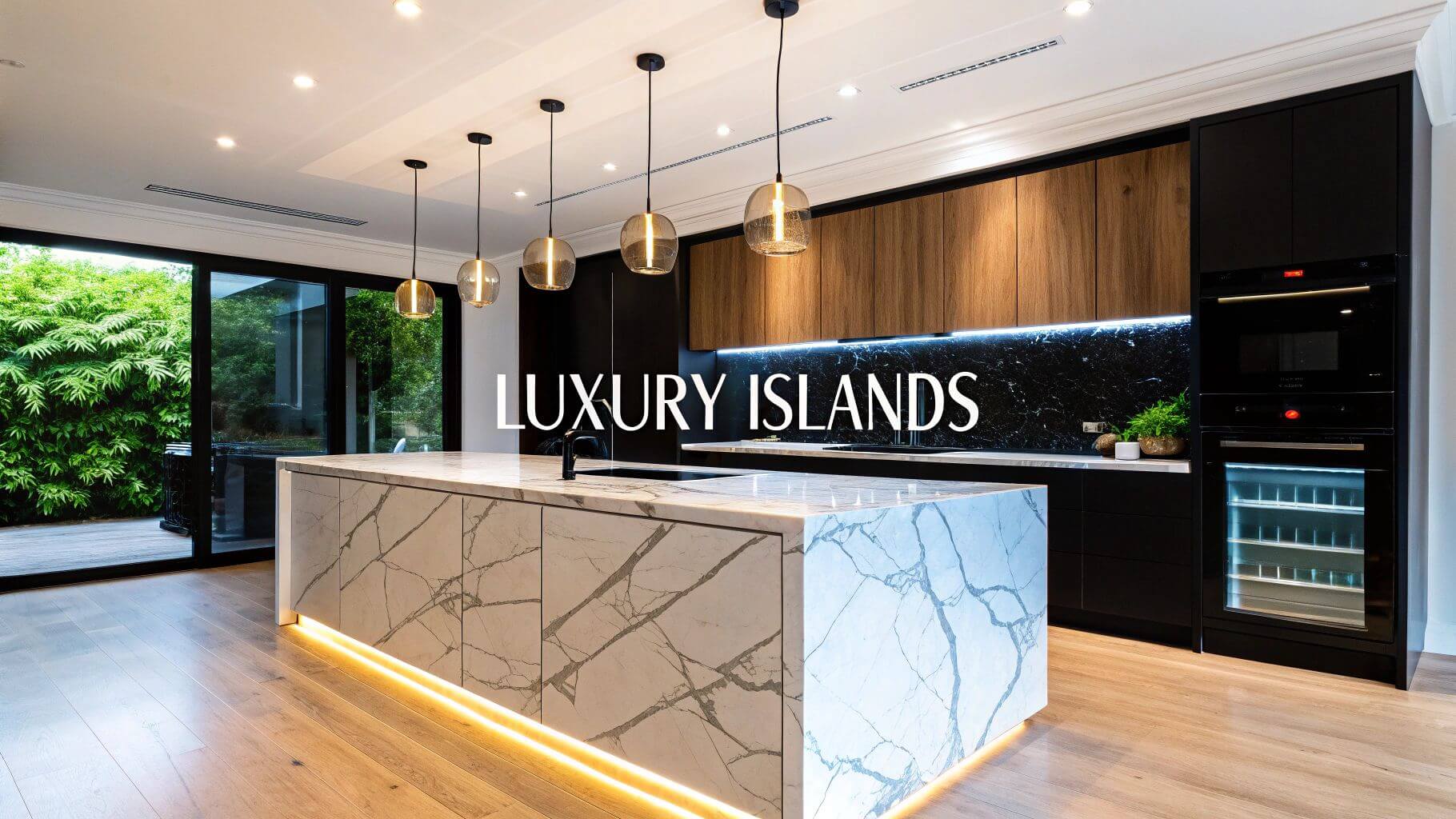
The kitchen has long been the heart of the home, but the island has now become its soul. Once a simple prep space, today’s luxury kitchen islands have evolved into multifunctional, sculptural centerpieces that anchor a room’s design and define its character. They are statements of style, hubs of innovation, and masterpieces of craftsmanship.
In luxury interior design, an island is not merely functional; it is foundational. It sets the tone for the entire home, blending bespoke materials with cutting-edge technology and architectural ambition. This evolution reflects a desire for kitchens that are not just for cooking, but for living, entertaining, and creating lasting memories. For designers and affluent homeowners, selecting the right island design is a critical decision that balances aesthetic vision with practical demands.
This listicle explores six transformative examples of luxury kitchen islands, showcasing the strategic thinking and detailed execution that elevate them from simple furniture to iconic design features. We will delve into the tactical insights behind each style, providing actionable takeaways for those looking to commission a truly exceptional kitchen. We’ll also see how platforms like Haute Design connect homeowners with the visionary designers capable of bringing these ambitious projects to life.
1. Waterfall Edge Marble Island
The waterfall edge island is a hallmark of contemporary luxury kitchen design, defined by its continuous, seamless flow of natural stone. Instead of ending abruptly, the countertop material extends vertically down the sides of the island, creating a “waterfall” effect. This design choice elevates a functional kitchen element into a powerful, monolithic art piece.
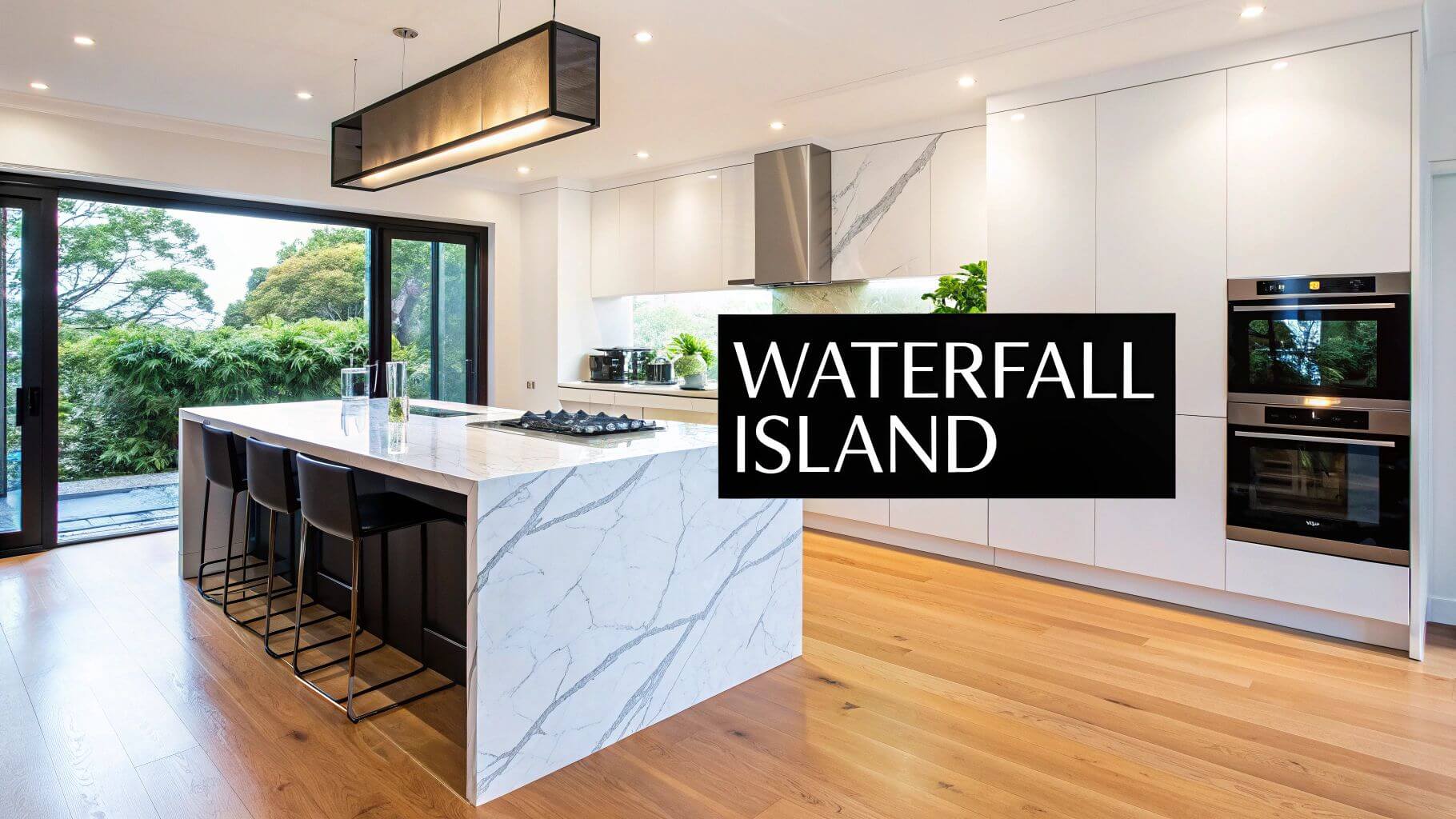
This technique transforms the island into the undisputed centerpiece of the kitchen. The continuous surface emphasizes the beauty and dramatic veining of premium materials like Calacatta Gold or Taj Mahal quartzite. As seen in the opulent kitchens of Manhattan’s One57 building and celebrity chef Gordon Ramsay’s London home, the waterfall edge makes a bold statement of sophistication and high-end taste.
Strategic Breakdown
The core strategy behind a waterfall island is visual continuity. By wrapping the sides in the same material as the top, it creates a unified, sculptural form that feels both grand and grounded. This design minimizes visual clutter from exposed cabinetry ends, presenting a clean, uninterrupted plane of luxurious stone.
Key Insight: The waterfall edge is not just a decorative finish; it’s an architectural statement. It signals an investment in premium materials and expert craftsmanship, as the mitered edges must be flawlessly executed to achieve a seamless look.
This design is often paired with minimalist, handle-free cabinetry to allow the natural stone to remain the primary focal point. The continuous lines of the waterfall can also make a space feel larger and more cohesive, elegantly connecting the floor to the countertop. You can often see this material choice extend up the wall as a backsplash, a technique explored in many luxury kitchen backsplash designs.
Actionable Takeaways for Implementation
For designers and homeowners looking to specify a waterfall island, precision is paramount. Consider these tactical steps:
- Prioritize Book-Matching: For stones with prominent veining, request book-matched slabs. This is where two adjoining surfaces are cut and polished to mirror each other, creating a stunning, continuous pattern that flows from the countertop down the side.
- Engineer for Support: The weight of the vertical stone panels requires robust structural support within the island’s framework. Ensure your cabinet maker or contractor accounts for this during the design phase to prevent stress on the material.
- Plan Utilities Early: All electrical outlets, switches, and plumbing rough-ins must be planned and installed before the stone fabrication. Cutting into a finished waterfall panel is complex and risks damaging the stone.
- Material Selection Matters: While classic marbles are stunning, consider high-end quartzites like Taj Mahal for enhanced durability. For a lower-maintenance alternative that still provides a dramatic look, engineered quartz offers a wide range of colors and patterns with superior stain resistance.
2. Multi-Level Functional Island
The multi-level functional island is an ergonomic masterpiece of kitchen design, creating distinct zones for different tasks by varying the counter height. This innovative approach moves beyond a single flat surface, typically incorporating a lower level for prep work, a standard height for cooking and general use, and a raised bar for casual dining or socializing. This intelligent division of space maximizes functionality within a single, cohesive unit.https://www.youtube.com/embed/ZfJiW-tSr8w
This design transforms the island into a dynamic, multi-purpose hub tailored to the user’s workflow. It is prominently featured in high-end projects by designers like Johnny Grey and Mick De Giulio, and in the bespoke kitchens of brands such as Poggenpohl and SieMatic. Martha Stewart’s iconic Bedford kitchen, with its three distinct levels, famously showcased how this design can serve as the ultimate command center for both cooking and entertaining.
Strategic Breakdown
The core strategy is ergonomic zoning. By assigning specific heights to different tasks, the island becomes more comfortable and efficient. A lower surface (around 30 inches) is ideal for chopping or kneading dough, reducing shoulder strain. The standard 36-inch height accommodates cooktops and sinks, while a raised 42-inch bar creates a natural, separate area for guests to gather without interfering with the cooking process.
Key Insight: A multi-level island is more than a design choice; it’s a commitment to a kitchen that adapts to human movement and social dynamics. It strategically separates work from leisure, allowing for simultaneous activities to occur in harmony.
This design inherently fosters social interaction by creating a clear boundary between the “chef’s zone” and the “guest zone.” The verticality adds architectural interest and dimension to the kitchen, breaking up the monotony of a single-plane layout. Effective interior design space planning is crucial to ensure each level is proportionate and accessible.
The infographic below provides a quick reference for the standard ergonomic heights used to define these functional zones.
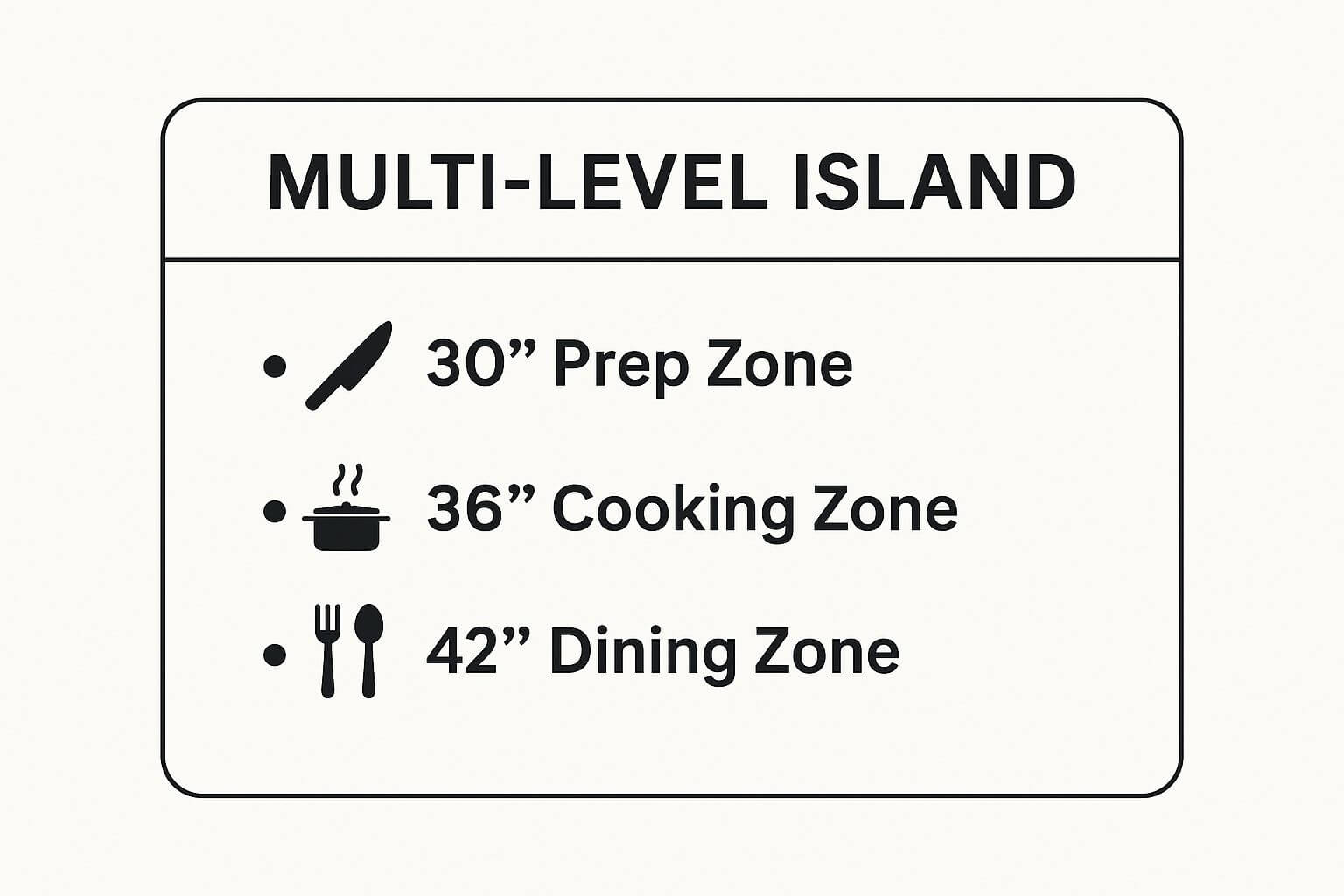
These established height variations are the foundation for a well-designed, functional multi-level island that caters to specific culinary and social activities.
Actionable Takeaways for Implementation
For designers integrating a multi-level island, the focus should be on seamless transitions and purposeful zoning.
- Unify with Materials: Use a consistent countertop material across all levels to create a cohesive and unified look. This prevents the island from appearing disjointed despite the changes in height.
- Integrate Task-Specific Lighting: Install dedicated lighting for each zone. Pendant lights over the dining bar, under-cabinet lighting for the prep area, and focused spotlights for the cooking surface will enhance both functionality and ambiance.
- Plan Workflow and Clearance: Carefully map out the kitchen work triangle when positioning appliances within the island. Ensure there is at least 36 to 42 inches of clearance around the island to allow for comfortable movement and appliance access.
- Incorporate Power Strategically: Each functional zone requires dedicated electrical outlets. Plan for pop-up outlets in the prep area, outlets on the side of the cooking zone, and potentially USB ports at the dining bar to maximize convenience.
3. Smart Technology Integration Island
The smart technology integration island transforms a traditional workspace into an intelligent, connected hub for the modern home. This forward-thinking design embeds advanced technology directly into the island’s structure, featuring elements like pop-up outlets, wireless charging pads, integrated touchscreens for controlling home systems, and seamless connectivity with smart appliances. It represents the pinnacle of convenience and functionality in luxury kitchen islands.
This evolution of the kitchen island caters to a lifestyle where technology is central. High-end examples can be found in the technologically advanced homes of Silicon Valley and in the personal estates of tech pioneers like Bill Gates, where the kitchen acts as a central command center. These islands are not just for meal prep; they are for managing schedules, entertaining guests with built-in audio, and controlling the entire home’s ecosystem.
Strategic Breakdown
The core strategy is to create a centralized, intelligent hub that merges culinary functions with whole-home management. By embedding technology directly into the island, the design removes the clutter of wires and standalone devices, resulting in a sleek, minimalist aesthetic that conceals immense power. This approach elevates the island from a piece of furniture to an interactive, indispensable component of the home’s infrastructure.
Key Insight: A truly smart island is not just about adding gadgets; it’s about future-proofing the kitchen. It requires a foundational plan for wiring, connectivity, and modularity that allows for upgrades as technology evolves.
This design is often implemented with clean, modern materials that complement the high-tech features, such as durable quartz or sleek stainless steel. The integration allows for a highly personalized user experience, where lighting, temperature, and entertainment can be adjusted with a simple touch or voice command directly from the kitchen’s core. As technology continues to advance, you can explore more on the subject of how AI is reshaping luxury interior architecture.
Actionable Takeaways for Implementation
For designers and homeowners planning a smart island, meticulous early-stage planning is non-negotiable. Consider these tactical steps:
- Engineer the Infrastructure: Plan for robust electrical and low-voltage wiring from the very beginning. This includes dedicated circuits for high-power appliances, multiple ethernet ports for reliable connectivity, and conduit runs for future upgrades.
- Integrate Seamless Charging: Specify built-in, under-counter wireless charging units (like Qi chargers) to maintain a clean, unbroken countertop surface. Position them in areas where family members are likely to congregate.
- Select a Unified Control System: Choose a proven home automation system like Crestron or Control4 to serve as the “brain” for the island’s features. This ensures all components, from lighting to speakers to appliances, communicate and work together seamlessly through a single interface.
- Plan for Hardware Concealment: Design cabinetry with dedicated, ventilated compartments for routers, controllers, and other hardware. This keeps technology hidden and protected while ensuring it operates at an optimal temperature.
4. Curved and Sculptural Island
Moving beyond traditional linear forms, the curved and sculptural island introduces organic shapes and artistic expression into the heart of the kitchen. This design approach abandons rigid, rectangular geometry in favor of flowing, fluid lines that transform a functional workspace into a captivating centerpiece. These islands are defined by their sweeping countertops, rounded cabinetry, and a sense of movement that softens the kitchen’s aesthetic.
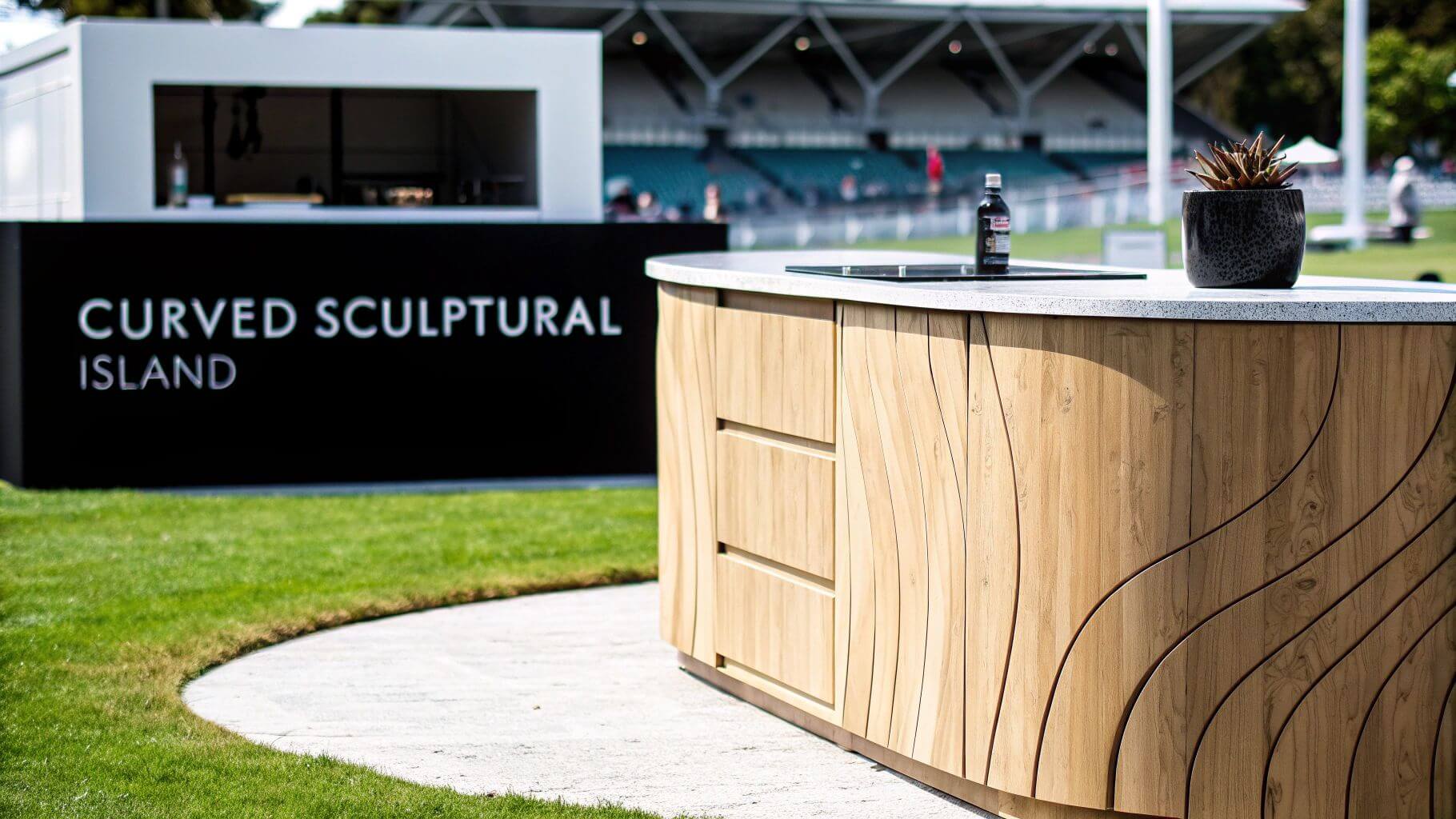
This style represents the pinnacle of bespoke kitchen design, treating the island not just as furniture, but as integrated architecture. The influence of pioneering architects like Zaha Hadid, known for her parametric and fluid designs, is evident in high-end projects that feature these ambitious forms. Similarly, interior designers like Kelly Behun Studio have popularized sculptural elements that blend art and function, creating kitchens that are as visually engaging as they are practical.
Strategic Breakdown
The core strategy behind a sculptural island is architectural integration. This design choice intentionally blurs the line between cabinetry and art, creating a bespoke feature that feels completely unique to the space. It challenges the conventional, block-like form of a kitchen island, instead promoting better traffic flow and a more dynamic, social environment.
Key Insight: A curved island is a statement of design confidence and material mastery. Its successful execution requires a deep collaboration between designer, fabricator, and installer, as the precision needed for seamless curves and complex joinery is exceptionally high.
These islands often become the primary organizing element of an open-plan living area, guiding movement and defining zones without the use of walls. The softened edges create a more welcoming and less formal atmosphere, encouraging guests to gather around. The design itself becomes a conversation starter, showcasing an investment in artistry and highly specialized craftsmanship.
Actionable Takeaways for Implementation
Implementing a curved or sculptural island requires meticulous planning and expert execution. For those aiming to incorporate this level of artistry, consider the following tactics:
- Engage Expert Fabricators: Work exclusively with fabricators who specialize in curved construction. They will have the experience and machinery required to shape materials like stone, solid surface, or wood veneers without visible seams.
- Invest in 3D Modeling: Utilize detailed 3D renderings and mock-ups during the design phase. This allows you to visualize the island’s scale, proportions, and interaction with the surrounding space, preventing costly errors during fabrication.
- Select Malleable Materials: Choose materials that lend themselves to shaping. Solid surface materials like Corian, premium engineered quartz, and certain types of wood or metal can be thermoformed or expertly joined to create flawless curves.
- Integrate Utilities Thoughtfully: Plan plumbing and electrical layouts with extreme precision from the outset. Housing appliances, sinks, and outlets within a curved form is complex and requires innovative solutions from your build team.
5. Butler’s Pantry Integration Island
The Butler’s Pantry Integration Island reimagines a classic service space for the modern luxury kitchen. This design consolidates the traditional functions of a separate butler’s pantry, such as staging, serving, and storage for formal dinnerware, directly into the central island. It creates a powerful, self-contained hub for sophisticated entertaining.
This approach transforms the kitchen island from a casual prep area into an elegant command center for hosting. It incorporates extensive, often concealed, storage and specialized appliances tailored for service. This design is a hallmark of high-end custom homes, seen in the work of Ferguson & Shamamian Architects in Greenwich estates and frequently featured in publications like Traditional Home, where functionality for formal events is paramount.
Strategic Breakdown
The core strategy is centralized functionality. By integrating pantry features into one of the most prominent luxury kitchen islands, it bridges the gap between everyday kitchen use and formal entertaining. This design eliminates the need for a separate, often underutilized room, making the kitchen more efficient and better suited for modern lifestyles where open-concept living is preferred.
Key Insight: This island is not just for cooking; it’s a sophisticated service station. It is designed around the specific rituals of hosting, with every drawer and appliance placed to streamline the process from preparation to presentation and cleanup.
This design often features custom cabinetry with specialized inserts for fine china, silver, and crystal, protecting valuable pieces while keeping them accessible. Integrating secondary appliances like a warming drawer, wine refrigerator, or dishwasher drawers directly into the island further enhances its role as a complete service hub, a concept often executed by high-end cabinet makers like Christopher Peacock.
Actionable Takeaways for Implementation
For designers and homeowners aiming to create a service-oriented island, meticulous planning is crucial. Consider these tactical steps:
- Map Entertaining Workflow: Plan storage based on your specific hosting needs. Create dedicated zones for glassware, plating, and beverage service to ensure a logical flow when preparing for guests.
- Integrate Smart Appliances: Specify appliances that support entertaining. A built-in ice maker, under-counter beverage center, or a warming drawer can dramatically improve service efficiency.
- Specify Premium Mechanisms: Install soft-close mechanisms on all drawers and cabinets to protect delicate china and glassware. High-quality hardware is a non-negotiable detail for this application.
- Plan for High-Capacity Utilities: Consider separate electrical circuits to support multiple integrated appliances. Ensure plumbing is planned for a secondary sink or dishwasher, which is often a key feature in these luxury kitchen islands.
6. Live Edge Wood and Metal Combination
The live edge island brings the raw, untamed beauty of nature directly into the heart of the home, pairing it with the refined precision of modern industrial materials. This design celebrates the natural, un-sanded edge of a wood slab, preserving its organic shape, knots, and grain variations. When combined with a sleek metal base or accents, it forges a powerful dialogue between rustic charm and contemporary sophistication.
This style elevates the kitchen island from a mere utility surface to a functional sculpture. The uniqueness of each wood slab ensures that no two islands are ever identical, offering true bespoke luxury. This approach is prevalent in high-end mountain retreats in Aspen and Jackson Hole, as well as in urban lofts featured in design publications like Dwell, where the island serves as a warm, organic counterpoint to concrete and steel environments.
Strategic Breakdown
The core strategy is the juxtaposition of raw and refined elements. The live edge wood slab provides organic texture, warmth, and a connection to nature, while the metal framework (often steel, brass, or copper) introduces clean lines, structural integrity, and an industrial or minimalist edge. This contrast creates a dynamic visual tension that is both grounding and sophisticated.
Key Insight: A live edge island is a statement of authenticity and craftsmanship. It moves beyond manufactured perfection, embracing natural “flaws” as unique design features. This signals an appreciation for singular, story-rich materials over mass-produced uniformity.
This design is often the focal point that dictates the rest of the kitchen’s material palette. It pairs exceptionally well with other natural materials like stone backsplashes and leather seating, creating a cohesive yet texturally rich environment. The philosophy popularized by furniture designer George Nakashima, celebrating the “soul of a tree,” is perfectly encapsulated in these luxury kitchen islands.
Actionable Takeaways for Implementation
For designers and homeowners aiming to integrate a live edge island, careful material selection and construction are crucial. Consider these key steps:
- Select a Stabilized Slab: Choose a wood slab that has been properly kiln-dried and stabilized to minimize future warping, cracking, or movement. Sourcing from reputable suppliers with sustainability certifications is essential for quality and environmental responsibility.
- Plan for Wood Movement: Wood naturally expands and contracts with changes in humidity. The metal base must be engineered to accommodate this seasonal movement, often using slotted holes or specialized fasteners to prevent stress on the slab.
- Choose a Durable Finish: The wood surface must be protected with a high-quality, food-safe finish. Options like hardwax oils or conversion varnishes offer excellent durability while enhancing the natural grain. Plan for periodic reapplication to maintain the finish.
- Integrate Functionality Thoughtfully: Incorporating sinks, cooktops, or electrical outlets requires precise planning. Work with a skilled craftsman to seamlessly integrate these elements without compromising the slab’s structural integrity or aesthetic flow.
Luxury Kitchen Islands Comparison Table
| Design Type | Implementation Complexity 🔄 | Resource Requirements ⚡ | Expected Outcomes 📊 | Ideal Use Cases 💡 | Key Advantages ⭐ |
|---|---|---|---|---|---|
| Waterfall Edge Marble Island | High – requires expert installation and reinforced cabinetry; complex fabrication | Very high – expensive natural stone and fabrication | Dramatic luxury aesthetic; increases property value significantly | Luxury kitchens; high-end residential projects | Timeless design; seamless, durable stone surfaces; luxury feel |
| Multi-Level Functional Island | High – complex custom cabinetry and coordinated utilities | High – custom cabinetry, appliances, electrical/plumbing | Maximizes workflow and functionality; accommodates multiple users | Family kitchens; entertaining spaces | Efficient multi-zone functionality; architectural depth |
| Smart Technology Integration Island | High – complex tech installation, wiring, and system integration | High – advanced appliances, smart devices, wiring | Future-proofed kitchen; streamlined cooking and entertainment | Tech-savvy homeowners; smart home enthusiasts | Cutting-edge automation; enhanced convenience and connectivity |
| Curved and Sculptural Island | Very high – custom curved fabrication and specialized craftsmen | Very high – custom materials and extended fabrication time | Unique sculptural focal point; improved flow and safety | Artistic homes; modern architectural designs | One-of-a-kind artistic statement; safer edges; smooth flow |
| Butler’s Pantry Integration Island | High – complex storage systems and appliance integration | High – extensive cabinetry, specialized appliances | Maximizes storage; formal entertaining hub; organized workflow | Formal entertaining; large families | Abundant concealed storage; specialized serving features |
| Live Edge Wood and Metal Combination | Medium to High – requires sourcing quality wood and custom metalwork | Medium to High – quality wood slabs and metal fabrication | Warm, natural industrial aesthetic; unique statement piece | Contemporary rustic/industrial homes | Unique natural wood grain; mixed-material visual interest |
Designing Your Legacy: The Strategic Choice of a Kitchen Island
Our exploration of these six exemplary luxury kitchen islands has illuminated a powerful truth. A kitchen island is not merely a functional countertop or a storage unit; it is the strategic heart of the home, a convergence of art, engineering, and personal expression. It is an asset that defines the flow of daily life, dictates the atmosphere for social gatherings, and stands as a testament to uncompromising quality.
The designs we’ve analyzed, from the sleek monolithic form of a Waterfall Edge Marble Island to the integrated genius of a Butler’s Pantry Integration, underscore a critical principle: intentionality is everything. The most impactful and enduring luxury kitchen islands are those that transcend trends. They are born from a meticulous analysis of the homeowner’s lifestyle, the architectural integrity of the space, and a forward-thinking approach to culinary needs.
Synthesizing the Core Strategies
Reflecting on the examples, several key strategic takeaways emerge for homeowners and design professionals aiming to create an iconic kitchen centerpiece:
- Materiality as Narrative: The choice of material is not just aesthetic, it tells a story. The raw, organic character of a live-edge wood slab communicates warmth and a connection to nature, while the seamless flow of book-matched marble conveys pure, uninterrupted opulence. Your material selection is your island’s primary voice.
- Functionality as a Bespoke Suit: One-size-fits-all does not exist in the luxury space. The multi-level island’s genius lies in its custom-zoned approach to tasks, separating prep from dining. Similarly, a Smart Technology Integration is only successful if the technology serves the specific, daily habits of its user. Function must be tailored with precision.
- Form as a Sculptural Statement: As seen in the Curved and Sculptural Island, the silhouette of the island itself can be a powerful artistic statement. Breaking free from traditional rectilinear forms can introduce a dynamic, fluid energy into the kitchen, transforming the island from a utility piece into a captivating sculpture.
Your Path to an Enduring Design
Mastering these concepts is the difference between installing a kitchen island and commissioning a piece of legacy furniture. It requires moving beyond simple selection and engaging in a process of deep design discovery. The goal is to create a feature that not only serves you today but also retains its value, functionality, and aesthetic power for decades to come.
This elevated approach demands a partnership built on expertise and shared vision. A truly exceptional kitchen island is the product of a collaborative symphony between an ambitious client and a design professional who can navigate the complexities of materials, technology, and spatial dynamics. These designers don’t just follow blueprints; they interpret visions and translate lifestyle aspirations into tangible, breathtaking form. Ultimately, the strategic choice of your kitchen island is an investment in your home’s character and your family’s daily experience. It is where memories will be made, stories shared, and a legacy of sophisticated living is built.
Ready to transform your kitchen vision into a stunning reality? The journey to a bespoke luxury kitchen island begins with finding the right design professional. Connect with the nation’s leading interior designers and architects on the Haute Design network to find an expert who can craft a space that is uniquely yours.