


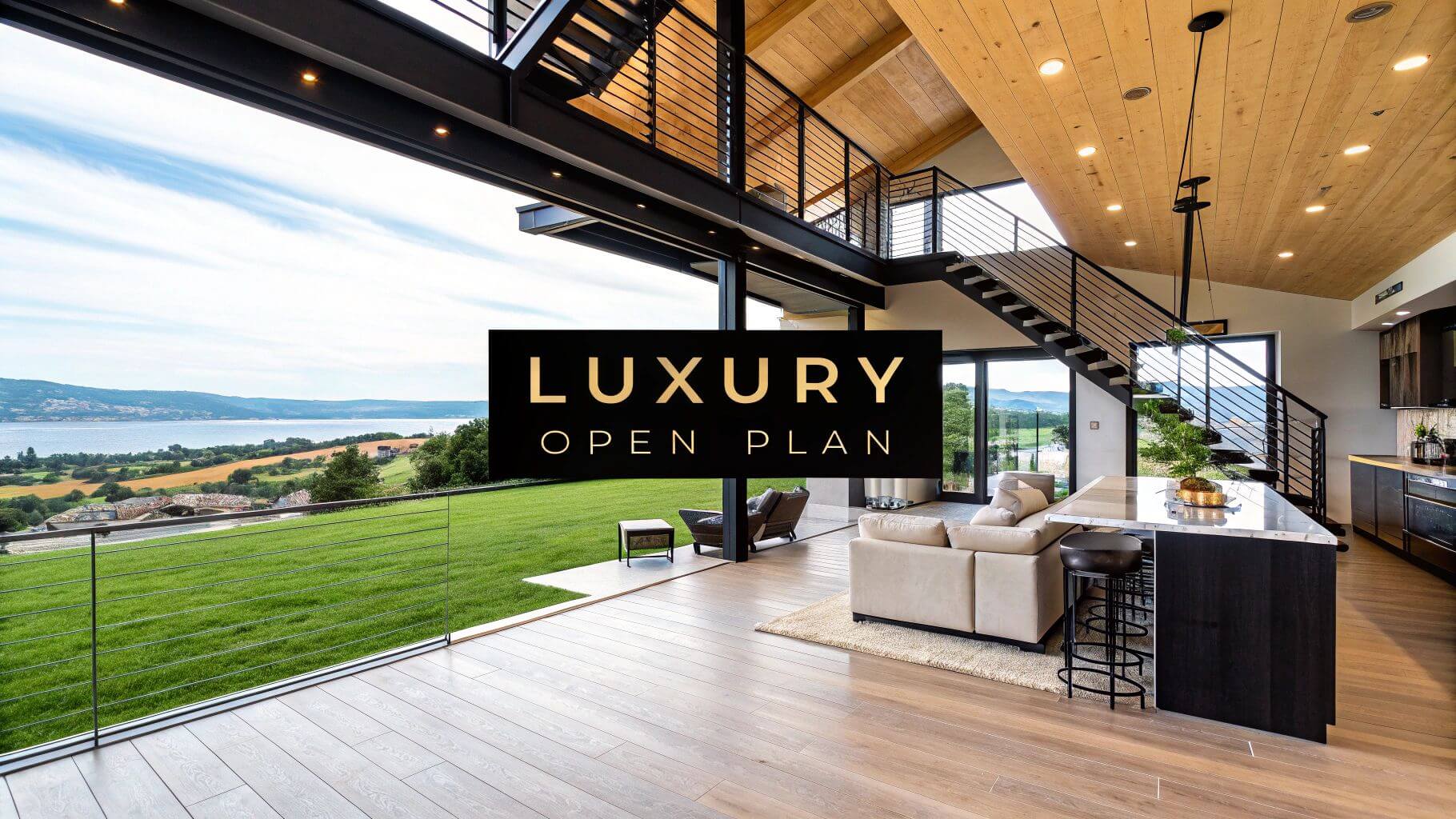
The allure of an open floor plan lies in its promise of light, space, and seamless flow. But transforming a vast, undefined area into a series of functional, inviting, and luxurious zones requires a masterful touch. The challenge is not simply filling the space, but defining it with intention and elegance. A truly successful open-concept design achieves a delicate balance, fostering a sense of expansive unity while providing the distinct comfort and purpose of separate rooms. This is where sophisticated design strategies become essential.
This guide moves beyond generic advice to offer nine sophisticated open floor plan design ideas, tailored specifically for high-end residential spaces. We will explore architectural solutions, strategic furnishing, and innovative techniques that create distinct ‘rooms without walls.’ Each concept presented offers actionable insights to help you craft an environment that feels both impressively grand and intimately personal. You will learn how to leverage elements like multi-level ceilings, two-sided fireplaces, and strategic furniture arrangements to build visual cues that guide movement and define activity zones without sacrificing the home’s airy, interconnected feel.
For those seeking to execute these concepts with unparalleled expertise, understanding the principles of spatial organization is key. The following ideas serve as a comprehensive toolkit for architects, designers, and discerning homeowners. We will delve into practical examples, from using a kitchen island as an undeniable central hub to integrating sleek glass partitions that maintain visual connection while offering functional separation. These are the techniques that elevate a simple open layout into a thoughtfully curated living experience.
1. Kitchen Island as Central Hub
One of the most effective and popular open floor plan design ideas involves establishing the kitchen island as the home’s central hub. This approach transforms a functional kitchen element into the gravitational center of the living space, anchoring the design while seamlessly connecting the kitchen, dining, and living zones. A well-designed island serves multiple purposes: it’s a food preparation surface, a casual dining spot, a storage powerhouse, and a social gathering point.
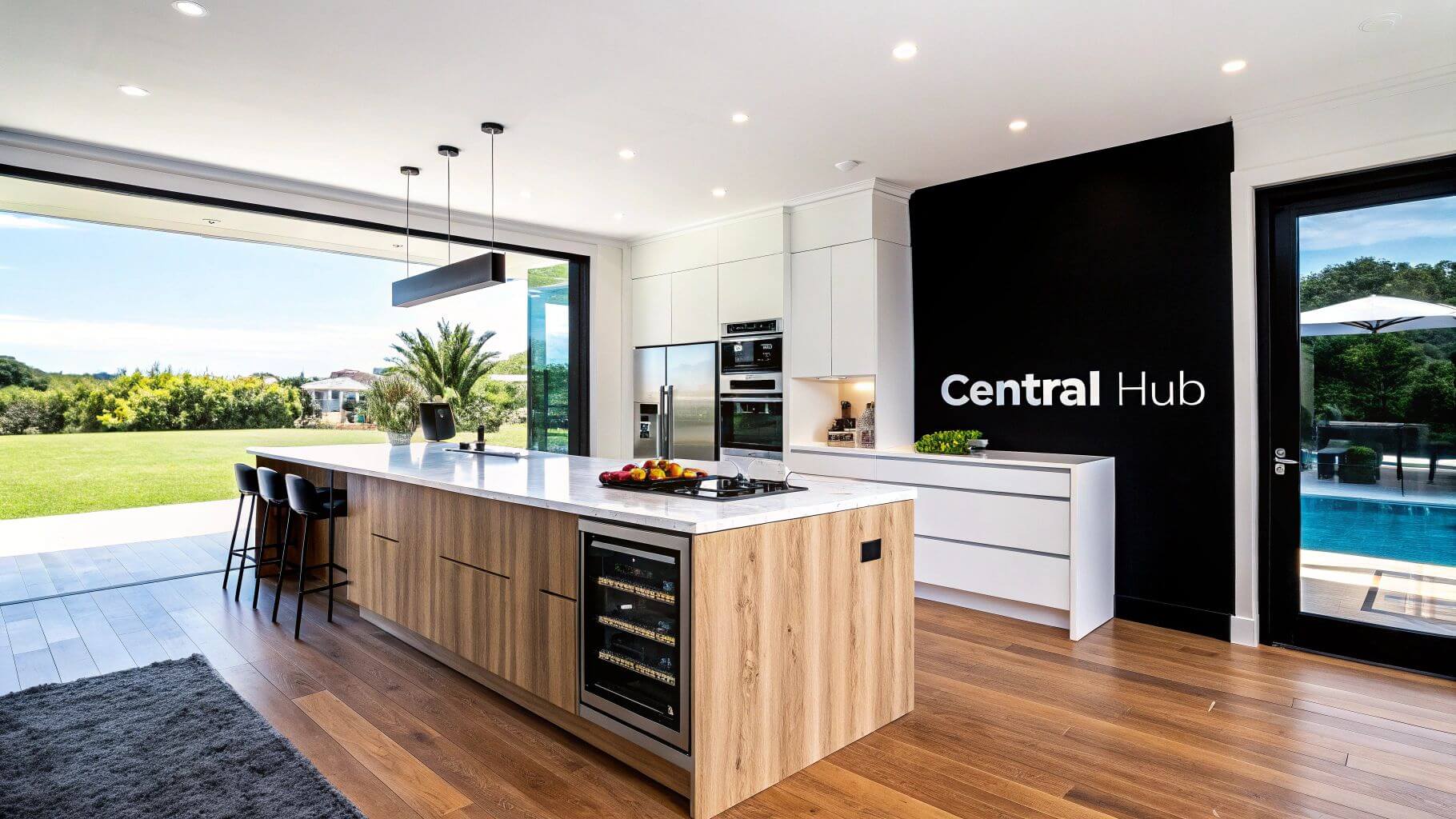
This strategy works by creating a subtle, psychological boundary without erecting walls. The island’s mass delineates the kitchen’s functional area from the relaxation and dining spaces, guiding foot traffic and maintaining an organized, uncluttered flow. In luxury residential design, this concept is often elevated with premium materials and thoughtful integration of technology.
Implementation and Best Practices
To successfully execute this concept, precision in planning and design is crucial. The island must be proportional to the room, serving as a focal point without overwhelming the space.
- Traffic Flow: Ensure a minimum clearance of 42 to 48 inches around all sides of the island. This provides ample space for movement, appliance access, and prevents bottlenecks in high-traffic areas.
- Functional Zoning: Incorporate multi-level countertops to define different uses. A lower, table-height section can be designated for casual dining, while a standard counter height accommodates food prep and cooking tasks.
- Material Selection: Choose materials that unify the open-concept space. A waterfall countertop, where the surface material flows vertically down the sides, creates a sleek, sculptural look that integrates beautifully with modern living areas.
- Integrated Technology: Enhance functionality with built-in features like a wine fridge, charging stations, a secondary sink, or even a downdraft ventilation system to maintain unobstructed sightlines.
Key Insight: The island’s design should be a bridge between the kitchen’s aesthetic and that of the adjacent living or dining areas. Select bar stools, pendant lighting, and finishes that complement the overall design scheme to create a cohesive and sophisticated environment. This turns a simple work surface into a deliberate piece of architectural furniture.
2. Zone Definition with Furniture Arrangement
A sophisticated alternative to structural dividers, defining zones with furniture arrangement is a cornerstone of successful open floor plan design ideas. This technique uses strategic placement of furniture to create distinct, functional areas for living, dining, and other activities without erecting physical barriers. The result is a space that feels both expansive and intuitively organized, where each zone has a clear purpose yet contributes to a cohesive whole.
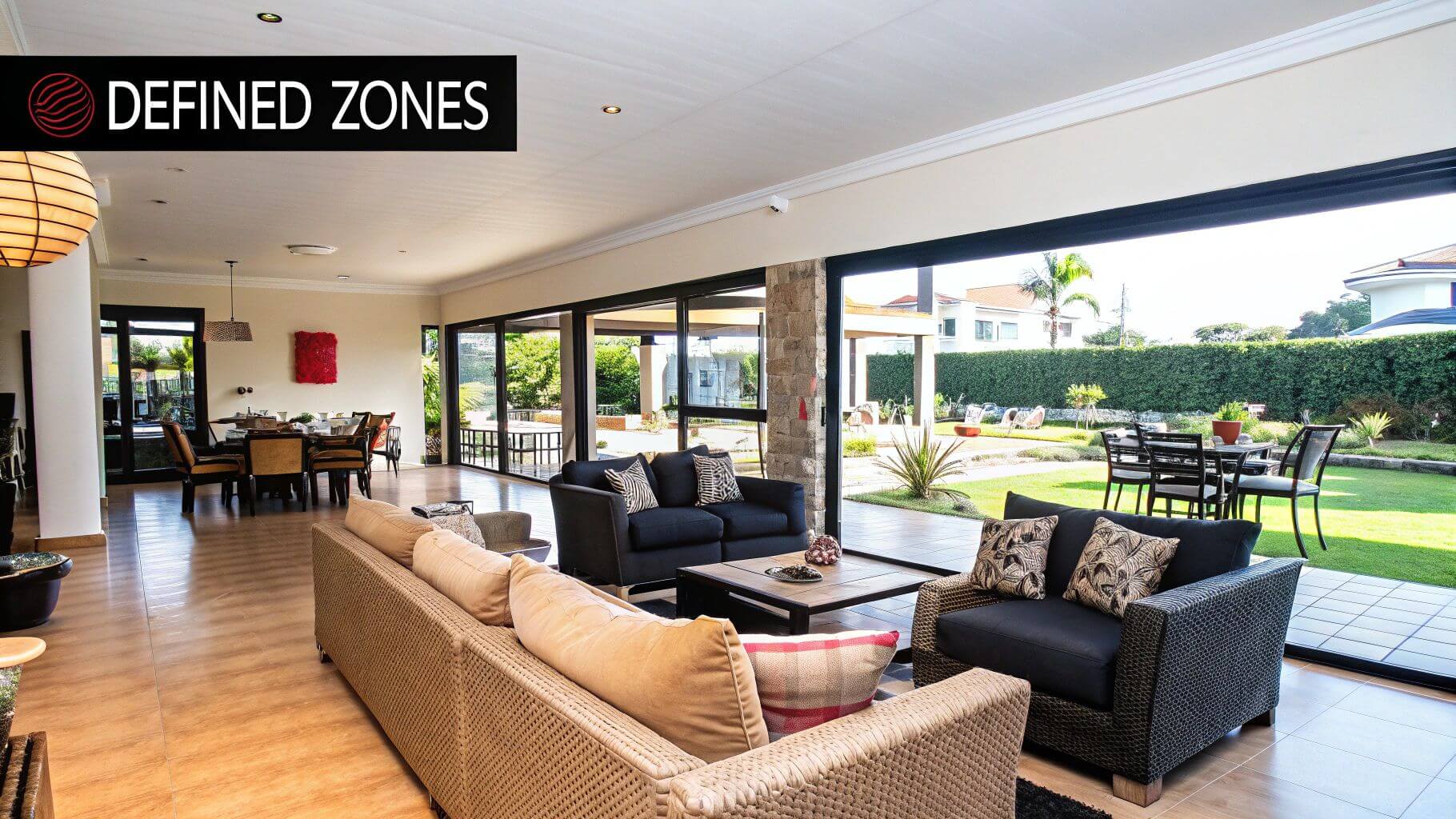
This method works by using large furniture pieces like sofas, area rugs, and console tables as soft, visual boundaries. For instance, the back of a large sectional can effectively demarcate the boundary of a conversation area, separating it from a dining space or a home office nook. This approach maintains uninterrupted sightlines and light flow, preserving the airy, open feeling that is the hallmark of this architectural style.
Implementation and Best Practices
Mastering furniture arrangement requires a thoughtful approach to scale, flow, and visual continuity. The goal is to create “rooms without walls” that are both functional and aesthetically pleasing.
- Anchor with Area Rugs: Use large area rugs to anchor each functional zone. A rug under the living room seating group and another under the dining table clearly define these separate areas while adding texture and color.
- Create Clear Pathways: Arrange furniture to establish natural, unobstructed walking paths. This is a critical component of interior design space planning and ensures the layout feels intentional and easy to navigate.
- Use Furniture as Dividers: The back of a sofa is a classic and effective divider. Placing a sleek console table behind it can further solidify this boundary, providing a surface for lighting or decorative objects that serves both zones.
- Maintain Cohesive Design: While defining separate zones, maintain a unified look through a consistent color palette, material choices, or stylistic theme. This prevents the space from feeling fragmented or disjointed.
Key Insight: The success of this strategy lies in creating “destinations” within the larger space. Each furniture grouping should feel complete and purposeful on its own. By carefully considering the orientation and scale of each piece, you can guide movement and use, crafting an environment that is as functional as it is visually expansive.
3. Multi-Level Ceiling Design
An often-overlooked yet powerful strategy in open floor plan design ideas is to use multi-level ceiling designs to delineate space. This architectural technique employs varying ceiling heights, coffered details, exposed beams, or dropped soffits to create visual separation and depth. It defines functional zones from above, adding character and a sense of structure to an otherwise expansive area without impeding the flow of light or movement.
This method works by establishing subtle, non-physical boundaries. For example, a lower, more intimate ceiling height over a dining area can create a cozy atmosphere, while a soaring vaulted ceiling in the living room enhances its grandeur. This approach is fundamental in luxury design, where architectural interest is paramount, turning the “fifth wall” into a key element of the home’s narrative.
Implementation and Best Practices
Successful execution of a multi-level ceiling requires careful consideration of scale, style, and function to ensure the result is both beautiful and practical. The design must feel intentional and integrated with the home’s overall aesthetic.
- Define Zones with Soffits: Use dropped soffits or bulkheads to frame a specific area, such as the kitchen. This is an excellent way to conceal ductwork, plumbing, or electrical wiring while creating a deliberate transition between spaces.
- Add Architectural Character: Incorporate coffered ceilings or exposed beams over a great room or seating area. This adds texture, rhythm, and a classic or rustic elegance that draws the eye upward and defines the zone.
- Lighting Integration: Plan lighting strategically within the ceiling design. Install recessed lighting in dropped soffits for focused task lighting over a kitchen island, or hang a dramatic chandelier from the center of a coffered section to anchor a living area.
- Proportion and Scale: Ensure the scale of the ceiling treatment is appropriate for the room’s size. A heavy, dark-beamed ceiling might overwhelm a smaller space, while a subtle tray ceiling can add sophistication without dominating.
Key Insight: The ceiling design should not only define space but also guide the emotional experience of it. A higher ceiling can make a room feel airy and formal, while a lower one promotes intimacy and comfort. Use these variations to tailor the atmosphere of each distinct zone within your open floor plan.
4. Color Blocking and Paint Techniques
One of the most artistic and cost-effective open floor plan design ideas is the strategic use of color blocking and advanced paint techniques to define distinct zones. This method uses color to create visual boundaries and establish unique moods for different functional areas, such as the kitchen, dining, and living spaces, without any physical partitions. A bold accent wall, a geometric pattern, or a subtle shift in tone can effectively delineate a space while preserving the expansive feel of the open layout.
This design strategy works by drawing the eye and psychologically anchoring a specific area. For instance, painting the wall behind a dining set a deep, sophisticated navy can create an intimate, formal setting within a larger, brighter room. This approach allows for incredible creative expression and can be tailored to match the architectural style and desired ambiance of any high-end interior, from modern lofts to classic estates.
Implementation and Best Practices
Successful execution relies on a well-considered color palette and precise application. The goal is to create purposeful definition that enhances, rather than complicates, the open-concept environment.
- Create Accent Zones: Designate a single wall or a specific architectural feature, like a recessed nook, as an accent area. Painting this surface a contrasting or saturated color instantly sets it apart. A dark charcoal wall behind a media console, for example, can create a cozy, theater-like atmosphere.
- Use the 60-30-10 Rule: To maintain balance, apply a dominant color to 60% of the space, a secondary color to 30%, and an accent color to 10%. This ensures the palette remains cohesive and avoids overwhelming the senses. You can learn more about how to choose paint colors to master this technique.
- Define with Geometric Shapes: For a bold, contemporary statement, use painter’s tape to create large-scale geometric shapes that span from a wall onto the ceiling. This visually “contains” an area, such as a home office corner or a reading nook, giving it a distinct identity.
- Consider Color Psychology: Select hues that evoke the desired feeling for each zone. Calming blues and greens are ideal for relaxation areas, while warm, energizing colors like terracotta or ochre can stimulate conversation in dining spaces.
Key Insight: The success of color blocking lies in its intentionality. The chosen colors should not only define zones but also complement the furniture, flooring, and lighting within the entire open plan. Use colors to highlight architectural details and create a visual narrative that guides the eye gracefully from one area to the next.
5. Industrial Divider Elements
One of the most architecturally compelling open floor plan design ideas is the use of industrial divider elements. This technique introduces structures like steel-framed glass partitions, custom metal screens, or exposed pipe frameworks to delineate zones without closing them off entirely. These dividers act as functional art, adding a raw, urban edge while maintaining the light and airy feel of an open concept.
This strategy works by creating a strong visual anchor that suggests separation, guiding the eye and defining purpose-driven areas like a home office or reading nook. Unlike solid walls, these semi-transparent barriers preserve sightlines and light distribution, making them ideal for high-end loft apartments and contemporary homes seeking a blend of sophistication and character.
Implementation and Best Practices
To integrate industrial elements effectively, the focus should be on balance and structural integrity. These features must feel intentional and complementary to the overall design, not like an afterthought.
- Material Harmony: Balance the cold, hard nature of metal and glass with warm, soft textures. Pair a black steel partition with a plush area rug, rich wood flooring, or velvet upholstery to create a sophisticated, inviting contrast.
- Scale and Proportion: Ensure the divider is scaled appropriately for the room. A floor-to-ceiling glass wall can make a dramatic statement in a high-ceilinged loft, while a lower, waist-high screen might be better for subtly separating a living and dining area.
- Functionality and Form: Choose a divider that serves a purpose beyond aesthetics. A steel-framed unit with integrated shelving provides both separation and storage. Sliding barn doors offer flexibility, allowing you to close off a space for privacy when needed.
- Lighting Integration: Weave lighting into the design. Backlighting a perforated metal screen or running LED strips along a steel framework can transform the divider into a stunning light feature, enhancing the room’s ambiance.
Key Insight: The success of industrial dividers lies in their ability to define space without confining it. Opt for designs with slim profiles and ample transparency, such as Crittall-style steel and glass partitions. This approach adds architectural interest and an urban aesthetic while upholding the core principles of open-concept living.
6. Living Area Sunken Conversation Pit
A truly distinctive approach within open floor plan design ideas is the reintroduction of the sunken conversation pit. This architectural feature creates a recessed seating area within the larger living space, establishing an intimate and cozy zone for gathering without sacrificing the expansive feel of an open concept. It introduces vertical dimension and visual interest, naturally drawing people in and serving as a sophisticated focal point for socializing.
This design strategy works by defining a specific function-driven area through a change in elevation. Originally popularized in mid-century modern architecture, contemporary interpretations blend this retro concept with luxury materials and clean lines. The pit carves out a dedicated “room within a room,” perfect for fostering connection and conversation while maintaining an unobstructed sightline across the main living area.
Implementation and Best Practices
Executing a sunken conversation pit requires careful structural and spatial planning. It’s a significant architectural commitment that, when done correctly, adds immense character and value to a high-end home.
- Safe and Accessible Steps: Design wide, shallow steps for safe and easy entry and exit. The rise and run of the stairs must be comfortable and compliant with building codes, often integrated seamlessly into the surrounding floor.
- Material Contrast: Use contrasting materials to emphasize the change in elevation. A hardwood floor on the main level transitioning to plush, deep-pile carpeting or custom upholstered bench seating in the pit can create a powerful design statement.
- Integrated Utilities: Plan for the pit’s specific needs. This includes dedicated, low-level lighting to create ambiance, integrated power outlets for charging devices, and considerations for HVAC to ensure the recessed area remains comfortable.
- Custom Furnishings: Built-in, wrap-around seating is the hallmark of a conversation pit. Custom upholstery allows for a perfect fit and a cohesive look, often incorporating hidden storage solutions beneath the benches to maximize functionality.
Key Insight: The success of a sunken pit lies in its ability to feel both separate and connected. Maintain visual cohesion by using a consistent color palette and complementary textures between the pit and the surrounding open-plan area. This ensures the feature feels like an intentional, integrated part of the overall design rather than an isolated element.
7. Two-Sided Fireplace as Room Divider
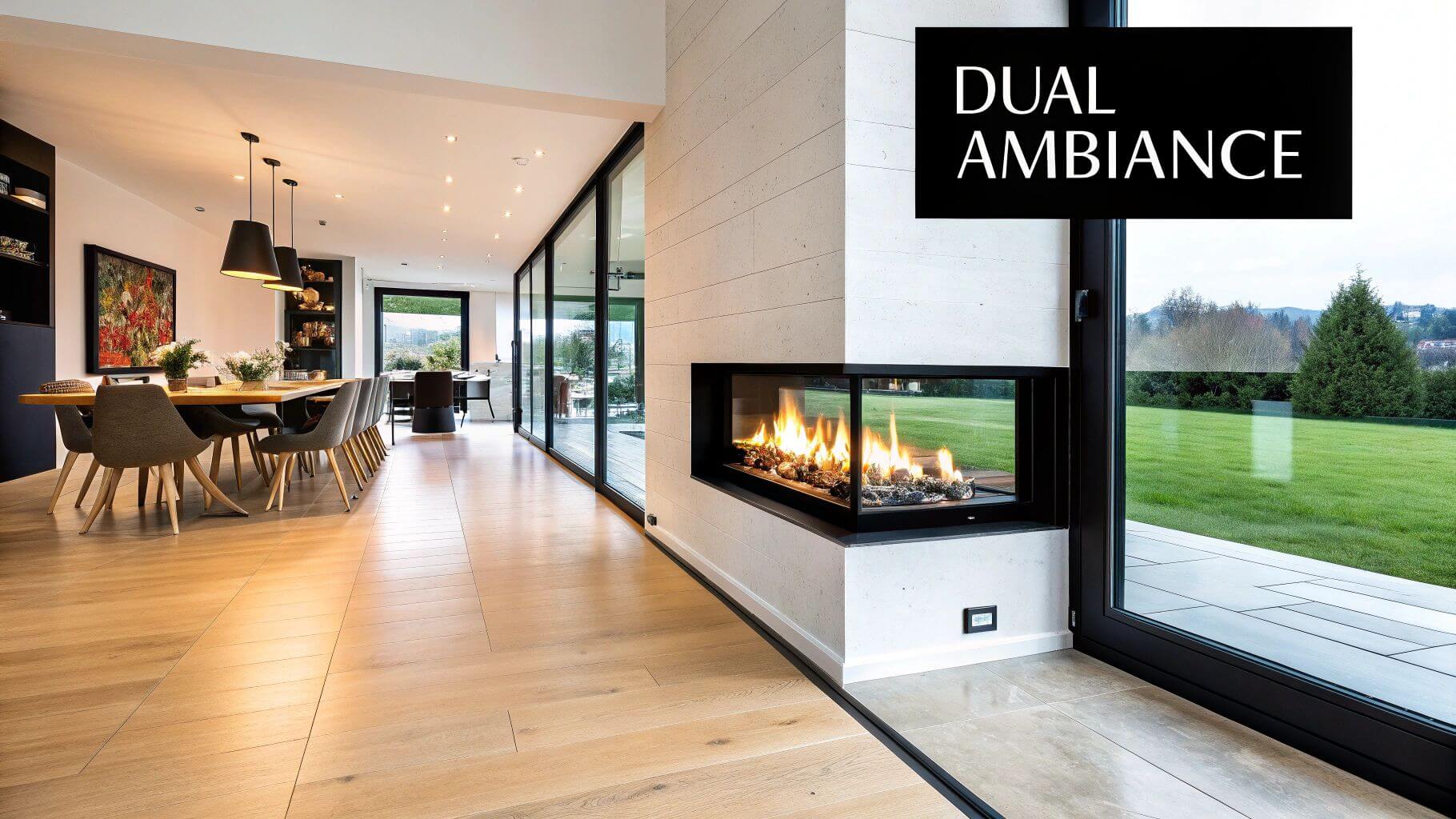
Integrating a two-sided fireplace is one of the most elegant and impactful open floor plan design ideas, offering both functional division and a powerful aesthetic statement. This architectural element acts as a see-through divider, creating a sophisticated partition between two distinct zones, like a living room and dining area, without sacrificing the sense of space and light that defines an open concept. It provides warmth and ambiance to both areas simultaneously, serving as a unifying focal point.
This strategy works by establishing a partial, permeable boundary that anchors the design while maintaining visual flow. The fireplace structure delineates functional zones with more substance than furniture alone, yet its transparent nature prevents the fragmentation of the space. In luxury residential projects, this feature is often customized to become a central piece of art, blending materials like stone, steel, and glass.
Implementation and Best Practices
Successful execution requires careful architectural planning to ensure the fireplace is both beautiful and functional. Its scale, placement, and material palette are critical to achieving a seamless integration into the open layout.
- Strategic Placement: Position the fireplace to create a natural and intuitive division between zones. A common application is between a primary seating area and a formal dining space, allowing each to benefit from its glow.
- Proportional Scale: The fireplace and its surround must be scaled to the room’s dimensions and ceiling height. A unit that is too large can overwhelm the space, while one that is too small will lose its impact as a focal point.
- Material Cohesion: Select materials for the fireplace surround that complement both adjoining spaces. A single material, like stacked stone or polished marble, used from floor to ceiling creates a dramatic, cohesive statement.
- Utility Planning: Plan for gas lines, electrical wiring, and proper ventilation during the initial construction or renovation phase. This is crucial for linear gas fireplaces or units that include remote controls and integrated blowers.
Key Insight: Treat the two-sided fireplace as a piece of architectural sculpture that frames views and connects spaces. The design should not only divide the room but also enhance the relationship between the two zones it separates. By surrounding it with complementary furniture and thoughtful lighting, the fireplace becomes the heart of the home, drawing people together.
8. Built-in Storage Wall Systems
An intelligent strategy for maximizing both function and form in an open concept space is the implementation of built-in storage wall systems. This approach utilizes floor-to-ceiling cabinetry and shelving to act as a sophisticated, partial room divider, offering extensive storage and display space. These systems are one of the most effective open floor plan design ideas for creating zones without sacrificing the feeling of spaciousness. They can elegantly house everything from a media center and book collection to fine china and personal heirlooms.
This design element works by establishing a strong vertical line that subtly demarcates different functional areas, such as separating a home office from a living room. Unlike a solid wall, a well-designed built-in can maintain visual connection and light flow, especially when it incorporates open shelving or glass-fronted cabinets. The key is to create a unit that feels like an intentional architectural feature rather than a simple piece of furniture pushed against a wall.
Implementation and Best Practices
Successful execution requires thoughtful planning to ensure the system is both beautiful and highly practical. The design must integrate seamlessly with the home’s existing architecture and interior style.
- Create Visual Balance: Combine open shelving for displaying decor with closed cabinets to conceal clutter. This mixture prevents the unit from appearing monolithic and adds depth and visual interest.
- Vary Shelf Heights: Plan for a variety of shelf heights and depths to accommodate different items, from tall vases and large art books to smaller decorative objects. This creates a more dynamic and personalized display.
- Ensure Cohesion: Use consistent hardware and finishes that complement the rest of the open-plan area. This ensures the built-in feels like an integral part of the home’s design narrative.
- Integrate Technology: For media walls, plan for integrated lighting, hidden cable management, and proper ventilation to keep electronic components organized and out of sight.
Key Insight: Treat a built-in storage wall as a piece of functional architecture that defines and enhances the space. It should be a statement piece that not only solves storage needs but also anchors the room’s design, providing a polished backdrop for daily life. A custom unit offers the best opportunity to tailor every detail to your specific needs, a critical step when you want to plan a home renovation for success.
9. Glass Partition and Sliding Door Systems
One of the most sophisticated open floor plan design ideas involves the strategic use of glass partitions and sliding door systems. This approach offers a brilliant compromise between a completely open layout and traditional walled-off rooms, providing physical and acoustic separation without sacrificing the flow of natural light or the feeling of spaciousness. These systems introduce an element of architectural elegance, allowing for flexible space definition.https://www.youtube.com/embed/Ins-CL31URk
This strategy works by using transparent or translucent barriers to delineate zones like a home office or dining area. Unlike solid walls, glass maintains visual connectivity, ensuring the space feels expansive and cohesive. In luxury residential design, these partitions are often custom-built, featuring slim, minimalist frames and high-performance glass to create a seamless and high-end aesthetic.
Implementation and Best Practices
Successful integration of glass systems requires careful consideration of both form and function. The goal is to enhance the open concept, not to complicate it with poorly planned additions.
- Structural Integrity: Ensure proper structural support is planned for, especially for large, floor-to-ceiling glass panels or heavy sliding systems. The header and floor tracks must be engineered to handle the weight and movement.
- Privacy and Aesthetics: Select the right type of glass for the application. While clear glass maximizes openness, frosted, reeded, or switchable smart glass can provide privacy on demand without blocking light.
- Acoustic Performance: For areas like home offices or media rooms where noise control is critical, specify laminated or double-glazed acoustic glass to effectively dampen sound transmission between zones.
- Hardware and Operation: Choose high-quality hardware for longevity and smooth operation. Soft-close mechanisms for sliding doors are a must for a luxury feel and prevent slamming.
Key Insight: The framing of the glass partition is a critical design element. A sleek, black steel frame can introduce an industrial-chic look, while a frameless system offers a minimalist, almost invisible barrier. This choice should directly complement the home’s architectural style, turning a functional divider into a deliberate design statement.
Open Floor Plan Design Ideas Comparison
| Item | Implementation Complexity 🔄 | Resource Requirements ⚡ | Expected Outcomes 📊 | Ideal Use Cases 💡 | Key Advantages ⭐ |
|---|---|---|---|---|---|
| Kitchen Island as Central Hub | Moderate to High: requires plumbing/electrical | High: materials, space, installation cost | Multi-functional workspace, social hub, added storage | Open kitchen/dining/living spaces | Natural room definition; multifunctional; social |
| Zone Definition with Furniture Arrangement | Low: furniture placement and styling only | Low: primarily furniture and decor | Flexible, functional zones without walls | Open-plan living rooms, studios | Cost-effective; reconfigurable; maintains openness |
| Multi-Level Ceiling Design | High: structural, professional installation | High: materials, permits, engineering | Visual separation, architectural interest, acoustics | Large open spaces, luxury homes | Adds character; defines zones overhead; luxury feel |
| Color Blocking and Paint Techniques | Low to Moderate: painting skills needed | Low: paint and supplies | Visual zone definition, mood setting | Any open-plan area | Cost-effective; flexible; creative expression |
| Industrial Divider Elements | Moderate to High: installation and materials | Moderate to High: metalwork, customization | Semi-permanent divides with urban aesthetic | Lofts, modern farmhouses, urban condos | Durable; visually striking; functional dividers |
| Living Area Sunken Conversation Pit | High: complex construction and waterproofing | High: structural work and customization | Intimate social space, architectural focal point | Large living rooms, luxury homes | Unique character; natural boundaries; social hub |
| Two-Sided Fireplace as Room Divider | High: professional installation and permits | High: fireplace units, installation cost | Heat, ambiance, natural division | Open living-dining areas, luxury homes | Dual heating; architectural focal point; value add |
| Built-in Storage Wall Systems | Moderate: custom or modular carpentry | Moderate to High: materials and labor | Maximized storage, room definition without blocking light | Multi-functional rooms, family or media rooms | Organized; customizable; combines storage and division |
| Glass Partition and Sliding Door Systems | Moderate to High: structural support and installation | High: glass, hardware, maintenance | Light flow with visual separation and noise control | Offices, modern homes, condos | Maintains openness; acoustic separation; modern look |
Designing Your Signature Open-Concept Space
Embracing an open floor plan is more than just removing walls; it is an exercise in creating a seamless, multifunctional environment that reflects a sophisticated and modern lifestyle. Throughout this exploration of high-end open floor plan design ideas, we’ve moved beyond the generic to uncover the nuanced strategies that transform vast, undefined areas into curated, intentional spaces. The journey from a blank canvas to a breathtaking, cohesive home is paved with deliberate choices and a deep understanding of spatial harmony.
The concepts we’ve detailed, from the architectural gravitas of a multi-level ceiling to the sleek functionality of glass partition systems, all serve a dual purpose. They simultaneously unite the overall space while artfully delineating specific zones for living, dining, and entertaining. This balance is the hallmark of exceptional open-concept design.
Key Takeaways for a Cohesive Open-Concept Home
To distill these insights into actionable principles, consider these core takeaways as you plan your own space:
- Anchor and Define: Every great open floor plan has strong anchors. A commanding kitchen island, a two-sided fireplace, or a sunken conversation pit acts as a powerful focal point that grounds the entire layout, creating a natural hub for activity and interaction.
- Create “Soft” Boundaries: True mastery lies in defining zones without building walls. Strategic furniture arrangements, large area rugs, and sophisticated color blocking techniques create psychological boundaries that guide flow and assign purpose to each area, maintaining an airy, unobstructed feel.
- Layer with Texture and Verticality: Avoid a flat, one-dimensional look by introducing varied textures and heights. Industrial metal dividers, custom built-in storage that reaches the ceiling, and thoughtful lighting at different levels all add depth, character, and a sense of layered luxury.
Your Path to an Elevated Living Experience
The ultimate goal is to craft a space that feels both expansive and intimate, a home that supports both grand-scale entertaining and quiet daily life with equal grace. The true value of mastering these open floor plan design ideas lies in their ability to enhance your lifestyle. A well-designed open concept promotes connection, floods your home with natural light, and offers unparalleled flexibility for how you live, work, and relax.
Your next step is to evaluate which of these strategies resonate most with your personal aesthetic and functional needs. Do you crave a central, social hub? The kitchen island is your starting point. Do you need a flexible boundary for a home office? A glass partition system offers a perfect solution. Begin by sketching out your ideal flow and identifying the key activities your space needs to support.
Remember, the most successful designs are a direct reflection of the inhabitants. Select and combine these elements to tell your unique story. The power of a thoughtfully executed open floor plan is its ability to not just house your life, but to elevate it, creating an environment that is as beautiful as it is functional. This is not merely a design trend; it is a commitment to a more connected and fluid way of living.
Ready to transform your vision into a professionally executed reality? The most distinguished open-concept spaces are born from collaboration. Connect with the nation’s leading architects and interior designers through the Haute Design network. Explore portfolios and find the perfect expert to orchestrate your project by visiting Haute Design.